

Oak Wilt Prevention in MA & NH: When It's Safe to Prune Your Oaks
Oak wilt is a fatal fungal disease that rides into healthy oaks through fresh pruning cuts. It's already established in neighboring New York, and the best defense is simple: prune and wound oaks only while they're dormant. Here's how the disease spreads, what to watch for, and how we keep your oaks protected.
Oaks are the backbone of the North Shore and southern New Hampshire canopy, and oak wilt is the disease every arborist in the region is watching for. Caused by the fungus Bretziella fagacearum, it plugs the water-conducting tissue inside the tree. A red oak can go from healthy to dead in a matter of weeks, and there's no cure once it takes hold. The good news: the most common way it reaches a new tree is entirely preventable.
Is Oak Wilt in Massachusetts or New Hampshire?
Oak wilt is established in New York and across the Midwest, and state forest health officials in both Massachusetts and New Hampshire treat it as a priority threat, asking residents to report any oak that suddenly wilts and drops leaves during the growing season. That's exactly why prevention matters here. The habits that keep oak wilt out of a neighborhood, like timing your pruning and not moving oak firewood, are the same ones that protect your trees if it ever arrives.
How Oak Wilt Spreads
The fungus travels three ways, and two of them are in a homeowner's control:
Sap beetles & fresh cuts
Small sap-feeding beetles pick up spores from infected trees and carry them to fresh wounds on healthy oaks. A pruning cut in the wrong season is an open door.
Root grafts
Neighboring oaks of the same group often fuse roots underground. Once one is infected, the fungus can move tree to tree below the soil.
Moved firewood
Infected oak logs can carry the fungus for long distances. This is how the disease jumps into new regions.
The Safe Window to Prune Oaks
Beetle activity follows the seasons, so the rule is about the tree's cycle, not a date on the calendar:
Safe: dormant season
From after the leaves drop in fall until before the buds swell in late winter. The tree is inactive, the beetles are inactive, and cuts close up before the risk returns.
This is when we schedule all planned oak pruning, crown work, and removals.
High risk: spring & early summer
From bud break through the first stretch of summer, sap is flowing, beetles are active, and spore mats on infected trees are at their peak. Fresh cuts in this window are the main way oak wilt spreads.
Prune only for emergencies, and seal the cut immediately.
Pruning a different tree? Our MA & NH pruning calendar covers the right season for every common species, and our dormant pruning guide explains why winter is the best time for most of them.
Warning Signs of Oak Wilt
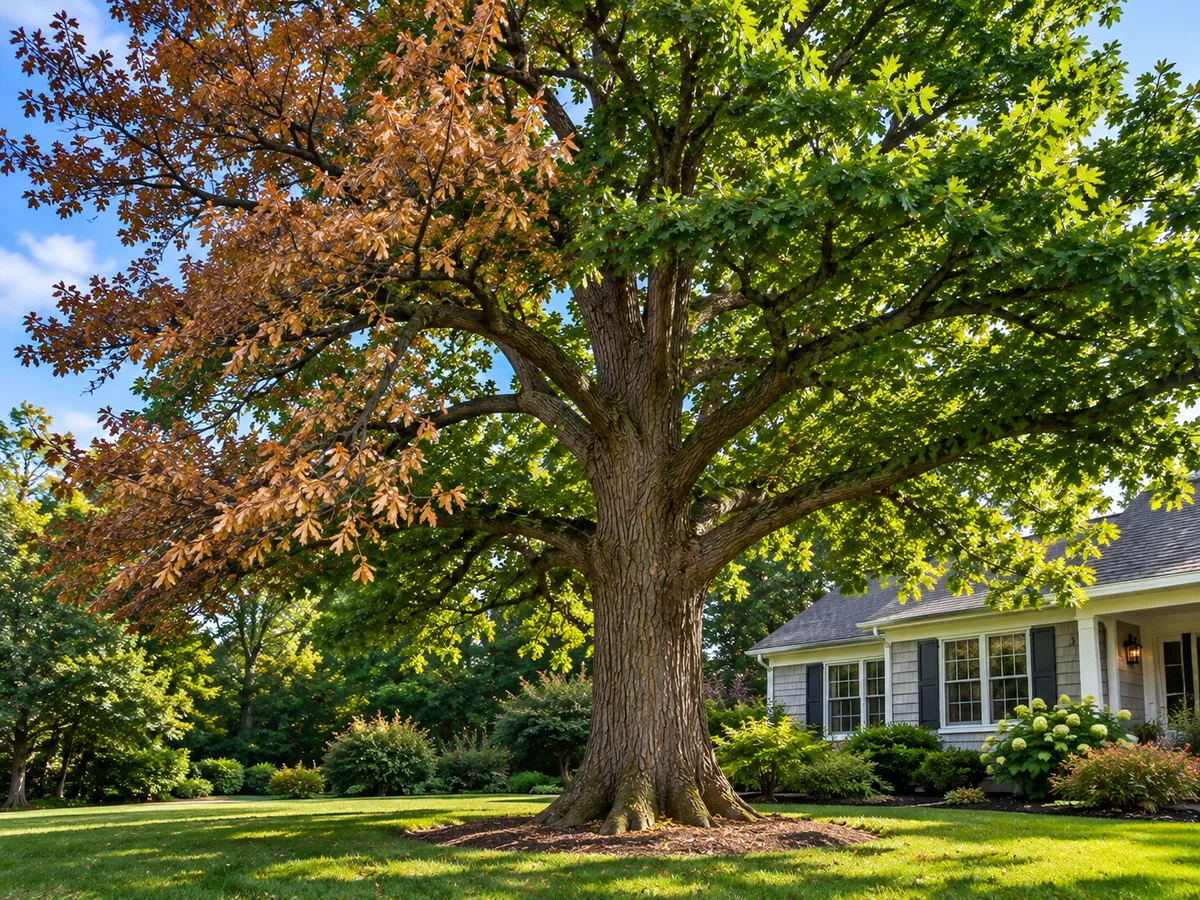
Symptoms show up in the warm months and look different depending on which oak group your tree belongs to. A quick way to tell: red oaks have pointed leaf lobes, white oaks have rounded ones.
- Top-down wilting. Discoloration starts at the top of the crown or the branch tips and moves downward.
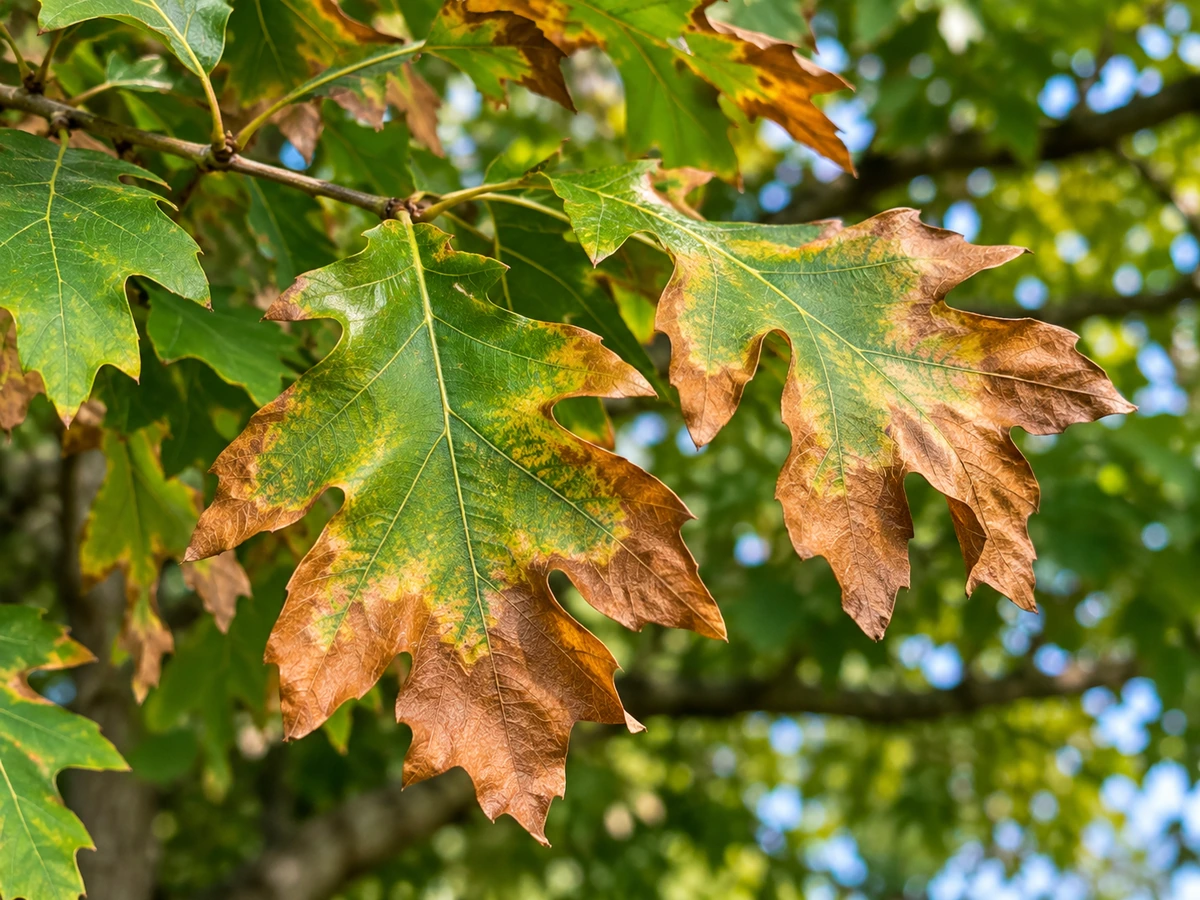
- Bronzed leaf edges. Leaves turn dull green, then bronze or brown from the outer edges inward toward the midrib.
- Summer leaf drop. Leaves fall in midsummer while still partly green, nothing like a normal fall shed.
- Streaks under the bark. Peeling bark on a wilting branch may show brown streaking in the sapwood.
- Sweet-smelling cracks (red oaks). Fungal mats can push the bark open and give off a fruity smell that attracts beetles.
Red Oaks vs. White Oaks
| Red oak group | White oak group | |
|---|---|---|
| Common in MA & NH | Northern red, black, pin, scarlet oak | White, swamp white, bur oak |
| Leaf shape | Pointed, bristle-tipped lobes | Rounded lobes |
| Susceptibility | Very high | Moderate, more tolerant |
| How fast it declines | Weeks to a few months after symptoms | Slowly, branch by branch, over one to several years |
| Can it recover? | Almost never | Rarely, if caught very early and treated |
| Spreads spores above ground? | Yes, through fungal mats under the bark | Rarely |
Northern red oak, the most common oak in our area, is in the highest-risk group. If you're not sure which oaks you have, our arborists can identify them during an inspection.
How We Protect Your Oaks
- Dormant-season scheduling. Planned oak pruning, crown reduction, and removal happen while the trees are dormant.
- Clean, correct cuts. Cuts are made just outside the branch collar, never flush and never as stubs, so the tree can seal the wound on its own.
- Emergency cuts get sealed. When a storm forces work on an oak in the growing season, every fresh cut is painted right away to keep beetles off the wood.
- Sanitized tools. Saws and pruners are cleaned between trees so nothing travels from one oak to the next.
- Safe wood handling. Oak wood from a suspect tree is chipped or kept on site, never moved as firewood.
What Happens if an Oak Gets Infected
Confirm it
Oak wilt mimics drought, borers, and other diseases. A branch sample sent to a lab confirms the diagnosis.
Break root grafts
Trenching between infected and healthy oaks cuts the underground connection before any tree comes down.
Protect neighbors
Preventive fungicide injections can help high-value healthy oaks nearby, and occasionally slow an early white oak infection.
Remove & contain
An infected red oak should come out, with the wood chipped or tarped so beetles can't reach it.
If an oak on your property has to come down, see our oak tree removal page for how we handle big, heavy oaks near homes.
Oak Pruning Mistakes That Invite Disease
- Pruning in spring or early summer. The single biggest oak wilt risk a homeowner controls.
- Flush cuts and stubs. Both stop the tree from sealing the wound and open the door to rot.
- Topping. Huge open wounds, weak regrowth, and a stressed tree. Ask about crown reduction instead of topping.
- Removing too much at once. Keep it to about a quarter of the live canopy at most, and less on mature oaks.
- Hauling oak firewood. Burn it where it was cut, and never bring oak logs in from out of state.
For the full how-to on shaping an oak, read pruning an oak tree to keep it small, or let our crew handle it with professional oak tree trimming. More regional threats are covered in our guide to common tree diseases and pests in MA & NH.
Protect Your Oaks Before the Season Turns
Book your oak pruning, crown work, or inspection while the trees are dormant. Free same-day estimates across Massachusetts & New Hampshire.

Why Choose AA Tree Service?
Choose AA Tree Service for expert care, professionalism, and dependable service. Our crews know New England oaks, and we time every cut to protect them, from routine pruning to removing a tree that can't be saved.
With experienced technicians, advanced equipment, and a commitment to safety, we deliver high-quality results on every project.
REQUEST A FREE ESTIMATELicensed & Insured
A fully licensed and insured company.
Dormant-Season Scheduling
Oak work timed to stop oak wilt.
Over 20 Years' Experience
Two decades serving MA & NH.
Locally Owned
A proud, locally owned company.
Experienced Technicians
Clean, correct cuts every time.
Free Same-Day Quotes
Know where you stand fast.