

MA & NH Tree Pruning Calendar: Best Time to Trim by Species
Prune at the wrong time and you can bleed a maple, stress a young tree, or expose an oak to deadly oak wilt. Here's exactly when to prune oak, maple, dogwood, pine, and Japanese maple in the New England climate — month by month.
Timing is the single biggest factor in whether pruning helps a tree or hurts it. In Massachusetts and New Hampshire, the general rule is simple — prune most trees in late winter to early spring while they're dormant — but the exceptions are what get homeowners in trouble. Oaks, maples, and spring-flowering trees each have their own window. This calendar lays out all of it.
Why Late Winter to Early Spring Is Best
For most deciduous trees in New England, late winter through early spring (roughly February to April, before the buds break) is the ideal window. Four reasons it works so well:
- Clear visibility — bare branches make structural problems and deadwood easy to spot.
- Less stress — dormant trees handle cuts with far less shock.
- Faster healing — cuts made just before spring growth seal and compartmentalize quickly.
- Fewer pests & diseases — fungi, bacteria, and insects are inactive in the cold, lowering infection risk at the cut.
The exceptions matter just as much as the rule — oaks, the "bleeders" (maples and birches), and spring-flowering trees each break from this window. The month-by-month table below and the species guide that follows cover every one.
Month-by-Month Pruning Calendar (MA & NH)
| Month | Good to prune | Hold off on |
|---|---|---|
| January | Oaks, most shade & deciduous trees, structural work dormant | Spring bloomers |
| February | Oaks, dogwoods, Japanese maples, most deciduous trees prime | Heavy maple/birch cuts |
| March | Oaks (window closing), dogwoods, Japanese maples — last dormant call | Maples/birches (bleeding) |
| April | Spring-flowering trees & shrubs after bloom | Oaks stop, most deciduous (bud break) |
| May | Lilac, forsythia, flowering dogwood — right after blooming | Oaks, maples, heavy cuts |
| June | Light shaping; finish early-spring bloomers | Oaks oak wilt |
| July | Maples & birches (in full leaf, less bleeding), summer thinning | Oaks |
| August | Maples & birches, summer deadwood cleanup | Oaks |
| September | Deadwood & hazards only go easy | Growth-stimulating cuts before frost |
| October | Deadwood & storm damage only | Routine pruning (slow healing, fungal spores) |
| November | Oak window opens; dormant season begins oaks OK | — |
| December | Oaks, dormant structural pruning on most trees | — |
Deadwood, and any dead, damaged, or diseased branch that poses a hazard, can be removed safely at any time of year, in any month above.
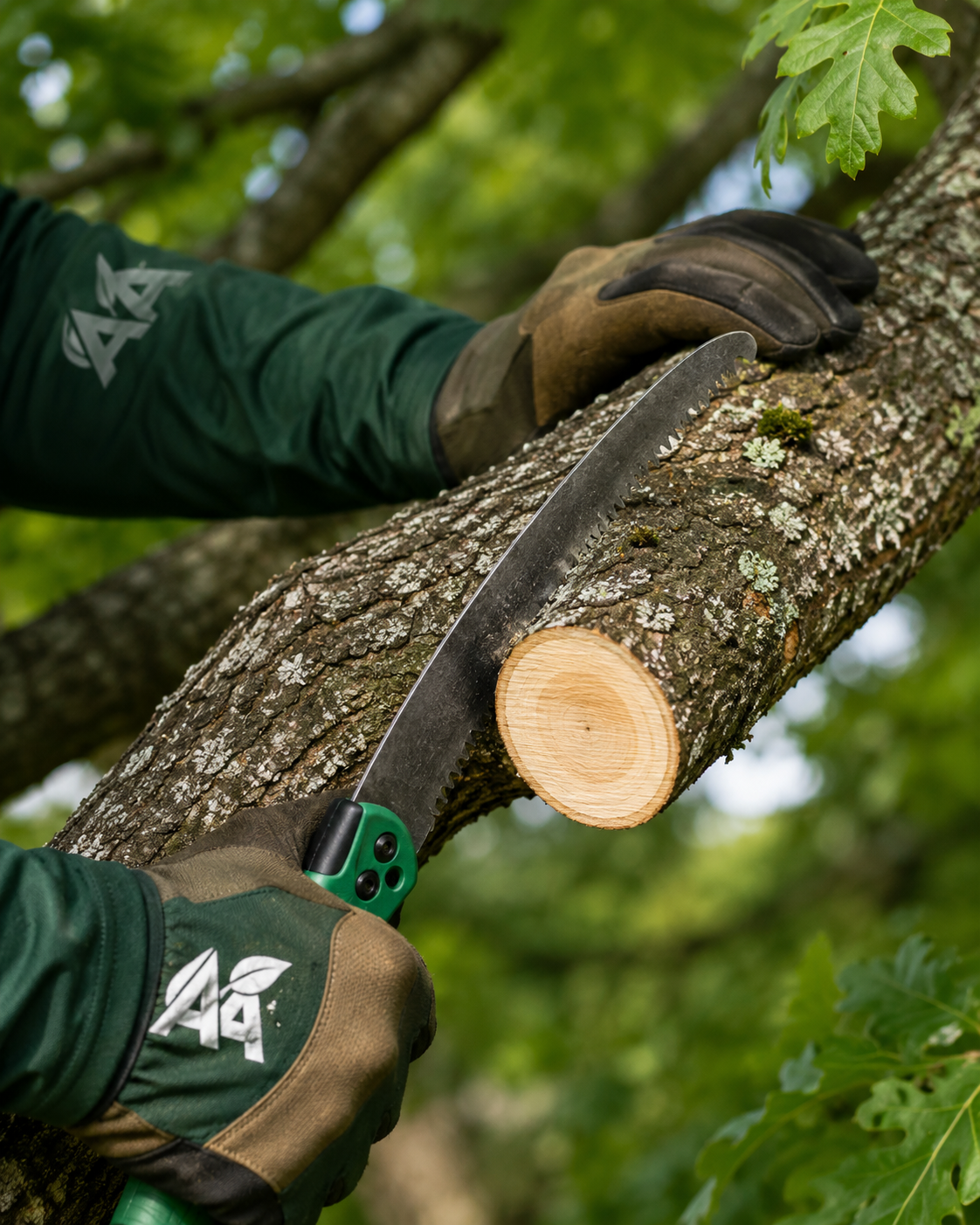
When to Prune, by Species
| Tree | Best window | Avoid | Why |
|---|---|---|---|
| Oak | Nov – Mar (deep dormancy) | Apr – Oct | Beetles spread oak wilt through fresh cuts in the growing season. |
| Maple & Birch | Jul – Aug, or after leaf-out | Late winter / early spring | They bleed heavy sap when cut before leaves emerge. |
| Dogwood (tree) | Feb – Mar (dormant) | Spring bud break | Dormant cuts prevent sap loss and show structure clearly. |
| Flowering Dogwood | Right after bloom (late spring) | Winter | Winter pruning removes next year's flower buds. |
| Japanese Maple | Jan – Mar (before buds swell) | Late summer / fall | Dormant, light thinning preserves its cascading shape. |
| Pines & Evergreens | Late winter to early spring | Fall | New "candles" can be pinched in spring; avoid stimulating late growth. |
Oaks — the strictest rule in the calendar
Oaks get their own paragraph because the stakes are highest. Prune oaks only during deep dormancy, November through March, and avoid April through October entirely. Sap-feeding beetles that transmit oak wilt — a fungal disease that can kill an oak in a single season — are drawn to fresh cuts in the warm months. If a storm forces an emergency cut during the growing season, seal the wound immediately with a latex-based paint to block those insects. For the full walkthrough on keeping a large oak healthy and in bounds, see our guide on pruning an oak tree to keep it small and our oak tree trimming service.
Maples & birches — the "bleeders"
Cut a maple or birch in late winter and it will drip sap heavily. It's mostly cosmetic and won't kill a mature tree, but to avoid it, prune these in mid-to-late summer (July–August) when the tree is fully in leaf and wounds close fast, or wait until leaves have fully emerged in late spring.
Dogwoods — timing depends on the type
Dogwood trees are pruned in late winter (February–March) while dormant. Flowering dogwoods, and stem-color shrubs like red-twig and yellow-twig, follow different timing — flowering types get pruned right after they bloom so you don't lose next season's flowers. Our step-by-step guides cover both: trimming a dogwood tree and pruning an overgrown dogwood.
Japanese maples — a light, artistic touch
Prune Japanese maples in late winter to very early spring (January–March) before the buds swell. Remove the "three Ds" — dead, damaged, and diseased wood — then any crossing branches, using selective thinning rather than shearing. Mature specimens often need very little. See our seasonal notes on pruning Japanese maple in spring.
The Rules That Apply to Every Tree
The 25% Rule
Never remove more than a quarter of a tree's live crown in one year — more than that starves and stresses it.
Cut at the Collar
Cut just outside the branch collar. Never make flush cuts against the trunk or leave long stubs.
Never "Top" a Tree
Topping ruins structure, starves the tree, and triggers weak, hazardous regrowth.
Deadwood Anytime
Dead, damaged, or diseased limbs — and true hazards — can be removed safely in any season.
When to Call a Pro Instead of DIY
Light shaping and small deadwood are fair game for a homeowner in the right season. But anything over your head, near power lines, or on a large oak or storm-stressed tree is worth a professional's hands and equipment — both for your safety and the tree's health. AA Tree Service prunes to ANSI A300 standards across Massachusetts and New Hampshire; if a tree needs more than a trim, we also handle pruning & trimming, tree removal, and a professional tree risk assessment.
Prune It Right — Let a Pro Handle the Timing
Free same-day estimates across Massachusetts & New Hampshire. Tell us what you need trimmed and we'll do it in the right window, the right way.

Why Choose AA Tree Service?
Choose AA Tree Service for expert care, professionalism, and dependable service. We prune to industry standards and in the right season, protecting both your property and the long-term health of your trees.
With experienced technicians, advanced equipment, and a commitment to safety, we deliver high-quality results on every project.
REQUEST A FREE ESTIMATELicensed & Insured
A fully licensed and insured company.
Satisfaction Guarantee
We stand behind every job we do.
Over 20 Years' Experience
Two decades serving MA & NH.
Locally Owned
A proud, locally owned company.
Experienced Technicians
Trained hands on every cut.
Free Same-Day Quotes
Know where you stand fast.