

Oak Tree Removal in MA & NH: When an Oak Has to Come Down
Oaks are the heaviest trees we take down, and the ones most often standing right over a house. Here's how to tell whether your oak can be saved or needs to go, what makes an oak removal different from any other tree, and how we bring a big one down safely in sections.
A mature oak is often the most valuable tree on a Massachusetts or New Hampshire property, so nobody wants to remove one without a reason. But oak wood is roughly twice as dense as pine, a dead oak turns brittle fast, and a big one leaning over the roof is a genuine hazard. The right call starts with knowing the difference between an oak that's struggling and one that's past saving.
Signs an Oak Needs to Be Removed
One of these alone deserves a professional look. Two or more together usually mean the tree has to come down:
Major canopy dieback
Half or more of the crown is dead or bare, often starting at the top and working down, with no new growth.
Deep trunk cracks or splits
Vertical fractures running into the wood, not just surface bark.
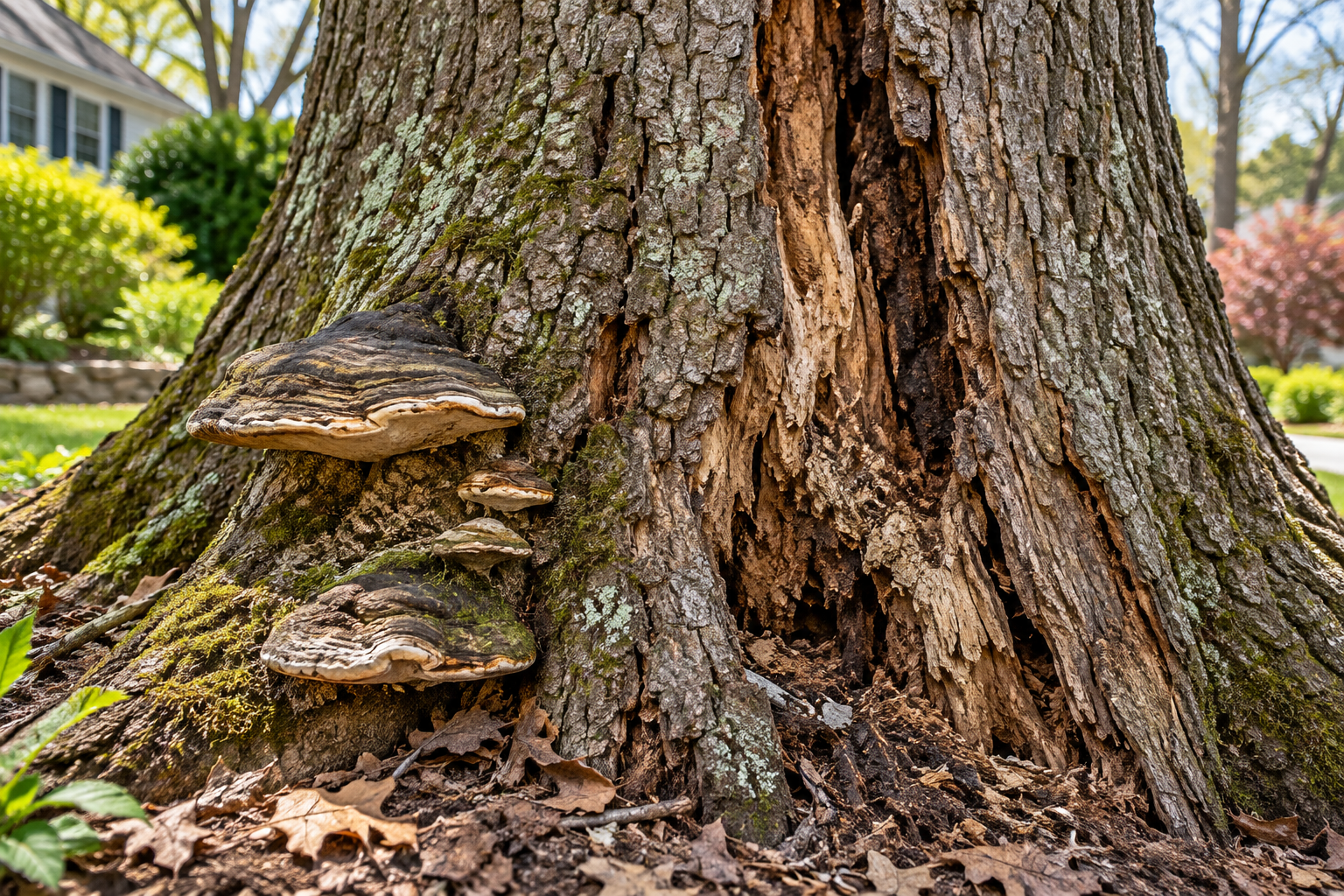
Fungus at the base
Shelf fungi or mushroom clusters at the trunk or root flare signal internal rot.
Hollow core
A hollow sound when tapped, or cavities taking up more than a third of the trunk.
Sudden lean
A new or worsening tilt with heaving or cracked soil on one side means the root plate is failing.
Confirmed oak wilt
An incurable fungal disease that can kill a red oak in a single season and spread to neighboring oaks through root grafts.
Other triggers: roots buckling a patio, walkway, or foundation, and large dead limbs hanging over the roof, driveway, or utility lines.
Can the Oak Be Saved First?
Often, yes, if the problem is caught early. Nutrient stress, soil compaction, early pest activity, or a single damaged limb can usually be treated or pruned out by an arborist. We'd rather save a healthy oak than remove it. The line gets crossed when the canopy is more than half dead, the trunk has advanced rot, the root plate is lifting, or the tree has an incurable disease. That's when removal protects your home, and often the other oaks on the property.
| What you're seeing | Usually savable | Usually removal |
|---|---|---|
| Canopy | Thinning, a few dead branches | Half or more dead, no new growth |
| Trunk | Surface bark damage, small cavity | Deep splits, hollow over a third of the diameter |
| Base & roots | Compacted soil, minor root exposure | Fungal conks at the flare, heaving soil, new lean |
| Disease | Minor pests, leaf spot | Confirmed oak wilt or advanced root rot |
Not sure which side your tree is on? A tree risk assessment settles it before any cut is made.
Why an Oak Is a Different Removal
Oak is one of the densest hardwoods in New England. A mature oak can weigh several tons, and every section the crew lowers is far heavier than the same-size piece of pine or maple. That changes the rigging, the equipment, and the margin for error.
A dead oak raises the stakes again. Dry oak wood is brittle and can split vertically up the trunk during a cut, a failure climbers call "barber chairing," and dead limbs can let go without warning. That's why dead oaks are never felled whole near a structure. They come down in controlled sections, often with a crane doing the lifting.
How We Remove a Large Oak
- Assessment. An arborist checks trunk integrity, internal decay, the root plate, and every target around the tree: house, fence, lines, neighbors.
- Plan the drop. Open yard and a healthy trunk may allow directional felling. Near structures, the tree is dismantled piece by piece.
- Rig and lower. Limbs and trunk sections are roped and lowered under tension so nothing swings into the property.
- Crane when it's the safe call. Oaks over a roof, in tight access, or too decayed to climb are lifted out with crane-assisted removal.
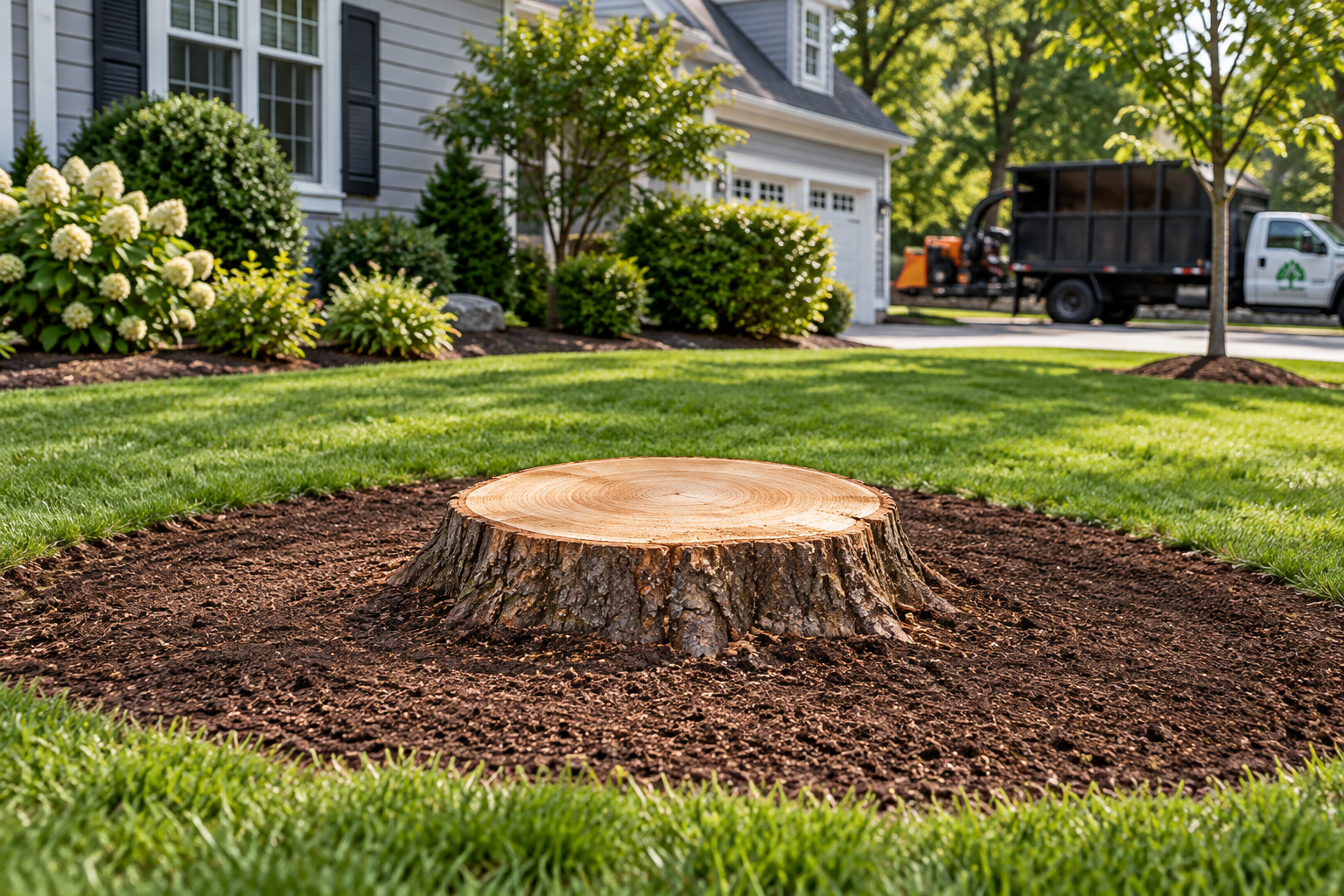
- Stump and cleanup. The stump is ground below grade and the wood and brush are chipped and hauled, leaving the yard ready to replant.
Timing, and the Oak Wilt Rule
Oaks have one rule other trees don't. Cutting them during the growing season leaves fresh wounds that attract the sap-feeding beetles that carry oak wilt, a fungal disease that can kill a red oak in weeks and move to nearby oaks through their roots. So planned oak removal and pruning is scheduled for the dormant season, late fall through winter, when the tree is inactive and the beetles are too. Frozen ground and a leafless canopy also make the work cleaner on your lawn.
Trimming rather than removing? See our guides on pruning an oak to keep it small, our oak tree trimming service, and the MA & NH pruning calendar.
Permits, Property Lines & What It Costs
Permits. Most oaks entirely on private property need no state permit in Massachusetts, but an oak along the road may be a public shade tree under the Tree Warden, and one within a wetland buffer needs Conservation Commission approval. We confirm the tree's status first. Full details in our tree removal permit guide.
A neighbor's dead oak. You can't cut it yourself, but a written notice that it's a hazard puts them on record. If it later falls on your property, that notice matters for liability and insurance. See what to do when a tree comes down.
Cost. Oak removal is priced by what the specific tree demands: height, trunk size, health, access, and whether rigging or a crane is required. Because no two oaks are alike, every job is quoted after an on-site inspection. Request a free estimate and we'll walk the tree with you and give you an exact number, no guesswork.
Worried About a Big Oak? Let's Look at It.
Free same-day estimates across Massachusetts & New Hampshire. We'll tell you honestly whether it can be saved or needs to come down, and quote the job on the spot.
Why Choose AA Tree Service?
Choose AA Tree Service for expert care, professionalism, and dependable service. Big, heavy oaks over homes are the jobs we're built for, with the rigging, crane access, and experience to bring them down without a scratch on the property.
With experienced technicians, advanced equipment, and a commitment to safety, we deliver high-quality results on every project.
REQUEST A FREE ESTIMATELicensed & Insured
A fully licensed and insured company.
Crane-Equipped Crews
For oaks over roofs and tight access.
Over 20 Years' Experience
Two decades serving MA & NH.
Locally Owned
A proud, locally owned company.
Certified Arborists
Save-or-remove calls you can trust.
Free Same-Day Quotes
Know where you stand fast.