

Tree Crown Reduction in MA & NH: Reduce Height Without Topping
A tree that's outgrown its spot, leaning into the roof, or catching too much wind doesn't need to be chopped flat. Crown reduction brings the height and spread down to selective, healthy side branches, so the tree keeps its shape, its strength, and its life.
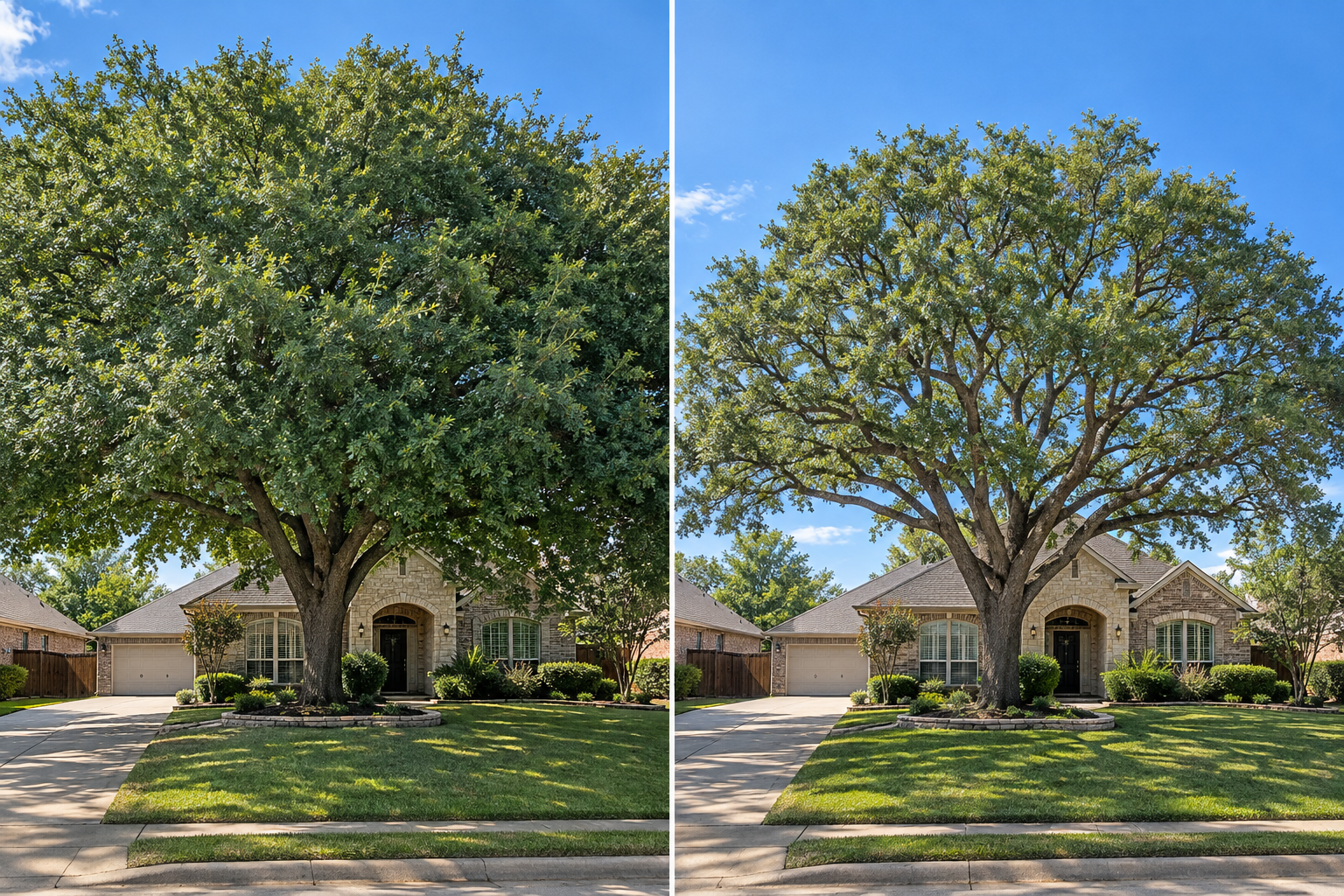
Crown reduction is the professional way to make a tree smaller. Instead of cutting branches off at random, an arborist shortens each overextended limb back to a vigorous side branch that's big enough to take over as the new lead. The tree ends up lower and more compact, but it still looks like the tree it was, and it stays structurally sound. That's the whole difference between reduction and the thing homeowners should never allow: topping.
Crown Reduction vs. Topping
Crown reduction
- Cuts back to a lateral branch at least one-third the diameter of the limb removed
- Removes no more than 20 to 25% of the live canopy at once
- Keeps the natural silhouette and vascular flow
- Wounds close quickly; mild stress, long-term stability
Topping ("hat-racking")
- Lops major limbs and the top off at arbitrary lengths
- Often strips 50 to 90% of the canopy
- Leaves large stubs that rot and invite insects
- Starves the tree, then forces weak "watersprouts" that snap in storms
A tree can survive topping, but it never truly recovers its strength or shape. Arborists only consider it as a last resort in a storm-damage emergency. For everything else, reduction does the job without the damage. Read more in our guide to tree topping vs. crown reduction.
Why Reduce a Crown
- Clearance. Pulls branches back from the roof, gutters, power lines, driveway, and walkways.
- Storm safety. Shortens the "lever arm" on long, heavy limbs and reduces the sail effect that snaps branches in high wind.
- Size control. Keeps a tree that's outgrown the yard in proportion to the house and neighbors.
- More light. Opens a dense canopy so sun and air reach the lawn and garden below.
- Tree health. Extends the life of an older or overloaded mature tree instead of removing it.
Reduction, Thinning, Raising: Which Does Your Tree Need?
Homeowners often ask for "trimming" when they mean one of four different things. Reduction is the only one that changes the tree's overall size.
| Technique | What it does | Changes size? |
|---|---|---|
| Crown reduction | Shortens outer branches back to laterals; lowers height and spread | Yes |
| Crown thinning | Removes select inner branches for light and airflow | No |
| Crown raising | Removes lower limbs for clearance underneath | No (height stays) |
| Crown cleaning | Removes dead, damaged, and diseased wood | No |
The Rules That Make It Safe
The lateral rule
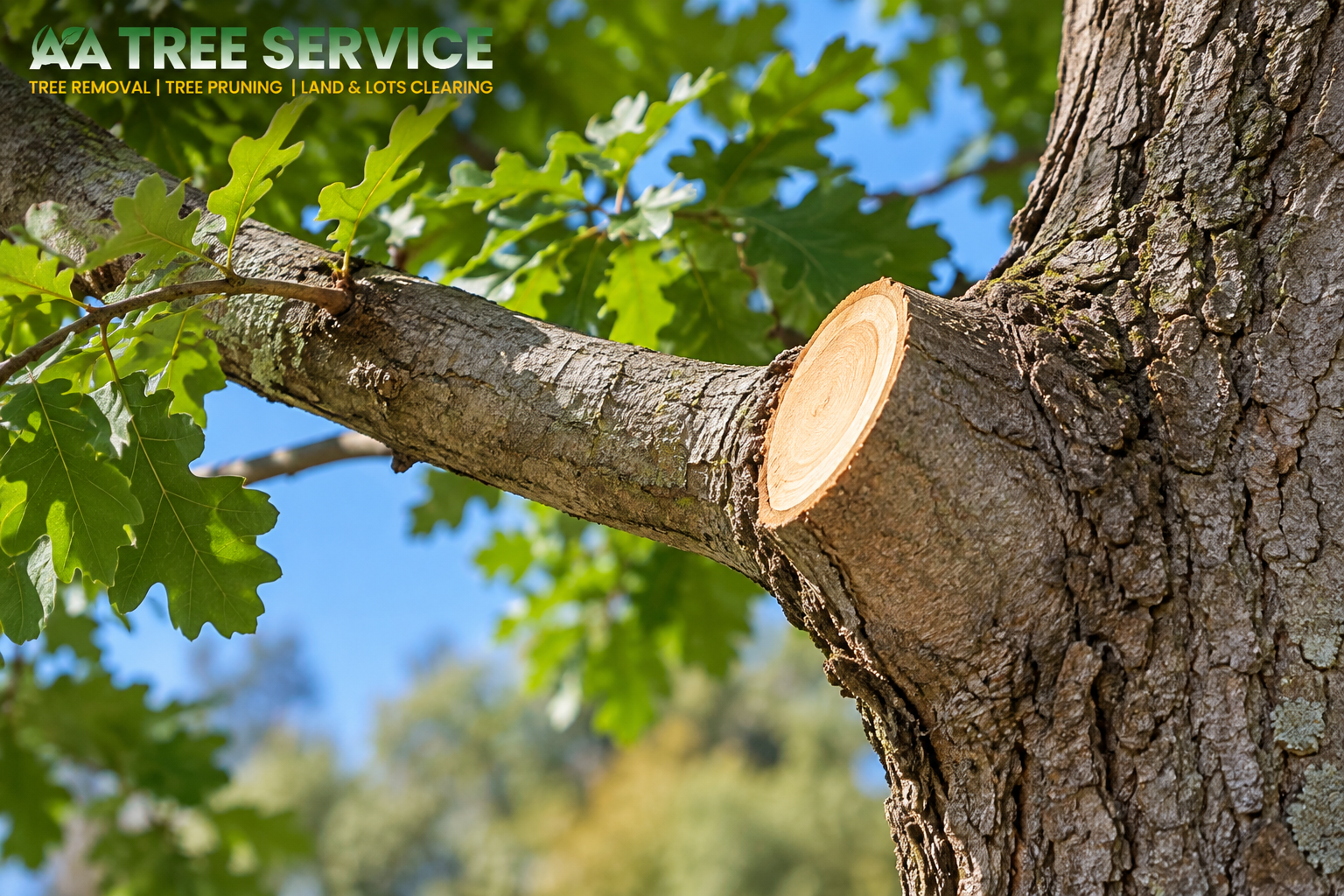
Cut back only to a side branch at least one-third (ideally one-half) the diameter of the limb removed, so it can take over.
The canopy limit
Never remove more than a quarter of the live canopy in one season. Big reductions are staged over years.
The three-cut method
Undercut, relief cut, then the final clean cut, so a heavy limb can't tear bark down the trunk.
How We Do It
- Remove the deadwood first. Dead, dying, diseased, and damaged branches come out before any shaping.
- Map the new outline. We identify every limb extending past the target height and spread.
- Cut to laterals. Each one is shortened back to a healthy side branch that meets the one-third rule, cut just outside the branch collar.
- Stay inside the limit. The total stays under 25% of the live crown. If the tree needs more, we schedule a second stage.
- Protect what's below. Heavy sections are rigged and lowered, never dropped onto the lawn, roof, or fence.
Timing, and the Trees That Benefit Most
Crown reduction is scheduled for the dormant season, late fall through winter. Bare branches make the structure easy to read, cuts close fast before spring growth, and insects and fungi are inactive. Oaks follow a stricter rule: dormant season only, because growing-season cuts attract the beetles that spread oak wilt. Our MA & NH pruning calendar lays out the window for every species.
The usual candidates in Massachusetts and New Hampshire are mature oaks and maples whose limbs have reached over a roof, tall pines that have become a sail in nor'easter winds, and any large tree planted too close to the house decades ago. Reduction is also a frequent recommendation after a tree risk assessment flags an overextended limb, and it pairs well with cabling and bracing on a tree worth keeping.
What Crown Reduction Costs
Pricing depends on the tree's size, how much needs to come off, how many stages it takes, and how hard it is to reach. Because every tree is different, every job is quoted after an on-site inspection. Request a free estimate and an arborist will look at the tree, explain exactly what we'd cut and why, and give you a firm number. Reduction is almost always far less than removing and replacing a mature tree, which is one more reason to do it right the first time. See our full pruning & trimming service.
Bring It Down to Size, the Right Way
Free same-day estimates across Massachusetts & New Hampshire. We'll reduce the crown to healthy laterals and keep the tree you love, no topping, ever.
Why Choose AA Tree Service?
Choose AA Tree Service for expert care, professionalism, and dependable service. We prune to ANSI A300 standards and never top a tree, so your trees stay healthy, safe, and good-looking for decades.
With experienced technicians, advanced equipment, and a commitment to safety, we deliver high-quality results on every project.
REQUEST A FREE ESTIMATELicensed & Insured
A fully licensed and insured company.
We Never Top Trees
Proper reduction cuts only.
Over 20 Years' Experience
Two decades serving MA & NH.
Locally Owned
A proud, locally owned company.
Certified Arborists
Every cut planned, not guessed.
Free Same-Day Quotes
Know where you stand fast.