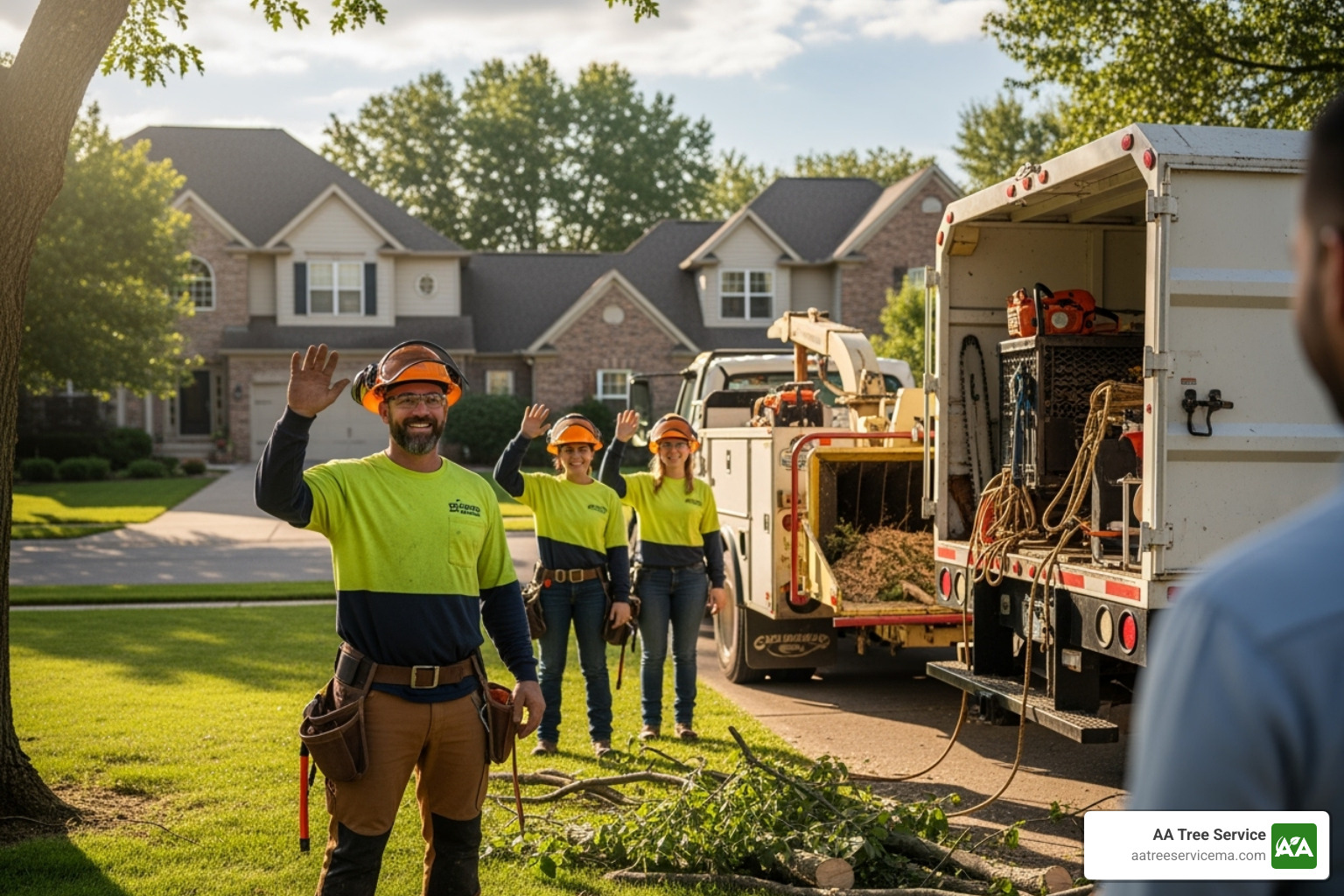
Why Professional Tree Removal Matters for Your Hampstead Property
Tree Removal Hampstead is a critical service for maintaining the safety, beauty, and value of your property. In a town known for its lush, wooded landscapes, trees are a defining feature, but they also present unique challenges. Addressing safety hazards, mitigating property damage risks, or managing declining tree health requires expertise. Whether you’re dealing with the aftermath of a Nor’easter, a tree that’s leaning precariously toward your home, or simply need to clear space for a new project, understanding the professional process is the key to a successful and safe outcome.
Quick Guide: Tree Removal in Hampstead, NH:
- Safety Hazards: Dead or broken branches (widowmakers), significant leaning, visible decay, and trees growing too close to power lines are all urgent concerns.
- Average Costs: Based on internet data, standard removal can range from $243 to over $1,900, with an average emergency service cost of around $959. Costs are highly variable.
- Local Requirements: Always check with the Hampstead municipal government and any applicable Homeowners Association (HOA) for permit requirements before any work begins.
- Key Services: A full-service company offers tree felling, technical rigging and dismantling, stump grinding, comprehensive debris removal, and 24/7 emergency response.
- What to Look For: Prioritize licensed and fully insured companies that use state-of-the-art equipment and adhere to strict safety protocols (ANSI Z133 standards).
Trees in Hampstead, with an average height of 52 feet and common species like the towering eastern white pine, sturdy red maple, and graceful eastern hemlock, are magnificent assets. However, their size and proximity to homes mean they can become significant liabilities when diseased, damaged, or poorly located.
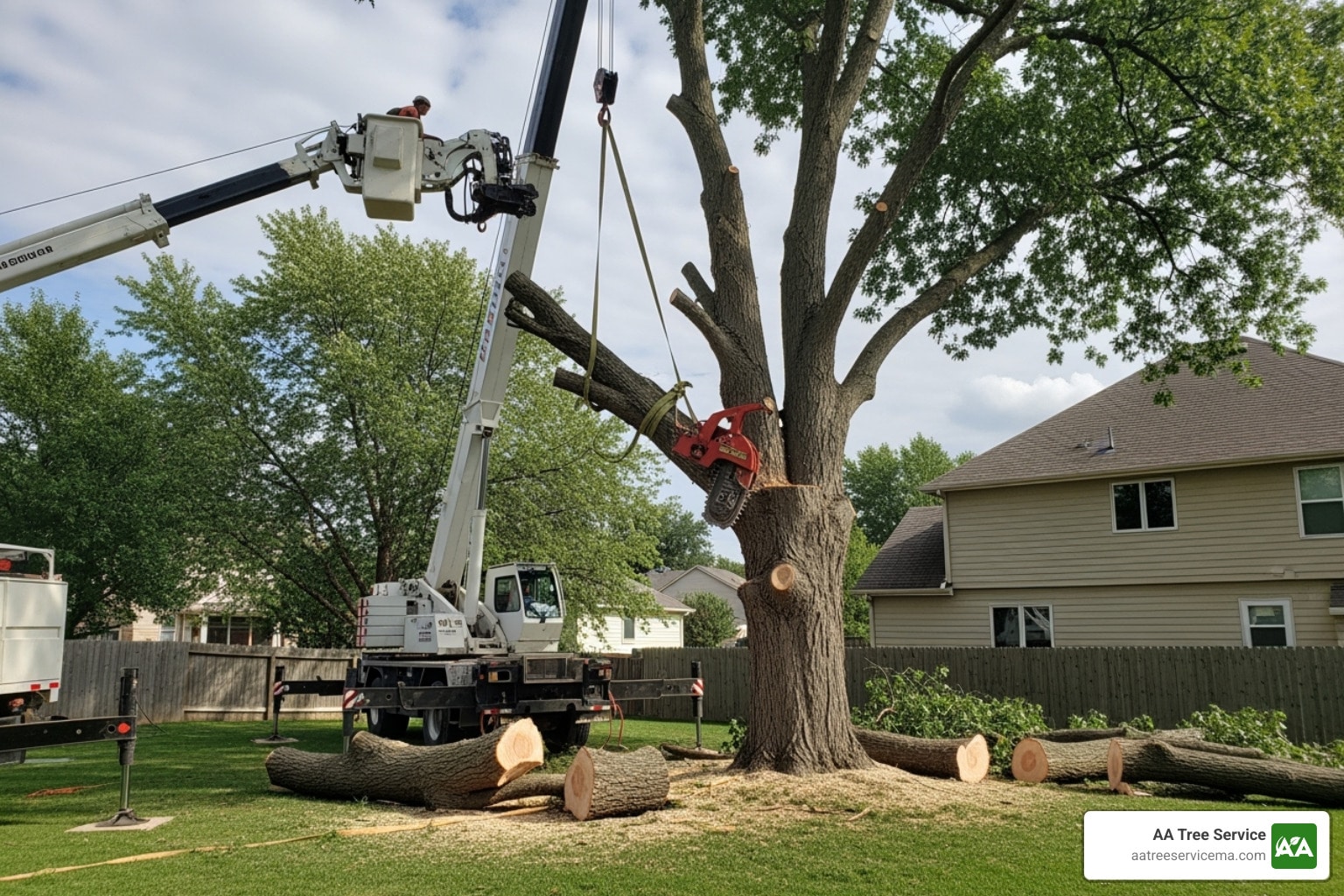
DIY tree removal is consistently ranked as one of the most hazardous homeowner activities. The risks are immense and often underestimated. Without professional-grade equipment, extensive training in cutting techniques, and comprehensive insurance, you expose yourself to the risk of catastrophic injury, fatality, or devastating property damage. Professionals utilize specialized gear like aerial bucket trucks for safe access, industrial-grade chippers for efficient debris processing, and cranes for removing trees from inaccessible or high-risk locations—tools and expertise that are simply unavailable to the average homeowner. This guide is designed to walk you through every step, from recognizing the first warning signs of a problem tree to understanding costs, navigating regulations, and choosing a reputable service provider in the Hampstead area.
When to Consider Tree Removal: 7 Telltale Signs
Knowing when a tree has transitioned from an asset to a liability isn’t always obvious. While a tree split by lightning is a clear-cut case, many other warning signs are subtle and develop over time. Ignoring these indicators can lead to sudden failure, resulting in expensive property damage or, worse, serious injury. If you suspect a problem with a tree on your Hampstead property, a professional evaluation from a certified arborist is always the safest and most prudent course of action.
Here are seven key warning signs that it might be time for Tree Removal Hampstead services:
- Dead or Dying Branches: Large, dead branches, often called “widowmakers,” are a significant hazard. If more than 25-30% of the tree’s canopy is bare, brittle, or discolored during the growing season, it points to serious health issues. These dead limbs can snap and fall without warning, and the decay they harbor can spread into the main trunk, compromising the entire tree.
- A Significant Lean: Many trees have a natural lean towards sunlight, but a sudden or dramatic change in lean is an emergency signal. Look for heaving soil and exposed roots on the side opposite the lean; this indicates a failing root system that can no longer support the tree’s weight. Trees leaning more than 15 degrees from vertical are often considered high-risk.
- Trunk Damage or Decay: The trunk is the tree’s backbone. Deep cracks (especially vertical ones), large cavities, sections of missing bark (cankers), or areas of soft, crumbling wood are all red flags. The presence of fungi, like shelf or bracket mushrooms growing on the trunk, is a strong external indicator of extensive internal rot. An arborist can perform a sounding test to assess the extent of the decay.
- Root System Issues: Problems below ground are just as dangerous as those above. Look for soil mounding or heaving around the base of the tree, which can signal root decay or failure. Exposed roots that are decaying or damaged by construction can destabilize the tree. Furthermore, aggressive roots cracking foundations, driveways, or septic systems are not just a nuisance; they indicate the tree is too close to infrastructure and may require removal to prevent further damage.
- Pest Infestation: While some insects are harmless, others can be a death sentence for a tree. In New Hampshire, pests like the emerald ash borer can kill an ash tree in just a few years. Carpenter ants don’t eat wood, but they excavate galleries in moist, decaying wood, signaling and accelerating structural weakness. Look for evidence like small D-shaped exit holes, unusual patterns of woodpecker activity, or piles of sawdust-like frass at the tree’s base.
- Proximity to Structures or Utilities: A tree that was perfectly placed 20 years ago may now be a major hazard. Branches overhanging or scraping your roof can cause significant shingle damage and create moisture problems. Trees growing too close to power lines are a serious electrocution and fire hazard that must be addressed by professionals. A tree that could fall on your home, garage, or a neighbor’s property is a liability waiting for a storm to happen.
- Storm Damage: New England weather is tough on trees. After a severe storm with high winds, heavy snow, or ice, a tree can sustain hidden damage. A lightning strike can create a long, vertical wound and fry the tree’s vascular system. A partial trunk split or a twisted canopy might indicate structural compromises that aren’t immediately obvious but could lead to failure weeks or months later. A post-storm inspection is always a wise investment.
If you notice any of these signs, it’s time to contact Hazardous Tree Removal Experts. Catching problems early is the best way to prevent them from becoming catastrophes.
What are the Common Reasons for Tree Removal in Hampstead?
Beyond these urgent warning signs, Hampstead homeowners often choose to remove trees for several practical reasons. Safety hazards remain the top concern, as dead, damaged, or structurally unsound trees pose an unacceptable threat to people and property. Irreversible health decline due to advanced disease or pest infestation also necessitates removal, not only for the sick tree but to prevent the spread to other healthy plants on your property.
Many removals are performed to clear space for construction or landscaping projects, such as a new home addition, a swimming pool, a driveway, or creating a sunny area for a garden. Finally, trees are sometimes removed for aesthetic or quality-of-life improvements, like opening up a scenic view, increasing natural light inside the home, or to prevent future property damage from aggressive root systems or constantly shedding branches.
The Professional Tree Removal Hampstead Process from Start to Finish
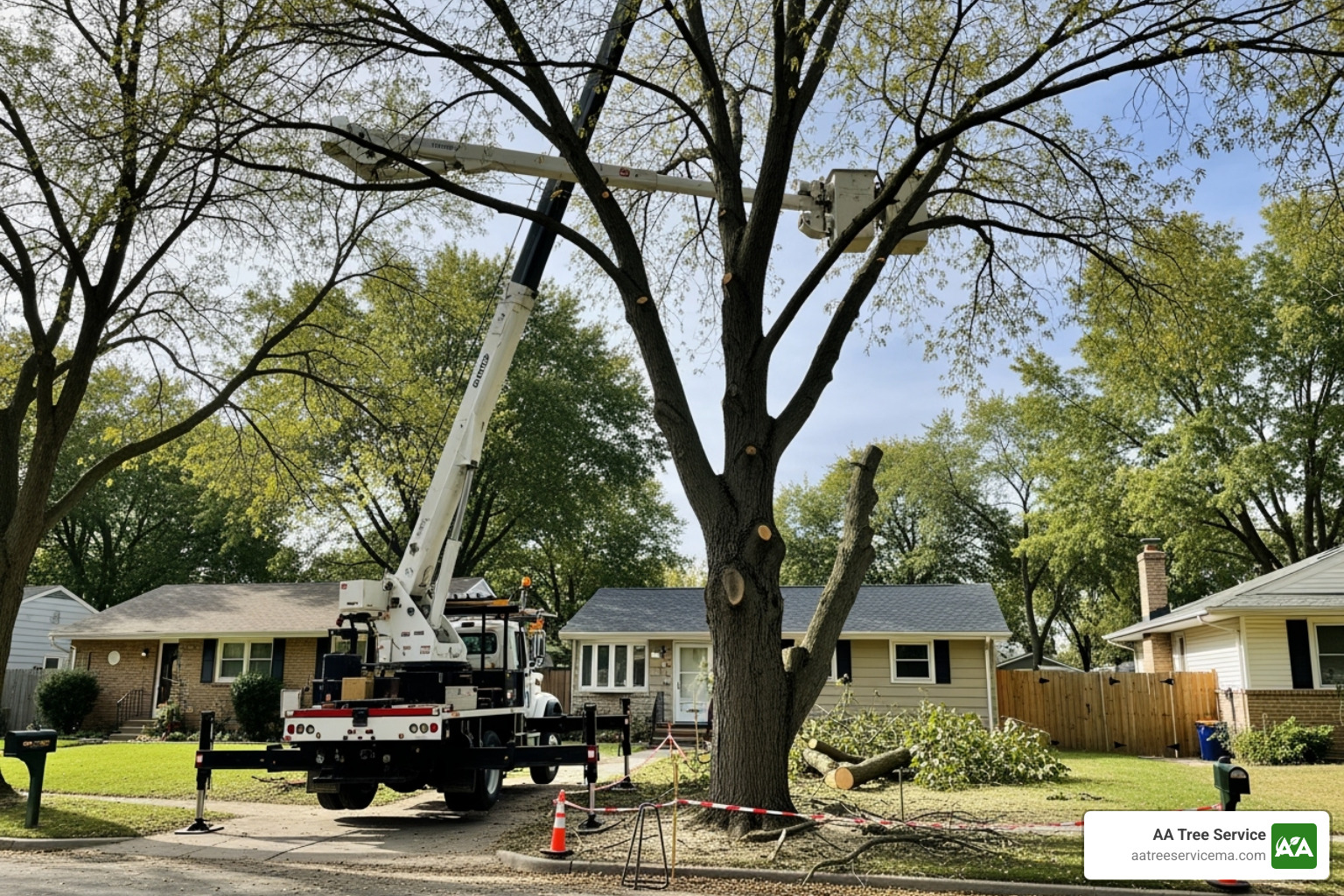
When you choose a seasoned professional like AA Tree Service for tree removal in Hampstead, our 20 years of experience ensures a process that is safe, efficient, and transparent from beginning to end. We understand that this can be a stressful event for a homeowner, so we prioritize clear communication and meticulous execution.
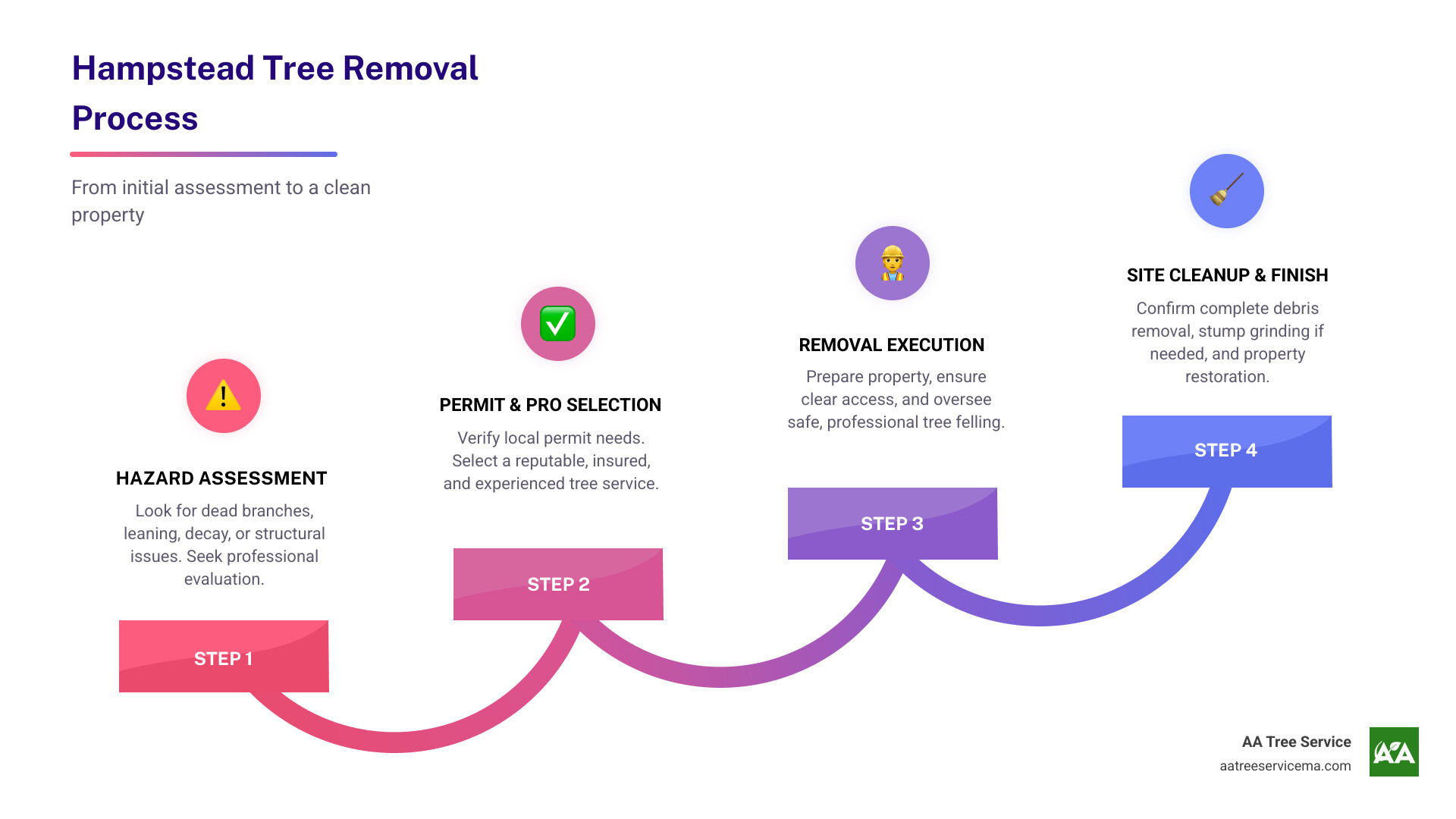
- Initial Consultation & Free Quote: The process begins when you contact us. We schedule a visit to your property where a certified arborist will conduct a thorough evaluation. We assess the tree’s species, size, health, and structural integrity, while carefully analyzing its location relative to your home, power lines, landscaping, and other obstacles. Based on this detailed assessment, we provide a free, itemized quote with no hidden fees, outlining the exact scope of work, the equipment needed, and the total cost.
- Property Preparation and Safety Briefing: Before our crew arrives, we’ll provide a checklist to help you prepare the work zone. This includes clearing the area of vehicles, patio furniture, grills, and any other movable items. On the day of the removal, our crew leader will conduct an on-site safety briefing, review the plan with you, and establish a secure work zone to ensure the safety of your family and our team. Securing pets indoors is also essential.
- Safe Tree Felling and Dismantling: Our certified crew employs industry-leading techniques and specialized equipment. For trees in open areas, traditional felling may be possible. However, for most residential jobs in Hampstead, we use a process called technical rigging. A skilled climber ascends the tree, carefully cutting it into manageable sections from the top down. Each piece is then safely lowered to the ground using a system of ropes and pulleys, controlled by our experienced ground crew. For the most complex removals over houses or in tight spaces, we may utilize a crane to lift sections up and away, guaranteeing no impact on your property.
- Debris Removal & Meticulous Cleanup: After the tree is safely on the ground, our Tree Debris Removal Service begins. All branches and limbs are processed through an industrial-grade wood chipper. Depending on your preference, we can haul everything away, leave the wood chips for you to use as landscape mulch, or cut the larger trunk sections into firewood-length logs. Our job isn’t finished until your property is spotless. We rake the area, use leaf blowers to clear sawdust and small debris from your lawn and driveway, and leave your property looking clean and tidy.
Comprehensive Tree Services You Might Need
Tree removal is often just one component of comprehensive property management. We offer a full suite of services to meet all your needs:
- Full Tree Removal: The complete and safe extraction of dead, diseased, hazardous, or unwanted trees of any size or location.
- Emergency Tree Removal Service: Our 24/7 rapid response team is always ready for trees that have fallen on structures or are posing an immediate threat after a storm.
- Stump Grinding: We use powerful stump grinders to chew the stump down 6-12 inches below ground level, eliminating tripping hazards and allowing you to plant grass or a small garden in its place.
- Tree Stump Removal Service: For situations requiring complete root ball extraction, such as before new construction or paving, we can fully excavate the stump and major root sections.
- Lot Clearing: We provide large-scale removal of trees, stumps, and brush to efficiently prepare your land for new construction, development, or landscaping projects.
- Storm Cleanup Services: Our crews are experts in the complex and often dangerous work of safely removing fallen trees and scattered debris to help you recover quickly after severe weather.
How to Prepare Your Property for Tree Removal Hampstead
A little preparation goes a long way in helping our crew work safely and efficiently, saving time and ensuring a smooth process.
- Clear the Area: Move all vehicles from the driveway and street in front of your house. Relocate patio furniture, planters, garden gnomes, and children’s toys from the work zone and the access path.
- Secure Pets and Inform Family: For their safety, please keep all pets indoors for the duration of the job. Ensure children and other family members understand the work zone is off-limits.
- Provide Clear Access: Unlock any gates and ensure our trucks, chipper, and other equipment have a clear, unobstructed path from the street to the tree.
- Communicate with Neighbors: If the tree is close to a property line, it’s a good courtesy to let your neighbor know about the scheduled work, especially if we may need brief access to their property.
- Discuss Plans for the Wood: Let us know beforehand if you want to keep the firewood or have the branches chipped into mulch. This helps us plan our workflow and cleanup.
- Ask Questions: We are here to help. We encourage you to ask any questions you have before, during, or after the job so you have complete confidence in the process.
Understanding Costs and Regulations in Hampstead, NH

Planning for Tree Removal Hampstead requires a clear understanding of both the potential costs and the local rules that govern the process. Being well-informed from the start can save you from unexpected expenses and legal headaches down the road.
What Impacts the Cost of Tree Removal?
The price of tree removal is not one-size-fits-all; it’s a tailored quote based on the specific challenges of your job. Several key factors influence the final price:
- Tree Size and Height: This is the most significant factor. A towering 80-foot eastern white pine requires far more time, labor, and risk management than a 25-foot decorative maple. Taller trees necessitate skilled climbers or expensive equipment like bucket trucks, and they produce a much larger volume of debris to be handled.
- Location and Accessibility: Where the tree is located on your property is critical. A tree in an open front yard with easy street access is the simplest scenario. A tree in a fenced backyard, wedged between your house and a garage, overhanging a swimming pool, or entangled in power lines, is a complex, high-risk job. These situations require intricate rigging, extra caution, and often the use of a crane, which can significantly increase the cost.
- Tree’s Condition: A healthy, strong tree is predictable to work on. A dead, decaying, or storm-damaged tree is the opposite. The wood can be brittle and unstable, making it unsafe for a climber and requiring a more cautious, piece-by-piece approach, often with a bucket truck. This added risk and specialized methodology translate to a higher cost.
- Debris and Stump Removal: The base price typically includes felling the tree. What happens afterward affects the cost. Hauling away all wood and debris is the most comprehensive and costly option. Leaving the wood cut into logs for your use will reduce the price. Opting for stump grinding is an additional service with its own cost, which also varies based on the stump’s size and accessibility. For a precise, personalized quote, it’s essential to request a Tree Removal Cost Estimate.
Average Cost of Tree Removal Hampstead
Please note these figures are general estimates based on aggregated internet data and are not actual quotes from AA Tree Service. Prices vary widely based on the specific factors mentioned above. The only way to determine your exact cost is through a professional on-site assessment.
| Service Type | Average Cost (Internet Data) | Typical Range (Internet Data) | Potential High End (Complex Jobs) |
|---|---|---|---|
| Standard Tree Removal | $641 | $243 – $1,025 | Over $1,900 |
| Emergency Tree Removal | $959 | $400 – $1,500 | Over $2,800 |
| Stump Removal (Grinding) | $197 | $100 – $360 | Over $600 |
A “standard” removal might be a medium-sized tree in an accessible yard, while a “complex” job could involve a massive, hazardous tree over a house requiring a crane. Emergency services command a premium due to the immediate response time, after-hours labor, and the inherent dangers of working in post-storm conditions.
Local Regulations and Permits
Before you cut down a tree, you must check local rules. In Hampstead, NH, your first step should always be to contact the town hall or the relevant municipal department to inquire about permit requirements. Regulations can be based on the tree’s size (diameter), species, or location (e.g., within a certain distance of a road, wetland, or property line). It’s the homeowner’s responsibility to secure any necessary permits. Asking first is a simple step that can help you avoid potential fines and stop-work orders. Additionally, if your property is part of a Homeowners Association (HOA), be sure to review your covenants, as they may have their own rules regarding tree removal.
New Hampshire does not have a statewide licensing system for arborists or tree companies, which makes your due diligence even more critical. You must hire an experienced, insured professional to protect yourself. While we are not aware of any specific tree subsidy programs in Hampstead, it’s always worth asking the town about any local initiatives. For general information, resources like the Tree Maintenance Information | Town of Arlington can offer useful context, but remember to always verify the rules specific to Hampstead.
How to Choose a Reputable Tree Service Company
Choosing the right company for Tree Removal Hampstead is the most important decision you’ll make in this process. It’s a choice that directly impacts the safety of your family, the integrity of your property, and your financial protection. Here’s a detailed guide on how to identify a true professional and avoid unqualified operators.

- Verify Insurance (Non-Negotiable): This is the absolute first question you should ask. A reputable company must carry two types of insurance: general liability (to cover any damage to your property) and workers’ compensation (to cover their employees if they get injured on your property). Ask for a certificate of insurance and call the insurance provider to verify that the policy is current. If you hire a company without workers’ comp and an employee is injured, you could be held personally liable for their medical bills and lost wages.
- Check Experience, Credentials, and Reviews: Experience is paramount in an industry where every job is unique and potentially dangerous. A company with decades in the business, like our 20+ years, has encountered and successfully managed nearly every scenario. Look for credentials like certification from the International Society of Arboriculture (ISA). An ISA Certified Arborist has passed an extensive exam and must maintain their certification with ongoing education. Finally, read online reviews from local customers in and around Hampstead. Look for consistent mentions of safety, professionalism, communication, and thorough cleanup.
- Request Detailed Written Quotes: Never accept a verbal quote or a price scribbled on the back of a business card. A professional quote is a detailed document that itemizes the exact scope of work: which trees are to be removed, whether stump grinding is included, how debris will be handled, and the total cost. Compare quotes from several companies, but don’t automatically choose the lowest bidder. An unusually low bid can be a red flag for a lack of insurance, proper equipment, or experience.
- Evaluate Safety Protocols: A professional company puts safety above all else. Ask about their safety procedures. Do they use personal protective equipment (PPE) like helmets, safety glasses, and chainsaw-resistant chaps? Do they hold safety meetings before starting a job? A crew that prioritizes the safety of its workers is a crew that will also prioritize the safety of your property.
- Choose a Local Tree Service Company: A local company has a vested interest in maintaining a strong reputation within the community. They are familiar with Hampstead’s common tree species, local pests and diseases, and municipal regulations. Their proximity also means they can provide faster service, especially in an emergency.
The Dangers of DIY Tree Removal
The temptation to save money by attempting tree removal yourself is powerful, but it is a dangerously misguided impulse. Tree work is recognized as one of the most hazardous occupations in the country, even for trained professionals. For an amateur, the risks are astronomical.
- Lack of Proper Equipment and Training: A homeowner’s chainsaw is no match for a large tree. Professionals use powerful, well-maintained saws and are extensively trained in advanced cutting techniques (like the hinge cut) to control the direction of the fall. They also use rigging, ropes, and heavy machinery like bucket trucks or cranes that require certified operators.
- High Risk of Severe Injury or Fatality: The potential for disaster is high. Chainsaw kickback can cause horrific facial injuries. Falls from unstable ladders are common. Electrocution from unseen power lines within the canopy is a fatal risk. And the most common danger is being struck by the falling tree or by heavy, detached limbs—an impact that is often deadly.
- Potential for Massive and Costly Property Damage: Trees are deceptively heavy; a medium-sized oak can weigh several tons. Misjudging the fall path by just a few feet can send thousands of pounds of wood crashing into your house, your car, or your neighbor’s property. The resulting damage will almost certainly cost far more to repair than the price of professional removal.
- Hidden Structural Weaknesses: A tree can look perfectly healthy on the outside while being dangerously rotten on the inside. Only a trained arborist can identify subtle signs of internal decay, disease, or structural instability. Attempting to cut a compromised tree without this knowledge is like trying to defuse a bomb without a manual—the tree can split, twist, or collapse in completely unpredictable ways.
For any Tree Removal Hampstead project, the choice is clear: trust the professionals. Your safety, your home, and your financial well-being are far too important to risk.
Frequently Asked Questions About Hampstead Tree Services
Here are detailed answers to some of the most common questions we hear from homeowners considering Tree Removal Hampstead.
What happens to the wood after a tree is removed?
You have several excellent options, and the choice is entirely yours. We will discuss your preference during the initial consultation to include it in the work plan.
- Keep for Firewood: Many homeowners choose to keep the larger trunk and limb sections for firewood. We can cut these pieces into manageable lengths (typically 16-24 inches) and stack them neatly on your property. Keep in mind that this wood will need to be seasoned (left to dry) for at least a year before it will burn efficiently.
- Create Garden Mulch: If you’re a gardener, we can process all the smaller branches through our industrial wood chipper to create a pile of fresh wood chips. This organic mulch is perfect for use around garden beds and trees to retain soil moisture, suppress weeds, and regulate soil temperature.
- Complete Hauling Service: If you prefer a completely hands-off approach, we can haul everything away. All logs, branches, and chips will be loaded and removed from your property, which is then raked and blown clean. This is the most convenient option, leaving you with nothing but a clear, usable space.
As a pro tip, if you keep firewood, avoid stacking it directly against your house, as this can attract pests like termites and carpenter ants.
What are the most common trees in Hampstead, NH?
Hampstead’s beautiful New England landscape features a variety of native trees, each with its own characteristics and potential issues.
- Eastern Hemlock: A graceful evergreen with soft, feathery needles. While beautiful, it is highly susceptible to the hemlock woolly adelgid, an invasive insect that can kill the tree over several years. They prefer moist, cool sites.
- Red Maple: Famous for its brilliant red fall foliage, the red maple is a fast-growing tree. However, its rapid growth can sometimes lead to weaker wood and branch structures, making it more prone to damage in ice storms and high winds.
- Eastern White Pine: As New Hampshire’s state tree, this tall, majestic conifer is a local icon. Its height makes it a potential target for lightning strikes, and its long branches can carry a heavy load of snow, leading to breakage.
Local data indicates that trees in Hampstead average 52 feet in height and 27 years in age. The size and maturity of these common species often mean that their removal is a complex job requiring professional expertise and heavy equipment.
Do I need to be home during the tree removal service?
While you are not required to be present for the entire duration of the job, we highly recommend being home at two key moments: the beginning and the end.
- At the Start: Being there when the crew arrives allows you to do a final walkthrough with the crew leader. You can confirm the exact trees and branches to be removed, point out any specific concerns like sprinkler heads or delicate plants, and ask any last-minute questions.
- At the End: Once the work is complete, being available for a final inspection ensures you are 100% satisfied with the removal and the cleanup before our crew departs. If you absolutely cannot be home, we can make arrangements to proceed as long as we have clear instructions, signed approval, and full access to the property. Our 24/7 emergency services often operate this way out of necessity. Learn more about our flexible approach at Tree Services in Hampstead NH.
Can my sick tree be saved, or does it have to be removed?
This is an excellent question. Removal is always a last resort. As certified arborists, our primary goal is to preserve healthy trees whenever possible. During our initial consultation, we will thoroughly assess the tree’s condition to determine if it can be saved. Viable alternatives to removal can include:
- Pruning: Removing dead, diseased, or weak limbs can often improve a tree’s health and structure.
- Cabling and Bracing: For trees with weak branch unions or splits, installing cables in the canopy or braces on the trunk can provide structural support.
- Disease/Pest Management: Depending on the issue, treatments like insecticidal applications or fungicides may be effective.
If the tree is more than 50% damaged, has a significant structural defect, or is suffering from an untreatable condition, removal is often the only safe and responsible option.
Your Next Steps for a Safer Hampstead Property
This guide has walked you through the critical aspects of Tree Removal Hampstead, from identifying the telltale warning signs like dead branches and trunk decay to understanding the professional removal process, cost factors, and local regulations. We’ve detailed how to choose a reputable, insured company and highlighted the immense dangers of treating this as a DIY project.
We cannot stress this enough: professional tree removal is an investment in your safety and the protection of your property. The risks associated with amateur work—severe injury, property damage, and financial liability—are simply too high. A professional service brings the experience, specialized equipment, and crucial insurance coverage needed to manage the job safely and efficiently, giving you complete peace of mind.
If you have a tree on your Hampstead property that is causing you concern, now is the time to act. Procrastination only allows the problem to become more hazardous and potentially more expensive to resolve. Don’t wait for the next storm to turn a problem tree into a full-blown disaster.
AA Tree Service has been a trusted partner to homeowners in New Hampshire and Massachusetts for over 20 years. Our dedicated team is available 24/7 for emergencies, because we know that tree hazards don’t operate on a 9-to-5 schedule. We make the process of getting expert help straightforward and stress-free:
- Contact Us: Call us or fill out our online form to schedule a consultation. Let us know your concerns and a convenient time for us to visit.
- Receive a Free, No-Obligation Quote: Our arborist will perform a thorough on-site assessment of your tree and property, then provide you with a detailed, free same-day quote.
- Get Your Questions Answered: We will take the time to explain our findings, our recommended course of action, and answer every question you have so you can make an informed decision.
Don’t let a hazardous tree cast a shadow of worry over your home. Whether you need a routine removal for a declining tree, an emergency cleanup after a storm, or expert stump grinding to reclaim your yard, we are here to help you create a safer, more beautiful property.
Ready to take the next step toward peace of mind? Visit our Tree Services in Hampstead NH page or contact us directly today for your free quote.