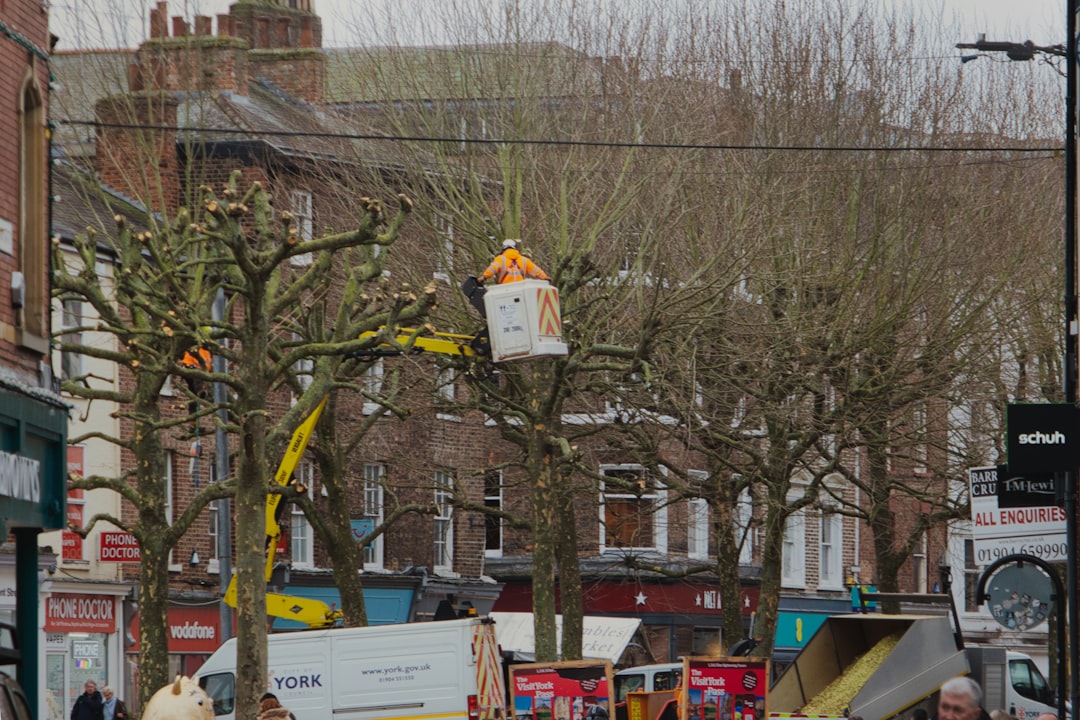
Why Finding the Right Tree Surgeon Matters for Your Property
Finding a qualified tree surgeon local to me is one of the most critical decisions a homeowner can make for their property’s safety, value, and aesthetic appeal. Trees are magnificent living assets, but when they are unhealthy, damaged, or overgrown, they transform into significant liabilities. Understanding the difference between a professional arborist and an unqualified individual with a chainsaw can save you from costly damage, legal trouble, and potential tragedy.
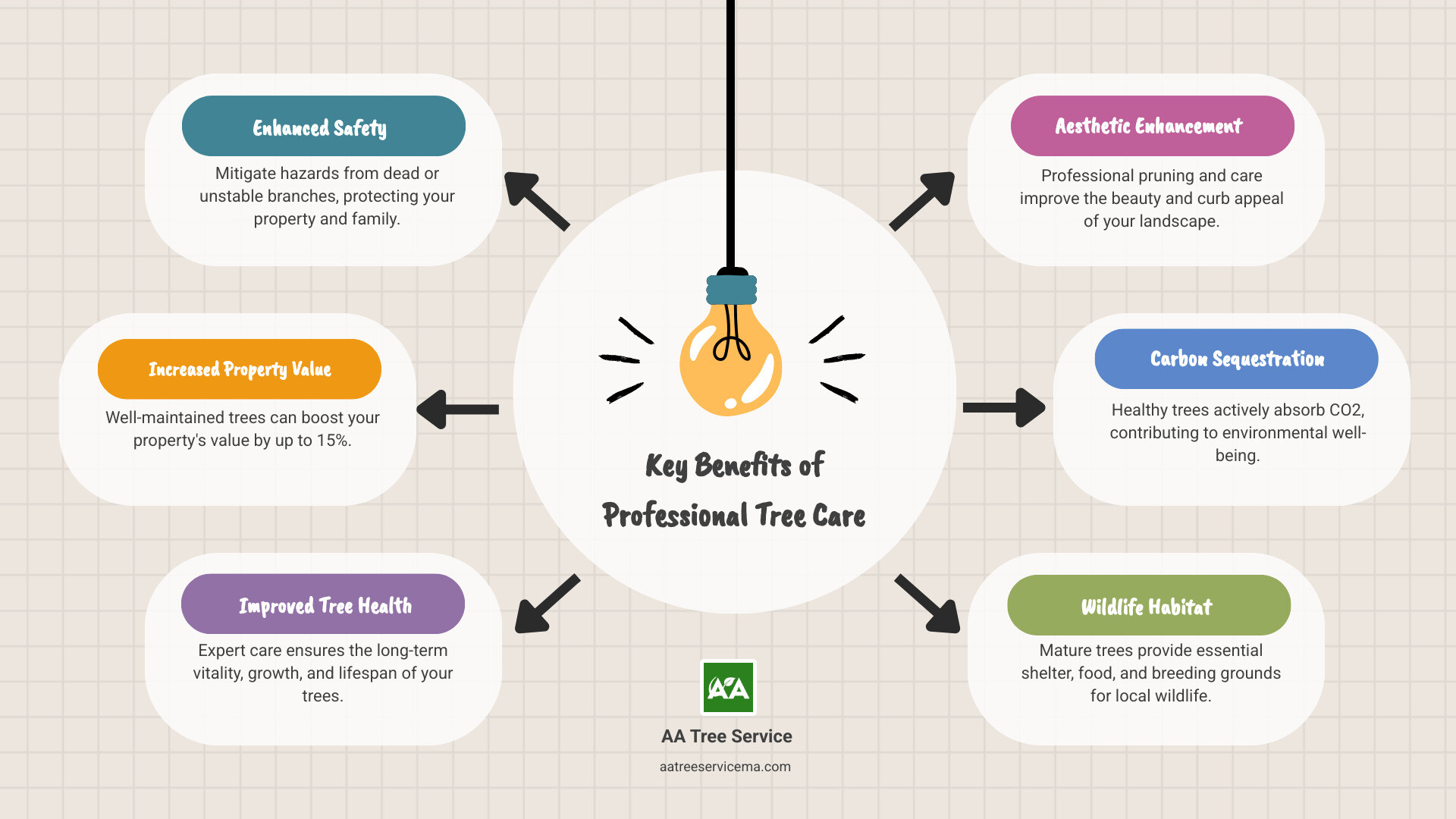
Well-maintained trees are proven to increase property value by as much as 15%. They provide shade that can lower summer cooling costs, offer a habitat for wildlife, and create a beautiful, mature landscape. However, the opposite is also true. A neglected tree with dead or hanging branches is a constant threat, especially during the powerful storms common in Massachusetts and New Hampshire. These limbs can fall on your home, vehicles, or worse, a person. Furthermore, diseased trees can spread pathogens to other healthy plants on your property, while invasive root systems can crack foundations, disrupt sewer lines, and destroy driveways.
This is where the expertise of a professional tree surgeon becomes indispensable. They do far more than just cut down trees; they are arboricultural experts trained to diagnose, treat, and manage trees to ensure their long-term health and stability. Experienced companies in Massachusetts and New Hampshire bring specialized equipment, rigorous safety protocols, and the deep knowledge required to identify subtle signs of decay or stress before they escalate into full-blown emergencies. Professional tree care is a proactive investment in your property’s safety and beauty, protecting your home, family, and financial well-being.
Quick Guide to Hiring Local Tree Surgeons:
- Essential Services: Look for companies offering a full range of care, including technical tree removal, expert pruning, stump grinding, and 24/7 emergency response.
- Non-Negotiable Qualifications: Prioritize ISA (International Society of Arboriculture) certification, comprehensive insurance ($5M+ liability is a good benchmark), and a long track record of local experience.
- Typical Cost Factors: Prices for removal ($400-$4,000+) and trimming ($250-$1,500+) are influenced by tree size, location, health, and the risks involved.
- Major Red Flags: Immediately dismiss any service with no proof of insurance, unsolicited door-to-door offers, pressure tactics, or bids that seem too good to be true.
- Critical Emergency Signs: Call a professional immediately for fallen trees, large hanging branches, visible storm damage, or a suddenly leaning trunk.
Tree surgeon local to me basics:
What Do Local Tree Surgeons Do? A Guide to Their Services
When you search for a tree surgeon local to me, you’re seeking a highly skilled specialist whose work extends far beyond simple tree cutting. A certified arborist acts as a doctor for your trees, employing a deep understanding of tree biology to diagnose issues and perform precise procedures. Their goal is to preserve your property’s most valuable natural assets, ensuring they remain healthy, safe, and beautiful for decades to come. From routine checkups to complex emergency operations, they possess the right tools, advanced training, and critical experience to manage any situation.
A Detailed Look at Core Arboricultural Services
Professional tree surgeons provide a comprehensive suite of services designed to address every aspect of a tree’s life cycle. While many people associate them with removal, their most valuable work is often in preservation and maintenance.
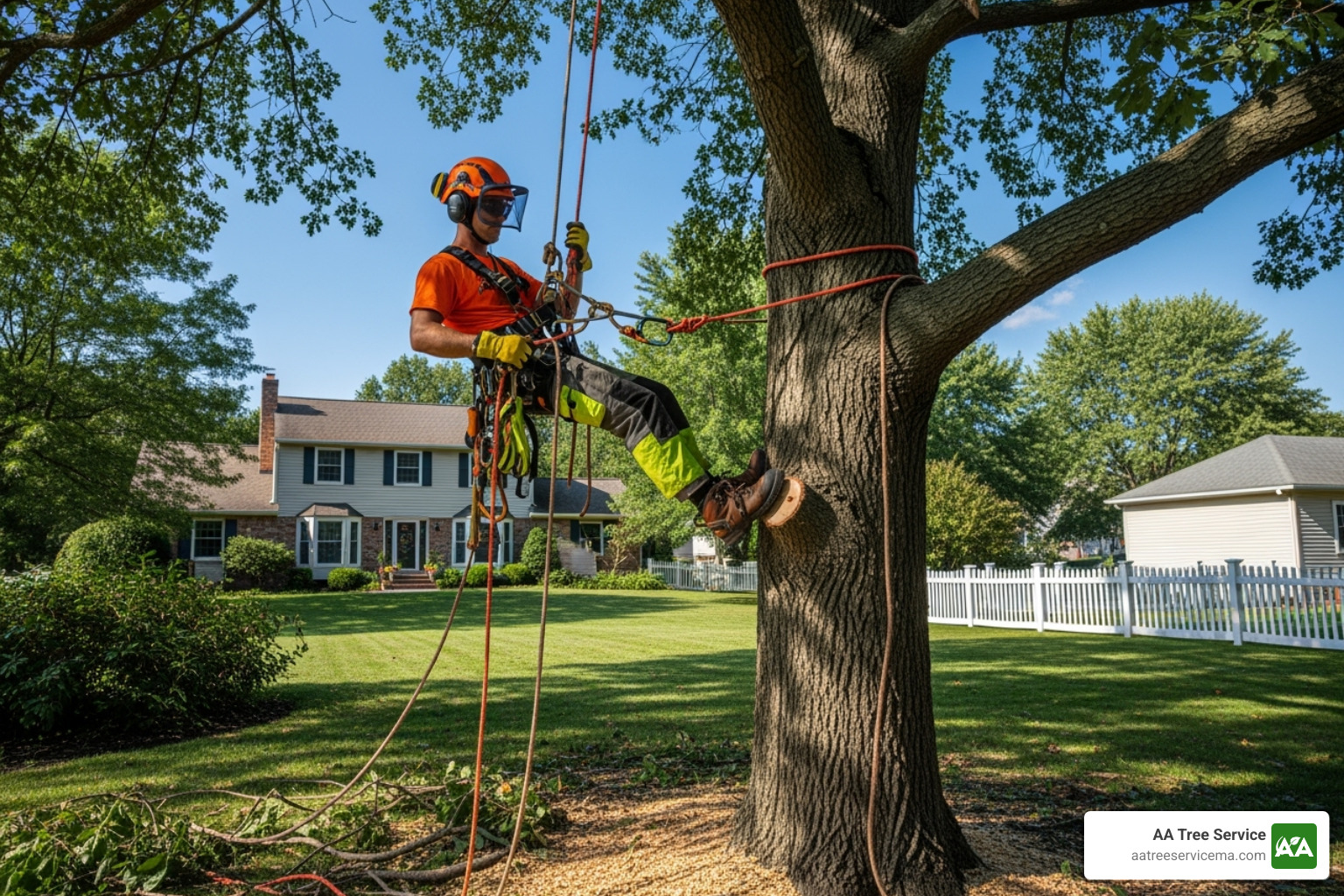
- Technical Tree Removal: This is often a last resort for trees that are dead, dying, or pose an unacceptable risk. A professional surgeon uses specific techniques based on the situation. For trees in open areas, they may use directional felling. More commonly in residential settings, they perform sectional dismantling, where a climber ascends the tree and carefully lowers each branch and section of the trunk with ropes and rigging to avoid damaging your home and landscape. For the most complex jobs over houses or obstacles, crane-assisted removal is used to lift large pieces away safely.
- Expert Pruning and Trimming: Proper pruning is essential for a tree’s health, safety, and aesthetics. It’s a science that goes far beyond simple cutting. Key techniques offered by a professional Tree Pruning and Trimming service include:
- Crown Thinning: Selectively removing branches to increase light penetration and air circulation, which can reduce the risk of disease.
- Crown Lifting: Removing lower branches to provide clearance for buildings, vehicles, and pedestrians.
- Crown Reduction: Reducing the overall size of the tree’s canopy while maintaining its natural shape, often done to reduce weight on heavy limbs or to manage a tree that has outgrown its space.
- Deadwooding: The removal of dead, dying, or broken branches, which is a critical safety measure.
- Stump Grinding: After a tree is removed, the stump remains. Stump Grinding Services use a specialized machine to grind the stump and major roots down to well below ground level. This is far less invasive than stump excavation, which involves digging out the entire root ball and leaving a large hole. The resulting wood chips can be used as mulch or to fill the hole, allowing you to plant grass or a new garden bed over the area.
- Disease and Pest Management: Arborists are trained to identify and treat a wide range of tree health issues. In Massachusetts and New Hampshire, this includes threats like the Emerald Ash Borer, Hemlock Woolly Adelgid, Dutch Elm Disease, and various fungal infections. Diagnosis may involve visual inspection or taking samples for analysis. Treatments can include targeted insecticide applications, trunk injections, or soil treatments to improve the tree’s natural defenses.
- Land Clearing: For larger projects, Land Clearing Services prepare entire lots for new construction, yard expansions, or agricultural use. This involves the efficient removal of trees, stumps, and underbrush using heavy machinery like excavators and forestry mulchers.
Signs You Need to Hire a Tree Surgeon Local to Me
Knowing when to call an expert can prevent a minor issue from becoming a major catastrophe. Be vigilant and look for these common warning signs:
- Dead or hanging branches: These are often called “widow-makers” for a reason and can fall at any time.
- A leaning trunk: A sudden or significant lean can indicate root failure or unstable soil.
- Deep cracks or cavities in the bark: These are entry points for disease and indicators of internal structural weakness.
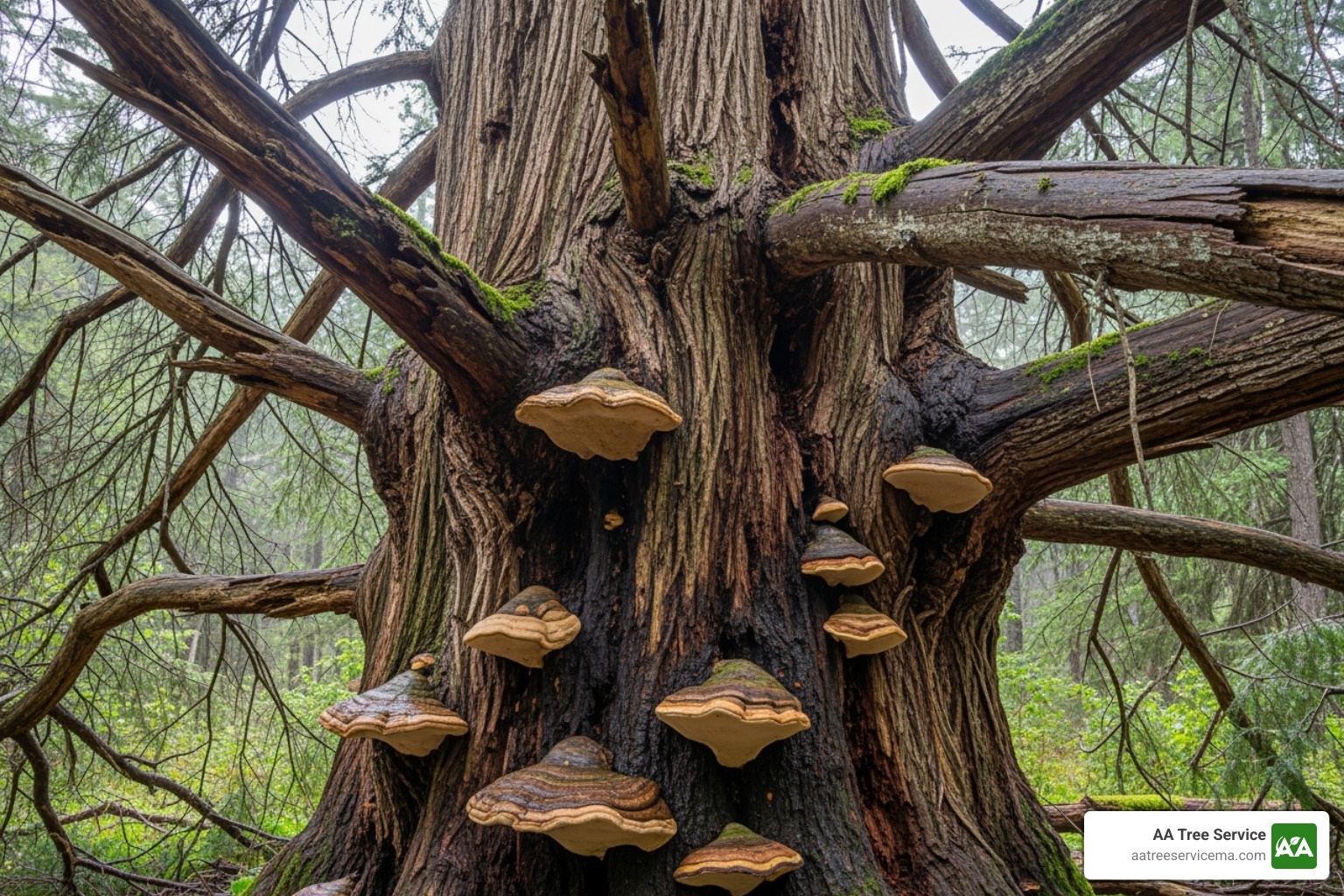
- Fungus or rot: The presence of mushrooms or other fungal growth on the trunk or at the base is a strong sign of internal decay.
- Discolored or premature leaf drop: Yellow or brown leaves during the growing season can point to disease, pest infestation, or root problems.
- Branches growing too close to power lines: This is an extremely hazardous situation that only a qualified professional should handle.
- Heaving soil at the tree base: This suggests the root system is failing and the tree could uproot.
The Long-Term Benefits of Professional Tree Care
Investing in professional tree care offers significant and lasting returns:
- Property Safety: Mitigates the risk of property damage and personal injury from falling limbs or trees.
- Increased Property Value: Healthy, well-placed trees are a major selling point and enhance curb appeal.
- Improved Tree Health: Proactive care extends the lifespan of your valuable trees by addressing problems early.
- Aesthetic Benefits: Expert pruning shapes trees to complement your landscape and improve views.
- Environmental Benefits: Healthy trees are more effective at producing oxygen, managing stormwater runoff, and providing a stable habitat for wildlife.
For comprehensive information, explore more info about tree care services to see how professional care can transform your landscape.
How to Hire the Best Tree Surgeon Local to Me
Finding a qualified, insured, and reliable tree surgeon is the most important step in protecting your property. The industry is unfortunately populated by a mix of true professionals and uninsured, untrained operators. Here’s a detailed guide on what to look for and what to ask to ensure you’re hiring a legitimate expert.
Essential Qualifications and Certifications
When you begin your search for a tree surgeon local to me, your primary focus should be on credentials and experience. A company with decades of experience serving communities in Massachusetts and New Hampshire has a proven track record of handling the region’s specific tree species and weather-related challenges.
Beyond experience, look for professional certifications. These are not just fancy titles; they represent a verified level of expertise. The most important credential for an individual arborist is ISA (International Society of Arboriculture) certification. To become ISA-certified, an arborist must have several years of full-time experience and pass a comprehensive exam covering tree biology, soil science, tree nutrition, pruning standards, safe work practices, and risk assessment. It distinguishes a true tree care professional from someone who simply cuts trees. You can Check for ISA qualifications on their official website. Another valuable credential to look for is TCIA (Tree Care Industry Association) Accreditation for the company itself. This rigorous program vets companies on their ethical business practices, safety programs, and professionalism.
Why Insurance and Liability are Non-Negotiable
Tree work is consistently ranked as one of the most dangerous professions. If you hire a company without proper insurance, you are taking on an enormous financial risk. Should an accident occur, you, the homeowner, could be held liable.
- Worker’s compensation insurance is crucial. If a crew member is injured on your property and the company lacks this coverage, you could be sued for their medical bills and lost wages.
- General liability insurance covers damage to your property or your neighbor’s property. A falling limb can easily crush a roof, a car, or a fence. Reputable services carry at least $5 million in liability coverage to account for the high-value assets in a residential setting.
Do not just take their word for it. Always ask for current certificates of insurance. For maximum protection, request that the certificates be sent to you directly from their insurance agency. This ensures the policy is active and has not been altered.
Your Step-by-Step Hiring Process
- Search and Vet Online: Use specific search terms like “ISA certified arborist in [your town]” or “TCIA accredited tree company near me.” Look at their website for information on their credentials and services.
- Read Reviews Critically: Go beyond the star rating. Read reviews on multiple platforms (Google, Yelp, etc.) and look for patterns. Consistent comments about professionalism, safety, communication, and thorough cleanup are excellent signs. Conversely, repeated complaints about property damage or hidden fees are major red flags.
- Get Multiple, Detailed Quotes: Aim for at least three written estimates. A professional quote is not just a number; it’s a detailed scope of work. It should clearly identify the tree(s), specify the exact work to be done (e.g., “Prune silver maple to ANSI A300 standards, removing deadwood over 2 inches in diameter”), outline the equipment to be used, state how debris will be handled, and provide a firm total cost. Be extremely wary of unusually low bids, as they often signify a lack of insurance or dangerous shortcuts.
- Insist on an On-Site Consultation: A true professional will need to visit your property to assess the tree, the risks, and the site access. This is your opportunity to interview them and gauge their expertise.
- Review the Written Contract: Before any work begins, get a signed contract that mirrors the detailed quote. It should include the total cost, payment terms, and an estimated timeline.
Request a Quote to get started with a professional assessment from a team that checks all these boxes.
Key Questions to Ask a Potential Tree Surgeon
- Can you have your insurance agency send me your current certificates for general liability and worker’s compensation?
- What are your qualifications and certifications (e.g., ISA, TCIA)? Can I see your certification number?
- What safety standards, such as ANSI Z133, does your crew follow?
- Can you provide references from recent jobs in my area?
- What specific equipment will you use for this job, and how will you protect my lawn and property from damage?
- What is the estimated timeline for completion, from start to final cleanup?
- Is complete debris removal and site cleanup (raking, etc.) included in the price?
- Do you offer 24/7 emergency services? (Essential for finding reliable Hazardous Tree Removal Experts)
Understanding Costs, Regulations, and Emergencies
The cost of professional tree work can vary significantly, and it’s important for homeowners to understand the factors that influence pricing, the local rules that govern tree removal, and how to respond in an emergency. This section breaks down these critical components.
What Factors Influence Tree Service Costs?
When you receive a quote from a tree surgeon local to me, the price reflects a careful calculation of labor, risk, and equipment. It’s not an arbitrary number. Here are the primary factors that determine the cost:
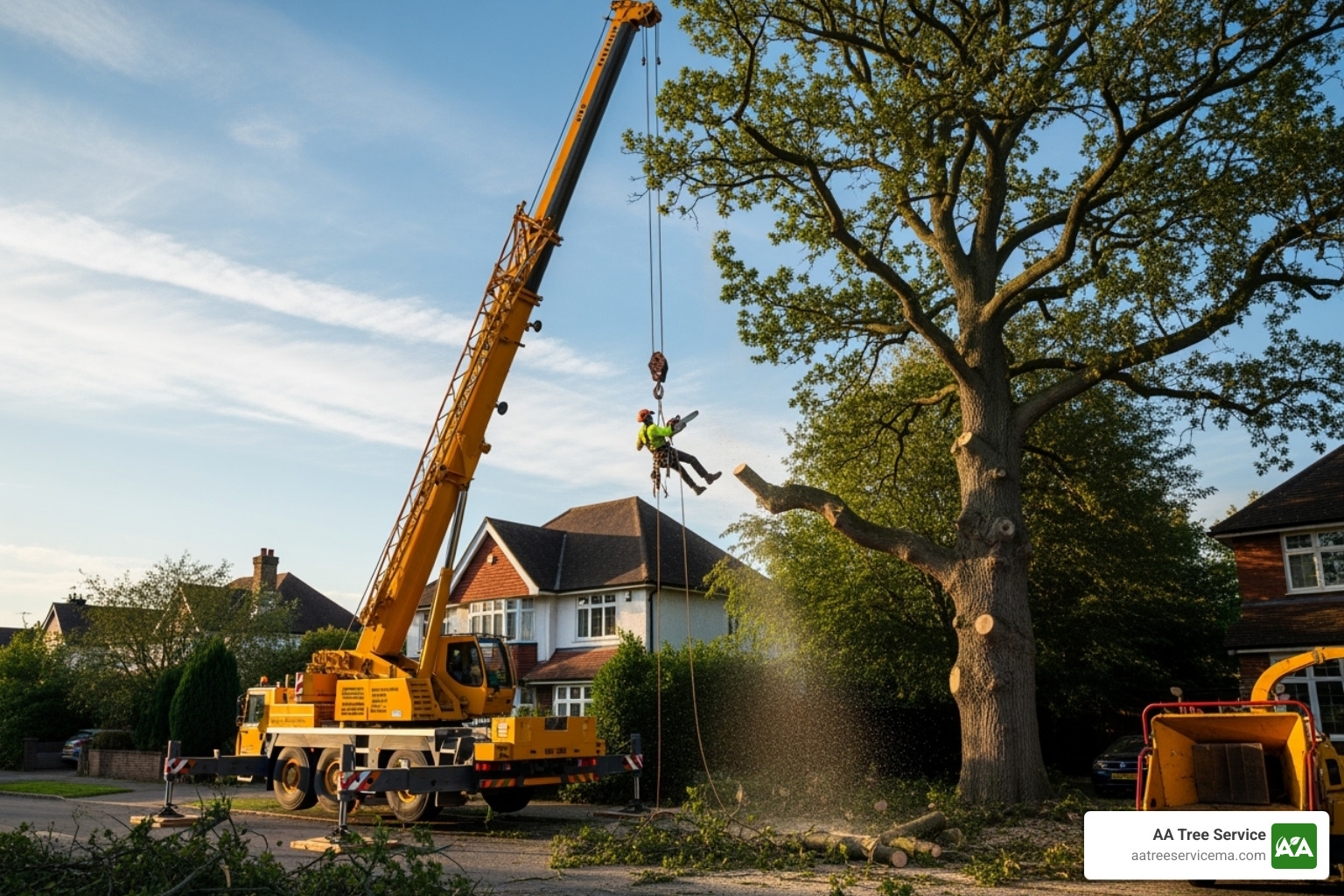
- Tree Size and Species: This is the most obvious factor. Removing a massive, 100-foot oak tree is a complex, full-day project for a large crew, while pruning a 20-foot ornamental dogwood might take a single arborist an hour.
- Accessibility: Where the tree is located has a huge impact on cost. A tree in a front yard with direct street access is far easier and cheaper to work on than the same tree in a fenced-in backyard. If equipment can’t reach the tree, every branch and log must be cut into smaller pieces and carried out by hand or meticulously rigged over the house, dramatically increasing labor time.
- Tree’s Condition and Health: A healthy, strong tree is predictable and safer to work on. A dead, brittle, or storm-damaged tree is highly unpredictable and poses a greater risk to the crew. This increased risk often necessitates the use of a bucket truck or crane for safety, which adds to the overall cost.
- Risk Level and Proximity to Structures: The job’s complexity skyrockets when a tree overhangs a house, garage, deck, or power lines. Each limb must be carefully tied off, cut, and safely lowered using specialized rigging techniques to prevent catastrophic damage. This meticulous, high-stakes work requires more time, skill, and crew members.
- Equipment Needed: The required equipment directly influences the price. A simple pruning job might only require climbing gear and chainsaws. A large removal in a tight space could require a 100-ton crane, a bucket truck, a chipper, and a log truck, all of which have significant operational costs.
Here are some national average cost ranges for context. These are based on internet data and are not actual costs for AA Tree Service. Prices in our service area will vary based on the factors above.
| Service Type | Average Cost Range (National) |
|---|---|
| Tree Removal | $400 – $4,000+ |
| Tree Trimming/Pruning | $250 – $1,500+ |
| Stump Grinding | $150 – $500+ |
Navigating Local Tree Bylaws in Massachusetts and New Hampshire
Even if a tree is on your private property, you may not have the absolute right to remove it. Many towns in both Massachusetts and New Hampshire have specific bylaws to protect their community’s tree canopy.
- Tree Preservation Orders (TPOs) and Bylaws: Some municipalities protect “significant” trees based on their size, species, or age. You may need a permit from the town to perform major pruning or removal, and unauthorized work can result in substantial fines.
- Scenic Roads and Public Shade Trees: Many towns have designated “Scenic Roads,” where any tree work within the public right-of-way (which can extend onto your property) is strictly regulated. Public shade trees are also protected.
- Conservation Areas & Wetlands: If your property is near a wetland or within a designated conservation area, any tree work will likely require approval from your local Conservation Commission.
Always check with your local municipality’s planning board or conservation commission before scheduling major tree work. A reputable local tree surgeon will be familiar with the regulations in your specific town and can often guide you through the permitting process. At AA Tree Service, we are well-versed in the rules for Tree Service in New Hampshire and Tree Service in Massachusetts.
When to Call for Emergency Tree Services
Tree emergencies are frightening and require immediate, professional intervention. Know when to make the call.
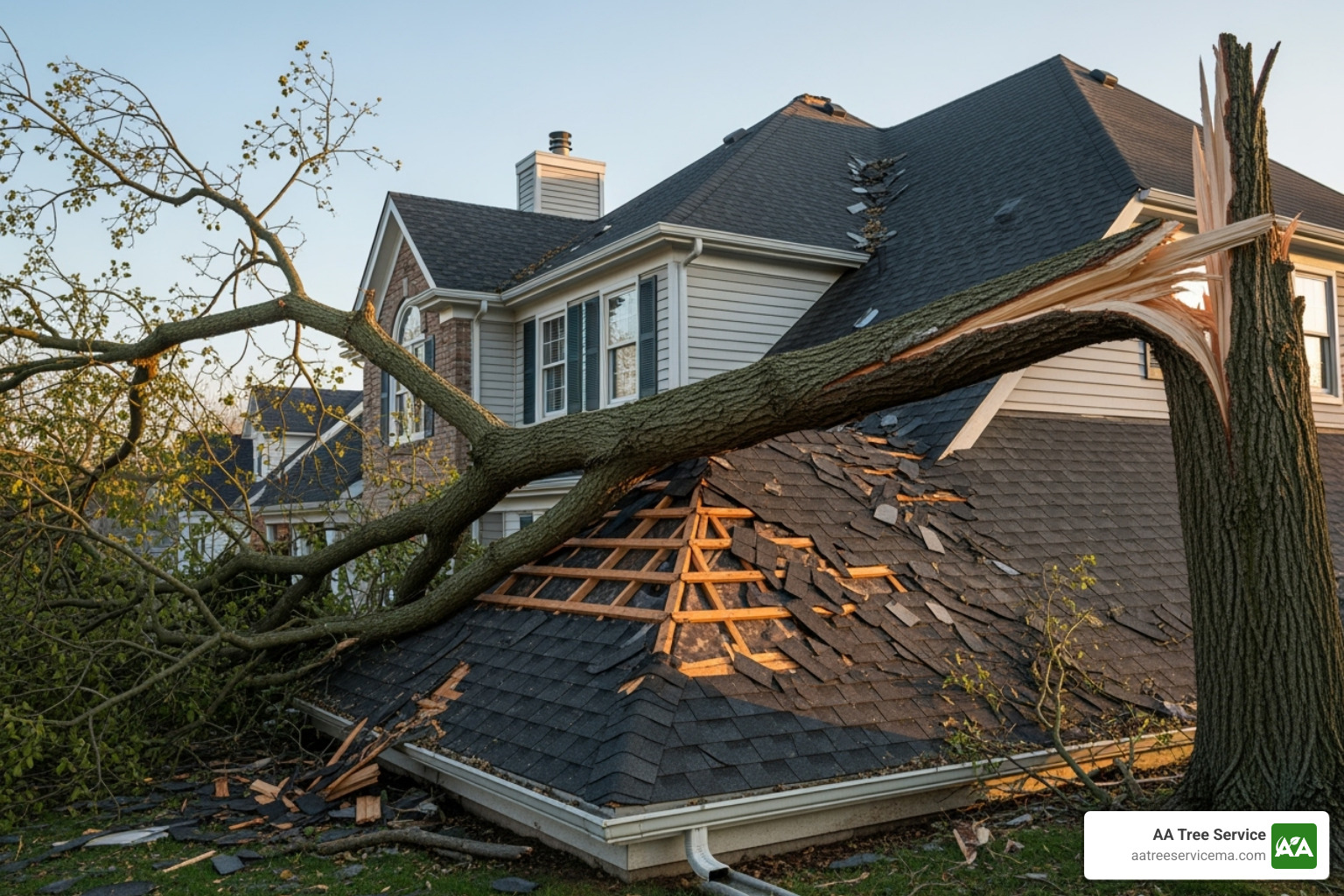
Call for help immediately if you have:
- Significant storm damage from high winds, heavy ice, or snow.
- A fallen tree on your house, car, or blocking your driveway.
- A split or uprooted trunk, which indicates the tree is extremely unstable and could fail completely at any moment.
- A large, broken branch that is hanging precariously over a target.
A true Emergency Tree Removal service offers 24/7 availability and a rapid response protocol. The process typically involves an immediate dispatch to assess the hazard, securing the site to prevent further damage (such as tarping a damaged roof), and then using specialized equipment to safely dismantle and remove the tree without causing additional harm.
Preparing For and Following Up on Tree Work
Once you’ve selected your tree surgeon and scheduled the job, a small amount of preparation can make a big difference in ensuring the process is smooth, safe, and efficient. Likewise, a thorough follow-up ensures the job is completed to your satisfaction. Here’s what you need to know.
How to Prepare Your Property for the Crew’s Arrival
Taking a few simple steps before the crew arrives protects your belongings and helps the team work more safely and effectively. Before your tree surgeon local to me is scheduled to arrive, walk through this checklist:
- Clear the work area: Remove all movable items from the vicinity of the tree. This includes garden furniture, potted plants, bird feeders, grills, and lawn decorations. This not only prevents them from being damaged by falling debris but also clears the ground, eliminating tripping hazards for the crew.
- Move your vehicles: Park all cars, boats, and RVs well away from the work zone, preferably on the street or in a neighbor’s driveway. Even with careful work, sawdust and small twigs can travel, and moving vehicles is the best way to prevent accidental dings or scratches.
- Relocate playsets and outdoor equipment: If possible, move swing sets, trampolines, and other large outdoor items to a safe distance. If they cannot be moved, be sure to point them out to the crew leader so they can take extra precautions.
- Inform your neighbors: Giving your immediate neighbors a heads-up is a courteous gesture. Let them know when the work is scheduled, that there will be noise from chainsaws and chippers, and that there may be temporary traffic disruptions on your street.
- Secure pets indoors: For their own safety and the crew’s focus, keep all pets inside your home for the duration of the job.
- Discuss property access and sensitive areas: Walk the property with the arborist before work begins. Point out the best route for trucks and equipment to minimize lawn damage. Crucially, identify the location of any underground systems like sprinkler heads, invisible dog fences, or septic system components so the crew can avoid them or use protective ground mats.
After the Job is Done: Post-Surgery Care and Cleanup
A professional’s job isn’t finished when the last branch is cut. The final phase of cleanup and inspection is just as important.
- Do a final walk-through with the crew leader: Before the crew packs up, walk the site with them. Inspect the work to ensure it matches the contract. Look up into any pruned trees to ensure no “hangers” (cut branches that got caught in the canopy) were left behind. Check your house, roof, fences, and surrounding landscape for any incidental damage. This is the best time to address any concerns.
- Ensure complete debris removal: Your contract should specify the level of cleanup. A professional service should leave your property looking as good as, or better than, they found it. Our Tree Debris Removal service, for example, guarantees a spotless finish, including raking up sawdust and small debris. Confirm if they are hauling all wood or if you are keeping any for firewood, and where it should be stacked.
- Check stump management: If stump grinding was part of the job, inspect the area. The stump should be ground to the agreed-upon depth, and you should be clear on what happens with the resulting pile of wood chips. Will the crew use them to fill the hole, haul them away, or leave them for you to use as mulch?
- Care for your landscape: The area around the tree may have been stressed during the work. Lightly watering nearby plants and turf can help them recover.
- Leave an honest review: Once you are satisfied with the job, take a few minutes to leave a detailed online review. Your feedback is incredibly valuable for other homeowners trying to find reliable professionals and it helps support good local businesses that prioritize safety and quality.
Frequently Asked Questions about Finding a Tree Surgeon Local to Me
Here are detailed answers to some of the most common questions we hear from homeowners in Massachusetts and New Hampshire when they are considering professional tree care.
How often should I have my trees professionally inspected?
Think of it as a regular health check-up for a valuable asset. For mature trees, we recommend a professional inspection every 3-5 years. An arborist can spot subtle signs of developing issues like structural weakness, disease, or pest infestations that an untrained eye would miss. For young and newly planted trees, an annual or biennial inspection is beneficial to ensure they are developing a strong structure and to correct any growth problems early on. However, you should always call for an immediate inspection if you notice any sudden signs of distress (like dead branches, fungal growth, or discolored leaves) or after any major storm involving high winds or heavy ice.
Is tree removal the only option for a sick or damaged tree?
Absolutely not! This is a common misconception. While removal is necessary for dead or hazardous trees, a qualified tree surgeon local to me has many tools to save a struggling tree. Trees are remarkably resilient. An arborist might recommend:
- Specialized Pruning: To remove diseased or pest-infested sections and prevent further spread.
- Disease/Pest Treatment: Applying targeted fungicides or insecticides to combat an infection or infestation.
- Cabling and Bracing: Installing high-strength steel cables in the upper canopy to support weak limbs or using threaded rods to reinforce a split trunk. These structural support systems can add decades to a tree’s life when it might otherwise have been considered for removal. Our Hazardous Tree Removal Experts will always conduct a thorough assessment to see if a tree can be safely preserved before recommending removal.
What’s the difference between a tree surgeon and a landscaper?
This is a critical distinction. Think of it as the difference between a general family doctor and a specialized surgeon.
- A landscaper focuses on overall garden and lawn maintenance—mowing, planting flower beds, and sometimes light trimming of small shrubs and ornamental trees. Their expertise is in aesthetics and general horticulture.
- A tree surgeon (or certified arborist) is a specialist who focuses exclusively on the health, structure, safety, and removal of trees, particularly large, mature, or hazardous ones. They have advanced training in tree biology, risk assessment, and the physics of rigging. They use specialized, heavy equipment like cranes, bucket trucks, and industrial chippers and follow strict safety protocols (like ANSI Z133 standards) that landscapers are typically not trained or insured for. For any work that involves climbing, a chainsaw on a tree, or removing a tree that could potentially damage property, you need a tree surgeon, not a landscaper.
What is the best time of year for tree work?
This depends on the type of work.
- For Pruning: The ideal time for most deciduous trees is the dormant season (late fall through early spring). With the leaves gone, the arborist has a clear view of the tree’s entire structure, making it easier to identify and correct issues. Pruning during dormancy is also less stressful for the tree and minimizes the risk of transmitting certain diseases. However, removing dead or hazardous limbs can and should be done at any time of year.
- For Removal: Tree removal can be performed year-round. Some homeowners prefer winter removal because the frozen ground can reduce the impact of heavy equipment on the lawn.
Can I do my own tree trimming to save money?
For very minor tasks, perhaps. If you can trim a small, low-hanging branch from the safety of the ground with a pole pruner, that is generally fine. However, the moment the job requires a ladder, a chainsaw, or leaving the ground, it enters the realm of professional work. The statistics on homeowner injuries from tree work are sobering. The risk of a serious fall, a life-threatening chainsaw accident, or dropping a limb on your own property is incredibly high for an amateur. A professional’s fee covers their expertise, specialized equipment, and, most importantly, the insurance that protects you from catastrophic liability.
Conclusion: Partner with a Local Expert for Healthy, Safe Trees
Your trees are living investments that are integral to your property’s ecosystem, value, and beauty. Entrusting their care to a qualified professional is not an expense but a crucial investment in the safety and longevity of that asset. When searching for a tree surgeon local to me, the guiding principles must always be safety, expertise, and professionalism.
Throughout this guide, we’ve emphasized the non-negotiable elements of hiring a tree care company. Always verify ISA certification and demand proof of full insurance, including both general liability and worker’s compensation. Take the time to get multiple, detailed quotes, but be deeply skeptical of any bid that is drastically lower than the others, as it almost certainly signals a dangerous compromise on safety or insurance. Before work begins, do your due diligence by checking the local tree bylaws in your Massachusetts or New Hampshire town. Most importantly, be proactive. Addressing potential issues like dead branches, fungal growth, or structural weaknesses early on is far safer and more cost-effective than dealing with the aftermath of a fallen tree.
Your Trusted Partner for Tree Services in MA & NH
By choosing a certified, insured, and experienced local arborist, you are not just hiring a contractor for a single job; you are forming a long-term partnership with an expert dedicated to the health of your landscape. AA Tree Service is here to be that partner. We’ve been protecting properties and preserving tree health across Massachusetts and New Hampshire for over 20 years. Our deep familiarity with the local trees, climate challenges, and town regulations makes us uniquely qualified to care for your property.
- 24/7 Emergency Services: We are always on call, ready to respond when a storm hits or a tree suddenly becomes a hazard.
- Free Same-Day Quotes: We provide fast, transparent, and detailed estimates to help you make informed decisions without delay.
- Satisfaction Guaranteed: We bring the right equipment for any job, full insurance for your peace of mind, and decades of hands-on experience to ensure your complete satisfaction.
Ready to give your trees the professional care they deserve and secure your property for the future?
Request a free quote for your tree pruning and trimming needs today! Your property—and your peace of mind—will thank you.