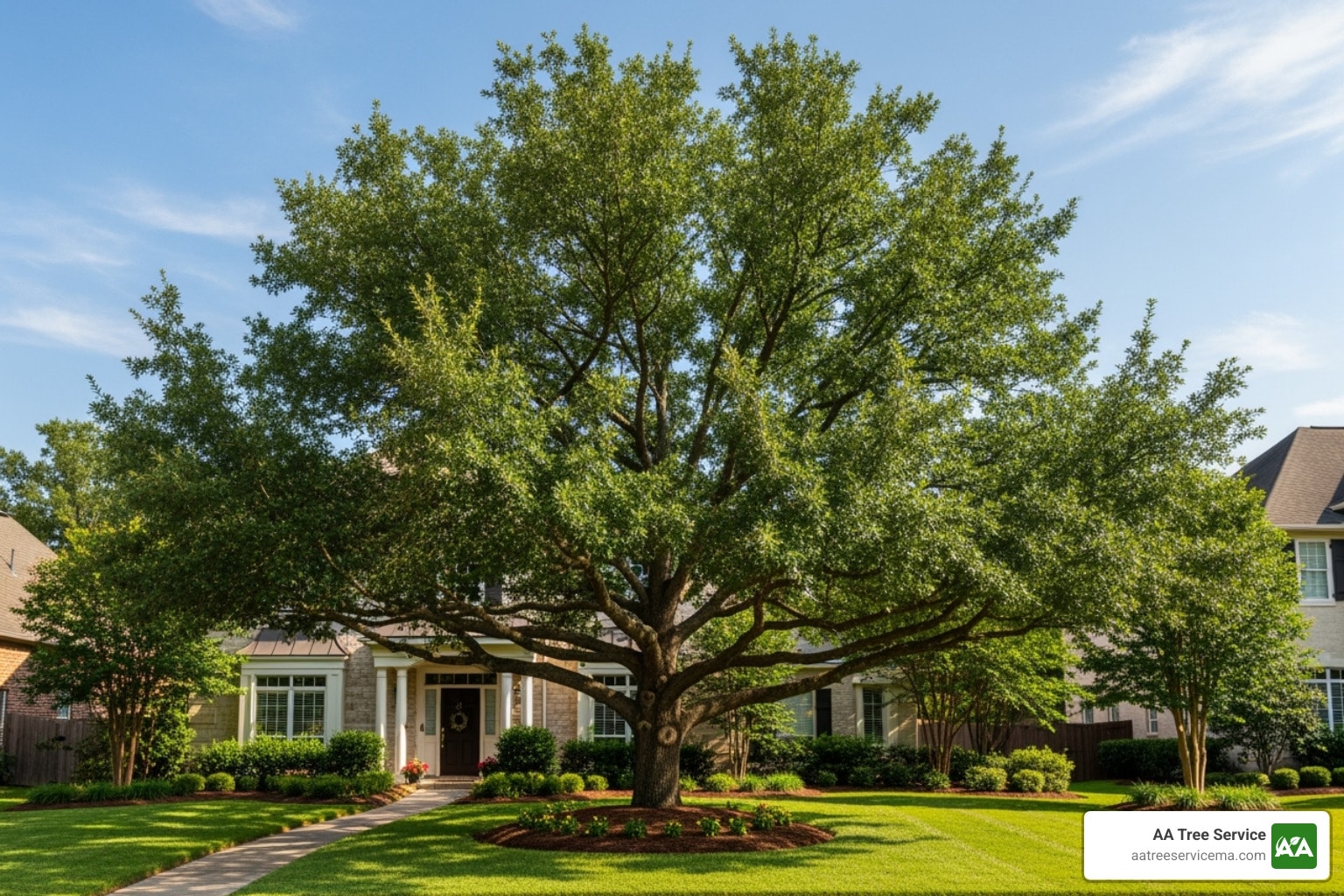
Why Professional Tree Care Matters for Your Property
When you search for a Tree Company Near Me, you’re taking the first step in managing one of your property’s most valuable and complex assets. Trees are more than just background scenery; they are living investments that contribute significantly to your property’s value, safety, and overall environmental health. Professional tree care is not a mere expense but a crucial service dedicated to protecting this investment, ensuring the safety of your home and family, and cultivating a vibrant, healthy landscape for years to come.
The Tangible Value of Expert Tree Management
Well-maintained, mature trees can increase a property’s value by as much as 20%. They provide curb appeal, create natural privacy screens, and offer shade that can reduce summer cooling costs by up to 30%. However, this value is contingent on their health and structural integrity. A neglected, diseased, or hazardous tree can quickly become a liability, decreasing property value and posing significant risks. Professional arborists understand the intricate biology of trees and apply scientific principles to improve their beauty, longevity, and value.
Key Services Offered by a Professional Tree Company:
- Tree Removal: The safe and strategic dismantling of trees that are dead, diseased, structurally compromised, or located in a hazardous position.
- Tree Trimming & Pruning: A vital maintenance service focused on improving a tree’s health, safety, and aesthetics by selectively removing specific branches.
- Stump Grinding: The mechanical grinding of a tree stump below the ground’s surface, eliminating tripping hazards and preparing the area for new landscaping.
- Emergency Tree Services: A rapid, 24/7 response to urgent situations caused by storm damage, fallen trees, or sudden structural failure.
- Land Clearing: Comprehensive removal of trees, brush, and undergrowth to prepare a lot for construction, landscaping, or other development projects.
- Plant Health Care (PHC): Proactive services including fertilization, soil analysis, and pest and disease management to keep trees healthy and resilient.
Essential Qualifications to Verify Before Hiring:
- ISA Certified Arborists: The company should employ arborists certified by the International Society of Arboriculture (ISA). This is the industry’s gold standard, proving extensive knowledge in tree science and safe work practices.
- Comprehensive Insurance: This is non-negotiable. The company must provide proof of both full liability insurance (to cover any damage to your property) and workers’ compensation (to cover their employees in case of injury). Without it, you could be financially responsible for accidents.
- Proper Licensing and Reputation: Ensure the company is licensed to operate in your state (Massachusetts or New Hampshire) and check their standing with the Better Business Bureau (BBB).
- Verifiable Local References: A reputable company will gladly provide a list of recent, local clients you can contact to inquire about their experience.
In New England, where Nor’easters, ice storms, and heavy snows are common, the need for expert tree care is even more pronounced. DIY tree work is exceptionally dangerous, often leading to severe personal injury, catastrophic property damage, and irreversible harm to your trees. A trusted local tree service with the right industrial-grade equipment, deep regional expertise, and comprehensive insurance is your best defense against the unpredictable, ensuring every job is handled with the utmost safety and professionalism.
Decoding Tree Care: What Services Do Professionals Offer?
When you search for a Tree Company Near Me, you’ll find a suite of specialized services designed to address every aspect of a tree’s life cycle, from promoting healthy growth to managing its final removal. Professional tree care is a science that balances the needs of the tree with the safety and aesthetic goals of the property owner.
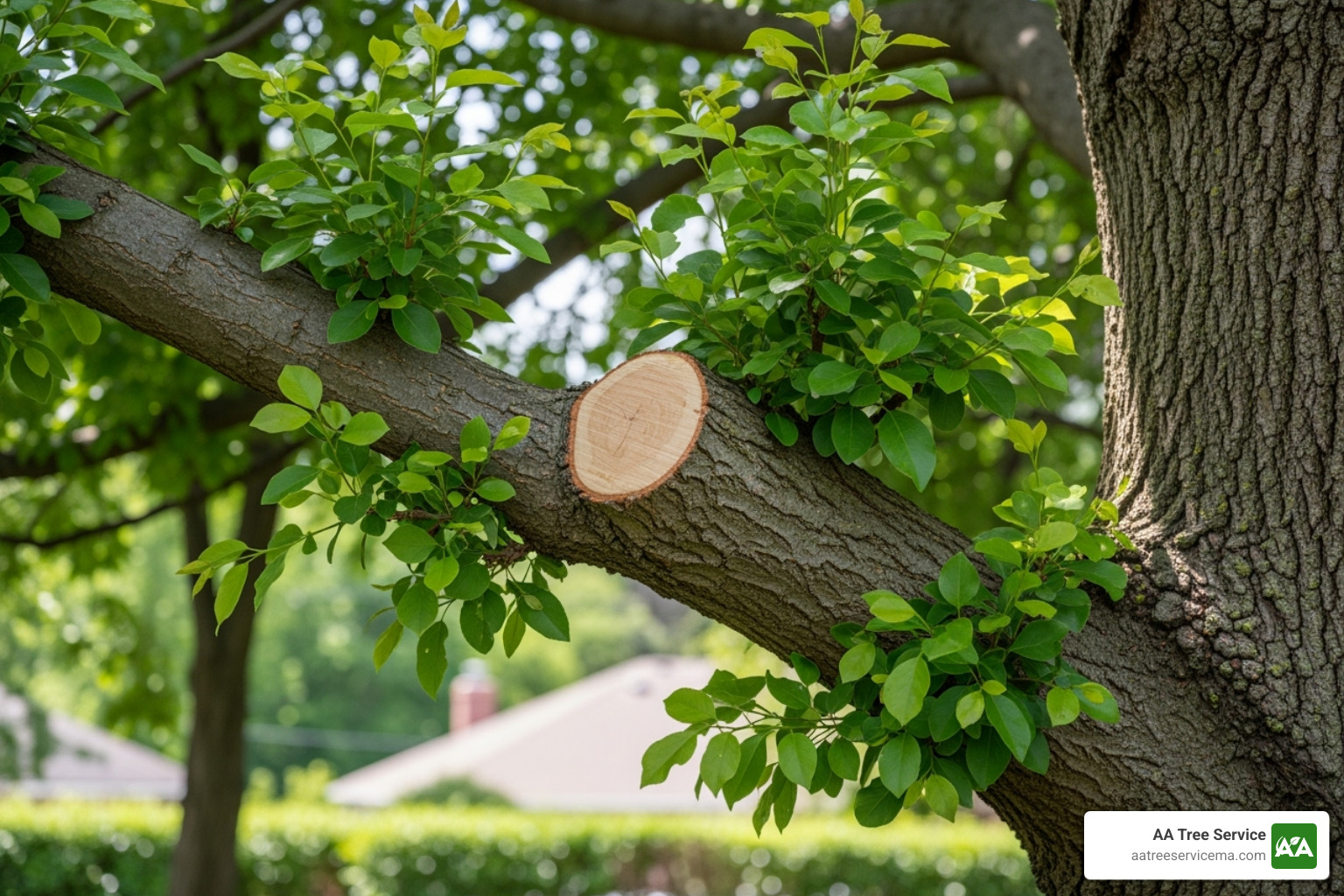
Here’s a detailed look at the services you can expect from a professional team:
| Service Category | Primary Goal | Key Activities |
|---|---|---|
| Tree Trimming | Maintain shape, size, and overall appearance. | Crown shaping, light branch removal for aesthetics, maintaining clearance from structures. |
| Tree Pruning | Improve tree health, structure, and safety. | Removing dead/diseased branches, crown thinning for light/air, structural pruning for strength, crown raising for clearance. |
| Tree Removal | Eliminate hazardous, dead, or unwanted trees. | Controlled felling, sectional dismantling using rigging or cranes, ensuring protection of property and power lines. |
| Stump Grinding | Remove unsightly and hazardous tree stumps. | Using a high-speed grinder to reduce the stump to wood chips, typically 6-12 inches below ground level. |
| Land Clearing | Prepare land for construction or landscaping. | Large-scale removal of trees, stumps, and brush; may involve heavy machinery like excavators and cranes. |
| Emergency Services | Respond to urgent tree-related hazards. | 24/7 dispatch for storm-damaged trees, clearing fallen limbs from homes and driveways, mitigating immediate risks. |
We offer a comprehensive Tree Removal Service and a full range of Tree Care Service Near Me.
The Arborist’s Craft: Trimming vs. Pruning vs. Removal
While these terms are often used interchangeably by homeowners, they represent distinct operations for a certified arborist.
- Tree Trimming is primarily about aesthetics and maintenance. It’s the horticultural equivalent of a haircut, focused on controlling a tree’s size and shape. This is often done to keep branches from scraping against a house, obscuring a view, or growing into a neat, desirable form.
- Tree Pruning is a strategic, health-focused service. An arborist performing pruning is like a surgeon, carefully removing specific branches to improve the tree’s long-term health and safety. This includes removing dead, diseased, or crossing branches to prevent decay and improve structural integrity. Proper pruning improves a tree’s ability to withstand the harsh weather of Massachusetts and New Hampshire, reducing the risk of failure during a storm.
- Tree Removal is the most drastic measure, reserved for trees that are beyond saving or pose an unacceptable risk. A Tree Removal Near Me is a complex, high-risk operation that requires meticulous planning, specialized equipment, and a deep understanding of physics to ensure the tree is brought down safely without damaging surrounding property.
Specialized Services for a Finished Landscape
Stump Grinding vs. Stump Removal: After a tree is removed, the stump remains. Stump Grinding is the most common solution, using a machine to shred the stump into wood chips, leaving the roots to decay naturally underground. This is fast, effective, and minimally invasive. Stump removal, a more intensive process, involves digging out the entire stump and major root ball, which is necessary for construction or replanting in the exact same spot but causes significant ground disturbance.
Land Clearing: This service is essential for preparing a property for new construction, a driveway, or a major landscape overhaul. It involves the complete removal of all vegetation from a designated area. Professionals can efficiently clear lots using heavy machinery, including Crane Services for large and hazardous trees, ensuring the land is ready for the next phase of your project.
When Disaster Strikes: Emergency Tree Services
New England weather is unforgiving. A sudden storm can turn a beautiful tree into an immediate disaster. Emergency Tree Services provide a critical 24/7 response. When you need Emergency Tree Removal because a tree has fallen on your roof, or Tree Limb Removal Near Me to clear a blocked driveway, a professional crew can be dispatched to safely assess the situation, mitigate the hazard, and prevent further damage, day or night.
Is It Time to Call for Help? Signs Your Tree is in Trouble
Trees often communicate distress through subtle signs. Recognizing these early warning signals can be the difference between a simple pruning job and a costly, hazardous removal. Knowing when to call a professional Tree Company Near Me is a key responsibility for any homeowner.
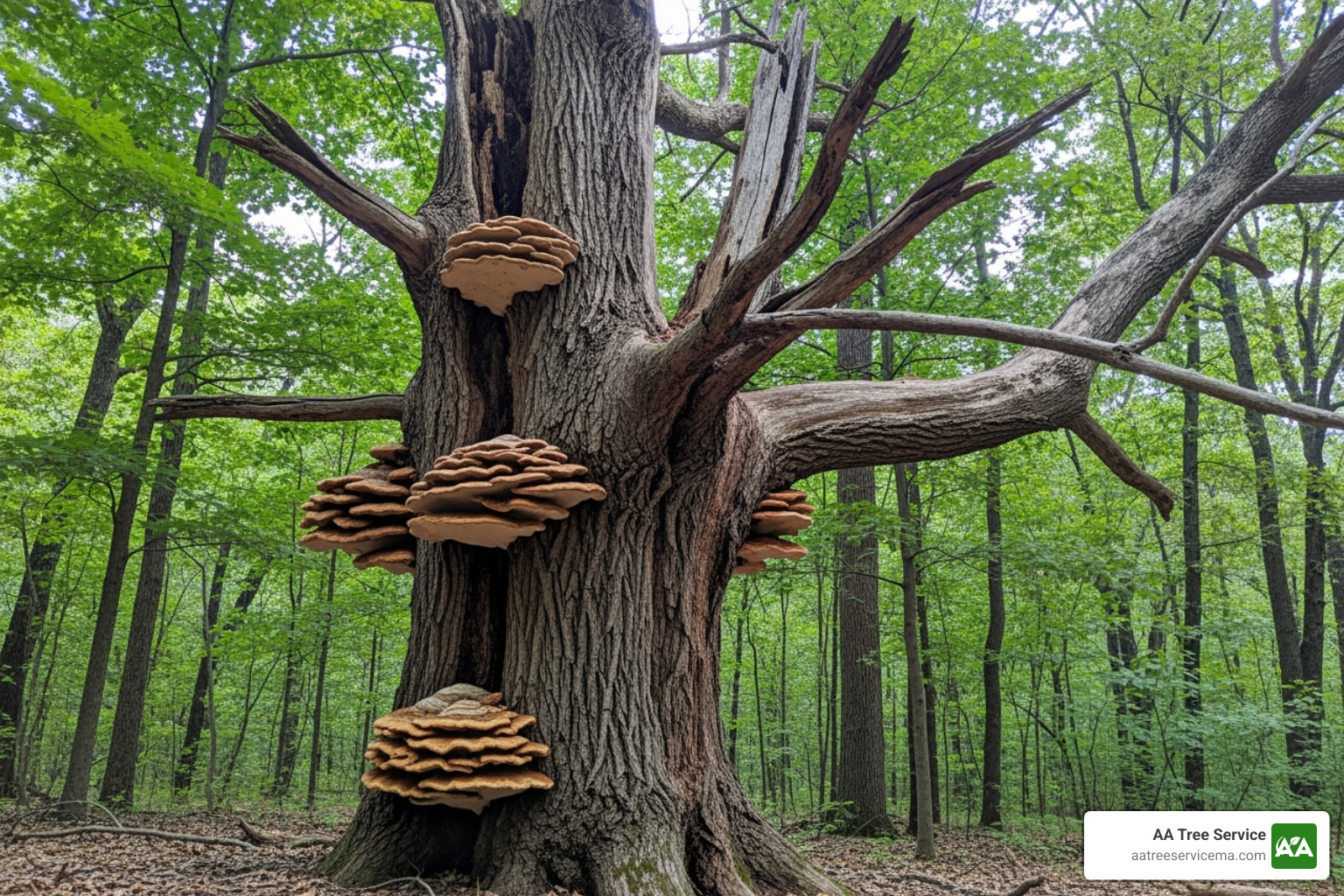
Look for these key indicators that your tree needs an expert assessment:
- Dead or Dying Branches: Large, leafless branches in the canopy, often called “widowmakers,” are a major red flag. They are brittle and can snap and fall at any moment.
- Sudden or Severe Leaning: While some trees have a natural lean, a sudden shift or a lean greater than 15 degrees from vertical indicates potential root failure or ground instability.
- Cracks or Cavities in the Trunk: Deep splits, missing bark, or hollow cavities in the trunk or major limbs are signs of significant structural weakness and internal decay.
- Fungus or Mushroom Growth: The presence of fungal bodies (conks, brackets, or mushrooms) on the trunk, major roots, or near the base is a definitive sign of internal rot. The fungus is merely the fruiting body of a much larger decay organism inside the tree.
- Root System Damage: Look for heaving soil, exposed and decaying roots, or construction damage near the base. A compromised root system cannot support the tree’s weight.
- Unusual Leaf Condition: Leaves that are prematurely yellow (chlorosis), brown, wilted, or stunted during the growing season can signal disease, pest infestation, or nutrient deficiencies.
- Pest Activity: Small holes in the bark, tunnels (galleries) underneath, or piles of sawdust-like frass at the base are telltale signs of boring insects that are weakening the tree from the inside out.
From Problem Tree to Hazard Tree
A tree becomes a hazard when it has a structural defect and a potential “target” (like your house, car, or a play area) within its fall zone. A professional arborist can perform a risk assessment. Calling a Tree Company Near Me is critical if you notice:
- Branches Overhanging Property: Limbs extending over your roof, garage, or deck pose a direct threat. Over time, they can drop debris, cause roof damage, and are the first to fail in a storm.
- Proximity to Power Lines: This is an extremely dangerous situation. Tree branches conducting electricity can cause fires and electrocution. Never attempt to prune these yourself; it is a job exclusively for a qualified line clearance professional.
For a professional assessment, we provide reliable Tree Services in Arlington and Tree Services in Medford MA.
Common Tree Diseases and Pests in MA and NH
Our region’s trees face specific threats that homeowners should be aware of:
- Pest Infestations:
- Emerald Ash Borer (EAB): This invasive beetle has killed millions of ash trees. Signs include D-shaped exit holes, canopy dieback, and serpentine galleries under the bark.
- Asian Longhorned Beetle (ALB): A destructive pest that attacks maples and other hardwoods. Look for perfectly round, dime-sized exit holes in the trunk and branches.
- Hemlock Woolly Adelgid (HWA): This tiny insect appears as white, cottony sacs on the underside of hemlock needles, causing needle drop and tree death.
- Spongy Moth (formerly Gypsy Moth): The caterpillars of this moth can defoliate entire trees, primarily oaks, weakening them and making them susceptible to other stressors.
- Fungal and Bacterial Diseases:
- Dutch Elm Disease: A fungal disease spread by bark beetles that causes wilting, yellowing, and death in elm trees.
- Oak Wilt: A serious fungal disease affecting oaks, causing rapid leaf discoloration and wilting, often leading to death within a single season.
- Anthracnose: A common fungal disease affecting sycamores, dogwoods, and other trees, causing leaf spots, twig cankers, and dieback.
An accurate diagnosis from a certified arborist is the first step toward effective treatment. When searching for Local Tree Surgeons in My Area, prioritize companies with ISA Certified Arborists who can correctly identify these regional threats.
How to Find a Reputable Tree Company Near Me
Choosing a Tree Company Near Me is a significant decision that impacts your property’s safety and financial well-being. The industry is unfortunately populated by a mix of highly trained professionals and unqualified operators. Thoroughly vetting a company by verifying their credentials, asking pointed questions, and looking for red flags is essential to protect yourself.
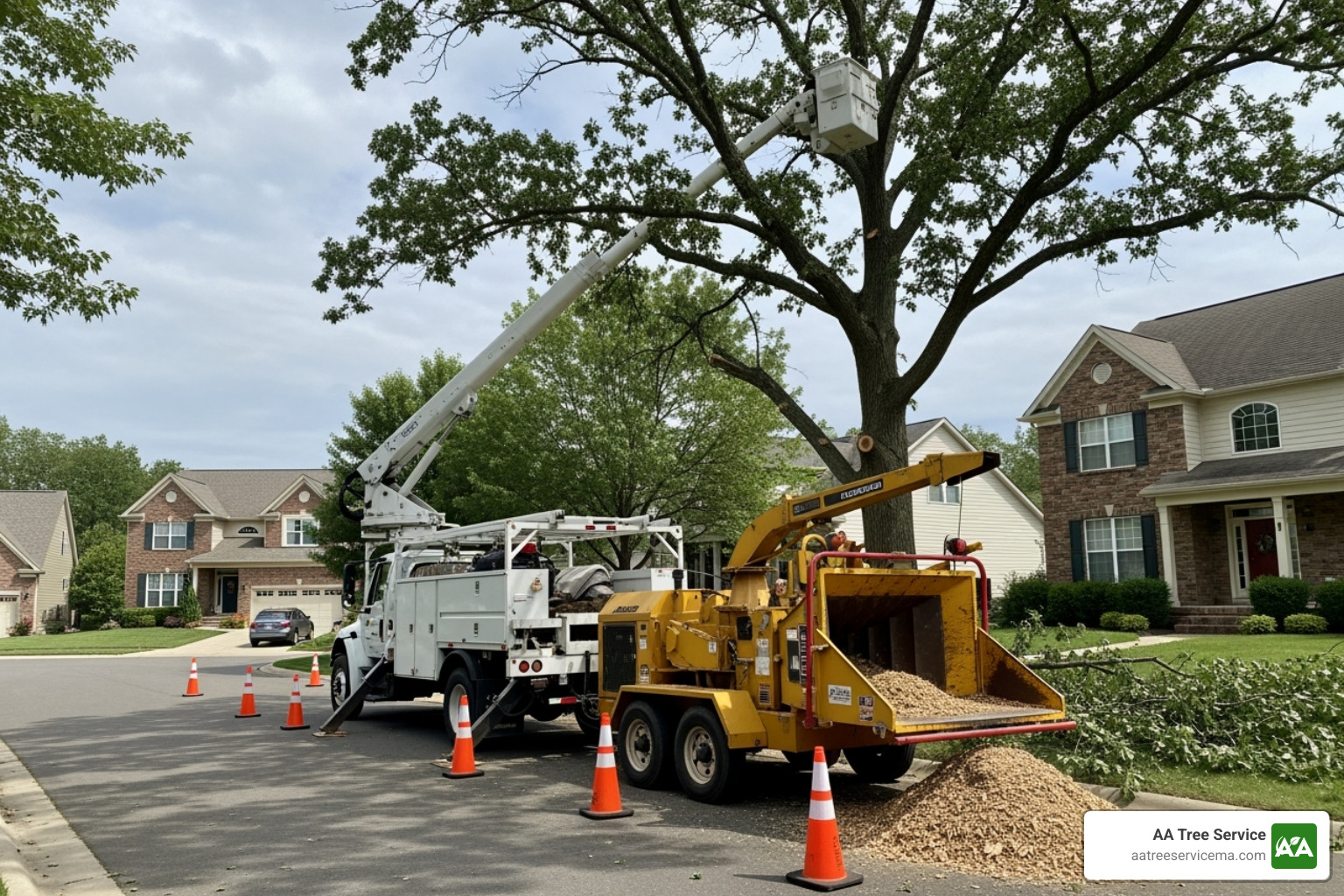
The Non-Negotiable Qualifications: Insurance, Licensing, and Certifications
Do not even consider a company that cannot provide proof of the following:
- ISA Certified Arborist: This certification from the International Society of Arboriculture is the hallmark of a true professional. It requires passing a comprehensive exam on all facets of arboriculture and maintaining the credential through ongoing education. It proves the person directing the work understands tree biology, proper pruning techniques, and safety standards.
- Proof of Insurance (Liability & Workers’ Comp): This is the most critical checkpoint. Ask for a certificate of insurance sent directly from their insurance agent. Liability Insurance protects your property from damage. Workers’ Compensation protects their employees if they get injured on your property. If you hire an uninsured company and an employee is hurt, you could be sued for their medical bills and lost wages.
- State Licensing and Industry Accreditation: Verify the company holds all necessary licenses to operate in Massachusetts or New Hampshire. For an even higher standard, look for accreditation from the Tree Care Industry Association (TCIA). TCIA accreditation is a rigorous process that vets companies for adherence to the highest standards in safety, business ethics, and professionalism.
A Step-by-Step Guide to Finding the Best Local Tree Company
- Gather Recommendations: Start by asking trusted friends, neighbors, or local landscaping professionals for referrals. Supplement this with online research, checking reviews on Google, Yelp, and Angi.
- Verify Credentials: Once you have a shortlist, visit their websites. Look for their ISA certification numbers and check their status with the Better Business Bureau (BBB).
- Get Multiple, Detailed Estimates: Always get at least three written estimates. A legitimate quote will be itemized, clearly describing the scope of work, the equipment to be used, the plan for debris cleanup, and the total cost. Be wary of any quote that seems drastically lower than the others.
- Ask the Right Questions:
- Can you provide a certificate of insurance?
- Do you have an ISA Certified Arborist on staff? What is their name and certification number?
- Will you be using spikes/gaffs to climb the trees for pruning? (Spikes should only be used for removals, as they wound healthy trees).
- What safety standards do you follow? (Look for adherence to ANSI Z133 standards).
- How will you protect my lawn and property from damage?
- Is debris removal and cleanup included in the quote?
- Look for Red Flags: Avoid companies that use door-to-door sales, pressure you for an immediate decision, ask for a large upfront payment, or recommend “topping” a tree (an outdated and harmful practice). Reputable companies like those serving Tree Removal Nashua NH or Tree Removal Haverhill MA will provide professional, no-pressure consultations.
Safety as the Top Priority
A professional Tree Company Near Me operates with a culture of safety. When they arrive, you should see:
- Personal Protective Equipment (PPE): The entire crew should be wearing hard hats, safety glasses, ear protection, and appropriate footwear.
- Job Site Briefing: The crew leader should conduct a safety meeting before work begins to discuss the plan and identify potential hazards like power lines, structures, or underground utilities.
- Clear Communication and Controlled Work: The job should proceed in a deliberate, organized manner, with clear communication between the climber and the ground crew. The cleanup process should be just as professional as the tree work itself. When hiring for Tree Services in Salem NH, confirm that a thorough cleanup is a standard part of their service.
Budgeting for Your Project: Costs and Preparation
Understanding the potential costs associated with professional tree work allows you to budget effectively and recognize the value in a detailed quote from a reputable Tree Company Near Me. Pricing is not arbitrary; it’s a calculated figure based on the risk, labor, and equipment required for each unique job.
Key Factors That Influence Tree Service Costs
- Tree Size and Height: This is the most significant factor. A towering oak requires more time, a larger crew, and more complex rigging than a small ornamental pear tree.
- Accessibility and Location: A tree in an open front yard is far less costly to work on than the same tree in a tight, fenced-in backyard next to a sunroom and power lines. Difficult access may require a crane, which significantly increases the cost.
- Tree’s Condition and Health: A dead, brittle, or structurally compromised tree is often more dangerous and unpredictable to work on than a healthy one. This increased risk translates to higher labor costs to ensure a safe removal.
- Complexity of the Job: A tree with multiple trunks, heavy leans over a structure, or extensive decay requires a more meticulous and time-consuming approach.
- Type of Service: A full tree removal is the most expensive service. Pruning costs vary based on the tree’s size and the type of pruning required. Stump grinding is a separate, additional cost.
- Debris Removal and Cleanup: The final price will depend on whether you want the wood hauled away, chipped and left as mulch, or cut into firewood-length logs.
Average Tree Service Costs: A General Guide
Disclaimer: These are national average cost ranges based on industry data and are for informational purposes only. They do not represent a quote. Prices in Massachusetts and New Hampshire can vary. The only way to get an accurate price is to receive a written estimate from a qualified arborist for your specific job.
- Tree Trimming & Pruning: $300 – $1,800. A small tree might be a few hundred dollars, while pruning a large, mature oak could be well over $1,500.
- Tree Removal: $400 – $4,000+. A small tree under 30 feet might cost $400-$900. A medium tree (30-60 feet) could range from $900 to $2,000. A large tree (over 60 feet) can easily exceed $2,000, especially if it’s in a hazardous location requiring a crane.
- Stump Grinding: $150 – $500. This is often priced by the diameter of the stump, with a minimum charge.
- Emergency Services: Expect to pay a premium of 25-50% more for after-hours or emergency call-outs due to the immediate mobilization and increased risk.
For a precise, no-obligation price, a detailed estimate is essential. If you need Tree Removal Reading MA or Tree Removal Service Manchester NH, we offer complimentary same-day quotes.
How to Prepare Your Property for Tree Work
Taking a few simple steps before the crew arrives ensures a safer, more efficient operation.
- Clear the Work Zone: Move all patio furniture, grills, potted plants, garden decorations, and children’s toys from the area around the tree.
- Relocate Vehicles: Park all cars, boats, and RVs on the street or far down the driveway, well away from the work area and the path of the chipper.
- Communicate with Neighbors: Give your neighbors a friendly heads-up, especially if work will be noisy, require temporary access to their property, or involve parking large equipment on the street.
- Secure Pets and Children: For their safety and the crew’s focus, keep all pets and children indoors for the entire duration of the job.
- Discuss Access Points: Confirm with the crew leader where they plan to park their trucks and chipper and how they will access the tree to minimize impact on your lawn.
- Review the Cleanup Plan: Re-confirm your expectations for debris removal with the crew leader before they begin work. This ensures everyone is on the same page.
Proper preparation for services like Tree Services in Billerica MA helps the job go smoothly and protects your property.
Frequently Asked Questions about Local Tree Services
When considering hiring a Tree Company Near Me, homeowners understandably have many questions. Here are detailed answers to some of the most common inquiries to help you make an informed decision.
How often should I have my trees trimmed or pruned?
The ideal frequency depends heavily on the tree’s species, age, health, and your specific goals. As a general guideline, most mature trees benefit from a professional pruning every 3 to 5 years to remove deadwood and maintain structural integrity. However, fast-growing species like silver maples may need attention every 2-3 years, while very young trees benefit from structural pruning every 1-2 years to encourage a strong, stable form as they grow. An ISA Certified Arborist can assess your specific trees and provide a custom maintenance schedule to maximize their health and resilience against pests, diseases, and storm damage.
Is stump grinding really necessary after a tree is removed?
While not technically mandatory, stump grinding is highly recommended for several important reasons. Leaving a stump behind can lead to:
- Safety Hazards: Stumps are significant tripping hazards, especially when hidden by grass or snow.
- Pest Problems: A decaying stump is an open invitation for termites, carpenter ants, and other wood-boring insects that can eventually migrate to your home.
- Aesthetic Issues: A stump is an eyesore that detracts from your property’s curb appeal and makes lawn care difficult.
- Unwanted Regrowth: Some tree species will send up new sprouts from the stump and roots, creating a recurring maintenance problem.
For a clean, safe, and usable landscape, grinding the stump immediately after removal is the most practical and cost-effective choice.
Can I perform tree removal myself to save money?
We strongly and unequivocally advise against DIY tree removal or major pruning. Tree work is consistently ranked as one of the most dangerous professions for a reason. The risks are immense and include:
- Severe Personal Injury: Chainsaw accidents, falls from ladders, and being struck by falling limbs can be catastrophic or fatal.
- Property Damage: A miscalculation can send a massive log crashing into your home, your neighbor’s property, or power lines, causing thousands of dollars in damage.
- Insurance Gaps: Most standard homeowner’s insurance policies will not cover damages or injuries resulting from such high-risk, non-professional work.
- Killing Healthy Trees: Improper pruning cuts can introduce disease and decay, leading to the slow death of a valuable tree.
If the job requires a chainsaw and the branches are off the ground, you must call a professional. The safety of your family and property is worth the investment. As the BBB notes in its article, Why you should avoid DIY tree pruning, the financial and physical risks are simply too high.
What is the difference between an arborist and a ‘tree guy’?
An ISA Certified Arborist is a trained professional who has passed a rigorous exam covering tree biology, diagnostics, safety, and maintenance. They are required to maintain their certification with continuing education. A ‘tree guy’ or ‘tree cutter’ may have experience cutting trees but often lacks the scientific knowledge of tree health, proper pruning techniques (like avoiding ‘topping’), and a deep commitment to industry safety standards. Always choose a company with a certified arborist leading the work.
Will your equipment damage my lawn or driveway?
Professional tree companies take extensive precautions to minimize impact. This often includes laying down large protective mats (AlturnaMATS) to distribute the weight of heavy equipment and protect your lawn and driveway. However, large-scale removals can sometimes cause some level of temporary turf depression. This is a crucial topic to discuss during the estimation process. A reputable company will be transparent about the potential impact and the steps they take to prevent it.
Conclusion: Entrust Your Trees to Local Experts
Throughout this guide, we’ve journeyed from identifying the subtle warning signs of a tree in distress to understanding the critical importance of hiring a qualified, insured, and professional Tree Company Near Me. You are now equipped with the knowledge to act as a responsible steward for the largest and most valuable living assets on your property. Your trees are a legacy—providing shade, beauty, and environmental benefits that can last for generations, but only with proper care.
While the temptation of a DIY solution or a suspiciously low bid from an unqualified cutter can be strong, the risks are simply too great. Professional arborists do more than just cut branches; they bring a scientific understanding of tree health, a mastery of complex rigging and removal techniques, and an unwavering commitment to the safety of their crew and your property. This expertise is the difference between a job done and a job done right.
In the challenging climate of Massachusetts and New Hampshire, where severe weather is a constant threat, partnering with a trusted local expert is not a luxury—it’s an essential part of responsible homeownership. It provides peace of mind, knowing that your trees are not a ticking time bomb but a well-managed asset that improves your home’s value and safety.
At AA Tree Service, we embody these principles. With decades of hands-on experience, a team of dedicated professionals, and a foundation built on safety and customer satisfaction, we are prepared to handle all your tree care needs. We simplify the process with reliable 24/7 emergency services and free, no-obligation same-day quotes, ensuring you get expert advice without the stress.
Don’t wait for a small tree problem to become a major catastrophe. Invest in the health, safety, and beauty of your landscape. Get your free tree removal estimate today and let our team of local experts help your property flourish safely for years to come.