Understanding the Bamboo Invasion: Why Removal is Crucial
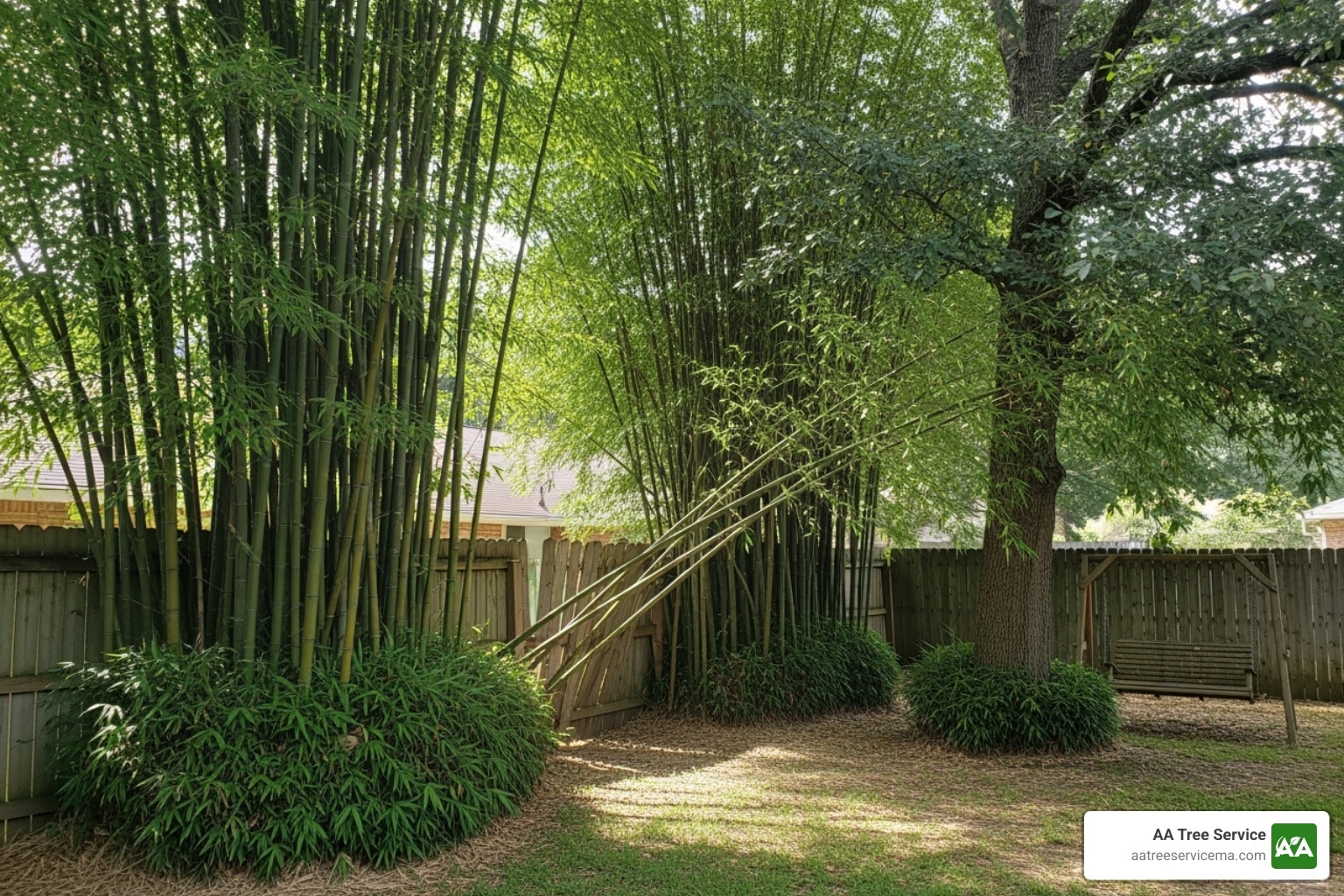
A bamboo removal service is essential for homeowners dealing with invasive bamboo. This fast-growing plant spreads aggressively via underground root systems called rhizomes, causing serious property damage and lowering property values. Waiting to act allows a small patch to become a massive infestation that chokes out other plants and spreads to neighboring properties, leading to costly disputes.
Most DIY removal attempts fail because cutting the visible canes stimulates the rhizomes to spread faster. Professional removal is often the only way to eradicate the problem permanently. Key services include:
- Full excavation of the root and rhizome system
- Stump grinding to destroy underground roots
- Root barrier installation to prevent future spread
- Chemical treatment for persistent cases
- Debris removal and proper disposal
Bamboo removal service vocab to learn:
The Two Types of Bamboo: Running vs. Clumping
Understanding the type of bamboo you have is crucial for effective removal.
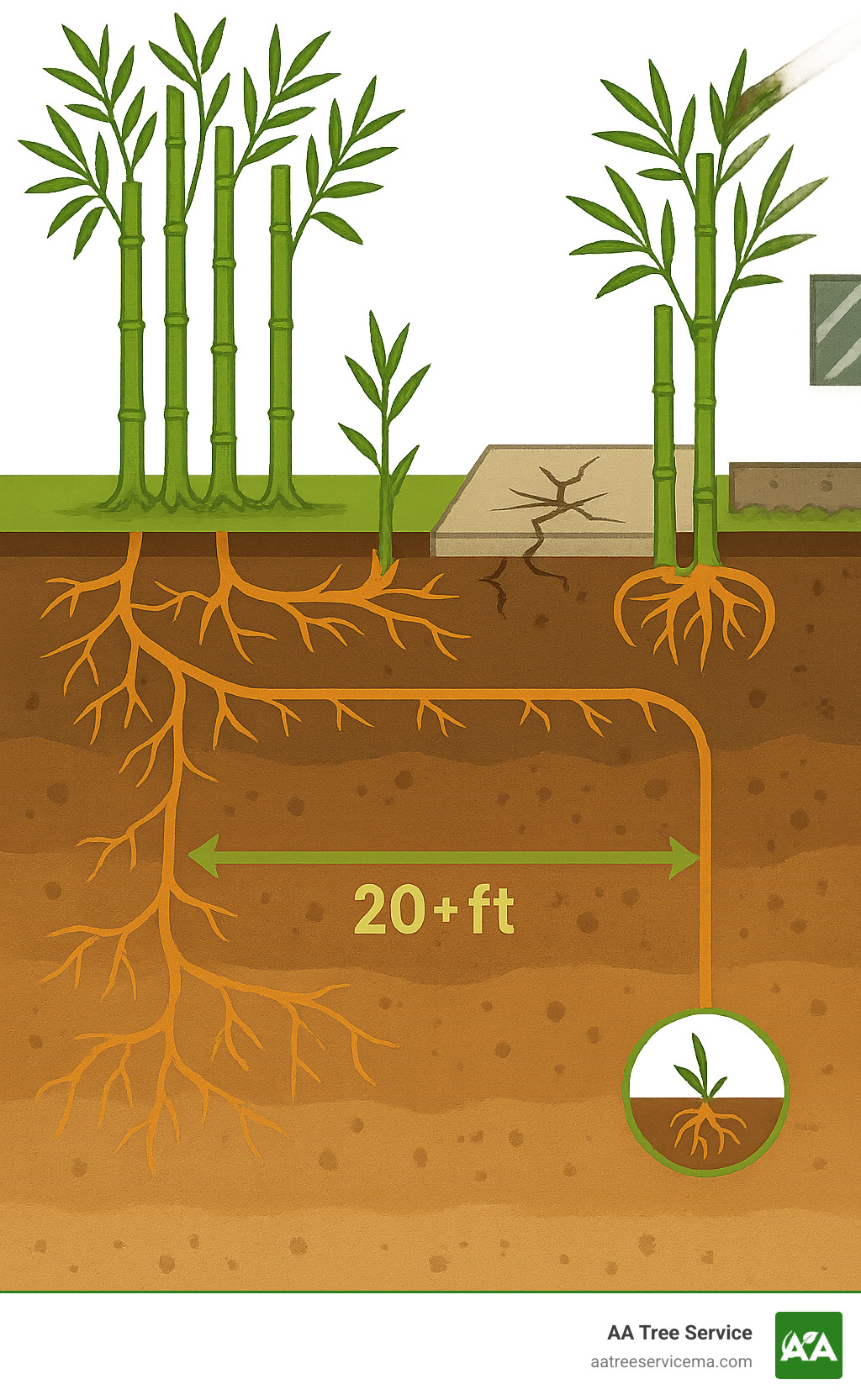
- Running Bamboo: This is the highly invasive type. It spreads via long, aggressive rhizomes that can travel 3 to 5 feet per year, with some roots extending up to 300 feet. It quickly takes over yards and is the primary cause of property damage and neighbor disputes.
- Clumping Bamboo: This variety is more manageable. Its rhizomes are short and compact, forming dense, circular clumps that expand by only a few inches per year. While less aggressive, it can still become problematic if not contained.
Running bamboo requires a much more intensive bamboo removal service than clumping varieties.
The Destructive Power of Unchecked Bamboo
Left unchecked, bamboo’s powerful root system can cause significant harm. We’ve seen extensive damage across Massachusetts and New Hampshire.
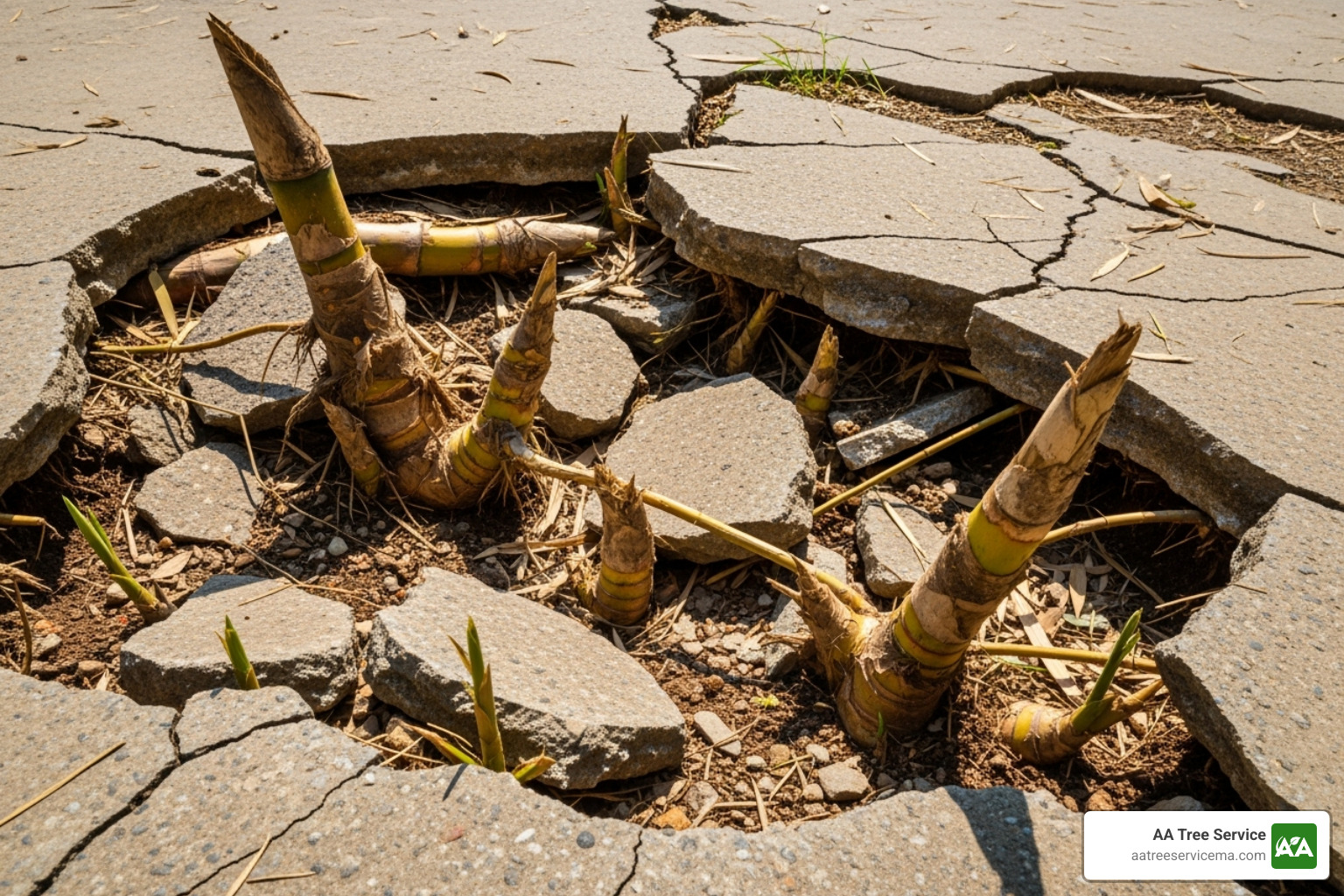
- Structural Damage: Rhizomes are strong enough to crack concrete driveways, patios, foundations, and asphalt. They can also damage underground utility pipes, leading to expensive repairs.
- Lawn and Ecosystem Destruction: Bamboo forms dense thickets that outcompete grass, gardens, and native plants for light, water, and nutrients. This degrades local biodiversity and can harm natural waterways.
- Financial and Legal Issues: A bamboo infestation can lower your property value. If it spreads to a neighbor’s yard, you could be held legally and financially responsible for removal and damages. For large-scale problems, our Land Clearing services offer a comprehensive solution.
Professional vs. DIY Bamboo Removal: A Realistic Comparison
While the DIY approach to bamboo removal seems budget-friendly, it often turns into a frustrating, multi-year battle. Professionals exist for a reason: bamboo is deceptively difficult to remove, and failed attempts can make the problem worse. Before you start digging, understand the challenges you’re facing.
Common DIY Bamboo Removal Methods and Their Pitfalls
Most DIY methods fail because they don’t eliminate the entire underground rhizome system, which stores vast amounts of energy and fuels regrowth.
- Cutting and Re-cutting: This involves repeatedly cutting new shoots to starve the rhizomes. In practice, this is a years-long process requiring constant vigilance. Missing even a few shoots allows the plant to recover.
- Digging Out Rhizomes: Though effective if done perfectly, this is backbreaking work. You must excavate the entire root network, which can be deep and widespread. Leaving even a small fragment of rhizome behind will lead to regrowth.
- Mowing New Shoots: Similar to cutting, this requires mowing religiously for several years. A single missed session during the growing season can undo months of progress.
- Smothering: This method involves covering the patch with a heavy, light-proof tarp for at least two full growing seasons. It only works for small patches and requires the cover to remain perfectly intact.
- Boiling Water and Vinegar: These home remedies are ineffective against established bamboo infestations.
Bamboo is relentless. For large or out-of-control infestations, our Brush and Land Clearing Services are designed to handle these challenging situations effectively.
When to Call a Professional Tree and Shrub Service
Knowing your limits can save you time, money, and frustration. It’s time to call a professional bamboo removal service when:
- The infestation is large. A patch bigger than a small garden bed requires professional equipment and many hours of labor.
- It’s growing near structures. DIY removal near foundations, driveways, or utility lines is risky and can cause costly damage.
- It has spread to a neighbor’s property. Professionals can handle these sensitive situations diplomatically and ensure complete removal to resolve disputes.
- You lack the time or equipment. Renting specialized tools can be expensive. Professionals have the right equipment and expertise to do the job safely and efficiently.
- You need a permanent solution. Professionals offer systematic approaches that target the entire root system, providing a level of eradication that DIY methods rarely achieve.
For comprehensive plant management, our Tree and Shrub Service can help you reclaim your entire landscape.
The Professional Bamboo Removal Service Playbook
When you hire a professional bamboo removal service, you’re investing in a proven strategy that combines heavy equipment, precision, and a deep understanding of how bamboo operates. Our experience in Massachusetts and New Hampshire has shown that this comprehensive approach is the only way to win the fight against this resilient invader.
What to Expect from a Professional Bamboo Removal Service
Our process is designed to be thorough and transparent from start to finish.
- Initial Consultation & Site Assessment: We start by discussing your situation and then conduct a detailed on-site evaluation. We identify the bamboo type, measure the infested area, assess its density, and check for obstacles like utilities or structures.
- Detailed Quote: You’ll receive a clear, transparent quote, typically the same day as our visit. It will outline the scope of work, timeline, and cost with no hidden fees. Projects can range from a few hours to several days.
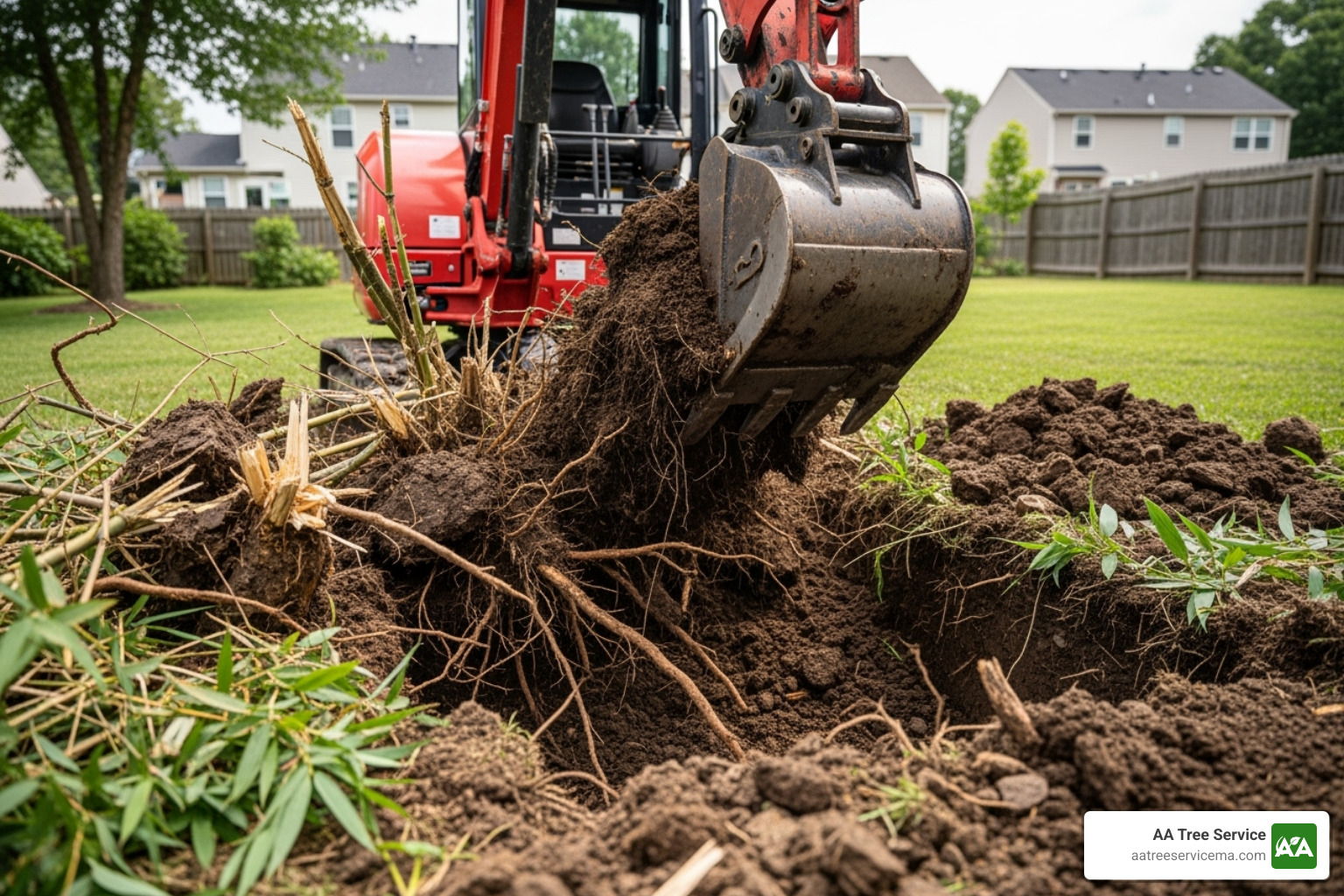
- Removal with Heavy Machinery: We use mini-excavators and stump grinders to excavate the entire rhizome network, typically digging 1 to 3 feet deep. We work methodically from the outside in to ensure no roots are left behind.
- Proper Disposal and Cleanup: We haul away all bamboo debris, as even small discarded pieces can resprout. Our Tree Debris Removal Service ensures your property is left clean and ready for your next landscaping project.
Ensuring Permanent Removal and Preventing Regrowth
Eradicating bamboo requires eliminating every last piece of the root system. Our methods are designed to prevent a comeback.
- Complete Rhizome Removal: Our primary goal is the physical excavation of the entire underground root network. We carefully trace every runner to its source.
- Root Barrier Installation: To prevent reinvasion from neighboring properties, we can install 30-inch deep root barriers made of high-density polyethylene (HDPE), creating an impenetrable underground wall.
- Post-Removal Monitoring: We recommend monitoring the area for several months before replanting. We can also schedule follow-up visits for stubborn infestations to eliminate any new growth.
- Targeted Herbicide Application: When necessary, we use professional-grade, eco-friendly herbicides with surgical precision on new shoots or cut stumps. This targeted approach is safe for the surrounding landscape and kills the plant from the inside out. For more on responsible control, see the RHS guide on controlling invasive plants.
Decoding the Cost of a Professional Bamboo Removal Service
Understanding the cost of a professional bamboo removal service is a key concern for homeowners. Please note: the figures below are national averages based on internet data and are not actual costs for AA Tree Service. Since every bamboo situation is unique, we provide free, customized quotes.
Nationally, bamboo removal can range from $450 to over $2,400, with an average around $875. However, the final price depends heavily on the project’s complexity.
| Factor | Small Patch (50 sq ft) | Medium Patch (100-200 sq ft) | Large Patch (500+ sq ft) |
|---|---|---|---|
| Average Cost Range (based on internet data, not AA Tree Service pricing) | $450 – $800 | $800 – $1,500 | $1,500 – $5,000+ |
| Cost Per Plant | As low as $50 (baby plants) | $100 – $200 per plant | $100 – $200 per plant |
| Hourly Rates | $25 – $80 per hour | $25 – $80 per hour | $25 – $80 per hour |
| Project-Based | Half-day: $400 | Full-day: $800 | Multi-day: Up to $2,400+ |
| Hauling/Disposal | $25 – $100 | $25 – $100 | $100 – $250+ |
Please remember that the costs listed above are general averages based on internet data and are not representative of AA Tree Service’s actual pricing. For an accurate and personalized quote for your specific bamboo removal project in Massachusetts or New Hampshire, please contact us for a free, no-obligation estimate.
Key Factors That Influence Removal Costs
The final price is determined by several factors:
- Patch Size and Density: Larger and denser groves require more time, labor, and equipment.
- Bamboo Type: Invasive running bamboo is more costly to remove than clumping bamboo due to its extensive root system.
- Accessibility: Sites that are difficult to access with heavy machinery (e.g., on steep slopes or in tight spaces) may increase labor costs.
- Soil Conditions: Rocky, clay, or root-filled soil is more difficult and time-consuming to excavate than soft, loamy soil.
- Proximity to Structures: Working near foundations, utilities, or fences requires extra care and precision, which can affect the cost.
Understanding the Cost of a Bamboo Removal Service in MA & NH
In Massachusetts and New Hampshire, costs generally align with national averages but are influenced by local labor rates and disposal regulations. A project can take anywhere from a few hours to several days. The best way to determine your cost is with a detailed estimate. We provide free same-day quotes for complete transparency. For more on our estimating process, see our Tree Removal Cost Estimate page.
How to Choose the Right Company in Massachusetts and New Hampshire
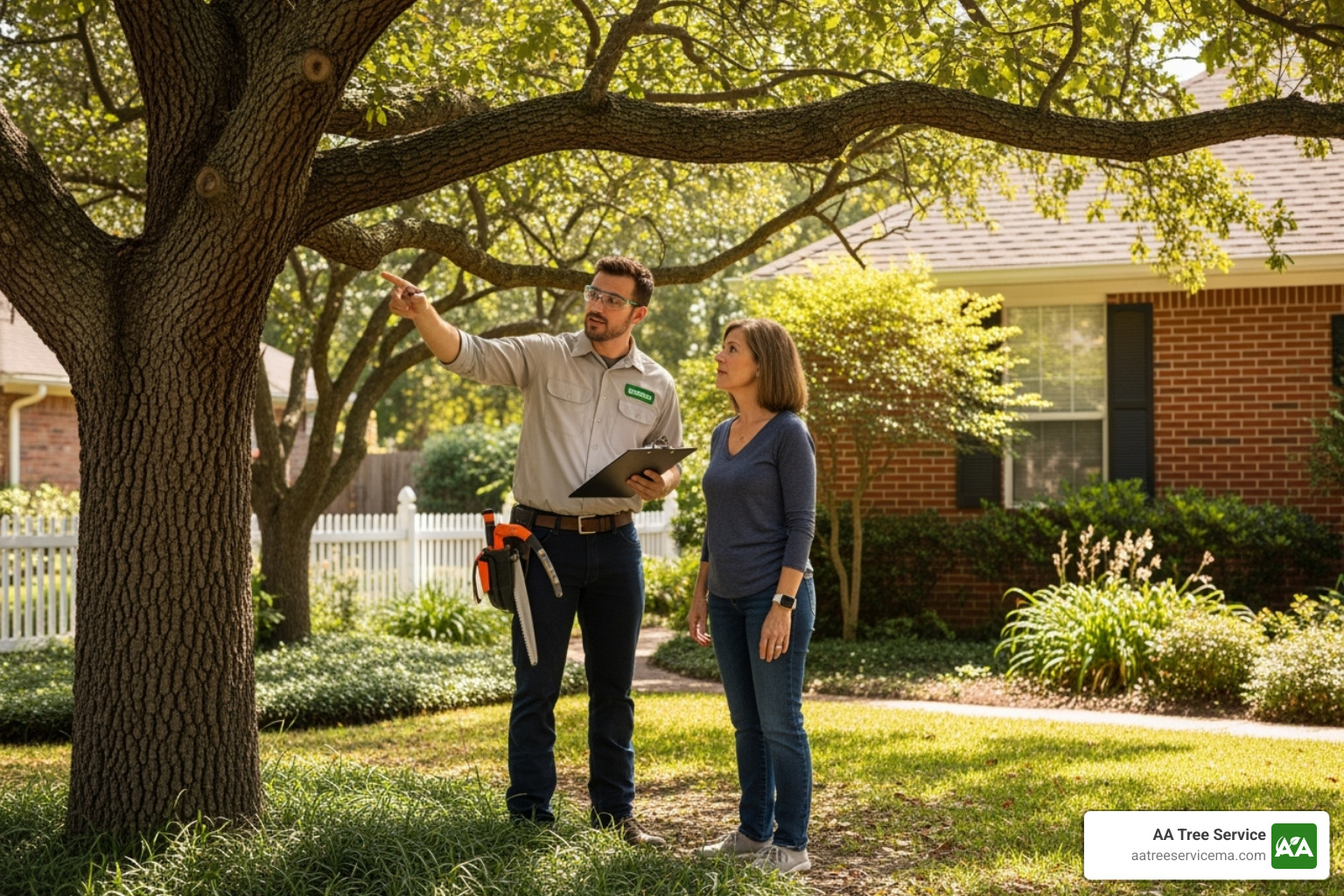
Choosing the right bamboo removal service is critical for a permanent solution. Not all tree services have the specialized knowledge to handle bamboo correctly; some may only cut the canes, which makes the problem worse. Look for a company with proven expertise in winning the fight against this invasive plant.
When selecting a provider in Massachusetts or New Hampshire, prioritize:
- Local Expertise: A company familiar with New England’s climate and common bamboo varieties will understand how to tackle your specific problem.
- Licensing and Insurance: This is non-negotiable. Ensure the company has full liability and workers’ compensation coverage to protect you. Ask for proof.
- Customer Reviews: Check online reviews and ratings from organizations like the Better Business Bureau. Look for feedback on long-term results and professionalism.
- Transparent Quoting: Avoid companies that give a price over the phone. A professional service will conduct an on-site assessment before providing a detailed, written quote.
Key Questions to Ask a Potential Company
Before hiring, get clear answers to these questions:
- Are you fully licensed and insured in my state?
- Can you provide local references for similar bamboo removal projects?
- What is your specific removal process for my type of bamboo?
- How do you guarantee against regrowth?
- Is debris removal and full cleanup included in the quote?
- What is the estimated timeline for the project?
Vetting a Company’s Credentials and Reputation
Do your homework before signing a contract.
- Read Online Reviews: Look for consistent feedback on effectiveness and customer service.
- Verify Insurance: Ask for current certificates of liability and workers’ compensation.
- Get a Written Contract: The contract should detail the scope of work, timeline, cost, and any guarantees.
- Check Professional Standing: Look for high ratings with the BBB and any professional affiliations.
Taking these steps ensures you hire the right bamboo removal service the first time, saving you money and the frustration of recurring bamboo.
Frequently Asked Questions About Bamboo Removal
Why did my bamboo grow back after I cut it down?
Bamboo grows back after cutting because the real plant is the underground rhizome system. These thick root networks store massive amounts of energy. When you cut the visible canes, the rhizomes are stimulated to send up new shoots, often more aggressively than before. The resilient nature of bamboo means that without completely removing or killing this underground system, it will continue to sprout. This is why most DIY attempts fail and professional bamboo removal service, which focuses on rhizome extraction, is necessary for permanent removal.
How long does it take to completely remove bamboo?
The time required for complete removal varies from a few hours to multiple days. The duration depends on several factors:
- Patch Size and Density: Larger, denser patches take longer to clear.
- Bamboo Type: Running bamboo requires more extensive excavation than clumping bamboo due to its far-reaching roots.
- Accessibility: Difficult-to-reach areas may require more manual labor, extending the timeline.
True permanent removal may also include follow-up monitoring or visits to ensure no new shoots emerge from missed rhizome fragments.
Can my bamboo cause problems with my neighbors?
Yes, absolutely. Bamboo is a leading cause of property disputes in Massachusetts and New Hampshire. Running bamboo does not respect property lines and its rhizomes can easily travel under fences and driveways to invade a neighbor’s yard, potentially causing significant damage.
Many towns now have ordinances holding property owners financially and legally responsible for damage caused by invasive plants like bamboo. Addressing a bamboo problem early with professional containment or removal can prevent costly legal fees, property damage claims, and strained neighborly relations. A bamboo removal service is a proactive investment to avoid these issues.
Reclaim Your Yard: Final Steps After Bamboo Removal
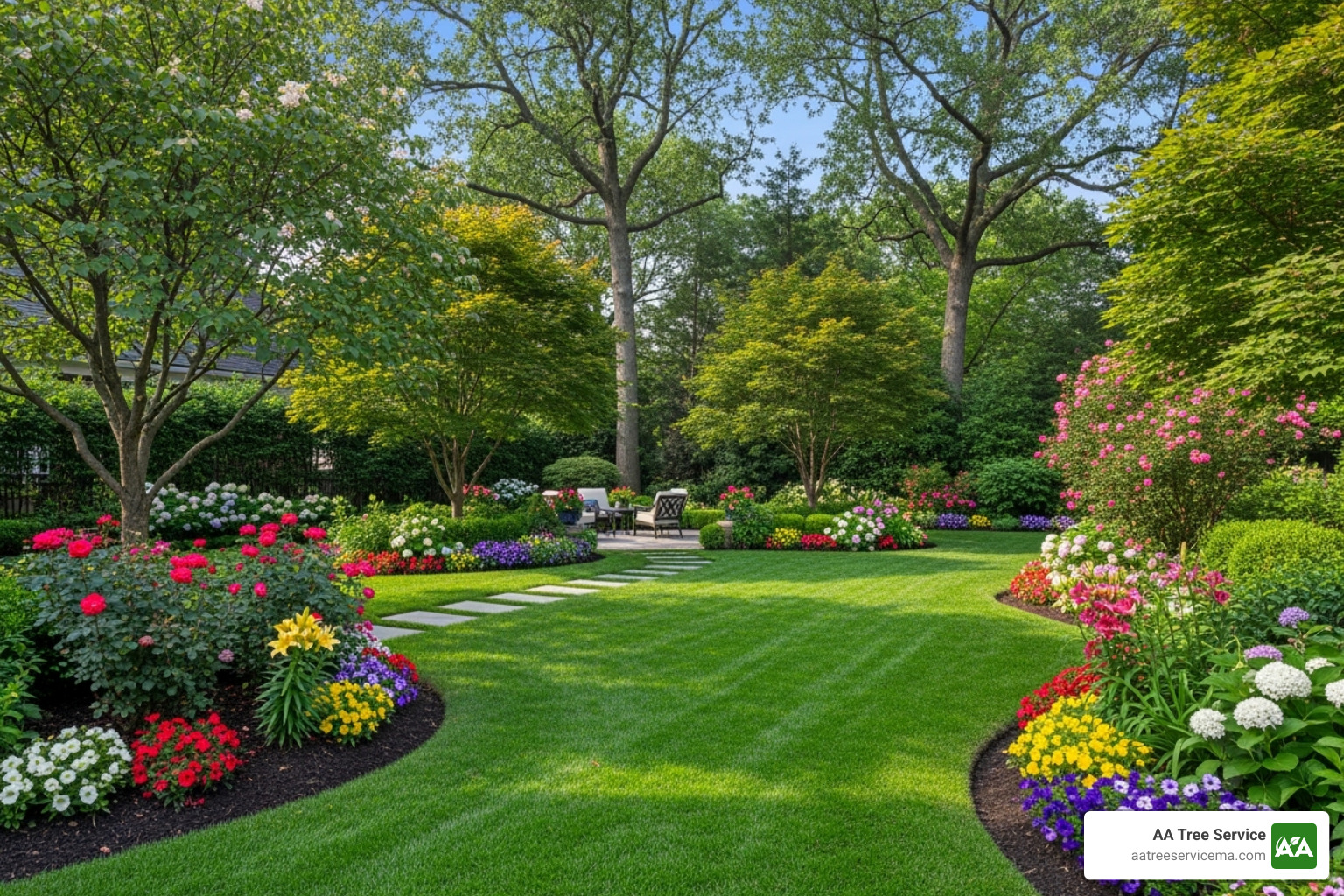
Now that you understand the threat of invasive bamboo, you know that professional intervention is the most effective path to a permanent solution. The resilience of bamboo’s underground rhizomes means DIY efforts often fail, allowing the plant to return even stronger.
When choosing a bamboo removal service in Massachusetts or New Hampshire, look for local expertise, proper insurance, transparent quoting, and a proven track record. With over 20 years of experience, AA Tree Service is committed to customer satisfaction, offering free same-day quotes and 24/7 emergency services.
Once the bamboo is gone, you have a clean slate for post-removal landscaping. You can begin soil restoration and plant native species that thrive in our New England climate, creating the beautiful, low-maintenance yard you’ve always wanted. Instead of battling an invasive plant, you can enjoy a peaceful outdoor space.
Don’t let bamboo control your property any longer. Take the first step toward reclaiming your yard. Request a Quote for your bamboo removal project today, and let us transform your bamboo battleground into a peaceful retreat.