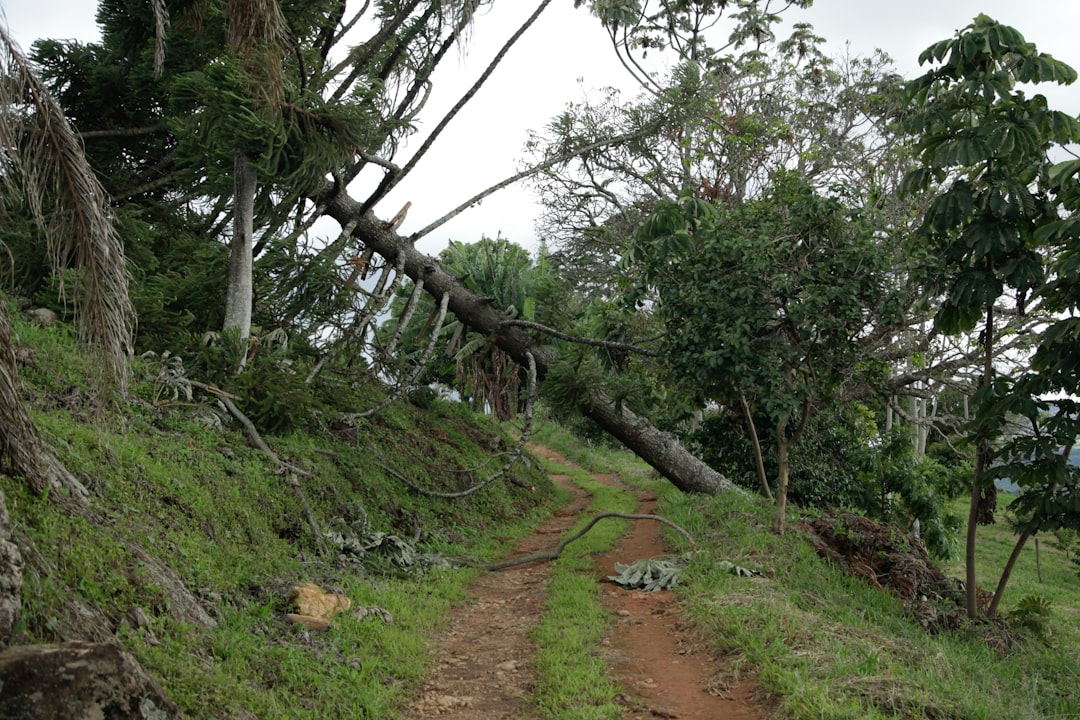
When Nature Strikes: Understanding Storm Tree Removal
Storm tree removal is the professional service of safely removing trees damaged by severe weather, including fallen trees, broken branches, and unstable trees that pose safety risks to people and property.
Quick Answer for Storm Tree Removal:
- Immediate safety first – Stay away from downed power lines and unstable trees
- Call professionals – Never attempt DIY removal of large or dangerous trees
- Document damage – Take photos for insurance claims
- Get multiple quotes – Compare licensed, insured tree services
- Act quickly – Storm-damaged trees can become more dangerous over time
When storms hit Massachusetts and New Hampshire, they leave behind a trail of damaged trees that can threaten homes, block roads, and create serious safety hazards. High winds, ice, and heavy snow can snap branches, split trunks, or uproot entire trees in minutes.
The aftermath of a storm is actually more dangerous than the storm itself. According to research, statistics show that more people are usually killed during storm clean-up than during storms. This happens because homeowners attempt to remove damaged trees themselves, not realizing the hidden dangers involved.
Storm-damaged trees are unpredictable. A tree that looks stable might have invisible damage to its root system or internal structure. Large branches can be under tension, ready to spring back violently when cut. Power lines might be hidden in the debris, creating electrocution risks.
Professional storm tree removal involves specialized equipment, trained crews, and safety protocols that most homeowners don’t have access to. These experts can assess whether a tree can be saved through pruning and cabling, or if complete removal is necessary for safety.
The decision to remove a storm-damaged tree isn’t always obvious. Some trees with minor damage can recover with proper care, while others that look fine might have structural damage that makes them dangerous. This is why getting a professional assessment is so important after any significant storm event.
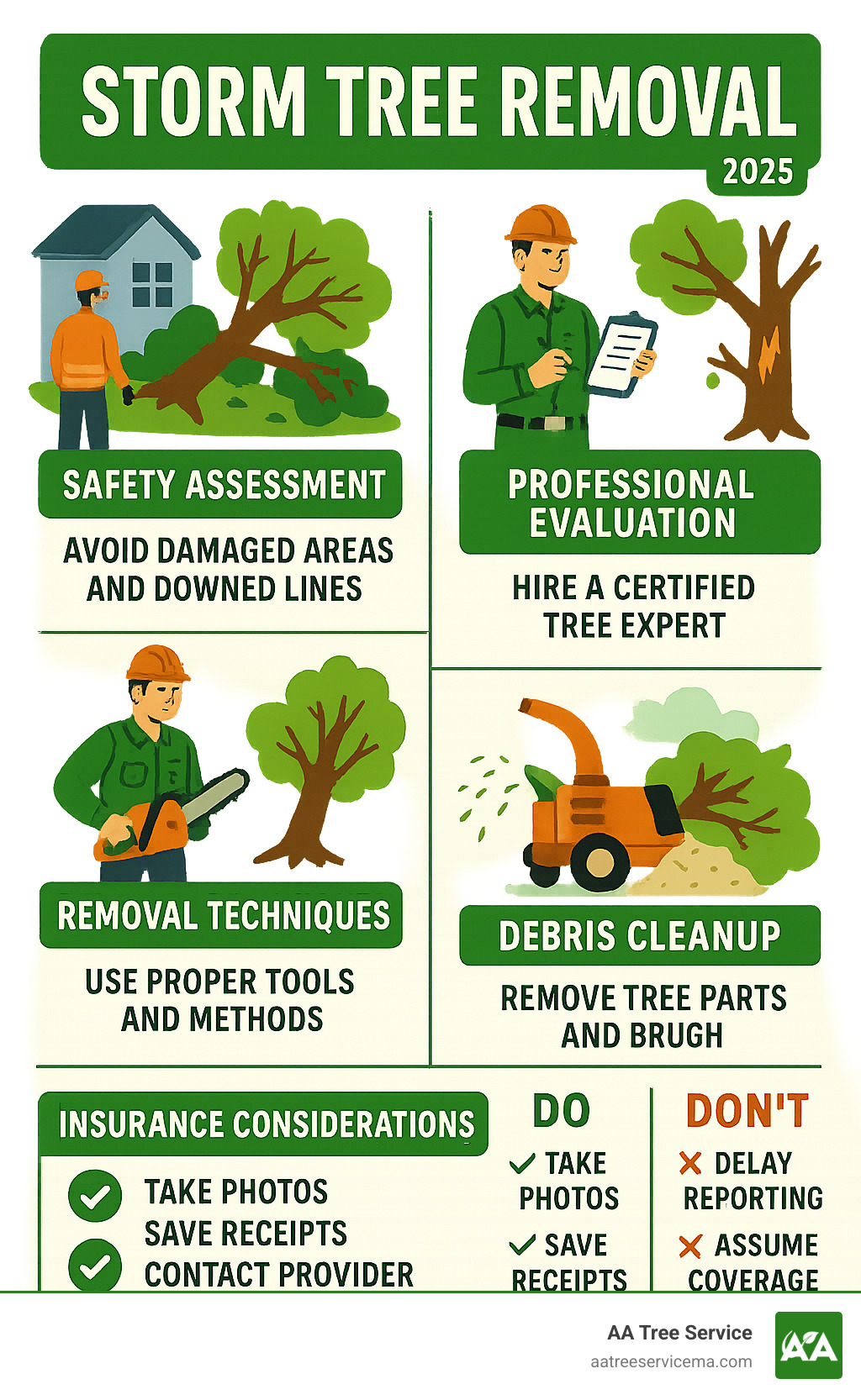
Common storm tree removal vocab:
The Aftermath of the Storm: Your First Steps
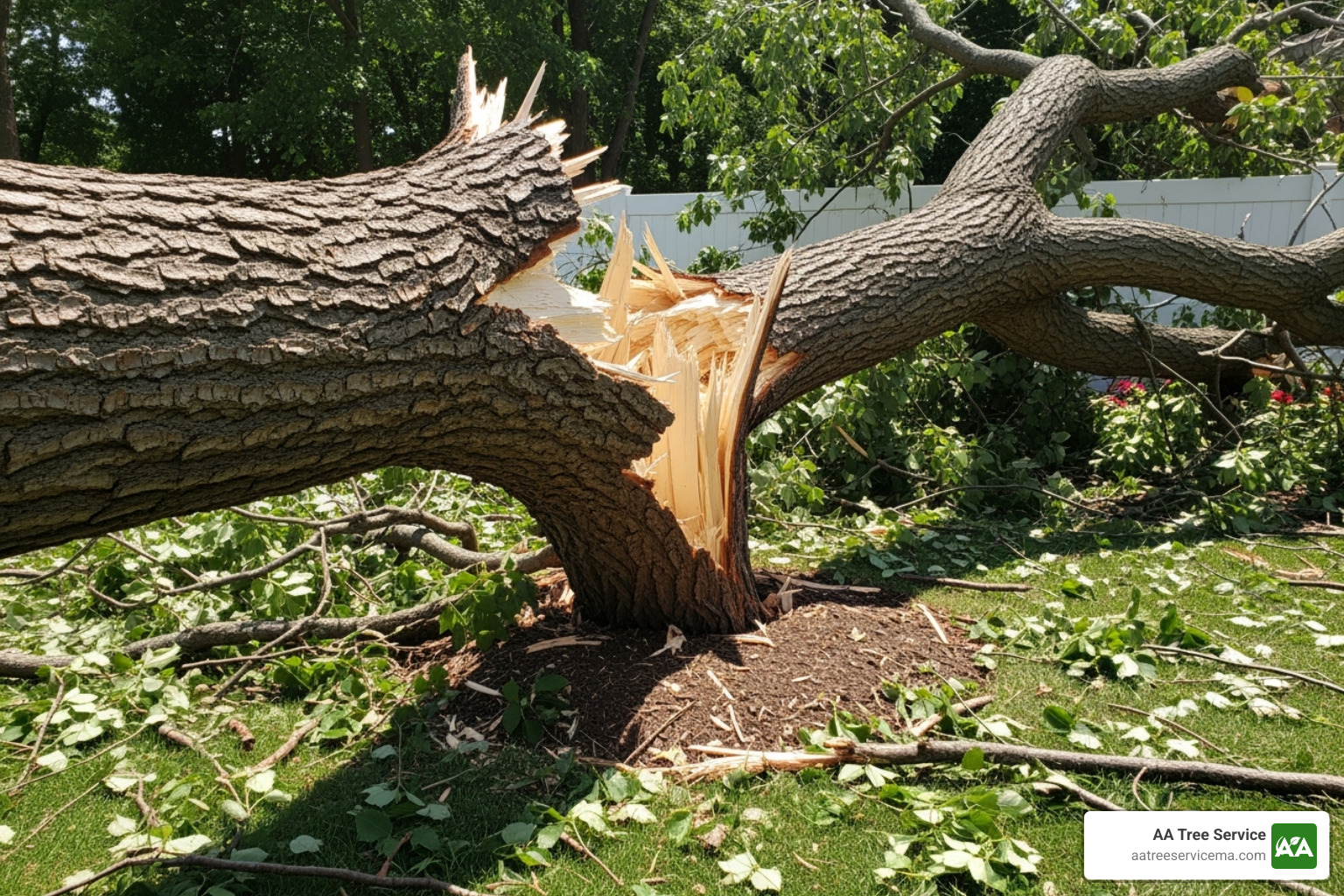
A calm yard can hide serious dangers after severe weather. Take a beat, look around, and follow a few simple rules before grabbing a rake or chainsaw.
What Are the Immediate Safety Precautions to Take?
- Stay inside until the storm fully clears. Secondary gusts often topple already-damaged trees.
- Keep at least 35 ft from downed power lines and anything touching them. Assume every line is live; call the utility company right away.
- Check for gas leaks. If you smell rotten eggs or hear hissing, evacuate and dial 911.
- Scan for unstable structures (loose roofs, leaning fences) and give them a wide berth.
- Restrict the area—kids, pets, and curious neighbors should stay well away.
- Call professionals for Emergency Tree Services if anything is bigger than you can safely drag.
Documenting the Damage for Insurance
- Take wide-angle photos of the whole scene.
- Grab close-ups of roof holes, vehicle dents, fence breaks, etc.
- Record a short video walk-through while narrating the date, time, and what you see.
- Save every file; you can delete extras later but you can’t rewind cleanup.
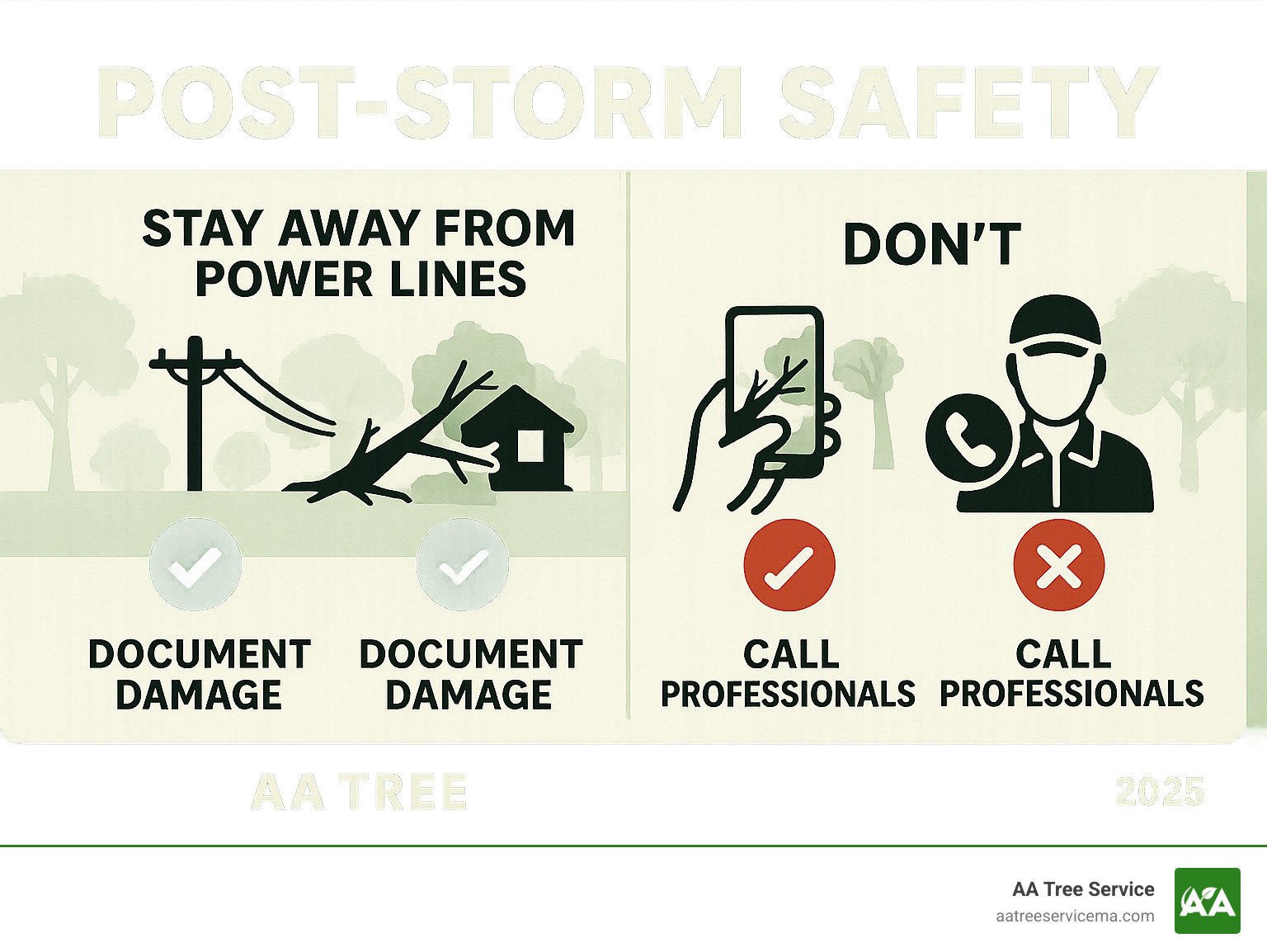
To Save or Remove: Assessing Your Storm-Damaged Trees
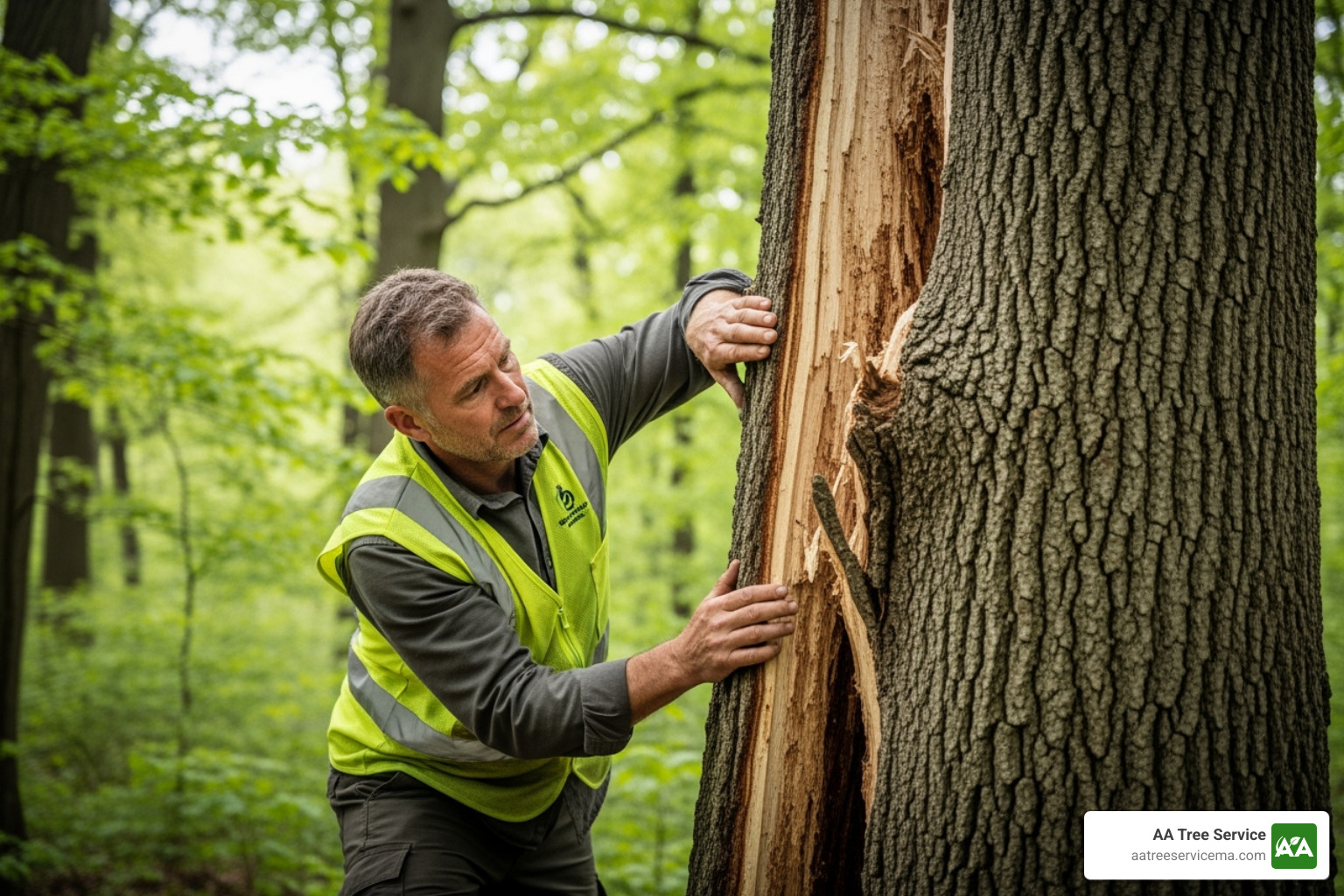
Not every battered tree is a lost cause, but deciding which ones stay or go takes a trained eye. Health before the storm, species, and damage type all matter.
Common Types of Storm Damage to Look For
- Broken branches (small = cosmetic, large = serious)
- Cracked trunks or split crotches
- Sudden new lean or visible root plate lift
- Partial or full uprooting
- Lightning scars or large missing bark
More detail at Broken Trees.
When is Storm Tree Removal Necessary?
Remove the tree when you see any of these red flags:
- Over 50 % canopy loss
- Major trunk crack/split
- Leaning 45°+ or on a structure/power line
- Significant root damage or full uproot
Fast help: Fallen Tree Removal.
When Can a Damaged Tree Be Saved?
A tree often survives if it still has:
- An intact trunk
- Less than 25 % canopy loss
- Solid roots (no lift)
Arborists can prune, cable, or brace to restore structure.
The Professional Storm Tree Removal Process
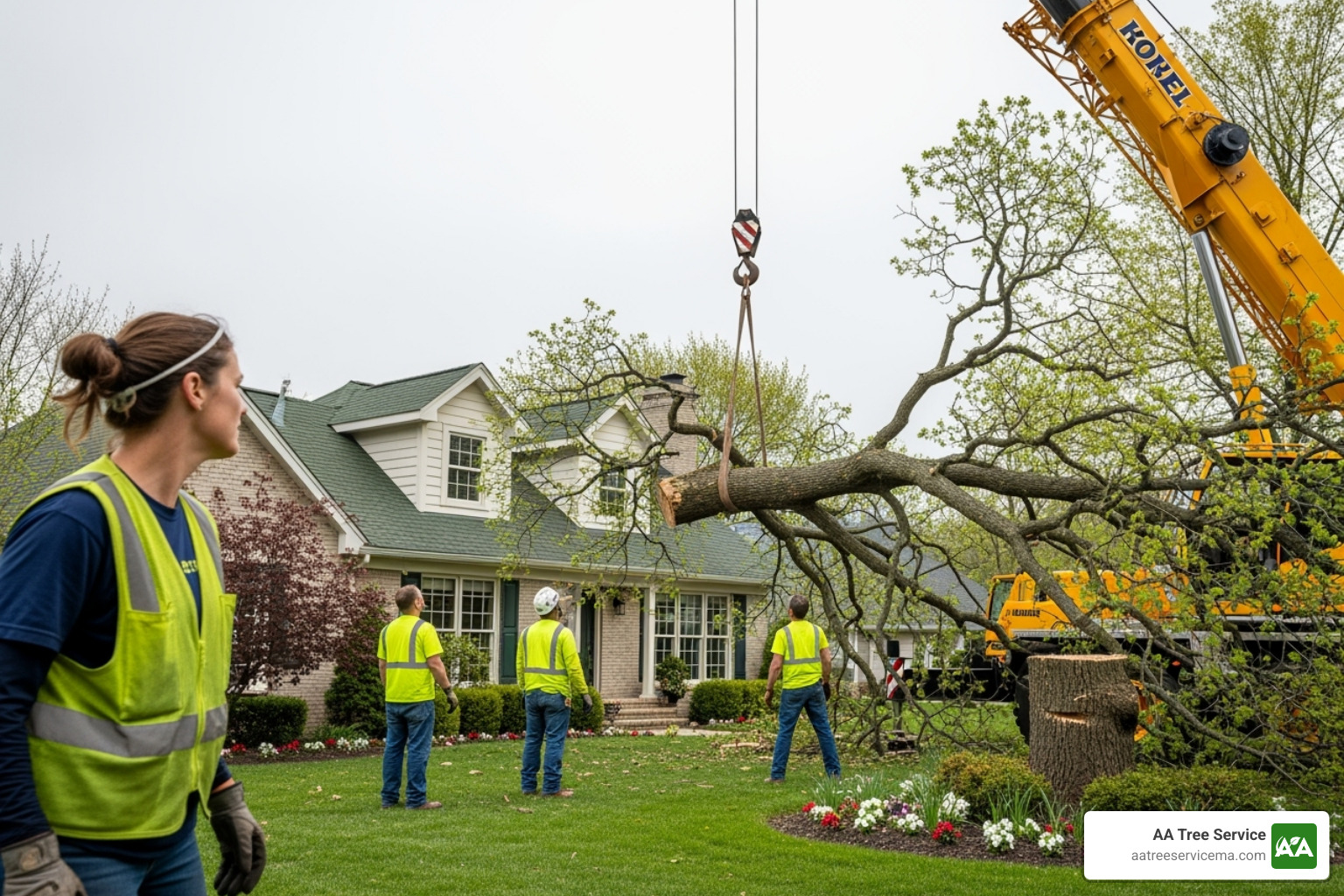
Removing a storm-damaged tree is equal parts science, skill, and heavy machinery. Crews map out every cut before a chainsaw starts.
- Specialized gear: cranes, bucket trucks, rigging, protective equipment.
- Controlled dismantling: pieces lowered by rope to protect roofs, fences, and landscaping.
- Debris hauling & stump grinding finish the job so you’re not left with a giant stump or piles of wood.
Need it now? Call for 24 Hour Emergency Tree Removal.
Why DIY Tree Removal is a Dangerous Idea
- Hidden tension in limbs turns cuts into spring-loaded hazards.
- Power lines may be energized even in an outage.
- Chainsaw kickback and falls send thousands to ERs post-storm.
- One wrong notch can drop tons of wood onto your roof.
Safer option: Downed Tree Removal Near Me.
How to Choose a Qualified Storm Tree Removal Professional
- Proof of $1 M+ liability insurance and workers’ comp.
- On-staff Certified Arborists.
- 5+ years storm-removal experience in MA & NH.
- Strong local reviews and BBB record.
- Written estimate outlining scope, cleanup, and disposal.
- Clear safety plan.
Directory help: TreeCareTips.org.
What to Expect During the Cleanup Process
- Assessment & free quote (often same-day).
- Scheduling based on urgency; trees on homes/power lines get priority.
- Site prep: barricades, equipment setup, crew briefing.
- Sectional removal, chipping, log hauling.
- Stump grinding & final rake-out so your yard looks normal again.
Full menu at Storm Cleanup Services.
Understanding Costs and Insurance Coverage

Will My Insurance Cover Tree Removal Costs?
- Yes, if the tree damages a covered structure (house, garage, fence).
- Maybe, if it blocks the only driveway—check your policy limits.
- Often yes, if a certified arborist labels it an imminent threat before it falls.
- Rarely, if it lands harmlessly in the yard.
- Typical debris-removal caps: $500–$1,000 per tree. Document everything.
What Factors Influence the Cost of Removal?
Prices vary widely (internet averages, not AA Tree Service quotes):
| Factor | Low | High |
|---|---|---|
| Small tree (<30 ft) | $350 | $1,500 |
| Large tree (>80 ft) | $1,500 | $5,000+ |
| Crane add-on | +$500 | +$2,000 |
Other cost drivers: tight access, proximity to power lines, weekend/emergency surcharges, and sheer volume of debris.
Shopping around? Get at least two written bids and ask what’s included in Tree Debris Removal Service.
How to Prevent Future Storm Damage to Your Trees
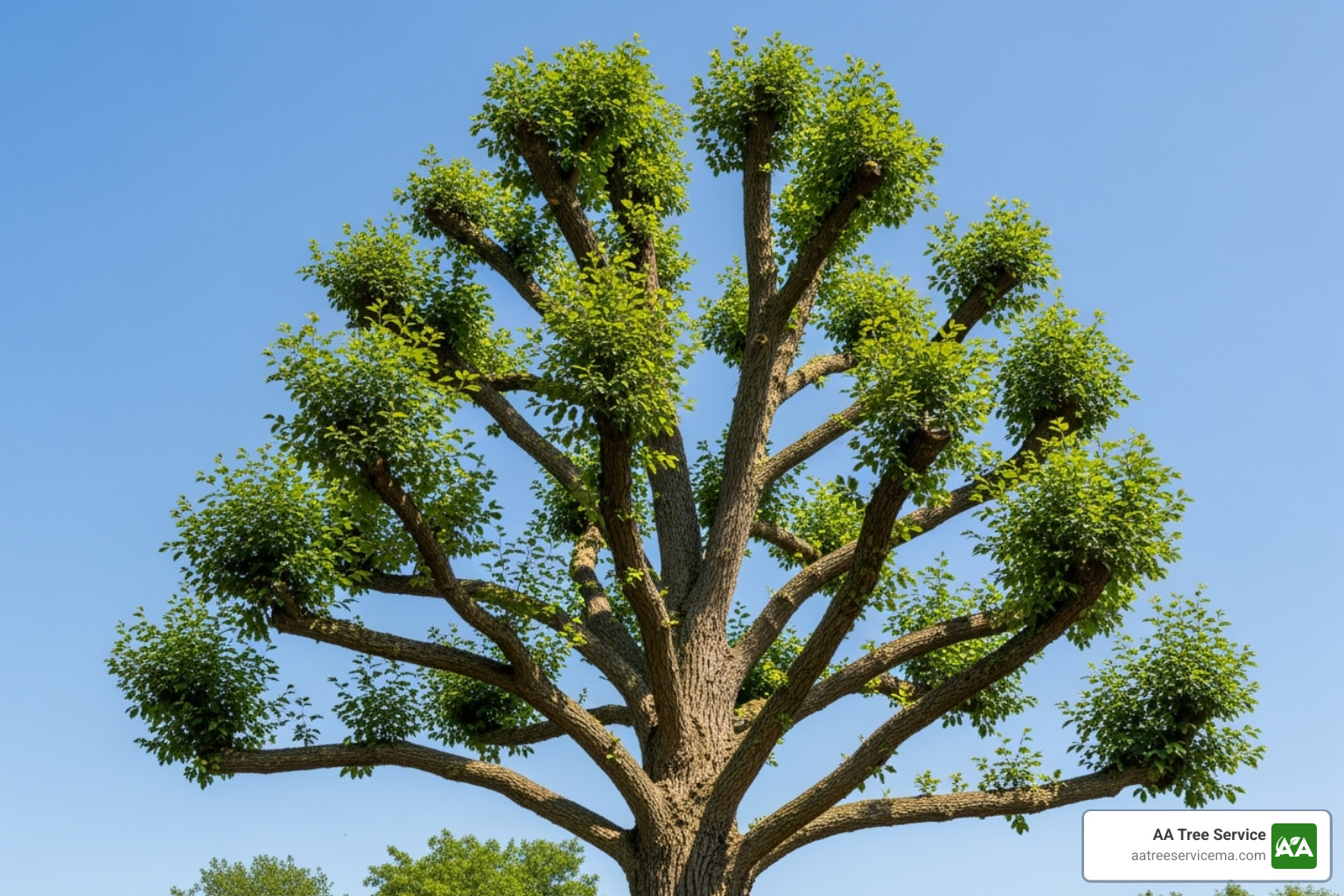
Proactive Pruning and Maintenance
- Inspect twice a year; look for cracks, deadwood, rubbing branches.
- Thin crowns so wind can pass through.
- Remove dead or weak limbs—first to break at 50 mph winds.
- Mature trees: prune every 3–5 years; young trees: 2–3 years.
Strengthening Your Tree’s Foundation
- 2–4 inches of mulch, but not against the trunk.
- Deep water during summer dry spells.
- Keep vehicles/heavy equipment off the root zone (top 12–18 inches of soil).
Choosing Storm-Resistant Trees for MA & NH
- Right tree, right place—know the mature size.
- Favor native, strong-wooded species like white oak, sugar maple, or river birch.
- Avoid weak-wooded, fast growers near structures.
Routine care now is cheaper than emergency storm tree removal later.
Frequently Asked Questions about Storm Tree Removal
How much does emergency storm tree removal cost?
Internet averages (not AA Tree Service pricing) show $500–$5,000+ depending on size, complexity, and if cranes or night crews are needed. Insurance often helps when a structure is hit.
How long does storm cleanup take?
- Single-tree jobs: a few hours.
- Whole-yard cleanups: one full day.
- Region-wide disasters: crews may triage for days; non-urgent work can wait a week or more.
What happens to all the wood and debris after removal?
- Chipping for mulch you can keep or we haul away.
- Log hauling or optional firewood cuts.
- Landfill only for diseased or unusable wood.
Professionals handle everything—see our Storm Tree Service page for details.
Conclusion: Trust the Professionals for Safe Storm Recovery
Storm-damaged trees are unpredictable and dangerous. AA Tree Service brings 20+ years of experience, 24/7 emergency response, and free same-day quotes across Massachusetts and New Hampshire. Let our certified crews handle the heavy lifting while you focus on getting life back to normal.
Need help right now? Contact us for expert tree removal services and sleep easier tonight.