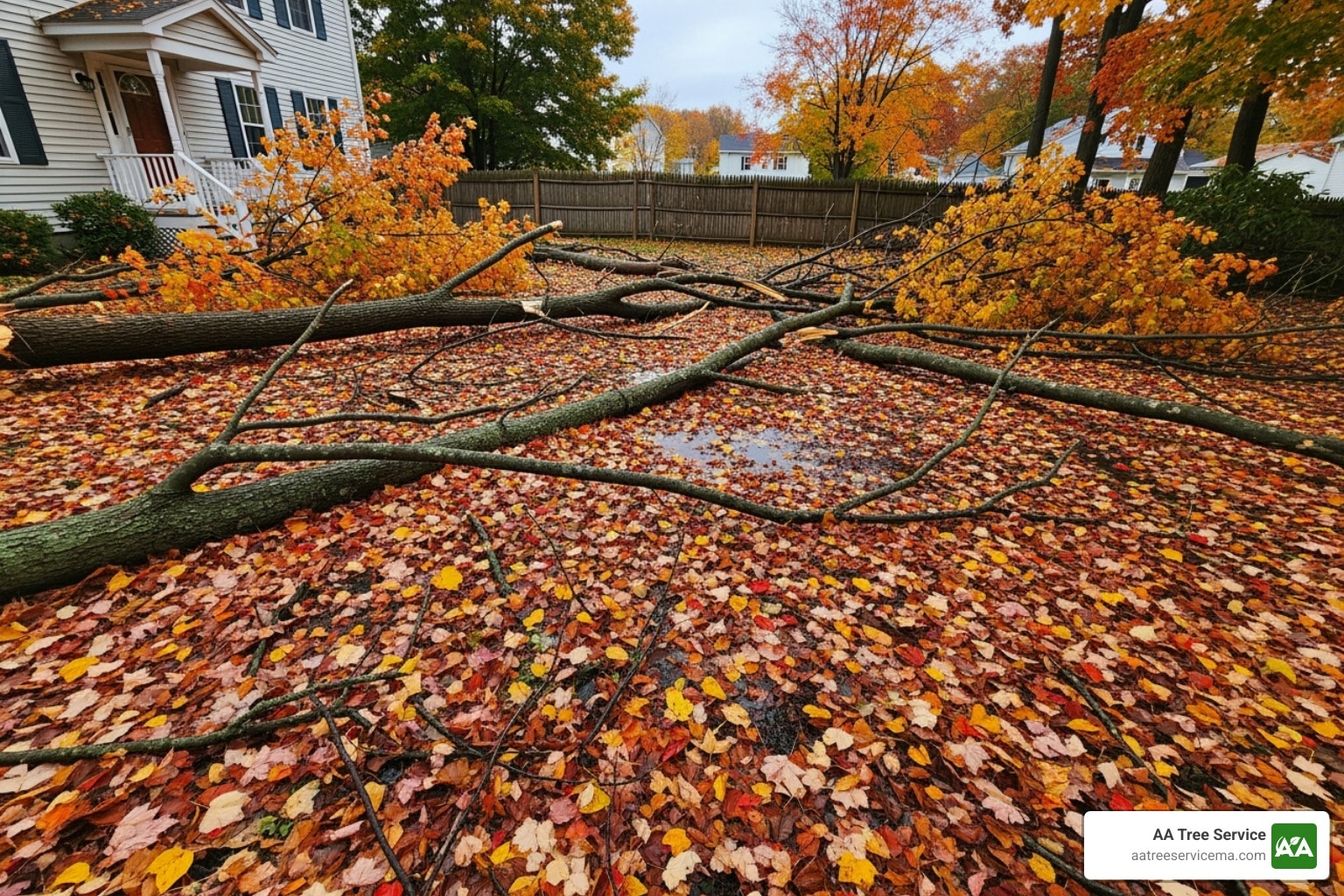
Why Professional Tree Debris Removal Matters for Massachusetts & New Hampshire Homeowners
Professional tree debris removal is a critical, specialized service designed for the safe, efficient, and complete cleanup of organic waste from your property. This includes fallen branches, entire uprooted trees, logs, stumps, and any other vegetative matter left behind by storms, tree maintenance, or land development. Utilizing industrial-grade equipment and proven techniques, professional companies manage debris scenarios that are far too dangerous, heavy, or complex for the average homeowner to handle alone. In regions like Massachusetts and New Hampshire, where severe weather events like Nor’easters and heavy snowstorms are common, the need for this service is not a luxury but a necessity for maintaining a safe and usable property.
What Comprehensive Professional Tree Debris Removal Includes:
- Emergency Storm Damage Cleanup: Rapid response to clear fallen trees, scattered limbs, and other hazards after severe weather.
- Post-Removal Debris Management: Hauling away logs, chipping branches, and grinding stumps after a planned tree removal.
- Land and Lot Clearing Waste: Managing the immense volume of trees, brush, and root systems from property development or expansion projects.
- Hazardous Debris Handling: Safely managing unstable logs under tension, debris entangled with live power lines, or diseased wood that requires careful disposal.
- Eco-Conscious Disposal: Ensuring all organic material is properly recycled at approved facilities, often being converted into mulch or firewood, in compliance with all state and local regulations.
After a significant storm sweeps through Massachusetts and New Hampshire, yards are often transformed into obstacle courses littered with debris that poses numerous hidden dangers. Unstable logs can roll or shift unexpectedly, downed power lines can remain energized and hidden within branches, and much of the debris is deceptively heavy, especially when waterlogged. This mess is far more than a simple eyesore; it can cause significant damage to lawn equipment, create serious tripping hazards for your family, suffocate your lawn, and become a breeding ground for pests like termites, carpenter ants, and rodents. Professional crews are equipped with specialized machinery like grapple trucks, industrial wood chippers, and skid-steers to dismantle and remove this debris safely, thoroughly, and efficiently.
Many homeowners drastically underestimate the sheer volume and complexity of a major cleanup. While tree removal costs can range from $150 to over $2,000, with the cleanup portion being a significant factor, investing in a professional service is an investment in safety and property preservation. It prevents potentially life-altering injuries, avoids accidental damage to your home or landscape, and guarantees a complete site restoration that reclaims your outdoor space.
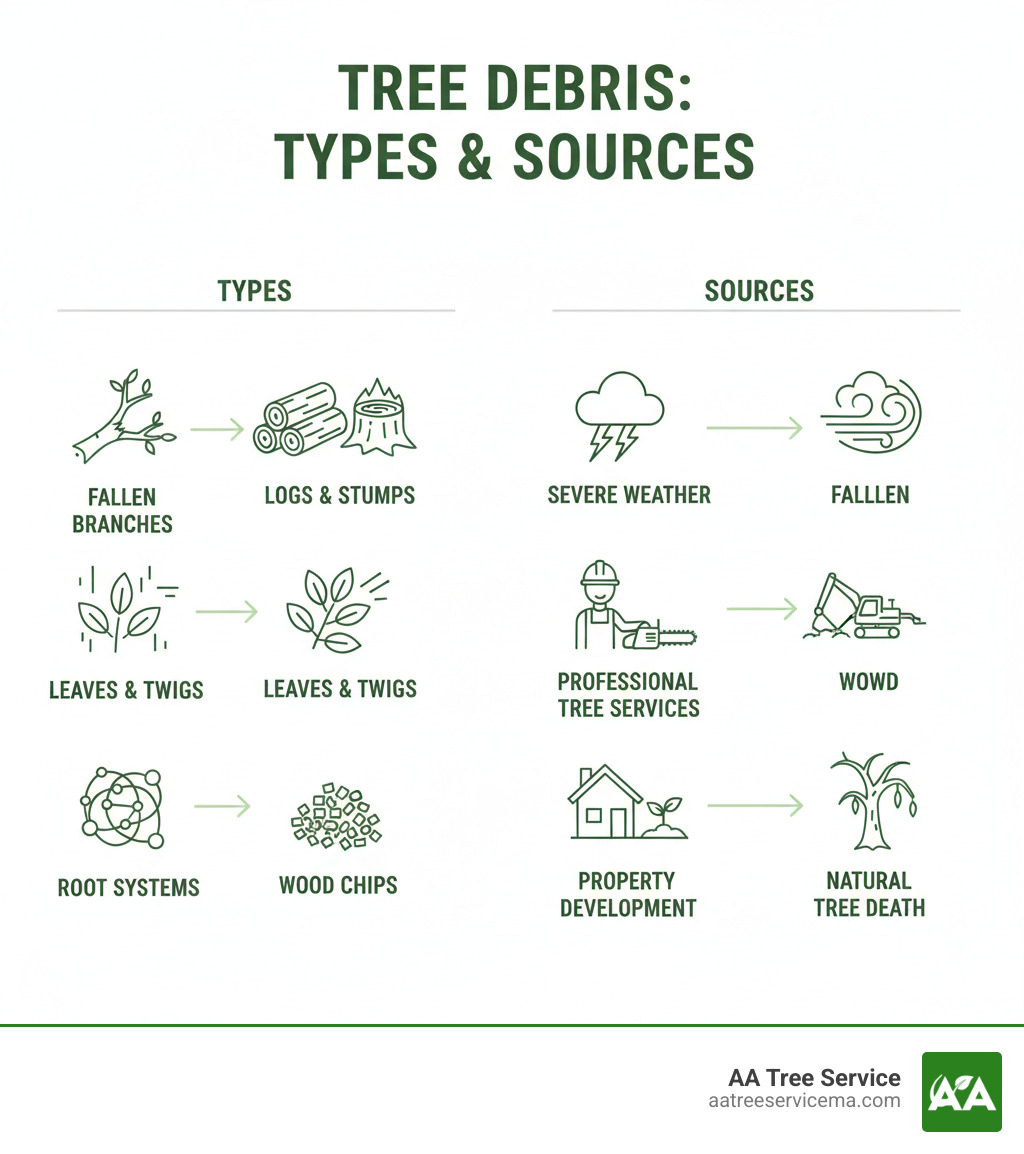
Basic professional tree debris removal vocab:
When Is Professional Debris Cleanup Necessary?
After a fierce New England storm passes, the instinct to start cleaning your yard immediately is understandable. However, while tackling a few scattered twigs is manageable, certain situations absolutely demand the expertise and equipment of professional tree debris removal to ensure your safety and the health of your property. Knowing when to put down the rake and pick up the phone is crucial.
- Fallen Trees: A mature tree is an object of immense weight, often several tons, and contains tremendous stored energy. If it has fallen, it may be unstable and under tension, capable of shifting or rolling with deadly force. Attempting to cut it without understanding these forces can be catastrophic. Professionals are needed to safely section and remove the tree, especially if it has landed on a structure like a roof, fence, or vehicle, or is compromising underground utilities. For more on handling storm aftermath, see our Storm Damage Tree Care Tips.
- Widespread Branch Scattering: After a severe wind or snow event in Massachusetts and New Hampshire, a yard blanketed in branches is more than just messy—it’s a minefield of hazards. The sheer volume can be overwhelming, and many branches are too heavy or awkward to lift safely. These piles can hide sharp, broken stubs, nails, or other dangerous objects, creating a serious risk of injury. Furthermore, a thick layer of debris can smother and kill your lawn if not removed promptly.
- Diseased Tree Removal: When a tree is removed due to an infection like Dutch elm disease, oak wilt, or other fungal pathogens, the debris is contaminated. Simply chipping it into mulch for your garden beds can spread the disease to your other healthy trees. Professionals understand the protocols for handling and disposing of infected wood, often requiring it to be burned or buried at a designated site to protect the surrounding landscape.
- Land Clearing Projects: Preparing a lot for new construction, an addition, or a major landscaping overhaul generates an enormous quantity of waste. This isn’t just a few branches; it’s entire trees, massive root balls, countless stumps, and tons of brush. This volume is far beyond the capacity of residential tools and vehicles and requires a coordinated, large-scale removal and disposal strategy.
- Overgrown and Neglected Vegetation: Years of accumulated fallen leaves, branches, and dead brush can create a significant fire hazard, especially during dry spells. This dense layer of fuel can turn a small spark into a dangerous blaze. It also detracts from your property’s curb appeal and value, and can harbor a variety of pests. A large-scale cleanup by professionals can mitigate these risks and instantly improve your property’s appearance.
Furthermore, it’s vital to watch for warning signs that indicate a need for professional assessment before a tree fails. Dead branches hanging precariously overhead (known as ‘widow-makers’), deep cracks or splits in the trunk that signal structural instability, and leaning trees whose root plates have shifted are all emergencies in the making. Addressing these issues proactively with expert help is always safer and often less expensive than dealing with the aftermath of a collapse.
The Benefits of Professional Tree Debris Removal vs. DIY
When your yard is buried under a mountain of branches and leaves, the DIY approach might seem like a cost-effective solution. However, professional tree debris removal offers far more than just convenience—it’s a comprehensive service centered on safety, efficiency, and achieving a truly complete restoration of your property. Here’s a detailed comparison:
| Feature | DIY Tree Debris Removal | Professional Tree Debris Removal |
|---|---|---|
| Safety | High risk of severe injury (lacerations, falls, strains, back injuries, electrocution) | Minimized risk with trained, insured crew, proper safety gear (PPE), and established protocols |
| Cost | Apparent low initial cost; high potential for hidden costs (medical bills, property damage, tool rental, disposal fees, fines) | Transparent, upfront estimates; an investment in safety, efficiency, and guaranteed results |
| Time | Extremely time-consuming; can consume multiple days or entire weekends | Highly efficient; a job that takes a homeowner days is often completed in a matter of hours |
| Equipment | Limited to basic homeowner tools (rakes, hand saws, small chainsaws); inadequate and unsafe for large debris | Specialized, heavy-duty equipment (industrial chippers, grapple trucks, skid-steers, cranes) |
| Disposal | Complicated and difficult; may involve multiple trips to a dump, violating local ordinances, or improper recycling | Streamlined, environmentally responsible recycling and disposal that adheres to all local and state regulations |
| Results | Often incomplete cleanup; leftover hazards, potential for lawn/property damage, lingering pest issues | Thorough, meticulous cleanup; site is restored to a pristine, safe, and usable condition |
The Hidden and Severe Dangers of DIY Cleanup
DIY cleanup is fraught with significant, often invisible dangers that can lead to devastating consequences.
- Lifting Injuries: Green wood is incredibly dense and heavy. A seemingly manageable log can weigh hundreds of pounds. Improper lifting techniques can easily lead to debilitating injuries like herniated discs, severe muscle strains, and chronic back problems.
- Unstable Logs and Tension: A fallen tree is not a static object. It can be under immense pressure from its own weight and position. Cutting a branch or section that is under tension can cause it to snap back with explosive force. Similarly, cutting a log on a slope can cause it to roll unexpectedly. Professionals are trained to read these forces and dismantle the tree in a safe sequence.
- Hidden Pests and Wildlife: Debris piles are an open invitation for pests. They provide ideal shelter for hornets, wasps, venomous spiders, snakes, and rodents. Disturbing a pile can result in painful stings or bites. These piles can also attract ticks, increasing the risk of Lyme disease.
- Power Line Hazards: This is the most lethal risk. A branch touching a power line can energize the entire tree and the surrounding ground. You don’t even need to touch the wire itself to be electrocuted. Only certified professionals working with the utility company should ever work near power lines.
- Chainsaw Accidents: Chainsaws are among the most dangerous consumer tools, causing thousands of emergency room visits each year. Kickback—when the tip of the saw blade hits an object and kicks back at the operator—is a primary cause of severe facial and neck lacerations. Proper training and personal protective equipment (PPE) are essential.
- Incomplete Removal: Leaving smaller branches and debris behind creates ongoing tripping hazards, can damage lawnmowers, and continues to harbor pests and plant diseases that can spread to the rest of your yard.
- Improper Disposal Fines: Massachusetts and New Hampshire have strict regulations for yard waste disposal. Dumping debris in wooded areas, on public land, or in unauthorized locations can lead to substantial fines and harm the local ecosystem.
Why Professionals Guarantee a Better, Safer Outcome
Choosing a professional service is an investment in expertise, advanced technology, and total peace of mind.
- Thorough Site Cleanup: Our Tree Clean Up Service goes beyond just hauling away the big logs. We ensure every branch, twig, wood chip, and leaf is removed, often finishing with a final rake and blow to leave your property immaculate.
- Massive Time Savings: What could take you several weekends of grueling labor, our crew can typically accomplish in just a few hours, freeing you to focus on your family and other priorities.
- Complete Peace of Mind: Our insured and experienced professionals assume all the risks. You and your family can stay safely indoors while the hazardous work is completed by a team that follows strict safety protocols.
- Prevention of Future Problems: During the cleanup, our trained arborists can often spot other potential hazards on your property, such as diseased trees or damaged limbs, giving you the chance to address them proactively.
- Proper Waste Management: We are committed to environmental stewardship. We ensure all organic debris is recycled responsibly into high-quality mulch or usable lumber, adhering to all local environmental regulations in MA and NH.
- Comprehensive Risk Mitigation: Our crews are outfitted with professional-grade protective gear (helmets, eye/ear protection, chaps) and are fully insured with both liability and workers’ compensation coverage to protect you from any and all liability.
Ultimately, professional tree debris removal is a smart investment in the safety of your family and the value of your property, delivering lasting results that DIY efforts simply cannot match.
The Process and Equipment Used in Professional Tree Debris Removal
Professional tree debris removal is a highly systematic process, refined over our 20 years of serving homeowners across Massachusetts and New Hampshire. It’s a far cry from just showing up with chainsaws and a truck; it is a coordinated, strategic operation designed to safely and efficiently restore your property with minimal impact on the surrounding landscape.
Our proven process unfolds in clear stages:
- Comprehensive On-Site Assessment: Our first step is a thorough evaluation. We assess the total volume and size of the debris, its precise location on your property, and identify any potential hazards. This includes checking for proximity to structures, overhead power lines, underground utilities, septic systems, and delicate landscaping to create a safe and effective removal plan.
- Strategic Planning and Logistics: Based on the assessment, we determine the optimal approach. This involves selecting the right equipment for the job, planning access routes for machinery to prevent lawn damage, and establishing the safest sequence for dismantling and removing the debris.
- Safe and Precise Execution: Our trained, certified, and properly geared crew carries out the plan. Using advanced cutting techniques and rigging where necessary, they systematically cut, lift, and remove all debris, prioritizing the protection of your home and property at every step.
- Meticulous Final Cleanup: The job isn’t done when the large debris is gone. We perform a final, detailed sweep of the area, raking, blowing, and clearing away every last wood chip, leaf, and branch to leave your yard looking better than it did before the event.
Core Services and What to Expect
Our services are comprehensive, covering every aspect of tree waste management from start to finish.
- Tree Branch Removal Service: We efficiently handle branches of all sizes, from small limbs to large sections, often chipping them on-site to reduce volume and facilitate recycling.
- Tree Limb Removal Service: For larger, heavier limbs, especially those still attached to a tree, we use specialized rigging and cutting techniques to lower them safely without damaging property below.
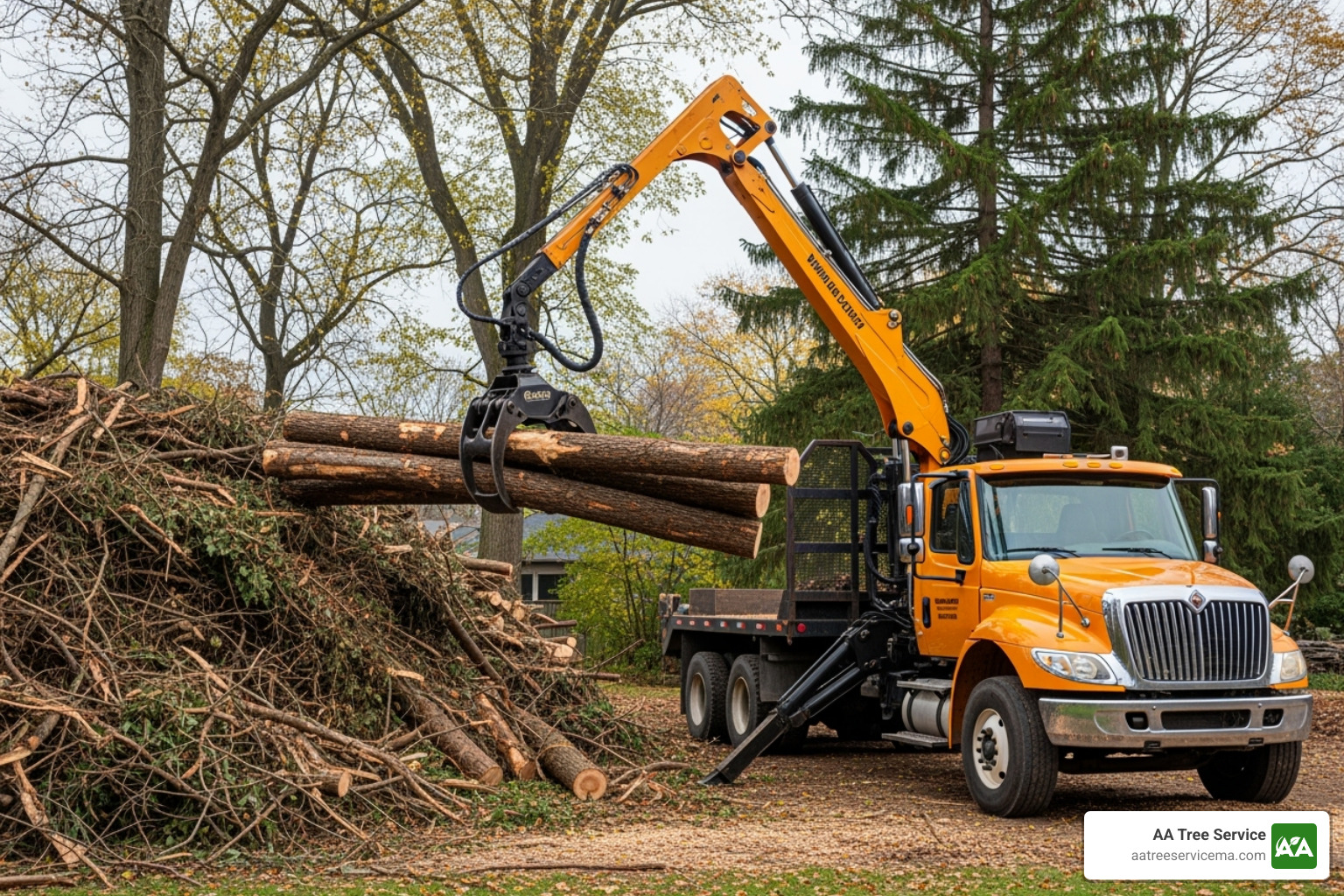
- Log Hauling and Removal: Our powerful grapple trucks make short work of heavy logs and trunk sections, lifting and loading them safely without needing to drag them across your lawn.
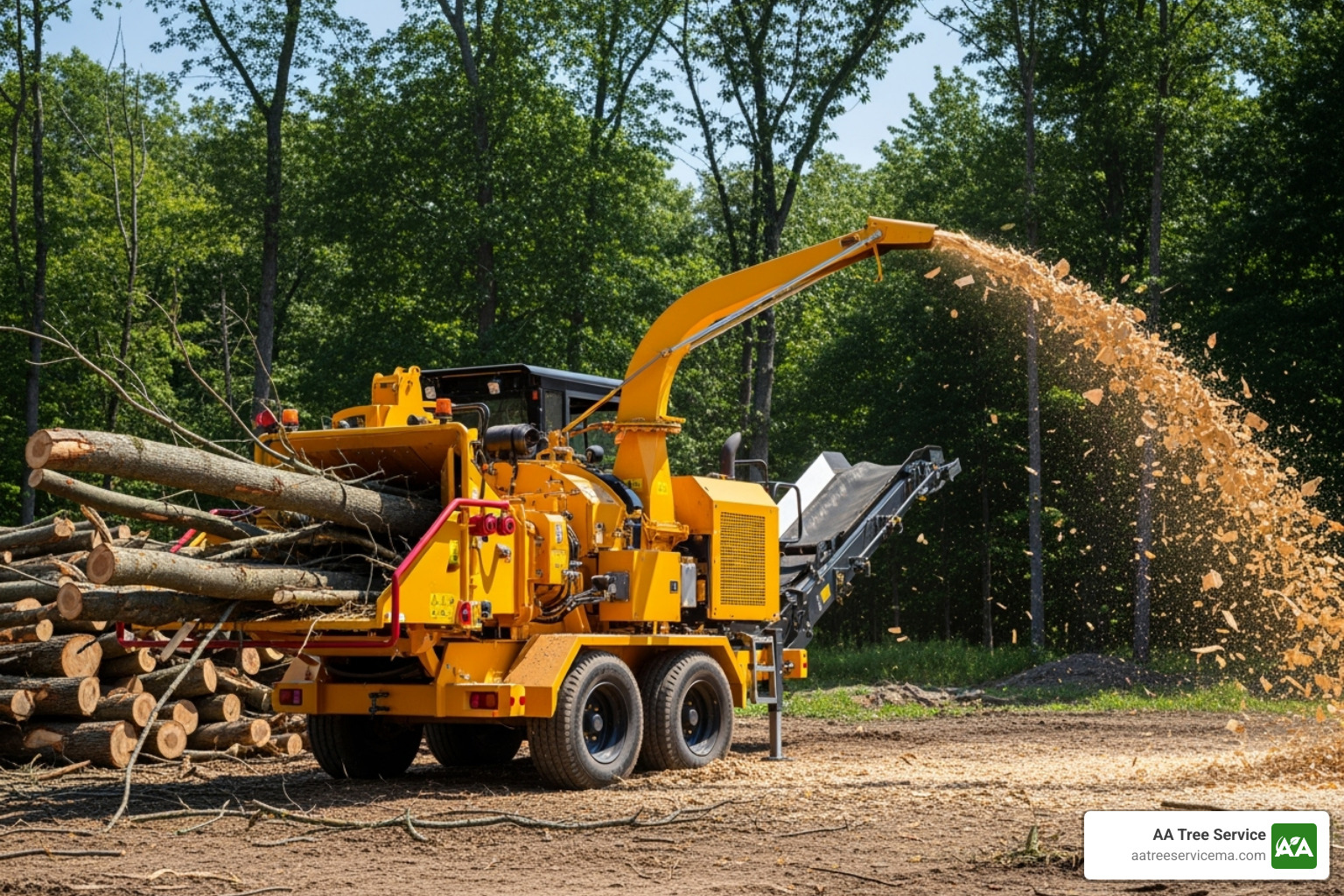
- High-Capacity Wood Chipping: We transform massive piles of branches into manageable, useful wood chips in minutes, which can be hauled away or left for your use as landscape mulch.
- Stump Grinding: We utilize powerful stump grinders to obliterate stumps well below ground level, eliminating tripping hazards, preventing pest infestations, and allowing you to reclaim that space for lawn or garden.
- Lot Clearing Services: For larger-scale projects, we offer comprehensive debris removal for construction site preparation or reclaiming overgrown and unusable areas of your property.
- Complete Site Restoration: Where necessary, we can level the ground, fill in holes left by uprooted trees, and prepare the area with topsoil and seed to fully restore your property’s appearance.
The Specialized Equipment That Gets the Job Done Right
Achieving professional results requires professional-grade equipment. A rake, a wheelbarrow, and a consumer-grade chainsaw are simply no match for the aftermath of a major storm.
- Grapple Trucks: These are the workhorses of debris removal. Their hydraulic claws (grapples) can lift and load massive logs and huge volumes of brush in a single grab, a task that would take hours of dangerous manual labor.
- Industrial Wood Chippers: Unlike smaller rental models, our commercial chippers can process large-diameter branches and entire small trees, rapidly converting them into recyclable wood chips.
- Stump Grinders: Our specialized grinders can access various locations and make quick work of even the largest, most stubborn stumps, grinding them into a mixture of soil and wood chips.
- Professional-Grade Chainsaws: Our crew is equipped with a variety of chainsaws of different sizes and power levels, all maintained to the highest standards for precision cutting and maximum safety.
- Skid-Steers and Compact Loaders: This versatile equipment helps maneuver heavy logs and consolidate debris in tight spaces or on delicate turf with minimal impact to your landscape.
- Bucket Trucks & Cranes: For removing high, broken branches (‘hangers’) or lifting entire trees off of structures, bucket trucks and cranes provide the safest possible access and immense lifting power, preventing further damage.
- Personal Protective Equipment (PPE): Our crew’s most important equipment is their safety gear. Every member is equipped with helmets, eye and hearing protection, chainsaw-resistant chaps, and reinforced gloves.
Safe and Environmentally-Conscious Disposal Practices
Proper disposal is a cornerstone of our professional service and a key differentiator from amateur operations. We are committed to ensuring your tree debris is handled responsibly and sustainably.
We partner with local recycling facilities to repurpose 100% of the organic waste we collect. Through mulch creation, we turn branches and leaves into a valuable soil amendment that can be used in landscaping. Larger logs are often processed into firewood or milled into lumber, giving the debris a second life. This dedication to minimizing landfill waste and strictly adhering to all local disposal regulations in Massachusetts and New Hampshire is central to our work ethic and our commitment to the communities we serve. For more on our green practices, visit our Tree Debris page.
Understanding the Cost of Debris Removal
For homeowners across Massachusetts and New Hampshire, the cost of professional tree debris removal is understandably a primary concern. While it represents a significant investment in your property’s safety and appearance, understanding the factors that shape the final price can help you appreciate the value you receive.
Please note: The prices discussed here are general industry averages based on publicly available data and are not official quotes for AA Tree Service. Every job is unique, which is why we provide detailed, personalized estimates after a thorough on-site assessment.
Based on industry data, debris cleanup that is part of a larger tree removal project can range from $150 to $2,000. However, for standalone, large-scale storm cleanup or complex jobs, costs can easily reach $6,000 or more. The removal of a single large fallen tree might fall between $100 and $1,500. This wide spectrum is a direct reflection of the many variables involved in each specific scenario. For exceptionally large trees (over 80 feet tall), especially those requiring a crane for removal from a structure, costs can be calculated at $15 per foot or more.
Key Factors Influencing the Cost of Professional Tree Debris Removal
Your final, personalized quote will depend on several key factors that we carefully evaluate during our initial assessment:
- Volume and Type of Debris: This is the most significant cost driver. The total amount of debris, often measured in cubic yards or the number of truckloads required, directly impacts labor and disposal fees. Furthermore, a large pile of small branches that can be quickly chipped is less costly to process than several massive, heavy logs that require specialized equipment to cut and lift.
- Site Accessibility: Where the debris is located on your property plays a huge role. Debris in an open, flat front yard near the street is the easiest and least expensive to remove. In contrast, debris located in a fenced-in backyard with a narrow gate, on a steep slope, or near a delicate structure like a pool or septic system requires more labor, specialized equipment, and time, thus increasing the cost.
- Equipment Needed: The specific machinery required will affect the price. A straightforward job may only need a chipper and a truck. A complex job involving a tree on a house will necessitate a crane, which has a significant hourly operating cost. The use of skid-steers, bucket trucks, or specialized rigging also factors into the final price.
- Location and Travel: Your property’s location within Massachusetts or New Hampshire can influence costs due to crew travel time and the distance to the nearest appropriate disposal or recycling facility. Local disposal fees can also vary from one municipality to another.
- Job Complexity and Hazards: A simple pile of branches is low complexity. A tree that has fallen into another tree and is tangled, debris that is intertwined with live power lines, or a trunk resting precariously on your roof are all high-complexity situations. These jobs require more time, higher levels of skill and certification, and meticulous planning to execute safely, which is reflected in the cost.
- Total Labor Hours: The estimated number of person-hours required for the crew to complete the job safely and thoroughly is a major component of the cost. This includes all phases, from initial setup and safety preparations to the final site cleanup.
- Disposal Fees: The costs associated with transporting the debris and the fees charged by recycling centers or transfer stations are factored into the overall price.
- Emergency Service: When you need an immediate, after-hours response for an emergency, the cost will typically include a surcharge. This covers the premium of mobilizing a crew outside of normal business hours and the often more hazardous working conditions (e.g., at night or during a storm).
Because every situation is different, we believe in providing transparent, itemized, and personalized pricing. To understand the specifics for your property, learn more on our Tree Removal Cost Estimate page or Request a Quote for a detailed, no-obligation breakdown.
How to Choose the Right Company in Massachusetts & New Hampshire
Selecting the right company for professional tree debris removal in Massachusetts and New Hampshire is a critical decision, especially when you’re dealing with the stress of an urgent, post-storm situation. It’s tempting to simply go with the cheapest quote, but this can be a costly mistake. The best value comes from a company that is properly credentialed, has a strong local reputation, and can prove they are qualified to work safely on your property. Our Local Tree Cutting Services page illustrates what comprehensive, professional local coverage should look like.
Must-Haves: Insurance, Experience, and Verifiable Reviews
When vetting potential companies, there are three non-negotiable factors you must confirm:
- Comprehensive Insurance: This is the single most important credential. The company must carry both general liability insurance to protect your property from damage and workers’ compensation insurance to cover their employees in case of injury. Do not just take their word for it; ask for current certificates of insurance and call the provider listed on the certificate to verify that the policies are active. Without adequate insurance, you, the homeowner, could be held financially liable for any accidents or damages that occur on your property.
- Demonstrable Experience: An experienced company has a proven track record of handling a wide variety of situations safely and efficiently. Look for a company that has been serving your local area for many years. Their crews will be familiar with the specific challenges of the region, from local tree species and weather patterns to municipal regulations. This experience allows them to anticipate problems and execute the job flawlessly.
- Authentic Customer Reviews: Go beyond the simple star ratings on platforms like Google, Yelp, and Facebook. Read through recent testimonials to get a feel for the customer experience. Look for patterns in the comments. Do customers consistently praise the company’s punctuality, professionalism, communication, and the quality of their cleanup? Positive reviews that mention a thorough cleanup process are a great sign. Before-and-after photos in their gallery also provide powerful, visual proof of their work quality.
Critical Questions to Ask Before You Hire
Asking the right questions upfront can save you from major headaches down the road. Use this checklist to interview potential companies:
- “Are you fully insured with both general liability and workers’ compensation, and can you provide me with current certificates?” This should always be your first question. If the answer is no, or if they hesitate, move on.
- “Can you provide a detailed, written estimate?” A professional quote should be itemized, breaking down the costs for labor, specific equipment, and disposal. Avoid vague, verbal quotes.
- “What specific equipment do you plan to use for my job?” This question helps confirm that they have thoroughly assessed the project’s needs and have the appropriate tools to do it safely and efficiently.
- “What is your projected timeline for this project?” Understanding when they can start and how long the job is expected to take helps you plan accordingly.
- “How do you dispose of the tree debris?” A responsible company will have a clear, environmentally sound plan for recycling debris into mulch or firewood and will follow all local disposal regulations.
- “Are your workers employees or subcontractors?” Employees are typically covered under the company’s workers’ compensation policy, while subcontractors may not be. This is a crucial detail for liability purposes.
- “What safety standards do your crews follow?” Professional companies often adhere to industry standards like those set by the American National Standards Institute (ANSI Z133).
- “Can you provide a few recent customer references I can contact?” Reputable companies with a history of satisfied clients will be happy to provide references.
Asking these questions empowers you to hire a true professional, not just a person with a chainsaw. To see if we serve your town in Massachusetts or New Hampshire, check our Tree Removal Near Me page.
Emergency Situations: When You Can’t Wait
When a tree crashes down during a violent storm, you don’t have the luxury of scheduling a convenient appointment. You need immediate help. Professional tree debris removal emergency services are specifically designed for these high-stakes moments when fallen or damaged trees pose an immediate threat to your safety, your home, and your accessibility.
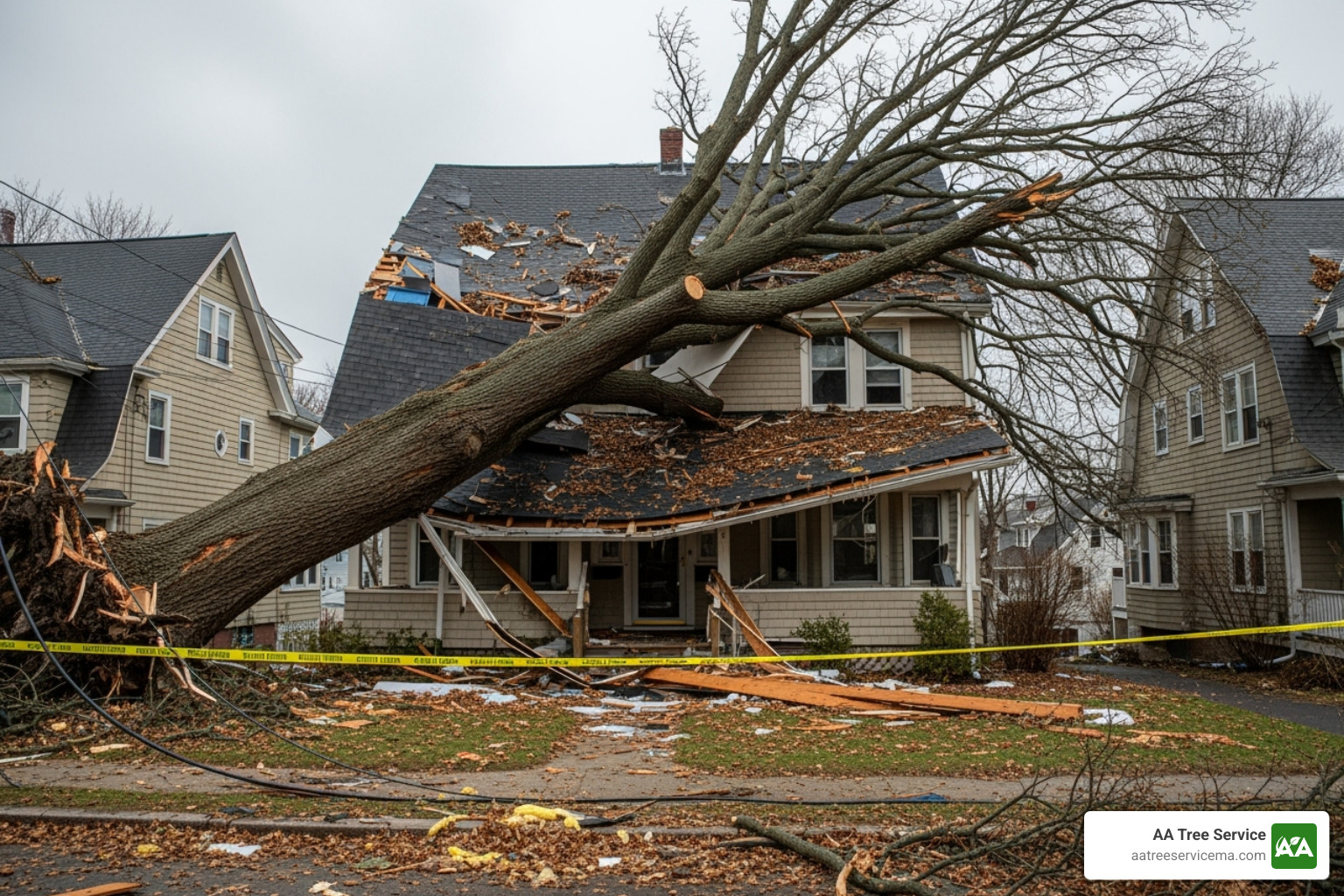
Common emergencies we handle in Massachusetts and New Hampshire include:
- Post-Storm Catastrophes: Severe weather, including Nor’easters, hurricanes, and thunderstorms with high winds, can topple multiple trees and scatter heavy debris across your property, creating widespread and complex hazards. Our Storm Damaged Tree Removal crews are on standby to respond quickly to these large-scale events.
- Blocked Access Routes: A tree falling across your driveway is more than an inconvenience; it can trap vehicles and, more critically, prevent access for emergency services like ambulances or fire trucks. This situation requires immediate action to clear the path.
- Fallen Trees on Structures: A tree that has fallen onto a house, garage, or other building is a grave threat. The immense weight can cause progressive structural damage, and improper removal can lead to further collapse. This requires a delicate, surgical approach to dismantle the tree without compromising the structure.
- Power Line Involvement: Debris that is near, touching, or has brought down power lines is an extremely dangerous and potentially fatal situation. Never attempt to approach or move it yourself. These scenarios require careful coordination with the local utility company to de-energize the lines before any removal work can safely begin.
- Imminent Tree Failure: An emergency isn’t just a tree that has already fallen. A tree that is actively splitting, has a newly developed lean towards a structure, or has a partially detached root plate is a ticking time bomb that requires immediate professional intervention.
Our 24/7 emergency response is built for speed, safety, and precision. When you call, we gather critical information to dispatch the right crew and equipment immediately. Upon arrival, our first priority is a scene safety assessment. We establish a secure perimeter and identify all hazards, including downed wires, unstable structures, and potential for further tree failure. The removal is then performed with meticulous care, often using specialized equipment like cranes and rigging systems to lift debris vertically, preventing further damage to your home or property. In cases of structural damage, we can provide temporary stabilization, such as tarping a damaged roof, to help protect your home from the elements until permanent repairs can be made.
When you’re facing a tree emergency, there is no time to waste. Our Emergency Tree Removal teams are always ready to deploy, because we understand that when your safety and property are on the line, waiting is not an option.
Conclusion
In the aftermath of a storm in Massachusetts or New Hampshire, or when facing any large-scale yard cleanup, the decision between a DIY approach and hiring experts is a critical one. As this guide has detailed, choosing professional tree debris removal is a definitive investment in your safety, your property’s integrity, and your own peace of mind.
The hidden dangers of DIY work—from life-altering lifting injuries and chainsaw accidents to the lethal risk of unseen power lines—are simply not worth the perceived cost savings. Professional crews mitigate these risks entirely, bringing the right training, insurance, and industrial-grade equipment to handle the job safely and with remarkable efficiency. They can transform weeks of your potential back-breaking labor into just a few hours of their expert work. Furthermore, they ensure that all debris is handled through proper disposal methods, adhering to all local regulations and recycling organic material responsibly to protect our environment.
From the initial, thorough assessment and strategic planning to the final, meticulous sweep of your property, comprehensive service is what sets true professionals apart. We don’t just remove the big pieces; we handle every branch, twig, and wood chip to restore your property completely. Storms and tree emergencies don’t operate on a 9-to-5 schedule, and neither do we. Our 24/7 emergency services are always on standby, ready to respond with speed and expertise when you need us the most.
For reliable, safe, and thorough Tree Debris Removal Service in Massachusetts and New Hampshire, place your trust in the proven experts at AA Tree Service. Contact us today for your routine cleanup or Emergency Tree Removal needs, and let our team restore safety, order, and beauty to your property.
Like us on Facebook!