Why Local Tree Experts Are Essential for Your Property
Local tree experts are certified professionals who provide specialized care for trees and shrubs on residential and commercial properties. These trained arborists offer a comprehensive suite of services including tree removal, precision pruning, detailed health assessments, and rapid-response emergency storm services to maintain safety, improve property value, and ensure the long-term vitality of your landscape.
Quick Answer: What Local Tree Experts Do
- Tree Removal: Safely dismantle and remove hazardous, diseased, dead, or unwanted trees, even in confined spaces.
- Pruning & Trimming: Employ scientifically-backed cutting techniques to maintain tree health, structure, and aesthetics.
- Health Assessment: Diagnose complex diseases, pest infestations, nutrient deficiencies, and structural issues.
- Emergency Services: Respond 24/7 to storm damage, fallen trees, and other urgent hazards to secure your property.
- Stump Grinding: Efficiently remove unsightly and hazardous stumps, reclaiming usable yard space.
- Plant Health Care (PHC): Implement holistic programs including fertilization, soil management, and pest control.
Trees are far more than simple landscape features; they are significant biological and financial assets. Properly maintained trees can increase your property value by up to 15%, provide essential shade that reduces summer cooling costs, and contribute to a healthier local ecosystem. In Massachusetts and New Hampshire, where properties are often graced with mature oaks, maples, and pines, professional tree care is not a luxury but a necessity. These regions face a unique gauntlet of challenges, from the heavy, wet snow and high winds of nor’easters to invasive pests like the Emerald Ash Borer and Asian Longhorned Beetle, and diseases such as oak wilt and Dutch elm disease. Only an expert with local knowledge can effectively combat these specific threats.
Your trees require a scientific assessment of their health, which goes far beyond a casual glance. A professional evaluation involves inspecting the root collar for signs of girdling roots or decay, analyzing soil composition and compaction, assessing canopy density, and identifying subtle signs of stress or disease that an untrained eye would miss. They use proper pruning techniques that adhere to ANSI A300 standards, ensuring cuts are made to promote healing and prevent future decay. When storms strike, their immediate response is critical. As one seasoned tree care professional noted: “Tree removal is a trade of perfectionists because there is no margin for error.” This sentiment underscores the high stakes involved, especially when working near homes and power lines.
The difference between a certified arborist and an untrained individual with a chainsaw is profound. It’s the difference between preserving a century-old oak for another generation and causing irreparable damage. It’s the difference between a safe, controlled removal and a catastrophic accident resulting in thousands of dollars in property damage. Investing in professional expertise is an investment in safety, property value, and the enduring beauty of your landscape.
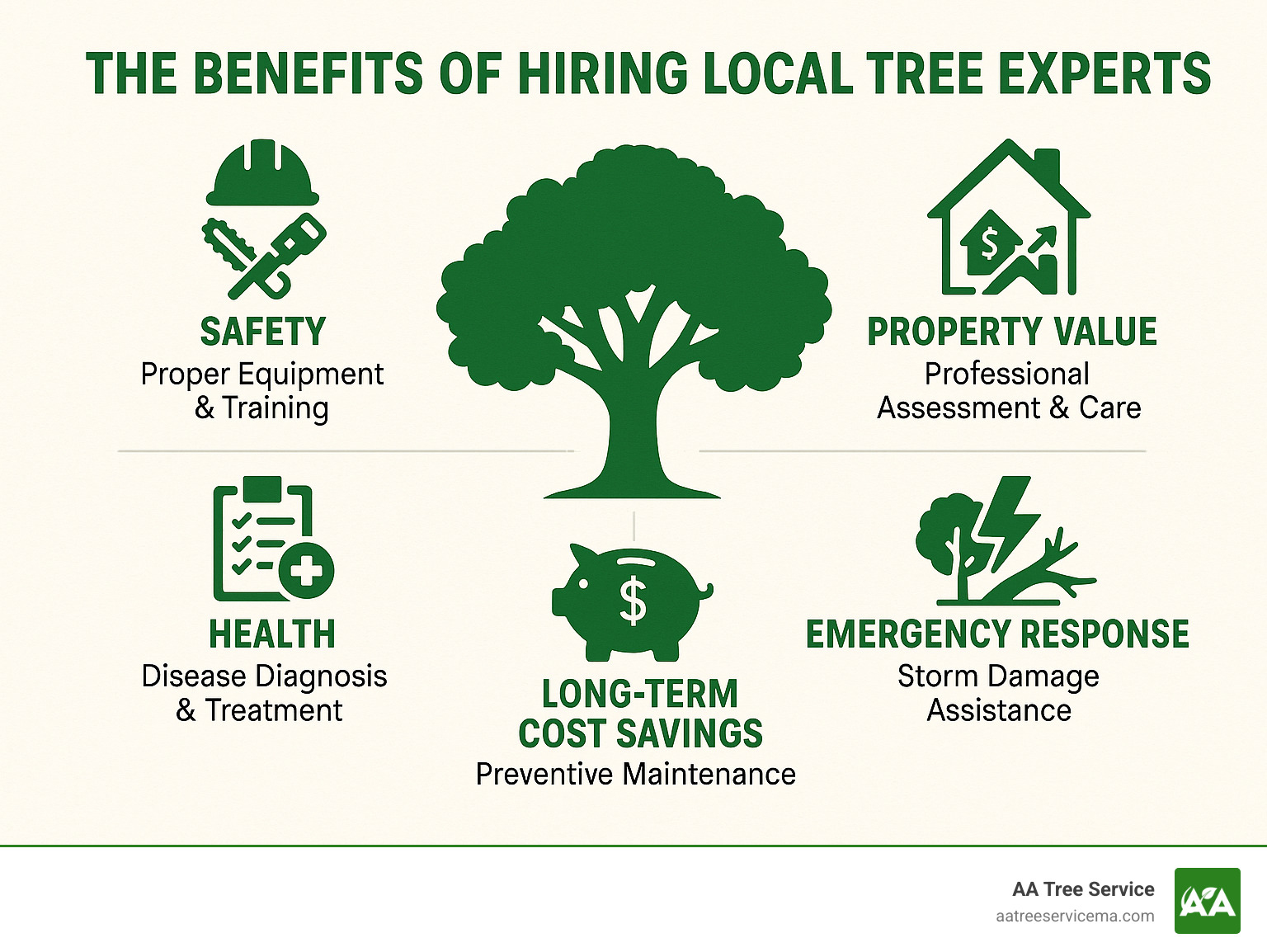
Local tree experts terms explained:
What Core Services Do Local Tree Experts Provide?
For the towering oaks, majestic maples, and historic pines of Massachusetts and New Hampshire, a simple chainsaw is not enough. Local tree experts bring a scientific, systematic approach to tree health, property safety, and landscape aesthetics, offering a range of services designed to protect and improve your valuable green assets.
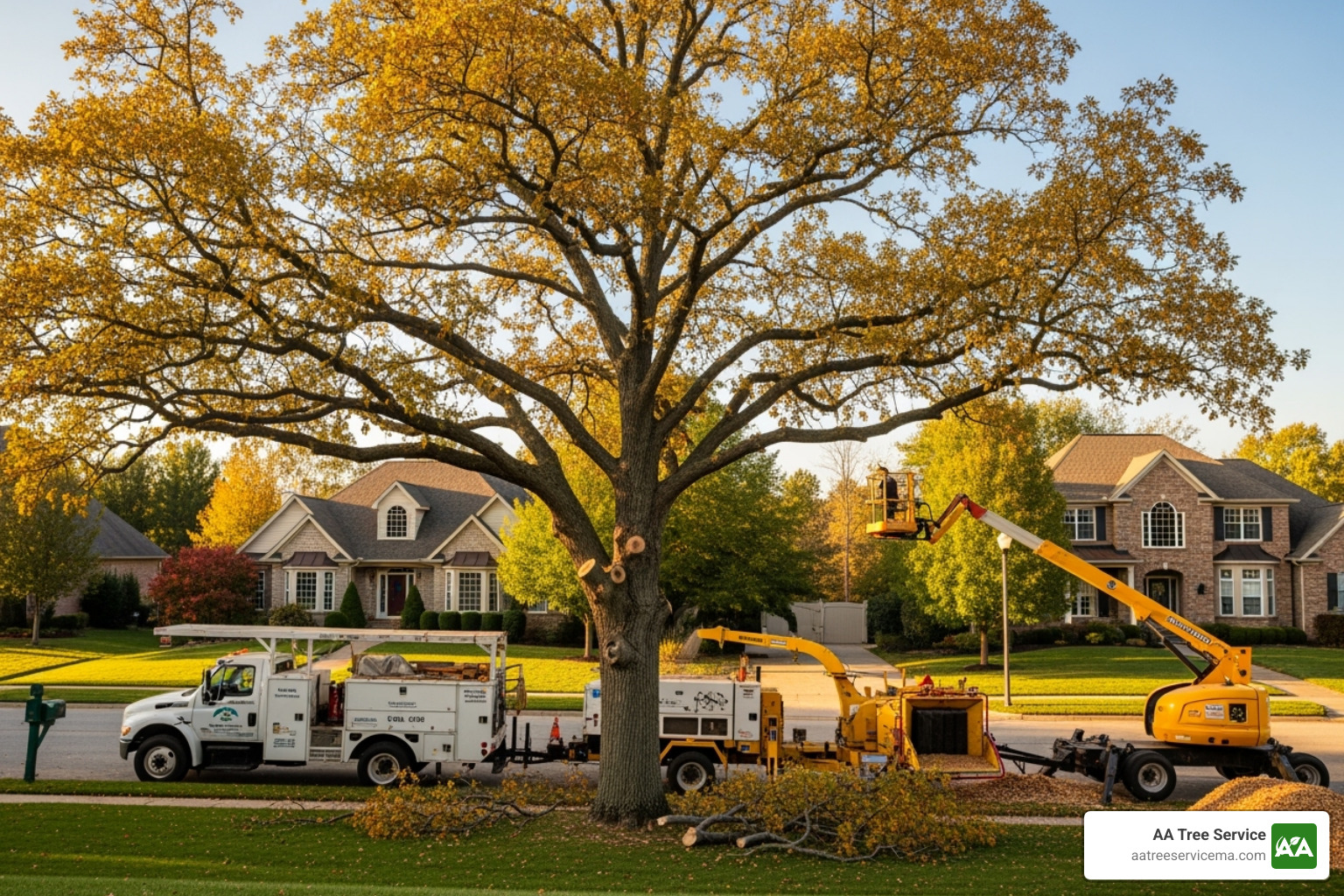
Professional tree care functions like preventative healthcare for your trees. The goal is to identify and address potential issues before they escalate into costly and dangerous problems. From routine health checkups to emergency interventions after a powerful nor’easter, local tree experts possess an intimate understanding of how New England’s unique climate impacts your trees. In MA and NH, common problems we diagnose and manage include acute storm damage, pervasive diseases like oak wilt and needle cast, overgrown branches threatening structures, hidden structural weaknesses like co-dominant stems, invasive root problems damaging foundations, and unseen construction damage that can take years to manifest.
Tree Removal & Land Clearing
While preserving trees is always the primary goal, removal is sometimes the only responsible option. Hazardous trees—those that are dead, dying, diseased, or structurally compromised—pose a significant risk to people and property. These trees are a liability that only grows more dangerous over time. Removal is also necessary for trees that are hopelessly diseased, extensively storm-damaged, causing irresolvable conflicts with infrastructure, or are invasive species outcompeting native plants.
Our Tree Removal Service is equipped to handle any scenario, from a small ornamental tree in a tight space to a massive, multi-ton oak requiring crane-assisted removal. For larger-scale projects like lot preparation for new construction or reclaiming overgrown fields, our Land Clearing Services efficiently and safely transform landscapes, adhering to all local environmental regulations and best practices.
Pruning, Trimming, and Maintenance
Proper, regular pruning is one of the most beneficial things you can do for your trees. It keeps them healthy, structurally sound, and visually appealing. Our experts practice several types of pruning based on the tree’s needs:
- Crown Cleaning: The removal of dead, dying, diseased, or weakly attached branches from the crown.
- Crown Thinning: Selective removal of branches to increase light penetration and air movement, reducing stress on the tree.
- Crown Raising: Removing lower branches to provide clearance for buildings, vehicles, and pedestrians.
- Structural Pruning: Guiding the growth of young trees to establish a strong, stable structure for the future.
Our Tree Trimming Services focus on health improvement and risk reduction. We also provide comprehensive shrub care to ensure your entire landscape is healthy and cohesive. Routine maintenance is the cornerstone of proactive care. Our Routine Tree Maintenance programs are designed to catch small problems early, saving you from future emergencies and significant expense.
Plant Health Care (PHC) and Fertilization
Beyond cutting, true local tree experts offer holistic Plant Health Care (PHC) programs. This proactive approach focuses on maintaining tree vitality to prevent problems before they start. This can include deep-root fertilization to address nutrient deficiencies common in urban and suburban soils, soil aeration to combat compaction, and Integrated Pest Management (IPM) to control harmful insects and diseases with minimal environmental impact.
Stump Grinding and Debris Removal
After a tree is removed, the stump remains. Stumps are not just eyesores; they are tripping hazards, obstacles for mowing, and can attract pests like termites and carpenter ants as they decay. Our Stump Grinding service uses powerful machinery to grind the stump and major roots into wood chips, going well below ground level. This allows you to reclaim the area for lawn, a new planting, or other landscaping features.
We take immense pride in our cleanup process. Our Tree Debris Removal Near Me service ensures that your property is left immaculate. We remove all wood, branches, and debris, leaving your New England yard looking better than when we arrived and restoring precious usable space.
The Professional Difference: Why You Need a Certified Arborist
While the allure of a cheap price from someone with a chainsaw might be tempting, certified local tree experts deliver a level of expertise, safety, and long-term value that is simply best. The difference is not just in the equipment they use, but in the scientific knowledge they apply to every decision.
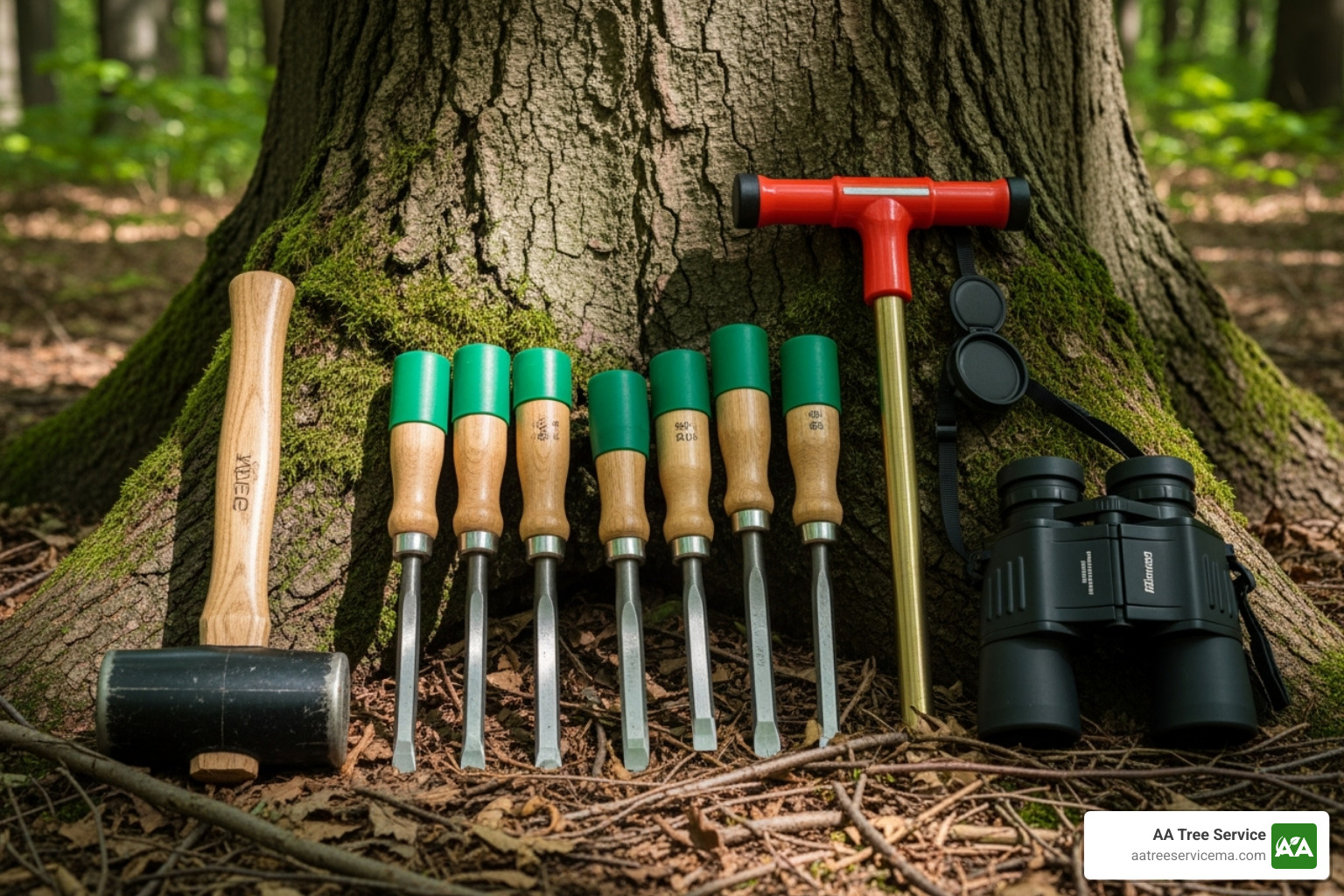
A certified arborist is a tree doctor. They possess a deep, scientific understanding of tree biology, soil science, and biomechanics. This allows them to diagnose underlying issues that cause visible symptoms, solve today’s problems effectively, and implement strategies to prevent future disasters. This focus on long-term tree health means they understand the complex interplay between pruning, soil conditions, root systems, and a tree’s overall structure. Risk assessment is another critical, highly developed skill. A trained arborist can identify subtle but significant hazards—such as internal decay, root plate instability, or weak branch unions—that could lead to catastrophic failure during a Massachusetts or New Hampshire nor’easter.
Qualifications and Certifications to Look For
When vetting local tree experts, certain credentials are non-negotiable. They are your assurance of knowledge and professionalism.
- ISA Certified Arborist: This is the gold standard in the industry. Achieving this certification requires years of documented experience and passing a comprehensive exam covering everything from tree identification and biology to safe work practices and nutrition. To maintain their certification, they must participate in ongoing education, ensuring they are up-to-date on the latest research and techniques.
- TCIA Accreditation: The Tree Care Industry Association (TCIA) offers an accreditation program for companies, not just individuals. A TCIA-accredited company has undergone a rigorous audit of its business practices, safety protocols, and customer service. It’s a sign that the entire operation adheres to the highest standards.
- Certified Treecare Safety Professional (CTSP): This certification focuses specifically on creating and maintaining a culture of safety within a tree care company. Having a CTSP on staff demonstrates a profound commitment to the well-being of both employees and clients.
Furthermore, a certified professional will never perform or recommend harmful practices like “topping” or “lion’s tailing,” which can severely weaken and disfigure trees. Always demand proof of licensing and insurance coverage, including both general liability and workers’ compensation. You can verify an arborist’s credentials directly on the ISA website.
The Importance of Hiring Professional Local Tree Experts
Safety is the paramount concern in arboriculture. Professional local tree experts operate according to ANSI Z133 standards, the authoritative safety guidelines for the industry. They also invest in and maintain specialized equipment that is essential for safe and efficient work. This includes:
- Aerial Lifts and Bucket Trucks: For safe access to high canopies without damaging the tree.
- Cranes: Our tree crane services are indispensable for removing large trees in tight quarters, allowing massive sections to be lifted cleanly away from houses, fences, and other landscape features.
- Professional Rigging Gear: A complex system of ropes, pulleys, and friction devices used to safely lower heavy limbs and wood sections to the ground with precision control.
- High-Powered Chippers and Stump Grinders: For efficient processing of debris and stumps.
Protecting your property is a top priority for a professional crew. They use ground mats to protect your lawn from heavy equipment, carefully plan every cut to avoid structures, and perform a meticulous cleanup. Hiring an insured company is also your shield against avoiding liability. If an uninsured worker is injured on your property, you could be held financially responsible for their medical bills and lost wages—a devastating and entirely avoidable risk.
Arborist vs. “Tree Guy”: What’s the Real Difference?
The distinction lies in diagnostic capability and a long-term, holistic perspective.
- Diagnosis Skills: A “tree guy” might see yellow leaves and suggest fertilizer. An arborist will investigate further. They might use an Air Spade to safely expose the root collar and check for girdling roots, or a resistograph to drill a tiny hole and measure the extent of internal decay. They can differentiate between a pest problem, a fungal disease, and a nutrient deficiency, prescribing the correct treatment for the actual problem.
- Proactive Care: An arborist focuses on creating a long-term health plan for your trees. This includes recommending proactive pruning schedules, soil treatments, and monitoring for pests and diseases common to New England, preventing expensive emergencies down the road.
- Alternatives to Removal: When you call for arborist tree removal, a true professional will first conduct a thorough assessment to see if the tree can be saved. They might recommend alternatives like installing cables or braces to support weak limbs, or a targeted treatment plan to nurse a sick tree back to health. For an arborist, removal is always the last resort, not the first suggestion.
The long-term value of hiring a certified arborist is undeniable: healthier, more resilient trees, a safer property, fewer unexpected emergencies, and a significant improvement of your property’s value.
How to Choose the Best Local Tree Experts in Your Area
Finding the right local tree experts for your Massachusetts or New Hampshire property is a critical decision. You are entrusting them with the health of valuable living assets and the safety of your home. A systematic approach to vetting potential companies will ensure you hire a true professional, not just someone with a truck and a chainsaw.
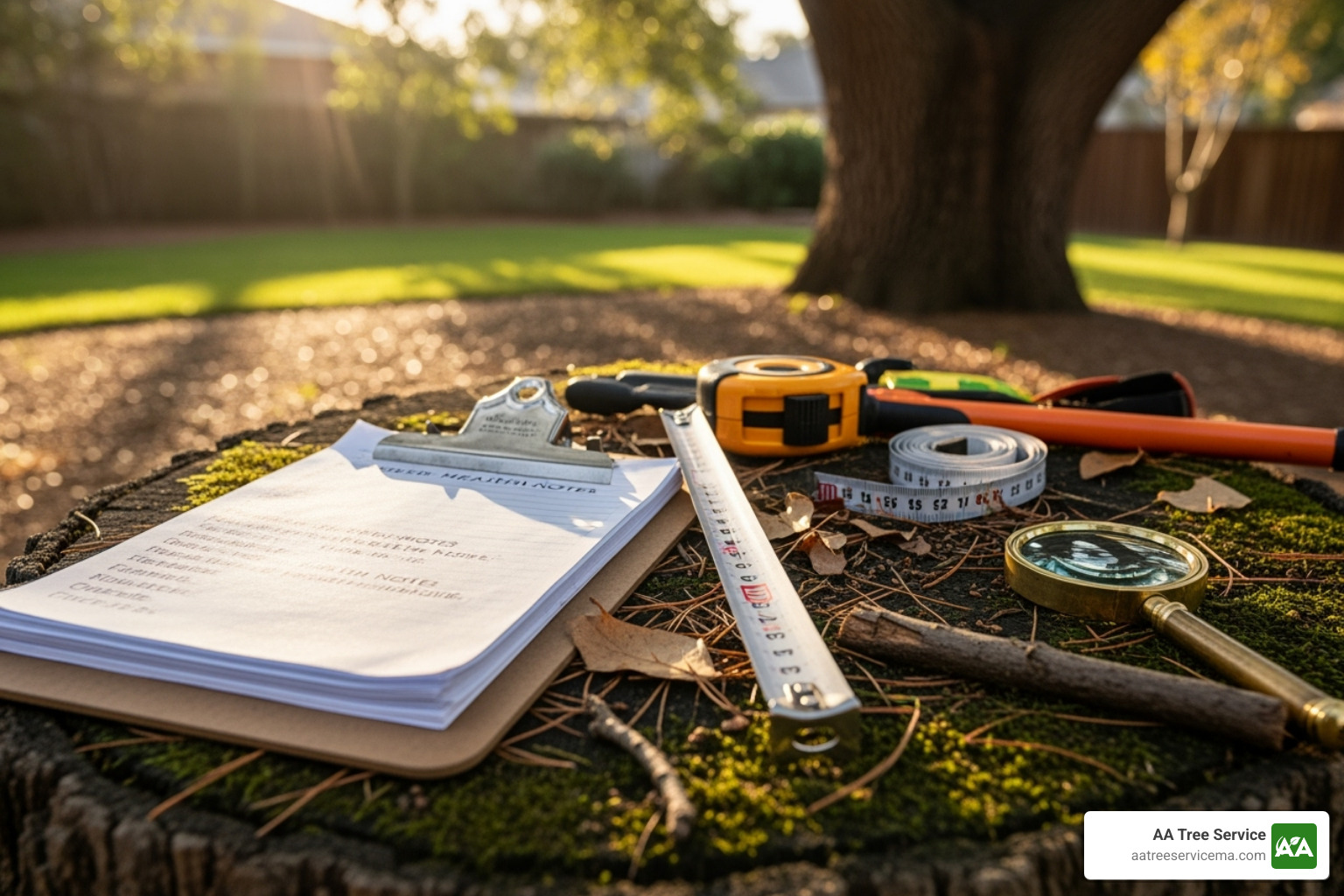
Step 1: Verify Credentials and Insurance
This is the most important step and should be your first filter. Don’t be shy about asking for proof.
- Credentials are Crucial: Not everyone who cuts trees is an arborist. Specifically ask if the company has ISA Certified Arborists on staff who will be involved in your project. This certification is your guarantee of a high level of knowledge in tree biology, health, and safety. For the highest level of expertise, look for companies with Board Certified Master Arborists.
- Insurance is Non-Negotiable: Tree work is inherently dangerous. A reputable company will carry, at a minimum, two types of insurance and should readily provide you with certificates.
- General Liability Insurance: This covers any damage to your property. Ensure the policy limit is sufficient to cover the value of your home and landscape.
- Worker’s Compensation Insurance: This covers injuries to the company’s employees while on your property. Without it, you could be sued for medical costs if a worker gets hurt.
- Actionable Tip: Ask for the insurance certificates to be sent to you directly from the insurance agency. This ensures they are current and valid. For added protection, you can ask to be listed as an “additional insured” on their liability policy for the duration of your project.
For complex jobs in dense urban environments like those requiring Boston Tree Service, this level of professionalism is absolutely essential.
Step 2: Read Reviews and Get Multiple, Detailed Quotes
Once you have a shortlist of qualified and insured companies, it’s time to dig deeper.
- Online Reviews Provide Insight: Check Google, Yelp, and the Better Business Bureau. Look for consistent patterns in customer feedback. Do multiple reviews praise their professionalism, communication, and cleanup? Be wary of companies with numerous complaints about property damage, hidden fees, or poor communication. A track record of industry awards and high ratings is a strong positive signal.
- Get Multiple Quotes, But Compare Apples to Apples: Always get at least three written estimates. However, the cheapest bid is often a red flag, potentially indicating a lack of insurance, proper equipment, or experience. A professional Tree Removal Cost Estimate should be a detailed document, not just a number on a business card. Your quote comparison checklist should include:
- A clear, detailed scope of the work to be performed.
- The specific techniques and equipment they plan to use.
- Whether complete debris removal and cleanup are included.
- Whether stump grinding is included or priced separately.
- A projected timeline for the work.
- Clear payment terms.
- Beware of Scams: Be extremely cautious of unsolicited door-to-door offers, especially after a storm. These “storm chasers” often lack proper insurance, perform shoddy work, and may demand cash upfront before disappearing.
Step 3: The Consultation Process and Asking the Right Questions
The on-site consultation is your chance to gauge a company’s professionalism and expertise.
- Evaluate Their Approach: A quality local tree expert will walk your property with you, listen carefully to your concerns, and offer a thoughtful assessment. They should be able to clearly explain their observations and recommendations, prioritizing tree preservation whenever possible. The process should feel educational and collaborative, not like a high-pressure sales pitch.
- Ask Specific, Probing Questions: A true professional will welcome your questions. Use this list to guide your conversation:
- “Can you walk me through the exact process you’ll use for this job?”
- “How will you protect my lawn, driveway, and surrounding plants from damage?”
- “What specific safety protocols and equipment (like rigging, cranes, etc.) will you use?”
- “Are you familiar with our town’s bylaws regarding tree removal permits?”
- “How will you handle the cleanup, and what will my property look like when you’re finished?”
- “Who will be my main point of contact during the project?”
By following these steps, you can confidently choose a reputable company that will treat your property with respect and provide the expert care your trees deserve. Ready to start? Request a Quote to experience a professional consultation.
Handling the Unexpected: Emergency Tree Services
When Mother Nature releasees her fury on Massachusetts and New Hampshire, your beautiful, sturdy trees can transform into immediate, dangerous hazards in the blink of an eye. It’s a scenario familiar to every New Englander: the sickening crack of a massive limb in a windstorm, or waking up after a nor’easter to find a beloved oak blocking your driveway or, far worse, resting on your roof. These moments are fraught with stress and uncertainty, and they are precisely when professional local tree experts become your most critical lifeline.
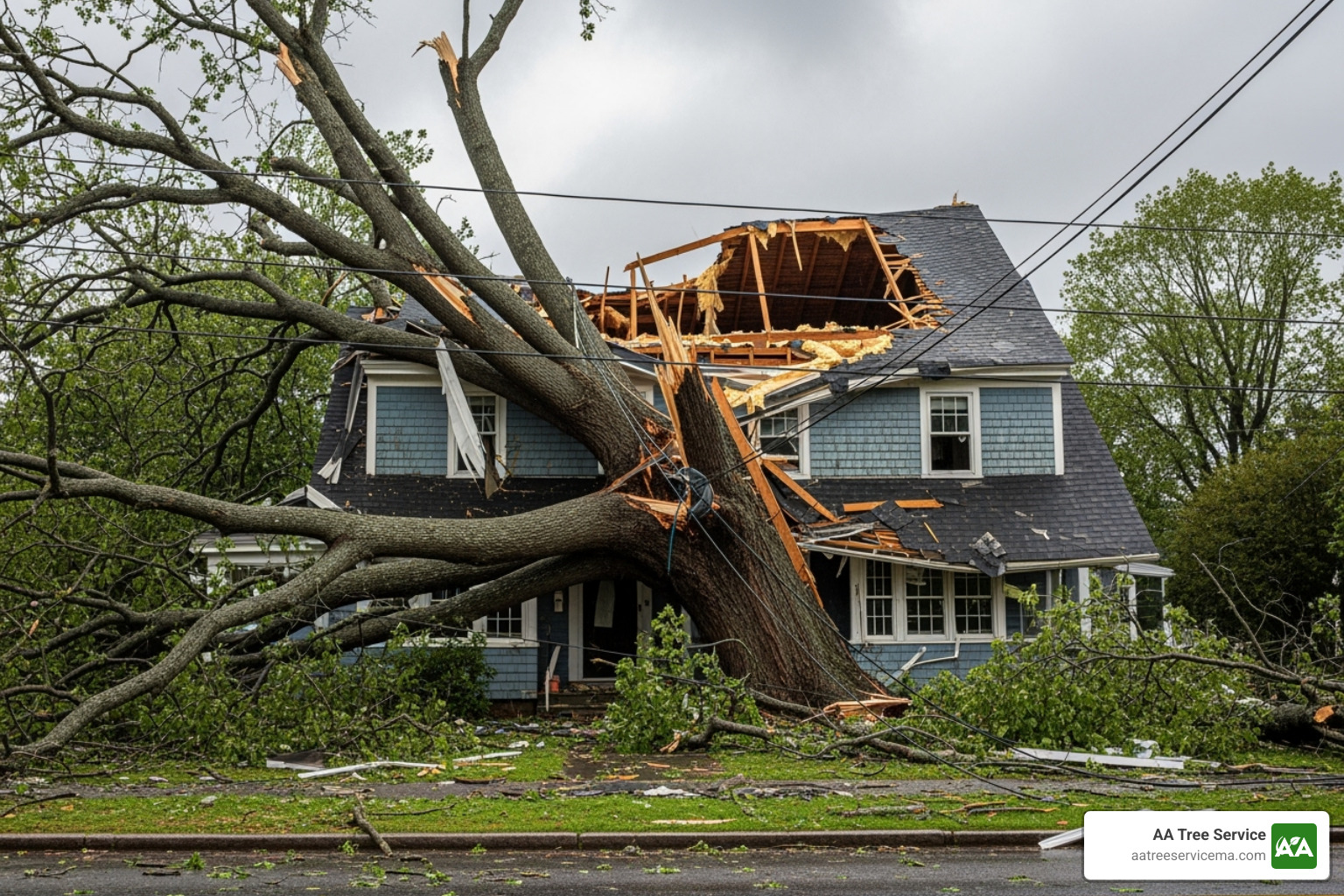
Tree emergencies don’t adhere to a 9-to-5 schedule. A tree won’t check the clock before failing during a 2 AM ice storm. This is why professional emergency tree services are defined by their 24/7 response capabilities. Having a team ready to mobilize at any hour can mean the difference between a contained incident and escalating property damage, or worse.
The stark reality is that emergency tree work is the most dangerous facet of arboriculture. A storm-damaged tree is inherently unstable. It may be under immense tension or compression, ready to shift, roll, or snap without warning. Compounding this danger are often adverse conditions like high winds, rain, darkness, and downed power lines. This creates a volatile cocktail of risks that should only ever be handled by highly trained, experienced, and properly equipped professionals.
Responding to Storm Damage in Massachusetts and New Hampshire
Living in New England means preparing for and respecting severe weather. Our region’s storms present unique challenges to our trees:
- Nor’easters: These powerful storms can dump feet of heavy, wet snow, which acts like a lever on branches, snapping even healthy limbs like matchsticks.
- High Winds: Summer thunderstorms and tropical storm remnants can generate winds strong enough to uproot entire trees, causing catastrophic root plate failure.
- Ice Storms: The accumulation of ice can increase the weight on branches by up to 30 times, leading to widespread breakage.
- Lightning Strikes: A direct strike can superheat the water within a tree, causing it to explode or creating a long, spiraling crack that compromises its entire structure.
Over our 20+ years in business, we’ve seen every conceivable type of tree failure. Sometimes the damage is obvious—a tree split down the middle or completely uprooted. Other times, the danger is more insidious, such as large, detached branches (“hangers” or “widow-makers”) caught in the upper canopy, or a tree leaning at a new, precarious angle towards your home. A professional local tree expert can rapidly assess the situation, triage the hazards, and prioritize actions to ensure safety first.
The Process for Emergency Tree Removal
When you make that urgent call, a clear, methodical process begins, designed for safety and efficiency.
- Initial Triage & Dispatch: Our team will ask for key information to understand the situation: your location, the tree’s position, what it has fallen on, and if any utilities are involved. This allows us to dispatch the right crew and equipment.
- On-Site Assessment: Upon arrival, our first action is not to cut, but to assess. The crew leader evaluates the tree’s stability, identifies all potential energy forces (tension and compression), checks for electrical hazards, and determines the safest plan of attack. Rushing this step is how accidents happen.
- Securing the Area: Safety is paramount. The crew will establish a secure work zone using cones and caution tape, coordinate with utility companies if power lines are involved, and ensure the area is clear of people.
- Controlled Dismantling: Using advanced rigging techniques, cranes, and precision cutting, the tree is carefully dismantled in a sequence that safely releases stored energy and prevents further damage to your property. The goal is to remove the hazard piece by piece with total control.
- Working with Insurance Companies: We understand that navigating insurance claims adds another layer of stress. We are experienced in documenting the damage and our work in a way that facilitates your claim. We can provide detailed reports and communicate directly with adjusters if needed, helping you get the coverage you’re entitled to under your policy.
Our 24/7 response means we are always ready. Whether you’re in a dense suburb in Massachusetts or a rural New Hampshire property, we know that emergencies can’t wait. Our goal extends beyond just removing the tree; it’s about restoring your safety, your property, and your peace of mind as quickly and professionally as possible, right down to the final cleanup.
Frequently Asked Questions about Local Tree Care
As local tree experts with over 20 years of experience serving homeowners across Massachusetts and New Hampshire, we’ve answered thousands of questions. Your concerns are valid—your trees are living investments that contribute significantly to your property’s beauty and value. Here are detailed answers to the most common questions we encounter.
How often should I have my trees inspected?
As a general rule, a yearly inspection by a certified arborist is highly recommended. Think of it as a wellness checkup for your trees. This proactive approach allows an expert to identify and address potential issues like emerging diseases, pest infestations, or structural problems long before they become dangerous or expensive to fix.
However, certain situations warrant more immediate attention. You should always schedule an inspection after any major weather event—a nor’easter, a severe thunderstorm with high winds, or a significant ice storm. Storm damage is not always visible from the ground; a professional can spot stress fractures, split limbs, or a subtle shift in the tree’s lean that could indicate a future failure.
Furthermore, we advise more frequent inspections (perhaps twice a year) for high-value or high-risk trees. This includes very old, mature trees, any tree located close to your house or over high-traffic areas, and trees that have a known history of health problems.
Is tree removal expensive?
The cost of tree removal can vary significantly, making a single price impossible to quote without an assessment. National averages suggest a range from $200 for a small, easily accessible tree to over $3,000 for a large, complex removal, with many projects falling in the $750-$1,500 range. The final price is determined by a combination of factors:
- Size and Location: A massive oak leaning over your house will cost substantially more to remove than a small ornamental tree in an open yard. Height, trunk diameter, and canopy spread all influence the time and equipment needed.
- Accessibility: Can a bucket truck or crane get close to the tree? Or does everything have to be climbed and lowered by rope in a tight backyard? Poor access increases labor and complexity.
- Tree’s Condition: A dead, brittle tree can be more hazardous and unpredictable to work on than a healthy one, often requiring more delicate techniques.
- Hazards: Proximity to power lines, your home, a fence, or other structures requires more intricate rigging and planning, which affects the cost.
The cheapest option is rarely the best. An unusually low bid often signals a lack of proper insurance, equipment, or experience. Our free, detailed estimates break down the costs so you understand the value and safety built into a professional job.
Can a dying tree be saved?
In many instances, yes! This is where the diagnostic skill of a certified arborist is invaluable. What a homeowner might see as a “dying” tree could be a treatable condition. An arborist will act like a detective to diagnose the root cause of the decline. Is it an insect infestation like winter moth? A fungal disease like anthracnose? Is the soil too compacted for roots to breathe? Is there a nutrient deficiency?
Based on the diagnosis, a targeted treatment plan can be developed. Common treatments that can save trees include:
- Systemic injections to treat diseases or pests.
- Deep-root fertilization and soil amendments to improve health.
- Corrective pruning to remove diseased wood and improve air circulation.
- Cabling and bracing to provide structural support to weak limbs or trunks.
- Integrated Pest Management (IPM) to control pests in an environmentally responsible way.
The key is early intervention. The sooner you call an expert to look at a struggling tree, the higher the chances of a successful recovery.
What time of year is best for pruning?
For most trees, pruning during the dormant season (late fall to early spring) is ideal. This timing minimizes stress on the tree, as it’s not actively growing. It also reduces the risk of transmitting diseases like oak wilt, and the absence of leaves makes it easier for the arborist to see the tree’s structure. However, removing dead, diseased, or hazardous branches can and should be done at any time of year.
What are the signs my tree is hazardous?
Look for these warning signs:
- Large dead branches in the canopy.
- Mushrooms or other fungal growth on the trunk or at the base.
- Deep cracks or splits in the trunk or major limbs.
- Hollows or cavities in the wood.
- A sudden, unexplained lean.
- Peeling bark or large wounds.
- Heaving soil or exposed roots around the base.
If you see any of these, call for a professional risk assessment immediately.
Your Trusted Partner for Tree Care in MA & NH
When you choose to invest in professional tree care, you are making a powerful decision to protect and improve one of your property’s most significant assets. Your trees are more than just scenery; they are living, breathing parts of your home’s ecosystem, providing shade, beauty, and value. From the majestic oaks of the North Shore to the sturdy maples of southern New Hampshire, these living investments require expert attention to thrive for generations.
This is where true local tree experts demonstrate their worth. By selecting a qualified, fully insured, and experienced professional team, you are safeguarding not only your trees but your entire property and, most importantly, your family’s safety. You are ensuring that every pruning cut is made with scientific precision to promote health, every assessment is grounded in arboricultural science, and every service call is executed with an unwavering focus on safety and long-term tree vitality.
For homeowners throughout Massachusetts and New Hampshire, AA Tree Service has proudly served as that trusted partner for more than two decades. Our experience spans the full spectrum of tree care needs, from routine pruning and health maintenance in quiet suburban neighborhoods to complex, high-risk emergency tree removal in the aftermath of New England’s most powerful storms. Our commitment extends far beyond simply arriving with state-of-the-art equipment—though we certainly have that covered. We bring decades of hands-on, local experience, a genuine respect for your property, and a core understanding that every tree and every situation is unique.
What truly sets us apart is our dedication to your peace of mind. We are available 24/7 for emergencies because we know that disasters don’t keep business hours. We provide free, detailed, same-day quotes because we respect your time and your need for clear, prompt information. Above all, we stand behind every job with an uncompromising commitment to your total satisfaction. We don’t consider a job complete until your property is safe, clean, and you are happy with the results.
Don’t wait for a problem to arise. Proactive care is the key to a healthy, beautiful, and safe landscape. From the essential maintenance that preserves the beauty of your yard to the urgent response required when a storm hits, we are your dedicated local tree experts. Contact us today to establish a partnership that will ensure your green investments continue to grow strong and healthy for years to come.