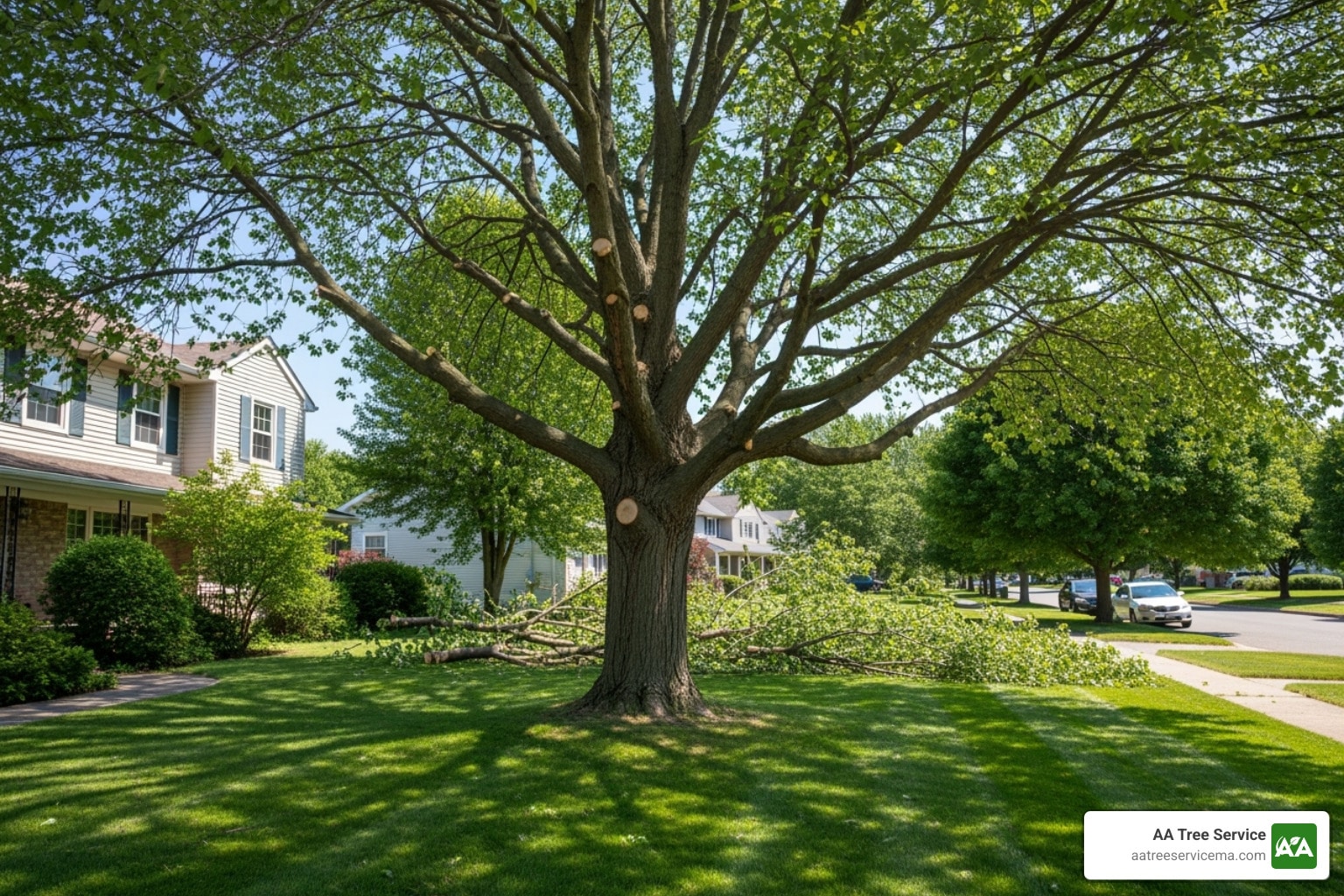
Why Tree Pruning Matters for Woburn Homeowners
Tree pruning Woburn MA homeowners can rely on is about more than just aesthetics—it’s an essential practice for ensuring safety, promoting long-term tree health, and protecting your property’s value. In a community like Woburn, with its beautiful mix of historic homes and modern developments, mature trees are a defining feature of the landscape. However, without proper, professional care, these beautiful natural assets can quickly become significant liabilities.
New England’s weather is notoriously unpredictable and harsh. Overgrown, heavy branches can snap under the weight of wet snow during a winter nor’easter or be torn off by the high winds of a summer thunderstorm. Dead or decaying limbs are even more vulnerable, creating year-round safety risks for your family, home, and vehicles. Furthermore, trees that are allowed to grow unchecked can encroach on power lines, creating a severe fire and electrical hazard that can affect your entire neighborhood. Professional tree pruning is not a reactive fix but a form of preventative care. It strategically strengthens a tree’s core structure, improves its overall health and resilience, and prepares your entire landscape to withstand whatever weather comes its way.
What to Expect from Professional Tree Services:
- Free, detailed estimates and comprehensive property assessments
- Fully licensed and insured professionals with certified arborists on staff
- Availability of 24/7 emergency services for storm damage and unexpected hazards
- Average costs: $350 – $1,800+ (costs vary significantly based on tree size, accessibility, and the complexity of the work required)
Whether you are proactively managing your property, dealing with the aftermath of storm damage, addressing overcrowded growth that blocks sunlight, or simply aiming to enhance your home’s curb appeal, professional tree pruning is a wise investment. It pays dividends in safety, beauty, and peace of mind. Woburn is home to many experienced tree care professionals who possess deep knowledge of local tree species—from mighty oaks and maples to delicate dogwoods—and understand the unique climate challenges of our region. They are ready to help you maintain a landscape that is not only picture-perfect but also safe and healthy for years to come.
Why Professional Tree Pruning is Essential for Your Woburn Property
For Woburn homeowners, trees are not just part of the scenery; they are valuable, living investments that significantly contribute to the quality of life and market value of your property. To protect these assets, professional tree pruning Woburn MA services are not a luxury but a crucial component of responsible homeownership.
These services are vital for keeping your family safe from falling limbs, ensuring your trees remain healthy and vibrant, and strengthening your property’s overall value. The demanding New England weather, with its heavy snow, ice storms, and high winds, is particularly tough on trees. Without regular, skilled maintenance, even the most robust native oaks, maples, and pines can develop structural weaknesses and hazardous conditions.
Investing in professional pruning is a proactive measure that protects your home and property from the costly damage of falling branches. It also helps trees live longer, more resilient lives by removing disease and promoting strong growth, preparing them to better withstand severe weather events. Beyond safety, well-maintained trees enhance your entire property by allowing more sunlight to reach your lawn and underlying gardens, promoting a healthier overall landscape.
Aesthetically, a well-landscaped yard featuring healthy, beautifully shaped mature trees can significantly increase your home’s curb appeal and market value. Furthermore, regular pruning is a key strategy in integrated pest management, helping to identify and stop diseases and insect infestations before they can spread and cause irreversible harm. Our comprehensive Tree Care Services Woburn MA are designed to address all these critical needs, giving your trees the expert attention and care they deserve.
Enhancing Tree Health and Vigor
Think of professional pruning as preventative medicine for your landscape. The process begins with removing dead, dying, or diseased branches. This does more than just improve the tree’s appearance; it eliminates primary entry points for wood-boring insects and decay-causing fungi. When a branch dies, the tree naturally begins to form a protective barrier at its base, a process called compartmentalization. Proper pruning cuts made just outside this barrier (the branch collar) help the tree heal efficiently.
Conversely, improper cuts can break this barrier, exposing the trunk to infection. Strategically thinning the crown improves air circulation and light penetration throughout the canopy. This is critical in our humid climate, as it reduces moisture buildup on leaves, which in turn lowers the risk of common fungal infections like anthracnose, apple scab, and powdery mildew. This process ensures the entire tree, from the inner branches to the outer leaves, can photosynthesize effectively and remain healthy and vigorous.
Beyond removing problematic branches, we guide a tree’s future growth to build a strong, balanced, and durable structure. This involves correcting issues like codominant stems (competing main leaders) and branches that cross and rub against each other, which can create wounds and weak points. By establishing a strong central leader and well-spaced scaffold branches, we prevent the formation of weak, narrow branch angles that are prone to splitting under stress.
When a tree doesn’t have to waste precious energy sustaining dead wood or fighting off preventable diseases, it can focus its resources on developing strong roots, a healthy trunk, and lush foliage, resulting in a stronger, more resilient, and beautiful tree. Our Professional Tree Pruning Services are always customized to the specific species, age, and condition of each individual tree.
Boosting Safety and Preventing Hazards
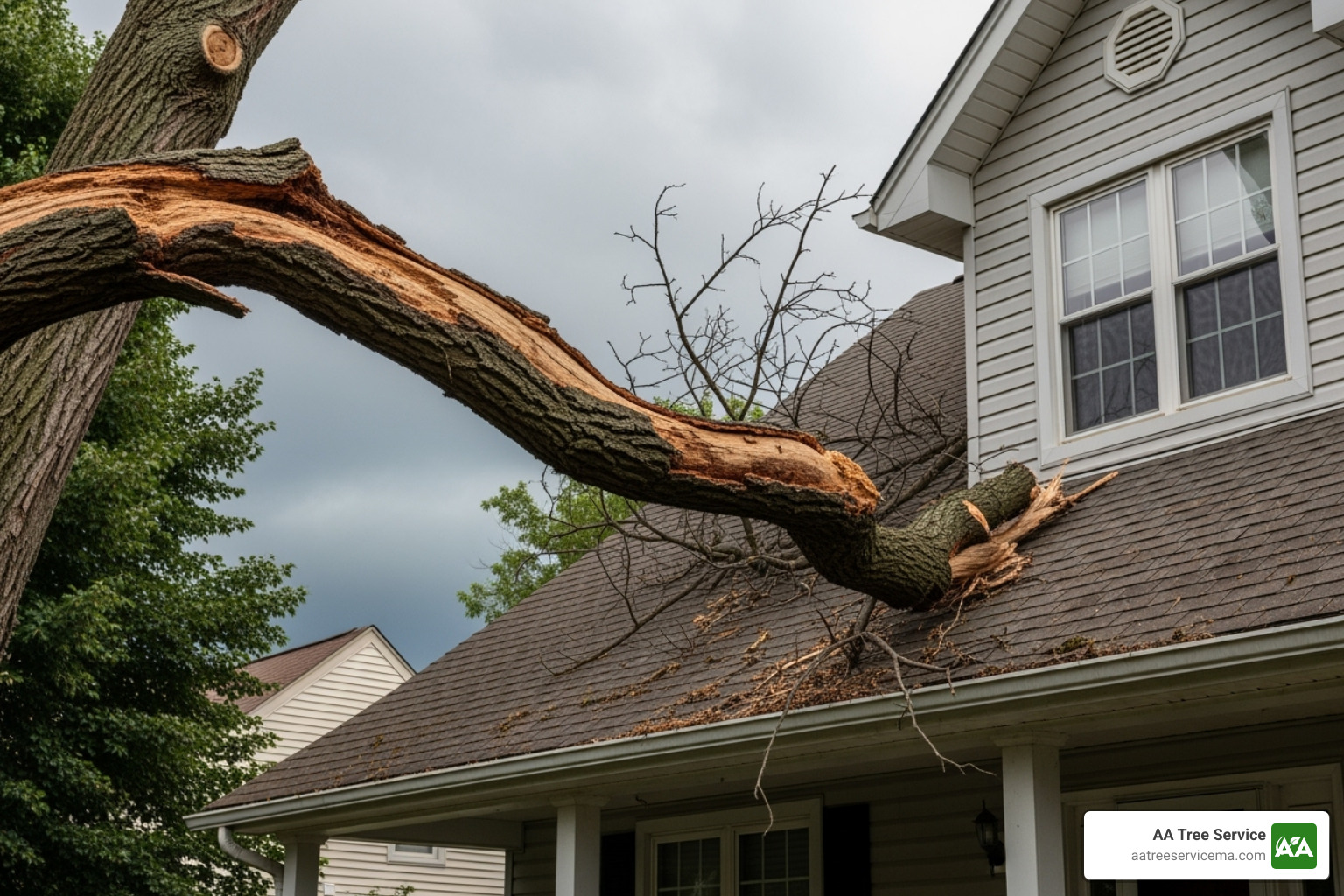
For any homeowner, safety is the paramount concern. A large, dead branch looming over a roof, driveway, or children’s play area is a ticking time bomb, an accident waiting to happen with the next strong gust of wind or heavy snowfall. Similarly, branches that grow into or over utility lines are a serious recipe for disaster, capable of causing power outages, fires, and electrocution hazards. Even seemingly minor issues, like low-hanging branches that obstruct visibility at the end of a driveway or scrape against the siding of your house, can lead to accidents or costly moisture damage and pest entry points.
Our team of trained arborists is skilled at identifying these potential risks long before they escalate into emergencies. During a thorough assessment, we meticulously inspect your trees for signs of weakness, such as dead or damaged limbs, cracks, decay, and poor structure. We then systematically remove these hazards.
This proactive approach significantly reduces the risk of storm-related damage, helping you avoid expensive emergency calls and repairs to your home, vehicles, or landscaping. By maintaining safe clearance around power lines and structures, we protect not only your property but also the public utility infrastructure. In cases where a tree’s structural integrity is too compromised to be saved through pruning, our Tree Removal Woburn MA services provide a safe and efficient solution to eliminate the threat entirely, protecting your property and bringing you peace of mind.
The Best Time for Tree Pruning in Woburn, MA
When it comes to professional tree pruning Woburn MA services, timing is not just a suggestion—it’s a critical factor that directly impacts the health, safety, and beauty of your trees. While it may be tempting to call a tree service whenever a branch looks out of place, understanding and respecting a tree’s natural biological cycles will yield far superior results and prevent unnecessary stress. The right cut at the wrong time can be detrimental.
For the vast majority of deciduous trees found in Woburn, such as oaks, maples, and birches, the dormant season is the ideal time for significant structural pruning. This period, which typically runs from late fall after the leaves have dropped until late winter before the buds begin to swell (roughly November to March), offers several distinct advantages. First, with the leaves gone, our crews have an unobstructed view of the entire tree structure.
This clarity allows for more precise identification of deadwood, crossing branches, and structural defects, leading to more effective and strategic cuts. Second, pruning during dormancy minimizes stress on the tree. Its metabolism is slow, and its energy reserves are safely stored in the root system, allowing it to dedicate its springtime energy to healing wounds and producing vigorous new growth rather than recovering from shock. Finally, the risk of transmitting diseases or attracting pests is significantly lower, as most pathogens and insects are inactive in the cold weather.
However, the pruning calendar is not one-size-fits-all. Some pruning tasks are best performed in the summer to slow the growth of overly aggressive branches or to remove storm-damaged limbs that pose an immediate hazard. Flowering trees require particularly careful timing to ensure a spectacular spring display. Spring-blooming species like dogwoods, magnolias, cherries, and lilacs should be pruned right after their flowers fade. This is because they form their flower buds on old wood during the previous summer; pruning them in winter would mean cutting off next year’s blooms. Conversely, summer-flowering trees, such as crape myrtles and some hydrangea varieties, bloom on new wood and can be safely pruned during the dormant season.
Fruit trees represent another special case, often requiring a combination of dormant pruning to establish structure and summer pruning to improve light penetration for fruit ripening. Furthermore, certain species have specific health considerations. For example, oak trees should ideally not be pruned during the active season (spring to mid-summer) to avoid creating wounds that can attract the beetles responsible for spreading the deadly oak wilt fungus. We also avoid performing heavy pruning during periods of extreme heat or drought, as this can place excessive stress on an already struggling tree.
In our New England climate, dormant-season pruning offers the added benefit of winter-proofing your trees. By removing weak, poorly attached, or overextended branches before winter arrives, we significantly reduce the risk of breakage from the heavy weight of snow and ice, preventing damage to your property and the tree itself. Our Tree Maintenance Services are built on a deep understanding of these seasonal factors, ensuring we provide the right care at precisely the right time for every tree on your property.
Common Tree Pruning Techniques Explained
Professional tree care is a highly skilled craft, far removed from the indiscriminate cutting often associated with amateur tree work. It is not a one-size-fits-all service. Different trees, growth stages, and property objectives require specific, scientifically-backed pruning techniques. Understanding these methods can help you, as a homeowner, appreciate the expertise involved in professional tree pruning Woburn MA services and better communicate your goals for your landscape.
Certified arborists and trained tree care specialists utilize several core techniques, each with a distinct purpose and application. The primary methods include crown cleaning, crown thinning, crown raising, and crown reduction. Each of these requires a deep understanding of tree biology, precise cutting methods, and a commitment to safety to ensure the long-term health, stability, and aesthetic appeal of the tree.
Crown Cleaning and Deadwooding
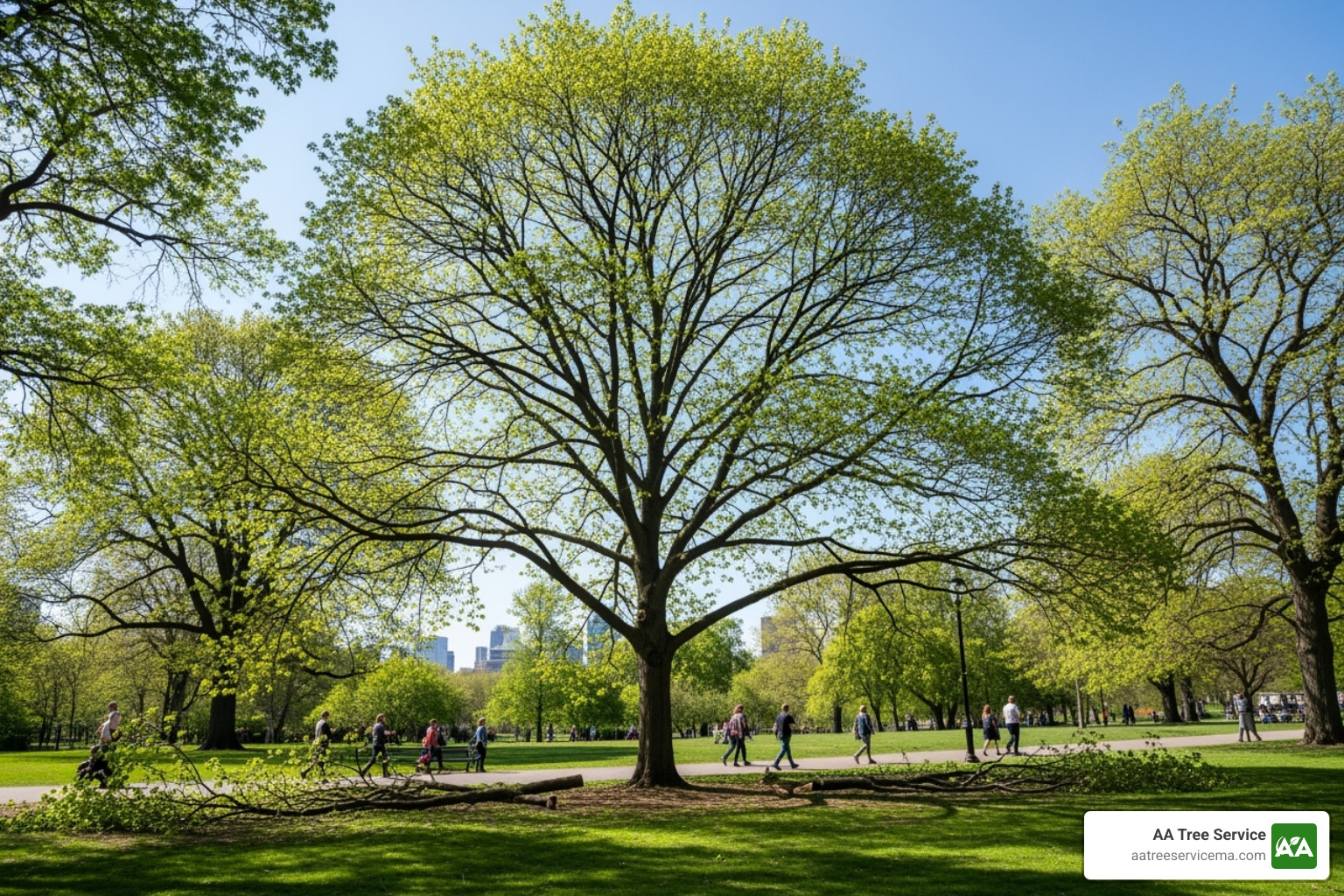
This is the most fundamental and essential form of tree maintenance, forming the basis of almost every pruning job. Crown cleaning is the selective removal of dead, diseased, dying, or broken branches from the tree’s canopy. These branches are not merely unsightly; they are significant hazards that can break and fall unexpectedly, posing a risk to people and property below. Beyond the safety benefits, removing this wood is crucial for the tree’s health. It prevents the spread of decay and pests from the dead branch into the main trunk, and it allows the tree to seal the wound properly. By eliminating non-productive wood, the tree can redirect its energy and resources toward healthy, vigorous growth.
Crown Thinning
Crown thinning is the selective removal of live branches to reduce the overall density of the canopy. The primary goal is not to reduce the tree’s height or spread, but to improve its structure and health. This technique involves carefully choosing and removing branches, often those that are crossing, rubbing, or growing too closely together, to open up the foliage.
The benefits are twofold: it increases sunlight penetration and air circulation throughout the canopy, which reduces the risk of many common fungal diseases. It also lessens the ‘sail effect’ by reducing wind resistance, making the tree more stable and less prone to damage during high winds and storms. A properly thinned tree retains its natural shape while becoming healthier and safer. As a rule, professionals avoid removing more than 25% of the live canopy in a single pruning session.
Crown Raising
Also known as canopy lifting or elevation, this technique involves the removal of the lowest branches of a tree to provide vertical clearance from the ground. This is a highly practical pruning method, ideal for trees located near sidewalks, driveways, buildings, or recreational areas. It prevents branches from obstructing pedestrian or vehicle traffic, rubbing against roofs or siding, or interfering with views. For example, municipal standards often require clearance of 8 feet over sidewalks and 14 feet over streets. Crown raising can also dramatically improve a landscape by allowing more sunlight to reach the lawn and gardens beneath the tree, promoting healthier turf and plant growth. On younger trees, this should be done gradually over several years to avoid creating large wounds on the main trunk.
Our Tree Trimming Woburn MA services include precise crown raising customized to your property’s specific functional and aesthetic needs.
Crown Reduction
When a mature tree has grown too large for its space, crown reduction is the proper technique to decrease its overall height or spread while maintaining its structural integrity and natural form. This is a highly technical process that involves cutting back leaders and branch terminals to smaller, outward-growing lateral branches that are at least one-third the diameter of the limb being removed. This ensures the lateral branch is large enough to assume the terminal role and sustain the limb, minimizing stress and promoting proper healing.
Crown reduction should never be confused with topping, an outdated and destructive practice that involves indiscriminately cutting the top of a tree or its main branches to stubs. Topping creates large, unsightly wounds that the tree cannot properly heal, inviting decay and disease deep into its structure. It also triggers a survival response, causing a flush of weak, poorly attached, and fast-growing sprouts (epicormic shoots) just below the cuts. These sprouts quickly grow back to the original height but are extremely prone to breaking, making a topped tree far more hazardous than it was before. Professional crown reduction is a skilled, surgical technique that preserves a tree’s health; topping is an act of mutilation that creates an ugly, unsafe tree with a drastically shortened lifespan.
How to Choose the Best Service for Tree Pruning Woburn MA
Choosing the right professionals for tree pruning Woburn MA is one of the most important decisions you can make for the long-term health and safety of your trees and property. You are entrusting a company with the care of valuable, living assets, and the quality of their work will have lasting consequences. It’s essential to select a knowledgeable, experienced, and trustworthy company that prioritizes safety and tree health above all else.
Key factors to consider include:
- Experience: A company with deep roots in the local area brings invaluable knowledge. They understand Woburn’s specific climate, its mix of native and ornamental tree species, and the common pests and diseases prevalent in our region, such as the Emerald Ash Borer or winter moth. When researching Local Tree Trimming Companies, ask about their years in business and their experience with trees like yours.
- Insurance: This is an absolute non-negotiable. A reputable tree care company must carry both comprehensive general liability insurance and worker’s compensation insurance. General liability protects your home and property from any damage that might occur during the job. Worker’s compensation protects you from being sued if a worker is injured on your property. Always ask for a current certificate of insurance and verify it with the issuing agency.
- Customer Reviews and Reputation: Check online reviews on multiple platforms (like Google, Yelp, and Angi) to get a well-rounded picture of a company’s reliability, professionalism, communication, and the quality of their work. A long track record of satisfied customers is a strong indicator of a trustworthy business.
- Professional Assessment & Estimates: A reputable service will never give a quote over the phone without seeing the tree. They should provide a free, on-site assessment and a detailed, written estimate. This document should clearly outline the specific work to be performed on each tree, the techniques to be used, how debris will be handled (e.g., cleanup and haul-away), and the total cost. Vague, high-pressure quotes are a major red flag.
- Safety Protocols: Observe their approach to safety. Professional crews adhere to industry safety standards (like ANSI Z133), use proper personal protective equipment (PPE) such as helmets and safety glasses, and have clear protocols for protecting your property and their workers.
Qualifications to Look For
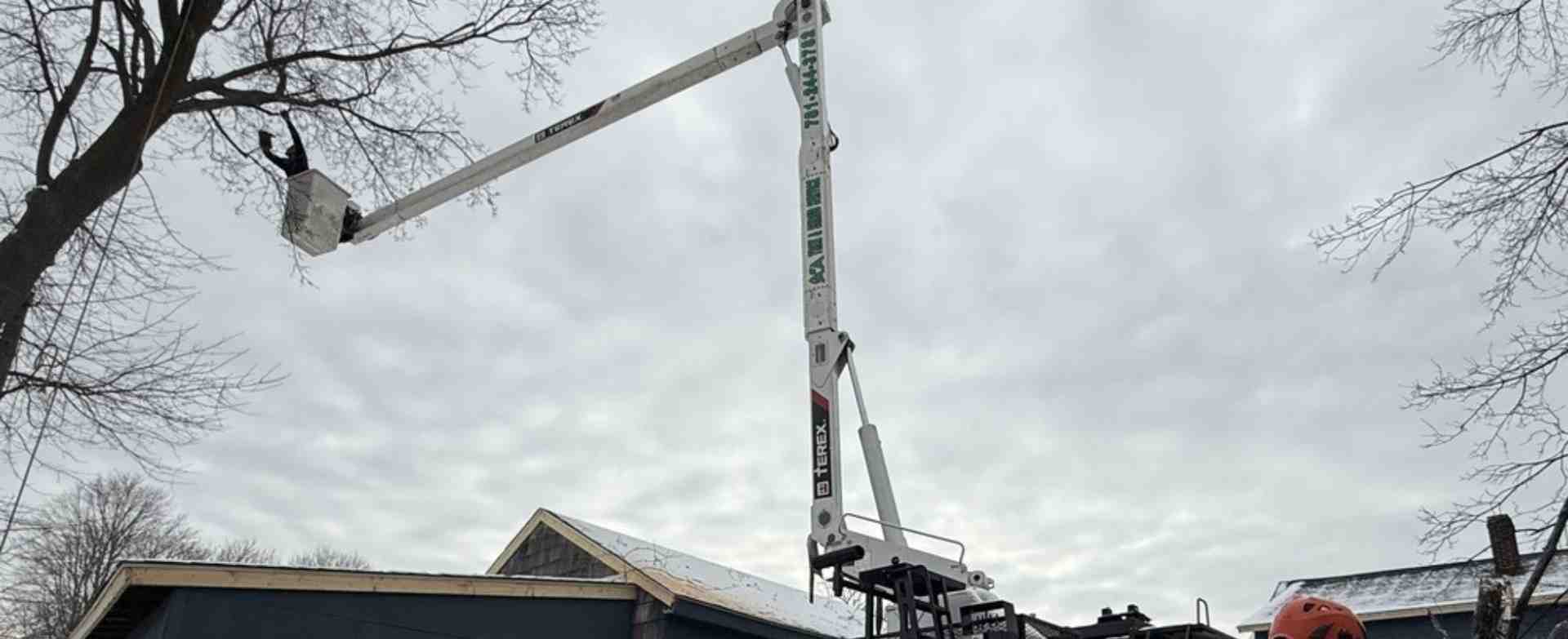
Beyond the basics, look for certified tree care specialists who have formally demonstrated their expertise. The most recognized credential is the ISA (International Society of Arboriculture) Certified Arborist. To earn this, an individual must have a minimum level of experience, pass a comprehensive exam covering all facets of arboriculture, and adhere to a code of ethics. They must also earn continuing education units to maintain their certification, ensuring they are up-to-date on the latest research and techniques.
Affiliations with professional organizations like the Massachusetts Arborists Association and the International Society of Arboriculture are also excellent indicators that a company is committed to professionalism and staying current with the latest industry standards. Local experience is invaluable, as these professionals know which trees thrive in our specific New England climate and how to best care for them through our challenging seasons.
At AA Tree Service, our team is trained to the highest industry standards. With over 20 years of hands-on experience in Massachusetts and New Hampshire, we have built our reputation on a foundation of expert knowledge, advanced skill, and genuine care for our clients’ properties.
Understanding the Costs of Tree Pruning Woburn MA
Tree pruning costs can vary widely because every tree and every job is unique. Based on general internet data, average costs for professional tree pruning in the region typically range from $350 to over $1,800, with large, complex, or hazardous jobs costing more. Please note these are average costs based on industry data and not the actual costs for AA Tree Service. For a precise, no-obligation quote for your specific needs, we encourage you to Request a Quote from us.
Key factors influencing the price include:
- Tree Size and Type: Larger, taller trees require more time, labor, and often specialized equipment to prune safely.
- Accessibility: A tree in an open yard is much easier and less costly to work on than one in a tight spot, overhanging a house, or entangled in utility lines.
- Tree Health and Condition: A healthy tree needing routine maintenance is simpler to prune than one with extensive deadwood, disease, or storm damage that requires more careful and time-consuming work.
- Technique Required: The complexity of the pruning—such as a delicate crown reduction versus a simple crown cleaning—will affect the labor and skill involved.
- Equipment and Crew Size: The need for a bucket truck, crane, or a larger crew for safety will be factored into the cost.
While it can be tempting to choose the lowest bid, quality tree care is an investment in the long-term health and safety of your property. An unusually low bid may indicate a lack of insurance, experience, or proper equipment.
The Dangers of Improper Pruning
Improper pruning can cause irreparable damage and may even kill a tree over time. The most egregious practice is topping, which creates large wounds that invite decay and triggers the growth of weak, hazardous shoots. However, other improper cuts are also damaging. Flush cuts, made too close to the trunk, remove the branch collar and prevent the tree from healing properly.
Stub cuts, which leave a long stub behind, lead to decay that can spread into the trunk. Hiring an unqualified individual not only risks your tree’s health but also exposes you to significant liability. DIY pruning is also extremely dangerous. Operating chainsaws on ladders, navigating falling branches, and working near power lines are tasks that demand the training, experience, and safety gear of a professional. To ensure your trees receive the best care from qualified experts, always seek out a certified tree service near you.
Frequently Asked Questions about Tree Pruning in Woburn
Homeowners often have excellent questions when considering professional care for their trees. Understanding the process helps you make informed decisions for your landscape. Here are answers to some of the most common questions we hear about tree pruning Woburn MA.
How often should I have my trees pruned in Woburn?
The ideal pruning frequency depends heavily on the tree’s species, age, location, and overall health. As a general guideline, most mature, healthy trees benefit from a professional inspection and maintenance pruning (like crown cleaning) every 3 to 5 years. Younger trees, however, benefit from more frequent structural pruning, perhaps every 1 to 2 years. This early training is crucial for establishing a strong, durable framework that will prevent problems as the tree matures. Fast-growing species like silver maples or willows may require more frequent attention than slow-growing species like oaks or beeches. Of course, if you notice any dead, broken, or visibly diseased branches, they should be addressed immediately, regardless of the regular schedule.
Can tree pruning save a sick tree?
In many cases, yes, strategic pruning can be a vital part of saving a sick or declining tree. By carefully removing diseased or pest-infested branches, we can physically stop the problem from spreading to the rest of the tree. This is particularly effective for fungal cankers or localized insect infestations. Thinning the canopy to improve air circulation can also help a tree recover by creating a less favorable environment for fungal pathogens. Pruning allows the tree to redirect its energy from sustaining weak or dying limbs toward healing and producing healthy new growth. However, pruning is not a cure-all. The first step should always be a diagnosis from a certified arborist. If a disease is systemic (like Dutch elm disease) or if decay has compromised the tree’s structural integrity, removal may be the only safe option.
Is it necessary to get a permit for tree pruning in Woburn, MA?
For routine pruning of trees located entirely on your own private property in Woburn, you generally do not need a permit. This includes standard maintenance like removing dead branches (crown cleaning), thinning the canopy, or performing minor shaping. However, the rules change when it comes to tree removal or work on certain types of trees. You should always check with the Woburn Department of Public Works before removing a tree entirely, especially a large, mature one, as local ordinances may apply.
Furthermore, any work on trees located on city property—such as ‘street trees’ in the planting strip between the sidewalk and the road—absolutely requires city permission and must typically be performed by the city’s contractor. If your property is located within a designated historic district or near a conservation area, there may be additional regulations. When in doubt, a quick call to Woburn City Hall is the best way to ensure compliance.
What is the difference between tree pruning and tree trimming?
While many people use the terms interchangeably, professionals often make a distinction. Pruning is the scientifically-based practice of making selective cuts to improve a tree’s health, safety, and structure. It’s based on an understanding of tree biology. Trimming is more often associated with shaping hedges and shrubs for aesthetic or formal purposes, like creating a flat top or a round shape. When you hire a professional arborist for your trees, you are paying for their expertise in pruning, not just trimming.
Will pruning make my tree grow back too fast?
This is a great question, and the answer depends entirely on the type of cuts made. Proper pruning, such as crown cleaning or thinning, redirects the tree’s energy into healthier, more desirable growth, but it doesn’t typically cause an explosion of unwanted growth. In contrast, improper pruning like topping or excessive reduction triggers a stress response in the tree, causing it to rapidly send out numerous weak, fast-growing shoots (suckers or watersprouts) in a desperate attempt to replace its lost leaf surface. This creates a cycle of required re-pruning and makes the tree more hazardous. The goal of professional pruning is to manage growth, not just stimulate it.
Your Partner for Expert Tree Care in Woburn
Your trees are long-term, living investments that add immense beauty, environmental benefits, and financial value to your property when cared for professionally. Proper pruning is not just about cutting branches; it’s a science and an art, a process of nurturing living assets so they can thrive safely for generations. It’s about ensuring the majestic oak in your front yard remains a source of pride and not a liability, and that the maple in your backyard provides safe, cool shade for years to come.
When you need a partner you can trust for your tree pruning Woburn MA needs, AA Tree Service is here to help. With over 20 years of dedicated experience serving homeowners and businesses throughout Massachusetts and New Hampshire, we have an intimate understanding of what it takes for trees to flourish in our unique New England climate. We have successfully managed thousands of projects, from routine maintenance on residential properties to complex removals and large-scale emergency storm response efforts in Woburn and surrounding communities like Burlington, Winchester, and Stoneham.
What truly sets us apart is our unwavering commitment to you, our client. We know that tree issues can be stressful, which is why our 24/7 emergency service means we are always ready to respond when you need us most. We offer free, same-day quotes provided by knowledgeable arborists who take the time to walk your property, listen to your concerns, and explain your options clearly. We treat your property as if it were our own, combining our local expertise with state-of-the-art, professional-grade equipment to deliver safe, efficient, and lasting results. From the initial consultation to the final cleanup, our goal is your complete satisfaction.
Whether you need routine maintenance to keep your trees healthy, specialized Tree Pruning Services Woburn MA to address a specific issue, or urgent storm damage cleanup, our highly trained and fully insured team is ready to provide the highest level of service. Explore our comprehensive Tree Services in Woburn MA and discover why your neighbors consistently trust us with their most valuable landscape assets.