Why Site Clearing Services Are Essential for Your Property Development
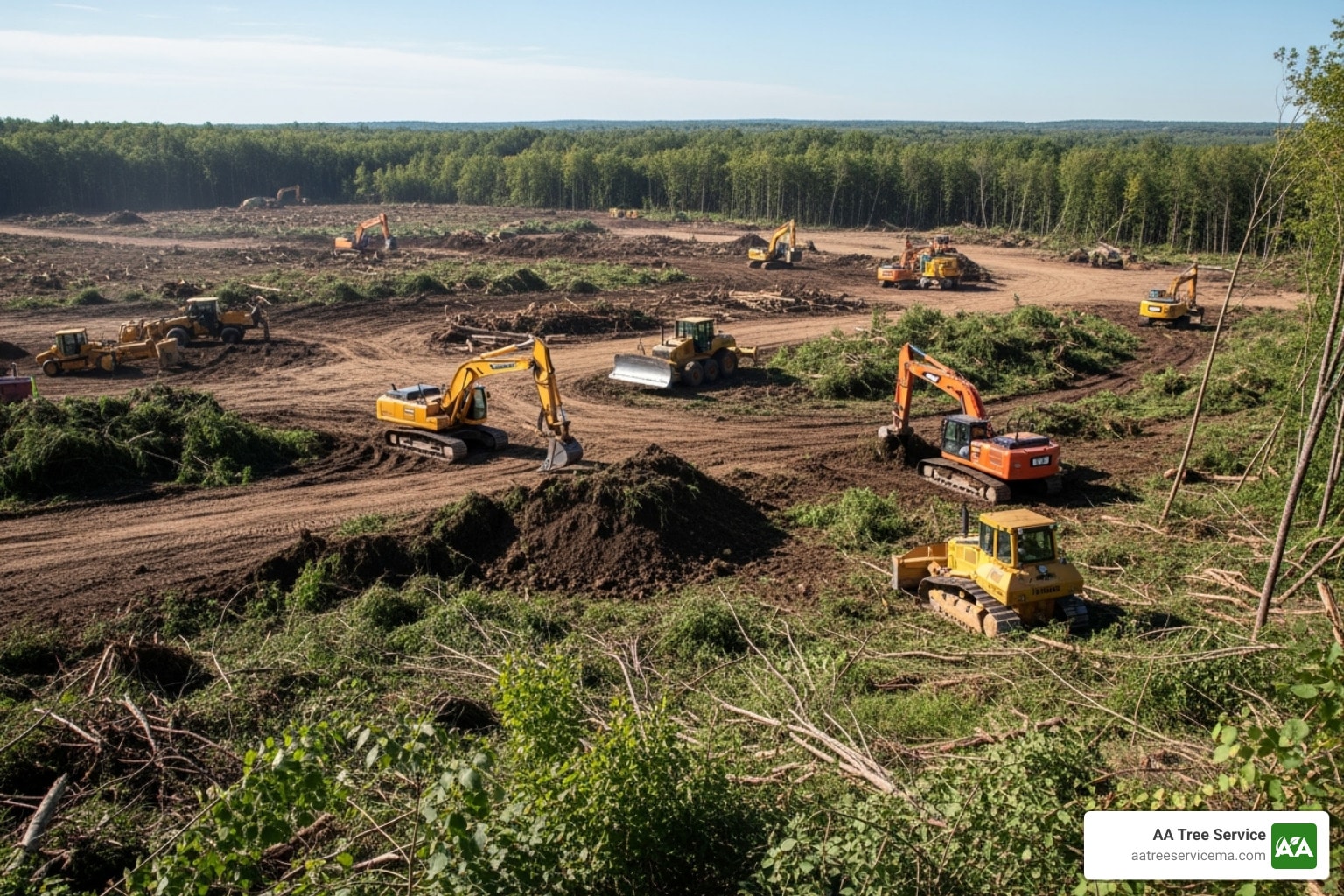
Site clearing services involve the professional removal of trees, vegetation, debris, and other obstacles to prepare a piece of land for construction, development, or other uses. These services transform overgrown or unusable land into a clean, accessible space ready for your next project.
What site clearing services typically include:
- Tree and vegetation removal: Cutting down trees, clearing brush, and removing undergrowth.
- Debris disposal: Hauling away or mulching cleared materials on-site.
- Stump grinding: Removing tree stumps and root systems.
- Site grading: Leveling and preparing the ground surface.
- Permit assistance: Helping you steer local regulations and requirements.
Whether you’re planning to build a new home in Massachusetts, develop commercial property in New Hampshire, or simply reclaim overgrown land, site clearing is the crucial first step that sets the foundation for project success. Professional site clearing prevents costly delays, ensures equipment can access your property safely, and creates the clean slate you need for construction or landscaping. The process requires specialized equipment and knowledge of local regulations, which is why it’s best left to experienced contractors.
What is Site Clearing and Why is it the Crucial First Step?
Site clearing is the foundational process of removing all unwanted elements from a piece of land, including trees, brush, rocks, and old structures. It transforms an overgrown or unusable lot into a clean, safe, and stable area, ready for your construction or landscaping project. A properly cleared site is the bedrock of any successful build, ensuring the ground is level, free of hidden obstructions, and accessible for heavy equipment and utility installation. Skipping this critical first step can lead to a cascade of costly delays, structural problems, and serious safety hazards down the road.
The Importance for Construction and Development
For any construction project, professional site clearing services are not just beneficial; they are absolutely essential. They provide the clean slate that architects, engineers, and builders need to execute their plans accurately and safely, ensuring:
- Foundation Stability: Removing trees is only half the battle. The underlying root systems, if left behind, will eventually decay, creating voids and soft spots in the soil. This can lead to soil shifting, which in turn can cause a building’s foundation to settle unevenly, resulting in cracks and long-term structural integrity issues. Proper grubbing and root removal are vital for a solid base.
- Utility Access: Imagine the logistical and financial nightmare of finding a massive network of old-growth tree roots or a buried boulder field precisely where a main sewer line or electrical conduit is planned. Professional clearing ensures that pathways for water, sewer, gas, and electrical lines are completely free of obstructions, preventing costly and time-consuming rerouting and project delays.
- Equipment Maneuverability: A clear, relatively level site is paramount for safety and efficiency. Heavy machinery like excavators, cranes, and concrete trucks require stable ground to operate without the risk of tipping over or getting stuck. A properly prepared site allows for the safe and efficient movement of all necessary equipment, materials, and personnel throughout the construction process.
- Hazard Reduction: Overgrown lots are often home to more than just plants. They can conceal dangerous debris like broken glass or scrap metal, hide uneven ground that poses a tripping hazard, and harbor pests like ticks, wasps, and rodents. Furthermore, clearing flammable undergrowth and creating a buffer zone around a new structure is a key component of fire prevention, establishing a “defensible space” that is critical for protecting homes in the wooded landscapes of Massachusetts and New Hampshire.
Common Projects That Require Site Clearing
The need for site clearing services spans a wide spectrum of projects, from small residential improvements to large-scale commercial and municipal developments. If you’re looking to fundamentally change how a piece of land is used, chances are you’ll need to start with professional clearing.
Our expertise is often called upon for a variety of common projects:
- Residential Lot Clearing: Preparing land for a new custom home, an addition, a new septic system, or creating a larger, more usable yard.
- Commercial Building Sites: Clearing and grading land for office buildings, retail centers, warehouses, or industrial facilities.
- Roadway and Subdivision Development: Creating the entire infrastructure for new communities, including access roads, residential lots, and common areas.
- Farmland Reclamation: Restoring overgrown or fallow fields for agricultural use, removing invasive species and woody growth.
- Utility Right-of-Ways: Clearing and maintaining clear paths for power lines, pipelines, and other essential public services.
For more information on how we prepare land for development, see our page on Land Clearing for Development or for smaller jobs, our page on Lot Clearing Services.
The Comprehensive Process of Professional Site Clearing Services
When you partner with us for your site clearing services, you’re engaging in a systematic and professional process designed for efficiency, safety, and environmental responsibility. We follow a carefully planned approach that ensures your project starts on the right foot.
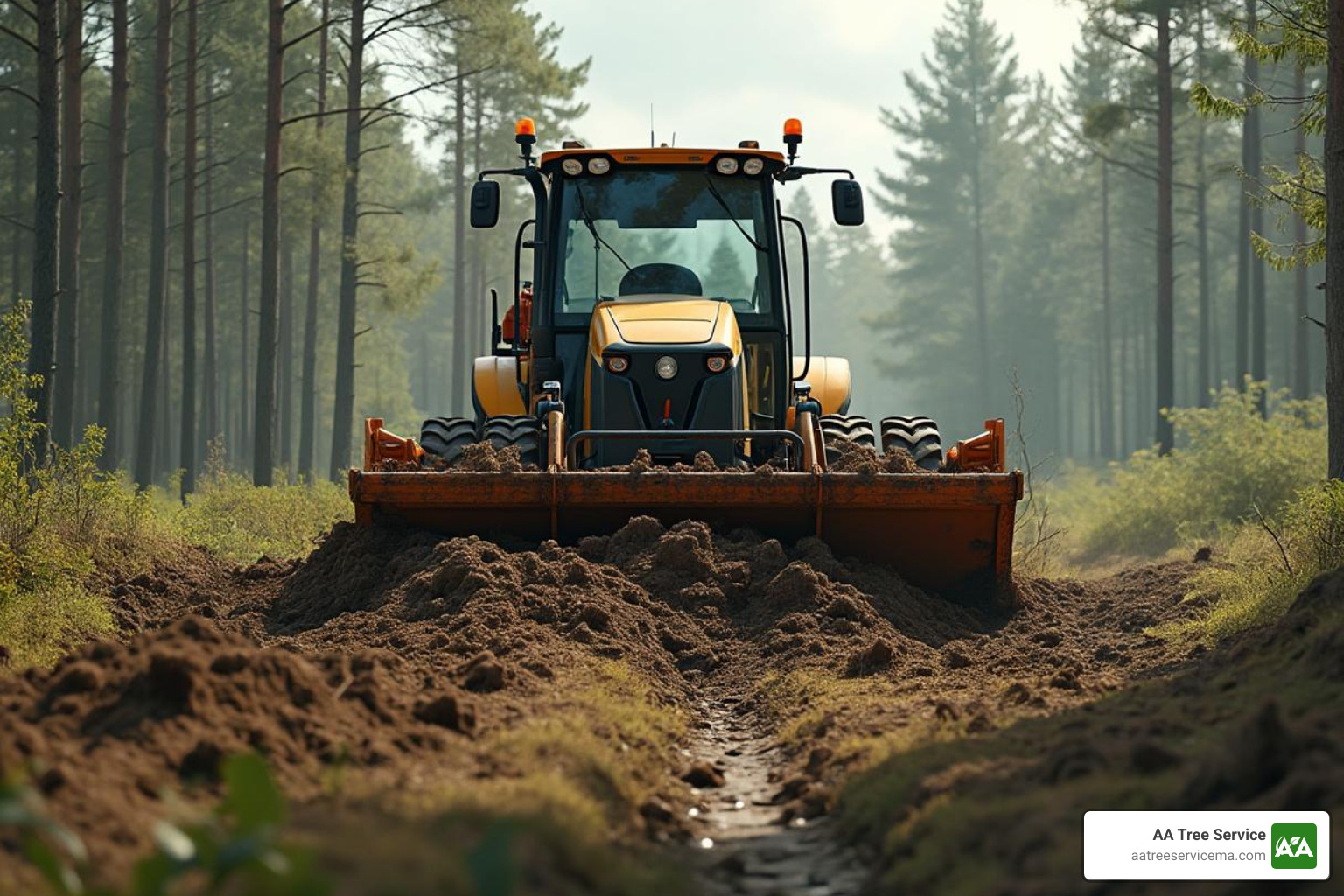
Our process includes a thorough site assessment, assistance with permitting to steer local regulations in Massachusetts and New Hampshire, and the selection of the most appropriate clearing methods. Throughout the project, we adhere to strict safety protocols and prioritize environmental protection by minimizing soil erosion and protecting natural resources. Finally, we handle all debris management, leaving your site clean and ready.
Different Methods for Different Needs
The world of site clearing services is not one-size-fits-all. We employ a range of techniques to ensure the most effective and environmentally sound approach for your property.
| Method | Description |
|---|---|
| Forestry Mulching | An eco-friendly method where machinery grinds trees and brush into mulch on-site. This minimizes soil disturbance and enriches the soil. As our equipment doesn’t disturb the root mat, it’s an excellent choice for sensitive areas. |
| Grubbing & Root Removal | A more intensive process that removes trees, stumps, and root systems entirely. This is necessary for creating a perfectly clear and stable base for foundations and new construction. |
| Cut and Grind | This involves felling trees and then using a stump grinder to remove the stumps below ground level. The remaining wood can be chipped or hauled away. |
| Debris Haul-Off | For projects where on-site disposal isn’t practical, we can efficiently remove all cleared materials, leaving your property completely clear. |
For more details on our methods, see our page on Brush and Land Clearing Services.
Essential Equipment Used in Operations
Successfully executing site clearing services demands the right tools for the job. Our fleet of modern, specialized equipment is crucial for tackling diverse clearing challenges efficiently and safely.
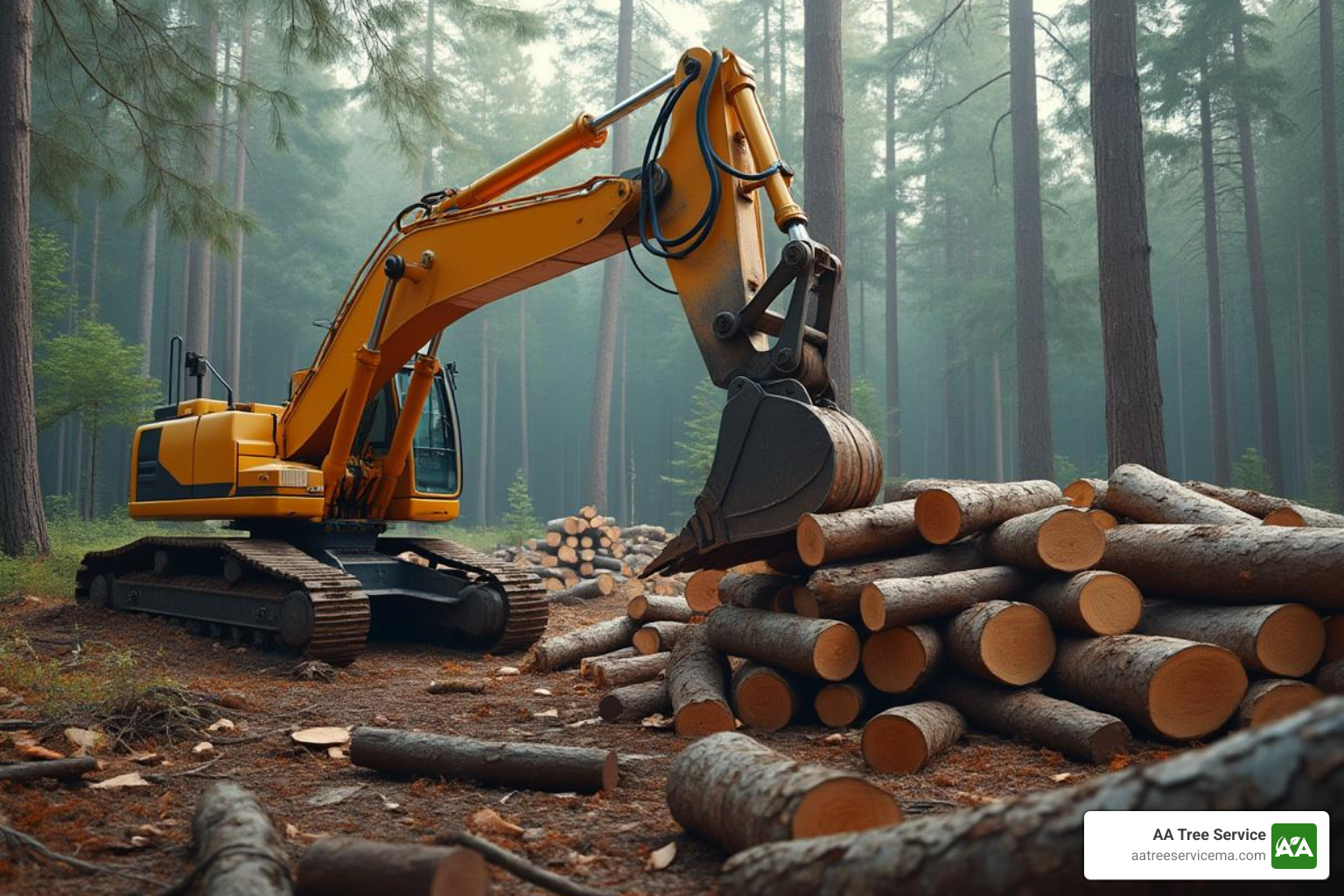
- Bulldozers & Excavators: For heavy-duty clearing, grading, and moving earth.
- Forestry Mulchers: To efficiently turn vegetation into mulch on-site.
- Stump Grinders & Wood Chippers: For removing stumps and processing smaller debris.
- Dump Trucks: For hauling materials off-site.
Learn more about our Tree Clearing Services.
Overcoming Common Challenges
With decades of experience in New England, we are prepared for any challenge, including:
- Difficult Terrain: Navigating steep slopes and rocky soil.
- Harsh Weather: Adapting schedules and methods to changing conditions.
- Unexpected Obstacles: Handling buried rocks, old foundations, or unmarked utilities.
- Environmental Regulations: Ensuring full compliance with local and state laws, especially concerning wetlands.
- Preserving Trees: We can selectively clear land while protecting specific trees you wish to keep. We offer Tree Preservation During Construction services to ensure their health. In case of storm damage, our Emergency Tree Removal team is also available.
The Comprehensive Process of Professional Site Clearing Services
When you entrust us with your site clearing services, you’re choosing a partner committed to a systematic, professional approach. Our goal is to transform your land efficiently, safely, and with respect for the environment, setting a strong foundation for your vision.
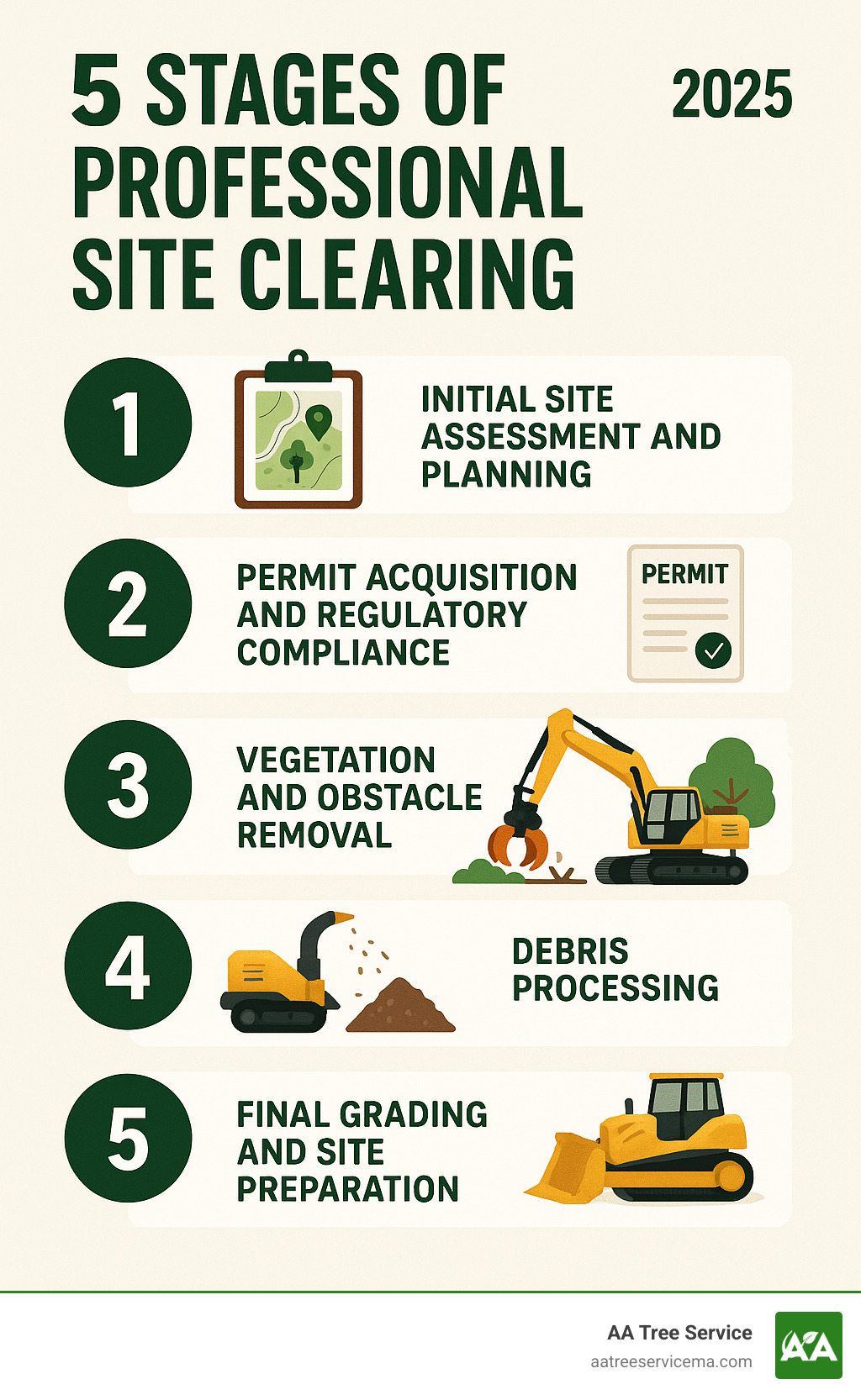
Our process begins with a thorough site assessment. Our team of experts will visit your property in Massachusetts or New Hampshire to carefully evaluate the terrain, identify the types and density of vegetation, note any existing structures or debris, and pinpoint potential challenges such as difficult access points, steep slopes, or environmentally sensitive areas like wetlands. This detailed assessment is crucial for developing a custom clearing plan that addresses your specific needs and the unique characteristics of your land.
Following the assessment, we assist with permitting. Depending on your location and the scope of your project, land clearing may require permits from local municipal authorities, conservation commissions, or state agencies. Navigating these regulations can be intricate, especially given the strict environmental protections in place for wetlands and conservation areas across Massachusetts and New Hampshire. We can help streamline this process, ensuring all necessary approvals are secured before any work commences, preventing costly delays and potential legal issues.
Once the planning and permitting phases are complete, we move into the clearing methods stage. Here, we select the most appropriate techniques based on our site assessment and your project objectives. Throughout this entire phase, stringent safety protocols are our top priority. Our highly trained team operates specialized equipment with the utmost adherence to safety standards, safeguarding both our personnel and your property.
Environmental protection is a core principle in our operations. We are dedicated to minimizing our ecological footprint by implementing best practices designed to mitigate soil erosion, protect nearby water sources, and preserve valuable habitats whenever feasible. Our project planning always includes measures to comply with all relevant environmental regulations.
Finally, efficient debris management is integral to our service. We don’t just clear; we responsibly manage all cleared materials. This often includes options for on-site mulching, which can benefit your property’s soil, or hauling materials to appropriate recycling and disposal facilities, ensuring nothing is left behind to hinder your next steps.
Different Methods for Different Needs
The landscape of site clearing services is diverse, and we understand that each project has unique requirements. We don’t believe in a one-size-fits-all approach. Instead, we select from a range of specialized methods, ensuring the most effective, efficient, and environmentally sound solution for your property.
Here’s a closer look at the primary methods we employ:
- Forestry Mulching: This is an increasingly popular and environmentally responsible approach. Using specialized machinery, we grind trees, brush, and other vegetation into a fine mulch directly on-site. The key advantage is that the “machinery blades do not contact the ground or roots, preserving natural integrity.” This significantly reduces soil disturbance and erosion. “Soil compaction is significantly lower than traditional bulldozers, comparable to a human footprint,” which is excellent for soil health. Forestry mulching also “allows for selective removal of trees and brush,” meaning we can clear specific areas while preserving desirable trees. The resulting mulch can be left on the ground to decompose, enriching the soil and suppressing weeds, or it can be removed.
- Grubbing and Root Removal: For projects requiring a completely clear and level surface, such as building foundations or agricultural fields, grubbing is essential. This method involves using heavy machinery like excavators to remove not just the visible vegetation but also the stumps and root systems below the ground. While more invasive than mulching, it’s necessary to prevent future regrowth and ensure a stable building platform.
- Cut and Grind: This method involves cutting down trees and brush, then using stump grinders to remove the remaining stumps. The cut vegetation can then be chipped, hauled away, or mulched separately. This offers a good balance between thorough removal and managing debris.
- Burning: In some cases, and where regulations permit, controlled burning can be an efficient method for disposing of large volumes of cleared brush and debris. We may use innovative approaches like portable air curtain burning systems, which are designed to be more eco-friendly and efficient than traditional open burning, minimizing smoke and particulate emissions. However, strict adherence to local burning regulations in Massachusetts and New Hampshire is always paramount.
- Debris Haul-Off: When on-site processing isn’t feasible or desired, we can efficiently haul away all cleared debris to appropriate recycling or disposal facilities. This ensures your site is left completely clean and ready for immediate use.
Our choice of method depends on factors like the density of vegetation, the type of soil, the ultimate purpose of the cleared land, and local environmental regulations. For more detailed information on how we handle various types of vegetation, please visit our page on More info about Brush and Land Clearing Services.
Essential Equipment Used in Operations
Successfully executing site clearing services demands the right tools for the job. Our fleet of modern, specialized equipment is crucial for tackling diverse clearing challenges efficiently, safely, and effectively across Massachusetts and New Hampshire. The choice of equipment depends entirely on the project’s scope and the type of vegetation and terrain involved.
Here are some of the essential pieces of equipment we commonly deploy:
- Bulldozers: These powerful machines are indispensable for pushing over trees, clearing large areas of brush, moving earth, and leveling ground. Their sheer force makes them ideal for initial heavy clearing and rough grading.
- Excavators: Versatile and agile, excavators equipped with various attachments (like grapples, hydraulic shears, or mulching heads) are used for precision work. They can dig out stumps and roots, sort debris, load trucks, and even perform selective clearing in tighter spaces.
- Forestry Mulchers: These specialized machines, often track-mounted for excellent maneuverability on uneven terrain, are designed to grind standing or fallen trees and brush into mulch. They are key to our eco-friendly mulching operations, capable of processing vegetation up to a certain diameter efficiently.
- Stump Grinders: After trees are felled, stumps can remain as unsightly obstacles. Our stump grinders efficiently chew away at stumps, reducing them to wood chips and allowing for easier soil preparation or replanting.
- Wood Chippers: For smaller branches and brush, wood chippers convert material into valuable wood chips. These chips can be spread on-site as mulch, used for biomass, or hauled away for off-site disposal or recycling.
- Dump Trucks: Essential for any project where debris needs to be hauled off-site. Our dump trucks ensure efficient transport of cleared materials to appropriate disposal or recycling facilities.
We use a range of specialized equipment, including “excavators, bulldozers, mulchers, and brush cutters.” This diverse array of machinery allows us to adapt to any project, big or small, ensuring optimal results. For a closer look at how we handle tree removal and related clearing tasks, visit our More info about Tree Clearing Services page.
Overcoming Common Challenges
Even with the most meticulous planning, site clearing services can present unexpected challenges. Our decades of experience in Massachusetts and New Hampshire have equipped us to anticipate and effectively overcome these obstacles, ensuring your project stays on track.
One frequent challenge is difficult terrain. Properties in our region can feature rocky soil, steep slopes, or uneven ground, making equipment operation more complex and demanding. We employ specialized machinery and experienced operators skilled in navigating such conditions safely.
Harsh weather is another common adversary. New England weather can be unpredictable, with heavy rains, snow, or extreme temperatures impacting project timelines and working conditions. We plan our projects with weather contingencies in mind, and our robust equipment is designed to perform even in less-than-ideal conditions. In emergency situations caused by weather, our More info about Emergency Tree Removal services are available 24/7.
We often encounter unexpected obstacles lurking beneath the surface. This could include large, buried rocks, old foundations from previous structures, or unmarked utility lines. Our thorough site assessments help identify potential issues, and our team is trained to handle these surprises safely and efficiently, minimizing disruption.
Buried debris from previous construction or dumping can also pose a significant challenge. This requires careful excavation and proper disposal to ensure a clean site.
Navigating environmental regulations is a constant, crucial challenge, especially with the strict protections for wetlands and conservation areas in Massachusetts and New Hampshire. We pride ourselves on our deep understanding of these laws and proactively work to ensure full compliance, often assisting clients with the complex permitting process.
Soil erosion control is vital after clearing, particularly on sloped terrain or near water bodies. We implement best practices such as temporary seeding, silt fencing, and careful grading to prevent topsoil loss and protect water quality.
Finally, a common request is protecting desirable trees within the clearing zone. This requires meticulous planning and selective clearing techniques to ensure that specific trees are preserved and protected from damage during the process. We also offer More info about Tree Preservation During Construction to help safeguard valuable trees on your property. Our arborists can assess tree health and recommend preservation strategies.
How to Select the Right Site Clearing Contractor
Choosing the right contractor for your site clearing services is one of the most critical decisions you’ll make for your project. It’s not just about hiring a crew with a bulldozer; it’s about finding a strategic partner who understands your vision, respects your property, and has the comprehensive expertise to prepare your land properly, safely, and in full compliance with local regulations.

Key Factors Influencing the Cost of Site Clearing Services
The cost of site clearing services is highly variable and depends on a unique combination of factors specific to your property. Understanding these elements will help you evaluate quotes and budget effectively:
- Acreage: The total size of the area to be cleared is the most basic cost factor.
- Vegetation Density: There is a vast difference in the effort required to clear light brush and saplings versus a dense forest of mature hardwood trees. The type, size, and number of trees per acre significantly impact the cost.
- Terrain: A flat, open, and dry parcel of land is the least expensive to clear. Costs increase with complexity, such as steep slopes, rocky ledges, or wetland areas that require specialized equipment and careful operating procedures.
- Debris Disposal: The chosen method for handling cleared vegetation is a major cost driver. On-site forestry mulching is often more cost-effective than the multi-step process of cutting, piling, loading, and hauling all materials to a disposal facility, which involves higher labor and transportation costs.
- Permit Fees: The costs associated with acquiring necessary permits from local and state authorities can vary widely depending on the municipality and the environmental sensitivity of the site.
- Accessibility: The ease with which heavy equipment can access the site matters. A remote property with a narrow or unpaved access road may require additional prep work or specialized machinery, influencing the price.
Industry-wide averages compiled from publicly available internet sources indicate that site clearing can run anywhere from about $1,500 per acre on the low end to well over $10,000 per acre on the high end (i.e., more than three times the lower figure). These figures are for general reference only—they are not quotes or actual pricing from AA Tree Service. For a precise quote, we recommend a site evaluation. If you’re considering financing options for a larger project, you can Learn More About Financing Options.
What to Look For in a Reputable Company
When evaluating potential contractors, look beyond the price tag. A cheap bid can become expensive if the work is done improperly. Look for these key qualities:
- Experience: A long track record, like our 20+ years of experience, indicates reliability, problem-solving skills, and a deep understanding of the entire process.
- Credentials: For any project involving trees, ensure they have ISA-Certified Arborists on staff. This certification demonstrates a high level of knowledge in tree care, biology, and safe work practices.
- Insurance: This is non-negotiable. The company must have full liability and workers’ compensation insurance. We carry over $1 million in liability coverage to protect you, your property, and our team.
- Licensing: Verify they hold all necessary state and local licenses for operating in Massachusetts and New Hampshire. This confirms they meet the legal requirements for conducting business.
- Positive Customer Reviews: Check for consistently good customer feedback on platforms like Google. Look for comments that mention professionalism, communication, and adherence to the project scope and timeline.
- Local Knowledge: A contractor familiar with the specific soil conditions, vegetation types, and complex regulations of your town or county can anticipate challenges and prevent costly surprises.
- Detailed, Written Proposals: A reputable contractor will provide a comprehensive proposal that clearly outlines the full scope of work, the specific methods and equipment to be used, a projected timeline, a clear cost breakdown, and payment terms. Be wary of vague, one-line quotes.
- Commitment to Safety: Ask about their safety program and record. A professional company prioritizes the safety of its crew and your property and will be transparent about its protocols and employee training.
We also offer a Tree Hazard Assessment to identify potential risks before work begins, further demonstrating a commitment to proactive, safe planning.
Frequently Asked Questions about Site Clearing
We understand that starting a site clearing services project can bring up a lot of questions, especially for those who have never undertaken such a task before. To help you feel more informed and confident, here are answers to some common inquiries we receive from property owners across Massachusetts and New Hampshire.
How long does a typical site clearing project take?
The timeline for a site clearing project is highly variable. It depends directly on the project’s size and complexity, the density and type of vegetation, the terrain, prevailing weather conditions, and the time required for any necessary permits to be approved. A small, straightforward residential lot might take just a few days to clear. In contrast, a large, multi-acre commercial site with dense forest and challenging terrain could take several weeks or more. After a thorough site assessment, we can provide you with a much more accurate and realistic project timeline.
Do I need a permit for land clearing in Massachusetts or New Hampshire?
Most likely, yes. Permit requirements vary significantly by town and county, but some form of approval is often necessary, especially for larger projects or any work conducted near wetlands, conservation areas, or other protected resources. It is absolutely crucial to check with your local municipal office (such as the building department or conservation commission) before starting any work. We have extensive experience navigating these local regulations and can assist you with the permitting process to ensure your project remains fully compliant, avoiding potential fines and stop-work orders.
What happens to all the cleared trees and debris?
We offer several responsible debris management options custom to your project’s needs and your property’s characteristics. We can use forestry mulching equipment to turn trees and brush into a beneficial layer of mulch that can be spread on-site to enrich the soil and prevent erosion. Alternatively, we can chip smaller material and haul away larger logs. For projects requiring a completely clean slate, we can haul all cleared materials away to an appropriate disposal or recycling facility. We’ll discuss the pros and cons of each option with you to determine the best approach for your specific project and budget. For more details, see our Tree Debris Removal Service page.
Can site clearing be done in the winter?
Yes, and in many cases, winter is an excellent time for site clearing in New England. When the ground is frozen solid, it is less susceptible to compaction and rutting from heavy machinery, which helps protect the soil structure and the root systems of any trees you wish to preserve. Clearing in winter when deciduous trees have no leaves can also improve visibility for our operators. The primary challenge is heavy snowfall, which can hide obstacles and slow down operations, but an experienced contractor can plan around weather conditions.
How do you protect the parts of my property that I want to keep?
Protecting the existing features of your property is a top priority. Before any work begins, we walk the site with you to clearly identify and mark all areas to be left untouched, including specific trees, landscaping, and structures. We establish clear work zones using high-visibility flagging tape or temporary fencing. For valuable trees near the clearing area, we employ specific tree preservation techniques, such as creating a root protection zone to prevent soil compaction and avoiding any mechanical damage to the trunk or branches.
Is site clearing bad for the environment?
When done irresponsibly, it can be. However, a professional and conscientious contractor makes environmental protection a core part of the process. We focus on using the right methods for the situation, such as low-impact forestry mulching, which minimizes soil disturbance. We are diligent about implementing erosion and sediment control measures, especially on slopes or near waterways, to protect water quality. By selectively clearing land and responsibly managing debris, we can help you achieve your development goals while minimizing the ecological footprint of the project.
Conclusion
Proper site clearing is the essential first step for any successful construction, development, or landscaping project. It’s about more than just removing trees; it’s about creating a safe, stable, and clean foundation for your vision. Choosing an experienced, professional contractor is critical to ensuring the job is done right.
With over 20 years of experience serving Massachusetts and New Hampshire, AA Tree Service has the expertise and equipment to handle any site clearing project with efficiency and care. We are committed to safety, environmental responsibility, and changing your property from an overgrown lot into a valuable, ready-to-use space.
Ready to get started? Contact us today for a professional assessment of your property.
Request a Quote for your land clearing project today!