 A safer, faster solution for removing large, hazardous, or hard-to-reach trees
Not every tree can be safely removed using traditional methods. When a tree is located near a home, power lines, fences, or other valuable structures, standard removal techniques may create unnecessary risk.
That’s where crane-assisted tree removal comes in.
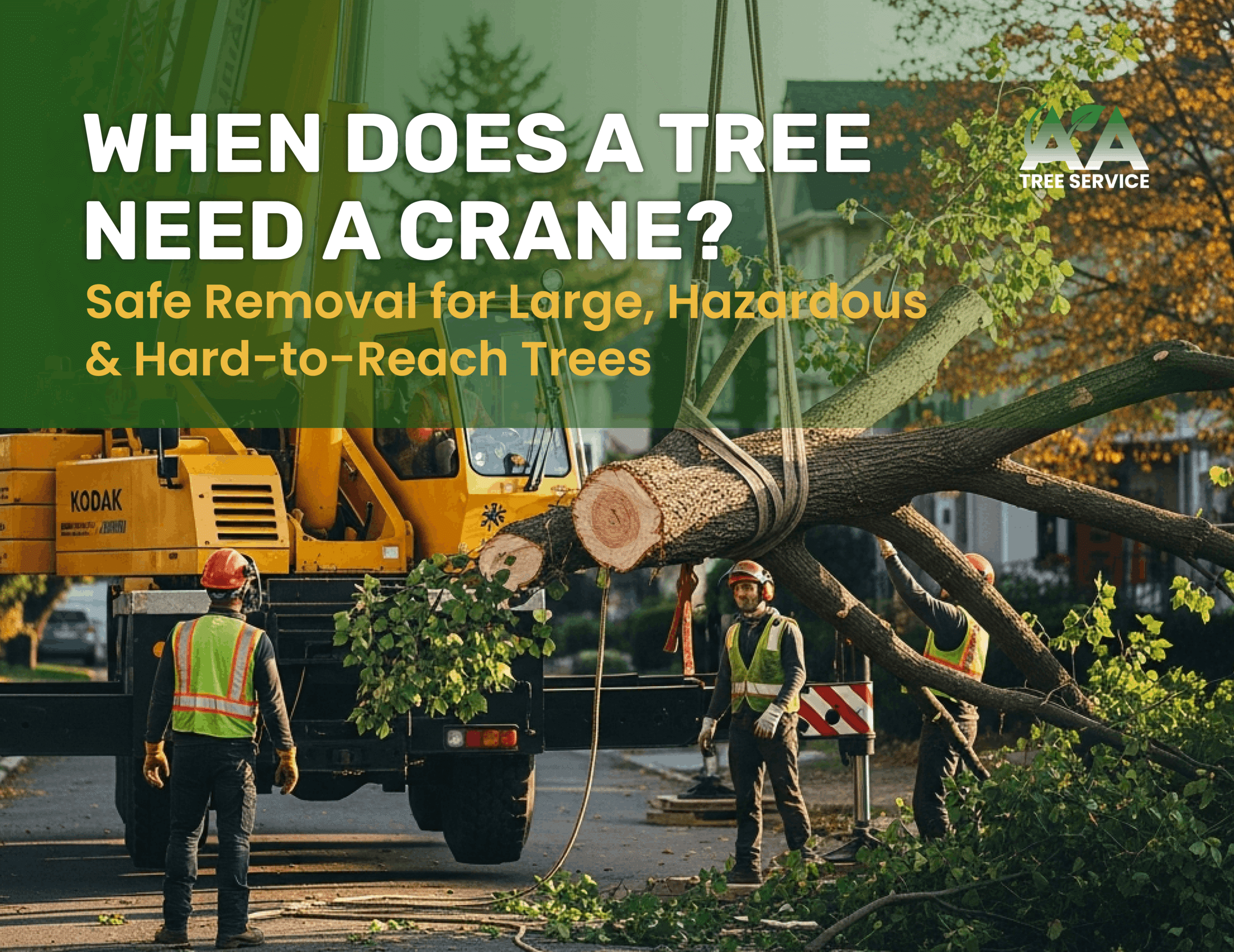
For homeowners and property managers throughout Massachusetts and New Hampshire, crane removals provide a safer and more efficient way to handle large, damaged, or difficult-to-access trees.
At AA Tree Service, we use specialized crane equipment to remove hazardous trees with precision while minimizing impact on your property. Here are five situations where crane-assisted tree removal may be the best solution:
-
The Tree Is Too Close to Your Home
One of the most common reasons for crane-assisted tree removal is when a tree is located near valuable structures.
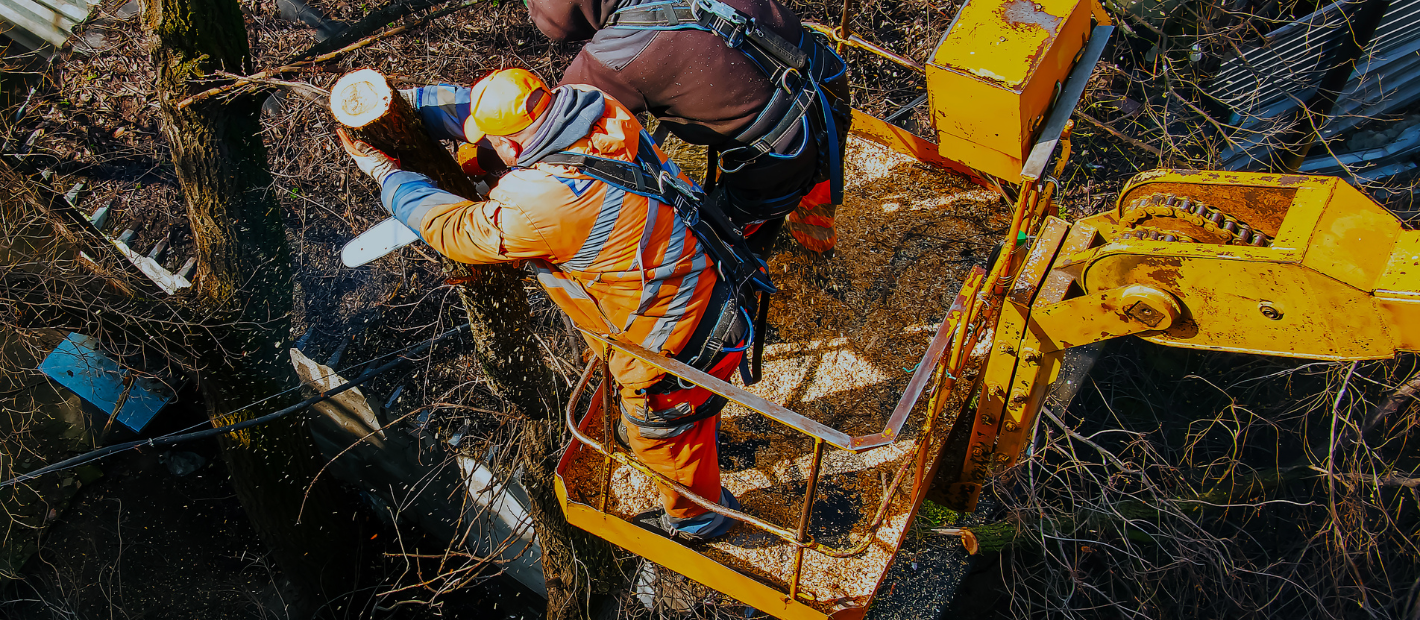
When a large tree grows directly beside a home, garage, fence, deck, pool, or commercial building, there may not be enough room to safely lower branches and trunk sections using traditional methods.
Benefits of crane removal in tight spaces include:
- Reducing the risk of damage to roofs, siding, windows, and gutters.
- Protecting nearby landscaping and hardscaping features.
- Preventing large branches from falling onto structures.
- Creating a safer work environment for both workers and property owners.
For trees growing in confined spaces, crane-assisted removal often provides the safest and most efficient solution.
-
The Tree Is Dead, Diseased, or Structurally Unstable
Dead trees can become extremely dangerous because their wood is often brittle and unpredictable.
Trees affected by decay, disease, insect infestations, or storm damage may not be strong enough to support climbers or traditional rigging equipment.
In these situations, using a crane minimizes unnecessary stress on weakened branches and trunks while allowing controlled removal.
Common warning signs that may require crane-assisted removal include:
- Significant trunk decay or hollow sections.
- Large dead limbs throughout the canopy.
- Severe storm damage.
- Trees leaning toward structures.
- Visible cracks or splitting in the trunk.
Because unstable trees can fail unexpectedly, crane removal often provides the highest level of safety for everyone involved.
-
The Tree Is Extremely Large
Large mature trees can weigh several tons and require specialized equipment for safe removal.
Removing an oversized tree using conventional methods often requires extensive cutting, rigging, and labor. This can increase both project duration and risk.
Advantages of using a crane for large tree removals include:
- Faster project completion.
- Reduced labor requirements.
- Improved safety during heavy lifting.
- Less wear and tear on surrounding property.
- More efficient debris handling and cleanup.
For large oak, maple, pine, and other mature trees, crane-assisted removal can significantly simplify the process.
-
Access Is Limited
Not every tree is located in an open area. Some trees are positioned behind homes, surrounded by landscaping, near retaining walls, or on steep terrain where traditional equipment has difficulty operating.
In these situations, cranes can extend over obstacles and access areas that would otherwise be challenging or impossible to reach.
Properties that often benefit from crane removal include:
- Homes with narrow side yards.
- Backyards with limited equipment access.
- Properties on hillsides or uneven terrain.
- Commercial sites with surrounding structures.
- Areas with extensive landscaping that homeowners want to preserve.
By lifting tree sections directly from above, cranes reduce disruption to the surrounding property while improving overall safety.
-
Storm Damage Has Created an Emergency Situation
High winds, heavy snow, and ice storms can leave trees partially uprooted, hanging over homes, tangled in power lines, or dangerously split.
These emergency situations require specialized equipment and careful planning to prevent further damage.
Crane-assisted emergency removals help by:
- Stabilizing damaged trees before removal.
- Preventing additional structural damage.
- Safely removing large hanging limbs.
- Reducing risks to nearby people and property.
- Speeding up the cleanup and recovery process.
When a storm-damaged tree becomes a threat, crane-assisted removal allows crews to respond quickly and safely.
What Happens During a Crane-Assisted Tree Removal?
Many homeowners are surprised by how organized the process is. A typical crane removal includes:
- Site inspection and safety assessment
- Strategic crane placement
- Section-by-section tree dismantling
- Controlled lifting and lowering of tree sections
- Debris removal and cleanup
Every lift is carefully planned to ensure maximum safety for both workers and surrounding structures.
The result is a faster, cleaner, and more controlled removal process compared to many traditional methods.
Why Homeowners Choose Crane Tree Removal
Crane-assisted removals offer several advantages:
- Improved safety
- Reduced risk of property damage
- Faster project completion
- Less impact on landscaping
- Ability to remove difficult or hazardous trees
For many large or high-risk removals, cranes provide the safest and most efficient solution available.
Professional Crane Tree Removal in MA & NH
AA Tree Service provides professional crane-assisted tree removal throughout Massachusetts and New Hampshire.
Our experienced team handles everything from hazardous tree removals and storm damage cleanup to large residential and commercial projects.
Using specialized crane equipment and proven safety procedures, we can remove even the most challenging trees with precision and care.
Schedule a Free Tree Removal Assessment
Not sure if your tree requires a crane? Our team can inspect the tree, evaluate site conditions, and determine the safest removal method for your property.
Contact AA Tree Service today to schedule your free consultation.
FAQs
- Is crane-assisted tree removal safer than traditional tree removal?
In many situations, yes. Cranes allow large tree sections to be lifted away from structures and obstacles, reducing risk during the removal process.
- Does using a crane damage my lawn?
Professional crews carefully plan crane placement and use protective measures whenever possible to minimize impact on your property.
- How do I know if my tree requires a crane?
Trees located near homes, power lines, or other structures, as well as large or hazardous trees, are often good candidates for crane removal.
- Is crane tree removal more expensive?
While crane removals may have higher equipment costs, they can often reduce labor time and improve safety, making them a cost-effective solution for difficult removals.
- Can cranes be used for emergency tree removals?
Absolutely. Crane-assisted removals are commonly used after storms when trees have become unstable or are threatening nearby structures.