Finding Expert Local Tree Surgeons in Your Area
When you’re looking for local tree surgeons in my area in Massachusetts or New Hampshire, finding the right professional is key to ensuring your property is safe and your trees stay healthy.
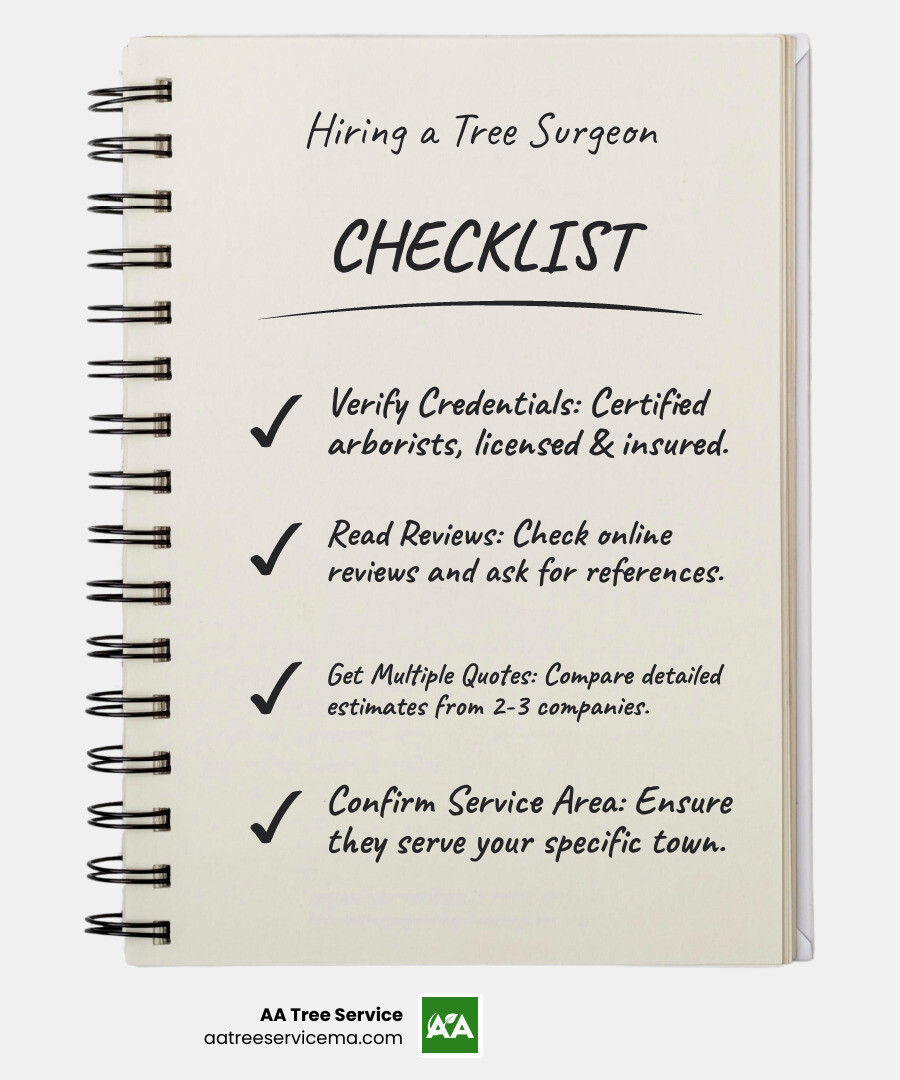
To quickly find a trustworthy tree surgeon:
- Verify Credentials: Check for certifications (like ISA-certified), licenses, and full insurance. This protects you and their workers.
- Read Reviews: Look at online reviews and ask for references from past customers.
- Get Multiple Quotes: Request detailed estimates from at least two or three companies to compare services and prices.
- Confirm Service Area: Make sure they serve your specific town in Massachusetts or New Hampshire.
Trees are a major asset to your property, but they can become dangerous if not cared for properly. Falling branches or entire trees can cause serious damage or injury, which is why professional help is often necessary. This guide will help you understand what local tree surgeons offer, how much their services cost, and what to look for when hiring.
Basic local tree surgeons in my area glossary:
What Services Do Professional Tree Surgeons Offer?
Professional local tree surgeons in my area, often called arborists, are like specialized doctors for your trees. They offer a full suite of services to keep your trees healthy, beautiful, and safe. Their expertise covers everything from tree biology to the safest methods for performing complex work. For a full overview of our capabilities, check out our Tree Care Services page!
Tree Pruning and Trimming
Tree pruning and trimming are essential for a tree’s health, structure, and appearance. It’s a careful mix of art and science where our certified arborists assess a tree’s health and any safety concerns before making precise cuts. This thoughtful approach promotes a long, healthy life for your tree.
Key pruning services include:
- Crown Thinning: Selectively removing branches to improve airflow and sunlight penetration, making the tree more resilient to wind.
- Crown Lifting: Removing lower branches to create clearance for walkways, driveways, or your yard.
- Crown Reduction: Carefully reducing the overall size of the tree’s canopy to manage its growth and keep it clear of homes or power lines while maintaining its natural shape.
- Deadwood Removal: Removing dead, dying, or diseased branches that can fall unexpectedly and harbor pests.
- Safety Pruning: Targeting branches that pose a direct risk, such as those that are weak, cracked, or overhanging structures.
- Aesthetics: Skillful pruning improves a tree’s natural beauty and boosts your landscape’s curb appeal.
Learn more about this vital service on our page for Local Tree Trimming Companies.
Tree Removal and Stump Grinding
Sometimes, a tree must be removed due to disease, storm damage, or posing a hazard to your property. Tree removal is a high-risk job that requires trained professionals with specialized equipment; it is not a DIY project.
We handle Hazardous Tree Removal for unstable or threatening trees, Diseased Tree Removal to prevent problems from spreading, and prompt Storm Damage Cleanup after severe weather. Once a tree is down, we perform Stump Grinding, using a machine to grind the stump below ground level. This is more efficient and affordable than full stump excavation. We can also turn branches into Wood Chips on-site, which we can haul away or leave for your use as mulch.
Explore our safe and efficient Arborist Tree Removal services for more details.
Emergency Tree Services
In Massachusetts and New Hampshire, storms can cause tree emergencies in an instant. A fallen tree or large broken branch requires immediate, professional attention.
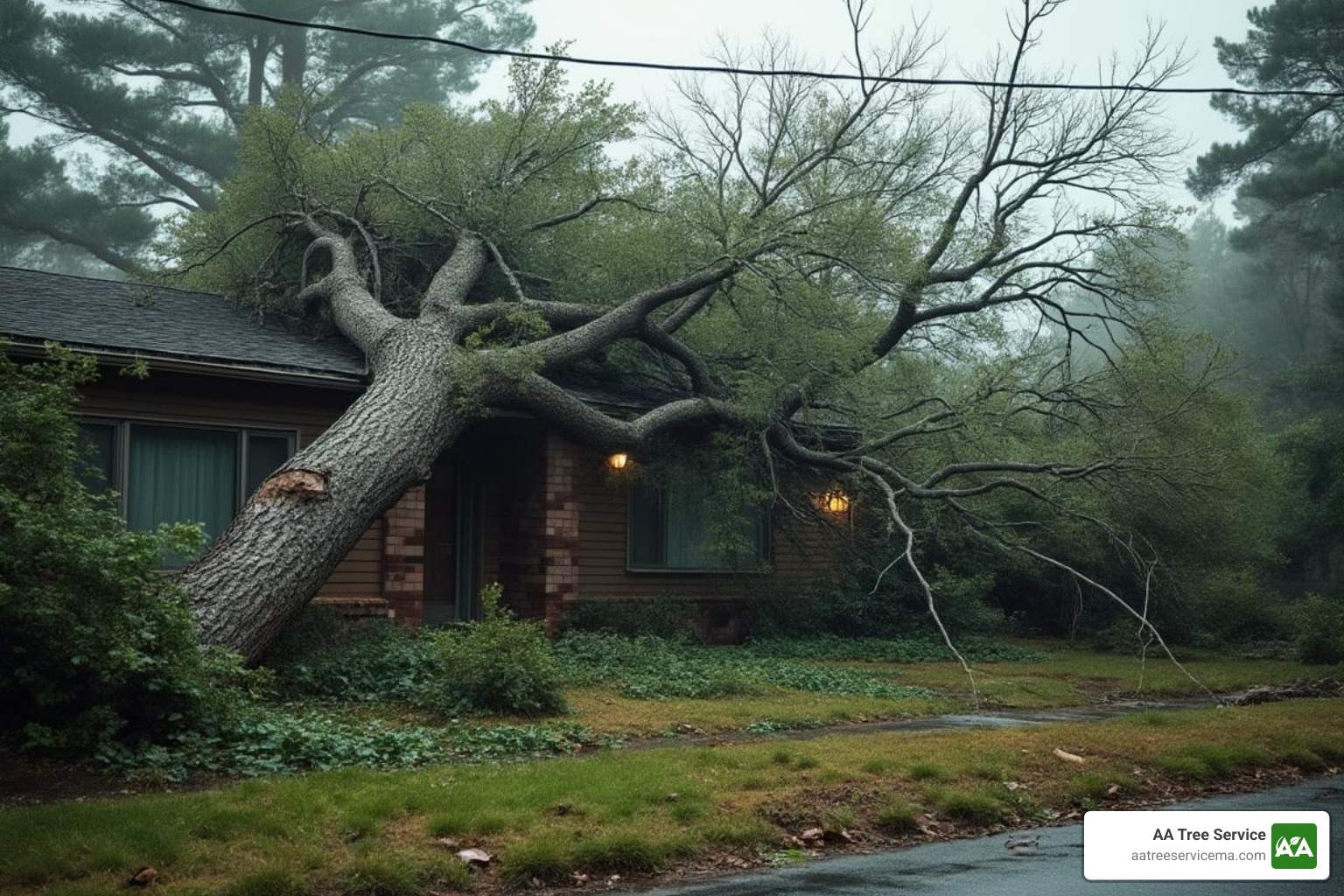
Our emergency tree services provide a rapid, safe response to urgent situations. Our support includes 24/7 Response, Storm Damage Cleanup, and efficient Fallen Tree Removal from homes, cars, or driveways. We also perform rapid Hazard Assessments and can offer Insurance Claims Assistance to help guide you through the process.
When disaster strikes, learn more about our rapid response on our Emergency Tree Removal page.
Other Specialized Tree Services
Beyond the core services, we offer specialized care to ensure your trees and property are at their best. Cabling and Bracing provides structural support to weak limbs or trunks to prevent failure. A Tree Health Assessment allows our arborists to evaluate your trees, identify early signs of disease or pests, and recommend proactive treatments. We also provide efficient Land Clearing services to prepare your property for new projects while prioritizing safety and environmental considerations.
Understanding Tree Service Costs and Pricing Factors
It’s natural to wonder, “How much does it cost to hire a tree surgeon?” There’s no single answer, as costs depend on several factors. We’re here to help you understand what goes into the pricing. For more on our services in Massachusetts, visit our Professional Tree Service Massachusetts page.
How Much Does It Cost to Hire a Tree Surgeon?
When looking for local tree surgeons in my area, you’ll find that costs vary widely. Nationally, the average is around $900, but a job can range from a few hundred dollars to over $2,500 for a large tree removal, depending on the work’s complexity.
Here is a general idea of national average costs for various tree services, based on widely available internet data:
| Service | Average National Cost Range (USD) |
|---|---|
| Tree Removal | $200 – $2,500+ |
| Tree Trimming | $250 – $1,500+ |
| Stump Grinding | $100 – $500+ |
| Emergency Service | Higher rates apply |
| Fallen Tree Removal | $100 – $600+ |
Note: Please remember these prices are national averages from online sources and are provided for informational purposes only. The actual costs for AA Tree Service will vary. We provide custom quotes based on the specific details of your job in Massachusetts and New Hampshire.
What Factors Influence the Price?
Several key factors determine the final cost of professional tree services:
- Tree Size: The tree’s height and trunk diameter are major factors. Larger trees require more time, equipment, and safety precautions, increasing the cost.
- Location and Accessibility: Trees in hard-to-reach spots, on steep slopes, or in confined spaces are more challenging and may require special equipment like a crane, which adds to the price.
- Proximity to Structures: Working near homes, garages, or power lines demands extreme caution and specialized techniques, impacting the cost. State laws like the Minimum Approach Distance (MAD) require a safe distance from power lines, often necessitating a certified arborist.
- Job Complexity: A simple pruning costs less than a full removal involving complex rigging or heavy machinery like bucket trucks or cranes.
- Number of Trees: While the total cost will be higher for multiple trees, a per-tree discount may be available for larger projects.
- Tree Health: A diseased or dead tree can be more brittle and unpredictable, making its removal riskier and potentially more expensive.
- Debris Haul-Away and Permits: Most reputable services include chipping and hauling debris, but always confirm this is in the quote. Some areas may also require permits for tree removal, which your tree surgeon can help steer.
For those in the Granite State, find more information on our NH Tree Service page.
How to Choose Reputable Local Tree Surgeons in My Area
Choosing the right tree surgeon is crucial for the safety of your property and the health of your trees. It’s about finding a qualified professional who understands tree health, prioritizes safety, and operates with integrity.
When searching for local tree surgeons in my area in Massachusetts or New Hampshire, a good vetting process is key. You should check credentials, ask key questions, get multiple quotes, read reviews, and consider their local reputation.
The Importance of Certification and Insurance
Certification and insurance are non-negotiable when hiring for tree work. The gold standard is an ISA Certified Arborist, which indicates a professional has demonstrated a high level of knowledge in tree care science through testing by the International Society of Arboriculture (ISA). You can even use the ISA’s online tool to verify an arborist’s credentials, giving you extra peace of mind.
Proper licensing is a legal requirement, proving the company meets state regulations. Insurance is your safety net. General Liability Insurance protects your property from accidental damage, while Workers’ Compensation Insurance protects their employees if they are injured on your property. Without it, you could be held liable. A professional company will gladly provide proof of their insurance and certifications—always ask to see these documents before work begins. For more on hiring certified professionals, visit our Certified Arborist Tree Service Near Me page.
Key Questions to Ask Before Hiring
Asking the right questions helps you gauge a contractor’s professionalism and experience. Here are some essentials to ask:
- Are you insured (General Liability and Workers’ Compensation)? Ask for and verify proof.
- Can I see your credentials? Look for ISA certifications and relevant state licenses.
- Do you provide a detailed, written estimate? This prevents surprises and clarifies the scope of work.
- What equipment will you use for this job? This ensures they are prepared for the task, especially for complex jobs.
- What is your timeline for completing the work? Get a clear start and end date.
- How will you protect my property? Ask about safety measures to prevent damage to your lawn, home, or other structures.
- Do you handle debris removal, and is it included in the quote? Confirm if cleanup is part of the price.
- Can you provide references? Hearing from past clients can be very reassuring.
- Do you adhere to industry standards? Following standards like ANSI A300 shows a commitment to safety and quality.
- Do you assist with local permits? If your tree is protected, their expertise in navigating paperwork is invaluable.
When to Call a Pro: Recognizing Tree Problems and DIY Limits
While DIY projects can be satisfying, tree work is in a different league. Attempting complex tree care yourself can be incredibly dangerous, leading to severe injury or property damage. Knowing when to call professional local tree surgeons in my area is essential.
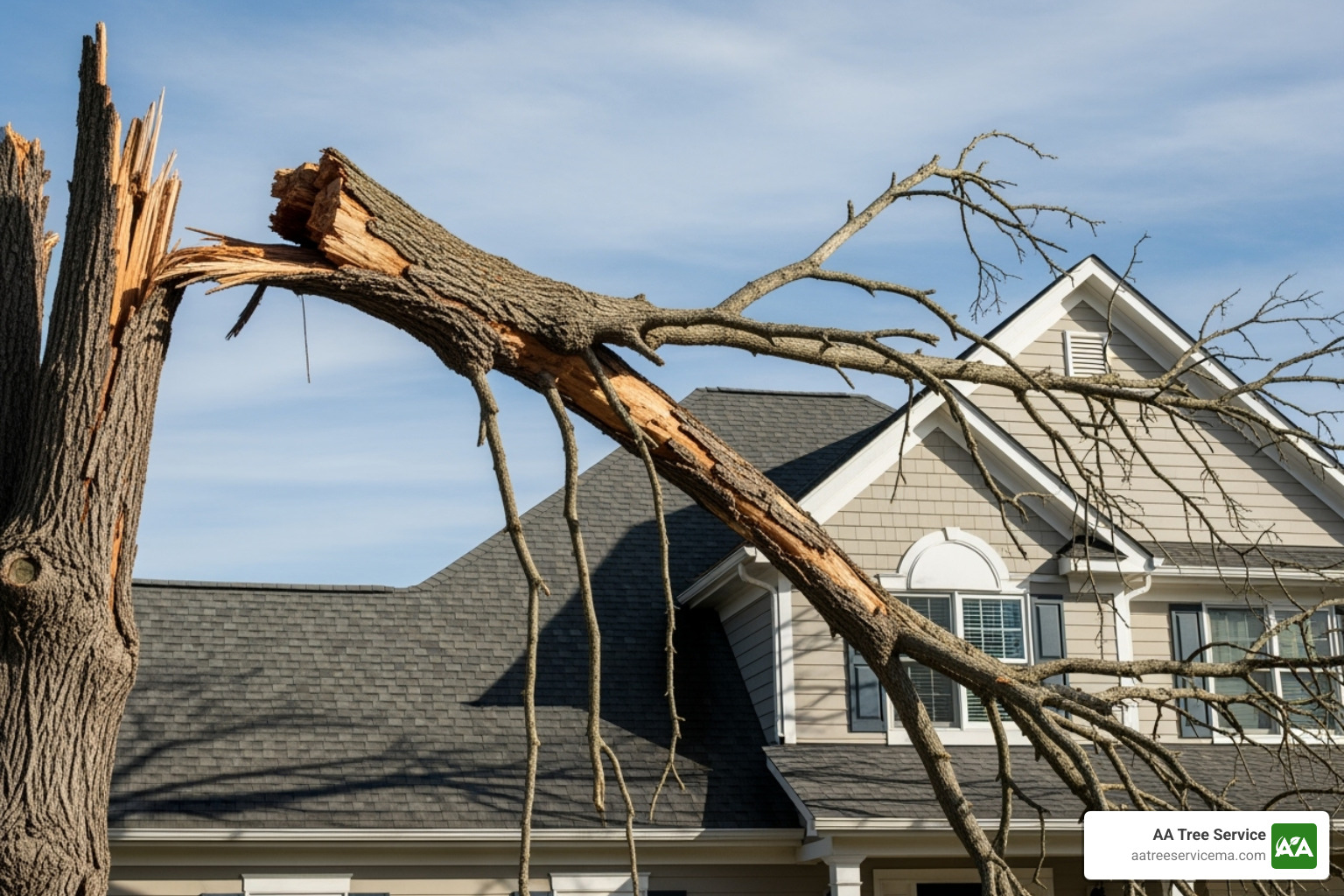
Understanding the warning signs your trees show and recognizing the limits of DIY can save you from a potential disaster. Let’s review the signals that mean it’s time to call an expert.
Signs Your Tree Needs Professional Attention
Your trees often show clear signals when they are stressed, sick, or becoming a hazard. Look for these indicators that it’s time to call for professional care:
- Dead or Hanging Branches: Brittle or broken branches are a major safety risk, especially in high winds.
- Cracks in the Trunk or Major Limbs: Deep splits or seams indicate structural weakness and a risk of failure.
- A Sudden Lean: If a tree develops a significant tilt, especially after a storm, its root system may be compromised.
- Fungus or Mushrooms at the Base: This is often a red flag for internal decay or root rot.
- Peeling Bark or Open Wounds: Large areas of missing bark leave a tree vulnerable to disease and pests.
- Discolored or Sparse Leaves in Summer: This can point to disease, pest infestation, or nutrient deficiency.
- Sawdust or Insect Trails: Sawdust-like material (frass) on the bark is a tell-tale sign of boring insects weakening the tree from within.
If you notice any of these signs, it’s time to get an expert opinion. For serious issues, our team can provide a Tree Removal Service if necessary.
The Dangers of DIY: When to Call Local Tree Surgeons in My Area
For anything beyond simple, ground-level pruning of small branches, you should always call professional Tree Contractors Near Me. The risks of DIY tree work far outweigh any potential savings.
- Chainsaw Safety: These powerful tools can cause severe injury in an instant. Professionals have extensive training and wear protective gear.
- Working at Height: Climbing ladders or trees with power tools is extremely risky. Pros use specialized climbing gear and aerial lifts for safety.
- Power Line Hazards: Working near power lines can be fatal. State laws mandate a Minimum Approach Distance (MAD)—usually 10 feet—that requires a certified professional if a tree is closer.
- Unpredictable Tree Felling: Without proper knowledge, a tree can fall in an unexpected direction, causing immense damage to property or people.
- Property and Personal Injury Risk: An uncontrolled fall can destroy property, and you are not covered for personal injury in the same way a professional with workers’ compensation is.
In Massachusetts and New Hampshire, don’t become a statistic. Trust local professionals for safe, efficient, and insured tree care.
Frequently Asked Questions about Local Tree Services
It’s natural to have questions when seeking expert tree care. Here are some of the most common inquiries we receive, along with clear, expert answers.
What is the difference between a tree surgeon and an arborist?
While often used interchangeably, these terms have different focuses. A “tree surgeon” typically refers to someone who performs the physical work of pruning, trimming, and removing trees. An “arborist,” on the other hand, is a professional who studies the science of tree care—their biology, health, and management. Many arborists become an ISA Certified Arborist, proving their advanced knowledge. The best local tree surgeons in my area are often both: skilled practitioners with the scientific expertise of a certified arborist. Choosing a Certified Arborist ensures you’re getting top-tier care.
Will my homeowner’s insurance cover tree removal?
This depends on your policy and the circumstances. Generally, if a healthy tree falls and damages insured property (like your house or garage) due to a covered event like a storm, your insurance will likely cover the removal and repairs. However, if a tree falls without causing damage, or if it was clearly dead or diseased beforehand, your policy may not cover the removal cost. It’s always best to contact your insurance provider directly to understand your specific coverage. We are happy to provide documentation to assist with your claim.
How can I save money on tree services?
While professional tree care is an investment, there are ways to manage costs without sacrificing safety or quality.
- Get Multiple Quotes: Obtain written estimates from at least two or three reputable companies. Be wary of unusually low bids, as they may indicate a lack of insurance or experience.
- Schedule During the Off-Season: If the work isn’t an emergency, scheduling for late fall or winter, when demand is often lower, may result in better rates.
- Handle Minor Cleanup: You may be able to handle simple, safe cleanup yourself. You could also ask to keep the wood chips for mulch, which might reduce the hauling fee. Discuss these options with your tree surgeon beforehand.
- Proactive Maintenance: This is the best long-term money-saver. Regular pruning and health checks can prevent small issues from becoming large, expensive emergencies. Combining several jobs into one visit can also be more cost-effective.
Conclusion
Finding the right local tree surgeons in my area in Massachusetts and New Hampshire is about protecting your home, your landscape, and your family. It’s an investment in safety and the long-term health of your valuable trees.
We’ve covered the essential services professionals offer, what influences costs, and how to choose a reputable, insured company. Remember the warning signs of a tree in trouble and the serious dangers of DIY tree work—your safety always comes first.
When you need expert tree care in Massachusetts and New Hampshire, AA Tree Service is ready to help. We offer comprehensive tree removal services and much more. With over 20 years of experience and a team ready for 24/7 emergency calls, we are committed to keeping your trees healthy and your property safe. Let’s work together to protect your green assets.