Why Finding Qualified Tree Trimmers Matters
When those magnificent maple branches start scraping your second-story windows or that towering oak begins to lean a bit too far toward your roof, finding local tree trimmers in my area suddenly jumps to the top of your to-do list. Here in Massachusetts and New Hampshire, our beautiful trees can transform from cherished landscape features to potential hazards almost overnight, especially after our notorious nor’easters or heavy winter snow loads.
Before you hire just anyone with a chainsaw and a pickup truck, take a moment to consider what truly matters. Professional tree care isn’t simply about removing branches—it’s about preserving your property’s safety, value, and natural beauty all at once.
Check credentials first. Legitimate tree professionals carry proper licensing and insurance, with many holding valuable ISA (International Society of Arboriculture) certification. This isn’t just paperwork—it’s your protection against liability and guarantee of proper tree care techniques.
Reviews tell the real story. When neighbors rave about a service that left their yard spotless and their trees healthier than ever, it’s worth paying attention. Companies earning 4+ stars from hundreds of customers (like many reputable New England tree services) have proven their reliability time and again.
The investment in professional tree care varies widely based on the complexity of your project. Most Massachusetts and New Hampshire homeowners can expect to pay between $200 for basic pruning up to $1,200 for comprehensive trimming of larger specimens. Always get multiple quotes to understand the fair market rate for your specific needs.
As one delighted New Hampshire homeowner recently shared, “These professionals genuinely seemed to be having a good time at their job while making my property safer and more beautiful.” That combination of expertise and enthusiasm makes all the difference in tree care results.
Winter in New England isn’t just for skiing—it’s actually prime time for tree work. Many reputable companies offer seasonal discounts of up to 20% during these quieter months. However, never sacrifice quality for cost—properly trained tree professionals protect both your property and themselves with specialized equipment and techniques.
Professional arborists offer services beyond basic trimming. Whether you need local tree removal for that dying birch, local tree stump grinders to reclaim your yard space, or comprehensive local tree services to maintain your entire landscape, qualified professionals bring both knowledge and specialized equipment to every job.
When those branches start swaying a little too close to your power lines or your favorite oak starts dropping suspicious amounts of leaves, don’t wait until the next storm makes decisions for you. Finding qualified local tree trimmers in my area isn’t just about maintenance—it’s about peace of mind through every New England season.
Understanding Professional Tree Trimming Services
When you’re searching for local tree trimmers in my area, it helps to understand what these professionals actually do. Tree care combines artistry with science, requiring specialized knowledge and equipment that goes far beyond simply lopping off branches.
Professional tree trimming is a comprehensive service designed to improve both the health and appearance of your trees while ensuring the safety of your property and loved ones.
Core Services Offered by Local Tree Pros
Most reputable tree care companies across Massachusetts and New Hampshire offer a variety of specialized services custom to different needs:
Crown thinning involves the selective removal of smaller branches throughout the tree’s canopy. This increases light penetration and air movement while maintaining the tree’s natural shape—essential for healthy growth in New England’s dense forests.
Structural pruning focuses on creating a strong framework for young trees by removing competing leaders and poorly attached branches. “What we do in a tree’s first decade shapes its entire life,” explains one of our arborists at AA Tree Service. “Good structure now prevents costly problems later.”
Vista pruning is particularly popular among homeowners in scenic areas of New Hampshire and Massachusetts. This technique strategically opens views while preserving the tree’s health and beauty—perfect for properties with mountain or water vistas.
When you hire professionals, they’ll also handle debris chipping on-site, changing what would be waste into usable mulch. This eco-friendly approach benefits both your landscape and reduces landfill impact.
More info about Tree Maintenance Services
Added Value of Certified Arborists
While many companies offer basic tree trimming, those employing ISA (International Society of Arboriculture) certified arborists bring a deeper level of expertise to your property.
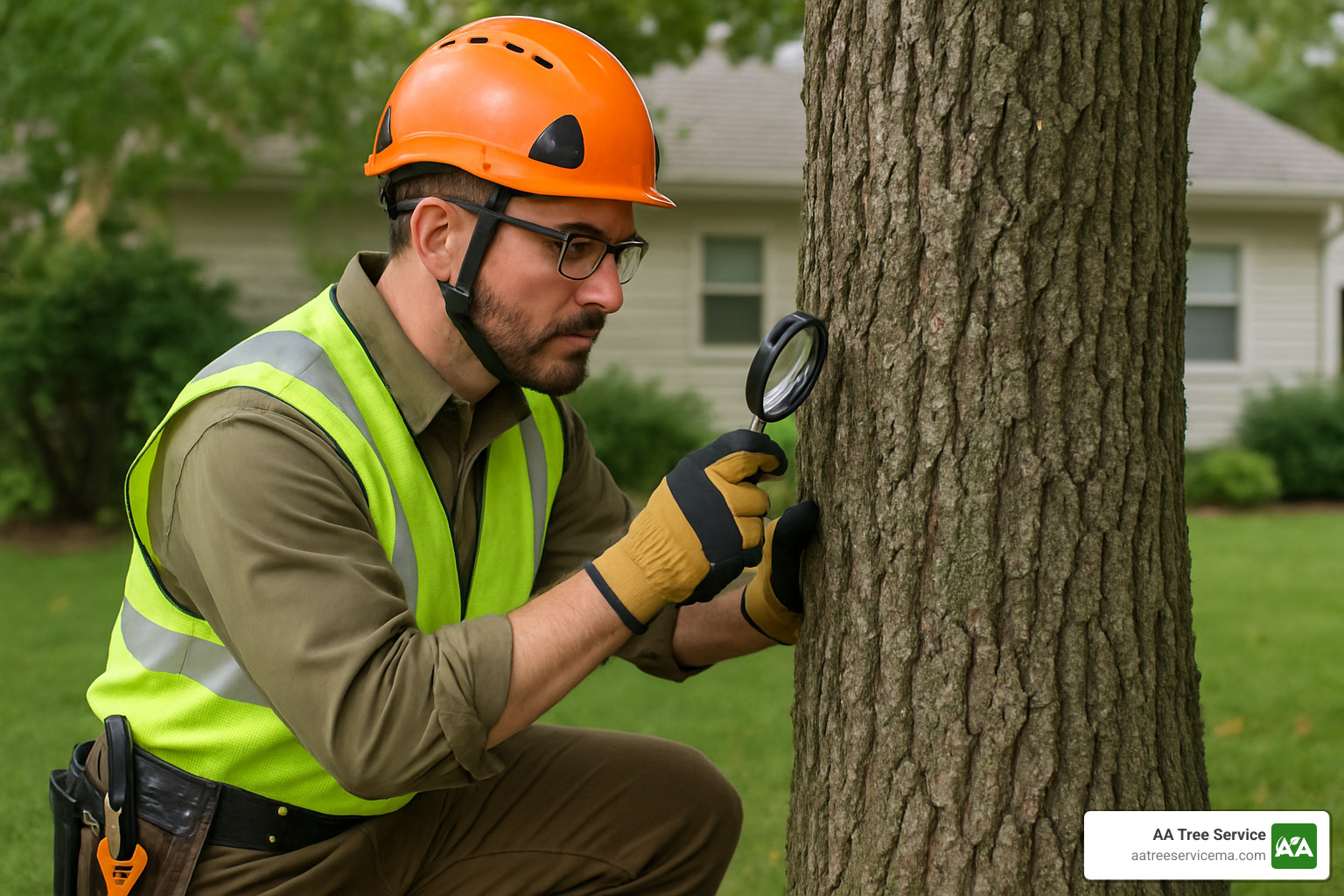
Certified arborists possess the ISA credential, which requires extensive studying, testing, and continuing education. This expertise allows them to perform thorough risk assessments that identify potential hazards an untrained eye might miss—like that hollow trunk that looks fine from the outside but could fail in the next Nor’easter.
They excel at disease diagnosis, spotting early signs of problems like emerald ash borer infestations that have devastated ash populations across Massachusetts. This early detection can save treasured trees before it’s too late.
Many certified arborists also perform soil testing to understand the underlying conditions affecting your trees. “Trees and soil have a complex relationship,” notes our head arborist. “Sometimes what looks like a branch problem actually starts below ground.”
At AA Tree Service, our team includes certified arborists who bring science-backed methods to every property assessment. This expertise particularly matters for native New England species like sugar maples and white pines, which have specific care requirements to thrive in residential settings.
The difference a certified arborist makes becomes especially apparent when dealing with heritage trees or preparing for our region’s notorious ice storms and heavy snow loads. Their preventative approach can save both your trees and your property from costly damage.
Scientific research on native tree benefits
How to Evaluate and Choose Reputable Local Tree Trimmers in My Area
Finding trustworthy local tree trimmers in my area feels like searching for a needle in a haystack sometimes. With dozens of companies advertising across Massachusetts and New Hampshire, how do you know who will actually care for your trees—and property—properly?
Let me walk you through how to find the cream of the crop:
Checking Credentials
Think of credentials as your first line of defense against potential problems. Before anyone fires up a chainsaw on your property, verify these essentials:
Proper licensing matters tremendously in tree care. Massachusetts and New Hampshire each have specific requirements that legitimate companies must meet. Equally important is comprehensive insurance coverage—both liability (protecting your home and property) and workers’ compensation (covering their team if accidents happen).
“I’ve seen homeowners get stuck with massive bills when uninsured workers got hurt on their property,” shares one Massachusetts arborist. “Always ask to see current insurance certificates—reputable companies expect this question.”
Beyond basic requirements, look for ISA Certification. Arborists certified by the International Society of Arboriculture have demonstrated specialized knowledge through rigorous testing. Similarly, membership in the Tree Care Industry Association (TCIA) signals commitment to industry best practices.
Don’t overlook permit knowledge. Experienced tree professionals understand local regulations about what can be removed, especially regarding protected species or conservation areas in your specific Massachusetts or New Hampshire community.
Comparing Reviews and Testimonials for “local tree trimmers in my area”
Online reviews tell stories that credentials alone cannot. When evaluating local tree trimmers in my area, dig deeper than surface-level ratings:
Google Reviews provide valuable insights, especially when companies maintain 4+ star ratings from substantial numbers of customers. Take time to read both glowing praise and critical feedback—how a company handles complaints often reveals their true character.
Photo galleries on company websites or social media can demonstrate skill and attention to detail. Look for before-and-after images that showcase challenging projects similar to yours.
Response time matters tremendously. Companies that answer inquiries promptly typically bring that same responsiveness to their actual work. And don’t overlook mentions of cleanup quality in reviews—the best tree services leave properties looking better than when they arrived.
One New Hampshire homeowner shared: “After removing three massive pines, you’d never know they were even here. No ruts in the lawn, no scattered debris, just a clean, safe property. That’s the difference professional local tree trimmers in my area make.”
Remember to cross-reference testimonials from company websites against independent review platforms for a more complete picture.
Questions to Ask Before Hiring Local Tree Trimmers in My Area
The interview process separates true professionals from those just looking for a quick job. When contacting potential tree services, have these questions ready:
Start by asking about their specific approach to your project. Their answer should demonstrate knowledge, experience, and thoughtful problem-solving. Property protection plans are equally crucial—professionals should explain how they’ll safeguard your lawn, landscaping, and structures.
Pricing clarity prevents surprises. Ask whether their quote represents a flat rate or hourly charge, and exactly what’s included. Many homeowners get caught off-guard by additional fees for debris removal, so inquire specifically about how branches and logs will be handled.
Safety protocols reveal professionalism. The best companies reference ANSI Z133 safety standards and explain their crew training. Request references from similar jobs in your neighborhood—local experience with properties like yours matters tremendously.
Timeline expectations should be crystal clear. When will work begin? How long should it take? What happens if weather disrupts the schedule? Professional companies have straightforward answers to these questions.
Finally, ask about eco-friendly practices. Responsible tree services recycle wood chips and logs whenever possible, changing potential waste into valuable resources.
“The right questions reveal everything about a tree service’s professionalism,” notes a veteran Massachusetts arborist. “If they seem annoyed by your questions or give vague answers, that’s your cue to keep looking.”
More info about Local Tree Trimming Companies
Cost Guide: What Local Tree Trimmers in My Area Charge
When you’re searching for local tree trimmers in my area, understanding typical pricing helps set realistic budget expectations. Massachusetts and New Hampshire homeowners often wonder what professional tree care will cost them—and the answer depends on several factors.
Based on internet research (not actual AA Tree Service pricing), New England homeowners might expect to pay within these ranges:
For trimming, smaller trees under 30 feet typically cost between $200-$500, while medium-sized trees (30-60 feet) generally run $500-$900. Larger specimens reaching 60+ feet can cost $900-$1,800, and those towering giants over 80 feet might range from $1,200-$3,600.
Tree removal follows a similar pattern, with costs increasing with size and complexity. Small tree removal often ranges from $200-$600, medium trees from $600-$1,200, large trees from $1,200-$2,000, and those very large specimens potentially costing $1,500-$4,500.
“Winter is often the best time to schedule non-emergency tree work,” explains one Massachusetts arborist. “Many companies offer up to 20% off during these slower months when crews have more availability.” This seasonal pricing strategy makes December through March potentially the most economical time for New England tree work.
Emergency services naturally command premium pricing—expect anywhere from 10-50% higher than standard rates when you need immediate response after storms or during off-hours. This reflects both the urgency and additional risks involved in such situations.
Factors That Influence Pricing
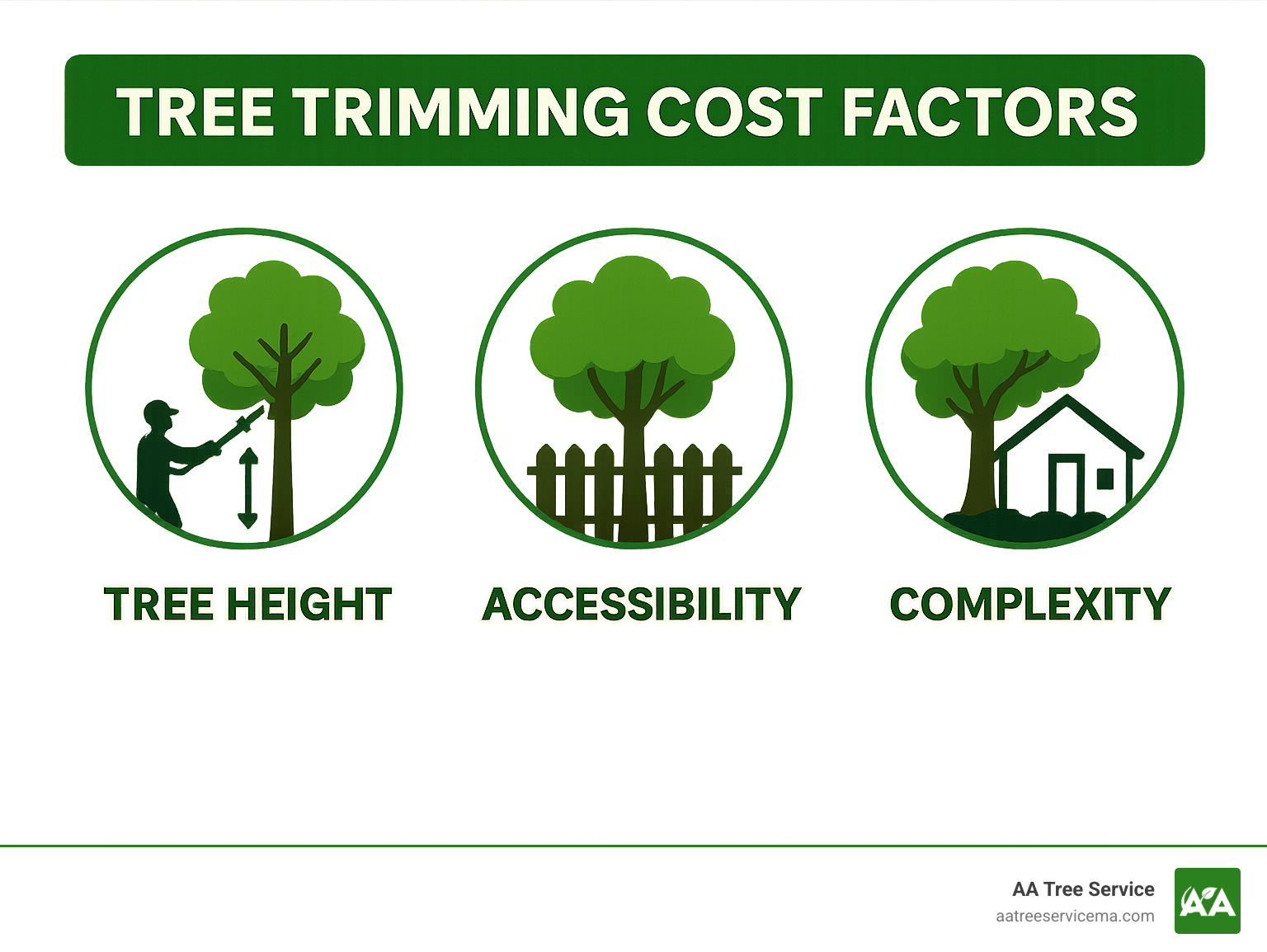
The final figure on your estimate depends on numerous variables beyond just tree height. Tree species plays a significant role—dense hardwoods like oak and maple require more labor and equipment than softer species like pine. As one New Hampshire homeowner finded: “The 50-foot oak in my backyard cost nearly double what my neighbor paid for removing a similar-sized pine.”
Tree location dramatically affects complexity and cost. Trees near power lines, structures, or with limited access points require more careful planning and specialized equipment. One arborist noted, “A tree that would cost $800 in an open yard might cost $1,400 if it’s wedged between your house and your neighbor’s garage.”
Tree condition matters too—dead, diseased, or structurally compromised trees often require more careful handling and safety precautions. The more dangerous the job, the higher the price tag.
Additional services like stump grinding typically add $100-$400 depending on size and accessibility. Debris disposal methods influence final pricing too—complete removal costs more than on-site chipping.
For truly massive trees over 80 feet that require crane assistance, budget over $1,500 according to industry sources. These complex removals involve additional equipment rental, specialized crew training, and extensive safety protocols.
Saving Money with Local Tree Trimmers in My Area
While quality tree care is an investment in your property’s safety and value, there are legitimate ways to manage costs without cutting corners on quality.
Winter scheduling often brings the best rates in Massachusetts and New Hampshire. Between December and March, many companies offer significant discounts during this traditionally slower period.
Bundling services can lead to substantial savings. Having multiple trees trimmed or removed during a single visit reduces setup time and equipment costs, savings companies often pass along to customers. One Concord resident shared, “By having three trees pruned at once rather than spacing them out, I saved nearly 30% overall.”
Consider organizing neighborhood group rates by coordinating with nearby homeowners who also need tree work. When crews can move efficiently between adjacent properties, everyone benefits from the economy of scale.
Regular maintenance proves more economical in the long run than emergency care. Preventative pruning costs far less than removing a neglected tree that’s fallen on your roof during a nor’easter.
Improving access for work crews before they arrive can reduce labor costs. Clearing obstacles, moving vehicles, and ensuring clear paths to work areas shows consideration while potentially lowering your bill.
If you’re comfortable handling some aspects yourself, ask about retaining wood for personal use. Many companies reduce fees when they don’t need to haul away and dispose of large logs—perfect if you heat with wood or know someone who does.
“After getting quotes from several companies, AA Tree Service’s prices beat out others in the area while maintaining the highest quality standards,” shared one satisfied Massachusetts homeowner. “Their transparency about costs and what factors might change the final price gave me confidence in their professionalism.”
More info about Tree Trimming Newton MA
Best Timing & Safety for Tree Trimming
Timing your tree trimming properly improves results while minimizing stress on trees. When searching for local tree trimmers in my area, understanding the optimal schedule for different services helps you plan effectively.
Seasonal Calendar for MA & NH Homeowners
New England’s distinct seasons create an ideal framework for tree care. Most homeowners don’t realize that timing can make all the difference in your tree’s health and appearance.
During late winter (February-March), you’ll find the ideal conditions for most pruning work. Trees are dormant, giving arborists better visibility of the branch structure without leaves in the way. There’s minimal sap flow during this time, which reduces “bleeding” in sensitive species like maple. Another bonus? Disease organisms are largely inactive, and frozen ground often improves access to otherwise muddy areas.
As spring arrives (April-May), it’s perfect timing for assessing any damage from winter storms. However, be cautious about pruning oak trees during this period due to the risk of oak wilt disease. Spring makes an excellent time for fertilization as trees enter their growth phase, and it’s also ideal for planting new trees before summer heat arrives.
“During the tree’s dormant season, pruning minimizes stress, although warm months are also popular in New England,” explains an arborist at AA Tree Service. “We adapt our approach based on the specific trees on your property.”
Summer months (June-August) are best for corrective pruning to address defects that become visible when trees are in full leaf. This is also when many Massachusetts and New Hampshire homeowners need storm-damaged limb removal. Summer is perfect for hazard assessments before hurricane season and for emerald ash borer treatments if you have ash trees on your property.
When fall arrives (September-November), focus shifts to dead limb removal before winter storms hit. Fall fertilization helps strengthen roots before dormancy sets in, making it the last chance for major pruning before winter. Just note that extensive pruning of spring-flowering trees isn’t ideal during autumn.
Safety Precautions Professionals Take
Professional tree care is inherently dangerous, which is why hiring qualified local tree trimmers in my area is crucial. Safety isn’t just a buzzword—it’s the foundation of quality tree care.
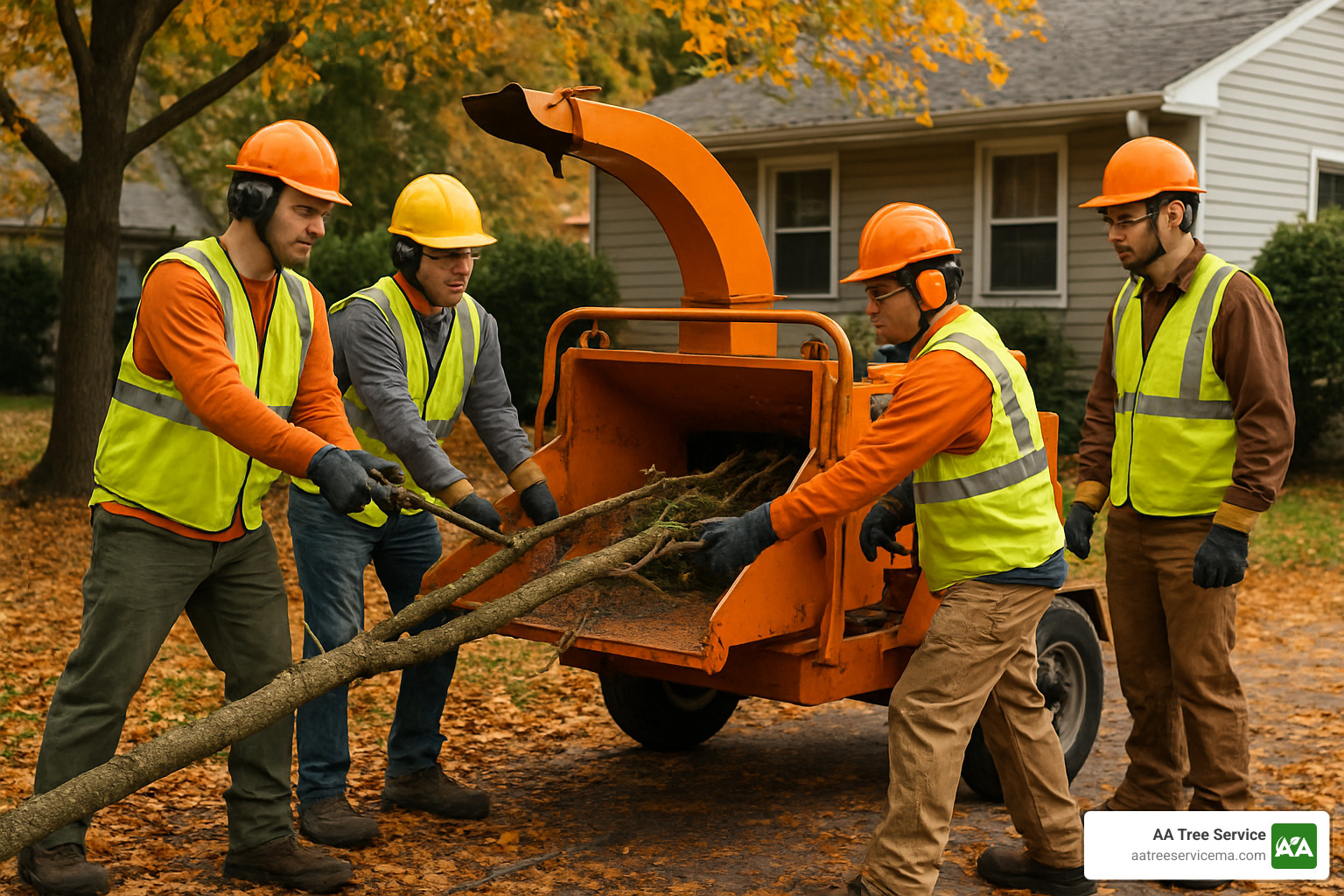
Professional arborists adhere to ANSI Z133 protocols, the industry safety standard specifically developed for arboriculture operations. This isn’t just about following rules—it’s about creating a culture of safety that protects everyone involved.
Personal protective equipment is non-negotiable for reputable tree services. Hard hats, eye protection, hearing protection, cut-resistant pants or chaps, and proper footwear are standard for every crew member. This might seem obvious, but not all companies maintain these standards consistently.
When it comes to equipment, professionals use specialized tools including aerial lifts, proper climbing gear, well-maintained chainsaws with chain brakes, and reliable communication systems. The difference between amateur and professional equipment can literally be life-saving.
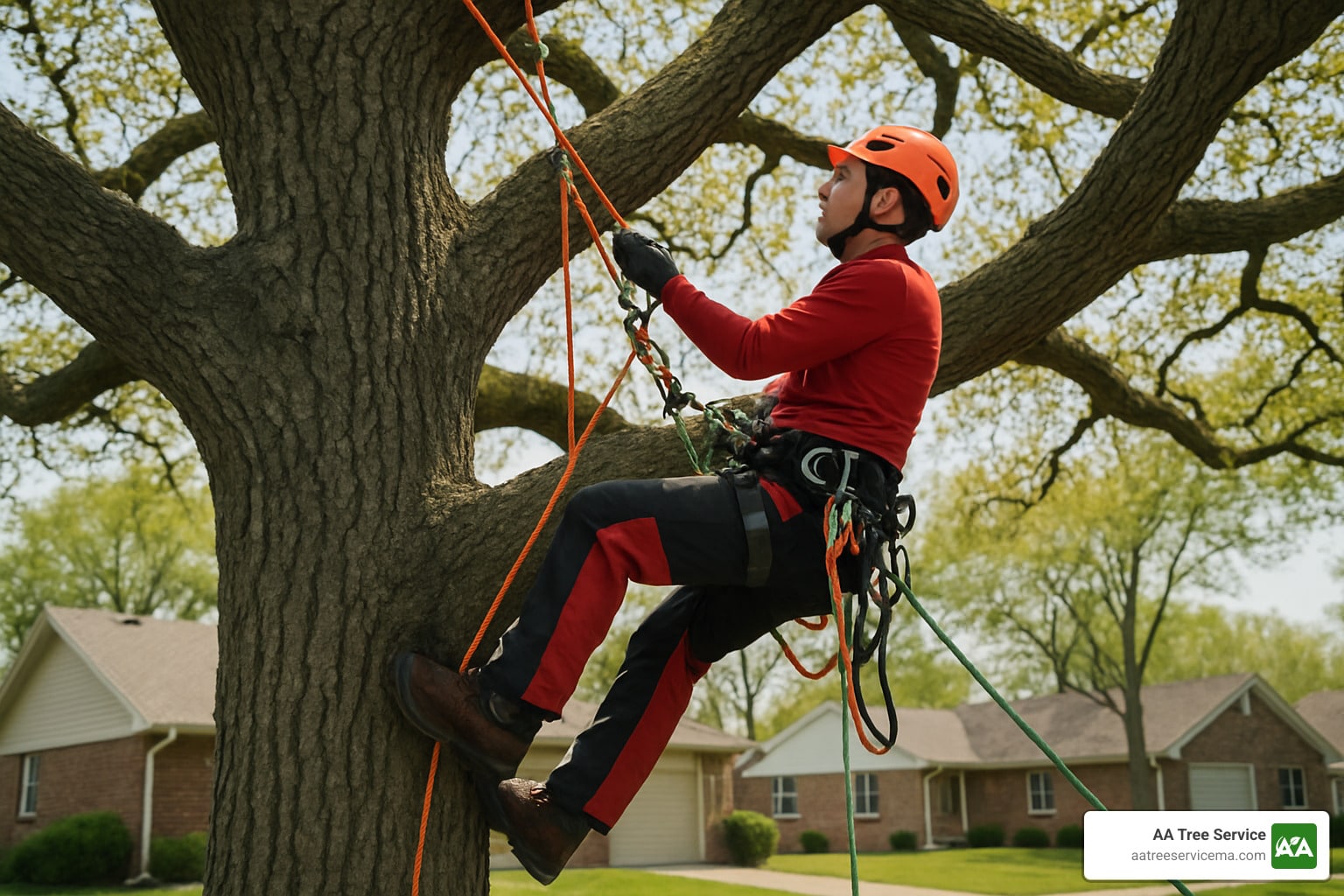
One of the most impressive skills to watch is the rope rigging techniques used for controlled lowering of heavy limbs. These techniques prevent property damage and worker injury while allowing precise placement of cut sections.
Working near power lines requires special care, which is why professionals handle utility coordination with local companies. They’ll also implement proper traffic control with signage, cones, and sometimes flaggers when work impacts roadways.
Weather conditions can change rapidly in New England, making weather monitoring essential. Reputable companies postpone work during high winds, lightning, or other dangerous conditions rather than risking safety for schedule.
“From our first meeting with you to job completion, our priority is the safety of your property and the people on it,” states AA Tree Service’s safety commitment. This comprehensive approach protects not only the workers but also your family and property.
When evaluating local tree trimmers in my area, always verify their safety protocols and insurance coverage. A truly professional company will be happy to explain their safety measures and provide proof of insurance—two non-negotiable elements of quality tree care.
What to Expect on Service Day & Aftercare
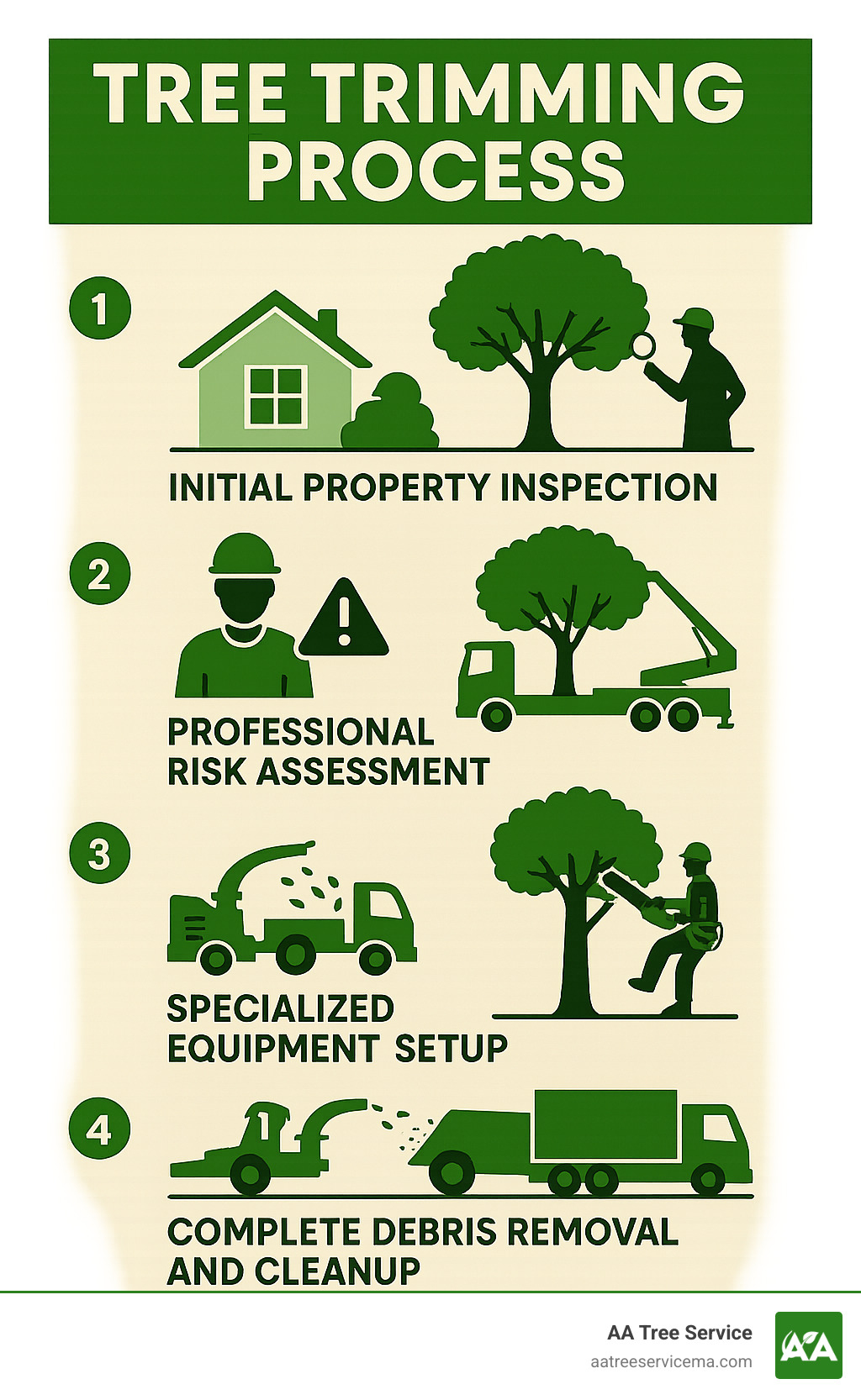
When you’ve hired local tree trimmers in my area, knowing what to expect helps ensure a smooth experience. Professional tree care isn’t just about making cuts—it’s about a systematic approach that protects your property while enhancing your landscape’s health and beauty.
A typical service day with AA Tree Service begins with a friendly introduction. Our crew leader will greet you, confirm the scope of work, and answer any last-minute questions. We’ll walk through your property together, identifying any special concerns or potential hazards before positioning our equipment.
“I was impressed by how carefully they set up before starting,” one Massachusetts homeowner shared. “They placed protective mats over my garden beds and explained exactly how they’d approach each tree.”
Once work begins, you’ll notice our team’s methodical approach. Professional arborists don’t just hack away—they strategically remove larger branches first, working inward with precision. For larger limbs, especially in tight spaces near structures, we use specialized rigging techniques to safely lower branches to the ground.
Throughout the process, our crew maintains constant communication for safety. Many clients comment on how seamlessly our teams work together, almost like a choreographed performance. We also clean as we go rather than leaving a massive cleanup for the end, minimizing disruption to your property.
As we complete the work, our arborists make final precise cuts that promote proper healing. These finishing touches make a significant difference in the tree’s long-term health and appearance. Before we consider the job complete, we conduct a thorough cleanup and final walk-through with you to ensure your complete satisfaction.
Debris Handling and Cleanup
One of the most appreciated aspects of hiring local tree trimmers in my area is professional debris management. After all, tree work creates substantial waste that can be overwhelming for homeowners to handle alone.
Most professional services, including AA Tree Service, bring commercial-grade wood chippers to process branches efficiently. We transform what would be unwieldy waste into usable mulch that can benefit your landscape. For larger trunk sections, we can cut them to firewood length if you prefer to keep them, or haul them away completely.
Stump management depends on your chosen service package. Some homeowners opt for complete stump grinding, while others schedule this as a separate service. We’re happy to discuss options that fit your preferences and budget.
The finishing touch is our thorough site cleanup. This includes raking and blowing the work area to remove even the smallest debris. As one New Hampshire customer noted, “They took down some huge trees surrounded by a shed, kids’ play set, and a large greenhouse. The trees magically disappeared with no signs they were ever there.”
Many clients are pleased to learn about our eco-friendly disposal practices. Rather than sending wood waste to landfills, we typically recycle wood chips as mulch or deliver logs to be processed for lumber or firewood.
More info about Tree Pruning and Trimming
Ongoing Care After Hiring Local Tree Trimmers in My Area
Professional tree care doesn’t end when our trucks leave your driveway. To maximize the benefits of your investment, consider these aftercare practices:
Watering schedule is particularly important for newly pruned trees, especially during dry New England summers. Deep, infrequent watering encourages roots to grow downward rather than staying near the surface. A slow trickle from a hose for 20-30 minutes once a week is often more beneficial than daily light sprinkling.
Keep an eye on wound healing in the weeks following significant pruning. Modern arboriculture has moved away from wound dressings, as research shows that trees have natural defense mechanisms. However, monitoring pruning cuts ensures they’re healing properly and allows early intervention if issues arise.
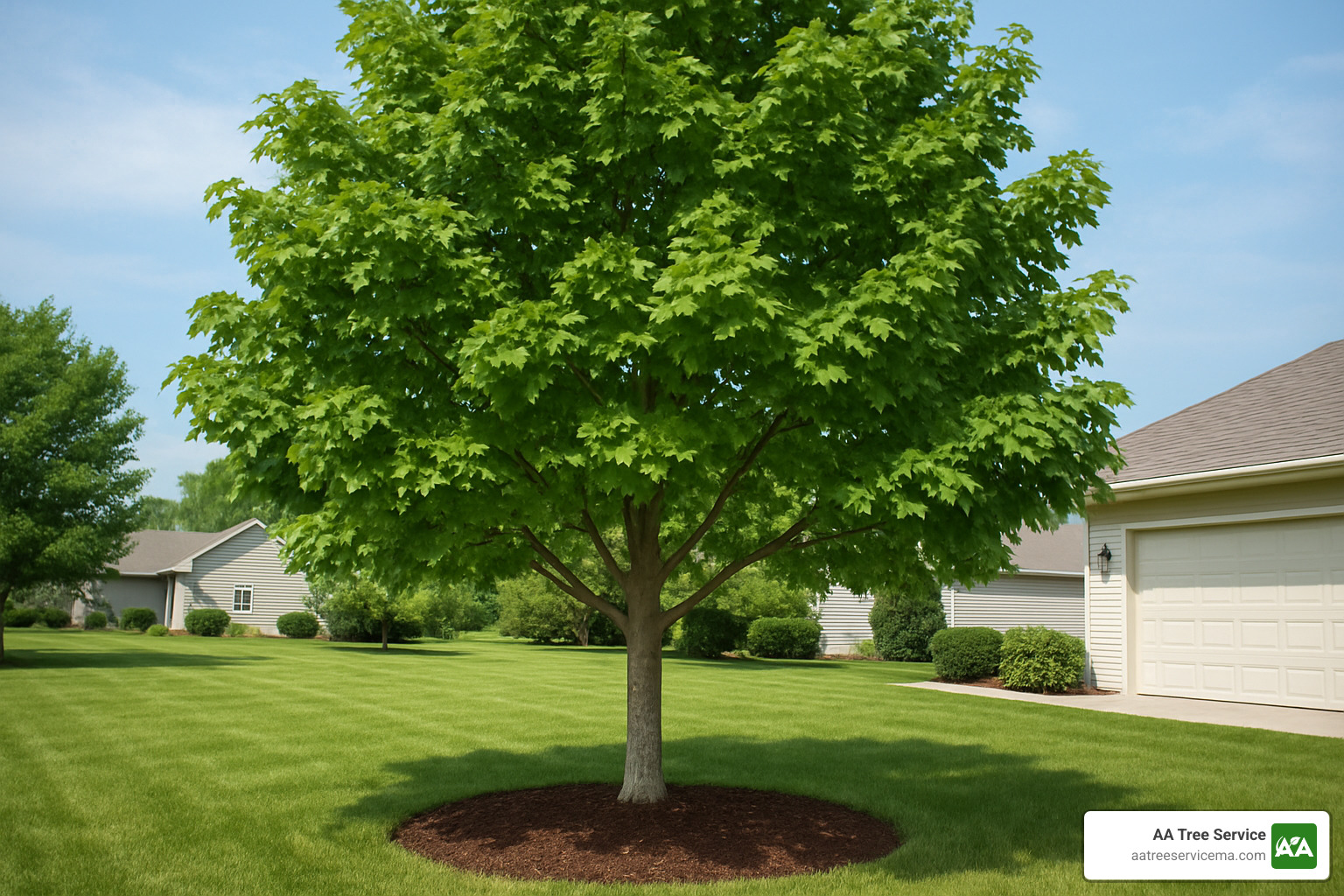
Mulching provides numerous benefits to your trees. Apply 2-4 inches of natural mulch in a ring around trees—but always keep it pulled back several inches from the trunk to prevent moisture-related decay. This simple step helps retain soil moisture, regulate temperature, and suppress competing weeds.
Depending on your soil conditions, fertilization may help trees recover from significant pruning. “Twice a year deep root fertilization is recommended,” notes one of our arborists. “Once in the spring to give your trees a boost before they gear up for a season of growth. And another in the fall before the tree enters its dormancy.”
Perhaps most importantly, schedule annual inspections with your arborist to catch potential issues early. Just like preventative healthcare for humans, regular professional check-ups can identify problems before they become serious—and expensive—emergencies.
Proper tree care is an ongoing relationship, not a one-time transaction. By partnering with knowledgeable local tree trimmers in my area like AA Tree Service, you’re establishing a foundation for long-term tree health that improves your property’s safety, value, and beauty for years to come.
Frequently Asked Questions about Local Tree Trimmers in My Area
When is the cheapest time of year to schedule trimming in MA & NH?
If you’re budget-conscious but still need quality tree care, timing your service strategically can save you money. Winter (December through March) typically offers the best rates for tree trimming in Massachusetts and New Hampshire. During these quieter months for the industry, many local tree trimmers in my area offer seasonal discounts—sometimes up to 20% off their standard rates.
Winter pruning isn’t just easier on your wallet; it offers several practical advantages too. Without leaves obscuring the view, arborists can better assess the tree’s structure. The frozen ground minimizes lawn damage from equipment, and since trees are dormant, they experience less stress from pruning. There’s also reduced risk of spreading certain diseases that are inactive during colder months.
As one of our longtime customers from Concord, NH told us: “I scheduled my oak trimming in February and not only saved about 15% compared to my neighbor’s summer service, but the crew had an easier time accessing my backyard when the ground was frozen.”
That said, don’t compromise safety for savings. If you notice hazardous limbs or storm damage, it’s always worth addressing these issues immediately rather than waiting for seasonal discounts. Your family’s safety and property protection should always take priority.
Are permits required before removing large trees on private property?
The answer varies significantly depending on where you live in Massachusetts or New Hampshire. This patchwork of regulations can be confusing, which is why knowledgeable local tree trimmers in my area are invaluable resources for navigating local requirements.
While many towns allow homeowners to remove trees on private property without permits, others have implemented strict protections, particularly for:
- Trees exceeding certain diameters (often 24 inches or larger)
- Trees located in conservation areas or wetland buffer zones
- Protected native species
- Trees in historic districts
- Trees along public streets, even when technically on your property
For example, Cambridge, MA requires permits for removing trees 8 inches or larger in diameter, while some rural New Hampshire communities have minimal restrictions for private property owners.
The consequences of skipping required permits can be severe—fines sometimes reach thousands of dollars per tree. At AA Tree Service, we’re familiar with regulations throughout our service area and can help guide you through any necessary permitting processes. Before planning any significant tree removal, we recommend checking with your local conservation commission or building department to understand your specific obligations.
What should I do if a storm damages my tree at 2 a.m.?
Middle-of-the-night emergencies are stressful, but having a plan can help you respond safely and effectively. When storms damage trees outside normal business hours, here’s how to handle the situation:
First and foremost, prioritize safety. Stay well away from any downed power lines—always assume they’re live. Keep your distance from unstable trees or large hanging limbs (what arborists call “widow-makers”).
When it’s safe, document the damage with photos for insurance purposes. This evidence can be invaluable for claims processing later.
If power lines are involved or roads are blocked, contact emergency services immediately by calling 911. They’ll coordinate with utility companies for power line issues.
Next, call a 24/7 emergency tree service like AA Tree Service. Our round-the-clock emergency response team has handled countless middle-of-the-night calls throughout Massachusetts and New Hampshire over our 20+ years in business.
While waiting for professionals, secure the area if possible by placing caution tape or cones around hazardous zones to warn family members and neighbors.
Finally, contact your insurance company as soon as their office opens to report the damage and start the claims process.
One Nashua homeowner recalled: “When that massive nor’easter hit at midnight, I panicked seeing a huge maple leaning against my garage. AA Tree Service answered immediately and had a crew onsite within an hour—even with roads all over town blocked by debris.”
Attempting DIY tree work, especially after storms and in darkness, can be extremely dangerous. Professional local tree trimmers in my area have the training, equipment, and experience to handle emergency situations safely, no matter the hour.
Conclusion
Finding reliable local tree trimmers in my area is about more than just getting the job done—it’s about ensuring your property remains safe, beautiful, and valuable for years to come. Throughout this guide, we’ve walked through the essential aspects of professional tree care, from understanding services to evaluating credentials and managing costs.
The unique challenges that Massachusetts and New Hampshire homeowners face—from nor’easters to summer thunderstorms—make professional tree care not just a luxury but a necessity. Those majestic oaks and maples that improve your landscape can quickly become hazards without proper maintenance.
At AA Tree Service, we’ve proudly served communities across Massachusetts and New Hampshire for over two decades, bringing our expertise to properties from coastal towns to mountain communities. We understand the specific needs of New England trees and the challenges they face in our sometimes harsh climate.
What sets us apart? Our team combines certified expertise with genuine care for your property. We arrive equipped with not just the right tools but also the right knowledge to handle everything from routine pruning to complex removals near structures.
“We treat every property as if it were our own,” explains one of our senior arborists. “That means meticulous attention to detail, thorough cleanup, and always putting safety first.”
Our commitment to accessibility means we offer free same-day quotes custom specifically to your situation. And because emergencies don’t wait for business hours, our 24/7 emergency response team stands ready to help when storms strike, providing peace of mind when you need it most.
The relationships we’ve built with homeowners across Massachusetts and New Hampshire remain our proudest achievement. As one longtime customer recently shared: “Simply put: there is no tree service better. They are fully equipped to handle any tree situation, big or small.”
Whether you’re in Newton, Manchester, Portsmouth, or anywhere in between, we invite you to experience the AA Tree Service difference. Your trees deserve expert care from professionals who understand both the science and art of arboriculture.
More info about professional tree removal