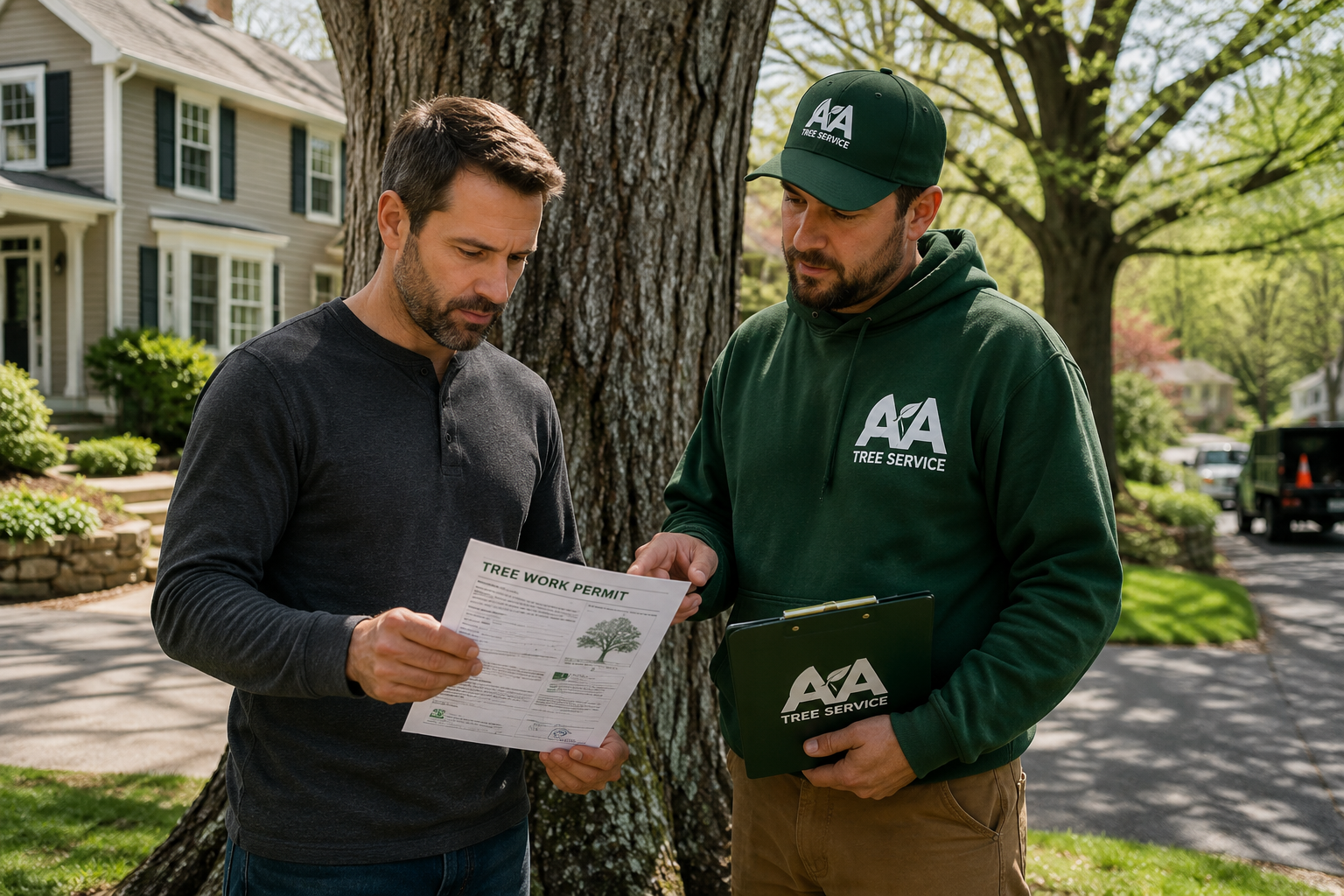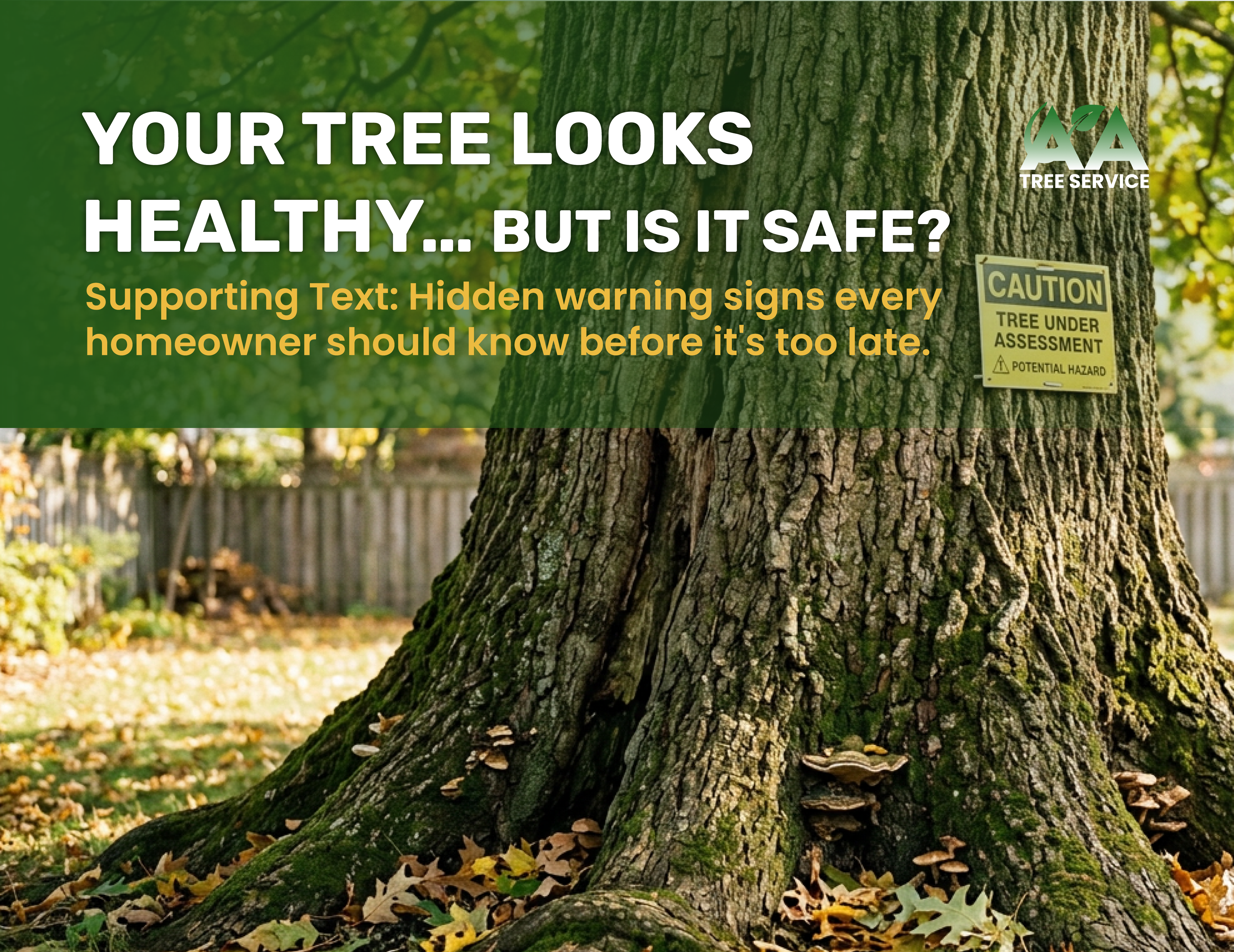
A Tree Can Look Perfectly Healthy While Hiding Serious Problems.
Green leaves, a full canopy, and a strong-looking trunk may make your tree seem perfectly healthy. But what you see from the outside doesn’t always tell the whole story.
When homeowners picture a dangerous tree, they often imagine something obvious: a dead trunk, a tree leaning dramatically toward a house, or a large branch already hanging loose.
But tree problems are not always that easy to spot.
A tree may continue producing leaves and appear relatively normal while developing weakness in its trunk, branches, or root system. Identifying these concerns early can give homeowners more time to decide whether professional pruning, monitoring, or removal is needed.
For homeowners throughout Massachusetts and New Hampshire, regularly looking at the trees around the property can be an important part of preventing unexpected problems.
The important thing to remember:
A tree doesn’t have to look dead to become a concern. Sometimes the smallest visible changes deserve the closest attention.
Look Beyond the Leaves
A full green canopy is encouraging, but foliage alone cannot tell you everything about a tree’s condition.
When checking your trees, take a look at the entire structure:
You don’t need to diagnose the problem yourself.
The goal is simply to recognize when something appears different enough to justify professional attention.
6 Hidden Tree Warning Signs Homeowners Often Miss
Some warning signs are easy to overlook, especially when a tree still has healthy-looking leaves. Here are six things worth paying attention to.
Cracks in the Trunk or Major Branches
Small variations in bark are normal, but significant cracks deserve attention, especially when they extend deeply into the trunk or appear where large branches connect.
Watch for:
- Deep vertical cracks
- Splits between major branches
- Fresh openings after storms
- Branches pulling away from the trunk
- Cracks that appear to be growing
Cavities and Areas of Decay
Hollows and cavities can develop after an old injury, branch loss, or decay. A cavity doesn’t automatically mean a tree must be removed, but its location and size matter.
Look for:
- Large openings in the trunk
- Soft or crumbling wood
- Sections of missing bark
- Decay around old branch wounds
- Insects entering damaged wood
Mushrooms or Fungal Growth
Not every mushroom near a tree signals trouble. However, repeated fungal growth around the trunk or major roots may be associated with decay beneath the surface.
Pay attention when you also notice:
- Dead branches
- Soft or damaged wood
- Root damage
- Changes in the tree’s lean
- Declining canopy sections
Changes in the Tree’s Lean
Some trees naturally grow at an angle and remain stable for decades. What matters more is a sudden or increasing change in position.
Warning signs include:
- Soil lifting on one side
- Newly exposed roots
- Cracks in the ground
- Damaged roots
- Leaning after strong winds
Dead Branches Hidden in the Canopy
A tree can have plenty of healthy foliage while still containing dead or weakened branches that may create a hazard.
Look for branches that:
- Have no leaves during growing season
- Have peeling or missing bark
- Appear dry or brittle
- Are broken but remain lodged
- Hang above roofs or walkways
Hidden Root Problems
Roots provide critical structural support, yet most of the root system remains underground, making developing problems difficult to identify.
Visible warning signs include:
- Damaged or severed roots
- Significant soil disturbance
- Decay near the base
- Soil lifting
- Unexpected changes in position
- Recent excavation near the tree
One Warning Sign Doesn’t Always Mean Tree Removal.
A cavity, an old lean, or fungal growth doesn’t automatically make a tree unsafe. The location, extent, and combination of warning signs are important. Professional evaluation can help determine whether pruning, monitoring, or removal is appropriate.
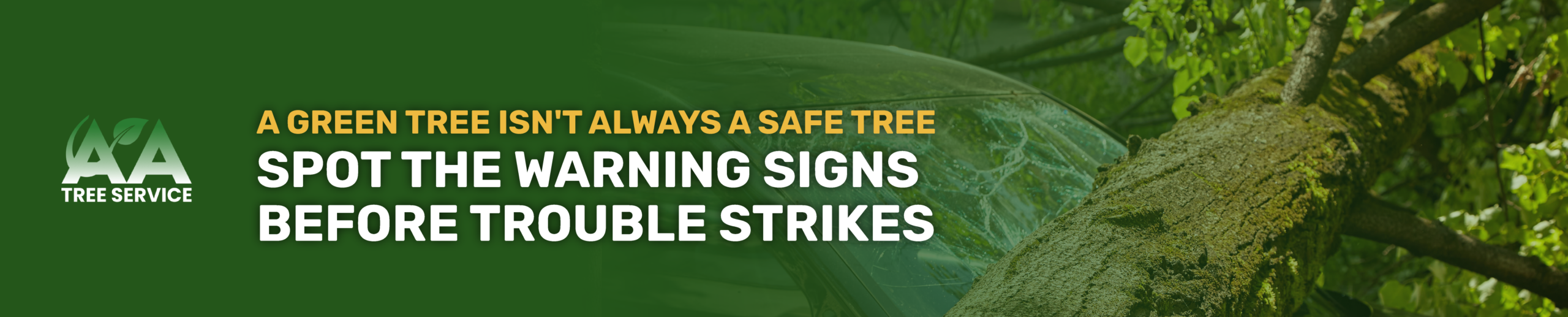
Pay Attention After New England Storms
Massachusetts and New Hampshire weather can put trees under significant seasonal stress.
Strong winds, heavy rain, snow, and ice can reveal weaknesses that were difficult to see beforehand.
Your Post-Storm Tree Checklist
After significant weather, visually check your property for:
- Broken or hanging branches
- Fresh trunk cracks
- Newly leaning trees
- Uprooted or exposed roots
- Branches resting on structures
- Changes around major branch connections
Safety Comes First.
Never attempt to remove a large hanging limb or unstable tree yourself. Keep people away from the affected area and contact a professional. Tree work involving height, heavy branches, compromised trees, or nearby structures requires specialized equipment and experience.
Pruning or Removal? It Depends on the Tree.
Finding a warning sign doesn’t automatically mean the entire tree needs to be removed.
Depending on its condition, professional tree care might involve:
01. Pruning & Trimming
Removing dead, damaged, or problematic branches may be enough when the rest of the tree remains suitable for retention.
02. Monitoring
Some conditions may simply need to be watched for changes over time.
03. Tree Removal
Significant structural problems, severe decline, instability, or unacceptable hazards may make removal the appropriate option.
04. Crane-Assisted Removal
Large trees or trees in difficult locations may require specialized equipment for safe and efficient removal.
The right solution depends on what is happening with the individual tree and its surroundings.
A Small Warning Sign Is Easier to Address Than a Fallen Tree.
Homeowners don’t need to become tree experts. What matters is recognizing changes and taking them seriously enough to ask for help before a problem becomes urgent.
If you notice cracking, decay, dead branches, root changes, fungal growth, or a new lean, getting a professional opinion can help you understand your options.
Have a Tree You’re Not Sure About? Call AA Tree Service.
Not every tree problem is obvious. And not every tree problem requires removal.
AA Tree Service has more than 20 years of experience helping homeowners throughout Massachusetts and New Hampshire care for problematic, damaged, and unwanted trees.
Whether your tree simply needs attention or you’re concerned about a potentially serious problem, our team can help determine the next step.
Our Professional Tree Services
Don’t wait for a tree problem to become an emergency.
Frequently Asked Questions
Can a tree be dangerous even if it has green leaves?
Yes. Foliage is only one indicator of tree condition. Structural weaknesses, decay, root problems, or damaged branches may still exist even when much of the canopy appears healthy.
Does a hollow trunk mean the tree has to be removed?
Not necessarily. The significance depends on the size and location of the cavity, the remaining structure, and the overall condition of the tree.
Should I worry if my tree is leaning?
A tree that has always leaned is different from one that has recently changed position. A new or increasing lean, particularly after a storm, should be evaluated.
What should I do if I see a large hanging branch?
Keep people and vehicles away from the area and contact a professional tree service. Large, suspended branches can be unpredictable and should not be handled as a DIY project.
Does AA Tree Service offer emergency help?
Yes. AA Tree Service provides 24/7 emergency tree services throughout Massachusetts and New Hampshire for urgent tree situations.
Protect Your Property Before Problems Grow.
Concerned about cracks, damaged branches, or an unstable tree? AA Tree Service is here to help you understand your options.