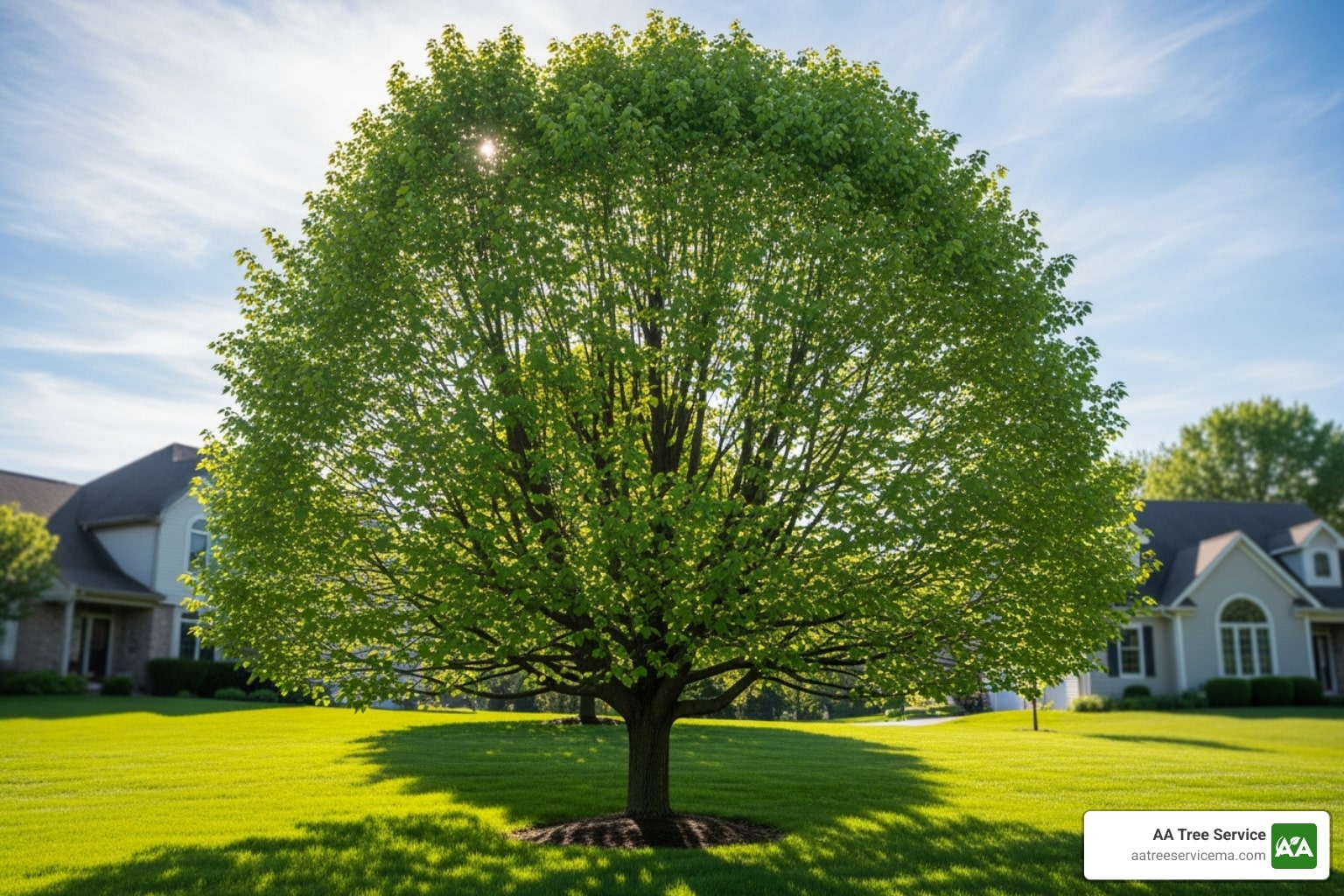
Why Professional Tree Surgery Matters for Your Property
When searching for tree surgery near me, you’re not just looking for someone to cut a few branches. You are seeking a qualified professional to manage one of your property’s most significant living assets. Reliable, local tree surgeons provide essential services like expert pruning, safe tree removal, stump grinding, and comprehensive health assessments that protect your investment, enhance your property’s beauty, and ensure your family’s safety.
Quick Guide to Finding Tree Surgery Services:
- Tree Pruning & Trimming: $150-$2,500+
- Tree Removal: $350-$5,000+
- Stump Grinding: $200-$800
- Emergency Services: Available 24/7
- What to Look For: Licensed, insured, and certified professionals
Note: These are average cost ranges based on internet data and not actual costs for AA Tree Service.
Trees: A Valuable Asset and a Potential Liability
Your trees are valuable assets that contribute significantly to your property’s worth—studies show that mature, healthy trees can increase property value by up to 20%. They provide shade that lowers energy costs, improve air quality, and create a beautiful, serene environment. However, they can also become serious liabilities if they are diseased, damaged, or structurally unsound. A falling limb can cause catastrophic damage to your home, vehicle, or a neighbor’s property, leading to complex insurance claims and potential legal disputes. Professional tree surgery is the practice of mitigating these risks while preserving the health and beauty of your trees.
This work is far more than just cutting; it is an applied science. A true professional, often called an arborist, possesses a deep understanding of tree biology, soil science, and structural mechanics. They use this knowledge, combined with specialized equipment and strict safety protocols, to accurately assess whether a tree requires corrective pruning, a support system, complete removal, or immediate emergency intervention.
The New England Challenge: Weather and Your Trees
In Massachusetts and New Hampshire, our trees face unique and constant challenges from severe weather. Heavy, wet snows can overload branches, powerful winds from nor’easters can uproot entire trees, and summer thunderstorms can bring lightning strikes and sudden limb failure. The ground freezing and thawing cycle also puts immense stress on root systems. Having a trusted local expert who understands these regional pressures is not just a convenience—it’s a critical part of responsible homeownership. The right professional will help you make proactive, informed decisions, ensuring the long-term health of your landscape and the safety of your family and property.
Common Tree Surgery Services You Can Find Locally
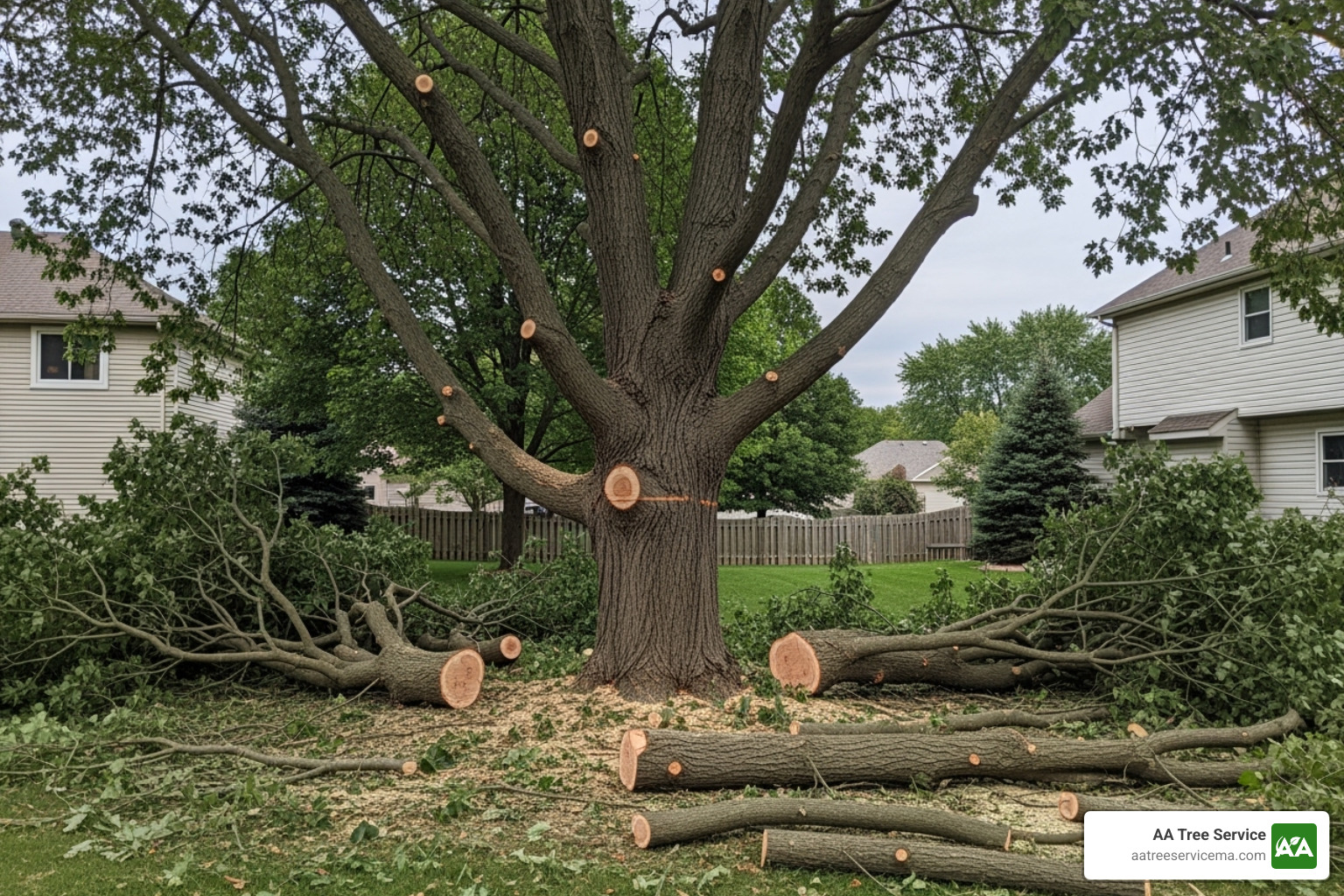
When you look for tree surgery near me, you’ll discover that professionals act as tree doctors, dedicated to keeping the urban and suburban forests of Massachusetts and New Hampshire healthy, safe, and beautiful. A reputable company offers a complete range of services, from routine maintenance that enhances a tree’s life to rapid-response emergency services when nature strikes unexpectedly.
Tree Pruning and Trimming: The Art and Science of the Cut
Our Tree Pruning Services are meticulously planned to enhance tree health, structural integrity, and property safety. This is not simply lopping off branches; it involves precise cuts based on arboricultural standards. We use several key techniques:
- Crown Thinning: This involves the selective removal of branches throughout the crown to increase light penetration and air circulation. Improved airflow helps the leaves dry faster, reducing the incidence of fungal diseases. It also lessens the “sail effect,” making the tree more resilient to high winds and reducing the risk of storm damage.
- Crown Lifting: We carefully remove the lowest branches of a tree’s crown to provide vertical clearance. This is essential for creating safe passage for pedestrians on walkways, preventing damage to vehicles in driveways, or allowing more sunlight to reach your lawn and underlying shrubs.
- Crown Reduction: This technique decreases a tree’s overall height and spread while preserving its natural form and structural integrity. It is a precise method that involves cutting limbs back to strong lateral branches that can assume the terminal role. This is the correct and healthy alternative to “topping,” a harmful practice that leaves ugly stubs vulnerable to decay and promotes weak, hazardous regrowth.
- Deadwood Removal: A critical safety and health service. Dead and dying branches are unpredictable and can fall at any moment, posing a significant risk to people and property below. They are also entry points for wood-boring insects and decay fungi that can spread to the rest of the tree. Regular removal of deadwood is one of the most important investments in tree maintenance.
Proper pruning not only improves a tree’s structure and appearance but also directs its energy toward healthy growth. Most mature trees benefit from professional pruning every 3-5 years, depending on the species, age, and location.
Tree Removal and 24/7 Emergency Services
While our goal is always to preserve trees, sometimes removal is the only responsible option. Our Tree Removal Service is equipped to handle both carefully planned removals and urgent, hazardous situations. We typically recommend removal after a thorough hazardous tree assessment reveals critical defects such as deep trunk cracks, significant decay or cavities, advanced root rot, or a severe lean with soil heaving. Removing diseased or dead trees is also crucial to prevent pests and pathogens from spreading to other healthy trees on your property.
Given the volatile weather in our region, storm-damaged trees are a frequent and dangerous problem. A tree that has been struck by lightning, partially uprooted, or has suffered major limb failure requires immediate attention. That’s why we offer Emergency Tree Removal Near me services 24/7. Our crews are on standby to respond quickly and safely, securing the site and mitigating further damage, no matter the time of day or night.
Stump Grinding and Land Clearing
After a tree is removed, the stump remains. Stump grinding is the most effective way to complete the process. Using a powerful machine with a rotating cutting wheel, we grind the stump down to well below ground level, turning the wood into useful chips. Beyond improving aesthetics, removing a stump is vital for pest prevention, as decaying stumps are a prime habitat for termites, carpenter ants, and other wood-boring insects that can then migrate to your home. Stump removal also creates usable space, allowing you to plant a new tree, lay sod, or expand your garden. For larger projects, our Local Tree Service Company also provides comprehensive lot preparation and vegetation management services.
Tree Health and Support Systems
Sometimes, a vulnerable tree doesn’t need to be removed—it just needs support. Cabling and bracing are advanced techniques used to provide structural support for weak limbs or multi-stemmed trees. Steel cables installed in the upper crown can limit the movement of heavy branches, while threaded rods can be used to bolt split or weak crotches, helping to save valuable, mature trees by giving them the strength to withstand storms. Our tree health inspections are designed to identify problems early, from pests like the Emerald Ash Borer to nutritional deficiencies in the soil. We can then prescribe targeted solutions, such as fertilization or soil amendments, to boost a tree’s natural defenses and promote vigorous, healthy growth.
Understanding the Cost of Professional Tree Care
When searching for tree surgery near me, cost is understandably a major consideration for homeowners. While every tree and property is unique, this guide will help you understand the pricing structure and what to expect. Please note: these are national average cost ranges based on online data and are not direct quotes for AA Tree Service. For a precise, reliable price for your specific job, we always provide free, on-site, personalized quotes.
Average Tree Service Costs
Tree work can range from a few hundred dollars for pruning a small ornamental tree to many thousands for the complex removal of a massive, hazardous tree. Here are some national average costs to provide a general baseline:
| Service | Average Cost Range |
|---|---|
| Tree Trimming (Small) | $150 – $500 |
| Tree Trimming (Large) | $500 – $2,500+ |
| Tree Removal (Small) | $350 – $1,200 |
| Tree Removal (Large) | $1,500 – $5,000+ |
| Stump Grinding | $200 – $800 |
These ranges are broad because a multitude of factors can dramatically influence the final price.
Key Factors That Influence Price
Several key variables determine the complexity, risk, and ultimately the cost of any tree surgery job:
- Tree Size and Height: This is the most significant factor. A 90-foot oak requires a larger crew, more time, and heavier equipment than a 20-foot dogwood. Taller trees involve more risk and a much greater volume of wood and debris to manage.
- Location and Accessibility: A tree in an open front yard is far easier and cheaper to work on than the same tree in a tight backyard, wedged between a house and a fence. Obstacles like sheds, decks, pools, septic systems, and delicate landscaping all require more complex rigging and careful work, increasing time and cost.
- Health and Risk Level: A healthy tree being removed for landscaping purposes is relatively straightforward. A dead, brittle, or storm-damaged tree is highly unpredictable and dangerous. It may require a crane for removal to ensure it doesn’t collapse unexpectedly, which significantly increases the cost due to the specialized techniques and equipment required.
- Equipment Needed: Standard jobs may only require chainsaws, ropes, and a wood chipper. However, complex jobs often necessitate specialized machinery. A bucket truck may be needed for tall trees with easy access, while a crane is essential for lifting large sections of a tree over a house. Tight access might require a compact “spider lift.” The mobilization and operation of this heavy equipment are major cost components.
- Cleanup and Debris Hauling: A professional quote should always include a thorough cleanup. The scope of this can vary. Does it include chipping all brush, hauling away all wood, raking the entire area, and using a leaf blower for a pristine finish? The sheer volume of debris from a large tree can require multiple truckloads to haul away, affecting the final price.
Getting an Accurate Quote: What to Look For
No reputable company can give you a firm price over the phone. An on-site inspection is non-negotiable.
- On-Site Assessments: A professional arborist must visit the property to evaluate the tree’s size, health, location, and surrounding hazards. This is the only way to develop a safe work plan and provide a fair, accurate price.
- Written Estimates: Always insist on a detailed, written quote. It should clearly outline the exact scope of work (e.g., “remove one 60-foot silver maple to be flush with the ground”), the total cost, and what is included in that price.
- Included Services: Clarify what’s part of the package. Is stump grinding included or a separate line item? Is all wood hauled away, or will logs be left? A thorough proposal prevents misunderstandings and ensures you can accurately compare quotes from different companies.
- No Hidden Fees: Reputable professionals are transparent about their costs. Be extremely wary of unusually low quotes. Quality tree work is expensive because it requires costly insurance, well-maintained equipment, and highly skilled labor. A rock-bottom price often means a corner is being cut, usually on insurance, which puts all the risk on you, the homeowner.
How to Hire the Right Professional for Tree Surgery Near Me
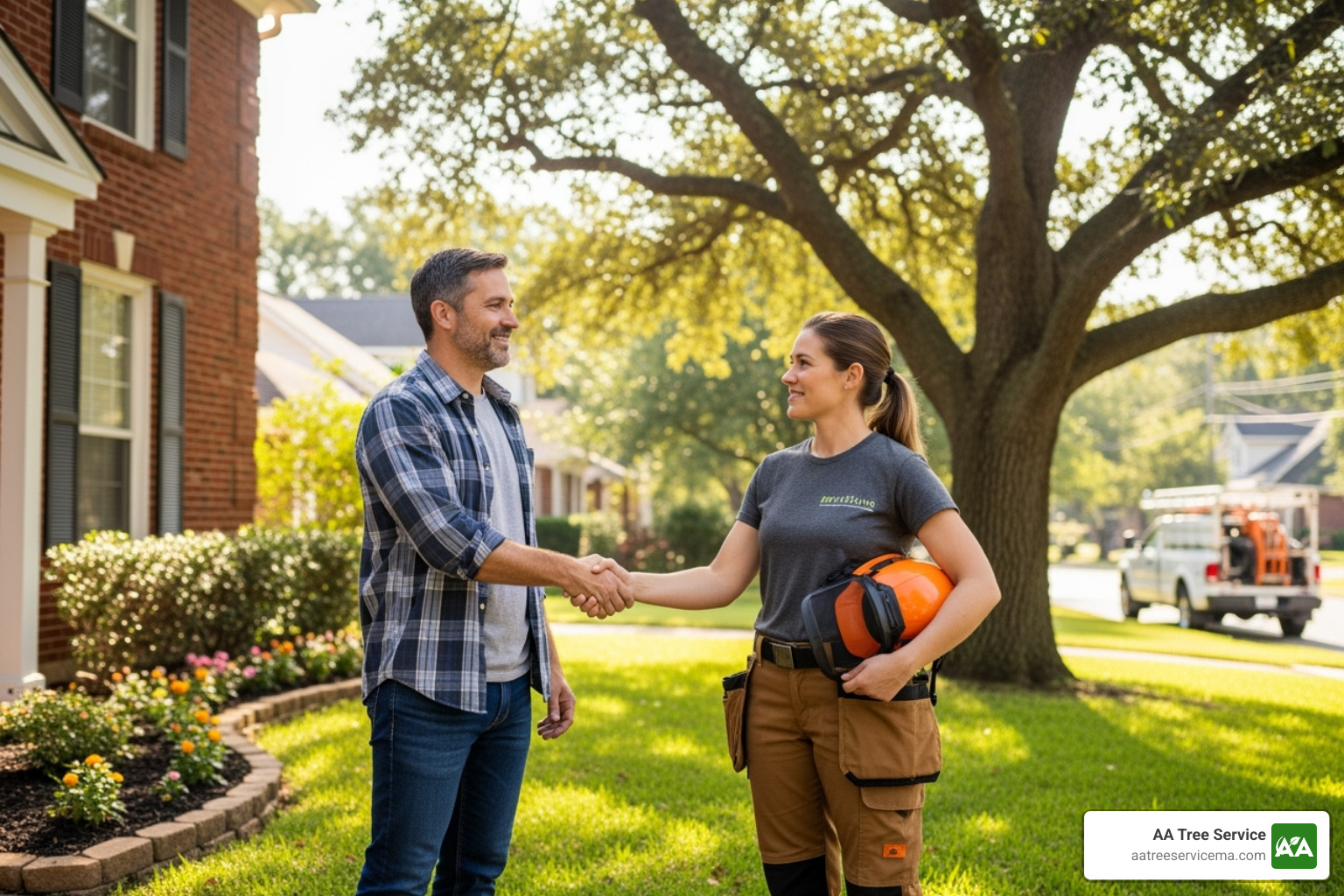
Choosing the right Tree Contractors Near Me is the most important decision you’ll make for your property’s safety and your trees’ health. A skilled, insured professional protects your investment, while an unqualified or uninsured individual can cause irreparable damage, create new hazards, or leave you financially liable for accidents. Here’s how to hire a tree surgeon you can trust.
The Hiring Process from Start to Finish
- Search Locally: Begin by looking for Local Tree Companies Near Me that have an established presence in Massachusetts and New Hampshire. Local companies are familiar with regional tree species, pests, diseases, and weather patterns.
- Check Reviews and Credentials: Don’t just look at star ratings. Read recent customer comments on platforms like Google, Yelp, and the Better Business Bureau. Look for feedback on their professionalism, communication, quality of work, and, importantly, their cleanup process. Check their website for credentials like industry certifications.
- Get Multiple Quotes: Contact at least three reputable companies for an on-site estimate. This allows you to compare not just prices, but also their proposed methods, knowledge, and professionalism. A good arborist will take the time to explain their plan and answer your questions.
- Request a Detailed Written Proposal: A professional bid is more than a number on a business card. It should be a written document that specifies the exact trees to be worked on, a clear description of the work to be performed, the equipment they plan to use, and the total cost.
- Verify Insurance: Before they start, ask for proof of insurance. You need to see both a certificate of general liability insurance (to cover any damage to your property) and a certificate of workers’ compensation insurance (to cover their employees if they get injured on your property). If they can’t provide both, do not hire them.
- Schedule the Work: A professional company will communicate clearly about the projected start date, how long the job will take, and what you need to do to prepare (e.g., move vehicles or patio furniture).
- Do a Final Walk-Through: Before making the final payment, walk the property with the crew leader to ensure the work has been completed to your satisfaction and that your property is left clean and tidy.
Key Qualifications for a Tree Surgeon
- Experience and Expertise: How long has the company been in business? Companies with years of local experience are better equipped to handle the complex and dangerous situations that are common in tree work.
- Insurance (Non-Negotiable): This is the single most important qualification. If you hire a company without adequate insurance, you could be held liable for any damage or injuries that occur. A legitimate company will gladly provide their insurance certificates upon request.
- Certifications and Professionalism: Look for credentials. Is there an ISA (International Society of Arboriculture) Certified Arborist on staff? This certification means an individual has a high level of knowledge in tree care. Is the company accredited by the TCIA (Tree Care Industry Association)? This indicates the company as a whole adheres to the highest standards of safety and professionalism. Also, observe their equipment—is it well-maintained? Do they use proper safety gear (hard hats, eye protection, etc.)?
- Adherence to Industry Standards: Reputable companies perform work according to the American National Standards Institute (ANSI) A300 standards, which are the industry-accepted best practices for tree care. They will also follow ANSI Z133 safety standards.
Legal and Local Regulations
Before major tree work begins, be aware of local rules in Massachusetts and New Hampshire:
- Tree Preservation Orders (TPOs) & Conservation Areas: Many towns have regulations to protect significant trees or all trees within a designated conservation area. Before removing or heavily pruning a large tree, especially one near the street or a wetland, check with your local town hall or conservation commission. Permits may be required, and fines for unauthorized removal can be substantial.
- Neighbor Disputes: Legally, you generally have the right to trim branches and roots that cross over onto your property line. However, you cannot do so in a way that harms the overall health of the tree. The best practice is always to discuss the issue with your neighbor first. A professional tree service can act as a neutral third party, advising on the best way to prune the tree for clearance without causing damage or escalating a dispute.
Proactive Tree Care: Health, Maintenance, and Storm Prep

Effective tree management is about being proactive, not reactive. Regular, thoughtful maintenance is the best way to ensure your trees live a long, healthy life and remain assets rather than becoming hazards. Proactive care is almost always safer, more effective, and more cost-effective than waiting to deal with a fallen tree or a major disease outbreak.
The Tangible Benefits of Regular Tree Maintenance
Consistent, professional tree care offers significant and measurable rewards for any homeowner:
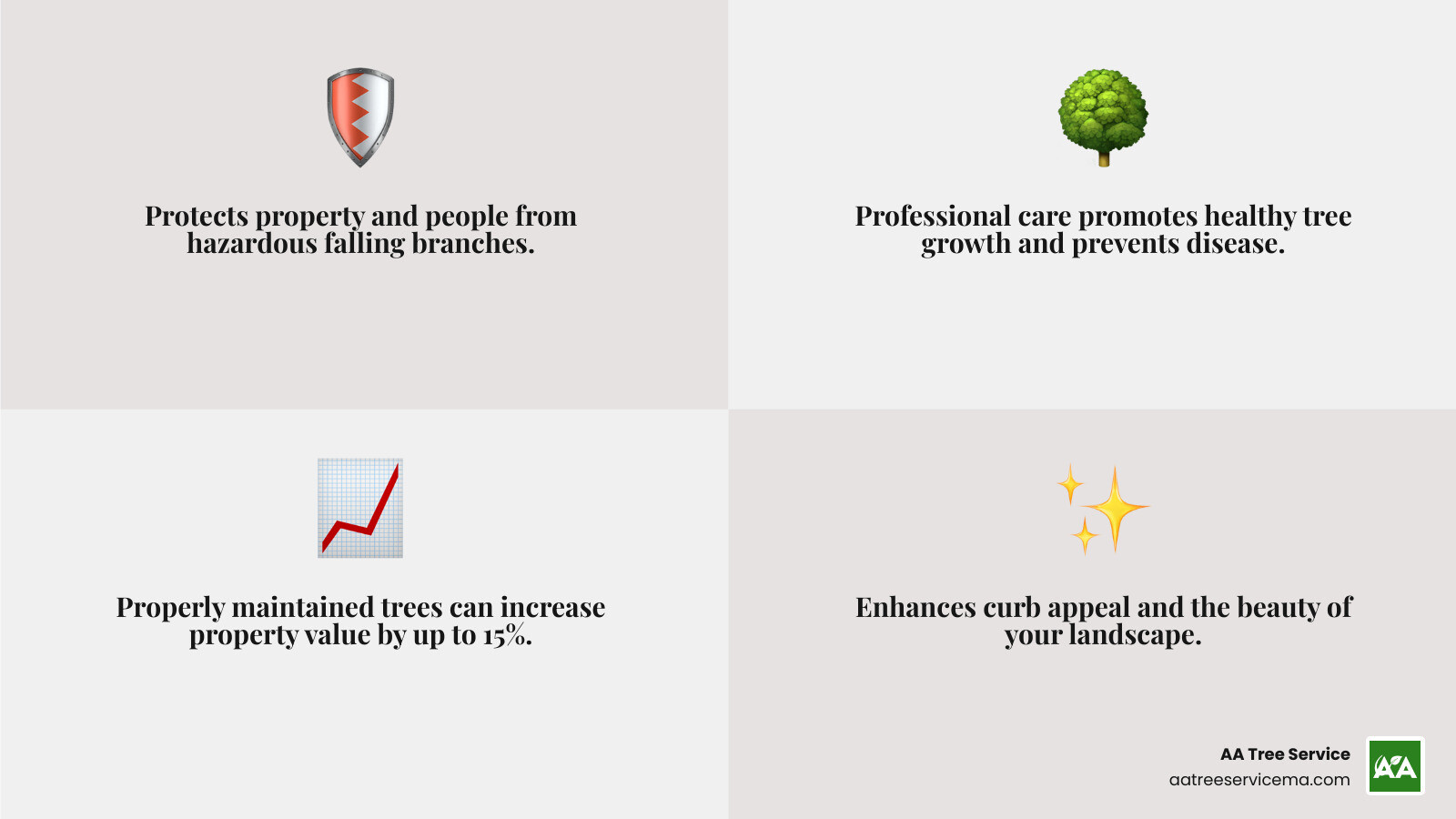
- Increased Property Value: A landscape with beautiful, well-maintained trees has superior curb appeal and can boost your home’s market value by a significant margin.
- Energy Savings: Strategically placed deciduous trees can provide dense shade in the summer, reducing air conditioning costs. In the winter, after they lose their leaves, they allow sunlight to warm the home. Evergreen trees can serve as effective windbreaks, lowering heating costs.
- Safety and Prevention: This is the most critical benefit. An arborist can identify and address weak branches, codominant stems with included bark, or early signs of disease long before they become critical failures. This preventative action helps you avoid the high cost and stress of emergency tree removals.
Identifying and Treating Common New England Tree Problems
Learning to spot the early warning signs of distress can help save a tree. In Massachusetts and New Hampshire, be on the lookout for:
- Pests: Look for signs of common pests like the Emerald Ash Borer (EAB), which leaves D-shaped exit holes in the bark of ash trees, or the Hemlock Woolly Adelgid (HWA), which appears as white, cottony sacs on the underside of hemlock needles. Other pests like aphids leave behind a sticky “honeydew” residue.
- Diseases: Fungal diseases are common and may appear as discolored or spotted leaves (anthracnose), powdery white coatings (powdery mildew), or large fungal growths (conks) on the trunk or branches, which often indicate internal decay.
- Environmental Stress: If you see leaves falling in late summer, it could be a sign of stress from drought, soil compaction, or root damage. Yellowing leaves (chlorosis) often point to a nutrient deficiency.
Modern solutions like Tree Injections for Treatment and Protection can deliver systemic insecticides or fungicides directly into the tree’s vascular system, providing targeted and effective treatment with minimal environmental impact.
The Importance of a Plant Health Care (PHC) Program
A Plant Health Care (PHC) program is the gold standard of proactive landscape management. It’s like a wellness plan for your trees and shrubs. Instead of just reacting to problems, a PHC program takes a holistic approach, focusing on routine monitoring and preventative treatments to build a tree’s natural resilience. A key component is improving soil health. Urban and suburban soil is often compacted and nutrient-poor. A PHC program addresses these underlying issues through services like soil aeration, amendment, and targeted fertilization to promote vigorous root and canopy growth. The Importance of Fertilizing Your Trees cannot be overstated, as it provides the essential nutrients a tree needs to fight off pests and diseases.
Preparing Trees for Massachusetts and New Hampshire Weather
Our demanding New England climate requires a specific storm preparedness plan for your trees:
- Professional Inspection: Have an arborist inspect your trees for weaknesses, such as V-shaped unions with included bark, overextended limbs, or signs of decay before storm season.
- Strategic Pruning: Proactively remove dead, dying, or weak branches that are most likely to fail under the stress of heavy wind, snow, or ice. Thinning the crown can also reduce wind resistance.
- Proper Hydration: Ensure trees, especially newly planted ones and evergreens, are well-watered throughout the fall before the ground freezes. This helps prevent winter desiccation, a common issue for evergreens exposed to winter winds.
- Protective Mulching: Apply a 2-3 inch layer of organic mulch around the base of your trees (keeping it away from the trunk itself). Mulch insulates the roots from extreme temperature swings, conserves soil moisture, and improves soil structure as it decomposes.
Frequently Asked Questions About Local Tree Surgery
When homeowners search for tree surgery near me, they often have similar questions and concerns. With over 20 years of experience serving Massachusetts and New Hampshire, we’ve compiled answers to the most common inquiries we receive.
How often should my trees be pruned?
For most mature trees, we recommend a professional structural pruning every 3 to 5 years. This schedule helps maintain their health, safety, and appearance. Younger trees may benefit from more frequent, lighter pruning (every 1-2 years) to encourage a strong and stable structure as they grow. You should call a professional immediately if you notice large dead or broken branches, limbs growing too close to your house or power lines, or branches that are rubbing against each other, which can create wounds and lead to decay.
Is stump grinding necessary after tree removal?
Yes, we almost always recommend it. While it’s technically optional, leaving a stump behind can cause several problems. It’s an unsightly tripping hazard, it can attract pests like termites and carpenter ants that may then move to your home, and it takes up valuable yard space. Grinding the stump several inches below the ground allows you to reclaim the area for lawn, a garden, or a new planting, providing a clean and finished look to your landscape.
Can I perform tree surgery myself?
We strongly advise against any significant DIY tree work. It is extremely dangerous. The U.S. Bureau of Labor Statistics consistently ranks logging and tree maintenance among the most hazardous occupations. Risks include severe injury from falling limbs, electrocution from power lines hidden among branches, and life-threatening accidents with powerful equipment like chainsaws. Furthermore, improper cutting techniques can permanently damage your tree’s health, creating long-term hazards that are more expensive to fix later. For your safety and the health of your trees, always hire an insured professional.
What is the difference between a tree surgeon and an arborist?
The terms are often used interchangeably, but “arborist” typically implies a higher level of training. A tree surgeon is a skilled professional who performs the physical work of pruning and removing trees. An ISA Certified Arborist is a tree surgeon who has passed a comprehensive exam covering all aspects of tree care, from biology and nutrition to safety and climbing techniques. They must also earn continuing education units to maintain their certification. Hiring a company with certified arborists on staff ensures you are getting advice and service based on the latest scientific knowledge.
When is the best time of year to prune my trees?
It depends on the tree and the goal. For most trees, pruning during the dormant season (late fall and winter) is ideal. It’s easier to see the tree’s structure without leaves, and the tree is less susceptible to pests and diseases. However, pruning to remove dead or hazardous limbs can be done at any time of year. Certain trees, like oaks, should only be pruned in the dormant season to avoid infection from serious diseases like oak wilt. Flowering trees have specific pruning schedules based on when they bloom.
Is “tree topping” bad for my tree?
Yes, tree topping is one of the worst things you can do to a tree. It involves indiscriminately cutting the top of a tree off, leaving large, open wounds that are highly susceptible to rot and disease. The tree responds by sending up a profusion of weak, poorly attached shoots (“watersprouts”) that are far more likely to break in a storm than the original branches. Topping starves the tree, makes it ugly, and creates a long-term hazard. A professional arborist will use proper crown reduction techniques instead.
Conclusion: Your Next Step for Healthy, Safe Trees
Proper tree care is a critical investment in the safety, beauty, and value of your property. In New England, where severe weather is a constant threat, proactive maintenance is not a luxury—it’s a necessity. A single falling branch can cause thousands of dollars in damage to your home or vehicle, but a strategic plan of regular pruning and health check-ups can prevent the vast majority of these emergencies. It’s about shifting from a reactive mindset to a proactive one.
When you search for tree surgery near me, the most important decision you’ll make is who you hire. Don’t gamble with an uninsured or inexperienced individual offering a suspiciously low price. Professional tree work is a high-risk trade that demands extensive expertise, millions of dollars in insurance coverage, and highly specialized equipment to be performed safely and correctly. In Massachusetts and New Hampshire, where a winter ice storm or a summer hurricane can turn a seemingly healthy tree into an immediate hazard overnight, having a trusted, qualified professional on call provides invaluable peace of mind.
At AA Tree Service, we have been helping homeowners and businesses protect their properties for over 20 years. We are not just a tree service; we are your local partners in landscape management. We live here, we understand the unique challenges of our region’s climate and ecology, and we are committed to the long-term health and safety of your trees.
What sets us apart? We offer 24/7 emergency services because we know that disasters don’t keep business hours. We also provide free, same-day quotes to give you the fast, honest, and expert advice you need to make an informed decision. When you call us, you’ll get a professional assessment, a transparent price, and a clear plan of action. Ready to give your trees the expert care they deserve? For a comprehensive assessment and a free quote, explore our Tree Removal services today and take the first step toward a safer, more beautiful property.