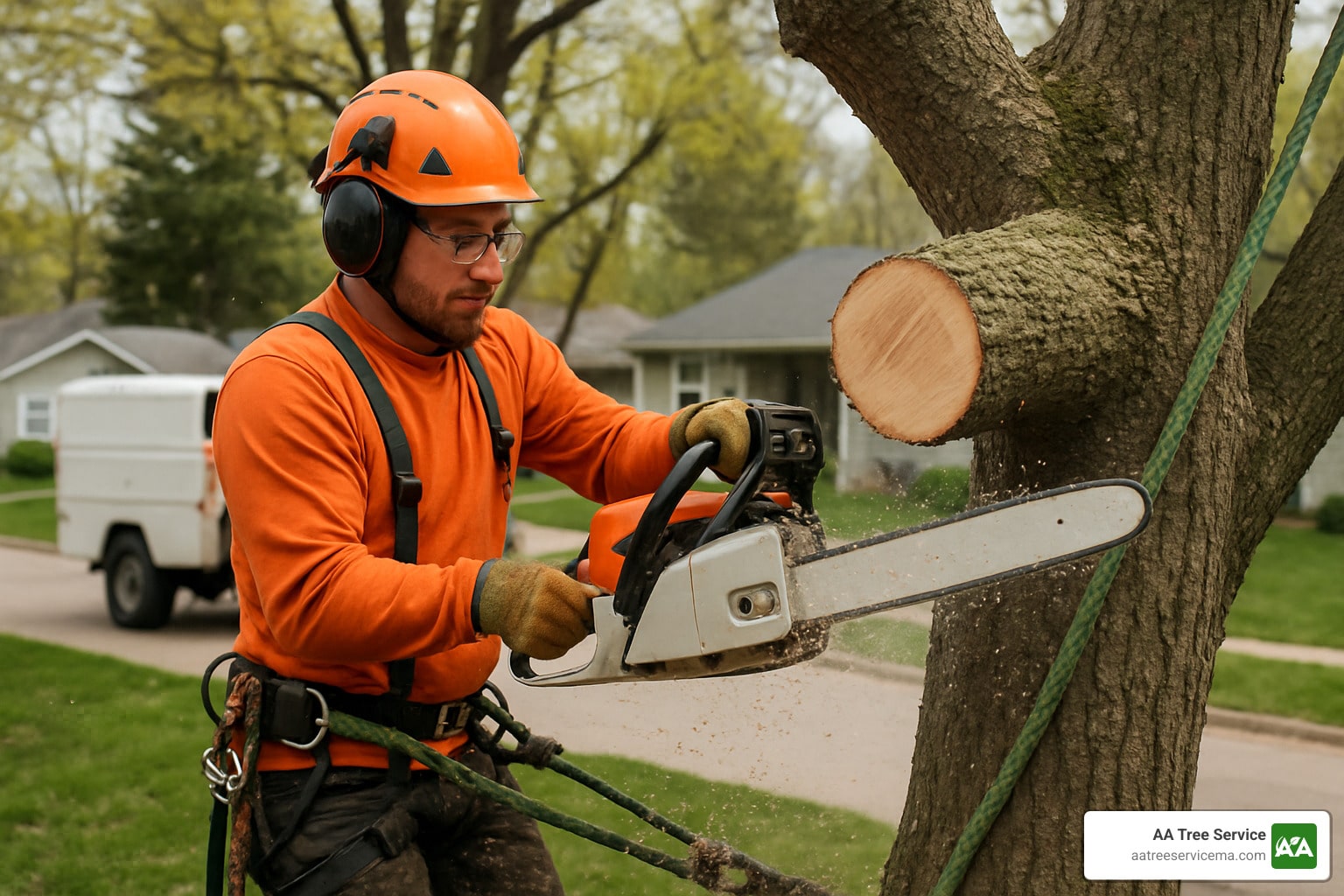
When Branches Become Hazards: Understanding Tree Limb Removal
Looking for tree limb removal near me in Massachusetts or New Hampshire? Here’s what you need to know:
- Emergency Response Time: Most local services can arrive within 1-2 hours for hazardous situations
- Average Cost Range: $150-$1,500 per limb depending on size, location, and complexity
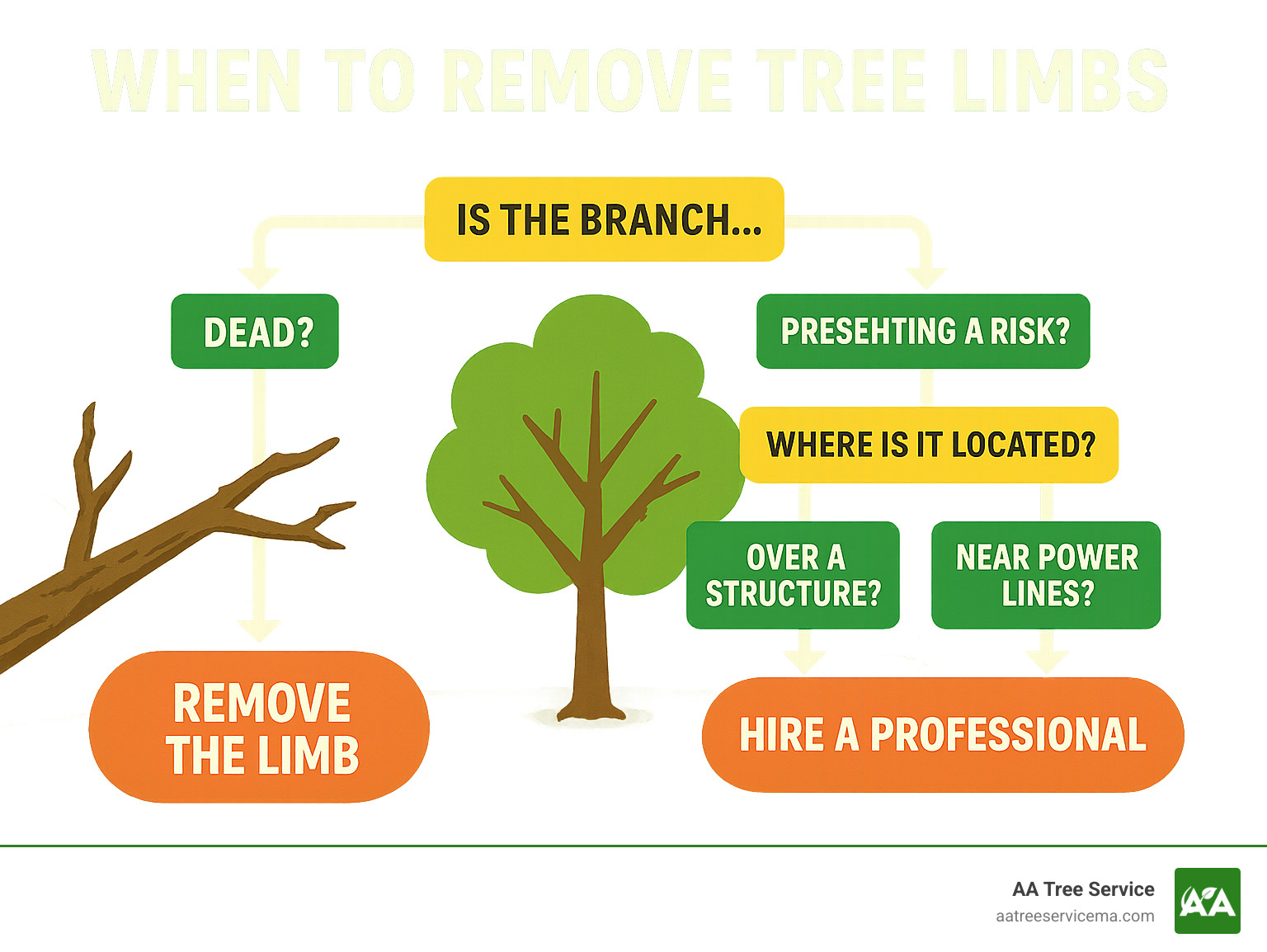
- When to Call Professionals: When limbs are near power lines, over structures, or too large to safely handle
- Key Safety Measures: Licensed, insured companies use specialized equipment like cranes and rigging systems
- Post-Removal Services: Reputable companies include cleanup and debris removal in their service
For immediate assistance in MA or NH, call a certified arborist for a free same-day quote.
When that massive tree limb removal near me becomes your urgent Google search, you’re likely facing a situation that requires immediate attention. Perhaps a recent storm has left a precarious branch hanging over your roof, or you’ve noticed concerning cracks in a limb that stretches across your driveway.
Tree limbs don’t announce their departure with a two-week notice. They snap, crack, and fall with little warning, often during the worst possible weather conditions. According to tree care professionals, ignoring dead or damaged limbs is one of the most common and costly mistakes homeowners make.
The decision to remove a tree limb isn’t just about aesthetics—it’s about safety, property protection, and sometimes even legal liability. When a limb shows signs of disease, damage, or dangerous positioning, prompt professional assessment becomes essential. In New England’s unpredictable weather patterns, that weakened branch hanging over your garage might be one nor’easter away from becoming an expensive emergency.
Learn more about tree limb removal near me:
– broken trees
– storm clean up near me
– tree debris
Tree Limb Removal Near Me: What It Really Means
When Massachusetts and New Hampshire homeowners search for “tree limb removal near me,” they’re seeking a skilled professional who understands the delicate balance between preserving tree health and protecting property.
True limb removal combines hazard mitigation, structural pruning, and deadwood elimination. In New England’s unpredictable weather, having a local service that can respond quickly—often within hours during emergencies—can make all the difference between prevention and disaster.
At AA Tree Service, we’ve spent over 20 years defining limb removal as a careful, selective process that addresses immediate risks while preserving the tree’s overall health whenever possible. To us, “near me” isn’t just about geographic proximity—it’s about having intimate knowledge of New England’s unique tree species, soil conditions, and local regulations.
How do I spot urgent hazards for tree limb removal near me?
Visible cracks or splits where major limbs connect to the trunk indicate structural weakness that could fail without warning. Partially attached or hanging branches should never be ignored, especially after ice storms or heavy snowfall.
Look for fungal growth or mushroom-like structures on branches, as these signal internal decay that’s often far more extensive than what’s visible. Branches touching power lines require professional removal—never attempt these yourself, as they pose serious electrocution risks.
After nor’easters or strong wind events, pay special attention to any new leaning or tilting in your trees, which might suggest root damage that’s compromised the entire structure. Dead leaves out of season, bark falling away, or hollow areas are also nature’s way of telling you it’s time to call a professional.
What does professional tree limb removal near me include?
When you hire AA Tree Service for limb removal in Massachusetts or New Hampshire, you’re getting a comprehensive approach that starts with a thorough site assessment by our certified arborists. For large or heavy limbs, we employ advanced rope rigging techniques that allow for controlled dismantling and lowering.
For particularly challenging situations, we bring in specialized crane lifts that can safely extract limbs from over structures without risking damage to your home. And unlike some services that leave you with a yard full of debris, our complete chipper cleanup ensures your property looks better after we leave than when we arrived.
For more comprehensive branch management, our Tree Branch Removal Service offers solutions for everything from routine maintenance to emergency situations.
When & Why to Remove a Tree Limb
Let’s face it—trees don’t come with warning lights that flash when a limb is about to fail. But knowing when to say goodbye to a branch could save you thousands in property damage and keep your family safe.
Wind damage is perhaps the most obvious culprit we see across Massachusetts and New Hampshire. After a nor’easter, partially detached limbs often hang precariously, waiting for the next gust to send them crashing down.
Disease control often necessitates removing infected limbs before problems spread throughout the entire tree. Your property insurance might actually require this kind of maintenance, as many policies specifically mention keeping trees properly trimmed to maintain coverage.
We’ve seen countless situations where homeowners face liability risks from limbs extending over sidewalks or neighboring properties. Other compelling reasons include pest infestations that hollow out branches, sunlight balance issues when overgrown limbs cast your garden into permanent shade, and simple landscape aesthetics.
The general recommendation is to have trees professionally evaluated every five years—but after severe weather events, immediate assessment becomes crucial regardless of your regular maintenance schedule.
Warning Signs Your Limb Has to Go
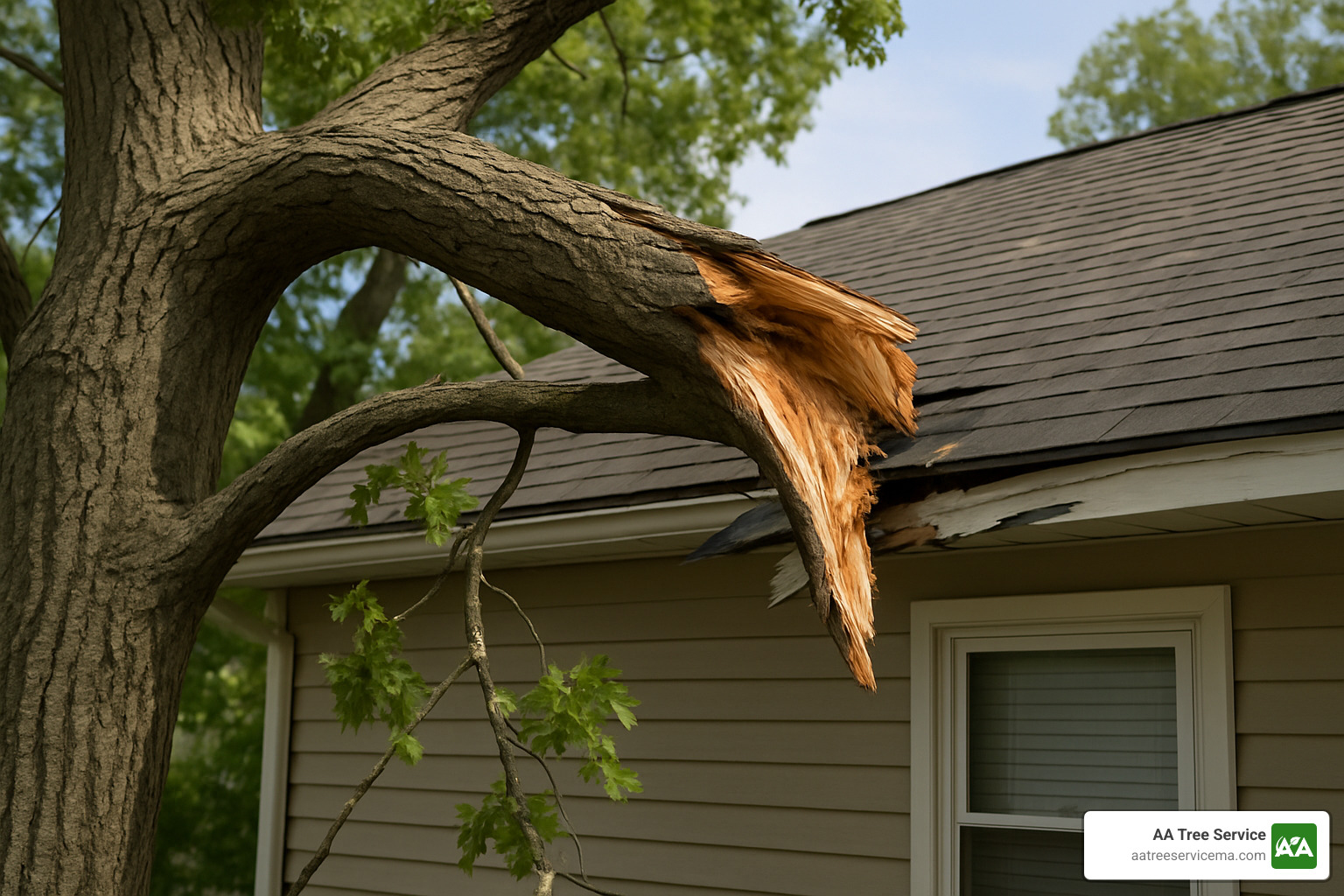
Some tree problems announce themselves loudly and clearly. Cankers and dead spots where bark is missing tell you that section of branch is already dead. Hollow cavities at branch unions are particularly concerning—they’re like hidden structural failures waiting to collapse.
When you notice extensive bark peeling beyond what’s normal for the species, it’s often a sign of serious issues beneath. Similarly, soil upheaval near the tree’s base suggests root problems that could affect every branch above.
After thunderstorms, check for lightning scars running vertically along branches. Crossed or rubbing branches create wounds that act like open doors for diseases and pests. And damage to the branch collar is particularly serious because it interferes with the tree’s natural healing mechanisms.
These warning signs take on extra urgency after severe weather events. What appears as minor damage initially can quickly deteriorate during the freeze-thaw cycles that define Massachusetts and New Hampshire winters.
Risks of Delaying Removal
Delaying necessary tree limb removal near me services often leads to much bigger problems. That suspicious branch hanging over your roof could cause a roof puncture during the next storm, leading to water damage that far exceeds the cost of professional removal.
Limbs that extend over driveways put vehicles at risk of sudden vehicle damage, while those over walkways or play areas create serious personal injury risks. There’s also the matter of legal liability if a limb from your property damages neighboring structures or injures someone.
Perhaps most concerning in our New England climate is storm damage escalation. Limbs that might survive mild conditions often fail catastrophically when loaded with ice or heavy snow.
While professional removal might cost between $150-$1,500 depending on complexity (based on internet averages, not AA Tree Service pricing), the potential cost of property damage or liability claims can easily reach tens of thousands of dollars.
Safety Standards, DIY Limits & Pro Process
When it comes to tree limb removal, safety isn’t just a recommendation—it’s absolutely essential. At AA Tree Service, we strictly adhere to the American National Standards Institute (ANSI) A300 pruning guidelines and International Society of Arboriculture (ISA) best practices developed through years of scientific research on proper pruning standards.
These aren’t arbitrary rules but carefully developed protocols covering everything from proper cutting techniques to comprehensive safety equipment requirements. Each tree species responds differently to pruning, which is why we apply species-specific methods backed by scientific research on ANSI A300 guidelines.
For homeowners eyeing that problematic branch with a chainsaw in mind, understand the very real dangers involved. Chainsaw kickback causes thousands of injuries annually. Drop-zone planning isn’t intuitive—it requires experience to predict how a limb will fall. And working at height without proper equipment and training is a risk no homeowner should take.
DIY vs. Hiring a Pro
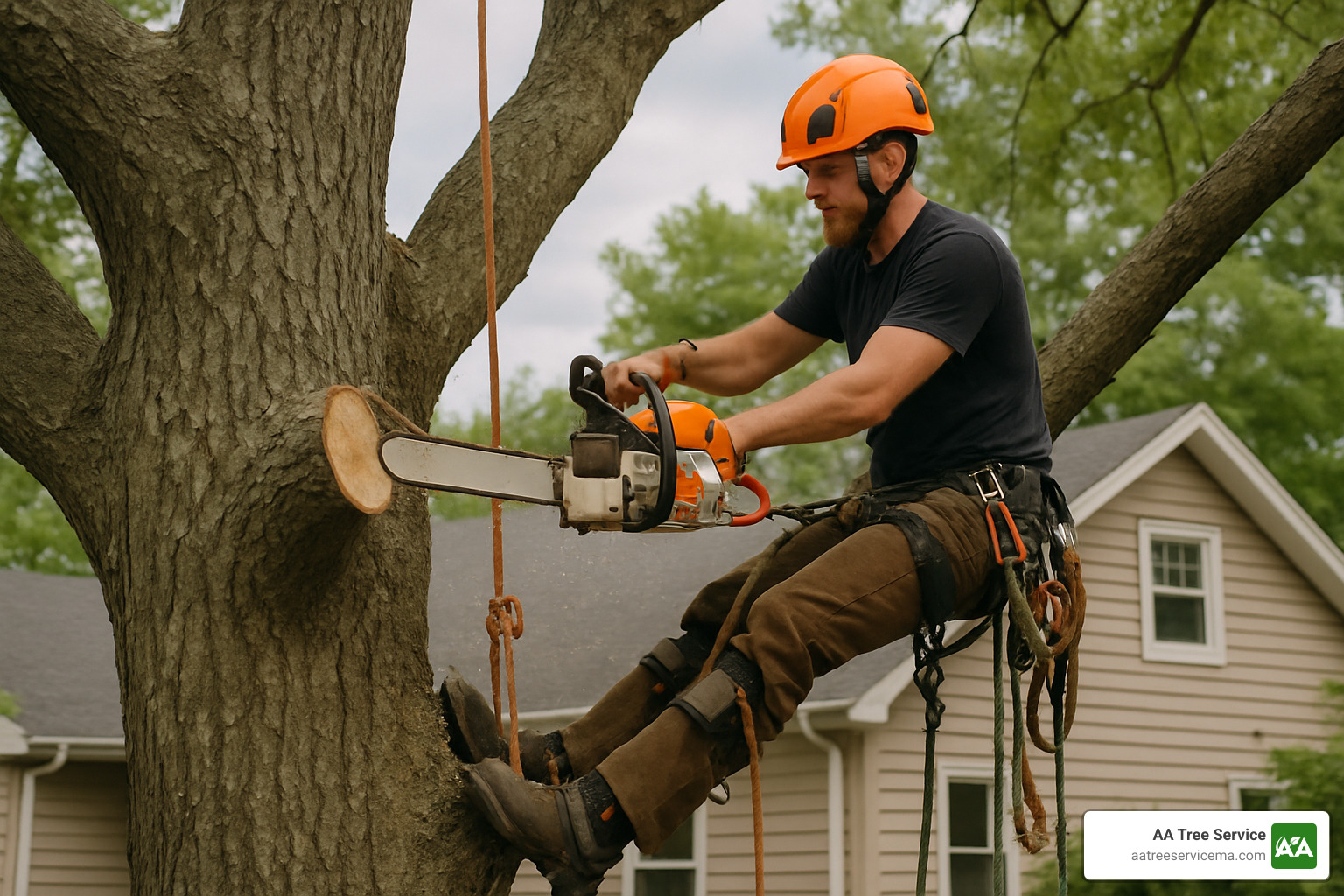
There’s a world of difference between snipping a pencil-thin twig and removing a substantial tree limb. While you might handle small, ground-level branches yourself, most limb removal projects require professional expertise.
Ladder falls represent one of the biggest dangers in DIY tree work. Unlike professionals who use specialized climbing gear and harnesses, homeowners often rely on inadequate ladders that can slip or tip. The equipment costs add up quickly too—professional-grade chainsaws, safety gear, and rigging equipment can run into thousands of dollars.
Perhaps most concerning is the insurance coverage gap. When professionals make a mistake, their comprehensive insurance covers any damage. When homeowners make a mistake, their homeowner’s insurance may not cover the resulting damage—leaving you personally liable for repairs.
When New England weather turns nasty, professional services offer something invaluable: emergency availability when you need it most. Our 24/7 response team has seen it all—from midnight storm damage to holiday emergencies. For urgent situations, our Emergency Tree Branch Removal service provides rapid response.
Step-by-Step Professional Removal Process
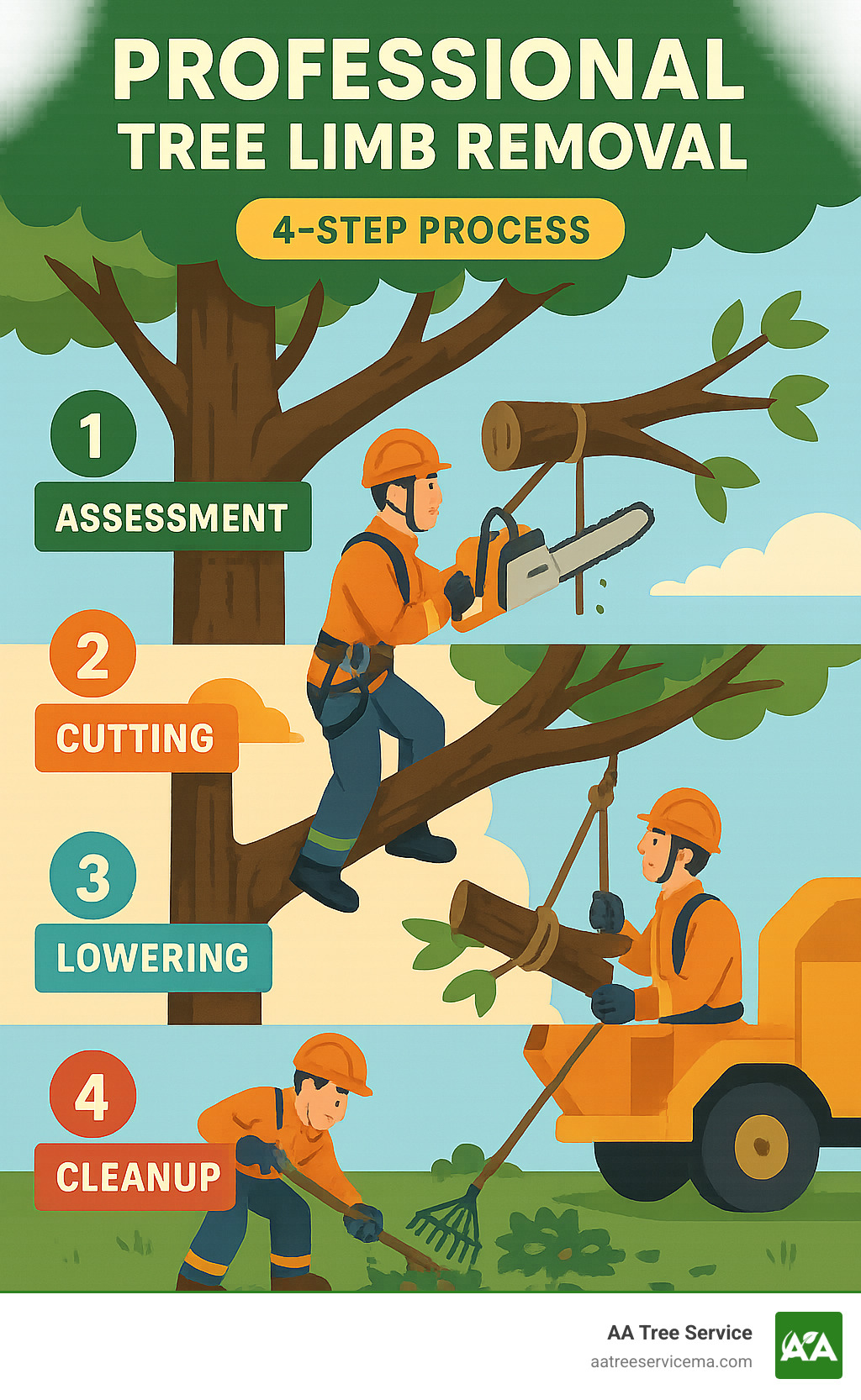
When we remove a limb at AA Tree Service, it’s never a haphazard operation. Our process follows a careful sequence designed to protect both your property and our team:
We begin with a thorough pre-job inspection where we assess not just the problem limb, but the entire tree’s health and structure. Rather than removing large branches in one dangerous piece, we use limb piecing techniques to break the work into manageable sections. These sections are then lowered using sophisticated controlled lowering systems.
Our arborists make cuts with surgical precision, using techniques that promote the tree’s natural healing processes. When applicable, we apply stump treatment to prevent pest infestation or disease spread.
Finally, we complete a thorough debris haul-off that leaves your property cleaner than when we arrived. For particularly challenging situations involving limbs near structures or utilities, we may employ crane services to eliminate risk entirely.
Cost, Permits & Regulations in MA & NH
If you’re wondering what tree limb removal near me will cost in Massachusetts or New Hampshire, you’re looking at a typical range of $150 to $1,500 per limb. That’s quite a spread because every limb tells its own story—a massive oak branch over your garage will naturally cost more than a small maple limb in your backyard.
These figures represent average costs based on internet data, not actual pricing from AA Tree Service. For an accurate assessment, we always recommend requesting our free same-day estimate.
When storms roll through New England, be prepared for potential emergency surcharges. After-hours or storm response work often commands premium pricing—sometimes up to three times the standard rate. This reflects the increased risk, urgency, and challenging conditions our crews face.
Need a crane to safely remove that massive limb? That specialized equipment comes with additional fees. Similarly, if your property has limited access, the more labor-intensive approach required will affect your bottom line.
Beyond your wallet, your address matters too. Massachusetts and New Hampshire have a patchwork of local regulations:
Town tree bylaws vary significantly between communities. If you live in a historic district, expect additional oversight and potentially more paperwork. Working near power lines requires careful coordination with utility companies. And if your trees border wetlands or protected areas, you might need conservation commission approval.
Local officials typically distinguish between emergency safety issues and standard removal requests. When that limb is actively threatening your home during a storm, the approval process tends to move much faster.
Factors That Change the Price
Limb diameter is perhaps the most obvious factor—larger limbs require more time, specialized equipment, and expertise to remove safely. Similarly, height above ground creates additional challenges and risks that professional services must account for in their pricing.
Property layout matters enormously. Homes with limited accessibility often require specialized approaches that can increase costs. If that troublesome limb hangs over your prized rose garden or new patio, the extra care needed to prevent damage naturally affects pricing.
The volume of debris generated is another consideration many homeowners overlook. Large limbs create significant material that must be processed—either through chipping, hauling, or both.
Timing also influences cost. Seasonal demand fluctuations affect pricing throughout the year, with post-storm periods typically commanding premium rates. The urgency factor plays a significant role too—emergency response during or immediately after weather events typically costs more than scheduled maintenance.
For a more comprehensive approach that might prevent emergency situations, consider our Tree Pruning Services as preventative maintenance.
Getting the Paperwork Right
The paperwork puzzle varies dramatically depending on your location in Massachusetts or New Hampshire. You might need local consent forms if the tree borders public property. Properties near water? Wetland buffer permits often come into play for trees near ponds, streams, or wetland areas. Living in a planned community? Don’t forget to secure HOA approval before any work begins.
Safety protocols like DigSafe notifications are required before ground-disturbing activities in both states. And if your property falls within an environmentally sensitive area, conservation commission review might be necessary.
Historic New England adds another layer of complexity. Many towns throughout MA and NH have strict preservation guidelines governing tree work when it might affect the historic character of the neighborhood.
While navigating this regulatory landscape might seem overwhelming, professional services like AA Tree Service handle these details as part of our comprehensive approach.
Choosing a Local Service & Preparing for Emergencies
Finding the right tree service for limb removal shouldn’t feel like rolling the dice with your property’s safety. In Massachusetts and New Hampshire, where mature trees and unpredictable weather create unique challenges, choosing wisely becomes even more crucial.
When evaluating potential tree limb removal near me providers, start with the fundamentals. Insurance verification should be your first priority—not just that they have it, but that they carry adequate coverage. Ask to see certificates for both liability (at least $1 million) and workers’ compensation.
Look for ISA certification (International Society of Arboriculture) among the crew members. This credential ensures they understand tree biology and proper cutting techniques, not just how to operate equipment.
Understanding a company’s typical response window matters too—especially in New England where a dangling limb during ice storm season isn’t something you want lingering for days.
Always insist on a written estimate before work begins. This document should detail exactly what’s being removed, the techniques that will be used, and all associated costs. Vague proposals often lead to unexpected charges later.
Don’t overlook a company’s cleanup policy. Some services consider their job done once the limb hits the ground, leaving you with a mess. Others, like our team, include thorough debris removal and site restoration as standard practice.
Finally, consider the company’s equipment inventory. Professional limb removal often requires specialized tools beyond a basic chainsaw. For challenging removals over structures or in tight spaces, access to bucket trucks, cranes, or specialized rigging systems makes all the difference.
For ongoing tree care beyond immediate limb removal concerns, explore our Local Tree Trimming Near Me services that help prevent emergency situations through regular maintenance.
Questions to Ask Before You Sign
Before you commit to any tree service for limb removal, arm yourself with questions that reveal their true professionalism. Beyond basic pricing, ask about their insurance coverage limits specifically. A professional won’t be offended—they’ll appreciate your diligence.
Ask about the crew size planned for your job. Adequate staffing isn’t just about efficiency; it’s about safety. Discuss your stump options. Will the cut surface be treated to prevent disease or pest entry? Will grinding be available if needed?
Clarify the expected timeline for completion, especially if you’re planning around events or other contractors. Understand the company’s payment schedule before work begins. Reputable services have clear policies—typically a deposit followed by final payment upon satisfactory completion.
Ask specifically about how they’ll protect your property during work. Will they use plywood to prevent lawn damage from equipment? How will they ensure falling debris doesn’t damage landscaping or structures?
Finally, inquire about the credentials of both climbers and ground crew. In tree work, the qualifications of everyone on site matter—not just the person who gives you the estimate.
Building a Long-Term Tree Health Plan
While immediate limb removal addresses urgent concerns, thinking beyond the emergency pays dividends for Massachusetts and New Hampshire homeowners. Trees are long-term investments in your property value and quality of life.
Consider scheduling annual inspections with a certified arborist. These professional assessments catch potential issues before they become hazards, often saving thousands in emergency removal costs.
Preventive pruning removes problematic growth while branches are still small and manageable. This approach is not only more affordable than emergency removal; it’s better for the tree’s overall health and structure. Most mature trees benefit from professional pruning every 3-5 years.
For particularly valuable trees with structural weaknesses, cabling and bracing systems provide mechanical support that can extend a tree’s safe lifespan by decades. Consider appropriate fertilization strategies based on soil testing rather than generic treatments.
For significant specimen trees, especially tall ones in exposed locations, lightning protection systems offer affordable insurance against catastrophic loss. When you consider that a mature shade tree can add 5-20% to property values, this protection becomes a sound investment.
Frequently Asked Questions About Tree Limb Removal
Do I need a permit to cut a limb over my driveway in Massachusetts?
In most Massachusetts communities, you’re free to remove limbs from private trees on your own property without any paperwork—your tree, your rules.
However, this freedom comes with exceptions. If your tree happens to be in a wetland buffer zone, along a designated scenic road, or within a historic district, you’ll need to jump through some regulatory hoops first. Cambridge has entirely different requirements than a small town in Worcester County, for instance.
Some towns have adopted “Significant Tree Ordinances” that protect trees above certain diameter thresholds—even on your own property. And that limb stretching over the public sidewalk? That might require a friendly chat with municipal authorities before firing up the chainsaw.
At AA Tree Service, we’ve been navigating this patchwork of local regulations for over two decades. We can quickly determine if your specific situation requires permits and, when needed, handle the entire permitting process as part of our service.
How fast can an emergency crew arrive during a Nor’easter?
During a classic New England Nor’easter, everyone wants help at once. At AA Tree Service, we use a careful triage system during storms, prioritizing the most dangerous situations first. For truly hazardous scenarios—like limbs resting on your roof or blocking your only exit—our typical emergency response time is 1-2 hours in most Massachusetts and New Hampshire service areas, weather and road conditions permitting.
This reality highlights why preventive maintenance is so valuable. Having your trees professionally assessed and maintained before storm season can dramatically reduce those middle-of-the-night emergencies when the winds start howling.
Will the company remove all wood chips and debris afterward?
At AA Tree Service, complete cleanup isn’t an add-on service—it’s standard procedure with every job. Our thorough cleanup process includes:
- Chipping smaller branches and brush on-site
- Hauling away larger wood pieces (unless you want them for firewood)
- Careful raking and blowing of the entire work area
- Removing any equipment marks from your lawn or driveway
Many of our customers actually request that we leave firewood-sized pieces behind for their woodstoves or fire pits. We’re happy to accommodate, cutting logs to manageable lengths and neatly stacking them wherever you’d like on your property.
Conclusion
New England weather doesn’t send warning letters before it strikes. When fierce storms roll through Massachusetts and New Hampshire, those questionable tree limbs hanging over your roof suddenly become your most immediate concern. That’s why addressing potential hazards before they become emergencies isn’t just smart—it’s essential for protecting your home, family, and wallet.
Think about it this way—that $150-$1,500 you might spend on professional limb removal today could save you thousands in property repairs tomorrow. As many of our long-term clients have found, preventive tree care is always more affordable than emergency response or insurance claims after damage occurs.
What matters most when it comes to tree limb safety:
Professional assessment gives you peace of mind about which limbs truly pose risks and which can safely remain. Our certified arborists bring specialized knowledge of New England’s native tree species and how they respond to our unique weather patterns.
Proper removal techniques make all the difference in preserving your tree’s long-term health while protecting your property during the process. Those technical cuts and rigging systems we use aren’t just for show—they’re developed from decades of arboricultural research and experience.
Local knowledge of Massachusetts and New Hampshire regulations ensures your tree work complies with municipal requirements. The last thing you need is to address a hazardous limb only to find you’ve inadvertently violated local ordinances.
At AA Tree Service, we’ve been climbing trees and solving problems for Massachusetts and New Hampshire homeowners since 2003. Our team has seen how proper maintenance prevents many emergencies before they develop—and we’ve also witnessed the aftermath when warning signs were ignored.
When storms hit and limbs come down, our 24/7 emergency response team is ready. But we’d much rather help you identify and address potential problems during calm weather, before nature forces your hand.
For prompt, professional tree limb removal near me service that protects what matters most, contact Emergency Tree Removal today. Let AA Tree Service show you why so many of your neighbors throughout MA and NH have trusted us with their trees for over two decades.