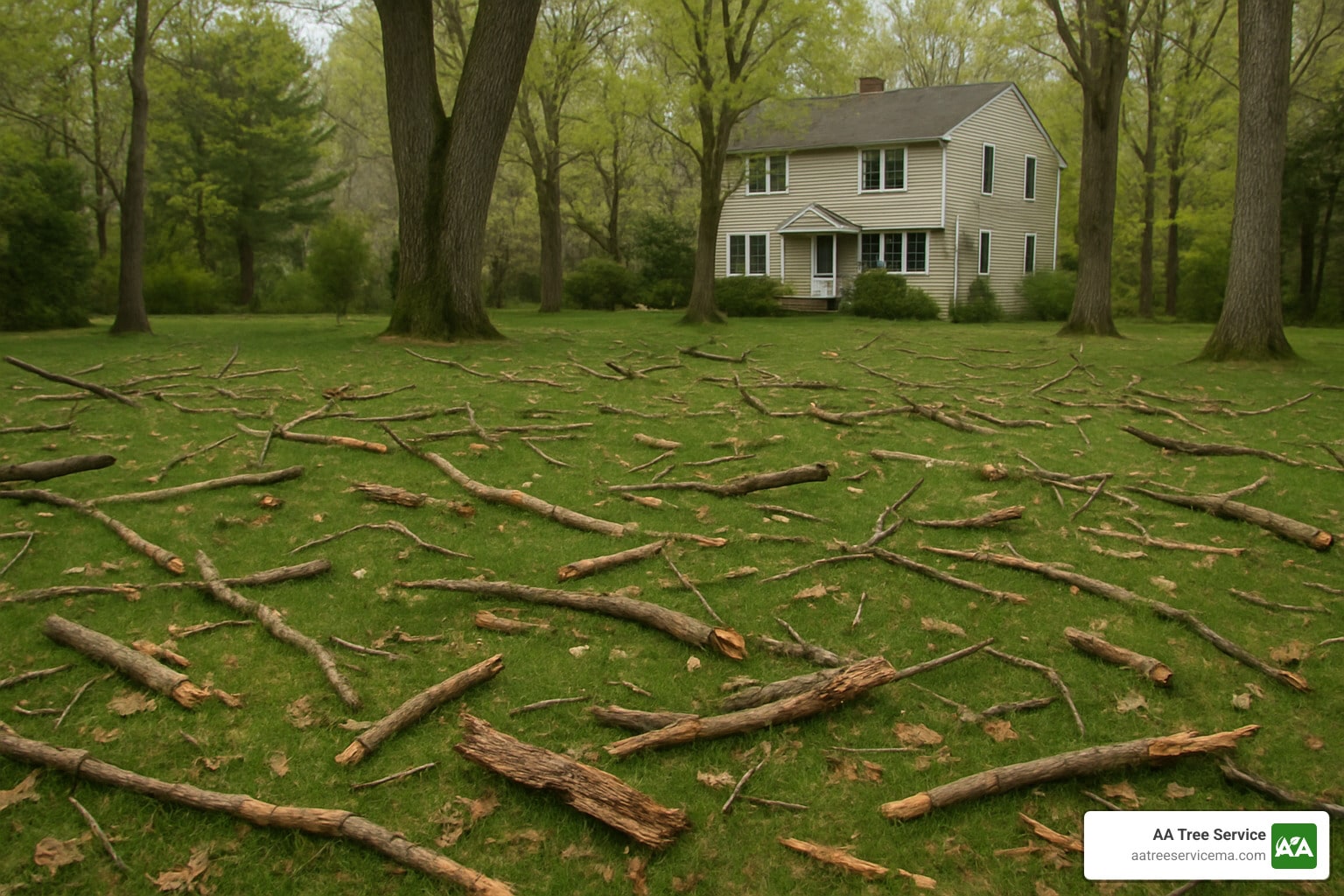
What Is Tree Debris and Why It Matters to New England Homeowners
Tree debris is any fallen or loose material from trees, including branches, leaves, twigs, bark, and wood pieces that accumulate in your yard. Here’s what you need to know:
Common Types of Tree Debris:
– Small twigs and branches (under 2 inches)
– Medium limbs (2-6 inches diameter)
– Large branches and trunk sections (6+ inches)
– Leaves, bark, and pine needles
– Storm-damaged hanging branches
Main Causes in Massachusetts & New Hampshire:
– Nor’easters and ice storms
– High winds and severe weather
– Natural seasonal shedding
– Tree pruning and maintenance
– Disease or pest damage
Tree debris becomes a serious concern when storms hit New England. As one homeowner described after a recent nor’easter: “In the wake of spring winds and storms, residents with trees on their properties are likely going to find woody debris of all sizes.”
Why prompt removal matters: Tree debris creates safety hazards, attracts pests, blocks drainage, and can damage your lawn equipment. But here’s the good news – much of it can be turned into valuable resources like mulch, compost, or firewood instead of heading to the landfill.
Massachusetts and New Hampshire have specific rules about disposing tree debris. Woody material over 3 feet long is banned from landfills in many areas, making proper disposal and recycling even more important for homeowners.
This guide will show you how to safely handle tree debris, explore your removal options, understand local regulations, and find creative ways to transform yard waste into useful materials for your property.
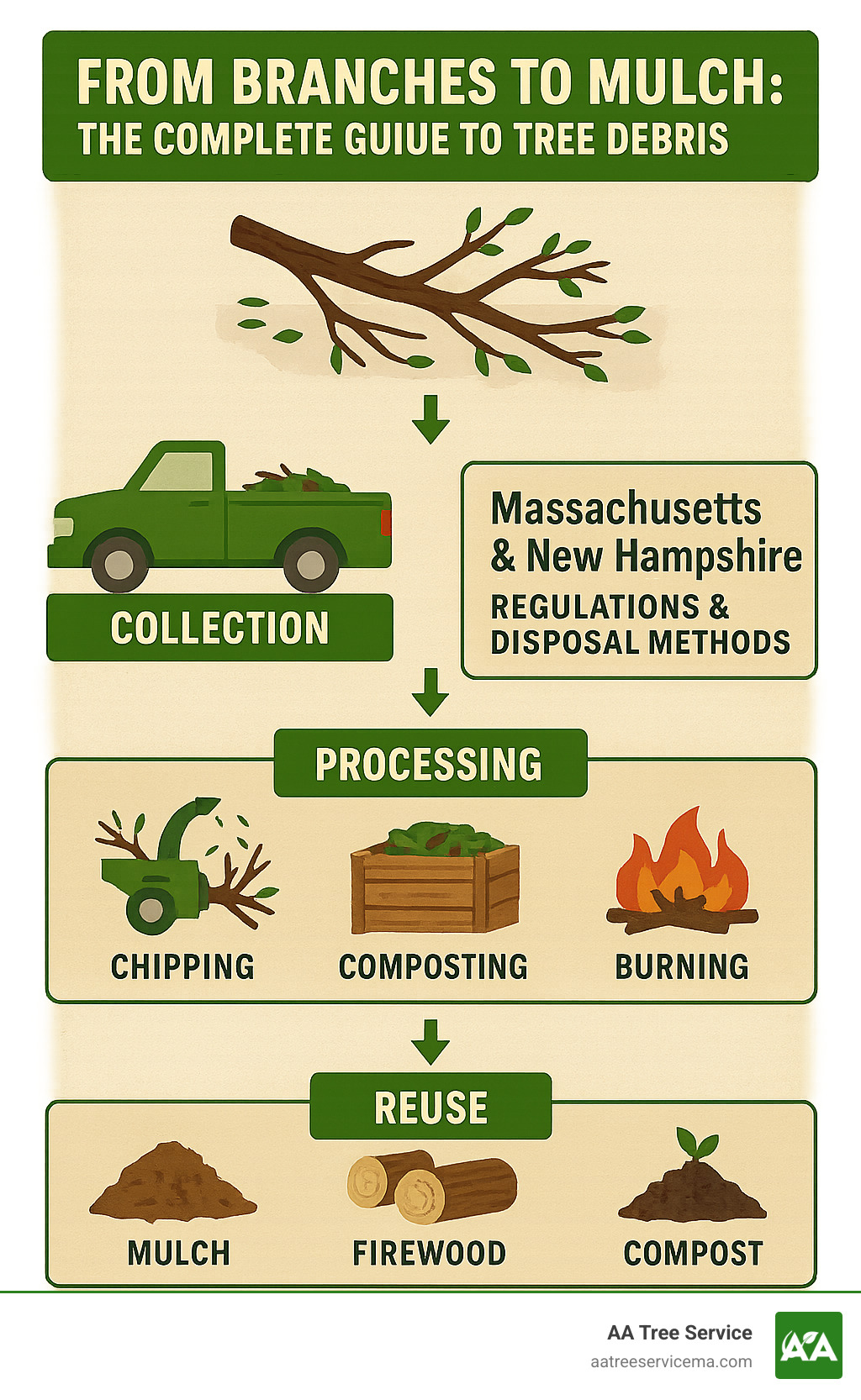
Related content about tree debris:
– storm clean up near me
– broken trees
– emergency tree branch removal
What Counts as Tree Debris?
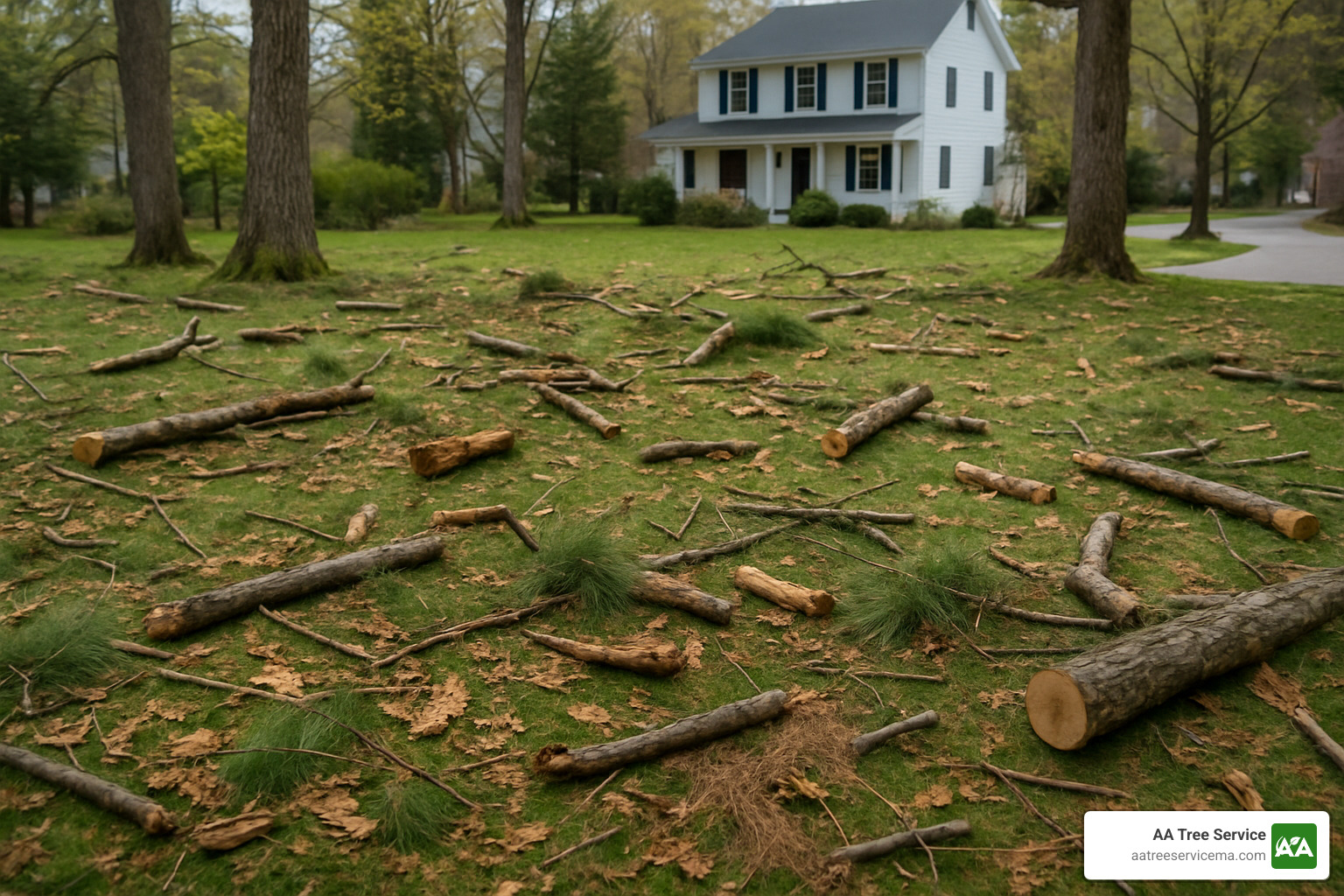
If you’ve ever wondered what exactly qualifies as tree debris, you’re not alone. After 20 years of helping Massachusetts and New Hampshire homeowners, we’ve seen just about everything that can fall from a tree – and trust me, it’s more varied than you might think.
Tree debris includes any organic material that comes from trees, whether it falls naturally or gets removed during maintenance. The most obvious pieces are branches and limbs ranging from tiny twigs you can snap with your fingers to massive trunk sections that require heavy equipment. Then there are logs and trunk rounds – those chunky pieces left behind after tree removal or created when storms snap trees in half.
Don’t forget about stumps and root material that remain after cutting down trees. These often get overlooked until you’re trying to mow around them or plant something new. Leaves and foliage create their own challenges, especially during New England’s spectacular but messy fall season.
Brush piles tend to accumulate gradually from routine yard work, while pine needles and bark shed naturally throughout the year. After storms, you’ll often find hanging or partially attached limbs that pose serious safety risks. And if you’ve done any pruning projects lately, you know how quickly those neat little trimming jobs can turn into mountains of branches.
Major Causes of New England Tree Debris
Living in Massachusetts and New Hampshire means our trees face some serious challenges. Nor’easters top the list as debris-creating machines, combining wicked winds with heavy snow, rain, and ice. These storms don’t just knock down weak branches – they can strip entire canopies and topple mature trees that have stood for decades.
Ice storms create their own special kind of chaos. When ice coats every branch and twig, even healthy trees can’t handle the extra weight. We’ve seen beautiful old maples lose half their canopy in a single ice event.
High winds from thunderstorms and hurricanes hit fast and hard, especially when the ground is already saturated from recent rain. Trees that look perfectly stable can suddenly uproot or lose major limbs.
Pruning projects generate more debris than most homeowners expect. What starts as “just trimming a few branches” often becomes a major cleanup project. Disease and pest damage weakens trees over time, making them drop branches unexpectedly. The emerald ash borer has been particularly brutal across our region.
Root decay is the sneaky culprit – you can’t see it happening underground until trees start leaning or dropping large sections without warning.
Types of Tree Debris by Size & Weight
Understanding what you’re dealing with helps you choose the right approach for cleanup. Twigs and small branches under 2 inches diameter are perfect for hand tools like pruning shears and loppers. You can easily rake these up and add them to compost piles or burn piles.
Medium limbs between 2-6 inches diameter require more muscle and usually need a reciprocating saw or small chainsaw. These pieces work great for chipping or cutting into firewood, and most towns accept them bundled for curbside pickup.
Large limbs over 6 inches diameter enter professional territory. These hefty pieces often weigh hundreds of pounds and need heavy-duty chainsaws or even crane assistance for safe removal. They make excellent firewood if you can handle the processing.
Trunk rounds and stump material require specialized equipment like stump grinders. Don’t underestimate these – what looks manageable often weighs far more than expected and needs professional handling.
The key is being honest about your capabilities. We’ve helped plenty of homeowners who started a weekend project only to realize they needed professional equipment and expertise to finish safely.
Why Prompt Removal Matters
When tree debris starts piling up in your yard, you might think it can wait until next weekend. Trust us – it can’t. We’ve seen too many homeowners learn this lesson the hard way after someone gets hurt or property gets damaged.
The biggest immediate concern is safety hazards. Those scattered branches become trip risks, especially for kids running around the yard or elderly family members walking to the mailbox. We’ve responded to calls where homeowners were injured simply trying to steer around debris piles in their own yards.
Your lawn equipment is also at serious risk. Hidden branches can destroy mower blades in seconds, turning a simple grass cutting into an expensive repair job. During dry spells, tree debris becomes a fire threat – all that dried wood and leaves can ignite quickly and spread to your home or neighbors’ properties.
Don’t forget about your lawn itself. When debris sits for weeks, it smothers the grass underneath, blocking sunlight and air circulation. You’ll end up with dead patches that need reseeding come spring.
Heavy branches can also cause property damage if they’re leaning against your house, fence, or vehicles. We’ve seen gutters damaged, car roofs dented, and siding scratched from debris that homeowners thought was “safely” positioned.
Hidden Dangers of Lingering Tree Debris
Here’s what most people don’t realize about leaving tree debris around: it becomes a magnet for problems you never saw coming.
Yellow jackets and wasps love building nests in brush piles. Nothing ruins a family barbecue faster than finding an aggressive wasp colony in that debris pile you’ve been ignoring. We’ve had customers call us in panic after disturbing nests during cleanup attempts.
Termites and carpenter ants are drawn to decaying wood like a dinner bell. Once they’re established in your debris pile, it’s a short trip to your home’s wooden structures. These wood-destroying insects can cause thousands of dollars in damage before you even notice them.
Mold and rot develop quickly in moist debris, especially after our typical New England spring rains. This fungal growth can spread to healthy trees and plants nearby, creating bigger problems than just cleanup.
The longer you wait, the harder cleanup becomes. Grass grows up through old debris, making it nearly impossible to remove cleanly. What could have been a weekend project becomes a major undertaking requiring professional help.
Impact on Home Insurance & Liability
Tree debris can create insurance headaches that many Massachusetts and New Hampshire homeowners never consider until it’s too late.
Most insurance companies expect prompt documentation of storm damage. If you leave debris sitting for months without reporting it, you might find your claim denied or complicated. Insurance adjusters want to see that you’ve taken reasonable steps to prevent further damage.
Neighbor disputes are another real concern. If debris from your property damages a neighbor’s yard, fence, or structures, you could be legally liable for cleanup and repair costs. We’ve seen friendly neighbor relationships turn sour over tree debris issues.
Smart homeowners take claim photos before, during, and after cleanup. This documentation can make the difference between claim approval and denial. Show the debris, show the damage, and show the cleanup process.
One surprise many homeowners face is that their deductible applies to debris removal costs. If your deductible is $1,000 and removal costs $800, you’re paying out of pocket. Understanding this ahead of time helps you budget for professional cleanup services.
Tree Debris Removal Options in MA & NH
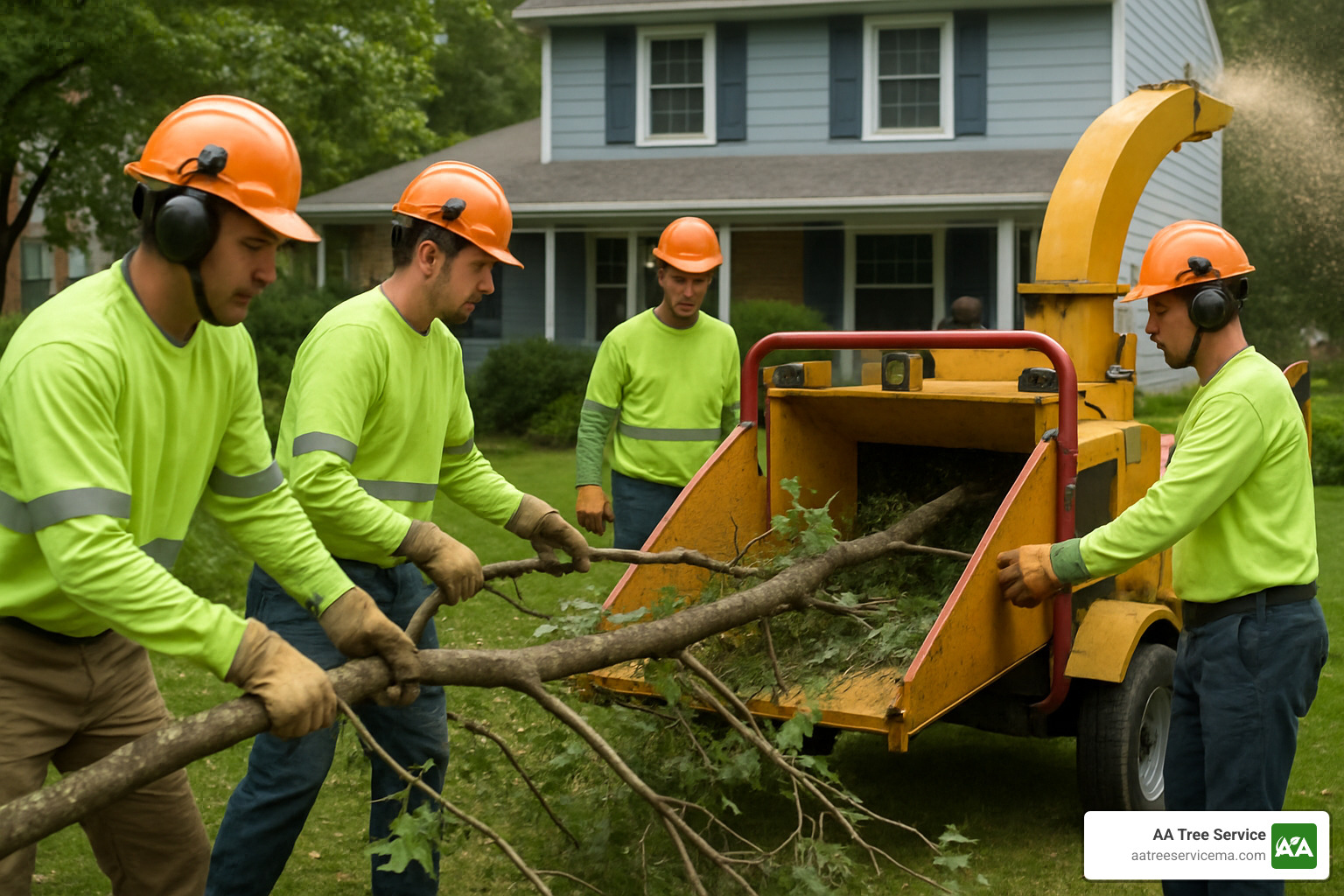
When you’re staring at a yard full of tree debris after a New England storm, you might feel overwhelmed by your options. The good news? You have several solid choices for getting your property back to normal, whether you’re a hands-on homeowner or prefer to leave it to the professionals.
DIY removal works well for smaller amounts of debris – think manageable branches and scattered twigs. You’ll need some basic tools and a free weekend, but it’s definitely the most budget-friendly approach. Professional services like Storm Cleanup Services make sense when you’re dealing with large volumes, dangerous hanging limbs, or simply don’t have the time to tackle it yourself.
Don’t overlook municipal programs either. Many Massachusetts and New Hampshire towns offer seasonal brush pickup or have compost facilities where you can drop off debris for free. Some communities even run special collection programs after major storms.
For those who want to process debris on-site, equipment rental opens up interesting possibilities. Renting a wood chipper lets you turn branches into valuable mulch, while a dumpster provides convenient disposal for larger cleanup projects.
DIY Tree Debris Removal: Tools & Safety Gear
Rolling up your sleeves to handle tree debris yourself can be satisfying work – and easier on your wallet. But having the right equipment makes all the difference between a productive weekend and a frustrating (or dangerous) experience.
Cutting tools form the backbone of any DIY debris removal project. A chainsaw handles branches over 4 inches diameter efficiently, though a reciprocating saw offers a safer alternative for smaller limbs. Keep loppers and pruning shears handy for branches under 2 inches, and always have a backup hand saw when power tools aren’t practical.
Safety gear isn’t optional – it’s absolutely essential. Safety glasses protect against flying wood chips, while heavy-duty gloves prevent cuts and splinters. A hard hat becomes critical when working under trees with potential widow makers, and steel-toed boots protect your feet from falling branches. Long sleeves and pants round out your protection against cuts and scratches.
Moving debris efficiently requires the right transport tools. A sturdy wheelbarrow or garden cart saves your back when moving heavy pieces. Heavy-duty tarps let you drag large loads across your yard, while ratcheting straps secure everything for transport to disposal sites. Finish up with a rake and leaf blower for final cleanup.
Here’s the most important safety tip: never attempt to remove hanging or partially attached branches yourself. These “widow makers” have seriously injured experienced professionals – they’re definitely not worth the risk for homeowners.
Hiring Pros for Tree Debris Removal
Sometimes calling in professional help for tree debris removal is simply the smart choice. Whether you’re dealing with massive storm damage, dangerous hanging limbs, or just don’t have the time and tools for a big cleanup, professionals bring expertise and efficiency that can actually save you money in the long run.
Look for licensed and insured services with certified arborists on staff. Local knowledge of disposal regulations matters too – Massachusetts and New Hampshire have specific rules about where and how you can dispose of woody debris. Companies offering emergency response become invaluable after major storms when debris creates immediate safety hazards.
Based on internet research, average costs for professional removal vary widely depending on your specific situation. Labor rates typically run $50-$100 per hour, while brush pile removal might cost $150-$600 per trip. Branch removal generally ranges from $75-$750 per load, and large debris removal can run anywhere from $200-$1,500 or more depending on volume and complexity. Stump removal adds another $80-$750 per stump to your total cost.
These are average costs based on internet data and not actual pricing for AA Tree Service. Your actual costs will depend on debris volume, how easy it is to access, disposal requirements, and local market conditions.
Professional removal brings real benefits beyond just convenience. You get proper safety equipment and training, efficient cleanup and disposal, insurance coverage for accidents, and knowledge of local regulations. For comprehensive options, check out Tree Debris Removal Service to see what professional removal can offer.
Navigating Local Pickup & Drop-Off Programs
Massachusetts and New Hampshire communities offer various programs for tree debris disposal, but the rules change dramatically from town to town. Understanding your local options can save you significant money on disposal costs.
Curbside pickup programs exist in many communities, but they come with specific requirements. Most towns want branches bundled in 4-foot lengths with bundle diameters limited to 18-24 inches. Many operate on seasonal schedules – typically spring and fall – and larger amounts often require advance notice to your public works department.
Municipal compost facilities offer year-round drop-off options for residents. These facilities usually restrict access to residents only and may have size and volume limits. The bonus? Many provide free mulch in return for your debris, turning your waste into valuable landscaping material.
After major storms, many communities activate special debris collection programs. These emergency services often relax normal bundling requirements and provide separate pickup for large limbs and trunk sections. The key is knowing who to call and what the temporary rules are.
For Massachusetts residents dealing with storm debris, the MassDEP guidance on storm debris provides official guidance on proper disposal methods and regulations. When in doubt, contact your local public works department – they’ll know exactly what programs are available and what the current rules are.
Eco-Friendly Ways to Reuse or Recycle Tree Debris
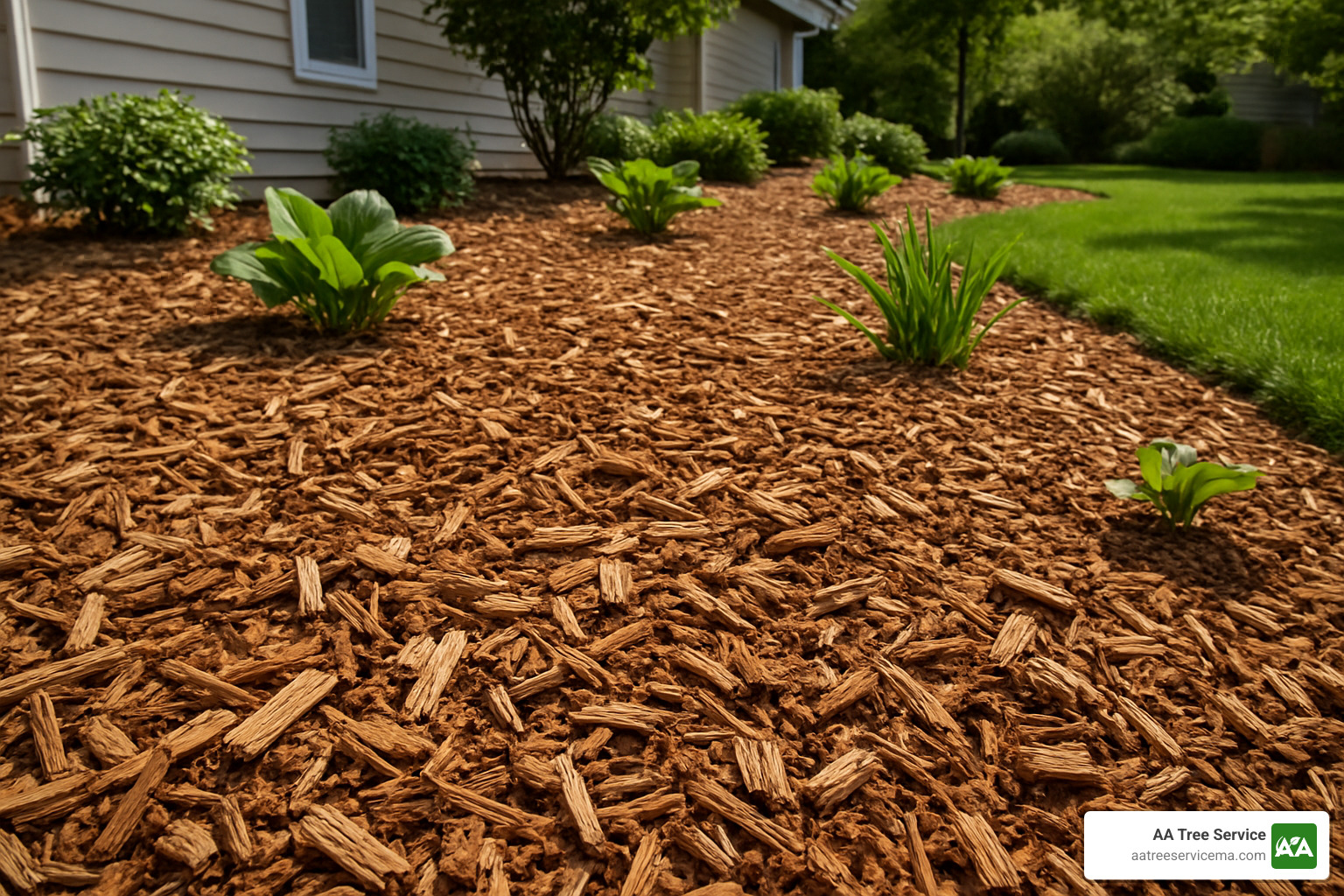
Here’s some good news about all that tree debris cluttering your yard: it doesn’t have to become waste. In fact, you’re sitting on valuable resources that can improve your property and save you money at the garden center.
Think of tree debris as free raw materials waiting to be transformed. That pile of branches from last month’s storm? Perfect for mulch production. Those logs taking up space in your driveway? They could be next winter’s firewood. Even small twigs and leaves make excellent compost material when mixed properly.
Massachusetts and New Hampshire homeowners are finding creative ways to turn cleanup chores into property improvements. One neighbor might chip branches for wood chips to cover garden paths, while another builds wildlife habitat areas that attract beneficial birds and small animals.
Professional services like our Brush Clearing Company can help process large volumes of debris into useful materials, especially when you’re dealing with more than a weekend project can handle.
The best part? These eco-friendly approaches often cost less than disposal fees and provide ongoing benefits to your landscape.
Turning Tree Debris into Mulch
Converting tree debris into mulch might be the smartest thing you can do with those fallen branches. Fresh wood chips work just as well as expensive store-bought mulch – sometimes better.
Chipper rental runs about $75-$200 per day for homeowner models, which sounds expensive until you price mulch at the garden center. A single day of chipping can produce enough material to cover your entire landscape for the season.
Many homeowners find that professional chipping services offer the best value, especially when combined with debris removal. The crew handles the dangerous cutting work and leaves you with neat piles of fresh chips ready to spread.
For smaller amounts of debris, hand processing with pruning shears works fine. You’ll get a coarser texture, but it still provides excellent ground cover and soil benefits.
Application is straightforward but important. Spread mulch in a 2-4 inch layer around plants, but always maintain a 2-3 inch gap around tree trunks. This prevents moisture buildup that can cause rot and pest problems.
Fresh wood chips provide excellent weed control – often better than landscape fabric. They retain soil moisture during dry spells and gradually break down to improve your soil structure. Plan to refresh the layer annually as the organic matter decomposes naturally.
Composting Woody Waste
Tree debris makes fantastic compost material, but it requires a different approach than typical kitchen scraps and grass clippings.
The key is understanding that woody material provides carbon-rich “brown” material that balances nitrogen-rich “green” materials like fresh leaves and vegetable scraps. Aim for roughly a 50/50 mix of brown and green materials for optimal decomposition.
Size matters significantly when composting wood. Large branches can take years to break down, while chipped material decomposes in 2 months to 2 years depending on conditions. A simple rule: if you can’t break it with your hands, it needs to be cut smaller.
Proper aeration speeds up the process dramatically. Turn your compost pile every few weeks to introduce oxygen and prevent the anaerobic conditions that create unpleasant odors.
What works well: chipped branches and twigs, leaves and small bark pieces, and sawdust from cutting operations. What to avoid: diseased wood that could spread problems to healthy plants, treated lumber, and pieces larger than a few inches.
Keep the pile moist like a wrung-out sponge, but not waterlogged. Too much moisture creates soggy, smelly conditions, while too little stops decomposition entirely.
Creative Projects with Tree Debris
Tree debris offers endless possibilities for functional and decorative projects that add character to your property.
Simple bird feeders can be created by drilling holes in logs for suet or seed. Kids love helping with these projects, and the rustic appearance fits naturally into any landscape.
Garden borders made from larger limbs define planting areas beautifully and cost nothing except your time. They’re particularly effective for separating lawn areas from flower beds or vegetable gardens.
Rustic furniture projects like benches and tables from trunk sections have become popular with homeowners who enjoy weekend woodworking. Even basic designs create attractive outdoor seating that weathers naturally.
Holiday decorations provide year-round opportunities to use smaller branches. Wreaths, centerpieces, and seasonal displays give you creative outlets while reducing waste.
Wildlife habitat creation benefits both your property and local ecosystems. Stack branches in quiet corners to create shelter for small animals, or leave hollow logs as natural insect hotels that support beneficial garden predators.
For functional landscape features, consider using debris for natural walkway borders, erosion control on slopes, or privacy screens from bundled branches. These applications solve practical problems while maintaining the natural character that makes New England properties so appealing.
Costs, Regulations & Storm Preparation
Understanding the financial and legal aspects of tree debris management helps you make informed decisions and avoid costly mistakes. Whether you’re dealing with a few fallen branches or major storm damage, knowing what to expect can save you both money and headaches down the road.
Tree Debris Removal Costs Explained
Tree debris removal costs can surprise homeowners, especially after major storms when demand spikes. Understanding the pricing structure helps you budget appropriately and avoid sticker shock.
These are average costs based on internet research and not actual pricing for AA Tree Service. Contact us for accurate quotes specific to your situation.
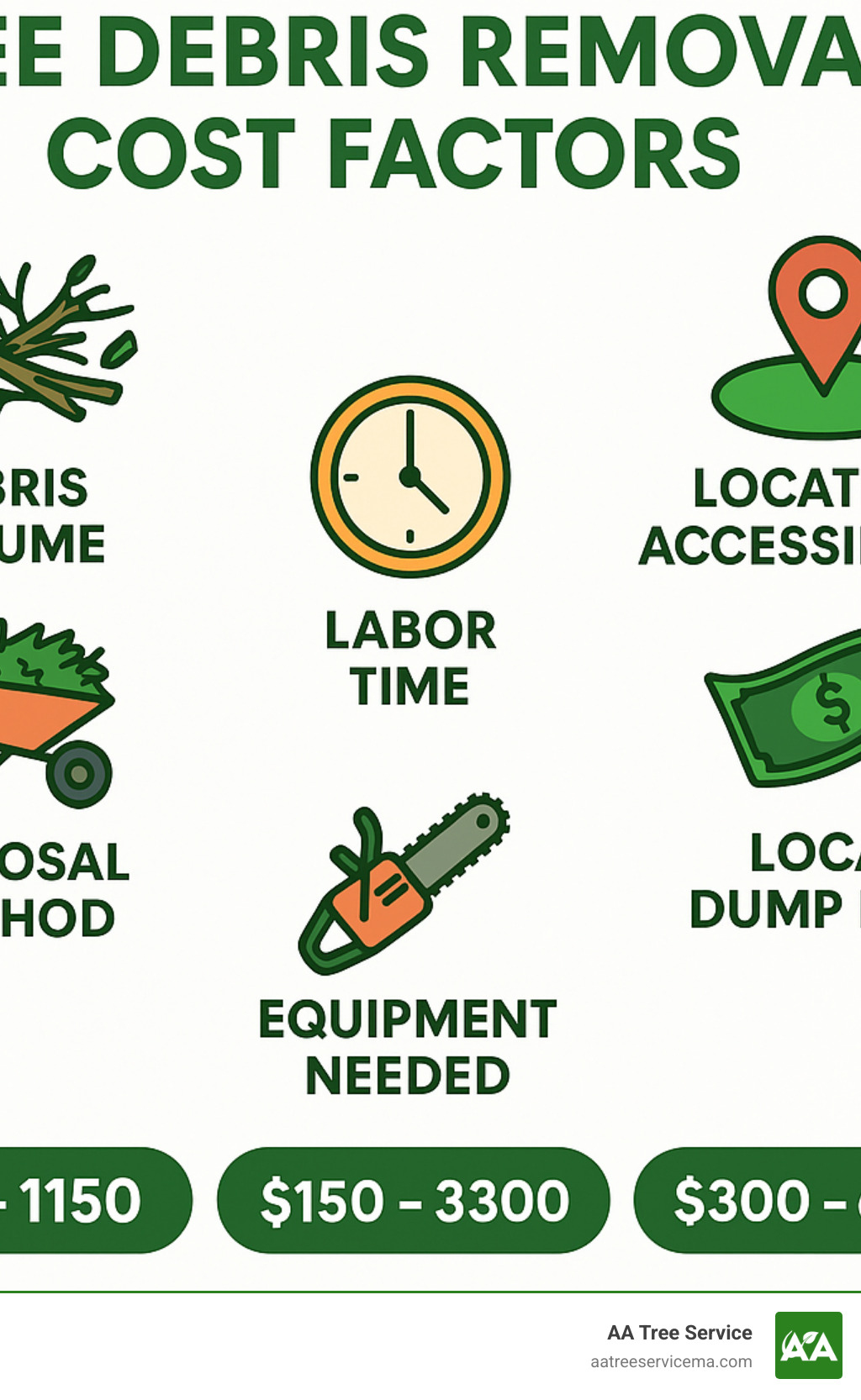
Labor rates typically range from $50-$100 per hour for standard work, but emergency services during storms can add an additional $100-$150 per hour premium. Most companies have minimum charges for small jobs, so even a quick cleanup might cost more than expected.
For brush pile removal, expect to pay around $150-$200 per trip, though this can vary based on the size of your pile and how accessible it is. A branch load removal generally costs $75-$250 per load, while large debris cleanup from extensive storm damage can range anywhere from $200 to $1,500 or more.
Stump removal is usually priced separately, adding $80-$250 per stump to your total bill. The wide price range reflects differences in stump size, location, and root complexity.
Several factors dramatically affect your final cost. The volume of debris is obvious – more material costs more to remove. But accessibility can be just as important. If crews need to haul debris from your backyard through a narrow gate, expect higher labor charges.
Your chosen disposal method also impacts pricing. Landfill fees differ from recycling costs, and some eco-friendly options might actually save money. Seasonality plays a huge role too – prices spike after major storms when everyone needs service at once. Geographic location matters as well, since rural properties may face higher transport costs.
Smart homeowners can reduce costs by scheduling removal during off-season months like winter, bundling debris removal with other tree services, and preparing debris for easy pickup to minimize labor time. Consider handling smaller pieces yourself while leaving the heavy, dangerous work to professionals.
Key MA & NH Rules for Disposing Tree Debris
Both Massachusetts and New Hampshire take tree debris disposal seriously, with regulations designed to reduce landfill waste and promote recycling. Breaking these rules can result in fines and disposal headaches.
Massachusetts has banned woody vegetative matter over 3 feet in length from landfills, making proper disposal planning essential. This means you can’t just toss large branches in your regular trash or take them to most dump sites.
Open burning requires permits during designated seasons in both states, and local bylaws often add extra restrictions. Some communities prohibit burning entirely, especially in densely populated areas.
New Hampshire follows similar guidelines with landfill restrictions for large woody debris and mandatory burn permits for most open burning. However, town-specific ordinances vary significantly, so always check with your local fire department before lighting anything.
When open burning is allowed, you must maintain safe distances from structures – typically 25 feet or more. Monitor weather conditions constantly, keep water or fire suppression equipment ready, and never burn during windy or dry conditions. Even with permits, you’re liable for any damage caused by escaped fires.
Fortunately, you have plenty of alternative disposal options. Municipal compost facilities accept most tree debris, private yard waste processing centers offer convenient drop-off, and on-site chipping creates valuable mulch. Professional removal services like our Land Clearing Services handle all disposal requirements for you.
Preparing for Post-Storm Tree Debris
Smart preparation makes tree debris cleanup safer, faster, and less expensive when severe weather inevitably hits New England. A little planning goes a long way during those chaotic post-storm days.
Pre-storm preparation starts with regular tree pruning to remove weak branches before they become projectiles. Walk your property and identify potential problem trees near structures, power lines, or vehicles. Create a staging area with tarps ready for debris collection, and maintain an emergency contact list including tree services like our Storm Damaged specialists.
Your emergency planning should include keeping basic cutting tools and safety equipment in an accessible location. Know exactly what your insurance covers for debris removal – many homeowners find their deductible applies to cleanup costs. Have contact information ready for professional help, and understand your municipality’s emergency debris collection procedures.
Post-storm priorities follow a logical sequence. First, ensure personal safety by checking for downed power lines and gas leaks. Document all damage with photographs for insurance purposes before touching anything. Remove debris blocking access routes first, then address hanging branches that pose immediate danger to people or property.
Plan your systematic cleanup of remaining debris based on safety and efficiency. Start with the most dangerous situations and work toward routine cleanup tasks.
Professional help becomes essential when dealing with large trees or limbs near power lines, debris blocking critical access routes, or hanging branches over structures. If the volume exceeds your equipment capabilities or you suspect structural damage to remaining trees, don’t risk injury trying to handle it yourself.
We’ve seen too many homeowners get hurt trying to save money on cleanup that requires professional expertise and equipment. Sometimes the smartest financial decision is calling for help before someone gets injured.
Frequently Asked Questions about Tree Debris
Let’s tackle the most common questions homeowners ask us about tree debris – from what it actually is to how you can handle it without breaking the bank.
What is tree debris and why is it everywhere after storms?
Tree debris is essentially nature’s leftover mess – all the fallen organic material from trees including branches, leaves, bark, and wood pieces that suddenly appear in your yard. If you’ve ever wondered why storms seem to turn your property into a lumber yard overnight, here’s what’s happening.
When storms hit Massachusetts and New Hampshire, they create perfect conditions for widespread tree damage. High winds exceed the structural limits of even healthy branches and trunks – imagine trying to hold an umbrella in a hurricane, but the umbrella weighs several hundred pounds.
Ice accumulation is particularly brutal in our region. Ice storms coat branches with layers of frozen water that can add thousands of pounds of weight that even the strongest branches simply can’t support. We’ve seen healthy oak trees lose massive limbs just from ice load alone.
Saturated soil from heavy rains makes trees more likely to uproot entirely. When the ground becomes waterlogged, it loses its grip on root systems, and even light winds can topple trees that have stood for decades.
Rapid temperature changes during New England storms cause wood to become brittle and break more easily. It’s like the difference between bending a warm rubber band versus a frozen one.
Our region’s weather patterns, particularly nor’easters and ice storms, create the perfect storm (literally) for massive tree debris generation. That’s why it seems like every major weather event leaves everyone dealing with cleanup.
How can I save money on tree debris removal?
Nobody wants to spend a fortune on tree debris removal, especially after a storm has already caused enough stress. Here are some proven strategies that can significantly reduce your costs.
Timing is everything when it comes to saving money. Schedule non-emergency removal during off-season months like winter when demand is lower. Avoid the rush immediately after storms when everyone needs service and prices naturally increase due to high demand.
Bundle your services whenever possible. If you’re already having tree work done, add debris removal to the same job. Most companies offer package discounts when you combine services rather than scheduling separate visits.
DIY preparation can cut your labor costs dramatically. Cut larger pieces into manageable sizes yourself if you have the tools and skills. Stack debris neatly in an accessible location – this reduces the time professionals spend on your property, which directly reduces your bill.
Separate different types of material before the crew arrives. Branches, leaves, and other debris types may have different disposal costs, and organizing everything ahead of time speeds up the process.
Handle small debris yourself and hire professionals only for the heavy lifting. You can often manage twigs, small branches, and leaves with basic tools, leaving only the dangerous or oversized pieces for the pros.
Use municipal pickup programs when available. Many Massachusetts and New Hampshire towns offer seasonal brush pickup that costs far less than private removal. Take smaller loads to town compost facilities yourself if you have a truck or trailer.
Convert debris to useful materials like mulch or firewood for your own use. This eliminates disposal costs entirely and gives you valuable materials for your property.
Is burning tree debris legal in Massachusetts or New Hampshire?
Yes, burning tree debris is legal in both Massachusetts and New Hampshire, but there are important rules and safety requirements you need to follow.
Massachusetts has specific burning seasons – typically running from January 15 through May 1, though exact dates can vary based on weather conditions. You’ll need permits from your local fire department, and they’ll set specific conditions based on current fire danger levels.
New Hampshire allows year-round burning with proper permits, but local fire departments have the authority to restrict or prohibit burning based on weather conditions and fire danger. Some municipalities prohibit open burning entirely, so always check with your local authorities first.
Safety requirements are non-negotiable regardless of which state you’re in. You must obtain proper permits before burning anything, maintain at least a 25-foot clearance from structures, and have water or fire suppression equipment ready. Never leave fires unattended, and avoid burning during windy or dry conditions.
Weather and fire danger restrictions can change quickly. Even with a valid permit, you may be prohibited from burning on high wind days or during drought conditions. Local fire departments monitor conditions constantly and can issue burn bans at any time.
Respect your neighbors when planning burns. Smoke can be a real problem for people with respiratory conditions or those trying to enjoy their outdoor spaces. Consider the wind direction and time of day to minimize impacts on others.
Alternatives to burning often make more sense for many homeowners. Chipping debris for mulch, using municipal compost facility drop-offs, hiring professional removal services, or creating on-site compost piles can be easier and more environmentally friendly than burning.
Burning regulations can change, and local ordinances may be more restrictive than state rules. Always check with your local fire department for current requirements and conditions before lighting any fire.
Conclusion
Dealing with tree debris doesn’t have to be overwhelming. Whether you’re facing a mountain of branches after a nor’easter or just handling routine yard cleanup, having a solid plan makes all the difference for Massachusetts and New Hampshire homeowners.
The most important thing? Don’t wait. That pile of branches might seem harmless, but it’s quietly creating problems. Safety hazards multiply as debris sits around – from trip risks to pest infestations to potential fire dangers. Plus, your insurance company expects prompt action after storm damage, and your neighbors will appreciate a tidy property line.
The good news is you have options. Maybe you’re the DIY type who enjoys firing up a chainsaw on weekends. Perhaps you’d rather call professionals and spend Saturday doing something more enjoyable. Either way works – just make sure you’re thinking beyond the dump truck.
Tree debris is actually valuable stuff when you look at it right. Those branches can become mulch that saves you money at the garden center. Larger pieces might heat your home next winter. Even composting small debris improves your soil naturally. Massachusetts and New Hampshire regulations actually encourage this thinking by restricting large woody material from landfills.
We’ve seen too many homeowners find local disposal rules the hard way – showing up at the dump with a truck full of branches only to be turned away. A little research about municipal pickup schedules, burn permits, and compost facility hours saves major headaches later.
Safety always comes first, especially with storm-damaged trees. Those hanging branches aren’t going anywhere good, and they certainly won’t wait for a convenient time to fall. When you’re looking at anything larger than you can handle with hand tools, or debris near power lines, that’s professional territory.
At AA Tree Service, we’ve spent over 20 years helping folks across Massachusetts and New Hampshire turn tree debris headaches into manageable projects. Whether it’s 2 AM after an ice storm or a planned Saturday cleanup, we’re here with the equipment, experience, and insurance to handle whatever nature throws your way.
The best part about proper debris management? Your property looks great, your family stays safe, and you’re doing right by the environment. Plus, you might find that free mulch and firewood make those cleanup costs a lot more bearable.
Ready to tackle your tree debris situation? Check out our Emergency Tree Removal services, or give us a call for a free consultation. We’ll help you figure out the smartest approach for your specific situation – and maybe save you some money in the process.