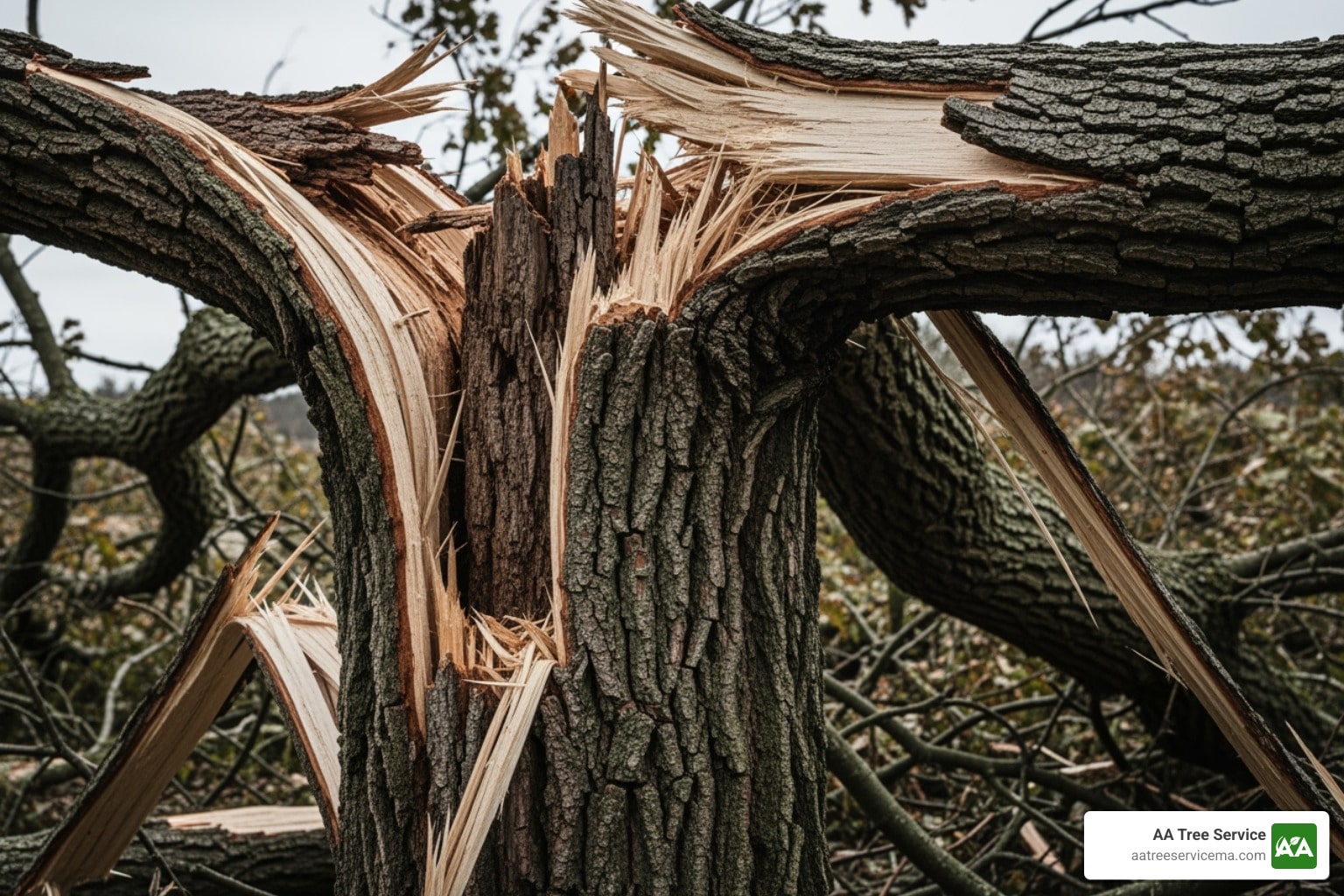
Why Storm Damage Cleanup Requires Immediate Attention
Safety First: Critical Precautions Before You Begin
When it comes to tree damage cleanup, your safety isn’t just important—it’s everything. Here’s a sobering fact that might surprise you: the Tree Care Industry Association reports that more people are injured during post-storm cleanup than during the actual storm. That’s why taking the right precautions before you even step outside can literally save your life.
Before you grab that chainsaw or start hauling branches, you need to become a detective. Your mission? Spotting the hidden dangers that could turn your cleanup effort into a trip to the emergency room.
Assessing the Area from a Safe Distance
Start by looking up—and we mean really looking up. Those partially broken branches hanging overhead aren’t just unsightly; tree professionals call them “widowmakers” for a very good reason. These silent threats can drop without warning, and even a small branch falling from 20 feet can cause serious injury.
Check every inch of your property for downed utility lines before you take another step. Here’s the rule that could save your life: assume every downed line is live and stay at least 10 feet away. It doesn’t matter if the power is out in your neighborhood or if the line looks harmless—electricity can still be flowing through it.
The ground itself can be your enemy after a storm. Saturated soil becomes unstable, wet leaves turn into nature’s slip-and-slide, and hidden debris can trip you up when you’re carrying heavy branches. Take a careful walk around your property first, noting any areas that feel soft underfoot or look particularly hazardous.
Don’t forget to plan your escape route. If you’re working near an unstable tree or large branch, always know which direction you’ll run if something goes wrong. It sounds dramatic, but having an escape plan is standard practice for professional arborists.
Essential Safety Gear
If you’re planning to tackle minor cleanup tasks yourself, proper personal protective equipment isn’t optional—it’s your armor against injury. A hard hat protects your head from falling debris, while safety glasses or goggles shield your eyes from flying wood chips and sawdust.
Heavy-duty work gloves give you better grip and protect your hands from cuts and splinters. Long sleeves and pants might feel hot, but they’re your best defense against scratches and cuts from rough bark and broken branches. Steel-toed boots protect your feet from heavy falling debris, and if you’re using power tools, hearing protection prevents long-term damage to your ears.
Think of this gear as your insurance policy. Yes, it might feel like overkill for “just cleaning up a few branches,” but professional tree workers wear this equipment for every job—and they know what they’re doing.
The Biggest Danger: Downed Power Lines
Let’s be crystal clear about this: never, ever touch a downed power line or anything that’s in contact with one. This includes trees, branches, fences, cars, or even puddles of water near the line. The electricity can travel through these objects and electrocute you instantly.
Call your utility company immediately to report any downed lines, and keep children and pets far away from the area. Don’t try to move branches away from power lines yourself—that’s a job for professionals with specialized equipment and training.
When you’re dealing with complex or hazardous situations involving power lines, tensioned branches, or unstable trees, it’s time to step back and call in the experts. At AA Tree Service, we provide emergency tree services throughout Massachusetts and New Hampshire, with 24/7 availability for exactly these kinds of dangerous situations.
There’s no shame in calling for help. Even experienced tree professionals work in teams and use specialized equipment for hazardous cleanup work. Your safety is worth more than the cost of professional services.
Assessing the Damage: Can Your Tree Be Saved?
After ensuring your property is safe, the next crucial step in tree damage cleanup is determining whether your storm-damaged trees can recover. This assessment can save you hundreds or even thousands of dollars – and possibly preserve a beloved tree that’s been part of your landscape for decades.
Here’s some encouraging news: trees are remarkably resilient. Many homeowners look at their storm-battered trees and immediately think “it’s a goner,” when in reality, the tree has an excellent chance of recovery with proper care.
The key is knowing what to look for and understanding that trees often look much worse than they actually are immediately after a storm. Don’t make any hasty decisions – take time to properly evaluate each damaged tree on your property.
The 50% Rule for Survival
The most reliable guideline for determining tree survivability is what arborists call the 50% rule. If at least half of your tree’s crown – that’s all the leaf-producing branches that form the tree’s canopy – remains intact, your tree will likely survive and thrive again.
This rule works because trees need their leaves for photosynthesis, the process that creates the food they need to live. A tree with less than 50% of its crown remaining simply can’t produce enough energy to sustain itself through another growing season.
Think of it like this: if your tree looks like it’s missing more than half of its “green parts,” it’s probably time to consider removal. But if it still has most of its major branches, even with some significant damage, there’s real hope for recovery. For more detailed information about damaged trees, check out our guide on broken trees.
Checklist: To Save or Remove?
When evaluating your storm-damaged trees, ask yourself these critical questions. Each answer helps paint a picture of whether your tree is worth saving:
Is the tree otherwise healthy and vigorous? A tree that was already struggling with disease or pest problems before the storm is less likely to recover from additional damage.
Are major limbs or the main leader branch broken? The main leader is the central trunk that grows upward – if it’s severely damaged, the tree’s structural integrity is compromised.
Is the trunk split or cracked? This is often a deal-breaker. A split trunk creates a weak point that will never fully heal and poses ongoing safety risks.
How large are the wounds on the trunk and branches? Small wounds heal relatively quickly, but massive gouges may never properly seal over. A 2- to 3-inch wound on a 12-inch diameter branch will typically heal within a couple of years.
Is the tree leaning, and are roots exposed or broken? A tree that’s been pushed over or has significant root damage has lost its anchor system and may never be stable again.
Is it a desirable species for its location? Sometimes storm damage is nature’s way of telling you that a particular tree wasn’t the right choice for that spot anyway.
For professional assessment and care of storm-damaged trees in Massachusetts and New Hampshire, our experienced team can provide the expertise needed to make these important decisions. You can find more information about our storm-damaged tree services to help guide your evaluation process.
When in doubt, it’s always wise to consult with a certified arborist who can provide a professional assessment of your tree’s condition and recovery prospects.
DIY vs. Professional: Knowing When to Make the Call
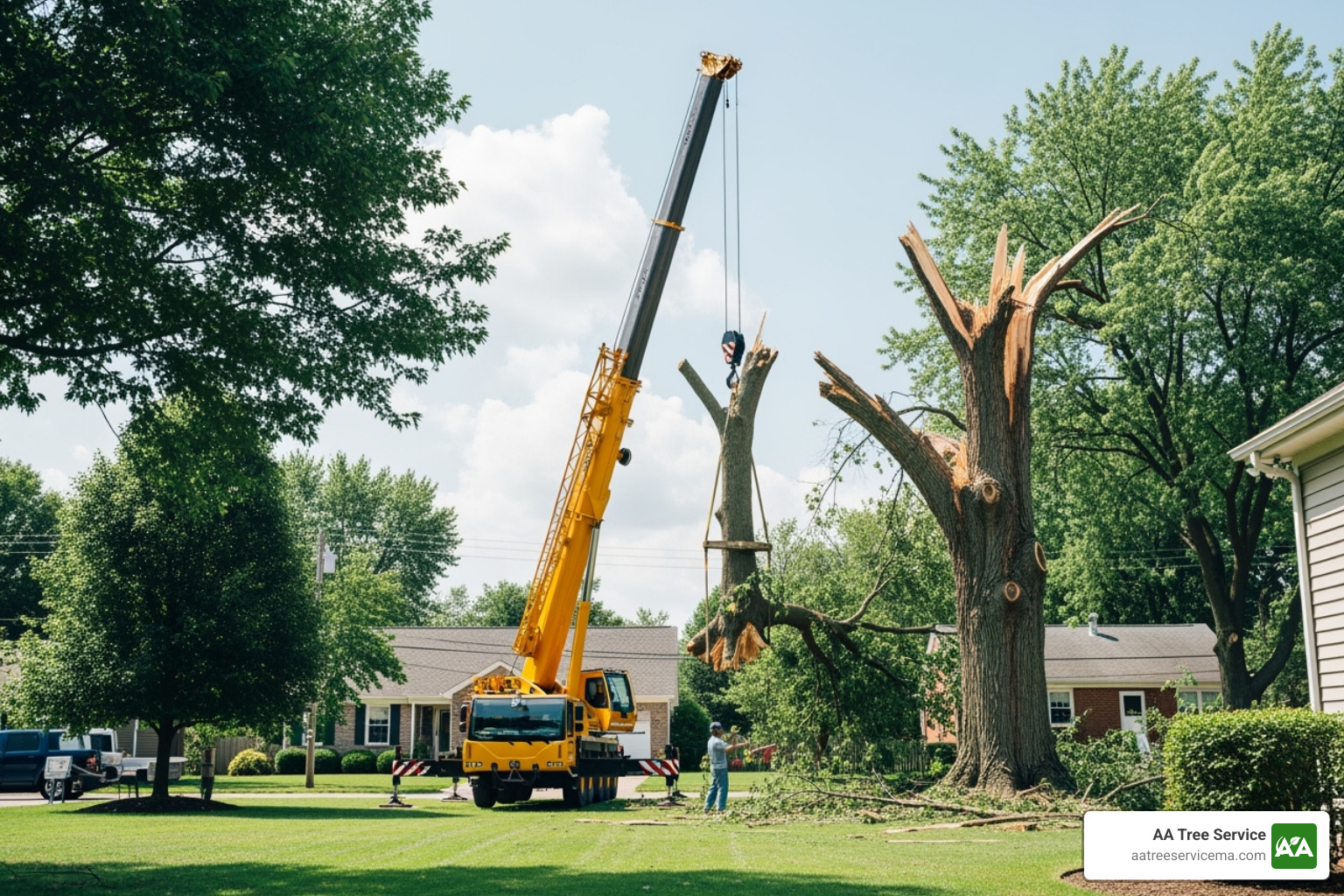
After a storm hits your Massachusetts or New Hampshire property, you’ll face a crucial decision: which tree damage cleanup tasks can you safely tackle yourself, and when should you call in the professionals? This choice isn’t just about saving money—it’s about protecting your life and property.
The reality is that most homeowners can handle basic cleanup tasks, but the line between “manageable” and “dangerous” can be surprisingly thin. Let’s help you steer this decision with confidence.
DIY Tree Damage Cleanup for Minor Issues
You can absolutely handle certain cleanup tasks on your own, and doing so can save you money while giving you a sense of accomplishment. Small branches scattered on the ground are perfect for DIY removal—just pick them up and stack them for disposal.
Minor pruning is another task you can manage yourself, but only if you can reach the damaged branches while keeping both feet firmly planted on the ground. This might include trimming small broken twigs or removing damaged branches that are easily accessible with hand pruners or a pole saw.
Debris stacking and organization is something every homeowner can do safely. Separating branches by size, bundling smaller twigs, and preparing debris for pickup or disposal is productive work that doesn’t put you at risk.
Here’s the golden rule that could save your life: never use a ladder for chainsaw work. This combination is extremely dangerous and has led to countless injuries. Professional tree services have specialized equipment and training to work safely at heights.
For homeowners in Massachusetts and New Hampshire who want to focus on the safe tasks while leaving the dangerous work to professionals, we offer comprehensive tree debris removal services to handle what you can’t safely manage yourself.
When You Absolutely Must Hire a Professional
Some situations require professional intervention—no exceptions, no shortcuts. Any work requiring you to leave the ground should be handled by certified arborists with proper safety equipment and training.
If your tree is near power lines or structures, don’t even think about DIY removal. Professional tree services have the specialized equipment and expertise to work safely around these hazards. The same goes for trees that are leaning precariously or have split trunks—these situations can turn deadly in an instant.
Large, heavy limbs that are broken but still attached pose a serious threat. These “widow makers” can fall without warning, and removing them requires professional rigging techniques and equipment. Similarly, if you’re not experienced with chainsaw operation, this isn’t the time to learn. Chainsaws are powerful tools that demand respect and proper training.
Completely uprooted trees present complex challenges that go far beyond simple cutting. Root balls can weigh thousands of pounds, and the tree’s weight distribution can shift unexpectedly during removal.
Professional tree services bring more than just equipment—they carry liability insurance to protect you from potential property damage or injury claims. They also have the experience to assess hidden dangers that might not be obvious to homeowners.
At AA Tree Service, we specialize in storm damaged tree removal throughout Massachusetts and New Hampshire. With over 20 years of experience, we’ve handled countless complex and dangerous situations, and we’re available 24/7 for emergency situations.
The bottom line? When in doubt, call a professional. It’s better to spend money on expert help than to risk your safety or create a more expensive problem down the road.
A Homeowner’s Guide to Cleanup and Recovery
Now that you’ve assessed the damage and determined what you can safely handle yourself, it’s time to roll up your sleeves and get to work. Proper tree damage cleanup is about much more than just hauling away debris – it’s your chance to help your trees heal and bounce back stronger than before.
Think of yourself as a tree doctor during this phase. Every cut you make and every care decision you implement will influence whether your trees thrive or struggle in the coming years. The good news? Trees are remarkably resilient when given the right support.
Proper Pruning Techniques for Damaged Limbs
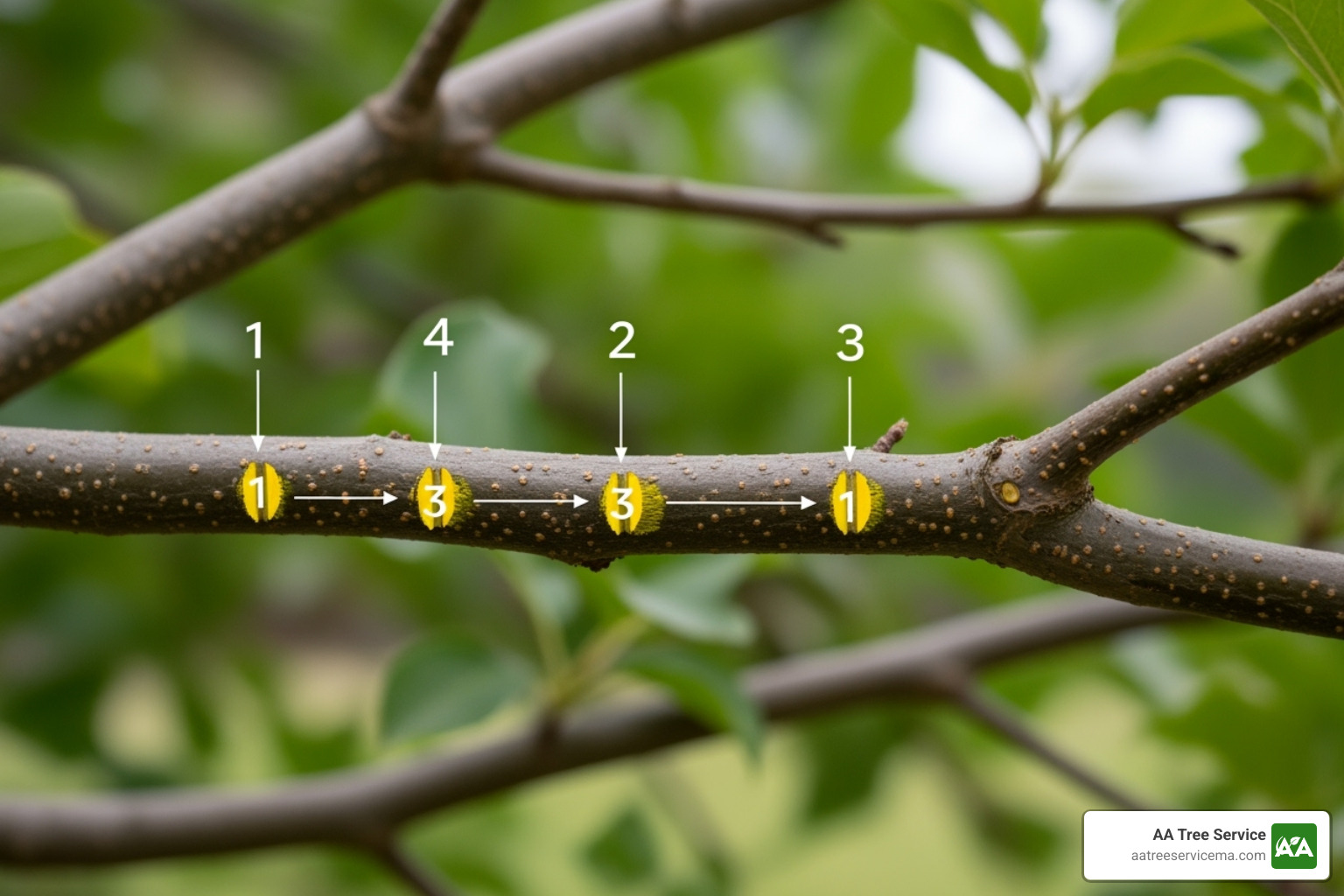
When it comes to pruning storm-damaged branches, technique matters more than speed. The three-cut method is your best friend for removing larger branches safely and properly. This tried-and-true approach prevents the bark from tearing down the trunk, which can create entry points for diseases and pests.
Here’s how to master the three-cut method: Start with an undercut about 12 inches from the trunk, cutting roughly one-third through the branch from below. Next, make your second cut from the top, positioned slightly further out than your first cut. This allows the branch to fall cleanly without tearing. Finally, remove the remaining stub with a third cut just outside the branch collar – that slightly swollen area where the branch meets the trunk.
The branch collar is nature’s healing zone, so never make flush cuts that damage this crucial area. Always aim for clean cuts that promote proper healing, and avoid leaving jagged stubs that become magnets for pests and diseases.
For situations requiring immediate attention, our emergency tree branch removal service provides rapid response throughout Massachusetts and New Hampshire when safety is a concern.
Nurturing Trees for Long-Term Health
Once you’ve completed the initial cleanup, your trees need some TLC to recover from their traumatic experience. Think of storm damage like a major surgery – your trees need time and proper care to heal.
Watering becomes especially important after storm damage. Provide deep, infrequent watering during dry periods, focusing on the root zone rather than the leaves. Stressed trees need consistent moisture to support their healing processes.
Mulching is like giving your trees a comfort blanket. Apply 2-3 inches of organic mulch around the base, but keep it away from the trunk itself. This helps retain moisture and regulate soil temperature while the tree recovers.
Here’s a counterintuitive tip: avoid fertilizing immediately after damage. Your trees need to focus their energy on healing rather than producing new growth. Wait at least a full growing season before introducing fertilizers.
Keep a close eye on your trees in the months following cleanup. Monitor for pests and diseases that often target stressed trees, and watch how the wounds are healing. Document the recovery process with photos – you’ll be amazed at how well trees can bounce back with proper care.
As recommended in The Morning After a Storm guidance, wait two years before doing any corrective pruning. This gives your trees adequate time to recover and redirect their energy where it’s needed most.
How to Dispose of Tree Debris
Now comes the less glamorous but equally important part – dealing with all that debris. In Massachusetts and New Hampshire, proper disposal isn’t just good citizenship; it’s often required by local regulations.
Many municipalities offer special pickup services after major storms, but they usually have specific requirements. Check with your local public works department about scheduling, size limits, and how branches need to be prepared. Some towns require limbs to be cut to specific lengths or bundled in particular ways.
Chipping for mulch is an environmentally friendly option that many communities support. Some towns offer free chipping programs where you can bring your debris, or they’ll chip it curbside during designated periods. The resulting mulch often goes back to residents for free.
If you have healthy hardwood branches, consider cutting them for firewood. Just make sure the wood isn’t diseased or infested with insects that could spread to healthy trees. Smaller organic material can often be composted right in your backyard.
Our tree debris removal service takes the hassle out of disposal, handling everything from pickup to proper disposal while ensuring compliance with local regulations.
Preventive Measures for Future Storms
The best tree damage cleanup strategy is the one you never have to use. Regular maintenance can dramatically reduce storm damage and save you from future headaches.
Routine pruning is your first line of defense. Remove dead, diseased, and weak branches before they become projectiles in the next storm. Pay special attention to branches that cross or rub against each other, as these create weak points that storms love to exploit.
Proactive deadwood removal eliminates the most obvious hazards. Dead branches are essentially just waiting for the right wind to send them crashing down. Address these during calm weather when you can work safely.
For trees with structural issues like weak limbs or co-dominant stems, consider professional cabling and bracing. These support systems can help valuable trees withstand storms that might otherwise destroy them.
Finally, think long-term when planting new trees. Choose species appropriate for your location and give them adequate space to grow. A tree planted in the right spot with proper care will be far more resilient when storms inevitably arrive.
The investment in preventive care pays dividends when the next storm hits, leaving you with minor cleanup instead of major damage.
Navigating Costs and Insurance for Tree Damage Cleanup
Understanding the financial side of tree damage cleanup can feel overwhelming when you’re already dealing with storm damage. The good news is that many homeowners have insurance coverage for tree-related damage, and knowing what to expect can help you make smart decisions during a stressful time.
Does Homeowner’s Insurance Cover Tree Removal?
Here’s the reality about insurance coverage – it’s not as straightforward as you might hope, but there are some general rules that apply to most policies.
Your homeowner’s insurance typically covers tree damage and removal when a tree falls on your home, garage, fence, or other insured structures due to natural causes like storms. Most policies also cover trees that fall anywhere on your property due to fire or lightning, which gives you broader protection than you might expect.
The tricky part comes with debris removal coverage limits. Many policies cap debris removal at a specific dollar amount, which might not cover the full cost of cleanup for large trees or extensive damage.
Insurance companies draw a clear line between covered “acts of God” and situations they consider preventable. If your tree falls due to poor maintenance, disease you should have addressed, or obvious structural problems you ignored, your claim might be denied under the negligence clause.
The key steps for insurance claims start with documenting everything. Take photos of all damage before any cleanup begins, contact your insurance agent immediately, and keep receipts for any emergency services. Get written estimates from licensed professionals rather than relying on verbal quotes.
For homeowners in Massachusetts and New Hampshire facing emergency situations, our fallen tree removal service works directly with insurance companies to streamline the claims process.
What to Expect for Tree Damage Cleanup Costs
Tree damage cleanup costs vary dramatically based on your specific situation, but understanding the factors helps you budget and avoid surprises.
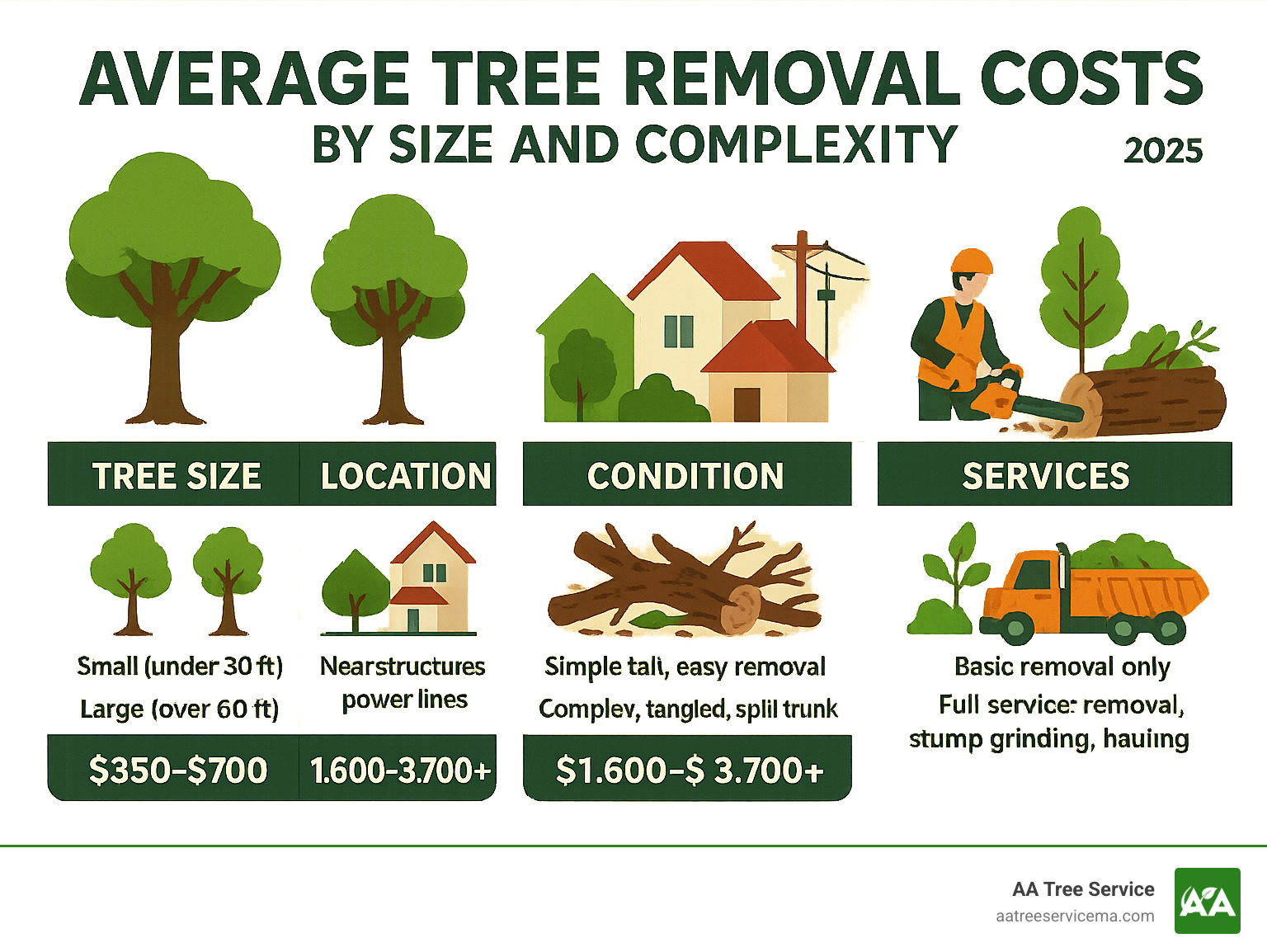
The size of your tree is the biggest cost driver. Small trees under 30 feet typically cost between $300 and $1,800 for removal, while large trees over 60 feet can range from $1,000 to $6,000 or more. These wide ranges are average figures gathered from multiple internet sources – they are not AA Tree Service prices.
Location makes a huge difference in pricing. A tree that falls in an open yard with easy access costs significantly less than one tangled in power lines or leaning against your house. Complex removals near structures or utilities require specialized equipment and extra safety precautions.
The condition of your damaged tree also affects costs. A cleanly fallen tree that can be cut up and removed straightforwardly costs less than a tree with a split trunk, multiple break points, or branches caught in other trees.
| Factor | Low Cost | High Cost |
|---|---|---|
| Tree Size | Small (under 30 ft): $300–$1,800 | Large (over 60 ft): $1,000–$6,000+ |
| Location | Open yard, easy access | Near structures, power lines |
| Condition | Simple fall, easy removal | Complex, tangled, split trunk |
| Services | Basic removal only | Full service: removal, stump grinding, hauling |
Emergency services typically cost 25–50% more than routine work, but sometimes you don’t have a choice when safety is involved. Crane work adds significant expense for large or difficult trees, and stump grinding usually starts around $250 as an additional service.
Smart money-saving approaches include getting multiple quotes from licensed, insured professionals and being wary of unusually low bids that often indicate corners being cut. Timing matters – non-emergency work costs less, and bundling services sometimes offers discounts.
At AA Tree Service, we provide free same-day quotes to help Massachusetts and New Hampshire homeowners understand their options without pressure. We believe in transparent pricing and work with your insurance company to make the process as smooth as possible during an already stressful time.
Conclusion
Tree damage cleanup doesn’t have to be a nightmare if you approach it with the right knowledge and mindset. Yes, it’s overwhelming when you first step outside after a storm and see branches scattered across your yard like nature’s version of pickup sticks. But take a deep breath – you’ve got this.
The most important thing to remember? Safety always comes first. It might be tempting to rush out and start clearing debris, but those few extra minutes you spend assessing the situation could literally save your life. Look up for those sneaky “widowmaker” branches, stay far away from anything that looks like a power line, and don’t be a hero with a chainsaw if you’re not trained to use one.
When it comes to deciding whether your damaged trees can bounce back, that 50% crown rule is your best friend. Trees are surprisingly resilient – they’ve been surviving storms a lot longer than we’ve been around to worry about them. Give them a chance to recover if they’ve got at least half their branches intact.
Here’s the thing about knowing your limits – it’s not about being weak or admitting defeat. It’s about being smart. If the work involves leaving the ground, dealing with power lines, or handling a chainsaw near a ladder, that’s professional territory. Period. The few hundred dollars you might save by doing it yourself isn’t worth a trip to the emergency room.
For those jobs you can handle safely, proper pruning techniques make all the difference. That three-cut method isn’t just fancy arborist showmanship – it’s how you help your trees heal properly and stay healthy for years to come. And don’t forget about the ongoing care your trees need after trauma. A little extra water, some mulch, and patience go a long way.
For homeowners throughout Massachusetts and New Hampshire dealing with storm aftermath, you’re not alone in this process. The experienced team at AA Tree Service provides 24 hour emergency tree removal services to safely and efficiently restore your property. With over 20 years of experience handling everything from single fallen branches to complex emergency situations, we understand that every storm cleanup situation is unique.
Whether you’re dealing with a small branch that came down in your driveway or facing extensive property damage, proper tree damage cleanup protects both your family’s safety and your investment in your landscape. When you’re standing in your yard feeling overwhelmed by the scope of the cleanup, it’s okay to ask for help.
The bottom line? Don’t let storm damage turn into a bigger problem because you waited too long or tried to handle something beyond your skill level. For immediate assistance with storm damage cleanup, contact AA Tree Service for your free same-day quote and let our experienced team help restore your property to its pre-storm condition. We’re here to help you steer this challenging time and get your outdoor space back to being a place you love.