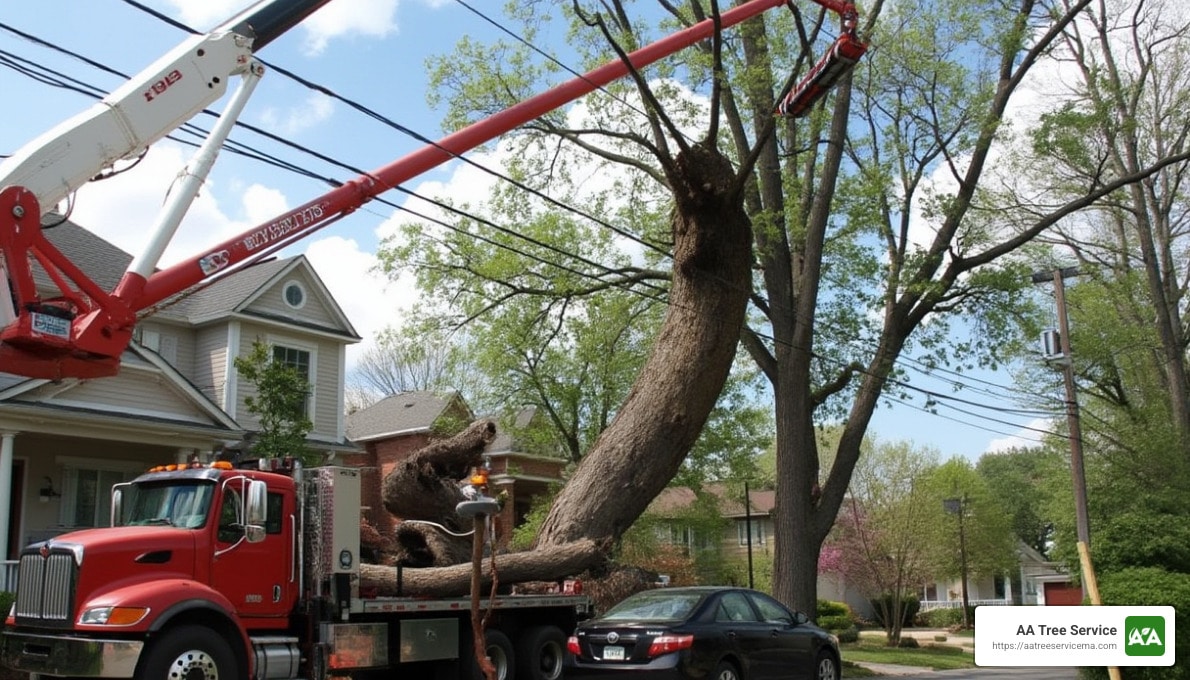
Tree crane usage is revolutionizing tree removal services, offering unparalleled safety and efficiency. For homeowners in Massachusetts and New Hampshire seeking quick and reliable solutions for tree care, understanding how a tree crane functions is key. Here’s how a tree crane benefits you:
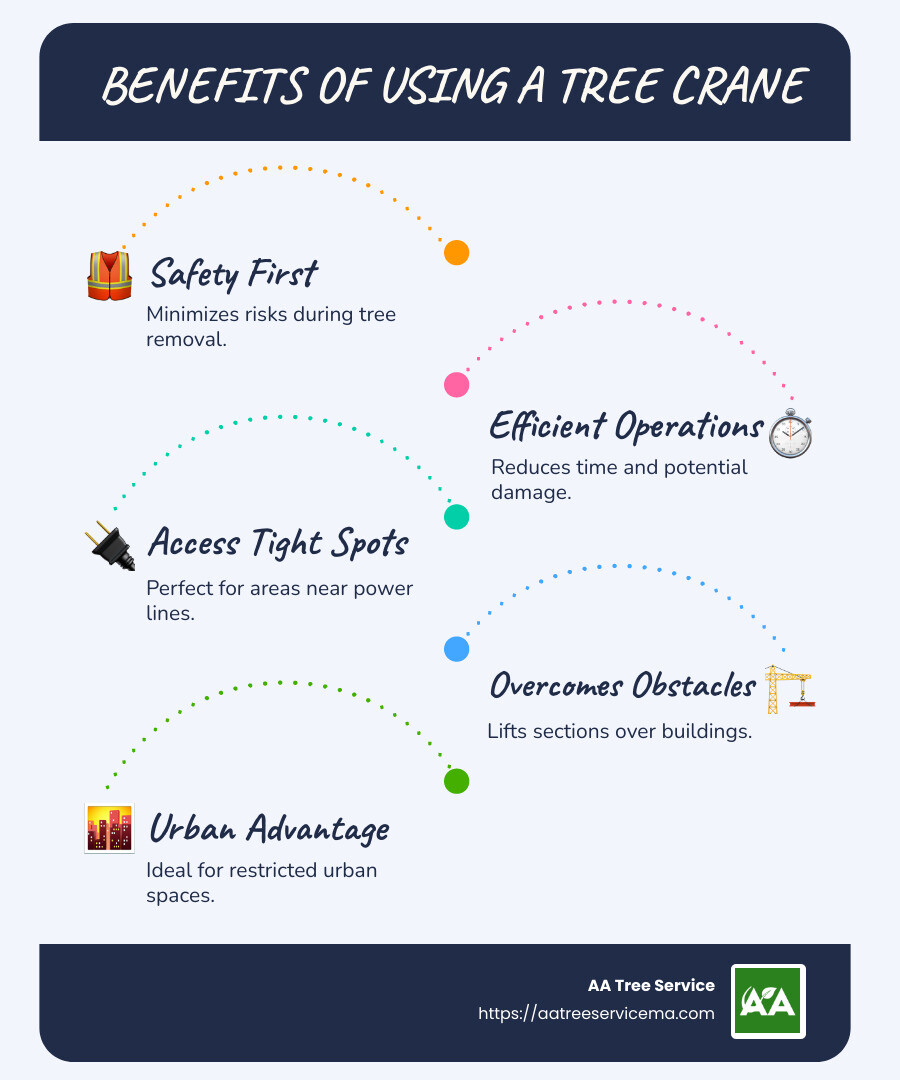
- Safety First: Minimizes risks associated with dangerous tree removal.
- Efficient Operations: Reduces time and potential damage during removal.
- Access to Tight Spots: Perfect for hard-to-reach areas like near power lines.
Imagine your trees being removed without the worry of falling debris or extended downtime on your property. Tree cranes offer cutting-edge solutions for tackling even the trickiest tree removal tasks.
By using cranes, services can access and safely remove trees from challenging locations, often lifting sections over buildings and obstacles. This technology is a game-changer in urban and suburban landscapes, where space is often restricted.
Learn more about tree crane:
– crane tree removal service
– tree cutting truck
Understanding Tree Cranes
Tree cranes are specialized pieces of equipment designed to lift the art of arboriculture. These machines offer remarkable maneuverability and reach, making them indispensable in modern tree care.
Specialized Equipment
Tree cranes are not your average construction cranes. They are custom for tree work, equipped with features like knuckle boom arms and grapples. These adaptations allow for precise handling of tree sections, ensuring safety and efficiency during removal. The HIAB knuckle boom crane is a popular choice due to its ability to reduce labor on-site while maintaining a high level of safety.
Arboriculture Meets Technology
In arboriculture, tree cranes have become a symbol of innovation. They allow arborists to tackle complex tree removals with minimal disruption to the surrounding environment. Whether it’s lifting a large oak from a confined backyard or removing storm-damaged limbs without causing further harm, tree cranes provide a technological edge.
Maneuverability and Reach
One of the standout features of a tree crane is its maneuverability. These cranes can reach up to a 200-ft radius, making them ideal for accessing trees in tight or awkward spots, such as between buildings or near power lines. This capability is crucial in urban areas where traditional tree removal methods might not be feasible.
A Game-Changer for Tree Removal
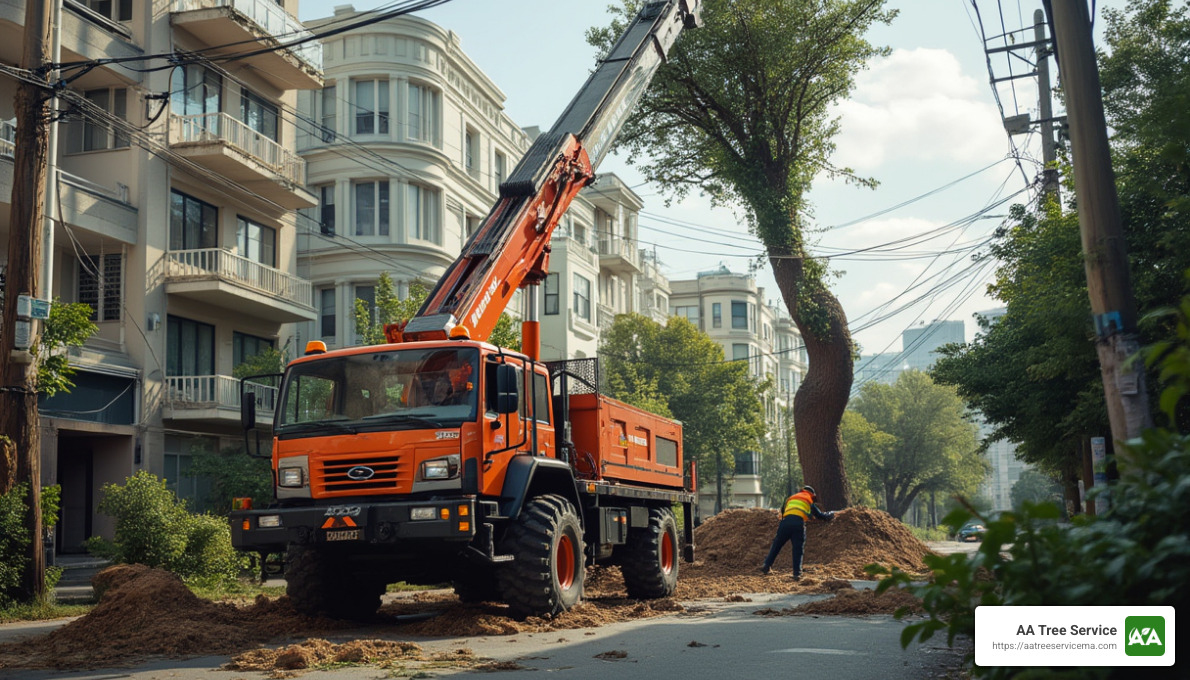
By leveraging the advanced capabilities of tree cranes, arborists can perform their work more safely and efficiently. The ability to lift tree sections over obstacles not only speeds up the process but also protects the property from potential damage. This is especially beneficial in Massachusetts and New Hampshire, where residential areas often have limited space for traditional removal methods.
Tree cranes are changing the tree care industry, offering solutions that were once thought impossible. With their specialized equipment, impressive reach, and best maneuverability, they are setting new standards for safety and efficiency in tree removal.
In the next section, we’ll explore how tree cranes improve the overall tree removal process, focusing on safety, speed, and minimal disruption.
How Tree Cranes Improve Tree Removal
Tree cranes are revolutionizing the tree removal process, bringing significant improvements in safety, speed, and minimal disruption, especially in hard-to-reach areas.
Safety First
Safety is a top priority when it comes to tree removal, and tree cranes excel in this area. These cranes allow arborists to remove trees without the need for risky climbing or manual cutting in precarious positions. By lifting tree sections vertically, the risk of falling debris is minimized, protecting both the workers and the surrounding property. According to industry experts, using a tree crane is far safer than traditional methods, particularly for hazardous trees that are structurally unsound due to storm damage or disease.
Speed and Efficiency
Tree cranes considerably speed up the tree removal process. By lifting entire sections of a tree in one go, they eliminate the need for time-consuming manual labor. This efficiency is invaluable in both residential and commercial settings, where quick removal is often required. In Massachusetts and New Hampshire, where weather conditions can change rapidly, the ability to swiftly remove trees can prevent further damage and reduce downtime for property owners.
Minimal Disruption
One of the standout benefits of using a tree crane is the minimal disruption it causes to the surrounding environment. Traditional tree removal methods can be invasive, often resulting in damage to nearby plants, structures, or landscaping. Tree cranes, however, operate with precision. They can lift tree sections over obstacles like buildings and power lines, ensuring that the surrounding area remains untouched. This is particularly advantageous in densely populated areas where space is limited.
Access to Hard-to-Reach Areas
Tree cranes provide unparalleled access to hard-to-reach areas. Whether it’s a towering tree in a cramped urban backyard or a tree located near sensitive infrastructure, cranes can steer these challenges with ease. Their ability to reach a 200-ft radius means that even the most awkwardly positioned trees can be removed safely and efficiently. This capability is crucial in urban environments and areas with difficult terrain, where other removal methods might not be feasible.
In summary, tree cranes are an essential tool in modern arboriculture, offering a safer, faster, and less disruptive solution for tree removal in challenging locations. In the following section, we will discuss when it is most appropriate to use a tree crane, focusing on specific scenarios such as tall trees, confined spaces, and storm damage.
When to Use a Tree Crane
Tree cranes are not just a luxury; they are a necessity for certain tree removal situations. Let’s explore when using a tree crane is the best choice.
Tall Trees
Tall trees present unique challenges. Their height makes them difficult to manage with traditional removal methods. A tree crane is perfect for these giants, allowing arborists to safely and efficiently dismantle and remove large sections from the top down. This method minimizes risk and ensures that the surrounding area remains undisturbed.
Confined Spaces
In urban settings, space is often limited. Whether it’s a narrow backyard or a tree growing close to a building, confined spaces make tree removal tricky. A tree crane can precisely maneuver around obstacles, lifting tree segments over structures without causing damage. This makes cranes invaluable in cities like Boston, Massachusetts, where buildings and trees often coexist in tight quarters.
Storm Damage
Storms can wreak havoc on trees, leaving them damaged or dangerously unstable. When high winds or heavy snow hit New Hampshire and Massachusetts, trees can become hazardous, posing a threat to nearby structures and power lines. A tree crane is ideal for safely removing storm-damaged trees. It allows arborists to work from a safe distance, reducing the risk of injury and preventing further property damage.
Dying Trees
Dying trees are unpredictable. They can fall or drop branches without warning, especially if they are infested with pests or diseases. Using a tree crane to remove these trees ensures that the process is controlled and safe. By lifting sections away from the ground, cranes prevent the potential spread of disease to healthy trees nearby, maintaining the overall health of the landscape.
In these scenarios, a tree crane is not only the safest option but often the most efficient and least disruptive. Next, we’ll explore the importance of operating a tree crane safely, focusing on key aspects like training, setup, and teamwork.
Operating a Tree Crane Safely
Operating a tree crane safely is crucial to ensuring successful tree removal. Let’s explore the key elements that make crane operations safe and efficient: training, setup, communication, and teamwork.
Training
First and foremost, operating a tree crane requires specialized training. Crane operators and arborists must be well-versed in handling the equipment to prevent accidents. Training includes understanding load limits, maneuvering techniques, and emergency procedures. Proper training helps operators make informed decisions, keeping the crew and property safe.
Setup
Setup is a critical step before any crane operation. The ground must be assessed for stability, and crane stabilizers, known as outriggers, are deployed to distribute the crane’s weight evenly. In some cases, hydraulic legs lift the crane truck off the ground entirely, transferring weight to the outriggers for maximum stability.
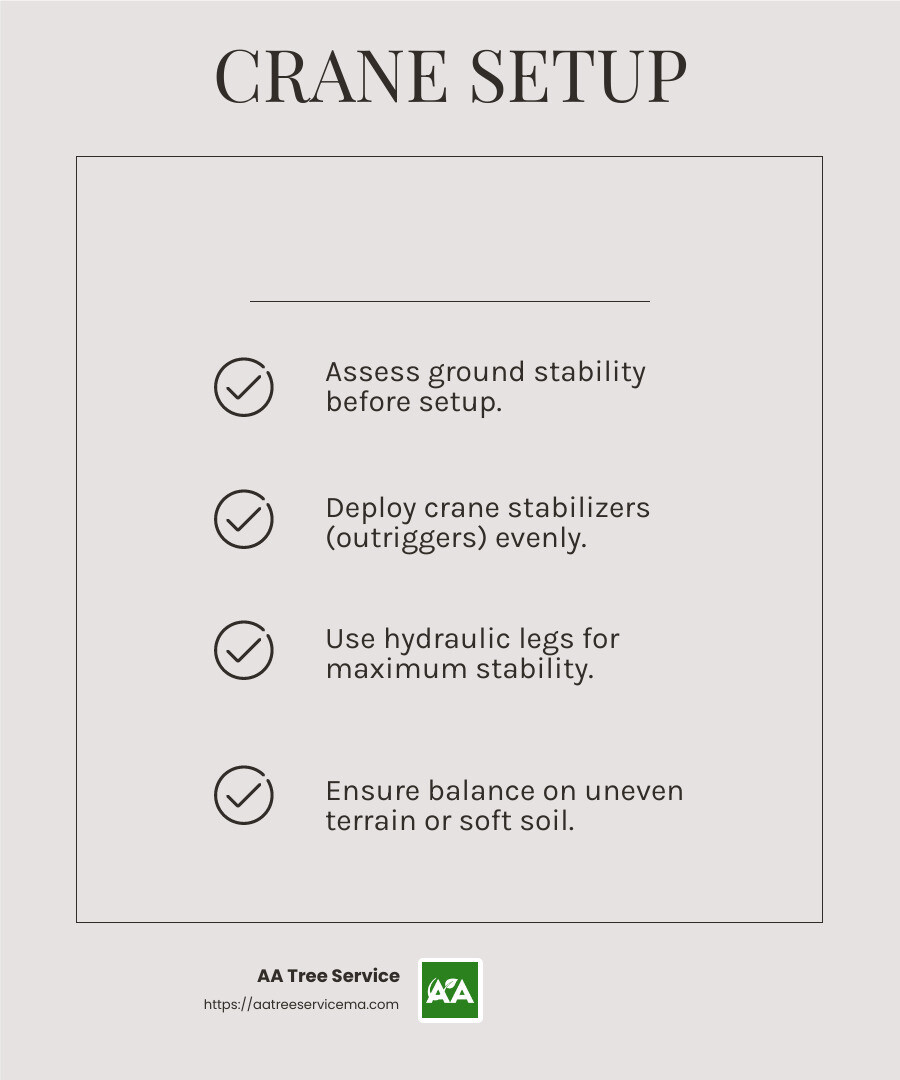
Setting up correctly ensures that the crane remains balanced and prevents tipping, especially in areas with uneven terrain or soft soil. A well-prepared setup is the foundation for a safe and smooth operation.
Communication
Clear communication between the crane operator and the ground crew is vital. During tree removal, operators and arborists use hand signals and headsets to coordinate every move. This constant communication allows for precise cuts and lifts, minimizing the risk of accidents.
For instance, when a climber secures a section of the tree, they communicate with the operator to ensure the crane is positioned correctly before any cuts are made. This teamwork ensures that each piece is lowered safely to the ground.
Teamwork
Teamwork is the backbone of successful tree crane operations. The crew must work in harmony, each member understanding their role and responsibilities. From the operator to the ground crew, everyone must be synchronized to ensure safety and efficiency.
During a crane removal, the arborist in the tree works closely with the crew on the ground. They use rigging and pulleys to control large sections of the tree, guiding them safely to the ground. This collaborative effort not only protects the crew but also prevents damage to surrounding structures and vegetation.
By focusing on training, setup, communication, and teamwork, AA Tree Service ensures that each tree crane operation is conducted safely and efficiently. Now, let’s address some common questions about tree cranes and their capabilities.
Frequently Asked Questions about Tree Cranes
What is a tree crane?
A tree crane is a specialized piece of equipment used in arboriculture to aid in tree removal and maintenance. Unlike standard construction cranes, tree cranes are designed to steer challenging environments where trees are located. They are mounted on vehicles, allowing them to be driven directly to the job site. The crane’s boom can extend and maneuver into tight spaces, making it ideal for safely removing large or awkwardly positioned trees without causing damage to nearby structures.
How far can a tree crane reach?
The reach of a tree crane can vary depending on its design and size. A typical tree crane can extend its boom to reach up to a 200-foot radius. This extensive reach allows the crane to access tall trees and those located in hard-to-reach areas, such as backyards or spaces surrounded by other buildings. The maneuverability of the crane’s boom is crucial, as it can steer around obstacles and ensure precise removal of tree sections.
How much does it cost to cut down a 20 ft tree?
The cost of cutting down a 20-foot tree can vary widely based on several factors, including the tree’s location, condition, and the complexity of the job. Using data from various online sources, the average price range can be anywhere from $150 to $500, with costs potentially reaching up to $1,500 for more challenging removals. These estimates reflect general market data and not specific pricing from AA Tree Service. It’s important to get a personalized quote, as each tree removal job is unique and can vary significantly in terms of equipment and labor required.
Conclusion
At AA Tree Service, we pride ourselves on delivering top-notch tree care services in Massachusetts and New Hampshire. Our commitment to customer satisfaction is unwavering, and we strive to ensure that every client experiences a seamless and stress-free service. Whether you’re dealing with a towering tree in a tight space or need assistance after a storm, our team is equipped with the expertise and advanced equipment to tackle any challenge.
Our use of tree cranes is a testament to our dedication to safety and efficiency. These specialized machines allow us to perform complex tree removals with precision, minimizing disruption to your property. By choosing AA Tree Service, you’re opting for a company that places a high value on both safety and customer service.
With over 20 years of experience, we understand the unique needs of our local communities. Our services are custom to the specific landscapes of Massachusetts and New Hampshire, ensuring that we provide solutions that are both effective and environmentally responsible.
For those looking for reliable and professional tree care, contact us today to learn more about our comprehensive services and to schedule your tree removal. With AA Tree Service, you’re in capable hands.