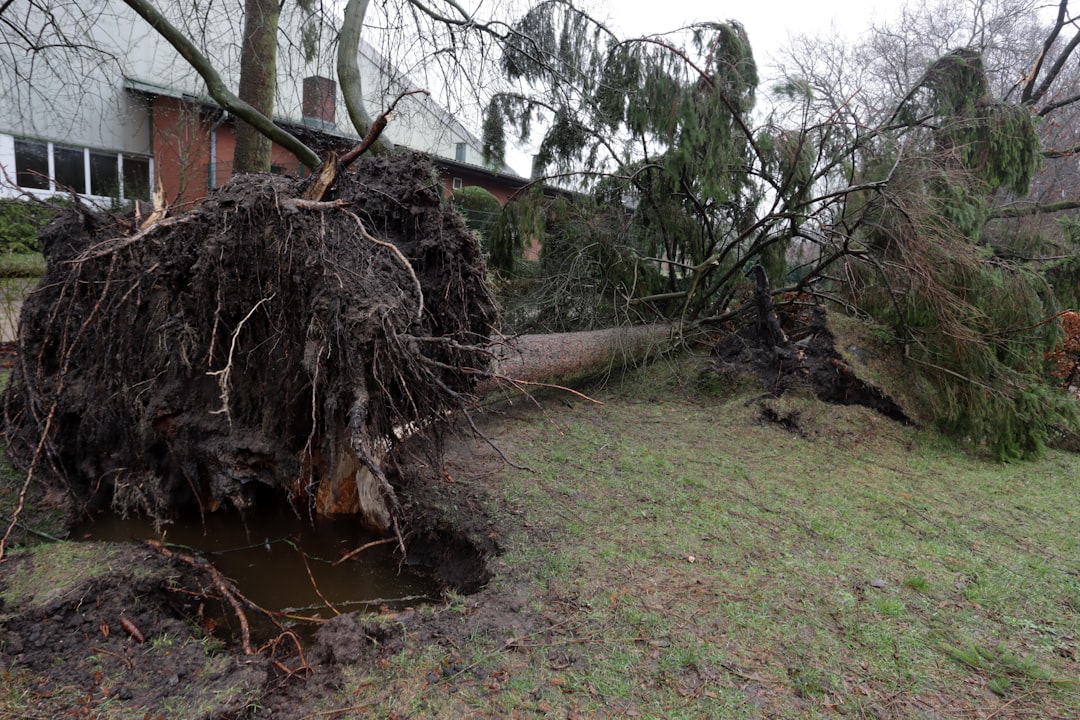
Why Immediate Storm Damage Tree Care Matters for Massachusetts and New Hampshire Homeowners
Storm damage tree care is the process of safely assessing and managing trees after severe weather. For homeowners in Massachusetts and New Hampshire, quick action following a nor’easter, ice storm, or thunderstorm can mean the difference between saving a valuable tree and facing costly removal or property damage.
The key is to avoid hasty decisions. Effective storm recovery involves prioritizing safety by avoiding downed power lines, assessing whether a tree can be saved (often possible if 50% of its crown is intact), and calling certified arborists for any significant work. Promptly documenting damage for insurance and providing proper recovery care like pruning and watering are also crucial steps.
As one storm recovery expert notes: “After a significant storm, the initial impulse of property owners is generally along the lines of ‘let’s get this mess cleaned up.’ However, hasty decisions can often result in removing trees that could have been saved.”
Trees have an amazing ability to recover from storm damage when given proper care. With the right approach, many damaged trees can be saved, protecting both your property value and the environment.
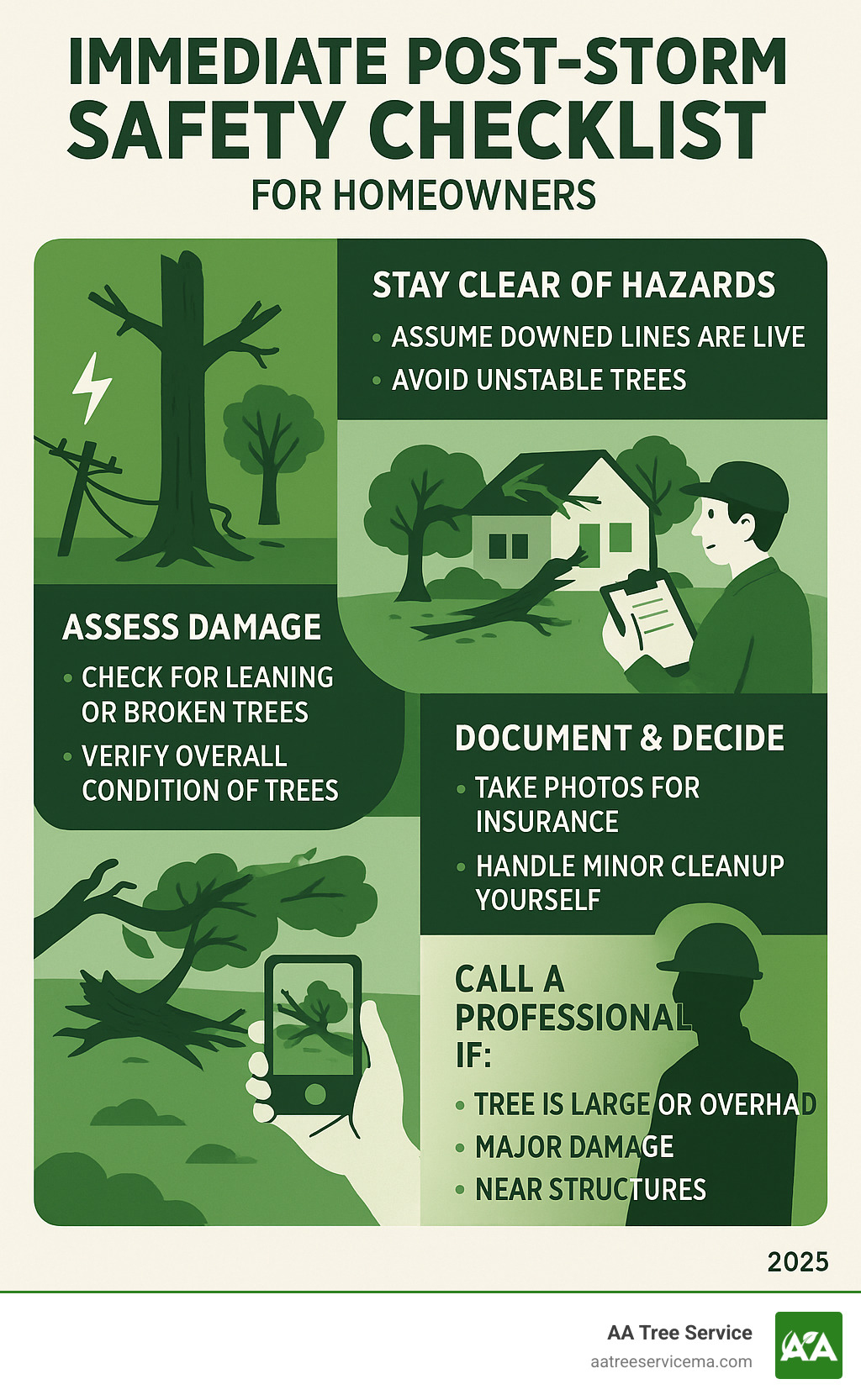
Storm damage tree care terms simplified:
Step 1: Prioritize Safety and Take Immediate Action
After a storm in Massachusetts or New Hampshire, your first priority must be safety. Damaged trees are unpredictable, and rushing into cleanup can be dangerous.
Downed power lines are your biggest threat. Never approach them or any trees touching them. Assume all lines are live and keep people and pets far away. Look up for “widowmakers”—broken branches hanging overhead that could fall at any moment. Also, spot any trees that are leaning or look unstable.
If you see immediate hazards like trees on houses, hanging branches over walkways, or anything involving power lines, call 911. For other urgent tree emergencies, our Emergency Tree Cutting Services are available 24/7. We know storms don’t wait, and neither do we with our 24/7 Tree Care response.
A note on chainsaws: Leave storm-damaged tree work to professionals. Cutting bent or twisted limbs requires special training and equipment to do safely.
Assess the Area from a Safe Distance
Walk your property slowly, staying clear of all potential hazards. This is reconnaissance, not cleanup. Look up frequently for cracked branches or shifted crowns. Check for any utility line involvement before doing anything else. If a large tree has fallen on or is leaning toward your home, evacuate if necessary. Keep family and pets away from all damaged areas until they have been professionally assessed.
Document the Damage
Once the area is safe, use your phone or camera to document everything. Take photos from multiple angles, getting wide shots of the scene and close-ups of specific damage to trees and property like cars, roofs, or fences. Note the time and date for your records.
This documentation is crucial for insurance claims. Most homeowner’s policies cover storm damage, even from a neighbor’s tree, as it’s typically considered an “act of God.” Thorough photos will smooth the claim process. When you’re ready for cleanup, our Fallen Tree Removal service can restore your property safely. Good documentation now saves major headaches later.
Step 2: How to Assess the Damage to Your Trees
After ensuring the area is safe, it’s time to assess your trees. Resist the urge to start cutting immediately; storm damage tree care requires patience, as trees often look worse than they are. A healthy tree has a much better chance of recovery than one that was already struggling. Factors like species, location, and proximity to structures all play a role in our Tree Hazard Assessment.
Is the Tree Salvageable? Key Questions to Ask
Deciding if a tree can be saved isn’t guesswork. Here are the key questions to guide the assessment:
- Is at least 50% of the crown intact? This is the most important rule. A tree with less than half of its branches and leaves will struggle to produce enough food to survive.
- Are major limbs broken? While small broken twigs are minor, the loss of major limbs reduces the tree’s food-producing capacity and creates large wounds that are slow to heal.
- Is the leader branch lost? The main upward-growing trunk is vital for the structure of many species. Its loss can lead to a misshapen and weak tree.
- How large are the wounds? If more than one-third of the bark around the trunk is damaged or there’s a severe split, the tree’s outlook is poor.
The good news is that trees are adaptable. Remaining branches often grow more vigorously to compensate for losses. We look for signs that the surviving branches can eventually restore the tree’s shape. For more guidance, consult this resource on First Aid for Storm-Damaged Trees.
Evaluating Leaning, Uprooted, and Split Trees
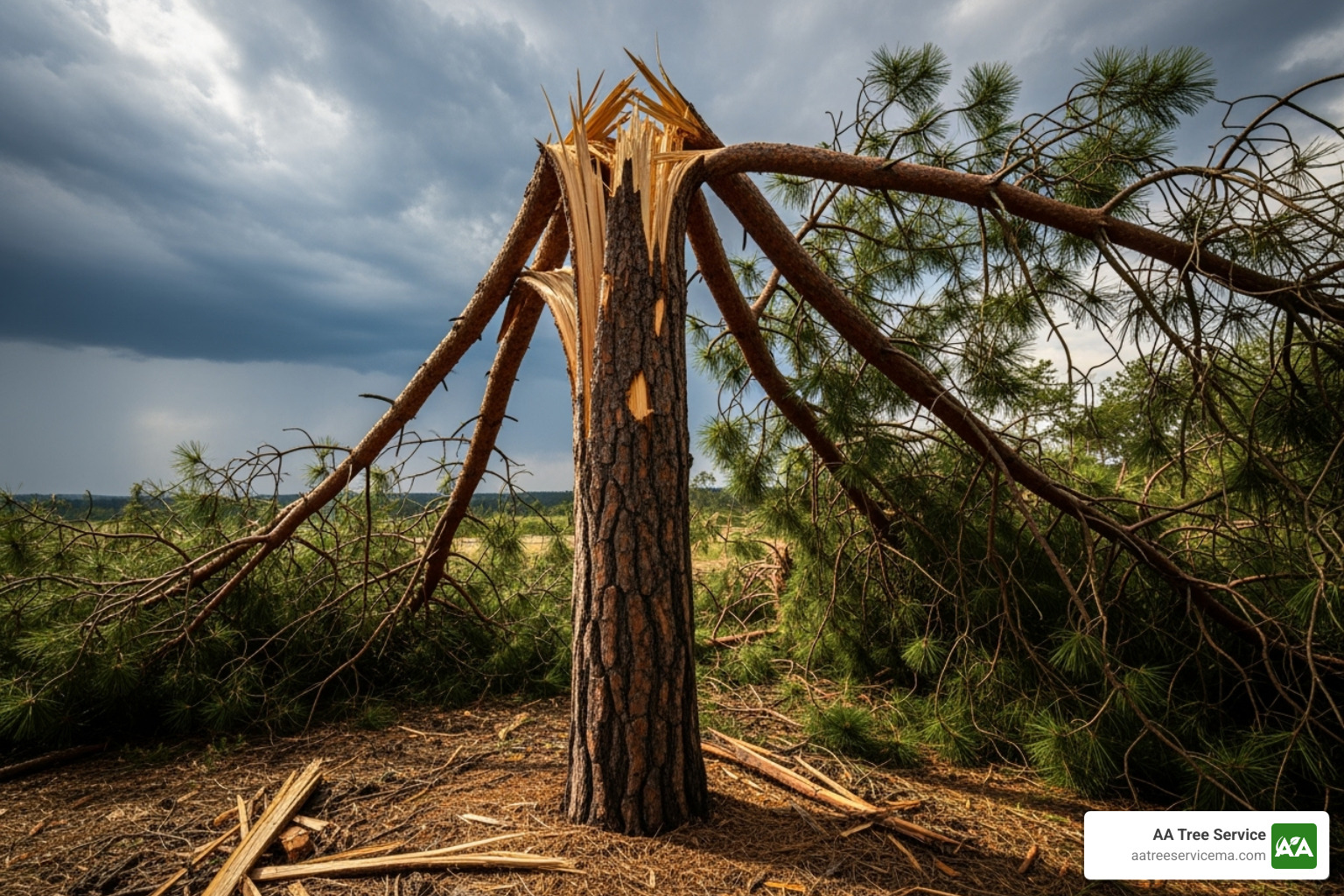
Leaning, uprooted, or split trees require careful evaluation.
- Leaning Trees: For mature trees, a significant lean usually indicates severe root system failure, making them a safety hazard that often requires removal. The stored energy in a leaning tree makes it unpredictable. Any tree or branch over 6 inches in diameter that’s bent or leaning should only be handled by professionals. Young trees (under 10 feet) may be salvageable if they can be staked upright.
- Uprooted Trees: A completely uprooted tree is almost always beyond saving, as its ability to absorb water and nutrients is gone.
- Split Trunks: A split in the main trunk is like a broken backbone. It compromises the tree’s structural integrity, making it extremely dangerous and unlikely to survive.
If you’re facing these serious situations in Massachusetts or New Hampshire, do not attempt to handle them yourself. Our Downed Tree Removal Near Me service can safely assess and address these complex scenarios.
Step 3: DIY First Aid vs. Calling a Professional for Storm Damage Tree Care
After a storm in Massachusetts or New Hampshire, it’s tempting to start cleaning up. While you can perform some minor “first aid” on your trees, knowing your limits is essential for your safety and the tree’s health. Attempting complex work can lead to injury or further damage.
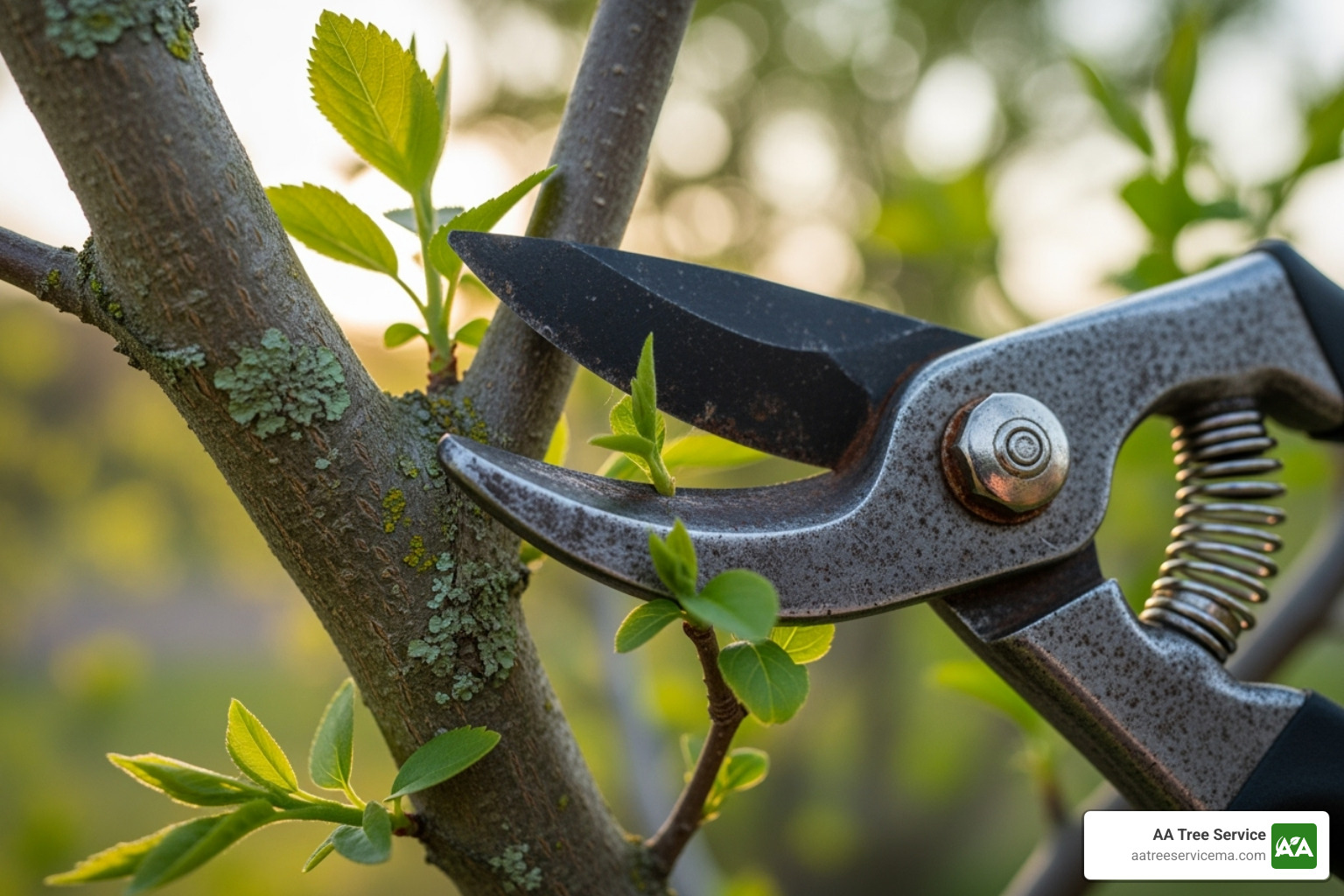
Minor Repairs You Can Handle: A Guide to Storm Damage Tree Care
For minor storm damage tree care, you can be your tree’s first responder. This includes cleaning up small debris and pruning small, easily accessible broken branches (less than 4 inches in diameter) that you can reach from the ground.
- Remove small broken branches using sharp hand pruners or a hand saw. Make clean cuts just outside the branch collar (the swollen area where the branch meets the trunk) to help the tree seal the wound naturally.
- Repair torn bark by carefully smoothing the ragged edges with a sharp knife. This helps the tree heal and prevents insect infestations.
Here’s what to avoid:
- Don’t use wound paint or dressing. These products can trap moisture and promote decay.
- Don’t over-prune. Removing too much healthy foliage stresses an already struggling tree.
- Never “top” your trees. This practice creates large wounds and encourages weak growth that is more susceptible to future storm damage.
For more details, see these Basic Pruning Guidelines. If you’re unsure or the branch is larger than your forearm, it’s time to call our Tree Branch Removal Service.
When to Call a Certified Arborist for Storm Damage Tree Care
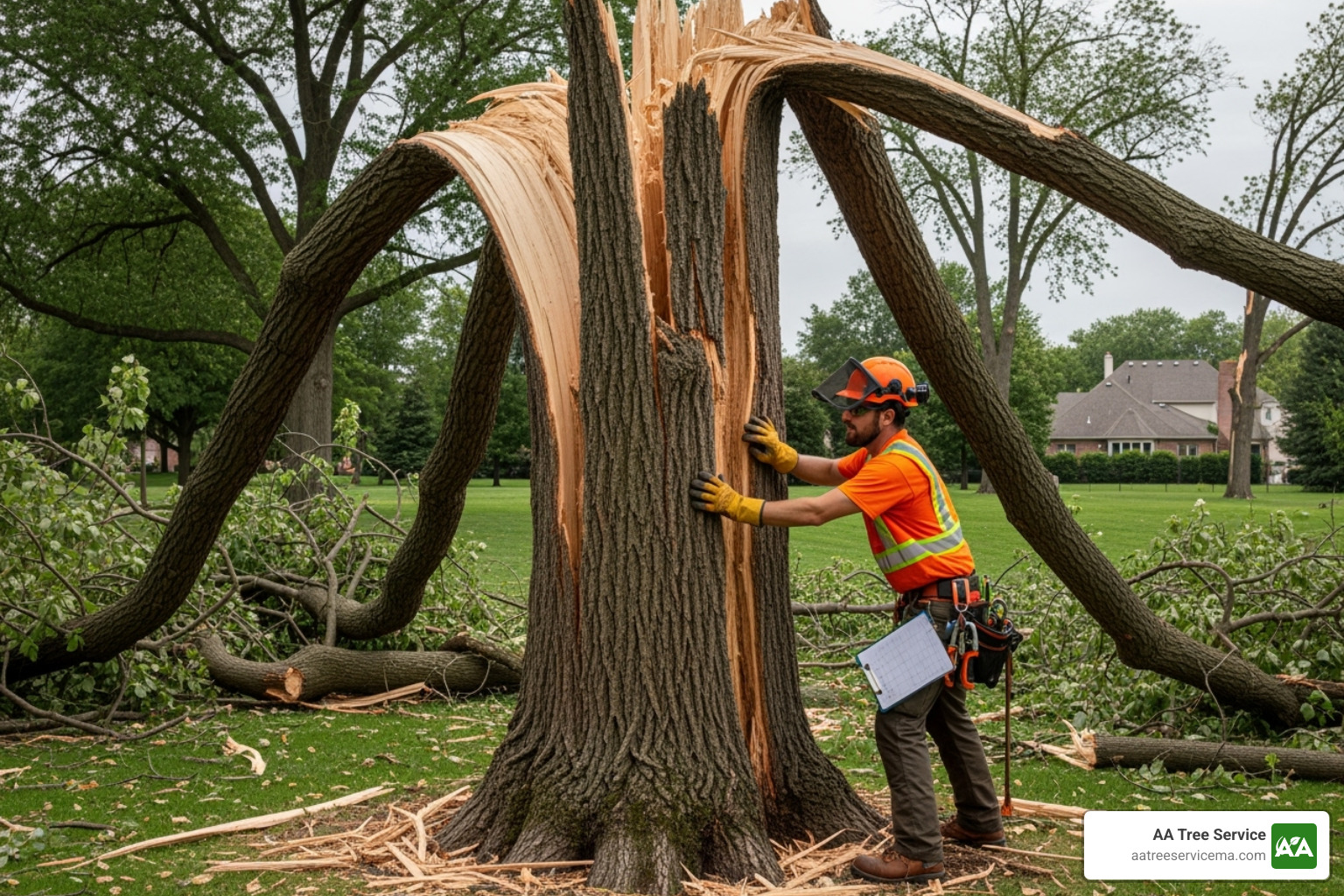
Knowing when to call a professional is a smart decision. Some situations require specialized training and equipment that homeowners don’t have. Call an expert for:
- Large broken limbs (over 4-6 inches in diameter) or branches under tension.
- Any work requiring height, such as climbing a ladder with tools or working in the tree canopy.
- Trees near power lines. This is non-negotiable. Call your utility company first, then a professional arborist.
- Leaning or uprooted trees, which pose extreme hazards and require professional assessment.
- Significant chainsaw work, especially on unstable trees or overhead.
When choosing an arborist, look for ISA Certification, proof of liability insurance and workers’ compensation, and a solid local reputation in your Massachusetts or New Hampshire community. At AA Tree Service, our team has over 20 years of experience with New England storms. We are available 24/7 for Emergency Tree Removal or Storm Tree Removal, prioritizing safety and expertise.
Step 4: Long-Term Recovery and Preventing Future Damage
Storm damage tree care continues long after the broken branches are gone. Your tree is in “survival mode,” and the healing process can take several years. Proper care during this time is critical for a full recovery.
Helping Your Tree Heal
Trees are resilient, and you can help them bounce back. Here’s how:
- Water consistently. A stressed tree needs about one inch of water per week, including rainfall. Water slowly and deeply to encourage strong root growth, especially during dry periods in New Hampshire and Massachusetts.
- Apply mulch. A 2 to 4-inch layer of organic mulch (like wood chips) around the base helps retain moisture and suppress weeds. Keep it a few inches from the trunk in a “donut” shape, not a “volcano.”
- Avoid fertilizing. Fertilizer can stress a damaged tree by forcing new growth when it should be healing wounds and strengthening roots.
- Be patient. It can take several growing seasons to see significant new growth. Monitor for signs of continued stress, but understand that recovery is a slow process. Our Storm Cleanup Services can help maintain your property while your trees heal.
Proactive Care to Minimize Future Risks
The best way to handle storm damage is to prevent it. Building your tree’s resilience is a smart investment.
- Regular preventative pruning removes dead, diseased, or weak branches that are likely to fail in a storm. It’s safer and cheaper to address these issues during calm weather.
- Promote good structure in young trees by encouraging a single, strong central leader and well-spaced branches.
- Consider cabling and bracing for mature trees with structural weaknesses to provide extra support against wind and snow.
- Choose storm-resistant trees if you’re planting new ones. Species with open canopies that let wind pass through often fare better.
- Schedule annual inspections. A certified arborist can spot early signs of trouble before they become emergencies. Our Tree Debris Removal Service can also help keep your property clear of potential projectiles year-round.
Frequently Asked Questions about Storm Damaged Trees
After a storm in Massachusetts or New Hampshire, we get many calls from concerned homeowners. Here are answers to the most common questions we hear.
Can a leaning tree be saved after a storm?
It depends on the tree’s age and the extent of the damage. Small, young trees (under 10 feet) can often be saved if at least half the root system is intact. We can carefully pull them upright and stake them for support.
Mature trees that are significantly leaning are a different story. A lean usually indicates major root system damage, making the tree heavy, unstable, and dangerous. Even if it could be pulled upright, the root damage often means it won’t survive long-term. Every situation is unique, so we always recommend a professional assessment. For trees that can’t be saved, our Storm Damaged Tree Removal service can handle the job safely.
Who is responsible if my neighbor’s tree falls on my property?
This often causes confusion, but the answer is usually simple: your own homeowner’s insurance typically covers the damage and removal costs. Insurance companies generally consider storm damage an “act of God,” regardless of where the tree came from. You’ll work with your own insurance agent to handle the cleanup and repairs.
The only major exception is if the tree was clearly dead or diseased before the storm and your neighbor was negligent in not addressing it. Proving this can be difficult, so in most cases, your own policy applies.
How much does emergency tree removal cost?
Emergency tree removal costs vary widely, so we can’t provide a simple answer. The final price depends on the tree’s size, location, accessibility, and the complexity of the damage. A tree tangled in power lines or resting on a house will cost more to remove than one that fell cleanly in an open yard.
Based on general internet data, average prices for emergency tree removal can range from $750 to over $5,000, with very complex jobs potentially costing more. Please note these are not our prices, as every situation requires an on-site assessment.
We always provide a free, same-day quote for our Emergency Tree Removal Service after assessing your specific situation. You’ll get a written estimate before any work begins, ensuring transparent pricing for quality storm damage tree care when you need it most.
Conclusion: Restoring Your Landscape with Confidence
When storms hit Massachusetts and New Hampshire, the aftermath can be overwhelming. But with the right approach to storm damage tree care, you can steer the challenge successfully. The key is to make smart, safe decisions.
We’ve walked through the essential steps: prioritizing safety, assessing the damage, and knowing when to DIY versus when to call in experts. The most important lesson is to not rush. A professional arborist can distinguish between a tree that will recover and one that poses an ongoing hazard. For anything involving large branches, height, power lines, or structural damage, professional help is essential.
At AA Tree Service, we have over 20 years of experience helping homeowners through these exact situations. We understand that tree emergencies don’t keep business hours, which is why we offer 24/7 emergency services and provide free, same-day quotes to help you make informed decisions quickly.
Whether you’re dealing with a fallen tree or want to assess potential hazards, our team is ready to help. We believe in doing the job right, treating your property with respect, and giving you the peace of mind that comes with professional storm damage tree care.
For immediate assistance with 24 Hour Emergency Tree Removal and expert storm damage tree care in Massachusetts and New Hampshire, don’t hesitate to reach out.
Get help with your emergency tree removal