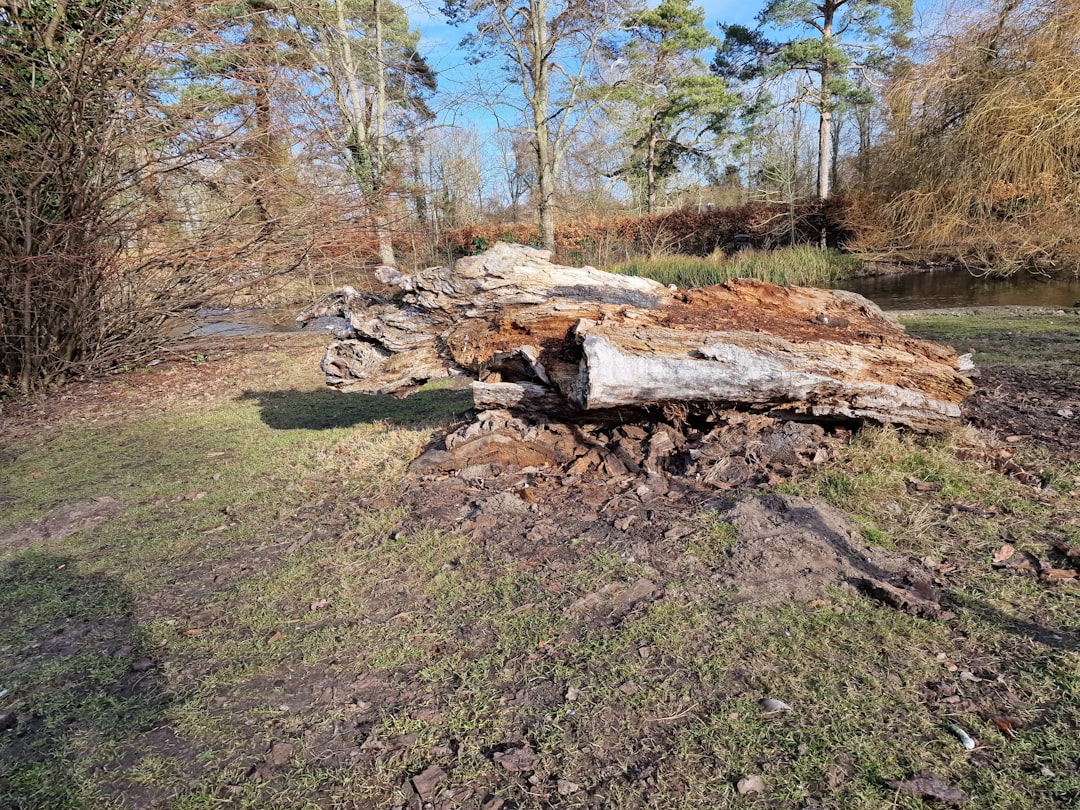
Why North Reading Tree Removal Services Are Essential for Your Property
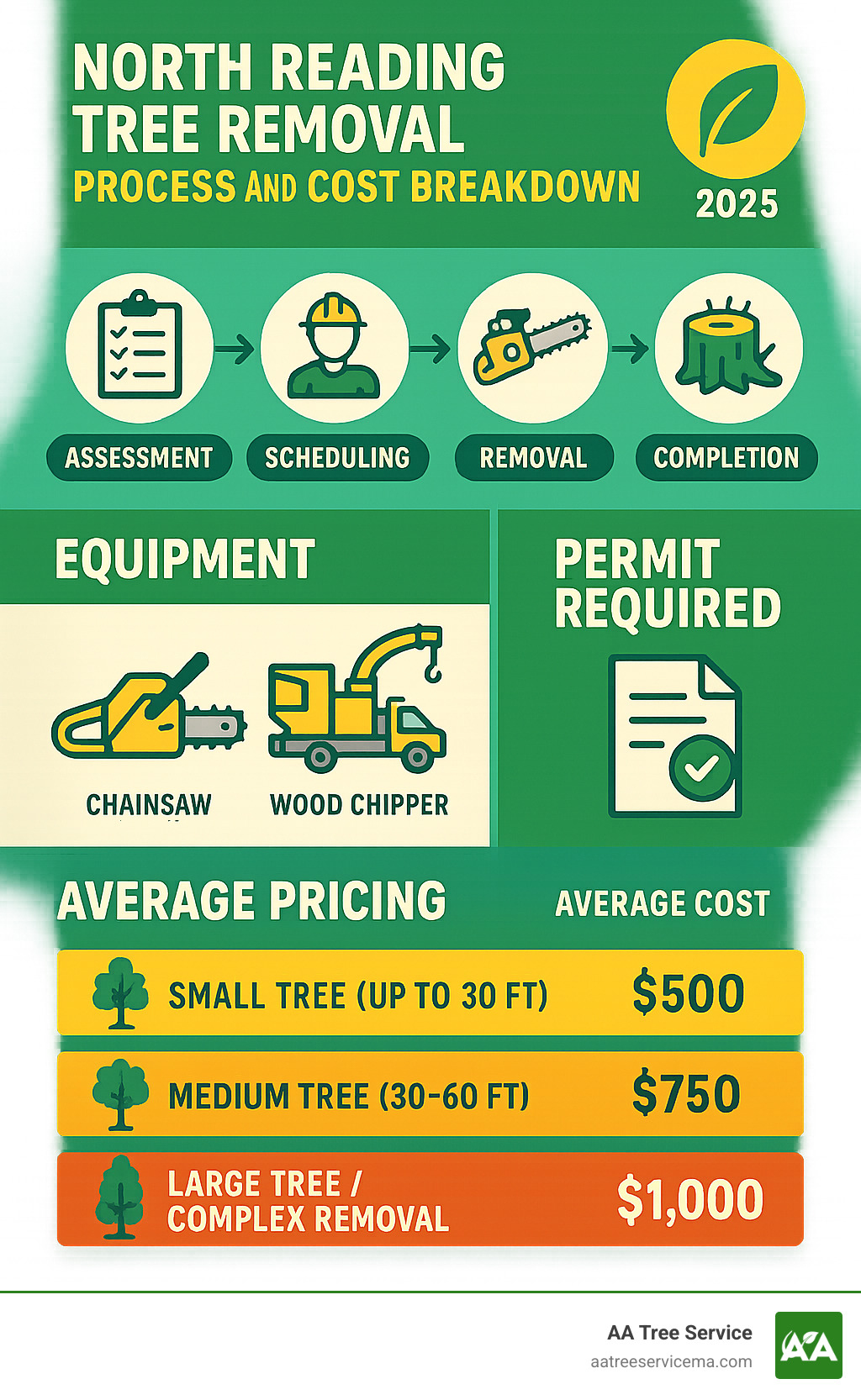
North Reading Tree Removal is a critical service for homeowners dealing with dangerous, diseased, or storm-damaged trees that threaten their property and safety. Whether you’re facing emergency removal after a storm or planning to remove a hazardous tree, professional tree services in North Reading typically cost between $284-$1,233 for standard removal, with emergency services averaging $1,143.
Quick Answer for North Reading Tree Removal:
- Average Cost: $762 (range $284-$1,233)
- Emergency Removal: $1,143 average
- Stump Removal: $233-$418 additional
- Permit Required: Often yes – check North Reading bylaws
- Best Companies: Licensed, insured, ISA-certified arborists
- Timeline: Most jobs completed in 1 day
- Emergency Service: Available 24/7 from local providers
North Reading homeowners face unique challenges with tree removal. The town’s mature trees – averaging 56 feet tall and 47 years old – often require specialized equipment like cranes for safe removal. Storm damage from nor’easters and winter weather creates urgent situations where trees block driveways or threaten power lines.
“More than 100 people have received a free quote for tree removal in North Reading in the last 60 days,” showing just how common this need is in our area. The key is finding certified professionals who understand local regulations and can handle everything from emergency storm cleanup to routine hazard removal.
Professional tree removal protects your property investment while ensuring safety for your family and neighbors. With proper planning and the right team, what seems like a major headache becomes a straightforward solution.
North Reading Tree Removal definitions:
Why & When You Should Remove a Tree
Trees are valuable assets that provide oxygen, filter air, and improve property values. However, there comes a time when removal becomes necessary for safety and property protection. Understanding when a tree needs to go can save you from costly damage and potential injury.
The most critical factor is safety. Trees that pose immediate threats to people or property should be removed promptly. As one arborist noted, “That leaning or rotten tree could be a ticking timebomb.” Don’t wait until it’s too late.
6 Warning Signs Your Tree Has To Go
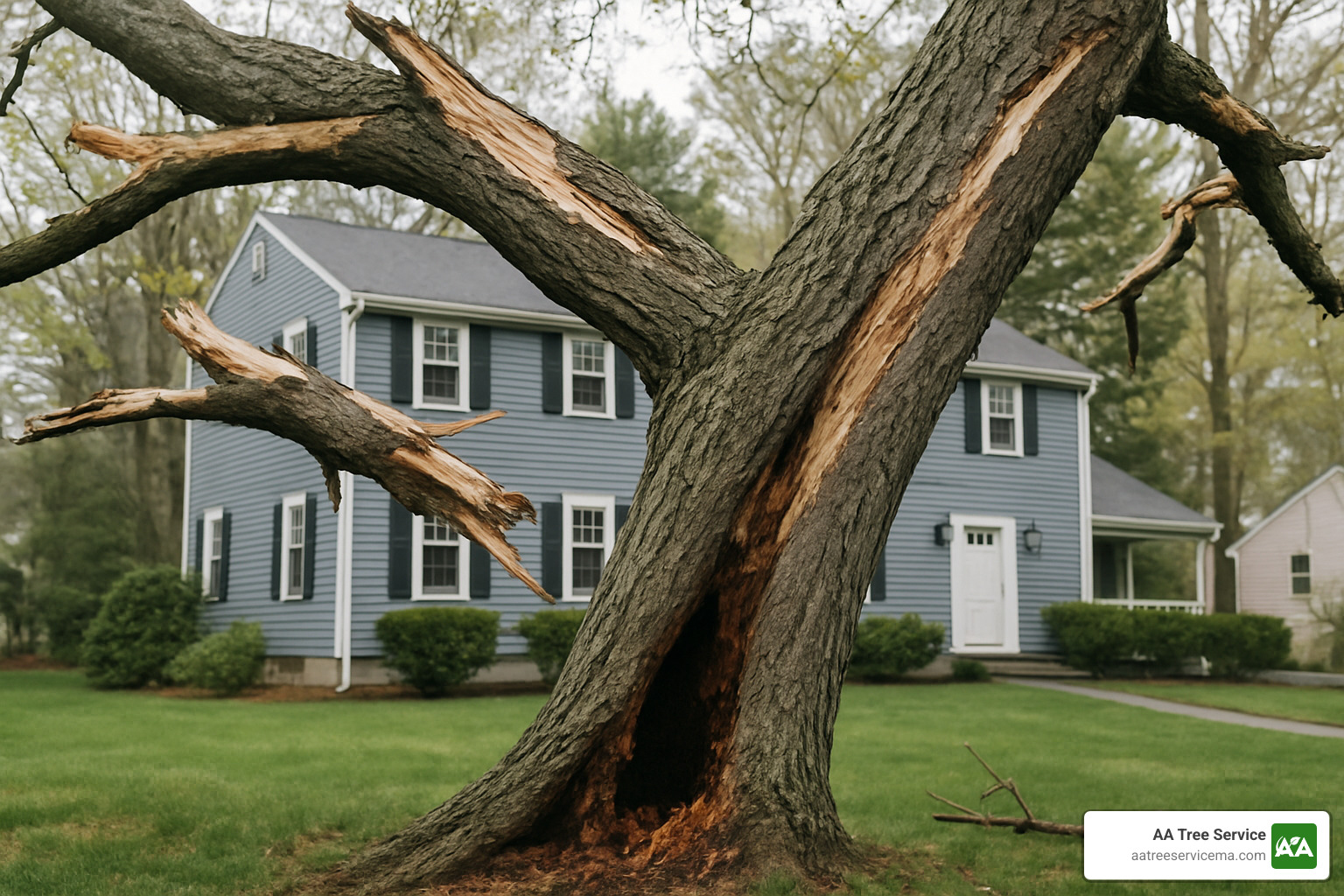
- Visible Cracks in Trunk or Major Branches: Deep cracks indicate structural weakness that could lead to sudden failure, especially during storms.
- Fungus Growth or Mold: Mushrooms growing at the base or on the trunk signal internal decay. Honey fungus and other wood-rotting fungi compromise the tree’s structural integrity.
- Dead or Dying Branches: More than 25% dead branches indicate serious health issues. Dead wood becomes brittle and can fall unexpectedly.
- Root Problems and Soil Lifting: Raised soil around the base suggests root failure. This is particularly dangerous as it affects the tree’s stability.
- Hollow Trunk: A hollow trunk significantly reduces the tree’s ability to support its weight and withstand wind loads.
- Sudden Leaning: Trees that develop a lean, especially after storms, have compromised root systems and pose immediate danger.
If your tree shows more than 50% rot, insect infestation, or structural damage, removal is typically recommended over treatment attempts.
Most Common Reasons for Removal in North Reading
North Reading’s mature landscape and weather patterns create specific removal needs:
Storm Damage: Nor’easters, winter storms, and occasional hurricanes cause significant tree damage. Emergency removal services see increased demand after major weather events when trees block roads, damage power lines, or threaten structures.
Disease and Pest Issues: Winter Moths and Hemlock Woolly Adelgid are significant threats to local trees. These pests can kill trees or weaken them to the point where removal becomes necessary.
Construction and Development: Property improvements, additions, and utility work often require tree removal. Planning ahead prevents last-minute complications.
Power Line Clearance: Trees growing too close to power lines create safety hazards and service interruptions. Utility companies may require removal rather than just trimming.
Root System Problems: Tree roots can damage foundations, septic systems, and underground utilities. When root barriers aren’t effective, removal may be the only solution.
North Reading Tree Removal Costs & Regulations
Understanding costs and regulations helps you plan effectively and avoid surprises. North Reading Tree Removal pricing varies significantly based on multiple factors, but having realistic expectations prevents sticker shock.
Based on current market data, these are average costs you can expect (not specific to our services):
- Standard Removal: $284-$1,233 (average $762)
- Emergency Removal: $1,143 average
- Stump Removal: $233-$418 additional
- Large/Complex Jobs: $1,500-$3,000+
These are general market averages. Your actual costs depend on specific circumstances and the contractor you choose.
Factors that Influence North Reading Tree Removal Pricing
Size and Height Matter Most: The average tree in North Reading stands 56 feet tall, requiring specialized equipment. Larger trees need more time, equipment, and expertise.
Proximity to Structures: Trees near homes, power lines, or other buildings require careful sectional removal rather than simple felling. This precision work increases costs but prevents damage.
Equipment Requirements:
- Simple removals use basic chainsaws and trucks
- Complex jobs need cranes, bucket trucks, and specialized rigging
- Crane-assisted removal costs more but reduces property damage risk
Accessibility: Easy access keeps costs down. Trees in backyards or tight spaces require more labor and smaller equipment, increasing time and expense.
Urgency and Timing: Emergency services cost more due to 24/7 availability and immediate response needs. Seasonal demand also affects pricing, with storm season bringing higher rates.
Additional Services: Stump grinding, debris removal, and site cleanup add to the total cost but provide complete solutions.
Permit Guidelines for North Reading Tree Removal
North Reading Tree Removal often requires permits, even on private property. Don’t assume you can remove any tree without checking local regulations first.
When Permits Are Required:
- Trees over certain sizes (varies by location)
- Trees in protected areas or conservation zones
- Trees near property boundaries
- Trees that might affect neighbors or public areas
Application Process:
- Contact North Reading’s Building Department or Tree Warden
- Submit application with tree location and removal reason
- Pay required fees (typically $50-$200)
- Wait for approval (usually 1-2 weeks)
- Schedule removal within permitted timeframe
Protected Trees: Some species or particularly large specimens may have special protection. The town may require replacement plantings or deny removal requests for healthy, significant trees.
Utility Clearance: Trees near power lines require coordination with utility companies. They may handle removal themselves or require specific contractors.
Penalties for Unpermitted Removal: Fines can range from hundreds to thousands of dollars. Some towns require expensive replacement plantings or restoration work.
For more detailed information about our professional services, visit our Tree Removal Service page.
The Step-By-Step Tree Removal Process & Choosing a Pro
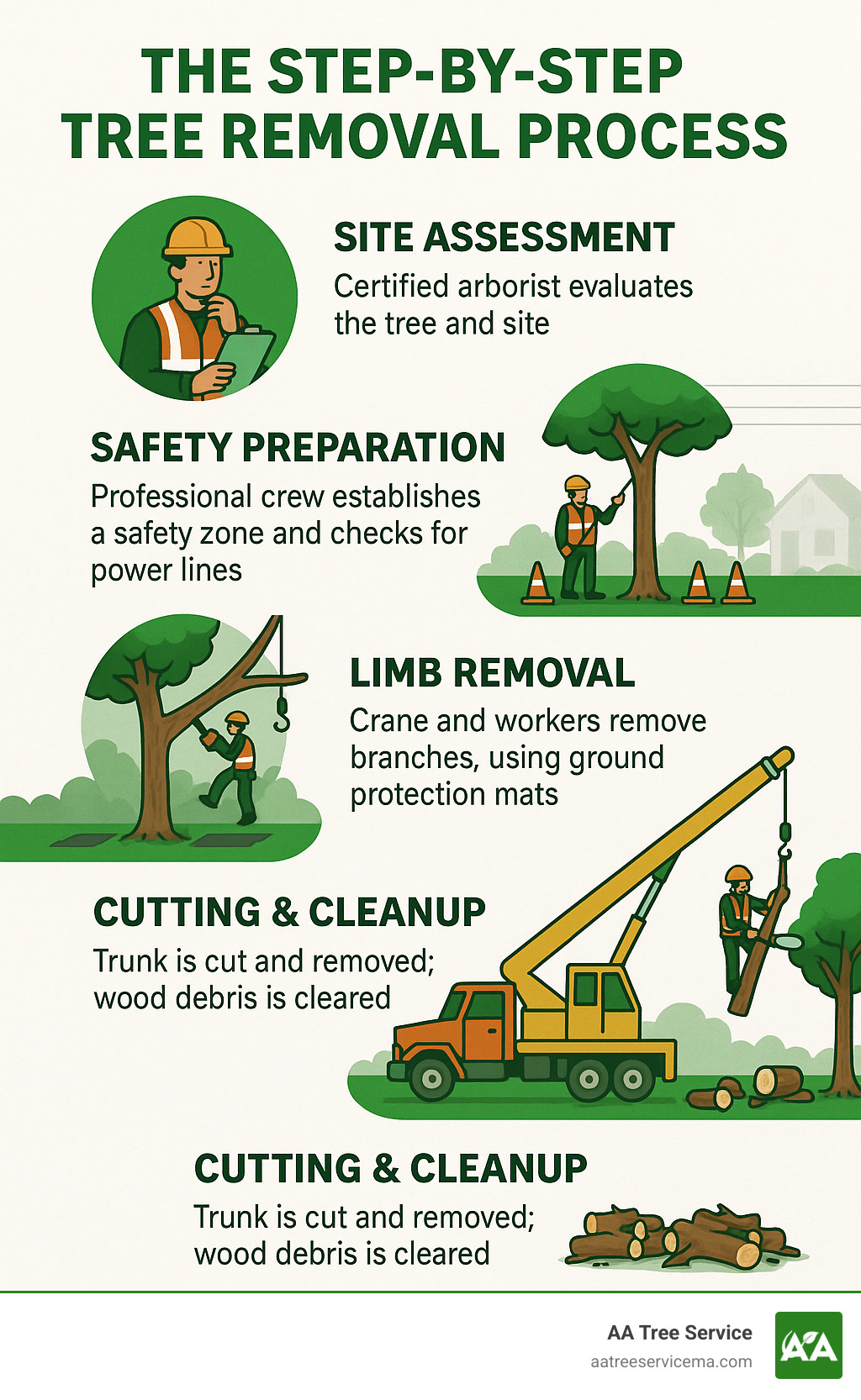
Professional tree removal follows a systematic process that prioritizes safety while protecting your property. Understanding what to expect helps you prepare and ensures you’re working with qualified professionals.
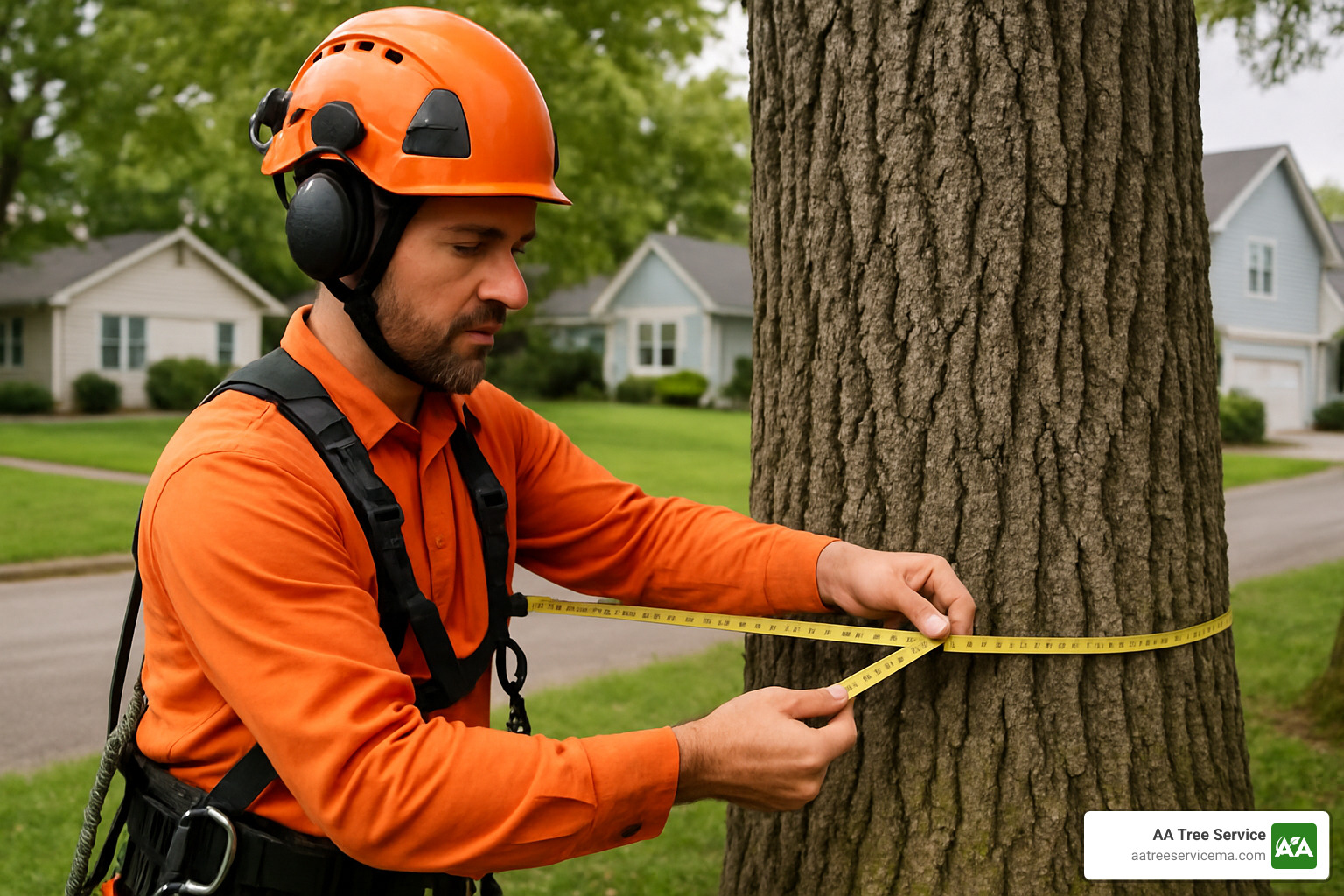
Site Assessment and Planning: Certified arborists evaluate the tree’s condition, surrounding structures, and potential hazards. They determine the best removal method and equipment needed.
Safety Preparation: Professional crews establish safety zones, check for power lines, and ensure proper equipment setup. This includes ground protection mats to prevent lawn damage.
Sectional Removal: Large trees are removed in sections, starting from the top. Each cut is carefully planned and rigged to control where branches fall.
Trunk Removal: The main trunk is cut in manageable sections, often using cranes or specialized rigging systems to guide pieces safely to the ground.
Debris Processing: Branches and trunk sections are fed through chippers or loaded for removal. Many companies offer wood recycling options.
Site Cleanup: Professional crews sweep the area, removing all debris and ensuring your property is left clean and safe.
Stump Grinding: Optional but recommended, stump grinding eliminates tripping hazards and prevents pest attraction.
What to Expect on Removal Day
Crew Arrival: Professional teams arrive with all necessary equipment and conduct a final safety briefing. They’ll review the plan with you and address any concerns.
Safety Zone Establishment: The area around the tree is cleared and marked. Ground protection mats are placed to prevent equipment damage to your lawn.
Systematic Removal: The actual removal follows the planned sequence. Certified arborists handle all cutting while ground crews manage debris and safety.
Real-Time Adjustments: Weather, equipment issues, or unexpected findies may require plan modifications. Professional crews adapt while maintaining safety standards.
Quality Control: After removal, supervisors inspect the work area to ensure complete cleanup and customer satisfaction.
Documentation: You’ll receive a completion report and any recommendations for follow-up care or additional services.
For specialized North Reading services, check our Tree Removal in North Reading MA page.
Additional Services That Add Value
Stump Grinding: Stumps left behind create tripping hazards and attract pests. Professional grinding eliminates these problems and prepares the area for new plantings or lawn restoration.
Tree Pruning and Trimming: Regular maintenance prevents future removal needs. Proper pruning promotes healthy growth and removes potential hazards.
Emergency Response: 24/7 availability for storm damage or urgent situations. Quick response prevents additional damage and restores safety.
Land Clearing: Comprehensive removal of multiple trees and vegetation for construction or landscaping projects.
Wood Recycling: Many companies offer firewood processing or mulch creation from removed trees, providing value from what would otherwise be waste.
Learn more about our comprehensive Stump Removal Service options.
DIY Tree Cutting vs Hiring a Certified Arborist
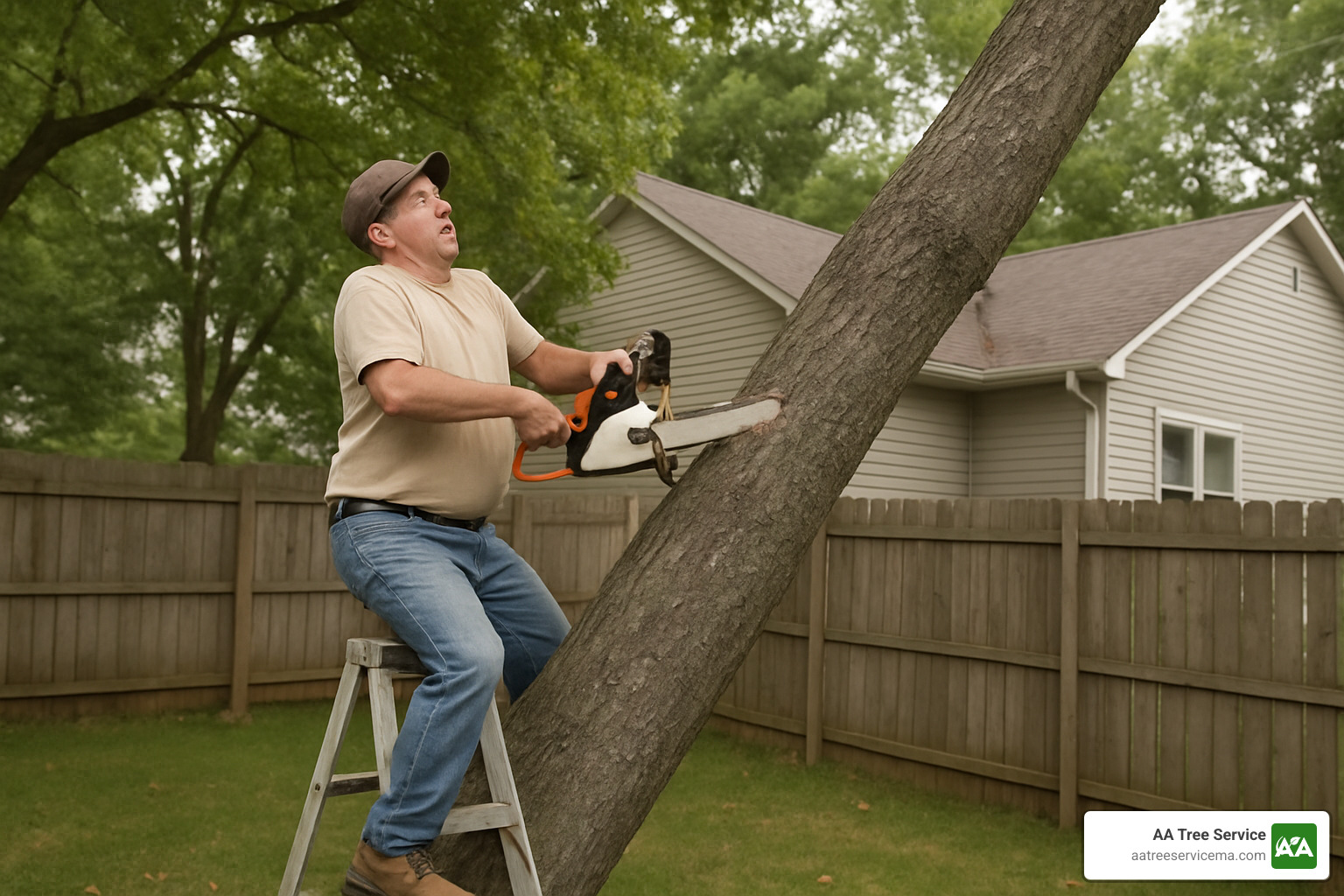
The temptation to save money with DIY tree removal is understandable, but the risks far outweigh potential savings. Professional tree removal isn’t just about having the right tools—it requires training, experience, and proper insurance coverage.
Risks of DIY Attempts
Chainsaw Injuries: Chainsaws cause thousands of injuries annually. Kickback, improper handling, and equipment failure can result in severe cuts, amputations, or death.
Falling Limbs and Trees: Predicting how trees will fall requires understanding weight distribution, wind effects, and cutting techniques. Miscalculations can destroy property or cause fatal injuries.
Property Damage: DIY removal often results in damage to homes, vehicles, fences, or landscaping. Your homeowner’s insurance may not cover damage from unpermitted or improperly executed tree work.
Hidden Costs: Tool rental, disposal fees, and potential damage repairs often exceed professional service costs. Factor in your time and physical effort, and DIY rarely saves money.
Legal Liability: If your tree falls on a neighbor’s property or injures someone, you’re fully liable. Without proper permits, you may face additional fines and legal complications.
How Pros Protect You & the Environment
ISA-Certified Crews: ISA certification indicates formal training in arboriculture and adherence to professional standards. These credentials ensure proper techniques and safety protocols.
Comprehensive Insurance: Professional companies carry liability insurance and workers’ compensation, protecting you from financial responsibility if accidents occur.
Ground Protection: Specialized mats prevent equipment damage to lawns and landscaping. This attention to detail preserves your property investment.
Environmental Responsibility: Professional companies recycle wood waste into mulch or biomass. Some partner with recycling facilities to ensure carbon-neutral disposal.
Organic Pest Control: Many certified arborists offer eco-friendly treatments for remaining trees, using methods like cedar oil applications for tick control.
Equipment and Expertise: Professional crews have cranes, bucket trucks, specialized rigging, and years of experience handling complex removals safely.
We’ve been serving Massachusetts and New Hampshire for over 20 years, providing the expertise and equipment necessary for safe, efficient tree removal.
Frequently Asked Questions About North Reading Tree Removal
How much does it cost to remove a tree in North Reading?
Based on current market data, tree removal in North Reading averages $762, with costs ranging from $284 to $1,233 for standard removals. Emergency services average $1,143 due to 24/7 availability and urgent response needs.
Several factors affect pricing:
- Tree size: Larger trees require more equipment and time
- Location: Trees near structures need careful sectional removal
- Accessibility: Hard-to-reach trees increase labor costs
- Urgency: Emergency services cost more than scheduled work
- Additional services: Stump grinding adds $233-$418 to the total
These are general market averages based on internet research, not specific quotes from our company. We provide free same-day estimates to give you accurate pricing for your specific situation.
Do I need to be home during the removal process?
Yes, you should be present during tree removal for several important reasons:
Safety Communication: You can answer questions about underground utilities, property boundaries, and specific concerns about your landscape.
Access and Logistics: Crews may need to access different areas of your property or move equipment through specific routes.
Real-Time Decisions: Unexpected findies (like decay or structural issues) may require immediate decisions about additional work.
Quality Assurance: Being present ensures the work meets your expectations and allows for immediate feedback.
Final Inspection: You can approve the cleanup and discuss any follow-up services before the crew leaves.
If you absolutely cannot be present, arrange for a responsible adult to represent your interests and make decisions on your behalf.
Can I keep the wood, and how is debris handled afterward?
Most homeowners can keep wood from removed trees, but this should be confirmed with your contractor beforehand. Here’s what you need to know:
Firewood Processing: Many companies can cut and split wood into firewood-sized pieces for an additional fee. This is often more cost-effective than hiring a separate service.
Wood Storage: Plan where you’ll store the wood. Avoid placing it directly against your home, as this can attract pests and create fire hazards.
Debris Removal Options:
- Full cleanup: Most companies include complete debris removal in their pricing
- Partial cleanup: Keep the wood, but have branches and leaves removed
- Mulch creation: Some companies can chip branches into mulch for your landscaping
Disposal Alternatives: If you don’t want the wood, companies typically handle disposal through:
- Municipal composting programs
- Biomass recycling facilities
- Waste management services
Environmental Benefits: Many professional services partner with recycling facilities to ensure wood waste becomes mulch or biomass fuel, supporting carbon-neutral disposal practices.
Discuss your preferences during the initial consultation to ensure the service meets your needs and budget.
Conclusion
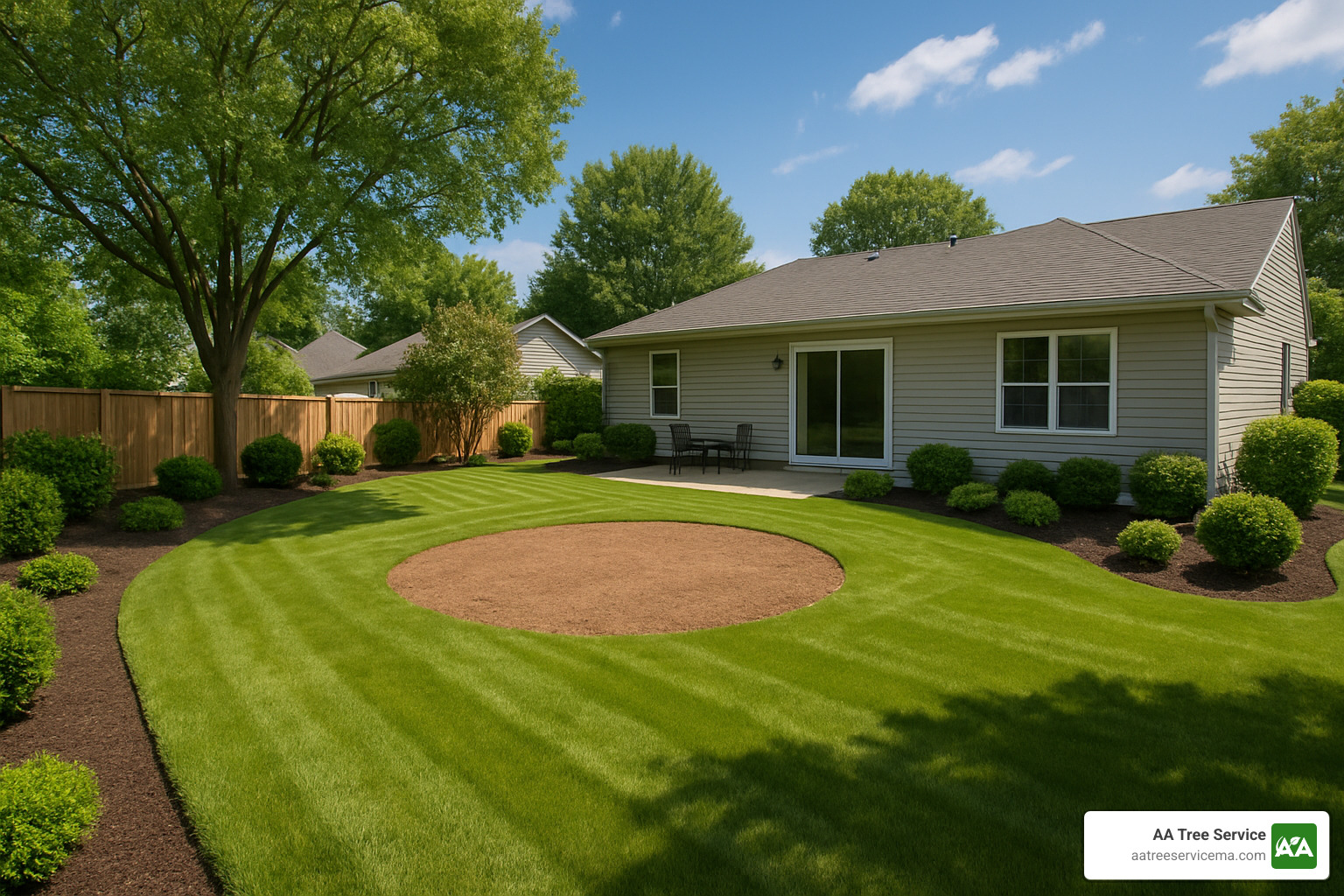
North Reading Tree Removal doesn’t have to be overwhelming when you understand the process, costs, and safety requirements. Professional removal protects your property investment while ensuring the safety of your family and neighbors.
Key takeaways for successful tree removal:
- Safety first: Never attempt DIY removal of large or hazardous trees
- Plan ahead: Check permit requirements and get multiple quotes
- Choose certified professionals: Look for ISA-certified arborists with proper insurance
- Understand costs: Budget for removal, stump grinding, and cleanup services
- Consider timing: Emergency services cost more than planned removals
The average North Reading tree removal costs $762, but investing in professional services prevents costly damage and ensures compliance with local regulations. With proper planning and the right team, tree removal becomes a straightforward solution rather than a major headache.
At AA Tree Service, we’ve been helping Massachusetts and New Hampshire homeowners with safe, professional tree removal for over 20 years. Our certified crews provide 24/7 emergency services, free same-day quotes, and complete customer satisfaction guarantees.
Don’t let dangerous trees threaten your property and peace of mind. Professional removal restores safety while preserving your landscape investment for years to come.
Ready to get started? Request a Quote today for your North Reading tree removal needs.