Understanding the Certified Arborist
What is a certified arborist?
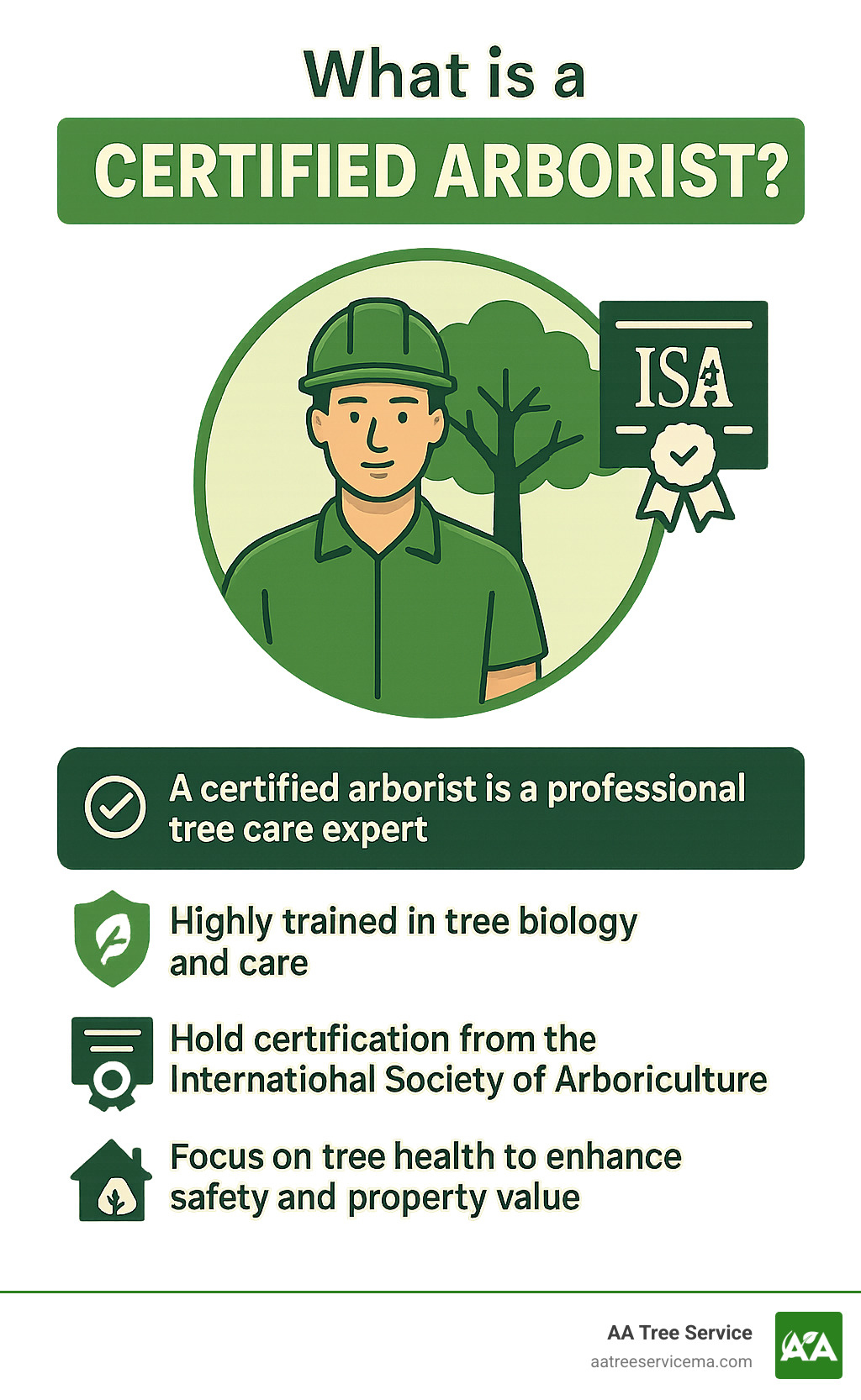
- A certified arborist is a professional tree care expert.
- They are highly trained in the science and art of planting, caring for, and maintaining trees and woody plants.
- They hold a special credential from the International Society of Arboriculture (ISA).
- This certification proves their deep knowledge and practical experience in tree health.
- To earn this, they typically need at least three years of full-time work experience in tree care or a related college degree.
When it comes to the health and safety of your trees, a certified arborist is your best ally. These aren’t just “tree guys” with a chainsaw. They are skilled professionals dedicated to the well-being of your trees.
Think of them as tree doctors, but with a focus on preventing problems and ensuring long-term vitality. Just as you wouldn’t trust your health to an unqualified person, your valuable trees deserve the best care. Hiring an arborist is a decision you shouldn’t take lightly. Incorrect tree work can pose risks to the tree itself, and even to the person doing the work.
Trees add beauty and value to your home. But without proper care, they can become a hazard. Hiring an expert means your trees get the right treatment, keeping your property safe and beautiful for years to come. In Massachusetts and New Hampshire, finding the right tree care professional is key to protecting your investment.
Certified arborist glossary:
What is a Certified Arborist and What Do They Know?
A certified arborist is a highly trained professional in the art and science of tree care. They possess a deep understanding of trees, from their roots to their leaves, ensuring they thrive in our New England environment.
Their expertise covers a wide range of critical areas:
- Tree Biology & Anatomy: Understanding how trees grow, function, and respond to care.
- Soil Science: Knowing how soil health impacts tree vitality and how to improve it.
- Plant Health Care: Diagnosing and treating diseases, pests, and nutrient deficiencies.
- Tree Identification: Accurately identifying tree species to provide appropriate care.
- Pruning Standards: Applying industry-approved techniques for tree health, safety, and aesthetics.
- Safety Procedures: Following strict protocols to protect people and property.
- Risk Assessment: Identifying potential hazards to prevent future damage.
This comprehensive knowledge ensures you receive professional, effective tree care. Learn more about our Tree Care Services.
The Science Behind Arboriculture
Arboriculture is far more than just cutting branches; it’s a deep science! Our certified arborists dig into the intricate details of tree life. They understand tree anatomy, knowing every part of a tree from its hidden roots to its leafy crown. They know the precise nutrient requirements trees need to thrive and how to make sure they get them.
Good water management is key, so they assess a tree’s thirst and make sure it gets just the right amount. They’re also detectives when it comes to pest and disease cycles, identifying common problems early to prevent big issues. Here in New England, especially, tree risk assessment is vital – they can spot if a tree might be a danger. Finally, they apply urban forestry principles, understanding how trees fit into our towns and cities, from planting new ones to keeping old ones healthy.
Why “Certified” Matters: The ISA Standard
The term “certified arborist” isn’t just a fancy title; it means a lot! It shows that someone meets a very high standard set by the International Society of Arboriculture (ISA). The ISA is a respected global group dedicated to the science of tree care. When an arborist is ISA certified, it proves they are highly skilled and truly committed to their job.
The ISA Certified Arborist program is like a gold standard. It’s even checked by the ANSI National Accreditation Board (ANAB) to make sure it’s fair and reliable, following rules like the ISO 17024 standard. This means you can trust the certification. Also, ISA certified arborists promise to follow a strict Code of Ethics. This makes sure they give you honest, professional advice and excellent service. You can learn more about the ISA and their important standards on their website: Learn more at the International Society of Arboriculture.
The Best Benefits of Hiring a Professional
Hiring a certified arborist is a smart investment in your property’s safety and value. Their expertise ensures that tree care is performed correctly, promoting long-term health and preventing potential hazards.
Here are some key benefits:
- Improved Property Value: Well-maintained trees boost curb appeal and can significantly increase property value.
- Safety and Risk Reduction: Arborists identify and mitigate potential hazards from weak or diseased trees, protecting your home and family. This reduces your liability compared to using an uninsured or under-trained individual.
- Long-Term Tree Health: Proper care, including expert diagnosis and treatment of diseases or pests, ensures your trees live longer, healthier lives.
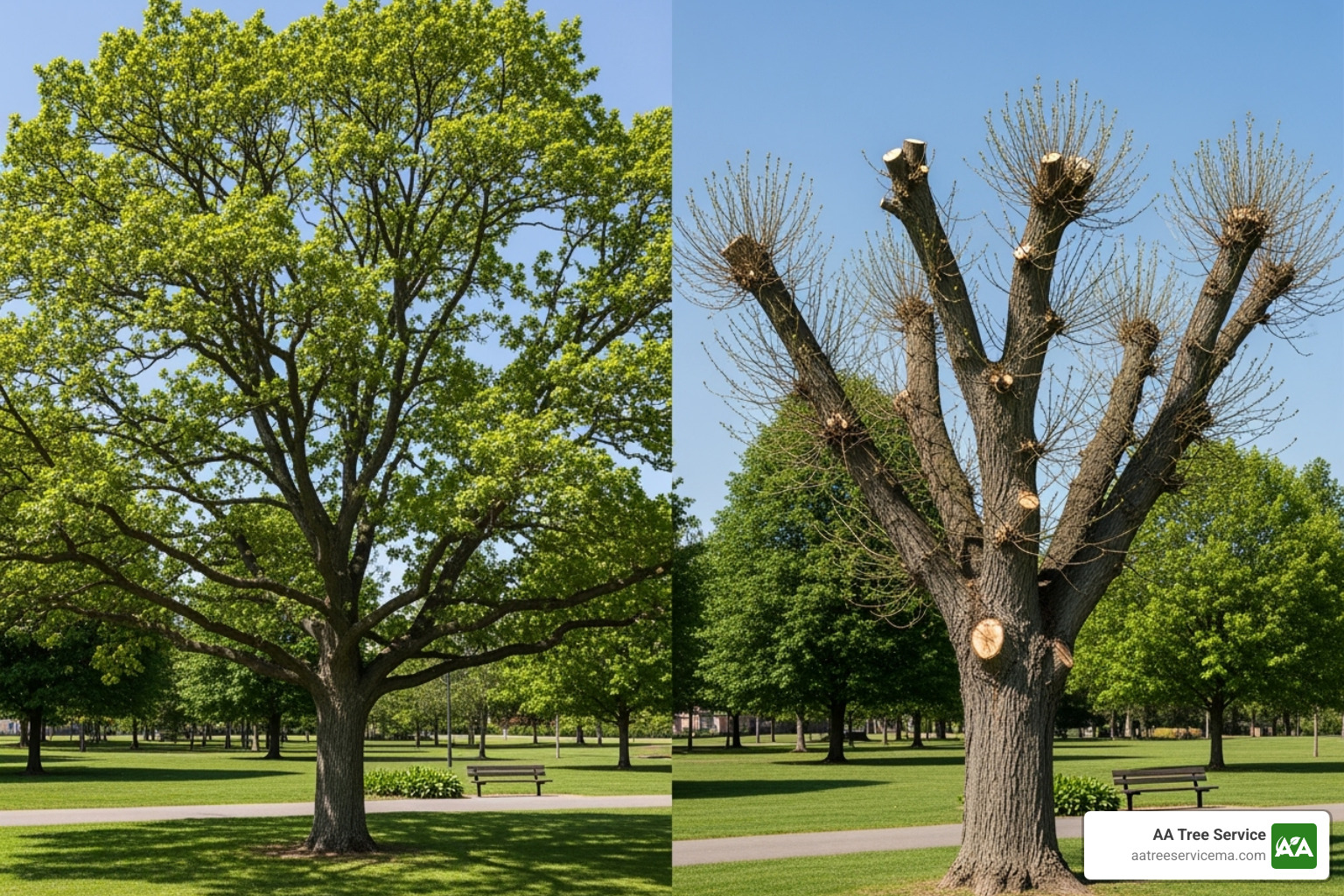
- Correct Pruning Techniques: Unlike untrained tree trimmers who might use harmful practices like “topping,” a certified arborist uses industry-standard techniques to improve tree structure and health.
- Specialized Equipment and Insurance: Professional arborists use the right tools for the job and carry full liability and workers’ compensation insurance, giving you complete peace of mind.
- Protection During Construction: An arborist can create a plan to protect valuable trees during construction projects, preventing root damage and other long-term issues. Learn more about our specialized service: Tree Hazard Assessment.
Certified Arborist vs. General Tree Service Provider
The distinction between a certified arborist and a general tree service provider (sometimes called a “tree guy”) is crucial. While both may offer tree services, the level of expertise, professionalism, and commitment to tree health varies significantly.
| Feature | Certified Arborist | General “Tree Guy” |
|---|---|---|
| Expertise | Deep, science-based knowledge of tree biology and health. | Experience is often practical but may lack formal training. |
| Certification | Passed a comprehensive exam from the International Society of Arboriculture (ISA). | Typically not certified. |
| Standards | Adheres to ANSI A300 standards for best practices. | May use harmful techniques like topping. |
| Insurance | Carries proper liability and workers’ compensation insurance. | May be uninsured or underinsured, creating risk for the homeowner. |
| Focus | Prioritizes the long-term health and structural integrity of the tree. | Often focused on quick removal or aggressive trimming. |
The Path to Certification: Qualifications and ISA Standards
Ever wondered what it takes to become a true tree expert? Becoming a certified arborist isn’t just about knowing a lot about trees; it’s about proving that knowledge and dedication through a rigorous process. It’s a significant achievement that shows a high level of skill and a real passion for the science of trees. The International Society of Arboriculture (ISA) is the organization that makes sure these standards are met, providing the clear path for arborists to get certified.
The journey to becoming a certified arborist involves several important steps. You need to meet specific requirements for education and experience, pass a challenging exam, and then commit to ongoing learning through what are called Continuing Education Units (CEUs). This ensures that every certified arborist stays up-to-date with the newest research, techniques, and the very best practices in tree care. It’s how they keep their skills sharp and their knowledge fresh!
Eligibility: The First Step to Becoming a Certified Arborist
Before an arborist can even think about taking the ISA Certified Arborist exam, they have to show they’ve got the goods – that is, a solid foundation of understanding and real-world experience. These requirements are put in place to make sure that anyone who earns this credential is truly ready for the important responsibilities that come with caring for your trees.
To earn an ISA Certified Arborist credential, a person generally needs to have one of these:
- At least three years of full-time, hands-on work experience in arboriculture. This practical experience is absolutely key for developing the skills needed to work safely and effectively with trees.
- A college degree in a related field, such as arboriculture, horticulture, landscape architecture, or forestry, from a recognized school. A degree can sometimes take the place of some or all of the work experience, showing a strong grasp of the science behind tree care.
- Or, a combination of both eligible work experience and a relevant degree. This flexible approach means that people with different backgrounds can still pursue this important certification.
This thorough eligibility process guarantees that every ISA certified arborist has either significant practical experience, a strong academic background, or both. It really shows a commitment to lifelong learning and always getting better, which directly translates to the top-notch care your trees will receive. For more information on keeping your trees healthy through expert care, check out our page on Tree Maintenance Services.
[LIST] of Different ISA Certifications
The ISA understands that tree care is a big field, with many different specializations. That’s why they offer a variety of certifications, each one showing a specific area of expertise. Think of it like doctors having different specialties – heart doctors, eye doctors, and so on. Each ISA credential means the arborist has passed a different, specialized exam and has proven their knowledge in that particular area.
Here are some of the main ISA certification credentials:
- ISA Certified Arborist®: This is the core certification. It shows a broad understanding of all things arboriculture, covering a wide range of topics and skills.
- ISA Certified Tree Worker Climber Specialist®: This one is all about climbing! It focuses on the skills and safety practices needed for professional tree climbing and working in the tree canopy. Arborists with this certification have proven their ability in climbing, aerial rescue, and even CPR and First Aid.
- ISA Certified Arborist Utility Specialist™: These arborists are pros at managing trees and other plants around power lines. They have special training to safely handle vegetation near utility lines, which is crucial for preventing outages and ensuring public safety.
- ISA Certified Arborist Municipal Specialist®: If you’re dealing with trees in a town or city setting, this is the expert you want. This certification is for arborists who manage urban trees in public spaces.
- ISA Board Certified Master Arborist®: This is the top tier! It’s the highest level of certification the ISA offers, showing an incredibly advanced level of knowledge and experience. Only a very small number of all ISA Certified Arborists – fewer than two percent – hold this prestigious credential. They achieve this by passing a very extensive, scenario-based exam and always sticking to a strict Code of Ethics.
These specialized credentials mean that you can find a certified arborist with exactly the right expertise for your tree care needs in Massachusetts and New Hampshire. Whether you need routine pruning, help with trees near power lines, or have complex tree health issues, there’s a specialized arborist ready to help.
Comprehensive Services Offered by a Certified Arborist
A certified arborist offers a comprehensive suite of services designed to manage the health, safety, and aesthetic beauty of your trees. Their expertise goes far beyond simple trimming, encompassing a deep understanding of tree biology and environmental science. At AA Tree Service, our team has over 20 years of experience providing these specialized services to homeowners throughout Massachusetts and New Hampshire, ensuring every tree receives the precise care it needs to flourish.
Our services are rooted in the latest arboricultural science and best practices. We believe in a holistic approach, considering every aspect of a tree’s life and environment. From proactive maintenance to emergency response, our goal is to be your trusted partner in preserving the valuable green assets on your property. Below is a detailed look at the key services we provide.
Pruning and Trimming
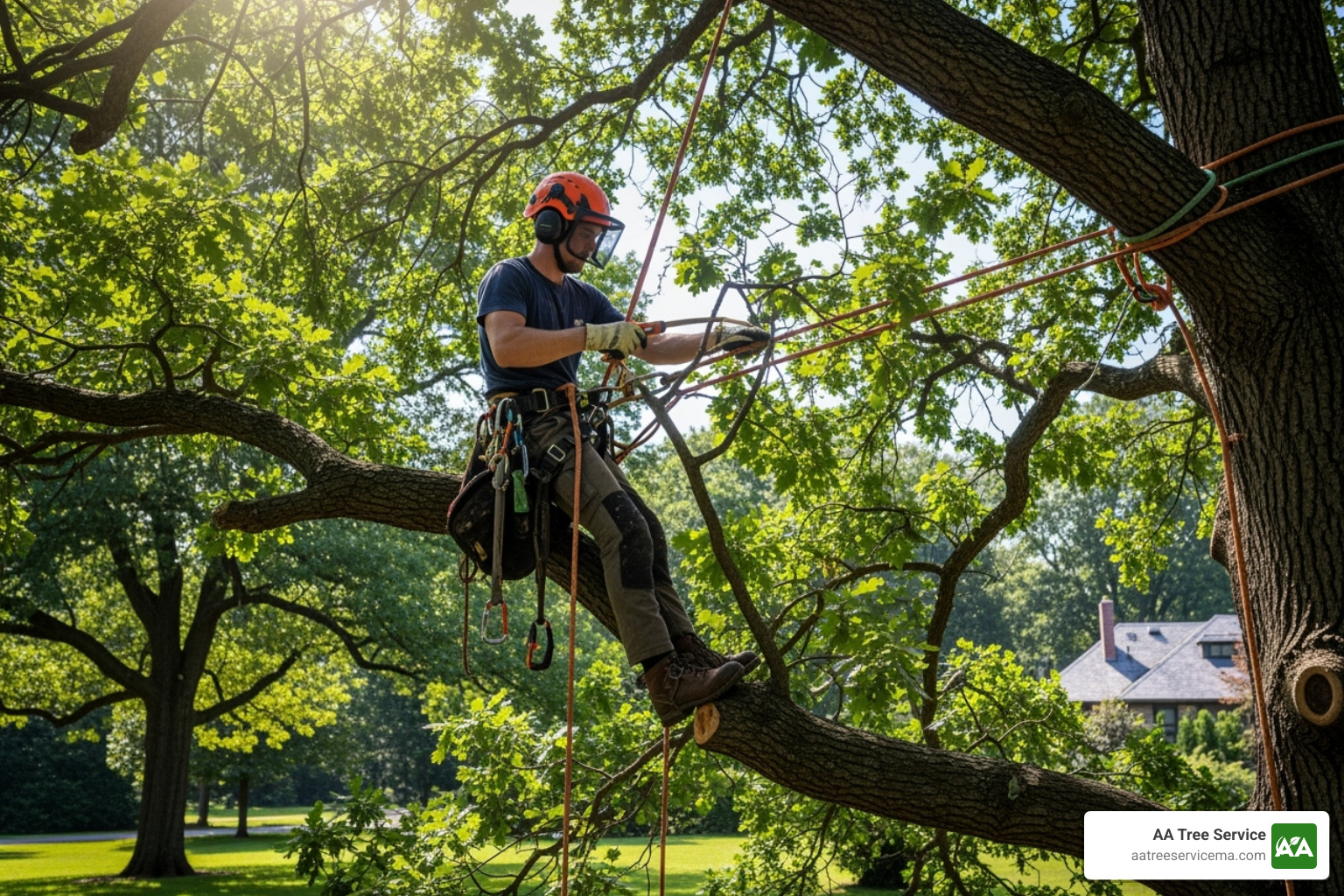
Proper pruning is both an art and a science, crucial for a tree’s long-term health, structural integrity, and appearance. A certified arborist does not simply cut branches; they make strategic cuts to achieve specific goals. We use precise techniques like structural pruning on young trees to encourage a strong, stable form as they grow.
For mature trees, we perform crown cleaning to remove dead, dying, or diseased wood, which improves safety and tree vitality. Crown reduction is carefully employed to decrease the size of a tree’s canopy when necessary, without resorting to the harmful practice of topping, which can lead to decay and weak regrowth. Our pruning methods are always aligned with ANSI A300 standards, ensuring your trees are not only beautiful but also healthy and safe.
Tree Removal
While our primary goal is always to preserve trees, removal is sometimes the only responsible option. A tree may need to be removed if it is dead, dying, in irreversible decline, or poses an unacceptable risk to people or property. Our team provides expert Arborist Tree Removal, a process that requires careful planning and execution. We assess the tree and its surroundings to determine the safest method for removal, which may involve complex rigging or the use of a crane for large trees in tight spaces. We handle every step of the process, from the initial assessment to the final cleanup, ensuring a safe, efficient, and clean job site.
Emergency Tree Services
The New England weather can be unpredictable, and storms can cause significant damage to trees, turning them into immediate hazards. We offer 24/7 emergency tree services to respond quickly when you need us most. Our team is trained in risk mitigation and can safely handle fallen trees, broken limbs hanging over structures, and other urgent situations. We prioritize making the area safe before proceeding with cleanup and removal. We can also provide documentation and assistance when you need to file Tree Service Insurance Claims, helping to streamline the process during a stressful time.
Cabling and Bracing
For valuable trees with structural weaknesses, such as co-dominant stems or heavy, overextended limbs, removal isn’t the only solution. A certified arborist can install supplemental support systems like cables and braces to reduce the risk of failure. Cabling involves installing high-strength steel cables in the upper canopy to limit the movement of branches, while bracing uses rods to support weak branch unions or split trunks. These systems, when properly installed, can add years to the life of a cherished tree, preserving its beauty and value for your landscape.
Fertilization and Soil Management
A tree’s health starts at its roots. Urban and suburban soils are often compacted and lack the essential nutrients found in a natural forest environment. Our arborists can perform soil analysis to identify specific nutrient deficiencies or pH imbalances. Based on these results, we develop a customized fertilization and soil management plan. This may involve deep-root fertilization, which injects a liquid blend of nutrients directly into the root zone, or applying organic matter to improve soil structure and microbial activity. Healthy soil leads to a more vigorous, resilient tree that is better able to withstand pests, diseases, and environmental stress.
Tree Preservation During Construction
Construction projects can be devastating to nearby trees, even if the trunk itself is untouched. Heavy equipment can compact the soil over the root zone, cutting off vital air and water. Excavation can sever major roots, leading to instability and decline. A certified arborist can create and implement a comprehensive tree preservation plan before construction begins. This involves establishing a protected root zone, providing specific instructions for working near trees, and monitoring the tree’s health throughout the project. Learn more about our specialized service: Tree Preservation During Construction.
Planting and Establishment
Adding new trees to your landscape is a wonderful investment for the future, but success depends on choosing the right tree for the right place. Our arborists can help you with tree selection, considering factors like soil type, sun exposure, moisture levels, and the mature size of the tree. We ensure proper planting techniques, from digging the hole to the correct depth and width to proper backfilling and mulching. This gives your new tree the best possible start, promoting rapid establishment and healthy long-term growth.
Whether it’s routine maintenance or an urgent situation, our team of Local Tree Surgeons in My Area has the skills and equipment, including cranes for complex removals, to handle any job safely and professionally.
How to Find and Verify a Reputable Arborist in Massachusetts and New Hampshire
Finding a reputable certified arborist in Massachusetts or New Hampshire is key to protecting your trees and property. Here’s what to look for and how to verify their qualifications.

What to Look for When Hiring a Certified Arborist
- ISA Certification: Ask for their ISA certification number. You can verify it on the ISA’s website.
- Proof of Insurance: Request a certificate of liability and workers’ compensation insurance directly from their provider. This protects you from liability.
- Written Contract: A professional will provide a detailed contract outlining the scope of work, timeline, and total cost. Be wary of anyone demanding full payment upfront.
- Knowledge of Local Regulations: A good arborist will be familiar with local tree ordinances in Massachusetts and New Hampshire.
- Avoid Door-Knockers: Be cautious of unsolicited offers, especially after storms. Reputable companies rely on their reputation, not high-pressure sales tactics.
Using Online Tools to Ensure Legitimacy
- ISA’s “Find an Arborist” Tool: This is the best way to confirm an arborist’s certification. You can find an arborist or verify their credentials here.
- Check Online Reviews: Look for consistent positive feedback on platforms like Google, Yelp, or Angie’s List.
- Better Business Bureau (BBB): Check their rating and accreditation status for an added layer of confidence.
By following these steps, you can confidently hire a qualified professional to care for your trees.
Frequently Asked Questions about Certified Arborists
Here are answers to some common questions we receive about working with a certified arborist in Massachusetts and New Hampshire.
How is a certified arborist different from a landscaper?
A certified arborist is a specialist in the health, care, and safety of individual trees and woody plants. They have in-depth knowledge of tree biology, disease diagnosis, and structural integrity. A landscaper, on the other hand, typically focuses on the overall design and maintenance of a property’s grounds, including lawns, gardens, and smaller shrubs. For complex tree issues, an arborist is the required expert.
Is hiring a certified arborist more expensive?
While the initial cost may sometimes be higher than that of an uncertified tree cutter, a certified arborist is a long-term investment that can save you money. Their expertise prevents costly damage from improper pruning, reduces the risk of property damage from hazardous trees, and improves your property’s value. While average costs for tree work can range from $100 to over $5,000 depending on the job, these are just general estimates and not a quote from AA Tree Service. The value comes from ensuring the job is done right the first time.
How often should I have an arborist inspect my trees?
We recommend a professional inspection every 1 to 3 years for general maintenance. However, you should call an arborist immediately if you notice any of the following:
- After a severe storm with high winds or heavy snow.
- If you see signs of disease, such as dead branches, discolored leaves, or fungal growth.
- Before beginning any construction or landscaping projects near your trees.
- Anytime you have a safety concern about a tree’s stability.
Conclusion
When it comes to your trees, expertise matters. A certified arborist provides the specialized knowledge needed to protect your property, improve its value, and ensure the long-term health of your landscape. From understanding complex tree biology to safely handling hazardous situations, their skills are an invaluable investment.
Poor tree care can lead to costly damage and safety risks. By choosing a professional, you’re getting peace of mind.
At AA Tree Service, our certified team has proudly served Massachusetts and New Hampshire for over 20 years. We understand the unique challenges of our local environment and are dedicated to providing the highest standard of care.
Whether you need routine maintenance, emergency storm cleanup, or specialized services like tree removal in Massachusetts and New Hampshire, trust our team to protect the health and beauty of your landscape. Make the smart choice for your property and partner with a certified arborist who delivers expertise and reliability.