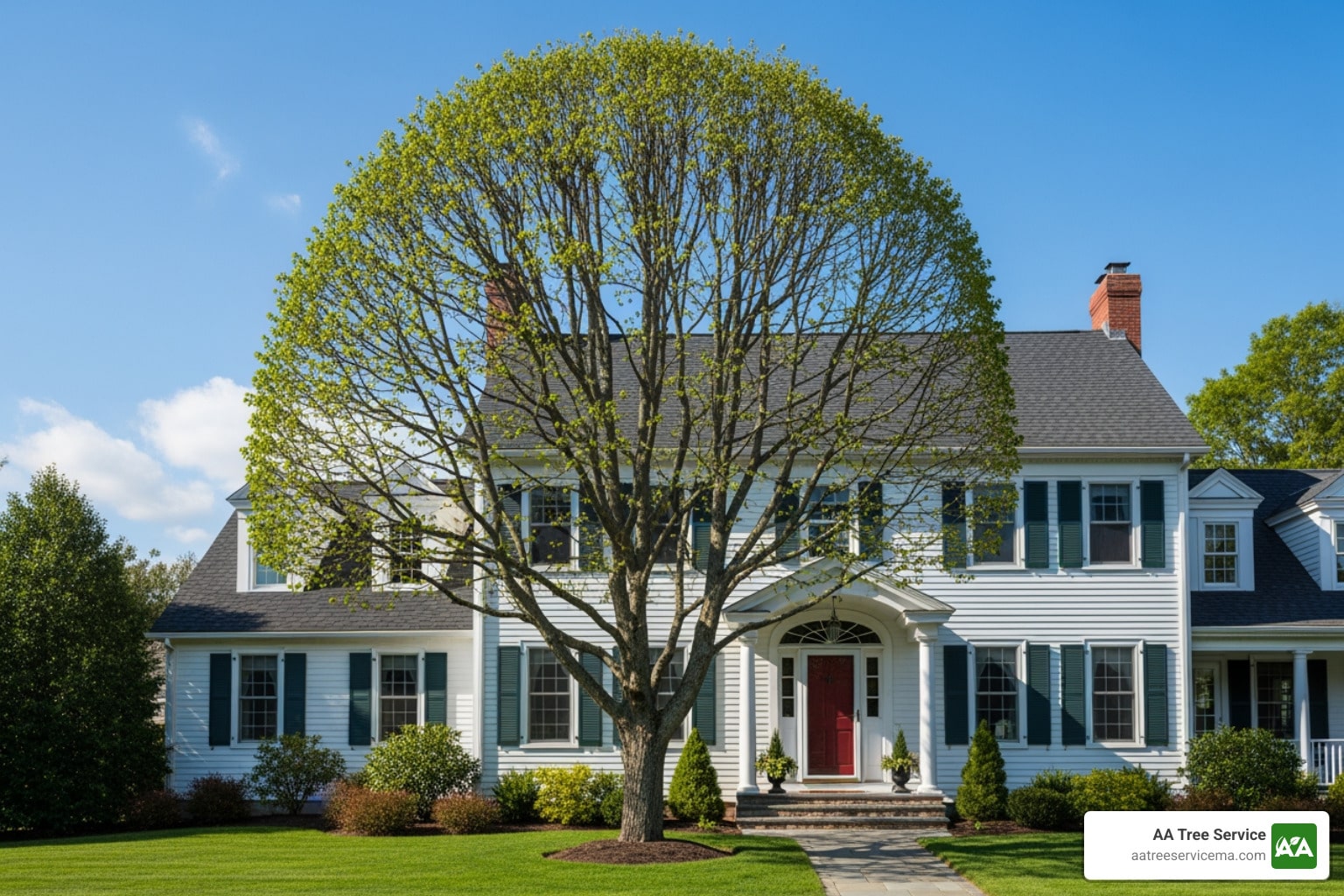
Why Tree Pruning North Shore Properties Matters for Your Home
Tree pruning North Shore services help homeowners maintain healthy trees, protect their property from falling branches, and improve their landscape’s appearance. Whether you’re dealing with overgrown limbs near your home or planning seasonal tree maintenance, professional pruning is essential for Massachusetts and Southern New Hampshire properties.
Quick Guide to Tree Pruning North Shore Services:
- When to Prune: Winter dormancy (December-March) is best for most deciduous trees in the North Shore climate
- Average Cost: $300-$3,000+ depending on tree size and complexity (These prices are average industry costs found online and are not actual prices from AA Tree Service)
- Key Benefits: Removes hazardous branches, improves tree health, improves property aesthetics
- How Often: Young trees every 2-3 years; mature trees every 3-5 years
- Safety Limit: Never remove more than 25-30% of a tree’s canopy at once
Your North Shore property’s trees face unique challenges. Cold winters with heavy snow and ice loads stress branches. Summer storms bring high winds that can snap weak limbs. Without proper pruning, these conditions create serious risks to your home, vehicles, and family.
But tree pruning isn’t just about safety. Regular professional care helps your trees grow stronger, resist disease, and look their best year-round. Healthy, well-maintained trees also increase your property value and curb appeal.
The difference between proper pruning and harmful cutting techniques matters. Professional services follow proven methods that strengthen trees rather than damage them. They know which branches to remove, when to make cuts, and how to shape your trees for long-term health.
Related content about tree pruning north shore:
The “Why”: Key Benefits of Professional Tree Pruning
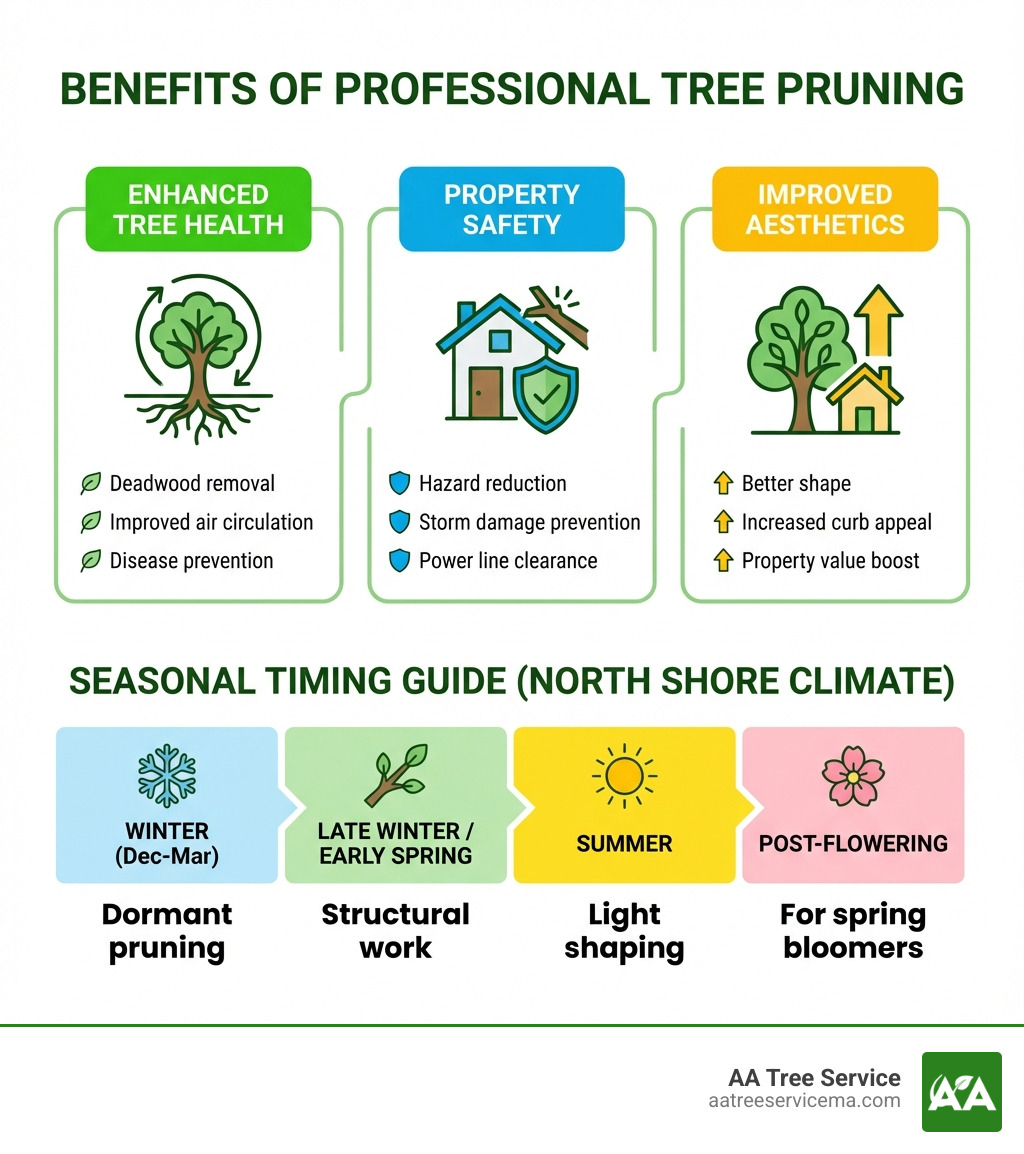
Trees are more than just part of the scenery; they’re living assets that contribute significantly to the beauty, value, and safety of your North Shore property. Professional tree pruning is a proactive investment that ensures these assets thrive, offering a multitude of benefits that extend far beyond simple aesthetics. From bolstering a tree’s natural defenses against pests and disease to safeguarding your loved ones and property from storm damage, the advantages of expert tree pruning North Shore services are clear and substantial.

Enhancing Tree Health and Vigor
Think of pruning as a targeted health and wellness plan for your trees. Our certified tree care professionals carefully remove specific branches to benefit the tree as a whole, a process grounded in arboricultural science. This strategic intervention is crucial for enhancing a tree’s overall health, extending its lifespan, and improving its resilience.
One of the primary health benefits is deadwood removal. Dead, diseased, or dying branches are not only unsightly but are open invitations for pests and pathogens. Fungi that cause decay, such as Ganoderma, can enter through these wounds, leading to internal rot that can compromise the entire tree. Pests like carpenter ants and wood-boring beetles colonize deadwood, potentially moving into the healthy parts of the tree or even your home. By professionally removing these compromised limbs, we eliminate these threats and prevent the spread of decay, allowing the tree to allocate its resources more effectively towards healthy growth rather than trying to sustain failing parts.
Proper pruning techniques also dramatically improve air circulation within the tree’s canopy. A dense, overgrown canopy traps moisture and creates a humid microclimate—the ideal breeding ground for fungal diseases like powdery mildew, anthracnose, and apple scab, which are common in our region. By thinning out overcrowded branches, we allow air to flow freely, drying the leaves more quickly after rain and reducing the risk of these infections.
Similarly, increased sunlight penetration to the inner canopy and lower branches is vital. It stimulates photosynthesis in interior leaves, leading to a more robust and structurally sound tree. Without it, a tree might shed its inner foliage, resulting in a weak structure with all the weight concentrated at the branch tips—a dangerous condition known as “lion’s tailing.”
Furthermore, professional pruning helps direct growth and correct structural defects. Arborists can identify and mitigate issues like codominant stems—weak, V-shaped unions that are prone to splitting—and crossing or rubbing branches that create wounds and invite decay. Early intervention on these structural flaws prevents them from becoming major hazards as the tree matures.
Ensuring Property Safety and Peace of Mind
Safety is paramount, especially when it comes to the large, majestic trees that grace many North Shore properties. Unpruned or improperly maintained trees can pose significant hazards, particularly during the harsh Nor’easters and summer thunderstorms we experience in Massachusetts and New Hampshire.
Removing weak limbs and branches with structural defects is a critical aspect of safety pruning. Our expert team identifies vulnerabilities like included bark—a pattern where bark gets trapped in a branch union, preventing strong wood from forming. This is a common and dangerous defect in species like Bradford Pears and some maples, often leading to catastrophic failure during a storm. By addressing these issues proactively, we prevent branches from breaking and causing considerable damage to your home, vehicles, or even injuring people.
Another vital safety measure is clearing branches from power lines. Branches growing too close to utility lines can cause power outages, fires from electrical arcing, and other serious hazards. Our professionals are trained in the specific techniques and safety protocols (like ANSI Z133 standards) required for working near energized lines, ensuring safe clearance that protects your property and maintains uninterrupted utility services.
In our region, heavy snow and ice loads are a major winter concern. Strategic pruning helps reduce winter snow and ice load risks. A properly thinned canopy has less surface area for wet, heavy snow to accumulate on, and the removal of weak or poorly attached branches eliminates the limbs most likely to fail under the extra weight. This preventative approach to tree pruning North Shore properties provides invaluable peace of mind, knowing your property and loved ones are safer from weather-related tree failures. For immediate threats, remember our emergency tree removal services are available 24/7.
Improved Aesthetics and Property Value
Beyond health and safety, professional tree pruning significantly contributes to the beauty and financial value of your North Shore property. Well-maintained trees are a cornerstone of an attractive landscape, creating an inviting and polished environment.
Pruning allows us to sculpt trees to their natural, most appealing form, enhancing their inherent beauty. This can involve shaping young trees to guide their growth into a strong, elegant form or refining the structure of mature trees to maintain their majesty. The result is a landscape that looks tidy, harmonious, and thoughtfully cared for.
This enhanced curb appeal translates directly to market value. Real estate studies have consistently shown that properties with mature, healthy trees can have a market value 7-19% higher than similar properties without them. A professionally pruned tree signals a well-maintained property, which is highly attractive to potential buyers. Think of it as a professional haircut for your landscape – it makes everything look sharper and more valuable.
Moreover, strategic pruning can improve your enjoyment of your property. We can perform specialized techniques like vista pruning, where branches are selectively removed to open up or frame a desirable view—such as a glimpse of the ocean or a beautiful garden—without compromising the tree’s health or your privacy. This balance of function and beauty is a hallmark of expert tree pruning North Shore services.
Is It Time to Prune? Signs and Seasons on the North Shore
Knowing when your trees need attention is the first step towards maintaining a healthy, safe, and beautiful landscape. While trees in a forest grow without intervention, the trees on your North Shore property exist in a different context and benefit greatly from regular, professional care. Being able to spot the common indicators of a tree in need can help you address issues proactively, preventing minor problems from becoming costly and dangerous emergencies.
Common Signs Your Trees Need Pruning
Your trees often communicate their needs through visible cues. Learning to recognize these signs can help you schedule professional tree pruning North Shore services at the right time, ensuring the long-term health and stability of your landscape.
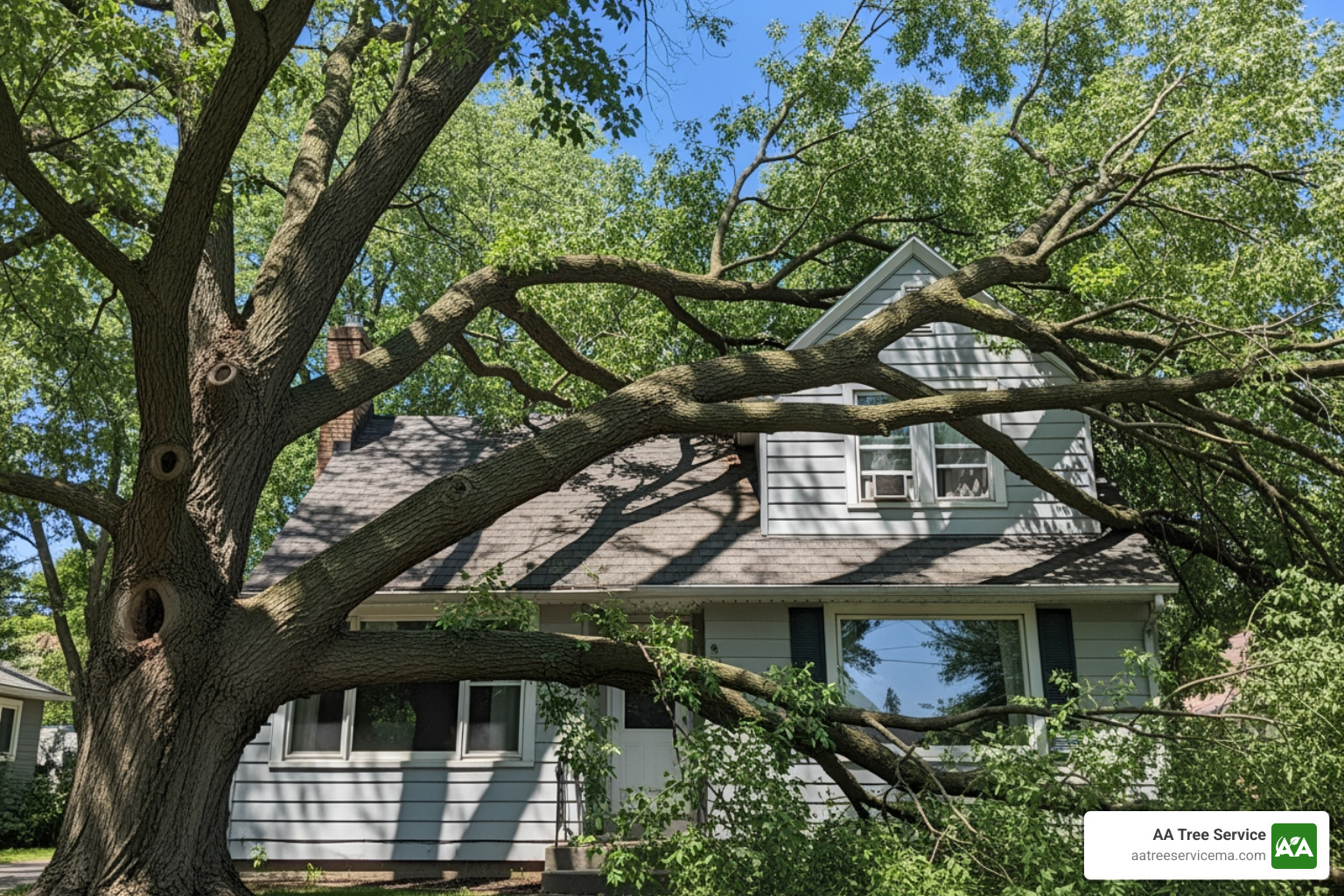
- Branches Touching Buildings or Wires: This is a major red flag. Branches rubbing against your roof or siding can cause significant abrasive damage over time and create moisture traps that lead to rot. They also provide a convenient bridge for pests like ants and squirrels to enter your home. Branches near power lines are an immediate safety hazard.
- Low-Hanging Limbs: If branches are obstructing walkways, driveways, or recreational areas, it’s time for them to be raised. This is a matter of both convenience and liability.
- Cracked, Damaged, or Dead Branches: Look for branches with cracks, peeling bark, or no leaves during the growing season. This visibly dead wood is weak and unpredictable, liable to break and fall at any moment. It should be removed promptly to eliminate the hazard and prevent the spread of decay.
- Crossing or Rubbing Branches: When two branches grow into each other, the constant friction wears away the bark, creating a wound. This wound is a prime entry point for diseases and insects, and the branches themselves are structurally compromised.
- Weak, V-Shaped Branch Unions: Look for branches that join the trunk at a very narrow angle, often with bark included in the union. These are called codominant stems and are structurally weak points that are highly susceptible to splitting, especially on maple, oak, and pear trees.
- A Dense, Overgrown Canopy: If your lawn is struggling to grow beneath a tree, or if your home feels unusually dark, the canopy may be too dense. Thinning the canopy allows more sunlight to reach the ground and improves air circulation, benefiting both the tree and your understory plantings.
- Sudden Sprouting from the Base or Trunk: The appearance of many fast-growing, vertical shoots (called suckers or water sprouts) is often a sign of stress. This can be a response to injury, disease, or previous improper pruning like topping.
The Best Time for Tree Pruning in the North Shore Climate
The timing of tree pruning is crucial and can significantly impact a tree’s health, especially in the varied climate of the North Shore of Massachusetts and New Hampshire. Our distinct seasons dictate the optimal pruning periods for different tree types and objectives.
For most deciduous trees (those that lose their leaves), the period of winter dormancy (December-March) is the gold standard for structural pruning. With the tree inactive, pruning causes minimal stress. The absence of leaves provides a clear view of the tree’s entire structure, allowing our arborists to easily identify and correct issues like crossing branches, weak unions, and deadwood. Pruning during dormancy also sets the stage for a vigorous burst of new growth in the spring.
Late winter or early spring remains an excellent window for removing any branches damaged by winter storms and for general structural work before the tree’s energy is directed into producing new leaves.
Summer pruning is performed for specific goals. It can be used to slow the growth of an overly aggressive tree, as removing leaves reduces its photosynthetic capacity. It’s also the right time to address issues on certain species that “bleed” sap heavily if pruned in late winter, such as birches and elms. For spring-blooming trees and shrubs like magnolias, dogwoods, and lilacs, pruning should occur immediately after they finish flowering to avoid removing the buds that will become next year’s blooms.
Autumn pruning should generally be light. It’s a good time to remove dead or damaged limbs before winter storms arrive. However, heavy pruning in the fall is typically discouraged because it can stimulate a flush of new growth that won’t have time to harden off before the first frost, making it vulnerable to winter damage.
Understanding the specific needs of common North Shore trees is key:
- Oaks: Must be pruned during dormancy (winter) to prevent infection by oak wilt, a deadly fungal disease spread by beetles attracted to fresh wounds in the growing season.
- Maples: Best pruned when fully dormant in winter to avoid the heavy sap flow that occurs in late winter and early spring.
- Birches: Prone to bleeding sap and bronze birch borer. Avoid pruning in spring; late summer or early fall is preferable.
- Pines and other Conifers: These trees require a different approach. Major structural cuts are best made in late winter. Light shaping can be done by trimming the new growth, or “candles,” in late spring.
Understanding the Craft: Professional Tree Pruning North Shore Techniques
When it comes to caring for your trees, not all cuts are created equal. The difference between skilled, professional tree pruning North Shore services and amateur attempts can mean the difference between a healthy, long-lived tree and a hazardous, dying one. Our team of certified arborists emphasizes techniques that align with the highest industry standards (ANSI A300), ensuring your trees are not only beautiful but also healthy and structurally sound for years to come.
Proper Pruning vs. Harmful Topping and Lopping
It’s crucial to understand the distinction between proper, science-based tree pruning and damaging, outdated practices like “topping” or “lopping.”
Proper pruning is a selective and strategic process. It involves the careful removal of specific branches using precise cuts made at the branch collar—the area of raised tissue where a branch joins the trunk. This technique respects the tree’s natural defense mechanisms, allowing it to properly seal the wound and prevent decay. Our tree care professionals focus on understanding tree biology to make cuts that promote natural healing, strengthen the tree’s structure, and enhance its natural form.
In stark contrast, topping or lopping is the indiscriminate cutting of branches and stems to stubs, reducing the tree’s size without any regard for its health or structure. This practice is exceptionally harmful. The large, flush wounds it creates are too big for the tree to seal, leaving them open to extensive rot and disease.
In response to the stress and loss of foliage, the tree produces a dense flush of weak, upright shoots called “water sprouts” just below the cut. These sprouts are poorly attached to the parent limb and are far more likely to break off in a storm than original branches. A topped tree becomes weaker, uglier, and requires constant, costly maintenance to manage the hazardous regrowth. It is a short-term, damaging fix that we never practice.
Common Types of Professional Tree Pruning
Our team offers a range of specialized tree pruning North Shore services tailored to the unique needs of your trees and property. Each technique serves a specific purpose, contributing to the overall health, safety, and aesthetics of your landscape.
Here are some of the common types of professional tree pruning we provide:
- Crown Cleaning: This is the most fundamental type of pruning for mature trees. It involves the selective removal of dead, dying, diseased, and weakly attached branches from the tree’s crown. It is a vital practice for improving safety and tree health by removing hazards and potential sources of infection.
- Crown Thinning: This technique involves selectively removing live branches to reduce the overall density of the canopy. The goal is to improve air circulation and light penetration, which can reduce disease pressure and wind resistance during storms. A proper thinning focuses on removing competing branches from the outer portions of the canopy while retaining the tree’s natural shape, never removing more than 25% of the foliage at once.
- Crown Reduction: When a tree has outgrown its space, crown reduction is the proper method to decrease its height and/or spread. Unlike topping, this technique involves carefully cutting branches back to a strong lateral branch that is at least one-third the diameter of the stem being removed. This ensures the remaining lateral branch is large enough to assume dominance and support healthy growth, maintaining the tree’s structural integrity and natural form.
- Crown Raising (Canopy Lifting): This involves removing lower branches to provide vertical clearance for pedestrians, vehicles, buildings, or to improve a view. To maintain a strong trunk structure, it’s important not to remove too many lower limbs at once. A professional arborist will ensure the tree maintains a healthy live crown ratio, which is typically having live branches on at least the upper two-thirds of the tree’s height.
- Formative (Structural) Pruning: This is perhaps the most important investment you can make in a young tree’s future. By carefully pruning young trees, we can guide their development to establish a single, strong central leader and ensure good branch spacing and attachment angles. This proactive care corrects structural problems early, preventing them from becoming major hazards and ensuring the tree grows into a strong, well-formed, and low-maintenance asset as it matures.
For a deeper dive into how these services can benefit your property, explore our pruning and trimming services page.
The “How”: Hiring Experts and Navigating Local Rules
Choosing the right team for your tree pruning North Shore needs is a critical decision that directly impacts the health of your trees, the safety of your property, and your financial investment. Professional tree care goes far beyond simply cutting branches; it involves specialized knowledge of tree biology, advanced equipment, rigorous safety protocols, and a clear understanding of local regulations.
What to Look for in a Professional Tree Pruning Company
To protect yourself and your property, it’s essential to hire a qualified and reputable company. Here are the key credentials to look for:
- Certifications and Qualifications: Look for companies with ISA (International Society of Arboriculture) Certified Arborists on staff. This certification is the industry’s gold standard, demonstrating that an individual has a high level of knowledge in tree care, has passed a comprehensive exam, and adheres to a strict code of ethics. It’s a clear indicator of professionalism and expertise.
- Comprehensive Insurance: This is non-negotiable. The company must carry both General Liability insurance to cover any damage to your property and Workers’ Compensation insurance to cover any injuries to their crew. Ask for a certificate of insurance directly from their insurance provider. Without this, you could be held liable for accidents or damages.
- Reputation and References: Check online reviews on platforms like Google and Yelp. Ask the company for references from recent, local jobs similar to yours. A reputable company will be proud to share examples of their work and connect you with satisfied customers.
- Written, Detailed Estimates: Do not rely on a verbal quote. A professional company will provide a written proposal that clearly outlines the scope of work (which trees, what type of pruning), the total cost, the timeline for completion, and what is included (e.g., cleanup and debris removal). This protects both you and the company.
- Adherence to Safety Standards: Observe their practices. A professional crew will use appropriate personal protective equipment (PPE), including helmets, eye protection, and chainsaw-resistant legwear. They will follow established safety protocols, such as the ANSI Z133 standards for arboricultural operations, to protect their workers, you, and your property.
Factors Influencing Tree Pruning Costs in the North Shore
The cost of professional tree pruning can vary widely. Understanding these factors will help you interpret your quote.
- Tree Size and Height: This is the biggest factor. Larger trees require more time, labor, and often specialized equipment like aerial lifts or cranes. A small ornamental tree might cost $300-$500, while a large, mature oak could be $1,200-$3,000+.
- Accessibility: A tree in an open front yard is far easier and cheaper to prune than the same tree in a tight backyard with no gate access, located over a delicate garden or on a steep slope.
- Tree Condition and Health: A tree that hasn’t been pruned in a decade and is full of deadwood and structural defects will require more intensive work than a well-maintained tree needing a routine thinning.
- Complexity and Risk: The specific type of pruning and the associated risks heavily influence the price. A simple crown cleaning is less complex than a technical crown reduction over a glass conservatory or near active power lines, which requires a higher level of skill and safety precautions.
- Equipment Needs: Jobs requiring bucket trucks, cranes, or specialized rigging equipment will have those costs factored into the final price.
These prices are average industry costs found online and are not actual prices from AA Tree Service. We always provide free, no-obligation quotes after an on-site assessment to give you an accurate estimate tailored to your specific needs.
Navigating Local Tree Pruning Regulations on the North Shore
The North Shore region, encompassing dozens of towns in Massachusetts and Southern New Hampshire, has a patchwork of local regulations regarding tree maintenance. These ordinances are designed to protect community character, public safety, and valuable natural resources.
While minor pruning is generally allowed without a permit, significant pruning or removal, especially of large trees (often defined by trunk diameter), protected species, or trees within specific zones, may require a permit. For example, many Massachusetts towns have a Tree Warden who oversees public shade trees along roads. Coastal communities like Gloucester, Rockport, and Newburyport often have stringent bylaws for any work done near wetlands or in conservation areas. Inland towns like Andover and North Andover may have specific ordinances related to street trees or trees on historic properties.
Our professional arborists are familiar with the general regulatory landscape across the North Shore of MA and NH. We can advise you on whether your project might require a permit and guide you on where to find information—typically on your town’s official website under the Planning Department, Conservation Commission, or Department of Public Works. This local knowledge is invaluable for ensuring your tree pruning North Shore project is compliant and hassle-free.
Understanding your local environment and planting native trees can also contribute to lower maintenance and healthier plants. Watch Planting Video Why Plant Native Trees?
Frequently Asked Questions about Tree Pruning
We understand you might have questions about the best approach to caring for your trees. Here are some of the most common inquiries we receive regarding tree pruning North Shore services:
How often should I have my trees pruned?
The frequency of tree pruning depends on several factors, including the tree species, its age, health, and location on your property.
- Young trees (up to 10-15 years old) typically benefit from formative pruning every 2-3 years. This helps establish a strong structure, guides their growth, and prevents future problems.
- Mature trees usually require maintenance pruning every 3-5 years. This involves removing dead, diseased, or crossing branches, thinning the canopy, and addressing any structural issues to maintain their health and safety.
- Fruit trees often need annual pruning to improve fruit production and manage their size.
- Hedges and ornamental shrubs may require trimming 2-4 times per year to maintain their shape and density.
Consistent care is key. Our team can assess your specific trees and recommend a custom pruning schedule to keep them thriving.
How much of a tree can be safely removed at once?
This is a critical question, and the general rule among tree care professionals is to never remove more than 25-30% of a tree’s live canopy in a single pruning event.
Removing too much of a tree’s canopy at once, known as “over-pruning” or “lion-tailing,” can severely stress the tree. This stress can lead to:
- Reduced vigor: The tree may struggle to produce enough food through photosynthesis.
- Increased susceptibility to pests and diseases: A stressed tree is weaker and more vulnerable.
- Sunscald: Inner bark, suddenly exposed to direct sunlight, can be damaged.
- Excessive water sprout growth: The tree may react by producing many weak, fast-growing shoots.
- Health decline and even death: In severe cases, over-pruning can be fatal.
The exact safe percentage can also depend on the tree species, its age, and its overall health. Our tree care professionals assess each tree individually to determine the appropriate amount of material to remove, ensuring the tree’s health and longevity.
Can pruning save a sick or dying tree?
Pruning can certainly play a vital role in the recovery of a sick tree, but it’s not a guaranteed cure, especially for a tree that is truly “dying.”
For sick trees, strategic pruning can:
- Remove diseased parts: By cutting away infected branches, we can sometimes stop the spread of disease to healthier parts of the tree.
- Improve airflow and light penetration: This can create a less hospitable environment for certain pathogens and promote overall tree vigor.
- Reduce stress: Removing dead or weak branches allows the tree to focus its energy on healing and growing healthy tissue.
However, if a tree is severely compromised, widely diseased, or structurally unstable, pruning may not be enough. In such cases, removing the tree might be the safest and most responsible option to prevent property damage or injury. Our team can diagnose the health of your tree and recommend the best course of action. For more information on when removal might be necessary, please visit our tree removal services page.
Conclusion
Maintaining the trees on your North Shore property is an investment that pays dividends in beauty, safety, and property value. Through professional tree pruning North Shore services, we ensure your trees are not just surviving, but truly thriving. We’ve explored how expert pruning improves tree health, safeguards your property, and boosts your home’s curb appeal, all while adhering to local regulations and best practices.
From recognizing the subtle signs that your trees need attention to understanding the critical difference between proper pruning and harmful lopping, we hope this guide has illuminated the importance of professional tree care. Our team at AA Tree Service is dedicated to providing meticulous, knowledgeable service, ensuring every cut contributes to the long-term well-being of your landscape.
With over 20 years of experience serving Massachusetts and Southern New Hampshire, we pride ourselves on our commitment to customer satisfaction and the health of your trees. We understand the unique challenges and beauty of the North Shore, and we’re equipped to handle all your tree care needs, including 24/7 emergency services and free, same-day quotes.
Don’t let overgrown or unhealthy trees detract from your property’s potential or pose unnecessary risks. Let us help you cultivate a landscape that is both stunning and secure.
Schedule your professional tree pruning service today and let us help your North Shore trees flourish.