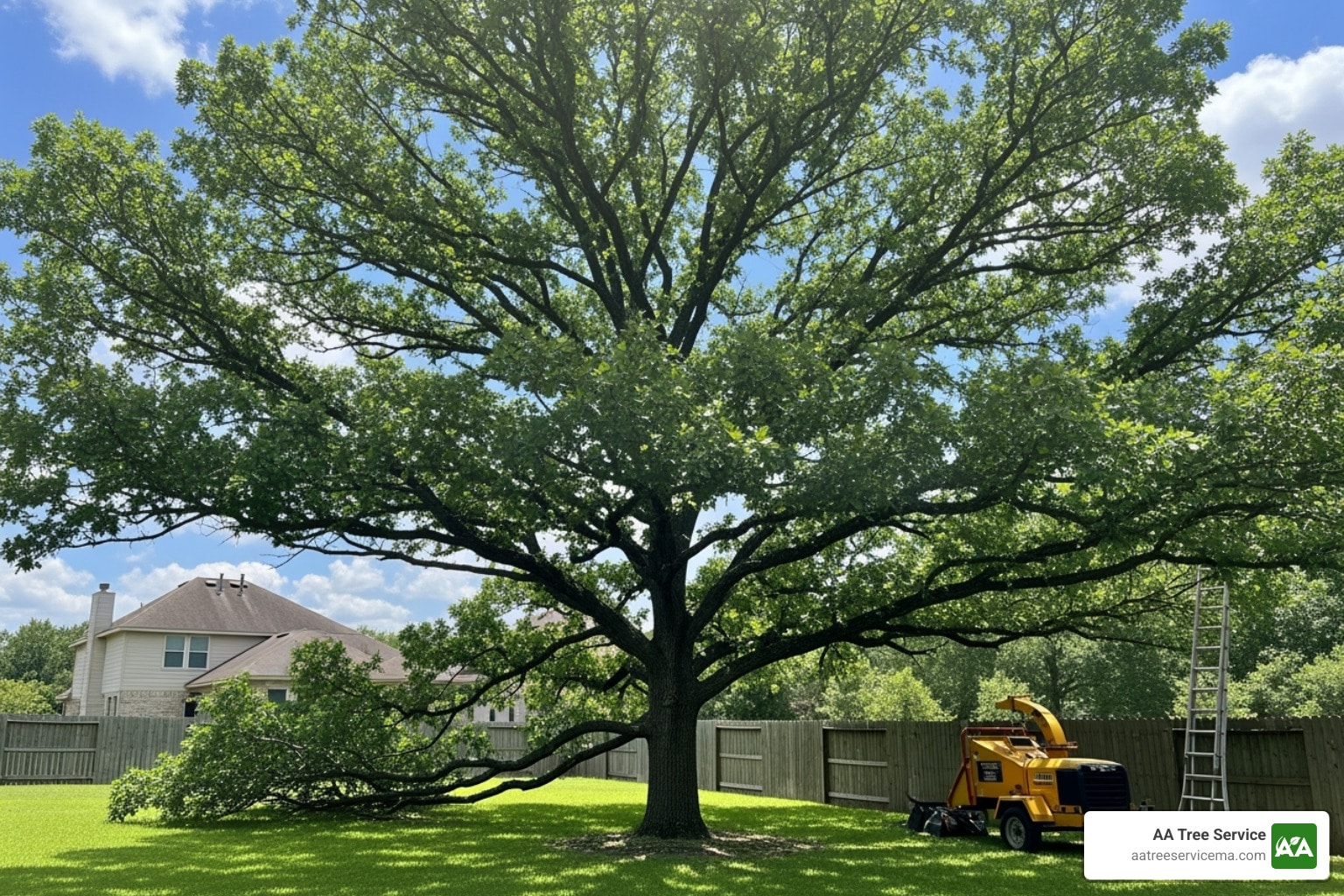
Why Professional Tree Care Matters for Your Property
Local Tree Services provide essential care that safeguards and improves one of your most significant assets: your property. While the national average for tree removal hovers around $750, with costs ranging from $200 to over $2,500, it’s crucial to understand that this is an investment in safety and expertise, not just a simple maintenance task. For homeowners in Massachusetts and New Hampshire, the value of professional tree care extends far beyond simple aesthetics.
Trees are a cornerstone of property value, contributing to curb appeal, providing shade that can lower energy costs, and offering environmental benefits. However, when neglected or improperly managed, they can become a significant liability. The research is unequivocal: tree removal is dangerous work that demands professional knowledge and equipment. An industry expert aptly stated, “You only get one chance to remove a tree the correct way.”
DIY attempts, often spurred by a desire to save money, frequently result in catastrophic consequences. Homeowners lack the training to predict a tree’s fall path, the knowledge to safely operate a chainsaw at height, and the equipment to handle immense weight. This can lead to severe property damage, life-altering injuries from falls or equipment kickback, or even electrocution if a tree is near power lines.
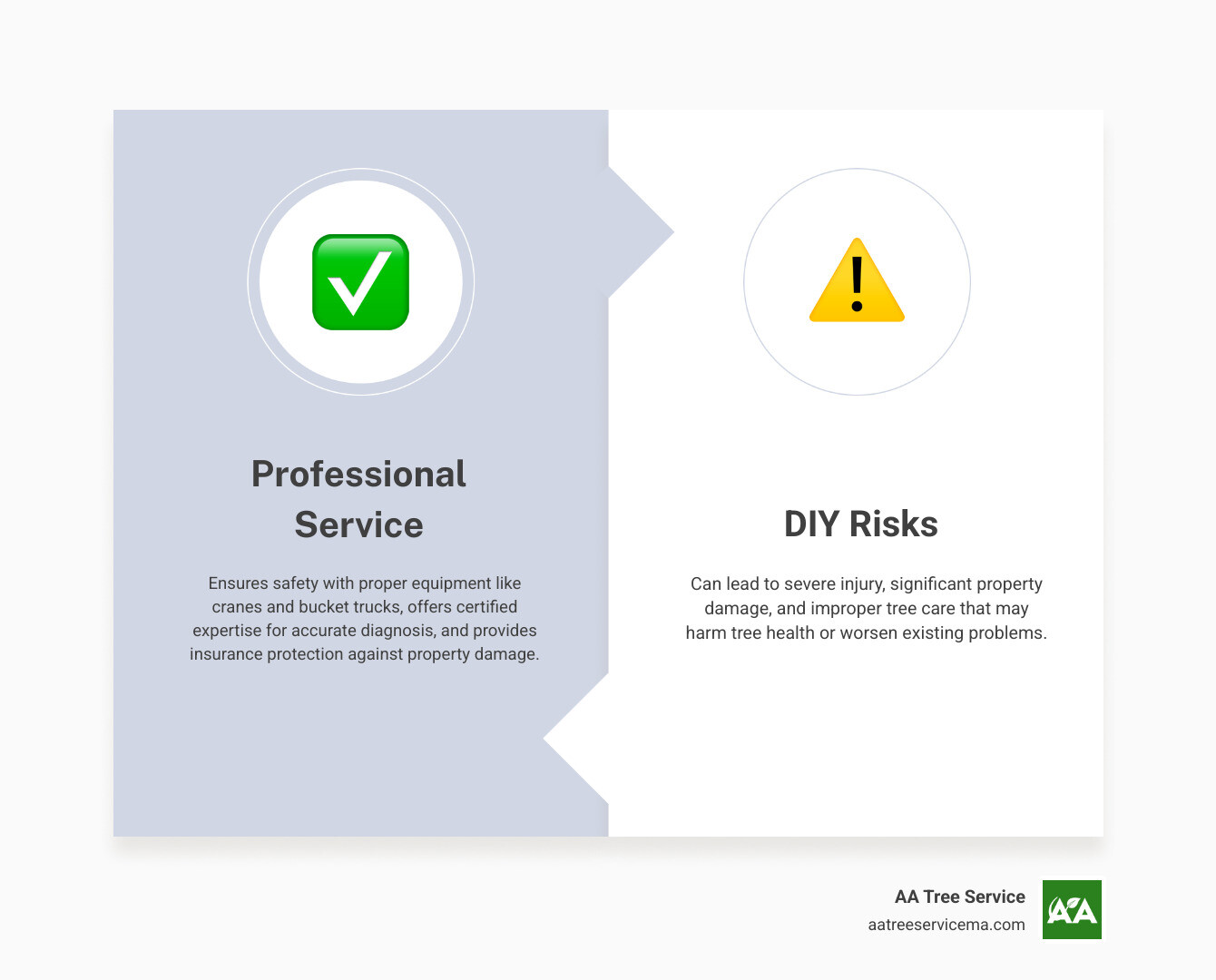
Professional service is indispensable for several critical reasons:
- Safety and Risk Mitigation: Professionals use a systematic approach to dismantle trees, especially large ones. They employ specialized equipment like cranes to lift sections over homes, bucket trucks for safe access, and advanced rigging techniques to lower heavy limbs with precision, minimizing any risk to your property.
- Arboricultural Expertise: A certified arborist does more than just cut branches. They can diagnose complex health issues, identify structural weaknesses, and recommend treatments that can save a valuable tree. Their understanding of tree biology ensures that any work performed promotes long-term health and stability.
- Proper Pruning for Longevity: Effective pruning is a science. Professionals adhere to industry standards, such as removing no more than one-third of a tree’s canopy at once. This selective removal of dead, diseased, or crossing branches improves a tree’s structure, increases its resilience to storms, and prevents the development of future hazards.
For homeowners across New England, selecting the right local tree service is a decision that balances cost, safety, and quality. It’s about entrusting the care of your living assets to experts who can protect your most valuable investment—your home.
Local Tree Services terms to know:
What Services Do Local Tree Companies Offer?
When you seek out Local Tree Services in Massachusetts and New Hampshire, you’ll find that premier companies provide a comprehensive suite of services built on a foundation of safety, advanced equipment, and a profound understanding of arboriculture.
- Tree Removal: This is often the most demanding service, reserved for trees that are dead, diseased, structurally compromised, or situated in a hazardous location. The process is highly technical, beginning with a detailed risk assessment. Professionals then devise a meticulous plan, often involving the use of cranes for trees in inaccessible areas or bucket trucks for tall specimens. The tree is carefully dismantled in sections, with each piece safely rigged and lowered to the ground to prevent damage to your home, landscape, and surrounding property. More info about tree removal.
- Tree Trimming and Pruning: Far more than a simple haircut, professional pruning is vital for a tree’s health, safety, and beauty. A skilled arborist employs specific techniques for different goals: crown cleaning removes dead, dying, or diseased branches; crown thinning selectively removes branches to increase light penetration and air movement; crown raising removes lower limbs to provide clearance for buildings or pedestrians; and crown reduction reduces a tree’s height and spread while maintaining its structural integrity. These practices encourage robust growth and prevent future issues. Learn more through our more info about tree trimming page.
- Stump Grinding: After a tree is removed, the remaining stump can be an unsightly obstacle. Stump grinding uses high-powered machinery with a rotating cutting wheel to grind the stump and major roots down to several inches below the soil surface. This process is far less invasive than complete stump removal (which involves excavating the entire root ball) and allows you to immediately reclaim the area for new grass, a garden bed, or other landscaping features. See details on this process with more info about stump grinding.
- Land Clearing: For larger-scale projects such as new construction, property expansion, or creating pasture, land clearing services remove all trees, stumps, and underbrush from a designated plot of land. This requires heavy machinery like excavators, bulldozers, and forestry mulchers to be done efficiently and safely. Our more info about land clearing explains how we manage these extensive projects.
- Emergency Services: New England weather can be unforgiving. When storms cause trees to fall on homes, cars, or driveways, a rapid response is critical. Reputable companies offer 24/7 emergency services to quickly and safely address these dangerous situations, mitigating further damage and restoring access to your property. Our more info about emergency tree removal covers what to expect.
- Plant Health Care (PHC) & Tree Planting: PHC is a proactive, holistic approach to maintaining the vitality of your trees. It includes services like soil analysis, deep-root fertilization, and Integrated Pest Management (IPM) to prevent and treat diseases and insect infestations. Professionals can also guide you in tree planting, helping you select the right species for the New England climate and ensuring it’s planted correctly for a long and healthy life.
Why Prune or Remove a Tree?
Pruning is a strategic intervention focused on safety, health, and aesthetics. Removing dead or weak branches (widow-makers) prevents them from falling unexpectedly. Eliminating diseased limbs can stop the spread of infection throughout the tree. Thinning the canopy improves structural integrity against high winds, while clearing branches away from utility lines or your roof is essential preventative maintenance. Experts recommend that proper pruning should not remove more than one-third of the canopy at once to avoid stressing the tree.
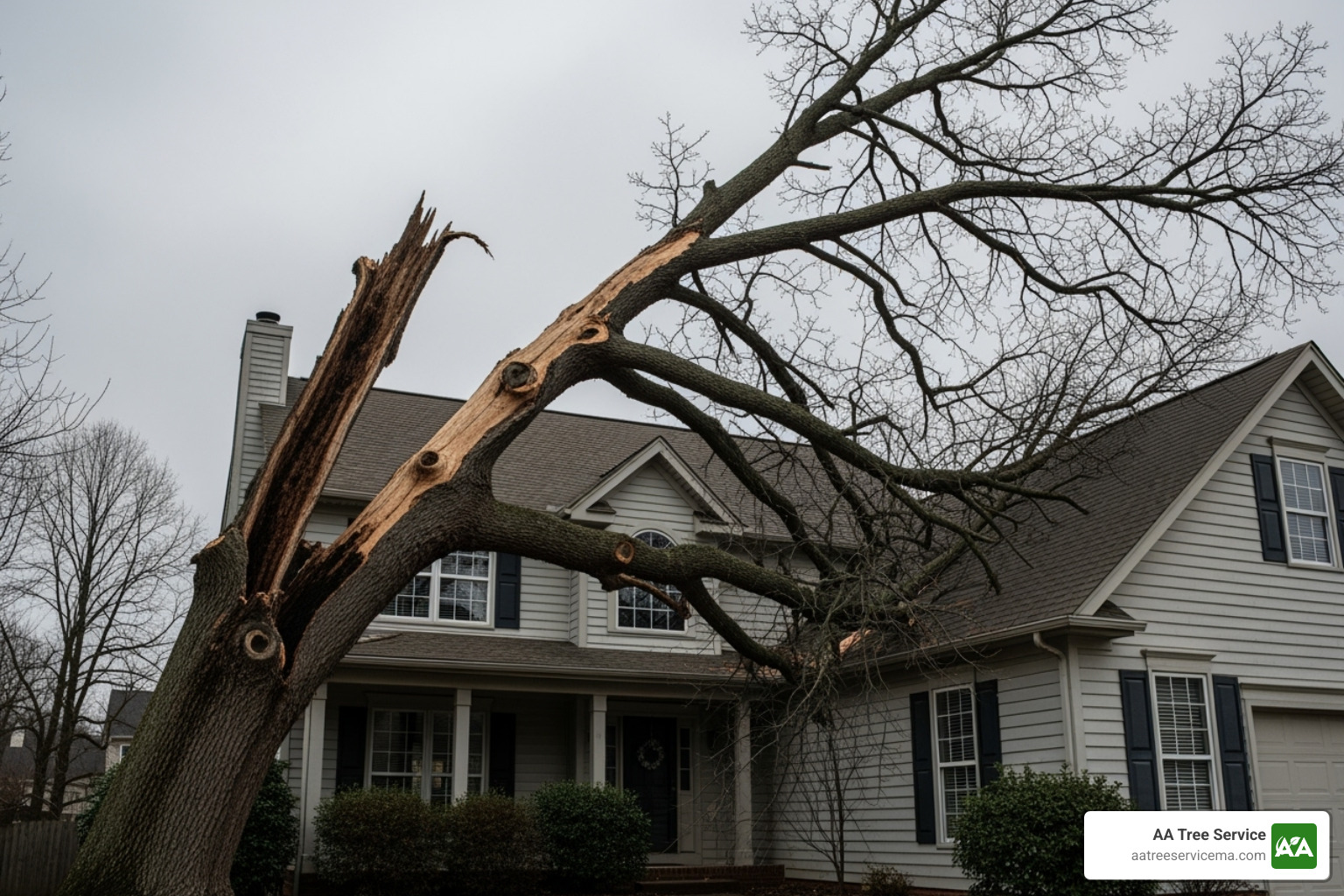
Full tree removal is the final option when a tree is dead, dying, or diseased beyond recovery, as it becomes an unpredictable hazard. Other non-negotiable reasons for removal include severe storm damage that has compromised the tree’s stability, roots that are damaging foundations or septic systems, trees growing too close to structures, or the need to clear land for construction. Additionally, removing invasive species like the Tree of Heaven or Norway Maple is crucial for protecting the health of native ecosystems in Massachusetts and New Hampshire.
How to Tell if Your Tree Needs Professional Help
Trees are living organisms that often display clear signs of stress or decline long before they become an immediate danger. As a homeowner, learning to recognize these warning signs is the first step in knowing when to call for a professional assessment from Local Tree Services.
Key warning signs to look for include:
- A Sudden or Significant Lean: While some trees grow with a natural lean, a sudden shift or a lean accompanied by heaving soil or exposed roots at the base is a red alert for root failure.
- Dead or Hanging Branches: These branches, often called “widow-makers,” are brittle and can break off in any weather, posing a serious risk. Look for branches that lack leaves in the growing season or have a dry, cracked appearance.
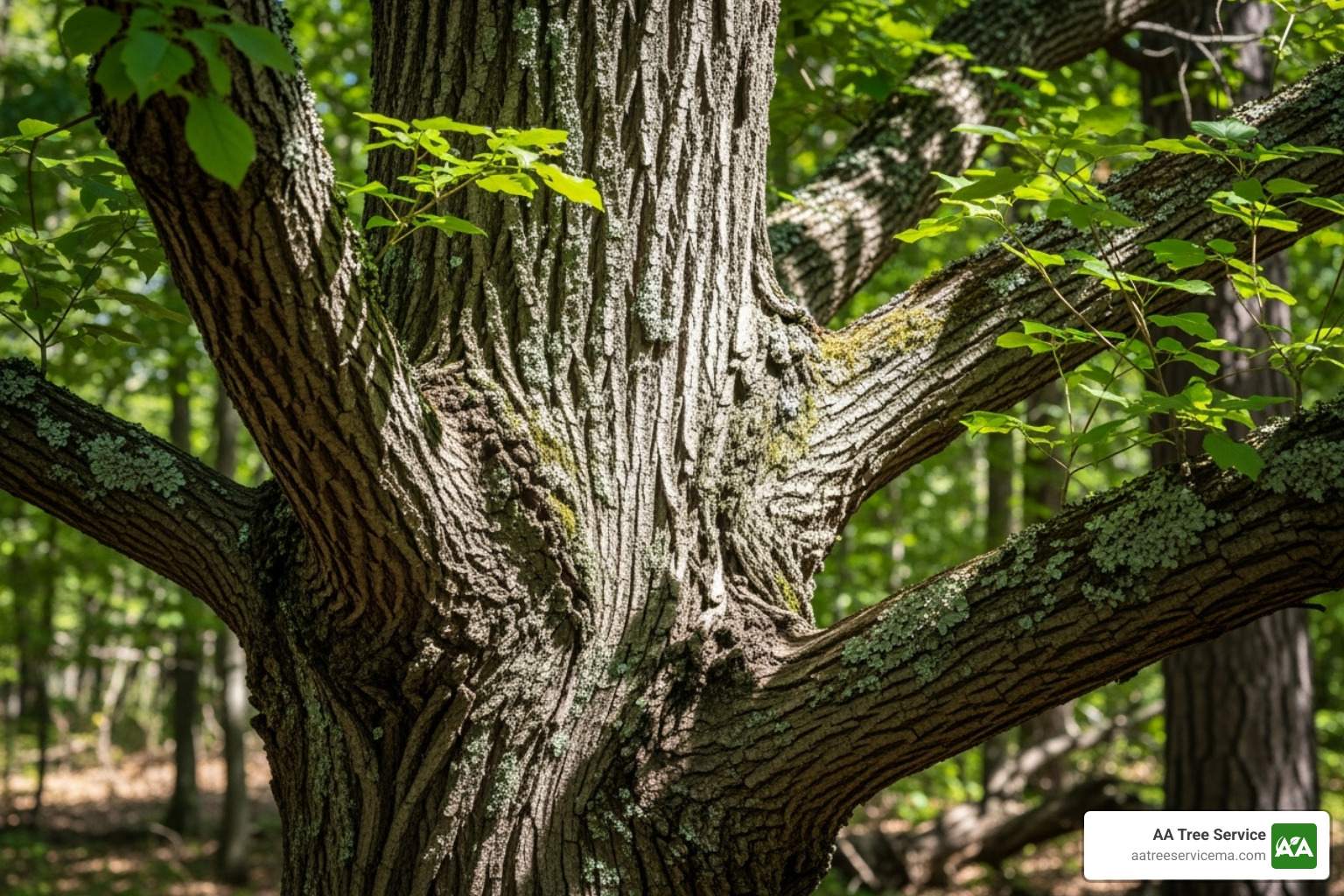
- Cracks or Deep Splits in the Trunk: Deep vertical cracks, especially those that extend through the bark, compromise a tree’s structural integrity. Areas where multiple branches grow from one point with “included bark” are also notoriously weak.
- Cavities, Cankers, or Peeling Bark: Holes or hollows in the trunk suggest internal decay. Cankers (sunken areas of dead bark) and unusual peeling or flaking can also indicate underlying disease or pest problems.
- Fungus or Mushrooms at the Base: The visible fruiting bodies of fungi, like mushrooms or shelf-like conks growing on the trunk or near the roots, are a strong indicator that significant internal root rot is occurring.
- Unusual Leaf Condition: Leaves that are discolored, sparse, or drop out of season can point to a wide range of issues, including disease, pest infestation, nutrient deficiency, or root stress.

If you observe any of these symptoms, a professional evaluation is crucial. An arborist can determine the severity of the problem and recommend a course of action, preventing a manageable issue from escalating into a costly and dangerous emergency.
Common Tree Issues in MA & NH
In Massachusetts and New Hampshire, trees face specific regional threats. Being aware of these can help you spot trouble early.
- Pests: The Emerald Ash Borer (EAB) is a devastating beetle that exclusively attacks ash trees, identified by D-shaped exit holes and canopy dieback. The Asian Longhorned Beetle (ALB) attacks maples and other hardwoods, leaving large, perfectly round exit holes. Hemlock Woolly Adelgid appears as small, white, cottony sacs on the underside of hemlock needles, causing needle drop and dieback. Winter Moths and Gypsy Moths can defoliate entire trees in their caterpillar stage.
- Diseases: Dutch Elm Disease, spread by bark beetles, causes rapid yellowing and wilting of leaves in elm trees. Oak Wilt is a fungal disease that can kill an oak tree within a single season, signaled by browning leaves at the top of the tree. Anthracnose is a fungal disease affecting sycamores and dogwoods, causing irregular dead spots on leaves and cankers on twigs.
What is a Plant Health Care (PHC) Program?
A Plant Health Care (PHC) program is a proactive, science-based approach to tree wellness, shifting the focus from reacting to problems to preventing them. It’s a comprehensive wellness plan for your entire landscape. A robust PHC program includes:
- Routine Monitoring and Inspection: Certified arborists regularly visit your property to inspect trees for early signs of pests, disease, or environmental stress.
- Preventative Treatments: Based on inspections and knowledge of local threats, arborists can apply targeted, often organic, treatments to prevent infestations or infections before they take hold.
- Customized Fertilization and Soil Management: Soil tests determine specific nutrient deficiencies. Arborists then use techniques like deep-root fertilization to deliver essential nutrients directly to the root zone, improving tree vigor and resilience.
- Holistic Landscape Management: A PHC program considers the entire ecosystem of your yard, addressing issues like soil compaction, poor drainage, and improper mulching that can impact tree health.
A PHC program helps your trees not just survive but thrive against the unique challenges of a residential landscape. You can find more info about tree care on our website to see how a program could benefit your property.
Finding Reputable and Qualified Local Tree Services
Choosing the right company for local tree services is arguably the most important step in the process. Because tree work is inherently dangerous and requires a high level of skill, your selection directly impacts the safety of your family and the integrity of your property. Here’s a detailed guide to finding a qualified and trustworthy professional in Massachusetts and New Hampshire.
First and foremost, verify credentials and insurance. This is the absolute, non-negotiable foundation of a safe hire. A reputable company must carry two critical types of insurance: general liability to cover any damage to your (or your neighbor’s) property, and worker’s compensation to cover injuries to their crew. Without worker’s comp, if a worker is injured on your property, you could be held liable for their medical bills. Always ask for a current certificate of insurance sent directly from their insurance agency to you. Additionally, check for any required local or state licenses and ensure the company is in good standing.
Next, seek out proven expertise and certifications. The gold standard in the tree care industry is the ISA Certified Arborist. These professionals have demonstrated a high level of knowledge in tree biology, diagnosis, safety, and proper care by passing a comprehensive exam and must maintain their certification through continuing education.
Some arborists may hold advanced credentials like the ISA Board-Certified Master Arborist designation, the highest level of certification offered. Furthermore, look for companies with Tree Care Industry Association (TCIA) Accreditation. This signifies that the company as a whole has been audited for its adherence to strict safety standards, ethical business practices, and professionalism. You can find a certified arborist via the International Society of Arboriculture and verify company accreditation with the Tree Care Industry Association (TCIA).
Finally, do your due diligence to ensure fair and affordable care:
- Get Multiple, Detailed Quotes: Aim for at least three written estimates. A proper quote should be a detailed document, not a number on a business card. It should clearly outline the scope of work for each tree, specify whether debris hauling and stump grinding are included, and provide a total fixed cost. A dramatically low bid is a major red flag, often indicating a lack of insurance, experience, or proper equipment.
- Check Reviews and Ask for Referrals: Look up the company on Google, the Better Business Bureau (BBB), and other review sites. Pay attention to comments about professionalism, safety, and cleanup. Don’t hesitate to ask for local references you can call.
- Be Wary of Red Flags: Avoid any company that uses high-pressure sales tactics, shows up uninvited after a storm, asks for the full payment upfront in cash, or recommends harmful practices like “tree topping” (indiscriminately cutting the top off a tree). Also, be cautious of anyone who wants to use climbing spikes or spurs on a tree that is not being removed, as this injures the tree.
For more details on working with experts, see our page with more info about certified arborists.
Understanding the Costs of Tree Services
Disclaimer: The following prices are based on national averages and online data, not a direct quote. Costs can vary significantly based on the unique factors of each job. Always request a quote for an accurate price from a local tree service.
When you receive a quote for tree work, it’s important to understand the components that make up the final price. The cost of local tree services is not arbitrary; it’s a calculated figure based on labor, risk, equipment, and expertise. Understanding these factors will help you evaluate estimates and appreciate that you’re investing in a process designed to protect your property and ensure safety.
Key Factors Influencing Cost
- Tree Size (Height and Diameter): This is the most significant factor. A towering 80-foot oak requires vastly more time, labor, and equipment to dismantle safely than a 25-foot ornamental pear. The diameter of the trunk (often measured as DBH, or Diameter at Breast Height) is also critical, as it dictates the weight of the wood and the size of the equipment needed.
- Accessibility: Where the tree is located on your property heavily influences the cost. A tree in an open front yard with easy access for a bucket truck and chipper will be far less expensive to work on than the same tree located in a tight, fenced-in backyard with a septic system, swimming pool, and delicate landscaping underneath. Difficult access often requires more manual labor, complex rigging, and ground protection mats, all of which increase the time and cost.
- Tree Health and Condition: A healthy tree being removed for landscaping purposes is predictable. A dead, decaying, or storm-damaged tree is not. The wood can be brittle and unstable, making the removal process more hazardous and complex. This increased risk requires additional safety precautions and more meticulous work, which translates to a higher cost.
- Proximity to Hazards: Trees looming over houses, garages, sheds, power lines, or fences require an extremely high level of precision. Each limb must be carefully cut, secured with ropes and rigging, and lowered to the ground to avoid any damage. If a tree is near power lines, the work may require coordination with the local utility company. The use of a crane, often necessary for lifting large sections of wood over a structure, is a significant additional cost.
- Scope of Work and Cleanup: A detailed quote will specify exactly what is included. Tree removal itself is just one part. Does the price include chipping all the brush, hauling away all the wood, and raking the area clean? Or will you be left with a pile of logs and branches? Stump grinding is almost always a separate line item, typically costing an additional $100 to $400 or more, depending on the stump’s diameter and accessibility.
Average Tree Removal Pricing
While every job is unique, these national averages can provide a general baseline. The average cost for tree removal is around $750, but the typical range is wide, from $200 to over $2,500, reflecting the variables above.
| Tree Size (Approximate Height) | Average Removal Cost (National) |
|---|---|
| Small (Under 30 ft) | $200 – $500 |
| Medium (30-60 ft) | $500 – $1,200 |
| Large (60-80 ft) | $1,200 – $2,000 |
| Very Large (Over 80 ft) | $1,500 – $4,500+ |
These figures are based on internet data, not actual costs for our services. For an accurate, fixed-price quote for your property in Massachusetts or New Hampshire, a professional on-site assessment is essential. When it comes to dangerous work, the cheapest quote is rarely the best value. Investing in an insured, qualified professional is an investment in peace of mind.
Frequently Asked Questions about Local Tree Services
Here are detailed answers to the most common questions homeowners in Massachusetts and New Hampshire have when considering hiring Local Tree Services.
Why shouldn’t I do extensive tree work myself?
In a word: safety. Tree work is consistently ranked as one of the most dangerous professions for a reason. Professionals have thousands of hours of training and use specialized safety gear (PPE), cranes, bucket trucks, and advanced rigging techniques to manage immense forces and weights safely. A homeowner with a chainsaw is simply not equipped to handle the risks, which include chainsaw kickback, falls from height, electrocution from hidden power lines, and misjudging the fall of a tree, leading to devastating property damage or personal injury. Furthermore, professionals carry the necessary liability and worker’s compensation insurance. This is a critical financial safeguard that protects you from liability in the event of an accident.
What is a certified arborist and why is it important to hire one?
A certified arborist is a tree care professional who has been credentialed by the International Society of Arboriculture (ISA). To become certified, an individual must have a minimum of three years of full-time experience in the field and pass a rigorous exam covering all facets of arboriculture, from tree biology and soil science to safe work practices.
They are required to maintain their certification with ongoing education. Hiring a certified arborist is like consulting a specialist doctor for your trees. They can accurately diagnose diseases, identify subtle structural flaws, and recommend solutions—like cabling or bracing—that may save a tree that a less-qualified person would simply cut down. Their expertise ensures that any work performed, especially pruning, is beneficial for the tree’s long-term health and not just a cosmetic fix.
What specific questions should I ask before hiring a tree service?
To properly vet a company, go beyond just asking for the price. Ask these critical questions:
- “Can you please have your insurance agent send me a current certificate of insurance showing both general liability and worker’s compensation coverage?” This is the most reliable way to verify insurance.
- “Do you have an ISA Certified Arborist on staff who will be involved in my project?” This confirms their level of expertise.
- “Can you provide a detailed, written estimate that breaks down the scope of work and total cost?” This prevents misunderstandings and surprise charges.
- “What equipment will you use for my job, and how will you protect my lawn and property from damage?” This shows they have a plan to respect your property.
- “Do you adhere to ANSI A300 standards for pruning and ANSI Z133 standards for safety?” This indicates they follow nationally recognized best practices.
- “What is your projected timeline for the project, from start to cleanup?” This helps set clear expectations.
- “Can you provide a few local references from recent jobs similar to mine?” Reputable companies will be happy to do so.
Is tree topping bad for my trees?
Yes, absolutely. Tree topping, or the indiscriminate cutting of a tree’s main branches back to stubs, is an outdated and extremely harmful practice. It creates large wounds that the tree cannot properly heal, inviting pests, disease, and decay. It also promotes the growth of weak, poorly attached sprouts that are more likely to break off in a storm than the original branches. A qualified arborist will never recommend topping and will instead use proper pruning techniques like crown reduction to manage a tree’s size.
Do I need a permit to remove a tree on my property?
It depends entirely on your local municipality. Some towns or cities in Massachusetts and New Hampshire have ordinances that protect trees of a certain size or species, requiring a permit for their removal. A professional, local tree service will be familiar with the regulations in your specific area and can often assist with the permit application process.
Conclusion: Investing in Your Property’s Safety and Beauty
Your trees are a living, breathing part of your property’s landscape. They should be a source of pride, beauty, and peace of mind, not a looming source of worry. Engaging professional Local Tree Services is the most effective way to protect your biggest investment—your home—while enhancing its natural appeal and value. This commitment goes far beyond simple aesthetics; it is a fundamental investment in the safety of your home, your family, and your community by proactively managing the risks associated with falling limbs or structurally unsound trees.

The intelligent and responsible approach is always to hire an insured, qualified, and reputable professional. As we’ve detailed, the cornerstones of a trustworthy service are comprehensive liability and worker’s compensation insurance, along with the proven expertise of ISA Certified Arborists on staff. The potential for severe injury, catastrophic property damage, and legal liability makes attempting extensive DIY tree work a risk that is simply not worth taking. A professional service brings not only the right tools and training but also the critical insurance that protects you from financial disaster.
For homeowners throughout Massachusetts and New Hampshire, AA Tree Service has been a trusted partner in property safety and beautification for over 20 years. Our commitment to excellence is demonstrated through our 24/7 emergency services, free same-day quotes, and an unwavering focus on customer satisfaction that ensures every job is completed to the highest standard.
Your trees are valuable, living investments that contribute to your quality of life. Professional care is the key to ensuring they remain healthy, beautiful, and safe for decades to come. When you’re ready to give your trees the expert attention they deserve, take the next step.
Get a free quote for your tree removal project today and find how affordable true peace of mind can be.