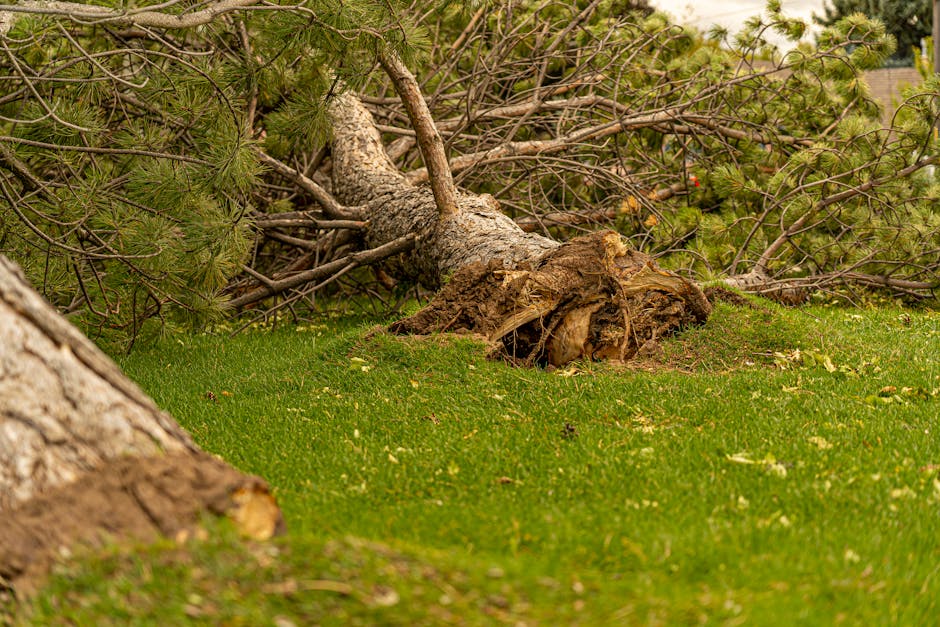
The Aftermath: When Tree Debris Takes Over Your Yard
Looking for tree debris removal near me? Here’s what you need to know:
- Average Cost: $75-$500 depending on volume and type
- Response Time: Same-day service available for emergencies in MA and NH
- Who to Call: Licensed and insured tree service companies like AA Tree Service
- DIY Options: Municipal yard waste programs or rental dumpsters ($280-$500/week)
- What They’ll Remove: Branches, logs, stumps, brush piles, and other tree waste
When storms roll through Massachusetts and New Hampshire, they often leave behind a chaotic mess of branches, logs, and other tree debris. This isn’t just an eyesore—it’s a safety hazard that can block driveways, damage property, and even create breeding grounds for pests.
Tree debris removal near me searches spike after storms, and for good reason. Fallen branches and toppled trees require professional equipment and expertise to clear safely. While some small branches can be bundled for municipal pickup, larger debris requires specialized hauling or on-site chipping.
The process doesn’t have to be complicated. Professional tree debris removal services can transform your cluttered yard back to its pristine condition, typically in just a few hours. They’ll assess the volume, provide a quote, and handle everything from cutting large pieces to hauling it all away.
For homeowners in MA and NH, it’s important to act quickly after storms. Debris left too long can damage your lawn, attract insects, and even increase removal costs as it settles and becomes more difficult to access.
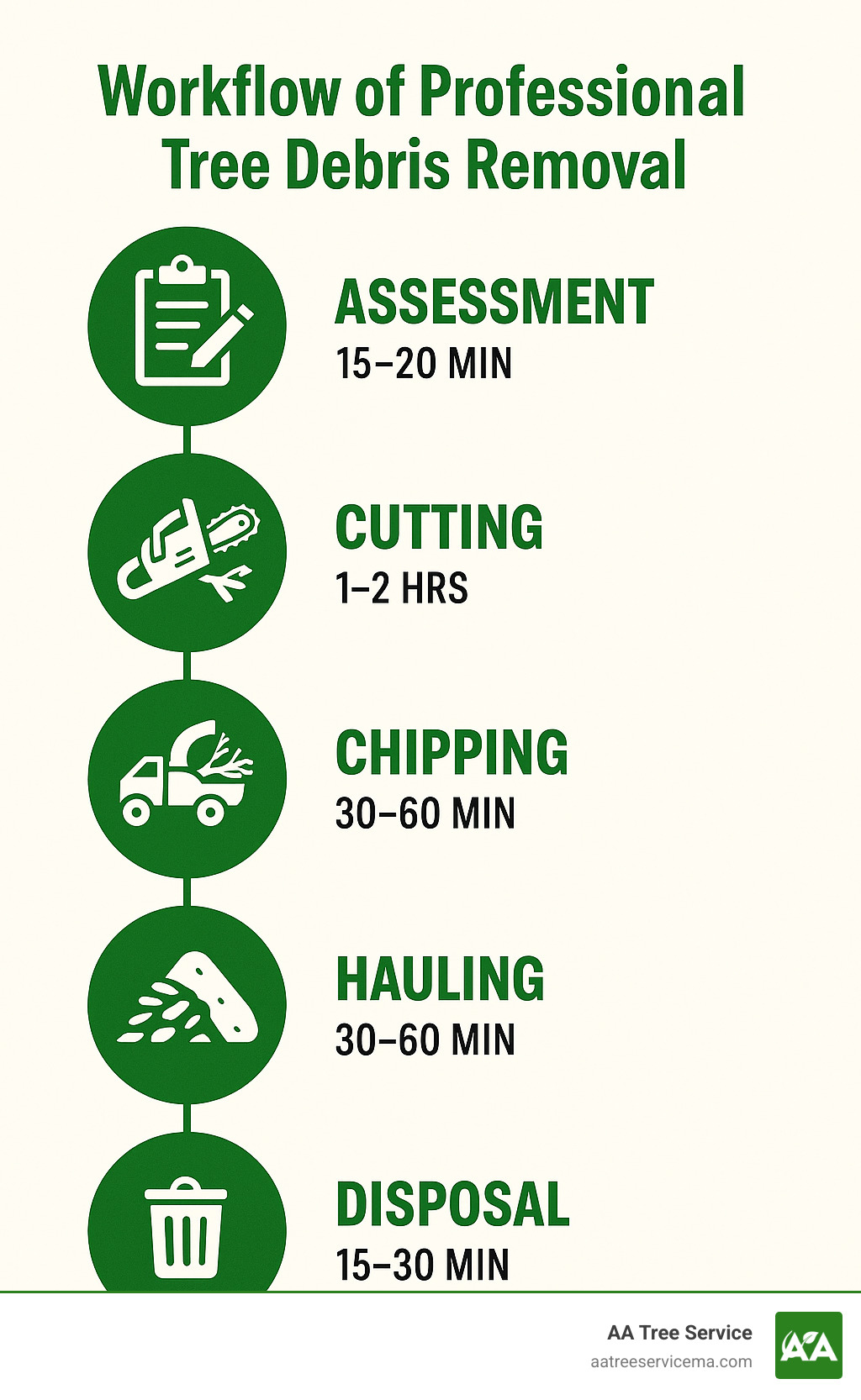
Simple tree debris removal near me word guide:
– storm clean up near me
– emergency tree branch removal
– broken trees
Understanding Tree Debris & Disposal Options
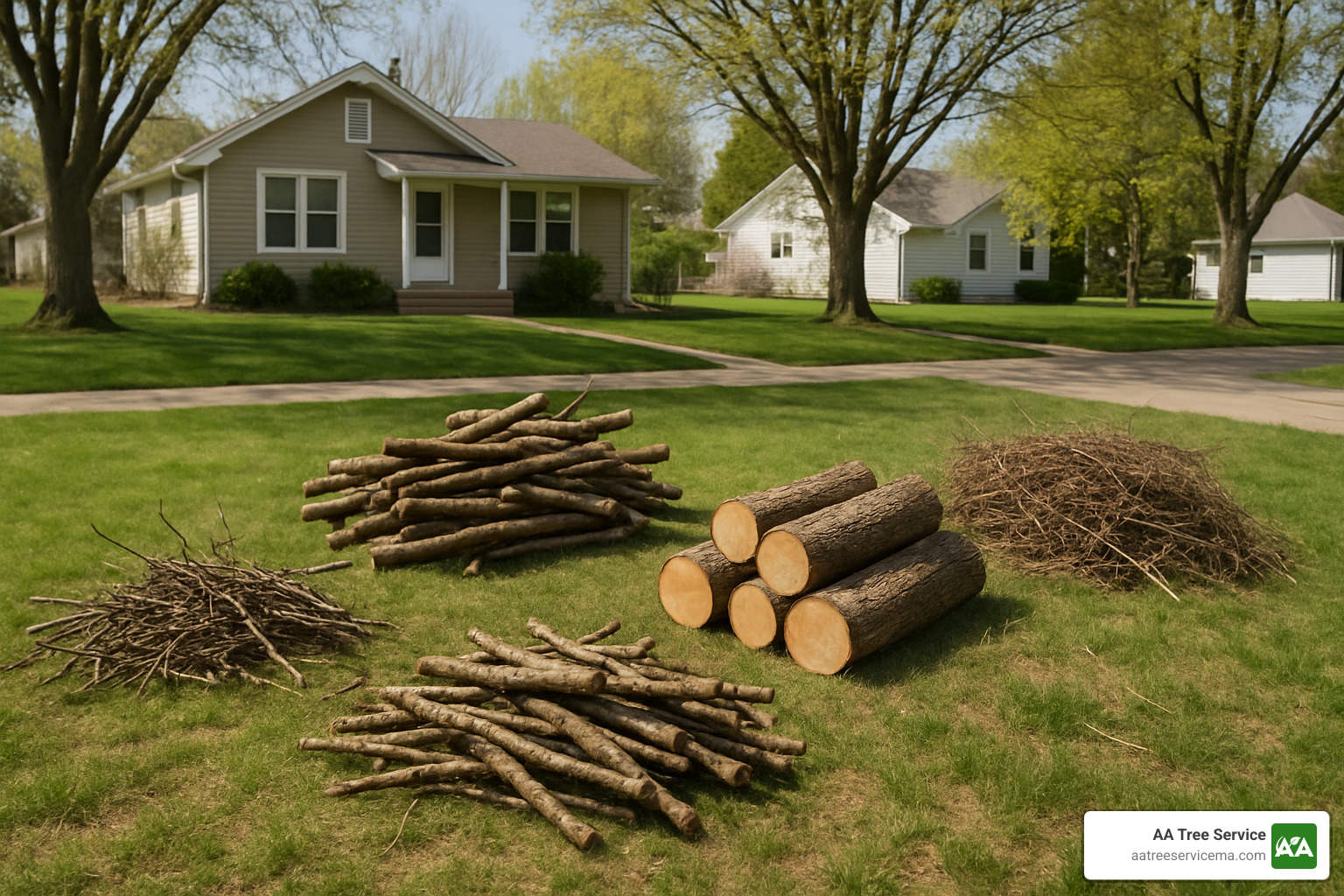
That mountain of branches in your yard after a windstorm isn’t just an eyesore—it’s the beginning of what could become a much bigger problem if left unaddressed. Whether you’re dealing with fallen branches after a nor’easter or cleanup after a necessary pruning project, knowing what you’re facing is half the battle.
What Is Tree Debris & Why It Matters
Tree debris is essentially any woody or leafy material that comes from trees. This includes everything from tiny twigs to massive trunk sections, and each presents its own challenges.
I remember chatting with Sarah from Concord, MA last spring after a particularly nasty storm. “I thought I could just leave those branches at the edge of my property,” she told me. “Two months later, I had a termite problem that cost three times what debris removal would have!”
Beyond pest problems, debris left in your yard creates real safety issues. Those innocent-looking branches become trip hazards, especially for children and elderly visitors. Large logs can shift unexpectedly during rain, potentially rolling onto driveways or damaging property.
Your lawn’s health suffers too. Grass smothered under branches and leaves dies quickly, leaving bare patches that can take seasons to recover. And don’t forget about your home’s value—a debris-filled yard can reduce curb appeal and even affect property appraisals.
During dry summer months in New Hampshire and Massachusetts, accumulated branches and leaves become serious fire hazards. What starts as simple yard waste can become kindling for dangerous situations.
Common Types You’ll Need Removed
Broken limbs and branches make up about 60% of what we see after storms roll through Massachusetts. These range from pencil-thin twigs to substantial limbs as thick as your arm. While you might handle the smallest pieces yourself, larger branches often require professional equipment.
Heavy trunks and logs are the most challenging debris to manage. A two-foot section of maple trunk can weigh over 300 pounds—not something you’ll want to tackle with a wheelbarrow! These heavy pieces require specialized equipment and proper lifting techniques to move safely.
Rotten stumps present unique challenges. They’re not just eyesores but safety hazards that attract pests and can cause trips and falls. Many homeowners in Nashua and Manchester are surprised to learn that stumps continue decomposing underground long after removal, potentially creating sinkholes.
Seasonal leaves and small debris might seem manageable, but large properties in wooded areas of NH and MA can accumulate surprising volumes each fall. Left unaddressed, they compact into dense mats that kill grass and create breeding grounds for lawn diseases.
Main Disposal Paths
Once you’ve assessed what’s in your yard, you’ll need a plan to get rid of it. Here in New England, we have several options:
Professional hauling offers the most convenience—companies like AA Tree Service bring specialized trucks and equipment to remove everything from your property in one go. This typically costs between $75 and $500 per job depending on volume and complexity.
On-site chipping transforms branches and smaller trunks into useful mulch. This approach is particularly popular in garden-proud communities like Lexington and Bedford. Professional chipping services average $100-$150 per hour, with many homeowners choosing to keep some chips for landscaping.
Municipal pickup programs vary widely across Massachusetts and New Hampshire towns. Chelmsford offers seasonal yard waste collection but limits branch diameters to 3 inches, while Amherst accepts larger pieces but requires advance scheduling. Check with your local waste management department for specific guidelines.
Recycling centers throughout the region accept wood waste, though policies vary. The facility in Merrimack, NH takes clean wood waste for free, while others might charge nominal fees based on volume. Find local recycling options through RecyclingSimplified.com.
Composting works wonderfully for smaller debris like leaves and twigs. Many gardeners in both states maintain compost bins that transform this “waste” into black gold for next season’s gardens.
Bob from Lowell shared his experience after we cleared his yard following a summer thunderstorm: “I asked the crew to leave some of the chipped material, and it saved me at least $200 on mulch for my perennial beds. The rest disappeared without me lifting a finger!”
For specialized needs or larger cleanup projects, our comprehensive Tree Debris Removal Service provides custom solutions for properties of all sizes.
Tree Debris Removal Near Me: Finding & Hiring Local Pros
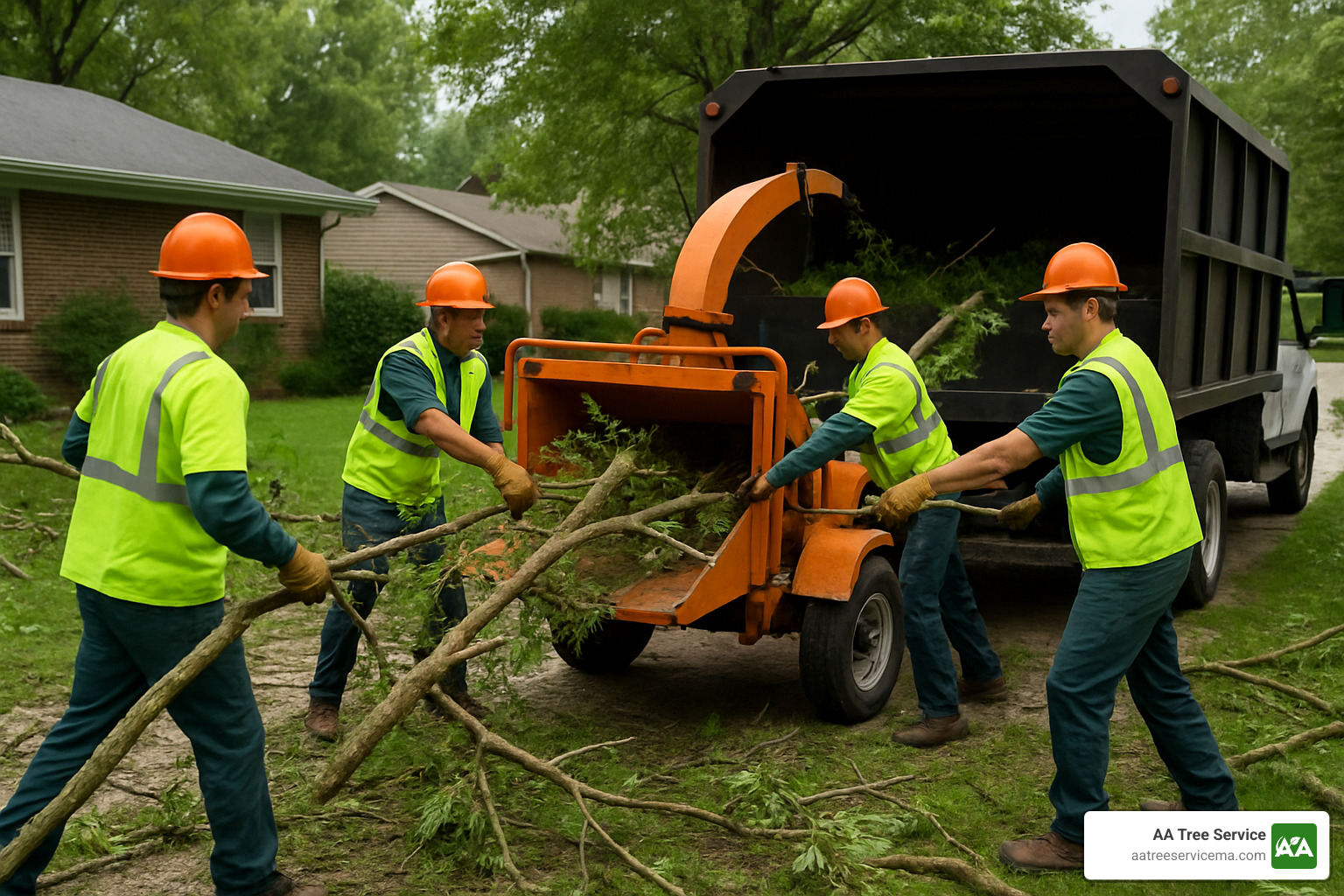
When the search for “tree debris removal near me” becomes urgent after a storm hits your Massachusetts or New Hampshire property, knowing how to find reliable professionals makes all the difference. The right team will transform your debris-strewn yard back to normal quickly and safely, while the wrong choice could leave you with headaches and hidden costs.
Vetting a Company: Must-Ask Questions
I’ll never forget what happened to our customer Mike in Nashua last year. “I hired the first company that could come out after that big ice storm,” he told me. “They seemed professional enough on the phone, but when they showed up without proper equipment and started dragging logs across my wife’s garden beds, I knew I’d made a mistake.”
Don’t let this happen to you. Before hiring anyone for tree debris removal near me services, have a conversation that includes these essential questions:
Do you employ certified arborists? Companies with ISA-certified arborists typically demonstrate higher standards of knowledge and professionalism. While not every debris job requires an arborist, their presence on staff often indicates quality service across the board.
Can I see proof of insurance? This isn’t just a formality—it’s your financial protection. Ask to see current certificates for both liability insurance and workers’ compensation. As our customer Sarah from Bedford finded, an uninsured worker’s mistake can become your expensive problem when they damage your property.
What specific equipment will you bring? Professional debris removal often requires specialized tools like chippers, grapple trucks, and occasionally cranes for difficult access situations. The right equipment means faster, safer work with less impact on your property.
Does your quote include all fees? Many homeowners are surprised by added disposal fees that can significantly increase the final bill. At AA Tree Service, we believe in transparent pricing that covers everything from labor to dump fees—no surprises.
Will you provide a written estimate? Verbal agreements leave too much room for misunderstanding. Always get the scope of work and costs in writing before the job begins.
Can I speak with previous customers? Local references, especially from your town, provide real insights into how a company performs. When we connected Tom from Portsmouth with our past customers, their positive feedback about our thorough cleanup gave him the confidence to hire us after a severe windstorm.
“tree debris removal near me” DIY Alternatives
While professional help is often the safest choice, particularly for large jobs, there are several DIY options worth considering for Massachusetts and New Hampshire residents:
Your local municipal yard waste program might be the simplest solution for smaller amounts of debris. Most towns in MA and NH offer seasonal pickup services, though they typically have strict guidelines. In Lowell, for example, branches must be bundled in 4-foot lengths weighing under 40 pounds, while Burlington’s program runs only from April through November.
Town brush drop-off facilities provide another convenient option. Many communities maintain dedicated sites where residents can dispose of tree debris for free or a small fee. The Earth911 locator tool can help you find the nearest facility to your home.
For moderate jobs, equipment rental might make sense. Daily chipper rentals run about $100-$200, while dumpsters for larger projects typically cost between $280-$500 per week. Just remember that operating equipment like chippers requires proper training and safety gear.
Creative repurposing is another approach worth considering. Those fallen oak logs might become next winter’s firewood, while smaller branches can create wildlife habitats in wooded areas of your property. Many gardeners also value wood chips as premium mulch material.
As Martha from Concord told us after trying to handle storm debris herself: “I spent an entire weekend dragging branches to the curb, only to learn they exceeded the town’s size limits. I wish I’d just called professionals from the start—it would have saved my back and my weekend!”
For properties requiring more extensive cleanup, our Storm Cleanup Services provide rapid response throughout Massachusetts and New Hampshire. And if you’re dealing with larger land management needs, our specialized Land Clearing service offers comprehensive solutions beyond simple debris removal.
How Much Does Tree Debris Removal Cost?
Understanding the cost factors for tree debris removal helps you budget appropriately and avoid surprises. Based on industry data (not specific to AA Tree Service), here’s what you might expect to pay for tree debris removal in Massachusetts and New Hampshire.
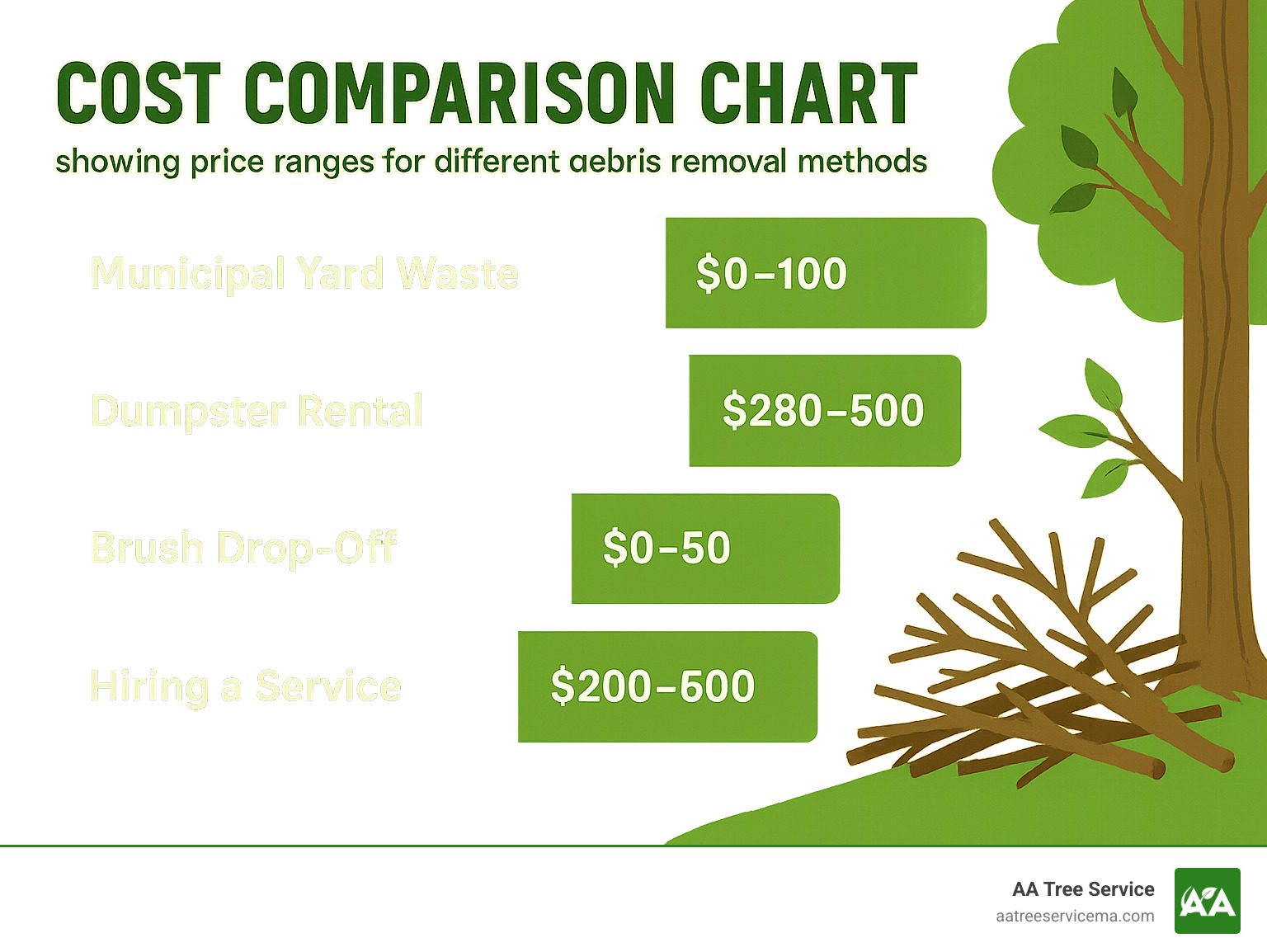
The average cost for tree debris removal near me services ranges widely from $75 to $1,500, with most homeowners spending between $150 and $450 for standard post-storm cleanup. It’s quite a spread, I know! This wide range exists because every situation is unique – the maple that split during last week’s thunderstorm creates a very different cleanup scenario than the brush pile from your spring pruning project.
When you’re looking at quotes, you’ll typically see these core costs broken down:
– Basic hauling: $75-$250 per dump trip
– Labor costs: $50-$100 per hour for loading and processing
– Chipping services: $100-$150 per hour
– Stump removal (if needed): $80-$250 per stump
I recently spoke with Maria from Lowell, MA who shared her post-storm experience: “I was quoted prices ranging from $200 to $900 for the same job. The cheapest quote didn’t include dump fees, while the highest included services I didn’t need. Finding a company that provided a detailed breakdown helped me understand exactly what I was paying for.”
Factors That Drive Price Up or Down
Several key variables can significantly impact your final bill when it comes to clearing tree debris:
Load size and volume makes a huge difference in your final cost. That single fallen oak might look like one cleanup job to you, but professionals see multiple truck loads. Each trip to the disposal site adds to your total.
Tree species and wood density matter more than you might think. Hardwoods like oak and maple are substantially heavier and more difficult to process than softer woods like pine. Your crew will work harder (and longer) with dense hardwoods.
Distance to disposal sites affects transportation costs. If your property is 30 miles from the nearest processing facility, expect to pay more than someone who lives just down the road from one.
Urgency and timing almost always impact pricing. Need that debris gone right now after a major storm? Emergency or after-hours service typically commands premium rates – about 25-50% more than scheduled maintenance removal. Patience can pay off when the situation isn’t hazardous.
Accessibility challenges can quickly complicate what seems like a simple job. Debris located in fenced backyards with narrow gates or on steep hillsides may require specialized equipment or additional labor hours. The harder it is to reach, the more it typically costs.
Equipment requirements vary by job. While simple branch removal might need just a truck and chipper, larger jobs could require cranes, specialized grapple trucks, or heavy machinery – all of which add to your bottom line.
Additional services needed beyond basic hauling will increase costs. Stump grinding, root removal, or landscape restoration work all represent add-ons to the base debris removal price.
Money-Saving Tips
While quality tree debris removal near me services aren’t cheap, I’ve gathered some practical strategies to help manage costs:
Bundle services whenever possible. Combining debris removal with planned tree pruning or removal often secures package pricing. Think of it like buying in bulk – companies appreciate the efficiency of completing multiple services in one visit.
Schedule during off-peak times if your situation isn’t hazardous. Winter months or non-emergency periods typically see lower demand, which can translate to better rates. The debris from that autumn windstorm might cost less to remove if you can wait until January.
Prepare for efficient removal before crews arrive. Clear access paths, move vehicles, and identify all material needing removal. This simple step reduces labor time and costs by making the crew’s job faster and easier.
Compare quotes carefully, ensuring all quotes cover the same scope of work. The lowest quote isn’t always the best value if it excludes crucial services like disposal fees or thorough cleanup. Ask specifically about what’s included and get it in writing.
Consider partial DIY approaches for suitable portions of the job. Handle what you safely can (like raking small debris or bundling smaller branches) and hire professionals for the heavy or dangerous materials. This hybrid approach can significantly reduce costs.
Check insurance coverage after storms. Homeowner’s insurance may cover some debris removal costs, particularly if trees have damaged structures. Document everything with photos before cleanup begins and contact your insurance provider promptly.
A customer from Amherst, NH shared this practical tip: “After getting three quotes, I realized I could save nearly $200 by moving my cars and clearing a path to the backyard before the crew arrived. That small effort on my part made their job much faster.”
For more detailed information about pricing factors, you might find this tree debris removal cost data helpful in understanding industry averages. And remember – for specific pricing on your project, requesting a free same-day quote from AA Tree Service or other reputable local providers will give you the most accurate figures for your unique situation.
DIY Safety & Yard Preparation Tips
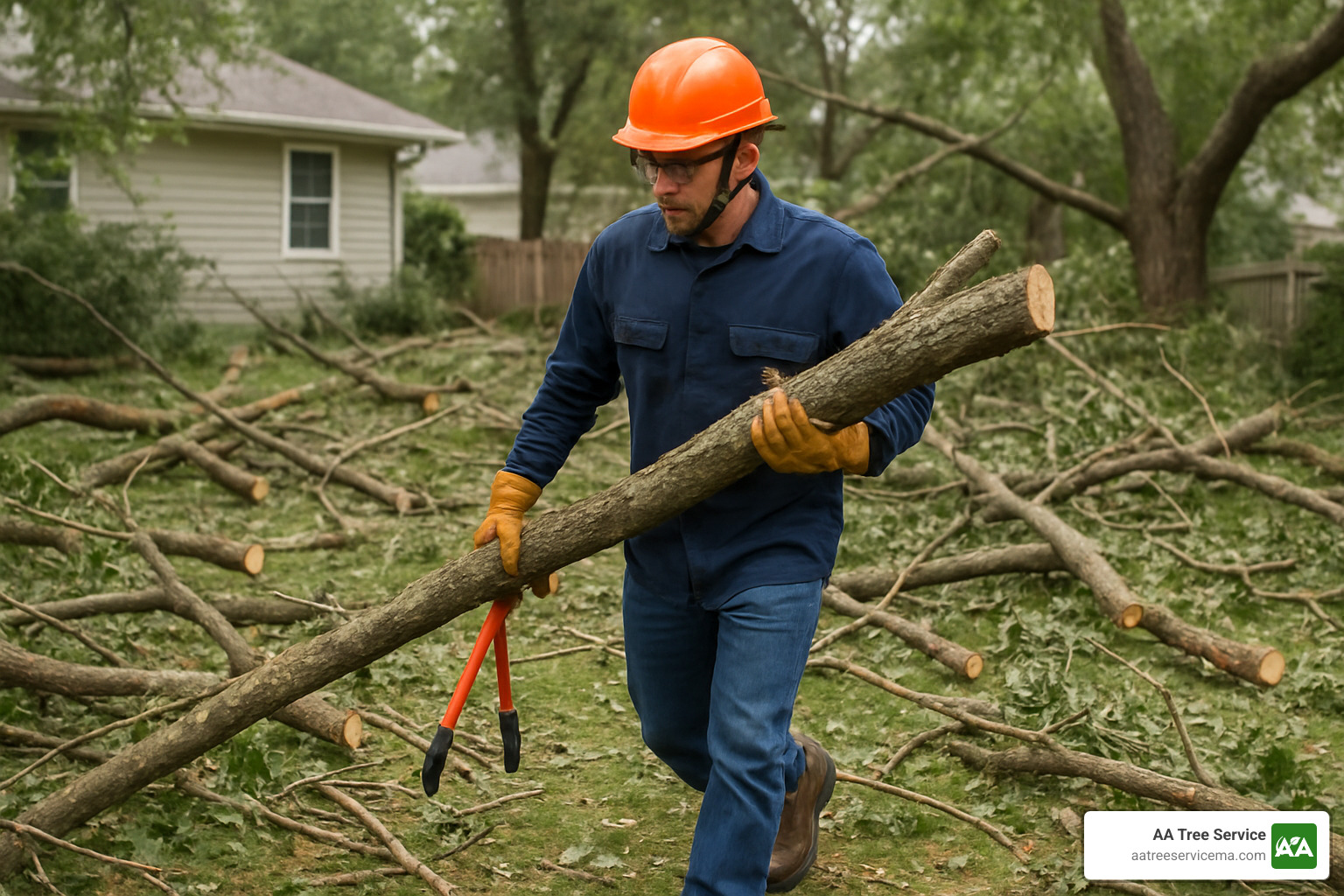
Thinking about tackling some tree debris removal near me projects yourself? I completely understand the appeal – it can save money and give you a sense of accomplishment. But as someone who’s seen the aftermath of DIY gone wrong, I need to stress something important: safety absolutely must come first.
Even what looks like a simple branch cleanup can turn dangerous in seconds. Take it from Mike in Burlington, MA, who learned this lesson the hard way: “I thought clearing a few branches wouldn’t be a big deal until a hidden branch under tension snapped back and nearly hit my face. Now I don’t touch storm debris without proper gear.”
Before you pick up that first branch, make sure you’re properly equipped. A good helmet with face shield protects against falling debris, while heavy-duty work gloves prevent painful cuts and splinters. Safety glasses shield your eyes, and ear protection is non-negotiable when operating power equipment. If you’re using a chainsaw, specialized chainsaw chaps could literally save your leg, and steel-toed boots provide both protection and better stability on uneven ground.
Power tools require extra caution. Always read those operator manuals (yes, really!), and maintain at least 10 feet of distance from any power lines. Never work alone with dangerous equipment, keep all safety guards in place, and be extremely aware of tension in bent branches that can spring violently when cut.
If your cleanup involves ladder work, you’re entering another risk zone. Always secure ladders to stable anchor points and maintain three points of contact at all times. That top step might look tempting, but it’s never worth the risk. For every 4 feet of ladder height, position the base 1 foot away from the wall for optimal stability, and never set up on soft or uneven ground.
Your medical preparations matter too. Make sure your tetanus shot is current (they’re recommended every 10 years), keep a first aid kit handy, and always have a charged phone for emergency calls. After storms, avoid working in standing water where bacteria may be lurking.
Storm Prep & Insurance Snapshot
Before storm season hits Massachusetts or New Hampshire, take time to understand your financial safety net. Most homeowner’s insurance policies include some coverage for tree debris removal, but the details matter enormously. Typically, policies cover removal when trees damage insured structures, but may offer limited or no coverage for trees that simply fall in your yard. Standard policies generally provide between $500 and $1,000 for debris removal – helpful, but often not enough for major cleanup.
FEMA assistance has even stricter criteria, generally only becoming available if debris blocks access to your home or presents an immediate safety hazard. This is why documentation is so crucial – take dated photos of your property before storm season begins. These images can make the difference in getting your claim approved.
Jane from Concord, NH finded this firsthand: “After documenting everything with photos and understanding my policy limits, I was able to get $800 toward debris removal when a maple fell on my garage. Without the photos, they might have denied my claim.”
Don’t forget about your deductible either. Even with coverage, you’ll typically need to pay this amount before insurance assistance begins.
Preparing Your Yard for Crew Arrival
If you’ve wisely decided to hire professionals like AA Tree Service, a little preparation goes a long way toward ensuring efficient service and potentially lowering your costs.
Start by clearing access paths – remove vehicles, lawn furniture, and anything else that might slow down the crew. Mark utilities and hazards like sprinkler heads, invisible fencing, and septic components that might not be immediately visible.
Designate a staging zone where equipment and temporary debris piles can be placed. Keep your pets secured indoors for both their safety and the crew’s efficiency. If you have special instructions – perhaps certain plants to protect or specific debris you’d like saved for firewood – communicate these clearly before work begins. And don’t forget to ensure gate access by opening gates or providing access codes if needed.
One of our customers in Newburyport, MA noticed the difference preparation made: “Having everything ready when your crew arrived meant they could get straight to work. The job was done in half the time I expected!”
For situations involving hazardous broken trees that pose immediate danger, specialized emergency response is crucial. AA Tree Service offers Broken Trees services with rapid response times to minimize risk to your property throughout Massachusetts and New Hampshire.
Frequently Asked Questions about Tree Debris Removal
How quickly can “tree debris removal near me” services arrive after a storm?
When Mother Nature releasees her fury across Massachusetts and New Hampshire, the clock starts ticking on cleanup efforts. Response times for tree debris removal near me services vary significantly depending on storm severity and regional demand.
At AA Tree Service, we understand that fallen trees don’t wait for convenient business hours. That’s why we prioritize true emergencies—situations where debris is creating immediate safety hazards or blocking access to your home. For these urgent scenarios, our teams often arrive within hours for our Massachusetts and New Hampshire neighbors.
“I couldn’t believe how quickly they responded,” shares Tom from Portsmouth, NH. “After that nasty windstorm took down three trees in my yard, AA Tree Service had a crew at my house within 4 hours. They cleared my driveway first so I could get my car out, then returned the next day to handle the rest of the cleanup.”
During major weather events that affect multiple communities, please understand that wait times naturally increase as demand surges. Most professional services implement a triage system during these periods, addressing dangerous situations first (like trees on houses or blocking driveways) before moving to aesthetic cleanup needs.
For non-emergency situations, you can typically expect service within 1-3 days from reputable companies. Just keep in mind that after-hours or immediate emergency response usually comes with premium rates—typically 25-50% higher than standard service costs, but well worth it when safety is at stake.
Does homeowner’s insurance help pay for tree debris hauling?
The question of insurance coverage for tree debris removal isn’t always straightforward, but understanding a few key principles can help you steer the claims process.
When insurance typically covers removal:
When trees damage insured structures like your home, garage, fence, or shed, insurance generally covers debris removal as part of the claim. Most policies include coverage limits ranging from $500 to $1,000 specifically for the removal portion.
Many policies also provide coverage when fallen trees block essential access points to your property, even without causing structural damage. This ensures you can safely enter and exit your home after a storm.
When coverage gets tricky:
Trees that simply fall in your yard without damaging structures or blocking access are typically not covered unless you have an additional “yard and garden” endorsement on your policy. This is an important distinction that catches many homeowners by surprise.
The cause of the fall matters too. Storm damage is generally covered, while neglect (like failing to remove a visibly dead tree) might be excluded from coverage.
Maria from Chelmsford, MA learned these distinctions firsthand: “My insurance covered $750 toward debris removal after a pine fell on my shed during a nor’easter. The key was having photos showing the tree was healthy before the storm and getting an arborist’s statement confirming it was wind damage, not neglect.”
If you’re facing storm damage, take these important steps for insurance claims:
1. Document everything with photos before cleanup begins
2. Contact your insurance company promptly
3. Get written estimates from licensed, insured tree services
4. Keep all receipts and documentation
Can I keep the chips or firewood from my own trees?
Absolutely! Repurposing materials from your own trees isn’t just economical—it’s environmentally friendly too.
Wood chips and mulch from your trees make excellent landscape material. Fresh chips can suppress weeds, retain soil moisture, add nutrients as they decompose, and create attractive garden paths. One caution: fresh wood chips temporarily deplete nitrogen from soil as they decompose, so keep them away from direct contact with plant stems and vegetable gardens until properly composted.
Firewood is another popular option, especially with our cold New England winters. Just remember that proper seasoning is essential—most hardwoods need 6-12 months of drying before they’re ready for your fireplace or wood stove. Stack logs off the ground with good air circulation, cover the top while leaving sides exposed for airflow, and check moisture content before burning (should be below 20%).
For high-value trees like oak, walnut, or cherry, portable sawmill services can transform larger trunks into beautiful lumber for woodworking projects. Some homeowners even create wildlife habitats with strategic placement of logs and brush piles in wooded areas of their property.
Robert from Bedford, NH made the most of his fallen oak: “The AA Tree Service crew cut all the oak logs to my specified length for splitting later and chipped the smaller branches right onto my garden paths. It saved me money on the removal and on buying mulch!”
When working with professional services, simply let the crew know in advance what materials you’d like to keep. Most companies are happy to:
– Chip branches directly onto garden beds
– Cut logs to firewood length
– Leave chips in a designated pile
– Haul away only what you don’t want
For comprehensive cleanup beyond just tree debris, our Storm Cleanup Services provide complete property restoration throughout Massachusetts and New Hampshire.
Conclusion
When your yard becomes overwhelmed with tree debris – whether from fierce New England storms, necessary pruning, or complete tree removal – swift and proper cleanup isn’t just about aesthetics. It’s essential for your family’s safety, your property’s value, and ultimately, your peace of mind.
Throughout Massachusetts and New Hampshire communities, we’ve seen how homeowners face this challenge in different ways. Some tackle smaller cleanups themselves, while others wisely call in professionals for larger or more hazardous situations.
As you consider your options, keep these important points in mind:
Safety must always come first. Whether you’re handling smaller branches yourself or watching our crew manage larger limbs, proper equipment and procedures prevent injuries and property damage. We’ve seen too many DIY projects lead to emergency room visits when safety precautions were overlooked.
Cost considerations vary widely based on your specific situation. While basic hauling might start around $75, complex situations involving multiple trees or difficult access can reach $1,500 or more. Understanding what drives these costs helps you budget appropriately and avoid surprises.
Your insurance policy might provide help after storms. Many Massachusetts and New Hampshire homeowners don’t realize their policies often cover debris removal when trees damage structures or block access to their homes. Always document with photos and check your specific coverage.
Local disposal options are plentiful throughout our service area. From municipal yard waste programs to recycling centers to professional services like AA Tree Service, our communities offer solutions for every situation and budget. The Earth911 locator can help you find nearby facilities if you’re handling smaller amounts yourself.
Environmentally responsible disposal benefits everyone. Whether we’re recycling wood chips into beneficial mulch, creating habitat piles in wooded areas, or processing materials for biomass energy, proper disposal practices support our New England environment and communities.
With over two decades serving neighborhoods throughout Massachusetts and New Hampshire, our team at AA Tree Service understands the unique challenges that come with our region’s weather patterns and tree species. Our comprehensive tree debris removal near me services include round-the-clock emergency response, free same-day quotes, fully licensed crews, and modern equipment designed for efficient removal with minimal impact to your property.
As Mary from Nashua recently told us after we cleared her yard following a particularly nasty ice storm: “What impressed me most wasn’t just how quickly you removed everything, but how carefully you worked around my perennial beds. You treated my yard like it was your own.”
When searching for “tree debris removal near me” in Massachusetts or New Hampshire, look for a company that combines experience, proper equipment, fair pricing, and a genuine commitment to customer satisfaction. Your property deserves nothing less than expertise delivered with care.
For emergency situations requiring immediate attention, our Emergency Tree Removal service provides round-the-clock response throughout our service area, ensuring you’re never left dealing with hazardous situations alone.