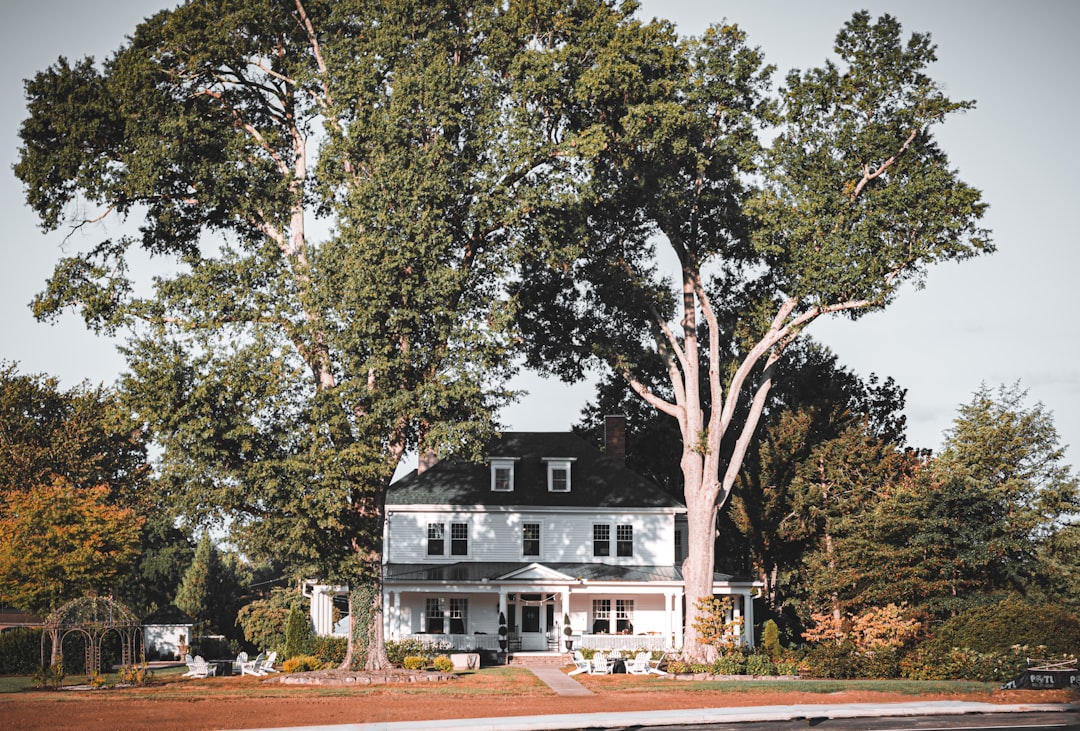
Why Professional Tree Removal in Massachusetts Protects Your Home and Property
Tree removal MA services connect you with licensed professionals who can safely remove hazardous, diseased, or unwanted trees from your property. If you’re looking for tree removal in Massachusetts, here’s what you need to know:
Quick Guide to Tree Removal in MA:
- Average Cost (based on internet data; not AA Tree Service pricing): $500-$1,500 for small trees; $1,500-$3,000 for medium trees; $3,000-$15,000+ for large or complex removals. Costs can vary widely, and the high end can be 3x or more than average depending on site conditions.
- Key Services: Tree removal, stump grinding, emergency storm cleanup, land clearing, crane services.
- What to Look For: Fully insured, licensed crews, certified professionals, free estimates, 24/7 emergency availability.
- Permits: Required in many MA towns for trees in Wetland Resource Areas or on conservation land.
Massachusetts homeowners face unique challenges with tree care. Heavy nor’easters, aging trees near homes, and strict local regulations make professional tree removal a necessity for safety and compliance.
Whether you’re dealing with a storm-damaged tree, a leaning oak threatening your roof, or need to clear land, understanding the tree removal process helps you make informed decisions. This guide covers everything from identifying hazardous trees to finding a reputable, insured company serving Massachusetts and New Hampshire.
Tree removal ma terms to remember:
Identifying When a Tree Needs to Be Removed
Trees are beautiful additions to a property until they become a liability. Knowing when a tree has crossed the line from asset to hazard can protect your family and home. Tree removal MA becomes necessary for several reasons, not all of which are emergencies.
The most common reasons for tree removal include:
- Hazardous Trees: Dead, diseased, or structurally compromised trees pose serious risks, especially during Massachusetts nor’easters. A tree with poor structure, co-dominant stems (two main trunks growing together), or included bark has weak points that are prone to failure under the stress of heavy snow, ice, or powerful winds. A weakened tree can topple onto your home, car, or power lines, causing catastrophic damage.
- Storm Damage: After a major weather event, partially uprooted trees, snapped limbs, or split trunks require quick action to prevent further damage. A tree that has been struck by lightning may have internal damage that is not immediately visible but can lead to failure weeks or months later.
- Disease and Pests: Infestations can spread quickly and devastate your landscape. In Massachusetts, common culprits include Dutch elm disease, emerald ash borer (which targets ash trees), Asian Longhorned Beetle (which attacks maples and other hardwoods), and Hemlock Woolly Adelgid. Removing an infected tree is often the only way to protect surrounding healthy trees and comply with state quarantines.
- Construction or Land Clearing: Projects like adding a garage, installing a pool, or expanding your home often require clearing trees to make space. Professional land clearing services can handle everything from single tree removal to complete site preparation, ensuring the land is ready for the next phase of your project.
- Infrastructure Interference: Tree roots are powerful and can crack foundations, sidewalks, and driveways. They are also notorious for invading and clogging sewer lines, leading to expensive plumbing repairs. Above ground, branches can grow into power lines, creating a serious fire hazard and risking power outages.
- Overcrowding and Aesthetics: Sometimes trees are planted too close together, forcing them to compete for sunlight, water, and nutrients. This can result in weak, misshapen trees that never thrive. In other cases, a tree might block a desirable view, cast too much shade on your lawn or garden, or simply no longer fit your landscaping vision, making removal a valid choice for improving your property.
Common Warning Signs Your Tree is Unhealthy
Learning to spot warning signs helps you catch issues before they become disasters. A regular walk around your property to inspect your trees is a proactive step every homeowner should take.
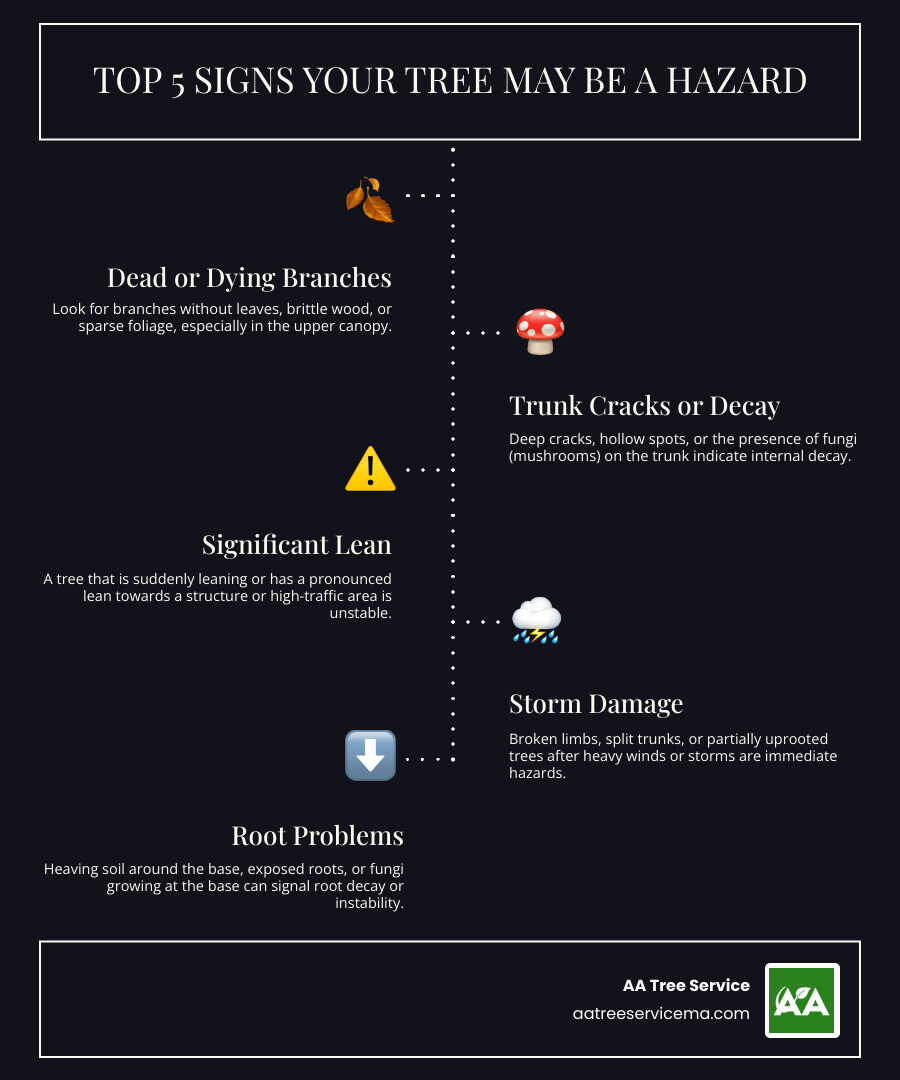
- Dead Branches: Multiple large, dead limbs, especially at the top of the tree (the crown), signal declining health. These branches, often called “widow-makers,” are brittle and can fall without warning on a calm day.
- Trunk Decay or Cavities: Large holes, deep wounds, soft or crumbling wood, and large sections of missing bark are clear indicators of internal rot. This decay weakens the tree’s structural integrity from the inside out, making it unstable.
- Fungi Growth: The presence of mushrooms or other fungal bodies growing on the trunk, major roots, or at the base of the tree is a red flag. Fungi are decomposers, and their appearance means there is well-established internal decay, even if the exterior of the trunk looks solid.
- A Sudden Lean: A tree that starts leaning, especially if the ground around the base is heaving or cracking, often indicates root failure. A lean of more than 15 degrees from vertical is considered a significant hazard and requires immediate professional assessment.
- Cracks in the Trunk: Deep vertical splits (cracks) in the trunk or where major limbs attach create critical weak points. These cracks can shear apart during high winds, ice storms, or under the weight of heavy snow.
- Heaving Soil: Raised or cracked soil on one side of the tree’s base suggests the root system is failing and the tree is beginning to uproot. This is an extremely dangerous sign of instability.
- Pest Infestations: Look for sawdust-like frass (insect waste) at the base of the tree, small D-shaped exit holes in the bark (a sign of Emerald Ash Borer), or significant, unseasonal leaf loss. These point to insect problems that can weaken or kill a tree.
- Lack of Leaves: If a deciduous tree fails to leaf out in spring, or if its foliage is sparse, wilted, or discolored during the growing season, it is under serious stress and may be dying or already dead.
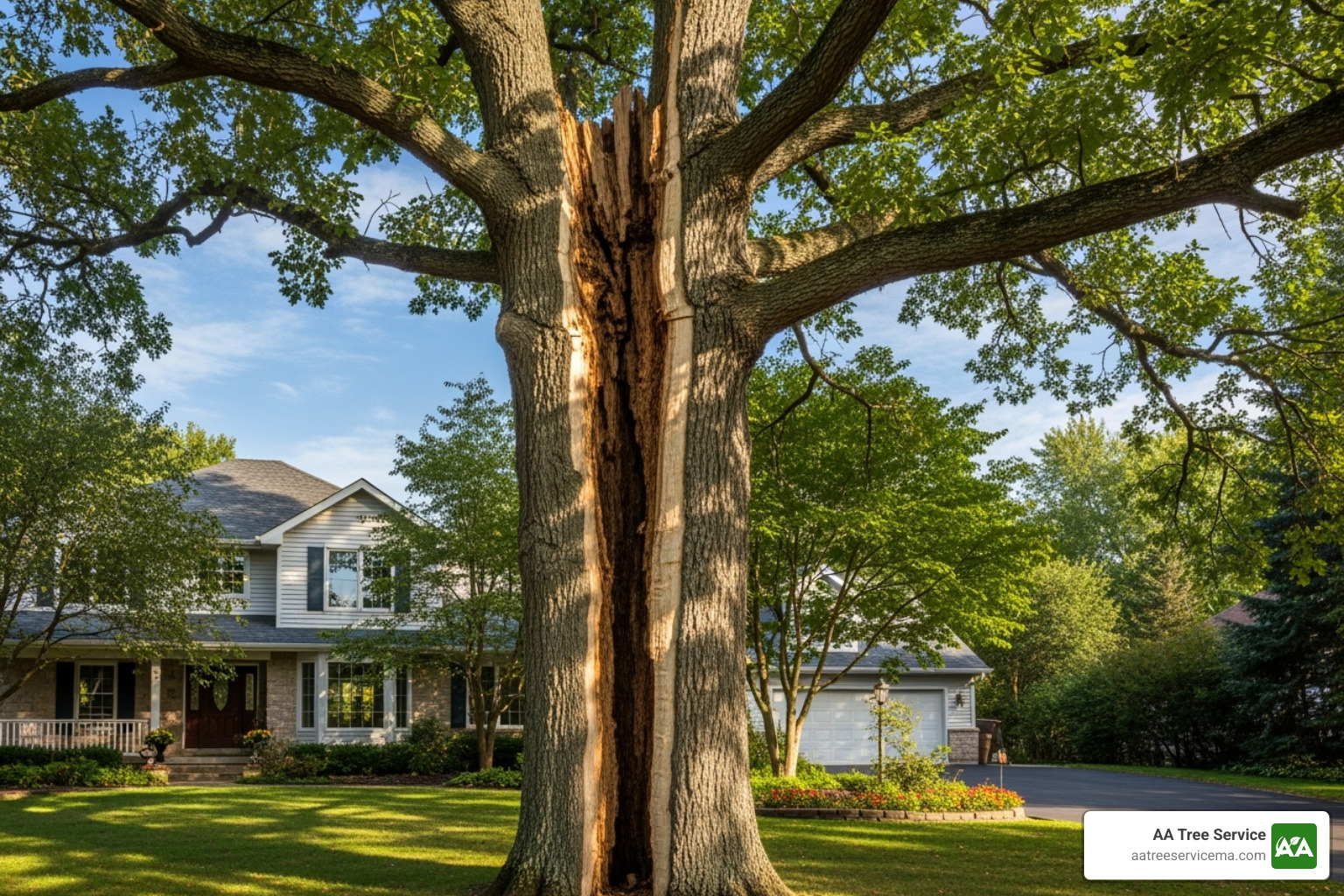
If you’ve noticed any of these warning signs, don’t wait. Our licensed and insured technicians can assess your tree’s condition and recommend the safest course of action. With over 20 years of experience in Massachusetts and New Hampshire, we provide honest advice on whether a tree can be saved or needs to be removed. More info about tree removal services.
Understanding the Cost of Tree Removal in MA
A common question from homeowners is, “How much will this cost?” The answer for tree removal MA pricing is: it depends. Every tree and property is unique, so costs vary significantly. While we provide free, custom estimates for every job, understanding the factors that influence the price will help you know what to expect.
Please note, these are average costs based on internet data and not actual costs for AA Tree Service.
- Small trees (up to 25 feet): $500 – $1,500
- Medium trees (25-75 feet): $1,500 – $3,000
- Large trees (over 75 feet): $3,000 – $10,000+, with very complex jobs exceeding $15,000.
Tree size is the biggest factor, but other elements heavily influence the final price.
Accessibility is key. A tree in an open, flat yard with no obstacles is the most straightforward and least expensive to remove. However, costs increase significantly if the tree is on a steep slope, in a tight backyard, wedged between your house and a neighbor’s, or surrounded by delicate landscaping, fences, sheds, or a pool. Obstacles require more complex rigging, more manual labor to move debris, and specialized equipment to avoid damage.
The tree’s condition also matters. A healthy tree can be dismantled in a predictable way. A dead, brittle tree is far more dangerous. The wood can snap unexpectedly, requiring extra safety precautions, more careful rigging, and sometimes a different removal strategy altogether. Similarly, a storm-damaged tree tangled in power lines or already leaning on a structure requires a highly technical and cautious approach, which affects the price.
Equipment needs can range from basic chainsaws and rigging to heavy machinery. For trees in hard-to-reach areas or those posing a high risk to property, a crane is often the safest and most efficient tool. Using a crane for a “zero-impact” removal, where pieces are lifted up and away from your home and landscape, is a significant cost factor but provides unparalleled safety and protection for your property. More info about crane services.
Debris removal and stump grinding are often priced as separate line items. You have several options. The most comprehensive (and expensive) option is for the crew to haul away all wood and brush, leaving your property clean. A more budget-friendly choice is to have the crew leave the larger logs for you to use as firewood (they can often cut it to a specific length for an additional fee) while they chip and haul away the smaller branches. The most basic service might involve leaving all debris on-site for the homeowner to handle. Grinding the stump below ground level to allow for new planting or lawn is almost always an add-on service.
Here’s a quick comparison of factors that influence tree removal MA prices:
| Factor | Low Cost Impact | High Cost Impact |
|---|---|---|
| Tree Size | Small (under 25 ft) | Large (over 75 ft) |
| Accessibility | Open yard, easy access | Tight spaces, near structures, steep slopes |
| Tree Condition | Healthy, structurally sound | Dead, diseased, storm-damaged, brittle |
| Equipment | Chainsaws, chippers only | Cranes, bucket trucks, extensive rigging |
| Debris | Left on-site, homeowner disposes | Full haul-away and disposal |
| Stump | Left in ground | Stump grinding and removal |
| Emergency | Scheduled, routine work | 24/7 rapid response, hazardous conditions |
All these factors combine to create your specific estimate. We always perform a thorough on-site assessment to provide an accurate, no-obligation free estimate that clearly outlines all costs.
The Complete Process for Tree Removal MA
Our tree removal MA process is built on safety, transparency, and respect for your property. We’ve refined our approach over 20 years to be as straightforward and stress-free as possible. Here’s what to expect from initial quote to final cleanup.
From Initial Quote to Final Cleanup
- Professional Assessment & Free Estimate: We start by visiting your property, often on the same day you call. A licensed technician will inspect the tree, identify challenges, and answer your questions. You’ll receive a detailed, no-obligation free estimate.
- Safety Planning: Once you approve the estimate, we create a custom safety plan. This includes determining the best removal method (felling or dismantling), identifying necessary equipment like crane services, and establishing safety zones to protect your property.
- Scheduling & Removal: We schedule the work at your convenience. Our crew arrives on time and executes the plan with precision. We may dismantle the tree in sections, using ropes and rigging to carefully lower each piece, ensuring no damage to your home or landscape.
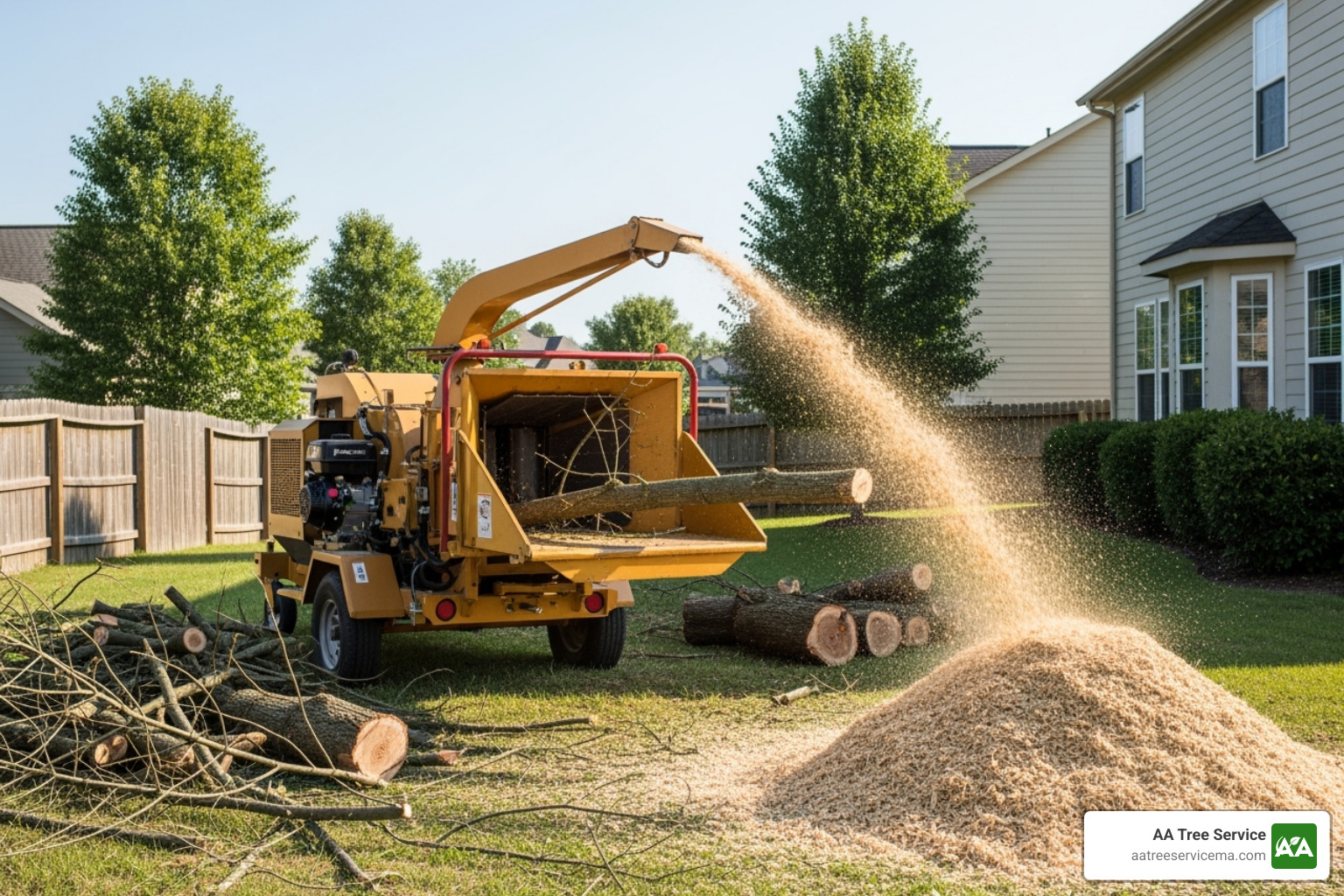
- Debris Cleanup & Final Inspection: After the tree is down, we thoroughly clean the area. We chip branches, haul away debris (unless you want to keep firewood), and leave your yard pristine. We finish with a final walk-through to ensure you are completely satisfied.
Comprehensive Services Beyond Just Removal
We are a full-service tree care company offering a range of solutions to maintain a safe and beautiful landscape.
- Tree Trimming & Pruning: Essential for tree health and safety, regular pruning removes dead branches and prevents interference with power lines or your roof. More info about tree pruning and trimming services.
- Stump Grinding: Stumps can be tripping hazards and attract pests. Our grinding services remove them below ground level, reclaiming your yard space. More info about stump grinding services.
- Land Clearing: We prepare properties for construction or landscaping by efficiently removing trees, brush, and vegetation for projects of any size. More info about land clearing services.
- 24/7 Emergency Services: Massachusetts weather is unpredictable. We’re available around the clock for emergencies, like a tree falling during a storm. More info about emergency tree removal services.
Hiring a Reputable and Insured Tree Removal Company
Choosing the right company for tree removal MA is about protecting your property and ensuring the job is done safely. Tree work is consistently ranked as one of the most dangerous professions. Hiring an experienced, insured professional is not just a good idea—it’s a crucial step to prevent accidents, property damage, and significant personal liability.
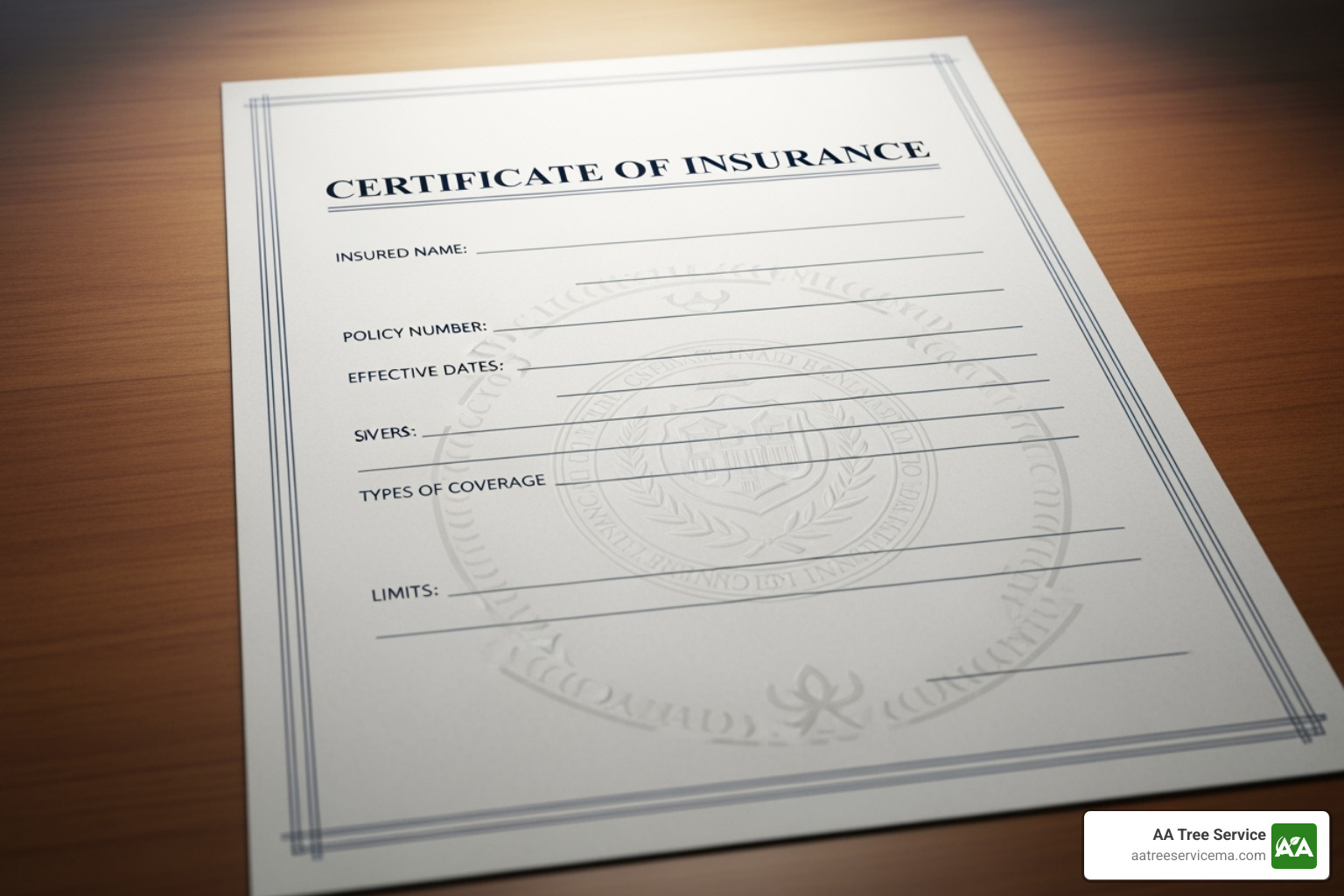
Safety, Insurance, and Credentials for tree removal ma
When evaluating companies, look for these critical factors:
- Experience: A long track record means the company has handled diverse and complex scenarios. With over 20 years serving Massachusetts and New Hampshire, our experience translates to safer, more efficient work and better problem-solving on the job.
- Insurance: This is non-negotiable. A reputable company must carry both Worker’s Compensation and General Liability Insurance. Worker’s Comp protects you if a crew member is injured on your property, while General Liability covers any damage to your home, vehicles, or landscape. Always ask for a certificate of insurance sent directly from their insurance agent to verify that coverage is current.
- Safety and Training: A reputable company invests heavily in safety. Ask about their safety protocols and training programs. Our licensed technicians are trained in accordance with industry standards (like ANSI Z133) to handle complex removals while ensuring the safety of everyone and everything on your property.
- Professional Equipment: The right tools make the job safer and more efficient. Quality companies use well-maintained, specialized machinery like cranes, bucket trucks, spider lifts, and advanced rigging systems. The condition of their equipment is often a reflection of their professionalism.
- Reputation: Check online reviews on platforms like Google, Yelp, and Angi to gauge a company’s reliability and quality of service. Consistent positive feedback and professional responses to any negative comments are strong indicators of a trustworthy provider.
Key Questions to Ask Before Hiring a Tree Service
To protect yourself, ask every potential company these questions:
- Can you provide a current certificate of insurance for both general liability and worker’s compensation?
- Are your arborists certified? (Look for credentials from the International Society of Arboriculture (ISA) or the Massachusetts Certified Arborists (MCA) program.)
- Will you be using a crane or other heavy equipment? How will you protect my lawn and property?
- Can you provide a detailed, written estimate that outlines the full scope of work, including cleanup and stump grinding?
- What is your company’s safety record? Do you adhere to ANSI Z133 safety standards?
- Can you provide a list of local references?
Understanding Local Tree Removal Regulations in Massachusetts
You can’t always remove any tree on your property just because it’s yours. Massachusetts regulations vary significantly by town, and failing to comply can result in hefty fines.
- Permit Requirements: Many towns require permits for removing trees over a certain diameter, designated “heritage” or “specimen” trees, or trees in specific zones. These rules differ widely, so always check with your local government first.
- Town-Specific Bylaws: Your local Department of Public Works (DPW), Tree Warden, or Conservation Commission has the final say. For example, towns like Arlington and Franklin have specific public tree and private tree removal regulations for homeowners. A professional company should be aware of the rules in the towns they service.
- Wetland Resource Areas (WRA): State and local laws strictly regulate any work within or near a Wetland Resource Area. This includes not only swamps and marshes but also rivers, streams, ponds, and the surrounding “Buffer Zones” (often extending 100 feet or more). If your tree is in a WRA, your local Conservation Commission will almost certainly need to review and approve the removal to protect environmental resources. The process often involves filing a formal application.
A reputable tree removal MA company should be familiar with local rules and can help guide you through the permitting process. With over two decades of experience working with town offices across Massachusetts, we can help identify potential regulatory issues during our initial assessment and ensure your project is fully compliant.
Emergency vs. Routine Tree Removal
The need for tree removal MA can be either a sudden crisis or a planned project. Understanding the difference helps you know what to expect.
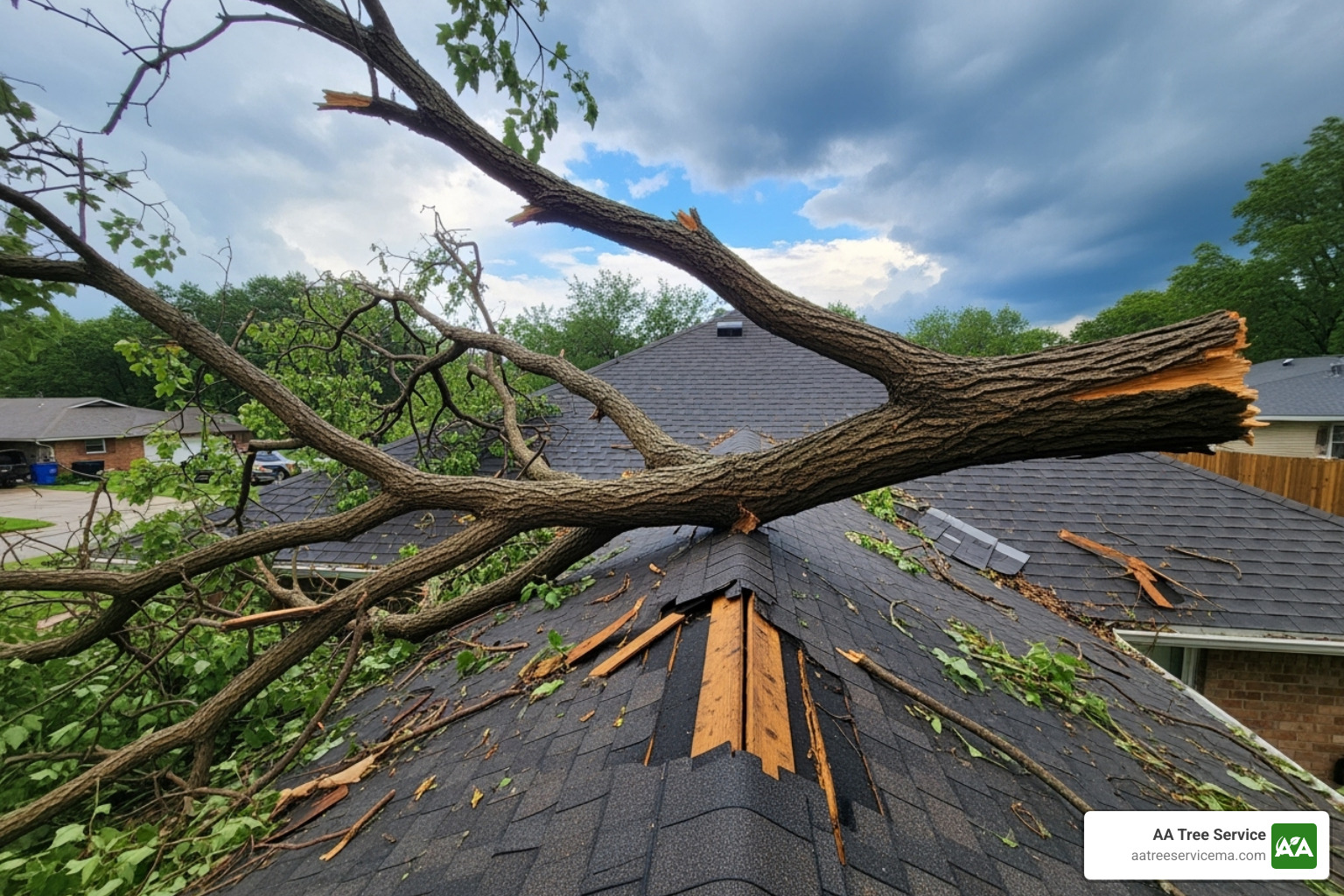
Emergency Tree Removal
When a storm causes a tree to fall on your home or block your driveway, you need help immediately. That’s what our emergency services are for. Massachusetts weather is unforgiving, and tree failure can happen suddenly.
We offer 24/7 availability because storm damage doesn’t keep business hours. Our rapid response team is ready to handle fallen trees, hazardous dangling limbs, and dangerously leaning trees day or night. These situations often require specialized equipment like our crane services to safely remove trees from homes, cars, or power lines without causing further damage. While emergency work can be more expensive due to its urgency and complexity, it’s crucial for mitigating risk and protecting your family and property. More info about emergency tree removal services.
Routine Tree Removal
In contrast, routine tree removal MA is a planned event. This applies to trees that are declining, blocking a view, or need to be cleared for a construction project.
With scheduled work, you have time to plan the removal around your schedule. Many homeowners prefer the dormant season (late fall to early spring) when leafless trees make for a cleaner job and frozen ground minimizes lawn damage from heavy equipment. Routine removals allow for thoughtful planning about all your options, from what to do with the wood to whether you need stump grinding.
Whether your need is urgent or planned, our commitment to safety, professional expertise, and property protection remains the same. The only difference is the timeline.
Frequently Asked Questions about Tree Removal in Massachusetts
Here are answers to the most common questions we receive about tree removal MA services.
How much does tree removal cost in MA?
Tree removal MA costs vary widely, as there is no one-size-fits-all price. Factors like tree size, accessibility, condition, and the complexity of the job all play a role. A large oak in an open field will cost far less to remove than the same-sized tree leaning over a house in a tight backyard.
Average costs based on internet data (not specific AA Tree Service pricing) are:
- Small trees (under 25 ft): $500 – $1,500
- Medium trees (25-75 ft): $1,500 – $3,000
- Large/Complex trees (over 75 ft): $3,000 – $10,000+, sometimes exceeding $15,000 for massive or extremely hazardous trees requiring a crane.
These estimates usually cover felling the tree and may include hauling debris, but services like stump grinding, cutting wood to firewood length, and extensive cleanup are often extra. We provide a free, on-site estimate for an accurate quote custom to your specific situation.
Do I need a permit for tree removal ma?
It depends on where you live. Massachusetts allows individual towns to set their own rules, so permit requirements vary significantly. You should never assume you can remove a tree without checking first.
Permits are often required for removing protected tree species, trees over a certain diameter at chest height (DBH), or any tree located in a Wetland Resource Area (WRA) or on conservation land. You will almost certainly need approval from your local Conservation Commission in these cases. Furthermore, you can never remove a “street tree” (one on public property, often in the strip between the sidewalk and the road) without explicit permission from the town’s Tree Warden.
Always check with your local municipal office, such as the Department of Public Works or Conservation Commission, for specific guidance before any work begins. Our team is familiar with local regulations across Massachusetts and can help you navigate the process.
Will my homeowner’s insurance cover tree removal?
This is a common question, and the answer is typically no—with some important exceptions. Homeowner’s insurance is designed to cover sudden, accidental damage. Therefore, it will usually cover the cost of removing a tree if it has fallen and damaged a covered structure, such as your house, garage, or fence. Policies often include a specific, limited amount (e.g., $500 – $1,000) for debris removal in this scenario.
However, insurance almost never covers the cost of preventative removal. This includes removing a healthy tree for aesthetic reasons or even removing a dead or hazardous tree that is still standing. Insurers view this as a homeowner’s maintenance responsibility. Waiting for a hazardous tree to fall just to get insurance to pay is a dangerous gamble that can lead to denied claims and catastrophic damage far exceeding the cost of removal.
What is the best time of year for tree removal?
We can safely remove trees year-round, but the best time depends on the situation.
- Hazardous Trees: Remove them as soon as possible, regardless of the season. A tree posing an immediate threat to people or property should not wait for an “ideal” time. Our 24/7 emergency services are available for these urgent situations.
- Routine Removals: The dormant season (late fall to early spring) is often preferred for non-urgent removals. With no leaves on deciduous trees, the crew has better visibility, there is less debris to clean up, and the frozen ground can help minimize lawn damage from heavy equipment.
- Storm Cleanup: This happens whenever a storm hits, regardless of the season.
We can discuss the optimal timing for your specific project during your free consultation.
Conclusion
Choosing a tree removal MA service is a critical decision for your family’s safety and your property’s value. The process involves navigating local permits, assessing risks, and safely managing heavy materials, which is why hiring an insured, experienced professional is essential.
For over 20 years, we have served homeowners in Massachusetts and New Hampshire, understanding the unique challenges of the region, from nor’easters to local conservation rules. Our licensed and insured technicians handle every job, from emergency cleanups to planned removals, with a steadfast commitment to safety and customer satisfaction.
Getting started is simple. We offer free, same-day quotes with a thorough on-site assessment, providing clear, honest pricing with no pressure.
If you have a problematic tree or need professional tree care, we are ready to help. Contact us for a free estimate on your Framingham tree removal project or for any tree service needs across Massachusetts and New Hampshire. Let’s work together to keep your property safe and beautiful.