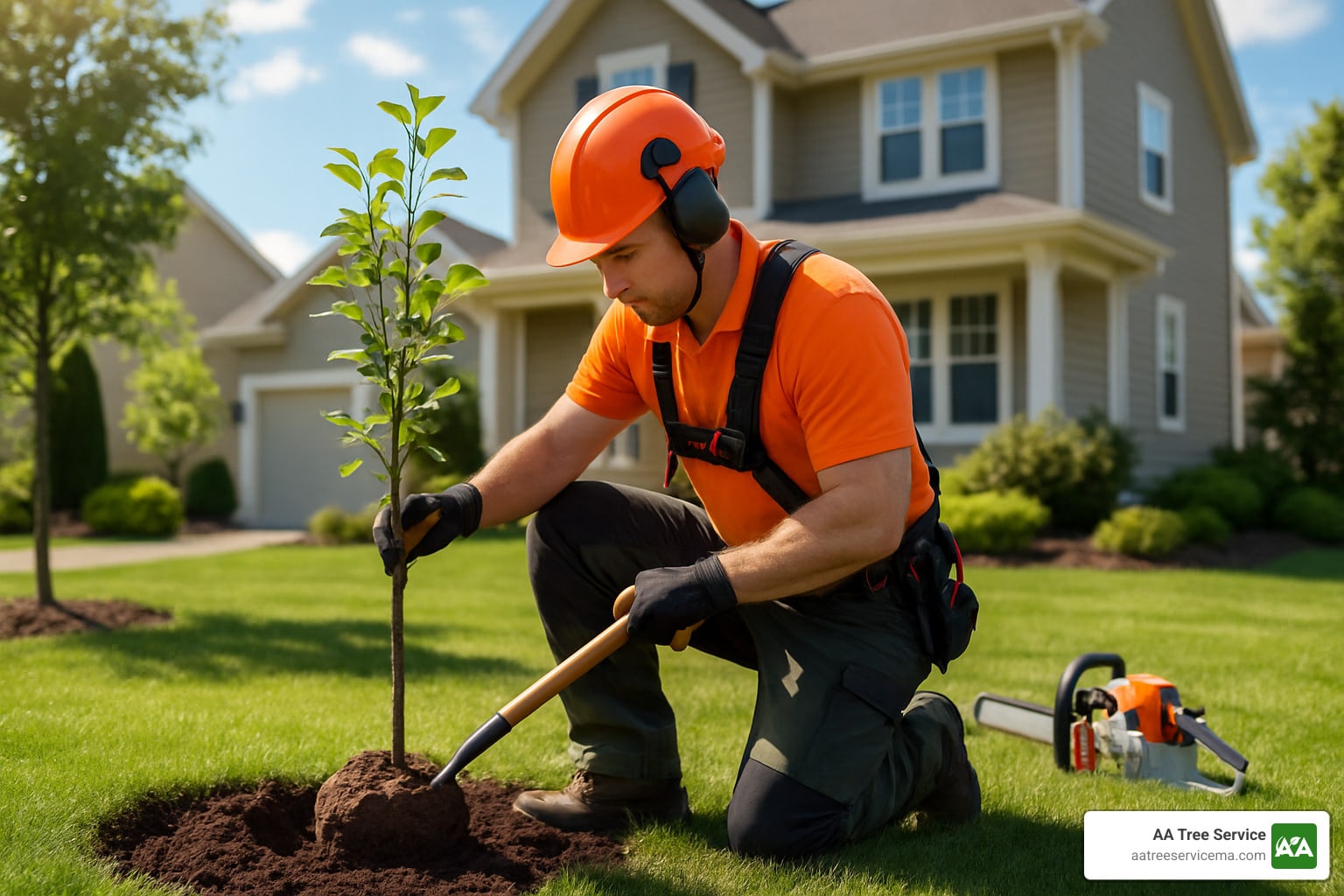
Investing in Healthy Landscapes: Professional Tree Planting Services
Tree planting services provide professional installation of trees on residential, commercial, and public properties. If you’re looking to improve your landscape with healthy, properly installed trees, here’s what you need to know:
What Professional Tree Planting Services Include:
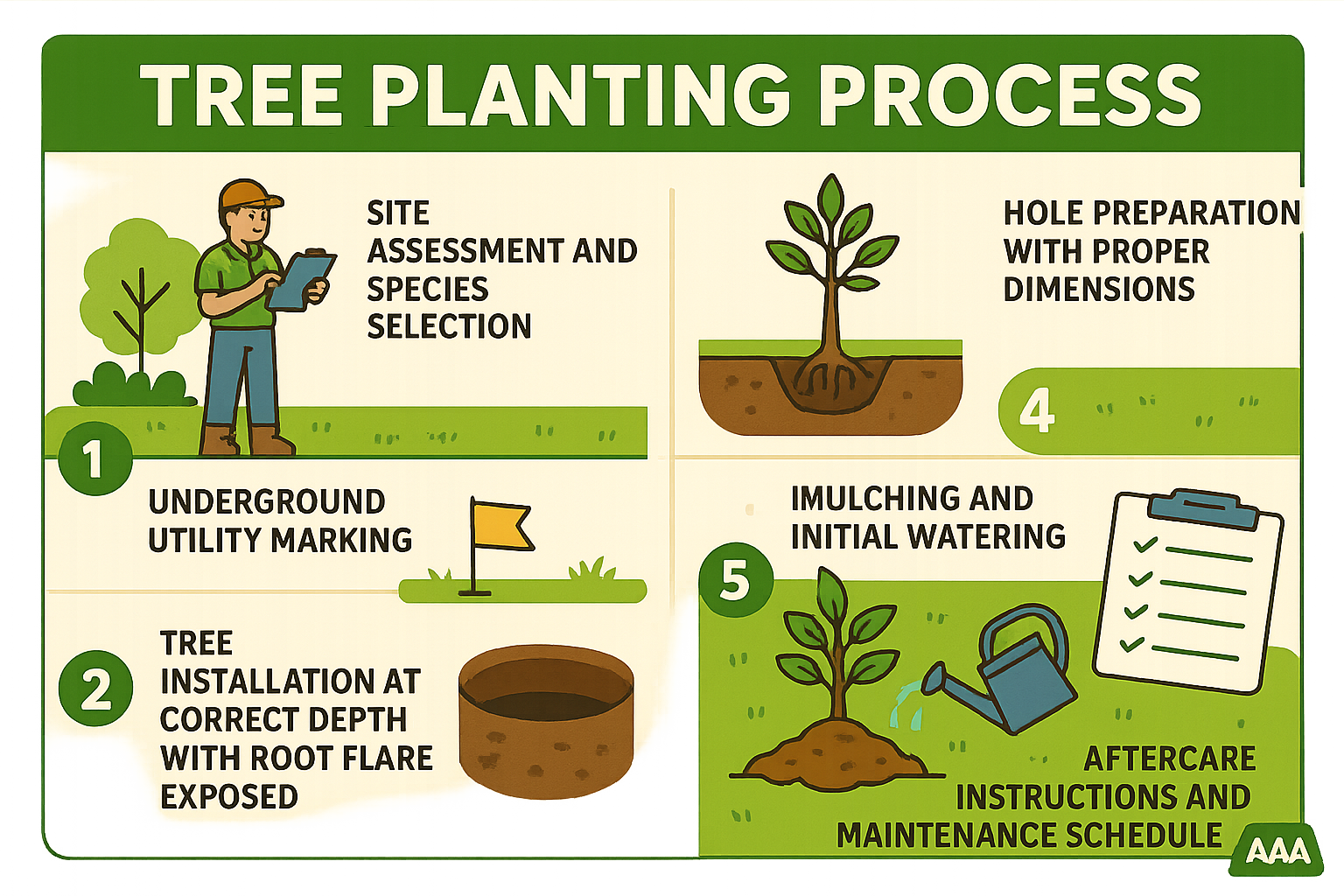
– Site assessment and species selection
– Underground utility marking
– Custom soil preparation and amendments
– Proper planting depth and technique
– Initial fertilization and mulching
– Watering guidance and aftercare instructions
– Optional warranties and maintenance packages
Tree planting is more than just digging a hole and dropping in a sapling. When done professionally, it’s a carefully orchestrated process that ensures long-term tree health and maximum landscape benefits.
As the Arbor Day Foundation notes, over 500 million trees have been planted through their initiatives in more than 60 countries, highlighting the global importance of proper tree planting. Here in Massachusetts and New Hampshire, professional tree planting services help homeowners create shade, improve property values, and contribute to local environmental health.
“Proper tree planting and transplanting are often underestimated in terms of their impact on long-term tree health,” note industry experts. This is why hiring certified arborists for your planting project can make the difference between a struggling sapling and a thriving landscape addition.
The cost of professional tree planting varies based on tree size, number of trees, and site conditions. According to internet data, expect to pay between $111.75 to $900+ per tree depending on size and planting requirements—with larger specimens and difficult sites commanding premium pricing.
Whether you’re planting a single ornamental tree or establishing a privacy screen, professional planting services ensure your investment grows strong for decades to come.
Tree planting services word guide:
– Tree hazard assessment
– Protect trees during construction
– Land clearing for development
Why Plant Trees? Benefits for Property & Community
There’s something magical about planting a tree. It’s like making a promise to the future. When you invest in tree planting services, you’re not just adding beauty to your landscape – you’re creating a living legacy that benefits your property, your neighborhood, and our planet.
Environmental Benefits
Trees are nature’s superheroes in the fight against climate change. A single mature tree can gobble up about 48 pounds of carbon dioxide each year – that’s like having a little climate-change fighter right in your yard! Here in Massachusetts and New Hampshire, where we experience the full drama of all four seasons, trees provide environmental stability that we sometimes take for granted.
The Arbor Day Foundation says it best: “Trees have the answers.” They’re not just being poetic. Trees release oxygen, filter harmful air pollutants, and create natural cooling zones that can reduce those sweltering urban heat islands by up to 10 degrees on summer days. If you’ve ever sought refuge under a leafy canopy during a July heatwave, you know exactly what I’m talking about!
Economic Benefits
Let’s talk dollars and sense. Those beautiful shade trees don’t just look pretty – they’re hard workers that can slash your cooling costs by 15-35% during our sticky New England summers. When August rolls around and your neighbors’ air conditioners are running overtime, you’ll appreciate those natural cooling machines.
Your wallet will thank you in other ways too. Well-placed trees can boost property values by 7-20% – that’s a pretty impressive return on investment! In upscale Massachusetts communities like Lexington, Newton, and Cambridge, homes on tree-lined streets consistently command higher prices. It’s simple: trees sell houses.
Community & Health Benefits
Trees don’t just benefit your property – they strengthen entire neighborhoods. Research consistently shows that communities with abundant tree cover enjoy lower crime rates, stronger community bonds, and better overall mental health. There’s something about trees that brings people together and helps us all breathe a little easier – both literally and figuratively.
In charming New Hampshire towns like Portsmouth and Exeter, community tree planting initiatives have transformed public spaces into vibrant gathering spots where neighbors connect. These green spaces don’t just look nice – they actively improve our wellbeing by reducing stress, cleaning the air, and creating habitat for birds and beneficial insects.
Climate Resilience
As climate change brings more unpredictable weather patterns to New England, trees offer natural protection. Their complex root systems hold soil in place during heavy downpours – an increasingly important benefit for coastal Massachusetts communities facing erosion concerns. They also act like natural sponges during storms, capturing rainfall and reducing flooding risks while protecting water quality in our precious rivers and coastal areas.
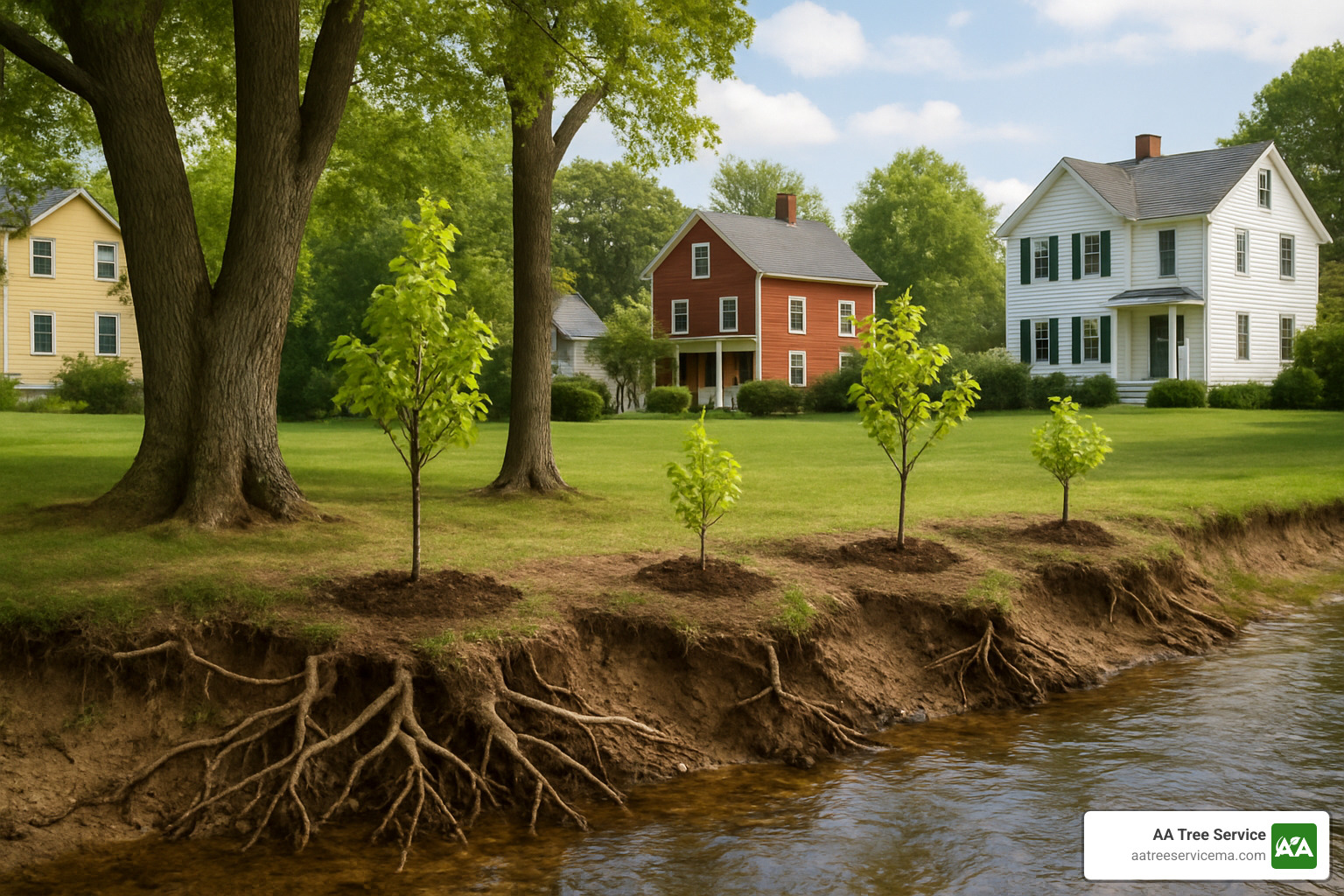
When you choose professional tree planting services, your new trees will be strategically positioned to maximize all these amazing benefits while avoiding potential conflicts with buildings, underground utilities, and other landscape elements. It’s not just about planting trees – it’s about planting them right so they can thrive for generations.
Comprehensive Tree Planting Services Explained
When you hire professional tree planting services, you’re getting far more than someone to dig a hole and drop in a tree. You’re investing in expertise that ensures your trees will thrive for generations to come. Think of it as the difference between grabbing fast food and enjoying a carefully prepared meal – both feed you, but one nourishes you properly.
Site Assessment & Planning
Before a single shovel touches soil, professional arborists take time to truly understand your property. They’ll walk your land, testing soil composition and checking drainage patterns. They’ll note how sunlight moves across your yard throughout the day and identify any microclimates that might affect growth.
“Is that spot really ideal for a maple?” your arborist might ask, pointing out overhead power lines you hadn’t considered. They’ll mark underground utilities and measure distances from your home’s foundation, walkways, and other features. This thorough approach prevents costly mistakes and ensures your trees have room to reach their full potential.
An ISA Certified Arborist brings science-based knowledge to this process, considering everything from soil depth to available canopy space before making recommendations. As the old arborist saying goes, “The right tree in the right place isn’t just a catchy phrase—it’s the difference between success and failure.”
Species Selection
Choosing the perfect tree species is like matchmaking – it’s all about compatibility. Professional tree planting services recommend trees that will thrive in your specific corner of Massachusetts or New Hampshire, taking into account:
Local climate tolerance – Will this species handle our cold New England winters?
Soil compatibility – Is your soil acidic, clay-heavy, or sandy?
Space requirements – How large will this tree be at maturity?
Purpose fulfillment – Do you want shade, privacy, fall color, or spring flowers?
Wildlife benefits – Are you looking to support local birds and pollinators?
Disease resistance – Will this species stand up to common regional threats?
Quality tree services have connections to reputable nurseries with diverse selections. For instance, the Davey Nursery in Ohio houses more than 90,000 trees with nearly 100 varieties of shade and ornamental trees suitable for various conditions.
Professional Installation
The planting process itself is where science meets craftsmanship. Your tree’s future health depends on proper technique during these critical steps:
First, professionals mark the perfect spot and call Dig Safe to identify underground utilities. Then they dig a hole that’s generous in width (typically 2-3 times wider than the root ball) but precisely matched to the root ball’s depth. Too deep, and your tree will slowly suffocate.
Next comes soil preparation, sometimes improved with amendments like perlite or compost for difficult sites. The tree is positioned with its root flare – that slight widening where trunk meets roots – visible above ground level. This detail alone prevents countless tree deaths.
The planting hole is carefully backfilled with amended soil, gently tamped to eliminate air pockets without compacting. Initial fertilization provides slow-release nutrients to support establishment, followed by proper mulching with 2-4 inches of shredded hardwood mulch (always kept away from the trunk to prevent rot).
After thorough initial watering, professionals assess whether support systems like stakes are necessary – used sparingly and only when truly needed to allow proper trunk development.
Aftercare & Maintenance
The relationship between your new tree and professional tree planting services doesn’t end when the crew packs up. Quality providers equip you with customized care instructions and often offer maintenance packages to ensure successful establishment.
“The first two years are make-or-break for newly planted trees,” explains most tree professionals. “Proper watering alone can mean the difference between thriving and merely surviving.”
You’ll receive guidance on watering frequency based on your specific tree species and soil conditions, along with instructions for mulch maintenance, health monitoring, and future pruning needs. Many companies offer seasonal check-ins to catch potential issues before they become problems.
For more comprehensive information about ongoing tree care beyond planting, visit our tree care services page.
Residential Tree Planting Services in MA & NH – Professional Tree Planting Services
Massachusetts and New Hampshire homes have unique tree planting considerations that professional services understand intimately. Whether you have a spacious yard in rural New Hampshire or a compact lot in historic Salem, tree planting services can help you make the most of your space.
Professional arborists work with you to balance aesthetics with practicality. Want privacy from neighbors? They might suggest a staggered row of arborvitae or spruce. Looking for summer shade to reduce cooling costs? A strategically placed red maple or oak could save you hundreds in energy bills while providing spectacular fall color.
In older New England communities like Newburyport or Portsmouth, space constraints often require creative solutions. Your arborist might recommend a columnar hornbeam for a narrow side yard or a dwarf flowering cherry for near-foundation planting. They’ll also steer HOA restrictions and municipal regulations that might limit your choices.
“We make sure you’re not barking up the wrong tree,” as one veteran planter likes to joke. “The last thing you want is to fall in love with a tree that’s eventually going to damage your foundation or run afoul of local ordinances.”
Commercial & Institutional Tree Planting Services
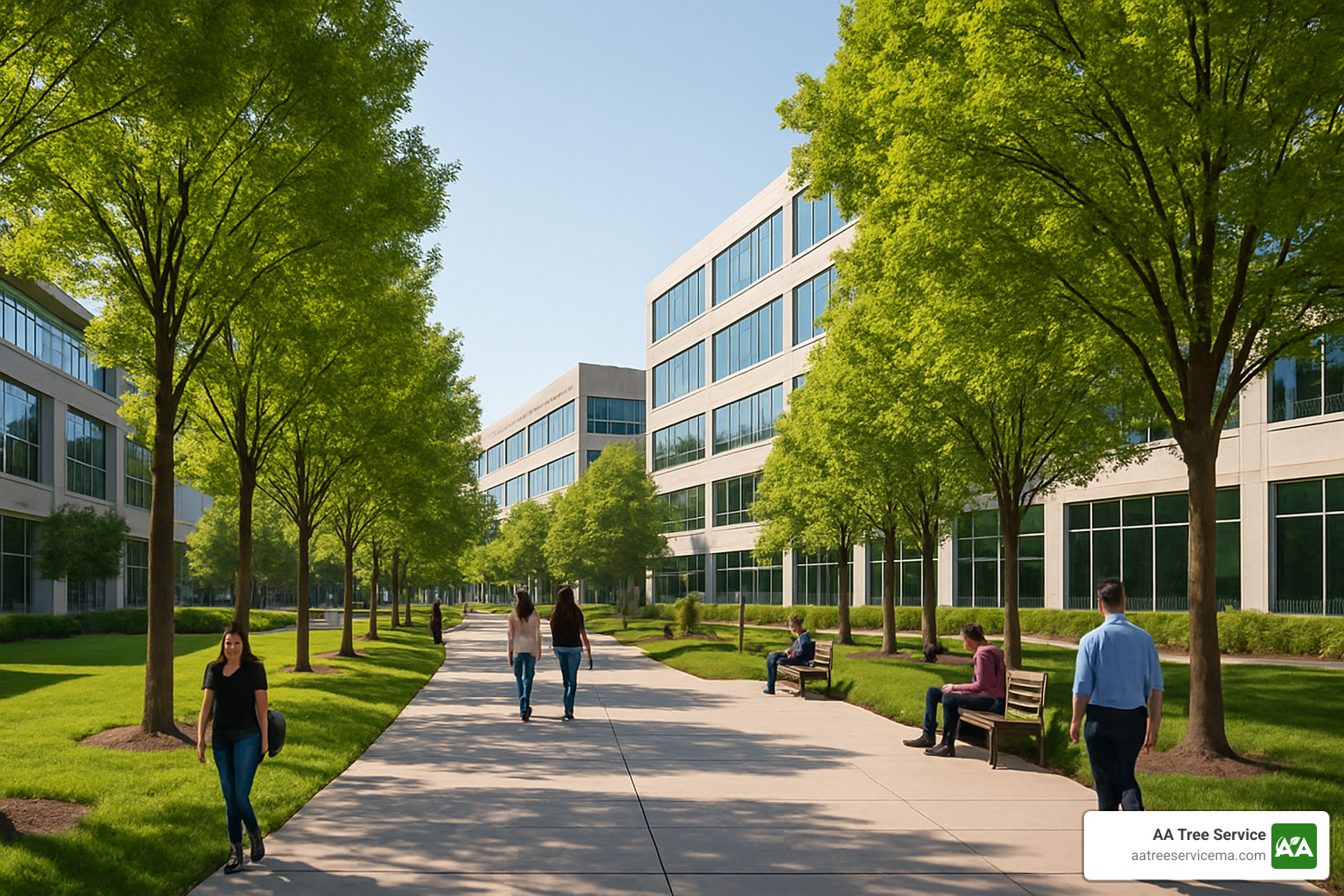
Businesses, schools, hospitals, and corporate campuses approach tree planting with different priorities than homeowners. First impressions matter in the commercial world, and thoughtfully planted trees create an immediate sense of establishment and permanence.
Professional tree planting services help businesses create landscapes that reflect their brand identity. A forward-thinking tech company might showcase native innovation with a contemporary planting design, while a law firm might prefer the gravitas of traditional shade trees framing their entrance.
Sustainability initiatives have become increasingly important for institutions across Massachusetts and New Hampshire. Many organizations now incorporate pollinator gardens alongside tree plantings, creating mini-ecosystems that support local biodiversity while demonstrating environmental commitment.
“Pollinator gardens not only benefit biodiversity but also human health and wellness,” note landscape experts. These combined plantings create outdoor spaces where employees can recharge, improving workplace satisfaction and productivity.
Commercial projects often involve planting dozens or even hundreds of trees simultaneously. This requires specialized equipment for handling large-caliper specimens, coordinated delivery logistics, and comprehensive irrigation planning to ensure consistent quality across the entire project.
Large-Scale & Reforestation Tree Planting Services
Beyond beautifying individual properties, tree planting services also tackle larger environmental restoration projects that benefit entire communities and ecosystems.
After natural disasters like the severe windstorms that occasionally sweep through New England, large-scale replanting helps ecosystems recover. According to the U.S. Forest Service, 81% of reforestation needs in national forests stem from wildfire damage. Professional services coordinate site preparation, mass planting of native species, and establishment of diverse tree communities that build resilience against future threats.
Massachusetts and New Hampshire residents treasure our rivers, lakes, and coastal areas, making riparian buffer plantings particularly important. These strategic tree installations along waterways stabilize streambanks, filter runoff from roads and agricultural lands, and create wildlife corridors that connect fragmented habitats.
Many large-scale planting initiatives happen through partnerships between landowners, municipalities, and nonprofit organizations. Programs like the Plant-A-Tree initiative by the U.S. Forest Service have been reforesting public lands since 1983, often at subsidized rates. Some programs offer coniferous seedlings for as little as $1.05 and deciduous seedlings for $1.58 (with minimum orders of 1,000 trees), though these prices don’t reflect complete professional installation services.
Whether you’re looking to plant a single specimen tree or restore acres of woodland, professional tree planting services provide the expertise to transform your vision into reality while ensuring long-term success for every tree.
For more information about tree hazard assessment that might influence planting decisions, visit our tree hazard assessment page.
Choosing the Right Species & Site
Finding the perfect match between tree and location is like matchmaking for your landscape. Professional tree planting services excel at this delicate art, ensuring your new trees will thrive for decades to come.
Site Analysis Factors
When our arborists visit your property, they’re like detectives looking for clues about what will grow best there. Soil tells us a story about what your landscape needs.
In Massachusetts and New Hampshire, soils vary dramatically even within a single property. pH levels matter tremendously—pin oaks love the naturally acidic soils common in parts of Massachusetts, while sugar maples prefer slightly sweet, alkaline conditions.
Soil texture also guides our recommendations. Sandy soils drain quickly (think coastal areas near Gloucester or Hampton Beach), so we might suggest drought-tolerant species like Eastern red cedar. Clay soils hold moisture but can suffocate roots if waterlogged, leading us toward adaptable trees like river birch.
The sunlight patterns across your yard create microclimates that determine which trees will thrive. That sunny south-facing slope might be perfect for a flowering cherry, while that shady corner near your fence line could be ideal for a native understory tree like serviceberry.
New England’s climate challenges require careful consideration too. Our region spans USDA hardiness zones 4-6, with colder pockets in northern New Hampshire and milder areas along the Massachusetts coast. We’ll help you select trees that can handle our temperature extremes and increasingly unpredictable weather patterns.
Available space is perhaps the most overlooked factor in tree selection. That tiny sapling might look perfect now, but what about when it’s 60 feet tall with a 40-foot spread? Professional tree planting services consider both the current landscape and future growth scenarios.
For a visual explanation of proper tree placement principles, the concept of “Right Tree — The Right Place” is essential. Watch this helpful video that illustrates these principles clearly.
If you’re worried about existing trees on your property that might pose safety risks, learn more about tree hazard assessment before adding new plantings.
Right Tree, Right Place, Right Way – Avoiding Future Problems
The mistakes we see most often happen when trees and sites are mismatched. Here’s what we work to prevent:
Proper root flare exposure is non-negotiable for tree health. This is the slightly widened area where the trunk meets the roots, and it should always remain visible above ground. When trees are planted too deeply (a surprisingly common mistake), they develop girdling roots that slowly strangle the tree from below. We carefully measure from the root flare, not the top of the root ball, ensuring your tree starts life at the right depth.
Overhead utility lines and trees are natural enemies. We’ve all seen those poor, V-shaped trees that utility companies have carved around power lines. We help you avoid this sad fate by recommending appropriate species and locations that won’t create conflicts with utilities as they grow.
Proper building setbacks prevent a host of problems. Those maple roots creeping toward your foundation or that pine dropping needles into your gutter aren’t just annoying—they can cause expensive damage. Generally, large shade trees need at least 20 feet of clearance from buildings, while smaller ornamental trees can come a bit closer at 10-15 feet away.
We’re also careful to help you avoid invasive species that might look appealing in catalogs but can become neighborhood nuisances. Instead of Norway maple or Bradford pear, we’ll suggest native alternatives that provide similar benefits without ecological drawbacks.
Timing & Transplanting Considerations for Tree Planting Services
In New England, timing really is everything when it comes to planting success. Professional tree planting services work with nature’s calendar, not against it.
The fall planting window (September through November) is often ideal in Massachusetts and New Hampshire. Trees planted in autumn can establish roots before winter dormancy and are ready to grow when spring arrives. Spring planting (April through June) works well too, giving trees time to settle in before summer heat stress. We generally avoid summer planting unless using container-grown stock with excellent irrigation systems in place.
The type of tree stock also influences planting decisions. Bare-root trees (without soil) are economical but have a limited planting window in early spring. Container-grown trees offer more flexibility with intact root systems and can be planted almost any time the ground isn’t frozen. Balled-and-burlapped (B&B) trees are field-grown with soil balls wrapped in burlap—ideal for larger specimens but requiring careful handling of their substantial weight.
Moving existing trees requires specialized expertise. According to scientific research on transplanting costs, successful transplanting depends on tree size, distance between locations, and the species’ tolerance for root disturbance. Some trees, like oaks, resent being moved once established, while others, like maples, are more forgiving.
For larger transplanting operations, we use specialized equipment like tree spades—giant mechanical scoops that carefully extract and move the tree with minimal root disturbance. It’s like giving your tree a first-class ticket to its new home!
With the right tree in the right place, planted the right way at the right time, your landscape investment will pay dividends in beauty, shade, and property value for generations to come.
Professional Process & Pricing: From Consultation to Aftercare
When you hire professional tree planting services, you’re not just paying for a tree—you’re investing in a comprehensive process designed to give your new trees the best possible start. Let’s walk through what this journey looks like from beginning to end.
Initial Consultation
Everything starts with a conversation. A qualified arborist will visit your property to understand your vision while assessing what’s actually possible in your space. During this visit, they’ll:
Talk through your goals and dreams for your landscape, whether that’s creating privacy, adding shade, or bringing seasonal color to your yard. They’ll evaluate your soil, sun exposure, and existing features, while considering any budget constraints you might have. This is also your chance to ask questions and address any concerns before work begins.
Many tree planting services offer these initial consultations at no cost and will provide you with a detailed proposal afterward—giving you a clear roadmap of recommended species, optimal locations, and transparent pricing.
Pre-Planting Preparation
Before any shovels hit the dirt, several critical steps ensure your tree planting project succeeds:
First comes safety—professional services contact “Dig Safe” or “Call Before You Dig” to mark underground utilities, preventing potentially dangerous and costly accidents. The site is then prepared by clearing competing vegetation and addressing any drainage issues that could affect your new trees.
Many services will conduct soil testing to understand exactly what you’re working with and recommend specific amendments if needed. With this information in hand, they’ll source high-quality trees from reputable nurseries—trees that match both your vision and your site’s conditions.
Planting Day Process
When planting day arrives, you’ll see why professional tree planting services are worth every penny. A skilled crew will:
Carefully deliver your trees to prevent damage during transport—something particularly important for larger specimens. They’ll dig holes with precise dimensions (typically 2-3 times wider than the root ball but only as deep as the root ball itself). The soil will be improved with custom amendments like Perlite, Peat Moss, and Compost to give your trees the perfect growing environment.
The team will properly remove containers or burlap (often leaving burlap underneath B&B trees to avoid root disturbance) and position each tree at the correct depth, ensuring the all-important root flare remains exposed. As they backfill with amended soil, they’ll gently tamp it to eliminate air pockets without compacting the soil.
They’ll create watering basins around newly planted trees, apply mulch properly (2-4 inches deep but kept away from the trunk to prevent rot), and stake trees only if necessary, using techniques that allow natural trunk movement for strength development. Finally, they’ll perform a thorough initial watering to help settle the soil around the roots.
Pricing Considerations
The cost of professional tree planting services varies widely based on multiple factors. According to internet data (not specific to AA Tree Service), average costs typically range from:
- $111.75 to $350 per tree for smaller specimens (1-2″ caliper)
- $164.25 to $500 per tree for medium specimens (2-3″ caliper)
- $201.75 to $900+ per tree for larger specimens (3-4″+ caliper)
These prices reflect the complexity of proper tree installation. Expect higher costs for difficult access sites, rocky or compacted soils, specialty or rare species, large caliper specimen trees, or sites requiring extensive preparation.
The good news? Many services offer volume discounts when you plant multiple trees at once, with potential savings of 25% or more when planting 3+ trees simultaneously. This makes creating that privacy screen or shade grove more affordable than you might think.
DIY vs. Professional Planting Comparison
| Aspect | DIY Planting | Professional Tree Planting Services |
|---|---|---|
| Tree Selection | Limited to retail availability | Access to wholesale nurseries and specimen trees |
| Site Assessment | Based on homeowner knowledge | Expert evaluation of soil, drainage, and space requirements |
| Utility Marking | Homeowner responsibility | Handled by service provider |
| Soil Preparation | Basic amendments | Custom soil preparation based on needs |
| Planting Technique | Variable based on research | Consistent professional standards |
| Equipment | Limited homeowner tools | Specialized equipment for larger trees |
| Labor | Physical demands on homeowner | Handled by trained crew |
| Warranty | None (nursery warranty only) | Often includes 1-2 year establishment guarantee |
| Aftercare Guidance | Self-research | Professional recommendations and support |
| Long-term Success | Variable | Higher success rate |
For ongoing care after your trees are planted, learn more about our tree maintenance services.
Aftercare Packages within Tree Planting Services
The first few years are critical to a tree’s long-term success. That’s why many professional tree planting services offer aftercare packages that remove the guesswork from establishing your new trees.
Watering Programs
Water is life for new trees, but knowing exactly how much and how often can be tricky. Professional aftercare takes the mystery out of this crucial step with customized watering schedules based on your specific trees, soil type, and local weather conditions. They might help set up irrigation systems, perform periodic soil moisture checks, and adjust watering recommendations seasonally.
Most newly planted trees need deep watering twice weekly during their first growing season, but this varies with rainfall and temperature—professional monitoring ensures your trees get exactly what they need.
Structural Pruning
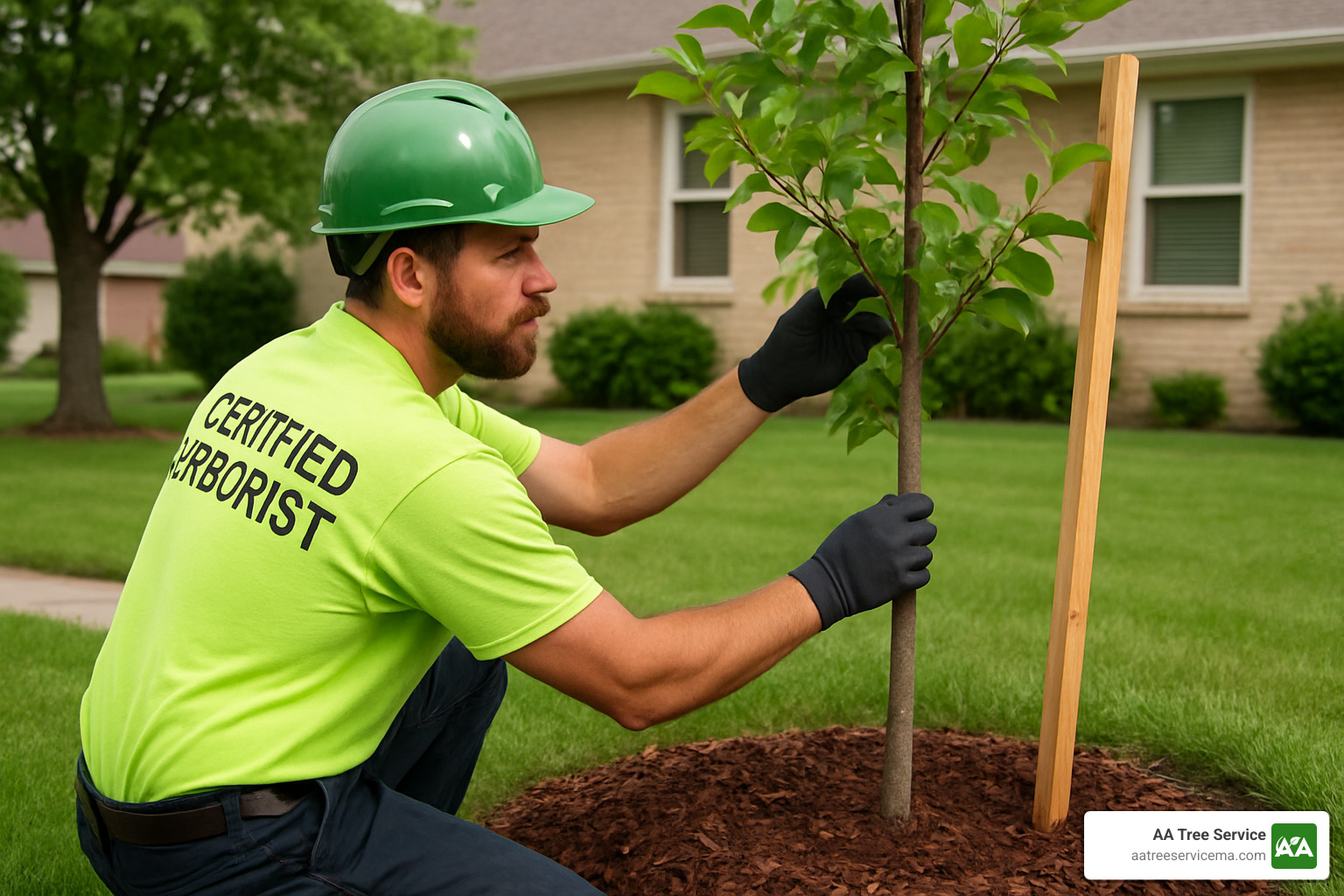
Early pruning isn’t about aesthetics—it’s about setting your tree up for a healthy future. Professionals will remove crossing or rubbing branches that could damage each other, establish strong central leaders when appropriate, eliminate co-dominant stems that might split years later, and provide clearance pruning as needed.
This early attention prevents problems that would be much more expensive to address when the tree matures.
Fertilization Programs
Young trees benefit from strategic nutrition support. Professional services offer slow-release fertilizers applied at the right times, soil amendments that address specific deficiencies, mycorrhizal inoculations that improve root development, and organic options for environmentally conscious homeowners.
These aren’t one-size-fits-all approaches—they’re customized to your specific trees and soil conditions.
Health Monitoring
Professional eyes can spot potential problems before they become serious. Regular monitoring includes pest and disease scouting, growth rate assessment, structural evaluation, and soil condition monitoring.
This proactive approach means small issues get addressed before they become tree-threatening problems.
Warranty Terms
Many professional tree planting services stand behind their work with warranties that typically cover tree replacement if failure occurs despite proper care. These warranties usually range from 1-3 years depending on species and size, require that you follow recommended maintenance practices, and include periodic survival audits to catch any issues early.
Certifications & Qualifications to Demand
Not all tree planting services are created equal. When choosing a provider in Massachusetts or New Hampshire, look for these important credentials:
ISA Certified Arborist credentials indicate that the arborist has passed comprehensive examinations, demonstrated knowledge across all aspects of tree care, committed to continuing education, and adheres to a professional code of ethics.
TCIA Accreditation for companies signifies compliance with industry standards and safety protocols, proper insurance coverage, adherence to best business practices, and ongoing professional development.
Always verify insurance coverage, including general liability insurance (typically $1-2 million minimum), workers’ compensation insurance, property damage coverage, and vehicle/equipment insurance. This protects both you and the workers on your property.
Check for proper local licensing, which may include business licenses, contractor registrations, pesticide applicator licenses (if offering treatment services), and special certifications for public property work.
Never hesitate to ask for proof of these qualifications before hiring. Reputable tree planting services will be happy to share their credentials and explain how their expertise benefits your project.
Grants, Subsidies & Community Programs
Planting trees doesn’t always have to strain your budget. Across Massachusetts and New Hampshire, various programs exist to help offset the costs of adding trees to your landscape. While these programs rarely cover the full expense of professional tree planting services, they can significantly reduce your out-of-pocket costs.
State and Municipal Programs
Both Massachusetts and New Hampshire offer valuable resources for residents looking to green their properties and communities.
In Massachusetts, the popular Greening the Gateway Cities Program has been changing urban landscapes by providing free trees to residents in designated cities. This initiative aims to increase tree canopy by 5-10% in urban residential areas, bringing shade and energy savings to neighborhoods that need it most.
“The trees we planted through the Gateway Cities program five years ago are already making a noticeable difference in summer temperatures on our street,” shares one Haverhill resident. “Plus, our air conditioning runs less often now.”
New Hampshire’s Urban and Community Forestry Center takes a different approach, offering grants that help communities launch tree planting initiatives. These funds often support public spaces like parks and school grounds, but can sometimes extend to residential areas through community-wide programs.
Many towns throughout both states have active shade tree committees that organize annual tree giveaways or subsidized tree purchases for residents. These local programs often focus on native species that support local wildlife and adapt well to regional growing conditions.
Utility Company Partnerships
Your local power company might be a surprising ally in your tree planting efforts. Many energy providers have recognized that strategically placed trees reduce energy consumption and benefit their operations.
Several New England utilities offer programs that encourage proper tree placement near power lines, sometimes providing free or discounted trees when planted in locations that won’t interfere with utility infrastructure. These “right tree, right place” initiatives help prevent future conflicts while still providing shade benefits.
Some utility companies partner with municipalities on community planting grants that beautify public spaces while demonstrating proper tree selection and placement. These demonstration projects serve as educational opportunities for homeowners planning their own landscapes.
Conservation Organization Support
The environmental community offers additional resources for tree planting enthusiasts:
The Arbor Day Foundation regularly partners with communities throughout Massachusetts and New Hampshire for tree distribution events. Their programs often target specific environmental concerns like watershed protection or urban heat islands.
For larger properties, the National Forest Foundation focuses on reforestation efforts that can sometimes include private lands adjacent to public forests. Their work helps create wildlife corridors and strengthen forest ecosystems across property boundaries.
One Tree Planted coordinates with local partners to implement planting initiatives that address specific environmental needs. Their “one dollar, one tree” model has helped fund numerous projects throughout New England.
Program Eligibility Considerations
Before getting too excited about these opportunities, understand that most subsidized programs come with specific requirements. Larger reforestation programs typically require minimum planting areas (usually 0.5-1 acre) and may involve planting substantial numbers of trees (often 1,000+ for major initiatives).
Many programs also require land management agreements lasting 15 years or longer, ensuring the environmental benefits of the planting will be protected. Most specify eligible species lists focused on native trees appropriate for the region’s ecology.
Maintenance commitments are nearly universal in these programs – you’ll likely need to demonstrate your plan for watering, mulching, and protecting young trees during their establishment period.
Resources for Finding Tree Planting Support
Finding the right program for your property might take some research, but several resources can point you in the right direction:
State forestry department websites offer comprehensive information about current initiatives and application procedures. Your municipal conservation commission office can provide insights about local programs and upcoming tree distribution events.
Local extension services affiliated with universities often maintain lists of tree planting resources and may offer technical assistance for landowners. Watershed associations frequently sponsor planting projects to protect water quality and may include private properties in their efforts.
While these programs primarily benefit larger-scale plantings or public spaces, homeowners with smaller properties shouldn’t lose hope. Community giveaway events and reduced-cost tree distributions happen regularly throughout Massachusetts and New Hampshire, especially around Arbor Day and Earth Day celebrations.
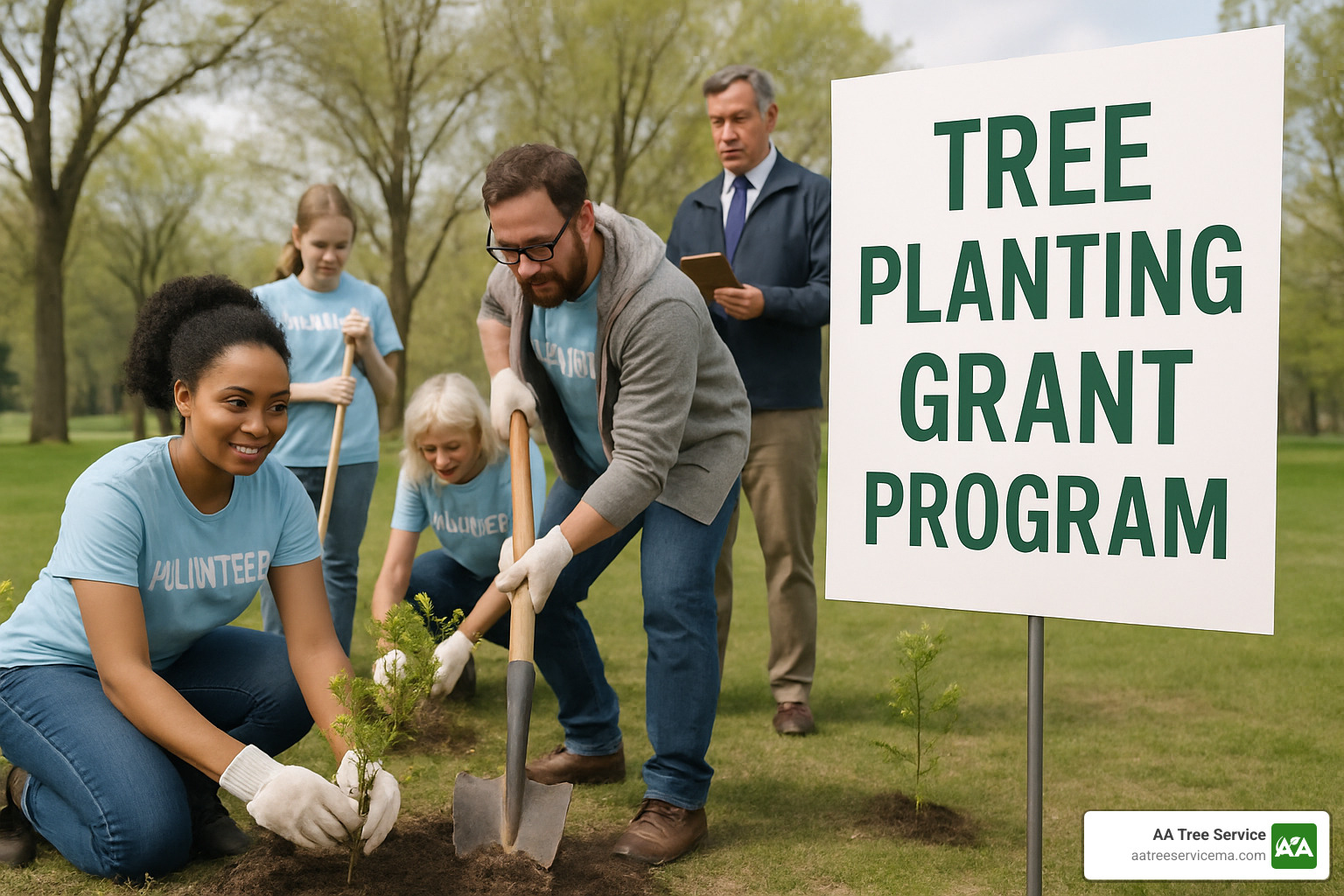
With a bit of research and planning, you might find that adding trees to your property is more affordable than you expected – creating benefits for both your landscape and the wider community for generations to come.
Avoiding Common Mistakes & Ensuring Tree Survival
Even with professional tree planting services, your new trees need ongoing attention to truly thrive. Let’s explore the most common pitfalls that can derail even the best planting efforts – and how to avoid them.
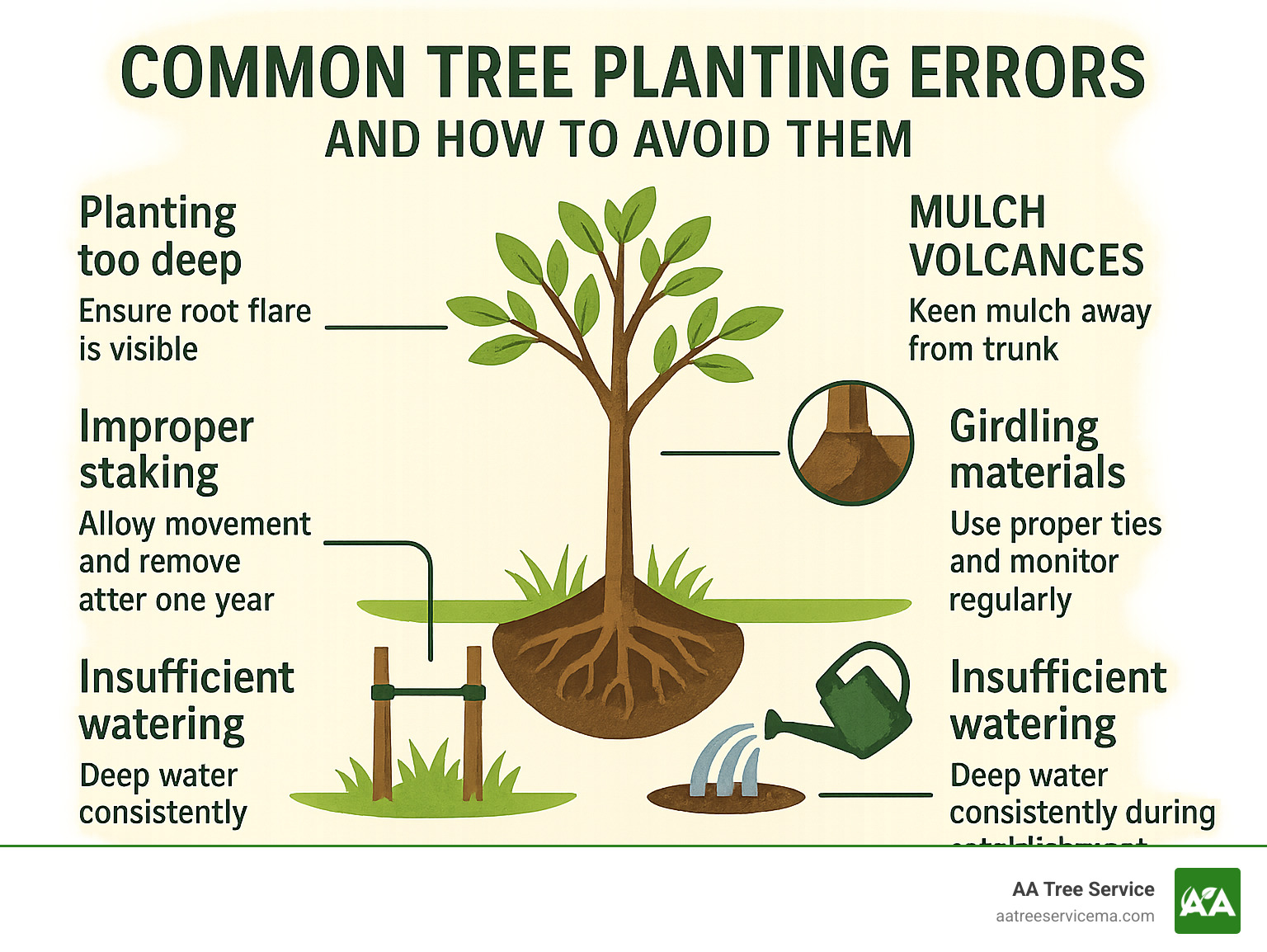
Planting Depth Errors
The number one mistake I see in my work across Massachusetts and New Hampshire is planting trees too deeply. It’s a silent tree killer that often goes unnoticed until it’s too late.
“A tree planted too deep is a tree with one foot in the grave,” as the old arborist saying goes. When the root flare – that widened area where the trunk meets the roots – gets buried, the tree essentially begins to suffocate. This leads to girdling roots that strangle the trunk, bark decay below soil level, and eventually, premature death.
Professional tree planting services are trained to identify and correct this issue, even fixing trees that arrived from the nursery already planted too deeply in their containers. We ensure that root flare remains visible above ground level – it’s a small detail that makes all the difference in your tree’s lifespan.
Root System Problems
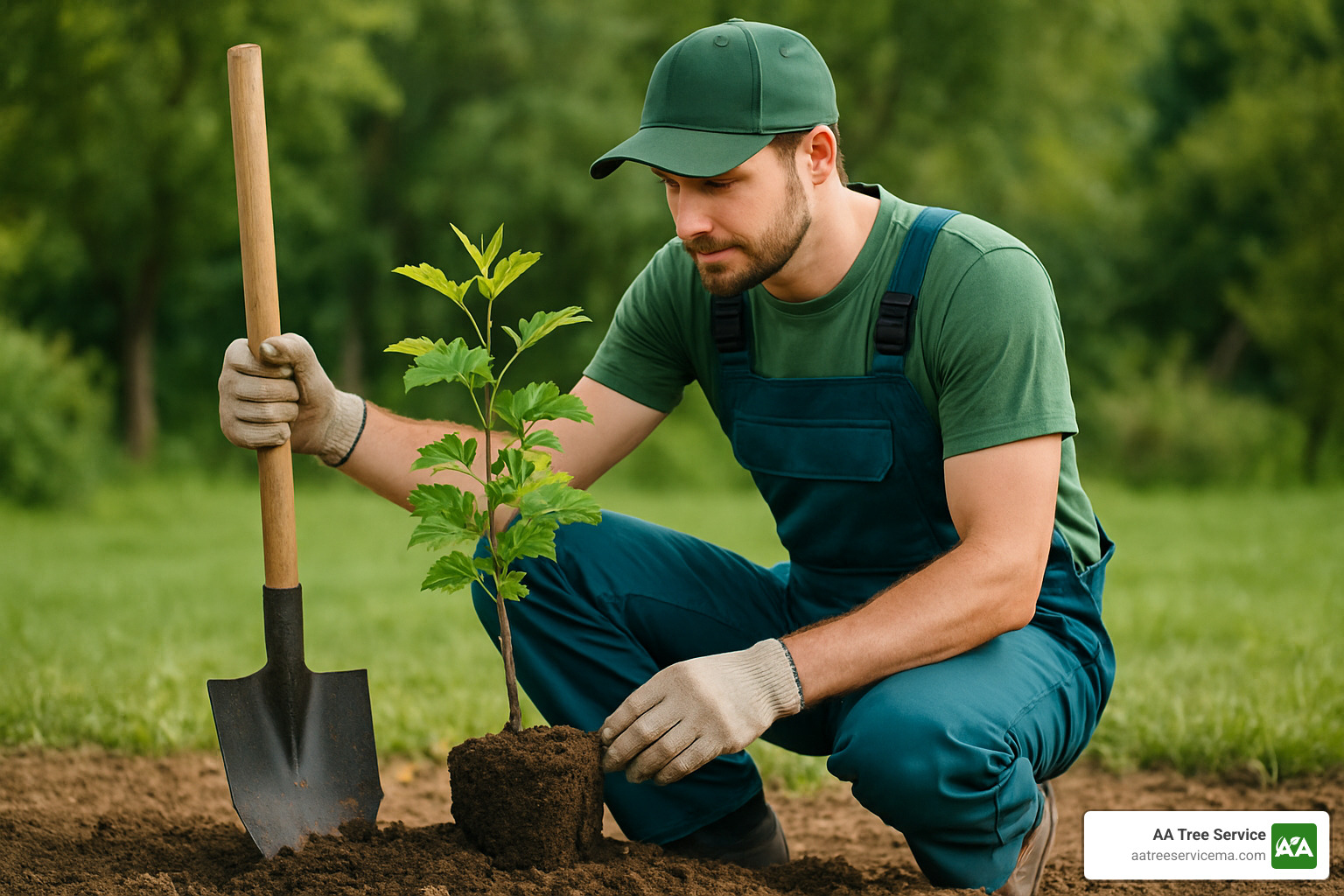
Many tree troubles begin below ground, where you can’t see them. Container-grown trees often develop circling or girdling roots as they outgrow their pots. Left uncorrected, these roots continue their problematic growth pattern after planting.
During professional installations, we carefully inspect root systems, gently teasing apart circling roots and sometimes pruning problematic ones. This seemingly simple step dramatically improves your tree’s chances of developing a healthy, expansive root system rather than one that eventually chokes itself.
Improper Staking
The staking paradox is one of my favorite topics to discuss with homeowners. While staking seems helpful, it often does more harm than good when done incorrectly.
Trees develop strength through movement – much like our muscles. When staked too rigidly, they don’t develop the trunk strength needed for long-term stability. Even worse, forgotten stakes and ties can actually girdle and damage growing trunks.
Professional tree planting services use flexible staking systems that allow natural movement while providing just enough support. And we never leave stakes in place longer than one growing season unless absolutely necessary for unique site conditions.
Mulch Misapplication
The dreaded “mulch volcano” has become an unfortunate landscape trend across Massachusetts and New Hampshire. Piling mulch against the trunk creates the perfect environment for bark decay, pest infestations, and root problems.
Proper mulching is simple: apply a 2-4 inch layer in a circle extending several feet from the trunk, but keep it pulled back several inches from the trunk itself. Think “donut” not “volcano” when applying mulch around your newly planted trees.
Watering Inconsistency
Newly planted trees need consistent moisture to establish their root systems. The boom-and-bust cycle of drought followed by flooding stresses young trees and often leads to failure.
The solution isn’t complicated, but it does require commitment: deep, thorough watering on a consistent schedule based on your specific soil conditions. Sandy soils in coastal New Hampshire towns might need more frequent watering than the clay-heavy soils common in parts of Massachusetts.
Professional tree planting services provide detailed watering guidelines custom to your specific trees, site conditions, and seasonal changes. This personalized approach helps bridge the critical establishment period.
Species Monocultures
There’s a valuable lesson we learned from Dutch elm disease and emerald ash borer: planting too many of the same species creates vulnerability. When a pest or disease strikes, it can devastate entire neighborhoods or properties at once.
Even when creating unified landscape features like privacy screens or shade groves, mixing compatible species creates resilience. A professional arborist can recommend diverse plantings that still provide the aesthetic cohesion you desire, while offering better protection against species-specific threats.
Failure to Monitor
Trees talk to us through their leaves, branches, and overall appearance. Learning to listen to these signals can mean the difference between addressing a minor issue and losing your investment entirely.
New trees need regular observation during their establishment period. Yellowing leaves, unusual spots, wilting, or branch dieback are all early warning signs that something isn’t right. Catching these issues early almost always means simpler, less expensive solutions.
This is why many homeowners in Massachusetts and New Hampshire opt for aftercare packages with their tree planting services. These scheduled check-ins with trained arborists catch subtle problems before they become serious threats.
By understanding and avoiding these common mistakes, the trees you plant today can provide shade, beauty, and environmental benefits for generations to come. After all, the best time to plant a tree was twenty years ago – the second best time is today, but only if you do it right!
Frequently Asked Questions about Tree Planting Services
How far in advance should I schedule a consultation?
Planning ahead makes all the difference when it comes to successful tree planting services. Here in Massachusetts and New Hampshire, we recommend scheduling your consultation at least 3-4 weeks before you’d like to plant. This gives enough time for proper site assessment, tree selection, and scheduling.
If you’re considering larger projects or have your heart set on specialty trees that might need to be sourced specifically for you, it’s best to plan 2-3 months ahead. Our New England climate gives us two prime planting windows—spring and fall—and these book up quickly! During these peak seasons, earlier scheduling is definitely your friend.
The consultation itself is quite manageable, typically taking just 30-60 minutes for most residential properties. During this time, the arborist will walk your property, discuss your vision, assess soil and light conditions, and provide initial recommendations and cost estimates.
What factors most influence the final cost?
When homeowners ask about pricing for tree planting services, several key factors come into play. Based on industry data (not specific to our company), here’s what typically affects your bottom line:
The size and type of tree makes the biggest difference—larger caliper trees (measured by trunk diameter) can cost three or four times more than smaller specimens. A 4″ caliper maple, for instance, commands a much higher price than a 1″ caliper of the same variety.
Good news if you’re planning multiple trees! Quantity discounts often apply when you plant several trees at once. Many New England homeowners save 25% or more when planting 3+ trees simultaneously—making that privacy screen or shade garden more affordable.
Your property’s conditions matter too. Rocky New Hampshire soil, steep Massachusetts hillsides, or difficult access points all increase labor costs. Similarly, rare or specialty varieties typically cost more than common landscape trees.
Need extensive site preparation? Services like soil amendment, drainage correction, or removing existing vegetation will add to your investment. Optional aftercare packages increase initial costs but dramatically improve long-term success rates.
According to internet data, average professional tree planting costs range from $111.75 to $900+ per tree, depending on these variables.
Do newly planted trees need fertilizer their first year?
This question sparks interesting discussions among tree care professionals! The truth is, fertilization needs during the first year depend on several factors.
Most quality tree planting services include some initial fertilization during the planting process. They typically use slow-release formulations that support gentle root establishment without forcing excessive top growth—which can actually harm a newly planted tree.
Current best practices usually follow this approach:
At planting time, a starter fertilizer with phosphorus often gets incorporated into the backfill soil to encourage root development. During the first growing season, additional fertilization is minimal unless soil tests show specific deficiencies. From the second year onward, trees benefit from regular fertilization programs custom to their species and growing conditions.
It’s worth noting that over-fertilizing during the first year can be counterproductive. It can stimulate leafy growth before the root system is ready to support it—especially problematic in our sometimes harsh New England climate.
Professional arborists calibrate initial fertilization based on your existing soil fertility, the specific tree species, planting season, and local growing conditions. For most newly planted trees in Massachusetts and New Hampshire, consistent watering is far more critical than fertilization during those first crucial months.
Each property is unique—what works in coastal Massachusetts might differ from what’s best in the White Mountains of New Hampshire. A professional consultation ensures your new trees get exactly what they need to thrive in your specific location.
Conclusion
Professional tree planting services offer so much more than just putting trees in the ground. They provide a thoughtful, science-based approach to enhancing your property with trees that will thrive for generations to come.
When you invest in expert tree planting, you’re not just improving your landscape today – you’re creating a living legacy. Properly planted trees grow more valuable each year, boosting your property value while providing increasing environmental benefits. In our New England climate, where trees face freezing winters and hot summers, professional planting ensures your trees have the best possible start to withstand these challenges.
Many homeowners consider DIY planting to save money, but this often leads to costly mistakes. The expertise, specialized equipment, and ongoing support from professional arborists dramatically improve your trees’ chances of thriving. From selecting disease-resistant varieties to ensuring proper planting depth, professionals handle all the critical details that determine whether a tree struggles or flourishes.
The benefits reach far beyond aesthetics. Your newly planted trees will cool your home in summer, block winter winds, create habitat for wildlife, capture carbon, and even improve mental wellbeing for everyone who enjoys their shade. As they mature, these benefits only multiply – a properly planted oak today might still be standing tall for your grandchildren to climb.
Whether you need a single ornamental tree to accent your front yard, a row of privacy trees along your property line, or a comprehensive planting plan for a large property, professional tree planting services transform your vision into reality with minimal stress and maximum success. AA Tree Service offers expert tree planting across Massachusetts and New Hampshire, with certified arborists who truly understand our local growing conditions.
By making this investment today, you’re creating beauty, shade, and environmental benefits that will continue growing for decades to come. The tree you plant this year could still be providing joy, comfort and natural beauty long after you’ve moved on.
For more information about our service areas throughout Massachusetts and New Hampshire, visit our full service area page.