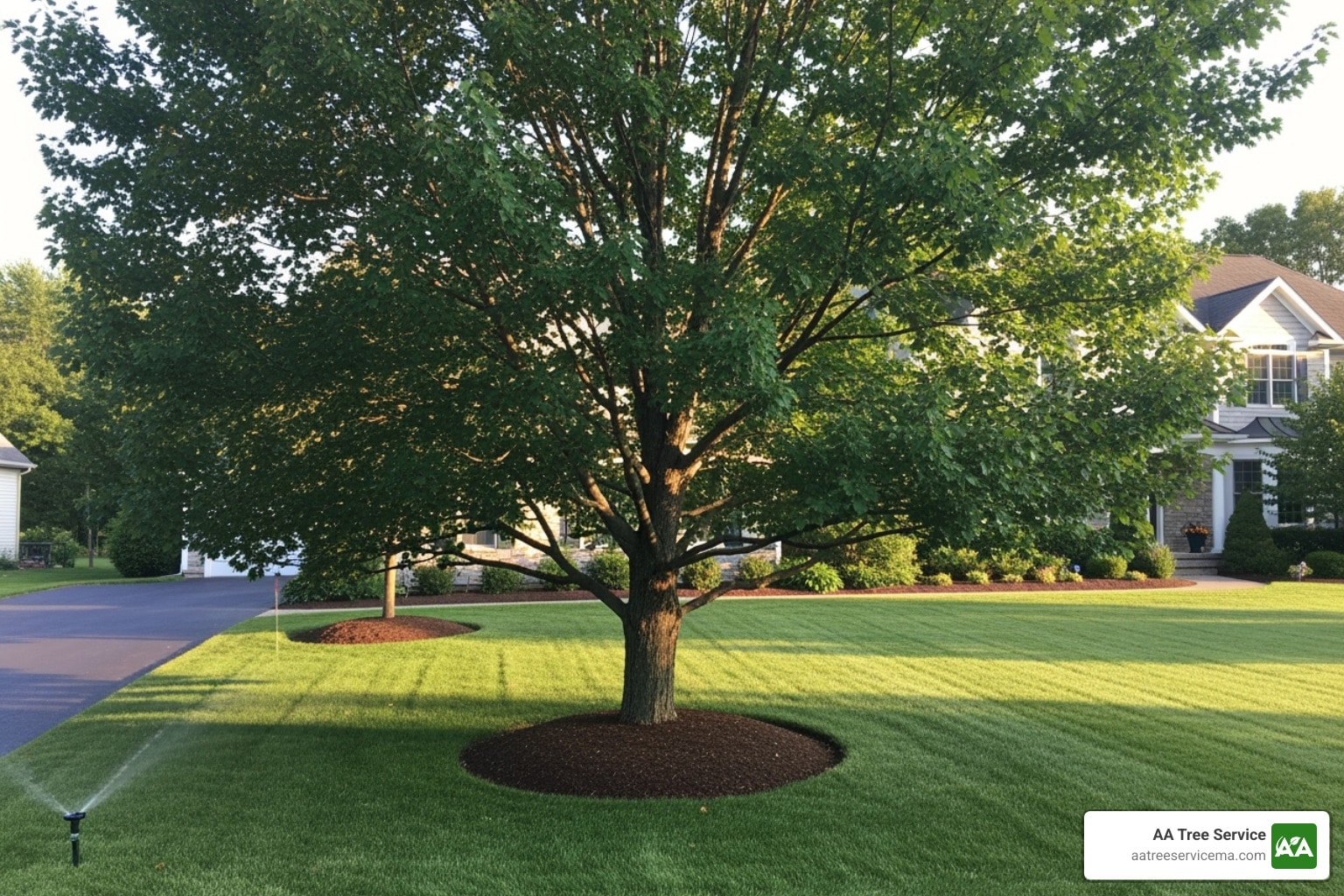
Why Professional Tree Care Matters for Your Property
When searching for tree experts near me, you’re not just looking for someone with a chainsaw; you’re seeking qualified professionals to manage valuable assets on your property in Massachusetts and New Hampshire. Your trees are more than just landscape features; they are a significant investment. Studies from organizations like the Council of Tree and Landscape Appraisers have shown that mature, healthy trees can increase a property’s value by up to 20%.
This value, however, is contingent on their health and safety. Professional care is a multifaceted discipline focused on risk mitigation, property protection, and nurturing this long-term investment. A single falling branch during a nor’easter or summer thunderstorm can cause thousands of dollars in damage to your roof, car, or fence, while proactive maintenance can extend a tree’s beautiful and beneficial life for decades. The key is knowing how to find true professionals who understand the science behind tree care.
To find the best tree experts near me, a systematic approach is crucial. Start by using the ISA Certified Arborist search tool to locate credentialed individuals in your area. Beyond individual certifications, look for companies with Tree Care Industry Association (TCIA) accreditation, which signifies a higher level of business ethics and safety protocols. Always verify that the company holds both general liability and worker’s compensation insurance and is properly licensed to operate in Massachusetts or New Hampshire. Reading recent, local reviews and asking for detailed, written estimates are also vital steps. Finally, confirm they offer 24/7 emergency services, a critical offering in New England’s unpredictable climate.
According to the International Society of Arboriculture, arborists are professionals who focus on individual tree care, bringing specialized knowledge that goes far beyond basic trimming. They are akin to tree doctors, diagnosing issues, prescribing treatments, and performing precise procedures based on an understanding of tree biology. They don’t just cut branches; they make strategic cuts to improve structure, health, and resilience. This expertise also translates into significant long-term savings. Healthy trees provide shade that can reduce summer cooling costs and act as windbreaks to lower winter heating bills. Finding the right expert makes all the difference in protecting your property, enhancing its curb appeal, and maximizing the return on your green investments.
Understanding the Scope: What Can Tree Experts Do for You?
When searching for tree experts near me, you’ll find they offer a comprehensive suite of services designed for holistic landscape care. It’s a far more sophisticated field than just cutting branches; it involves proactive maintenance to prevent problems, routine care to promote vigorous health, and rapid emergency response when disaster strikes. True experts are equipped to handle complex and dangerous situations, ensuring you don’t have to risk personal injury or property damage. Their work is a blend of science, skill, and specialized equipment.
Core Tree Care and Maintenance Services
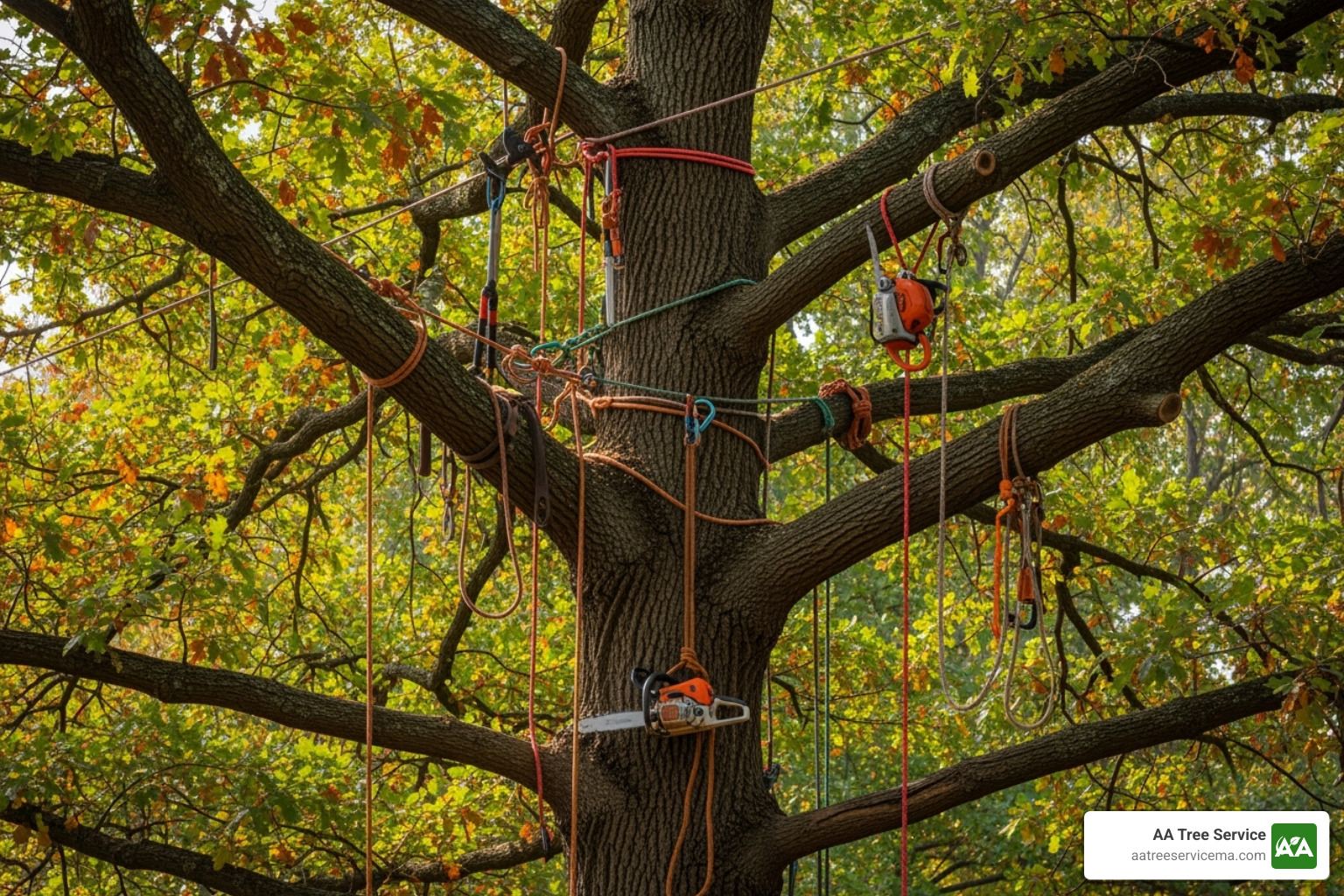
Tree pruning is a science that improves a tree’s health, structure, and appearance by removing specific branches. This is different from tree trimming, which is more about managing size and shape, like keeping branches clear of power lines or your roof. Professional pruning includes several techniques:
- Crown Cleaning: The removal of dead, dying, diseased, or weakly attached branches from the tree’s canopy.
- Crown Thinning: The selective removal of branches to increase light penetration and air movement, which can reduce the risk of some diseases.
- Crown Raising: The removal of lower branches to provide clearance for buildings, vehicles, and pedestrians.
- Crown Reduction: A method of reducing a tree’s height or spread while maintaining its natural form, often used as a correct alternative to harmful topping.
Health and safety pruning is the most critical type, removing hazardous dead or weak branches before they can fall. For curb appeal, aesthetic shaping can turn your trees into beautiful focal points. Want to dive deeper? Check our Tree Trimming Services page or learn about specialized Tree Surgery options.
Specialized and Large-Scale Projects
Hazardous tree removal is a critical service for trees that are diseased, storm-damaged, or dangerously located. This is not a simple felling job; it requires careful planning, technical rigging to lower sections of the tree safely, and precision to avoid damaging surrounding property. After removal, stump grinding uses a powerful machine to shred the stump down below ground level, eliminating the trip hazard and freeing up yard space for new planting or lawn.
For larger projects like construction site preparation or reclaiming overgrown land, land clearing efficiently removes multiple trees, stumps, and vegetation. For the most complex and delicate removals, crane services are indispensable. A crane allows large tree sections to be lifted vertically and moved over obstacles like your home, garage, or prized garden, making it the safest and most efficient method for tight quarters.
Learn more about these intensive services on our Tree Removal Services and Stump Grinding Services pages.
Emergency and Proactive Tree Services
In Massachusetts and New Hampshire, severe weather from nor’easters to thunderstorms makes 24/7 emergency response essential. When a storm leaves a massive tree on your driveway or a heavy branch dangling over your roof, you need immediate, professional help. Storm damage cleanup is complex and dangerous, often involving unstable trees, downed power lines, and other hazards that require professional crews to manage safely. To prevent these emergencies, a proactive tree hazard assessment is invaluable.
An arborist can inspect your trees to identify weak limbs, decay, or disease before they lead to catastrophic failure. For trees with structural weaknesses, such as co-dominant stems or heavy, overextended limbs, cabling and bracing can provide the necessary support. Steel cables and rods are strategically installed to reduce the risk of limb failure, preserving the tree and extending its life safely.
When emergencies strike, visit our Emergency Tree Removal page for immediate help, or check out our Tree Hazard Assessment services to stay ahead of potential problems.
The Mark of a Pro: Qualifications to Look for in a Tree Expert
When you’re searching for tree experts near me, distinguish between a basic tree cutter and a true professional who operates at the intersection of science, safety, and skill. Your trees are valuable living assets that deserve expert care, and credentials are your best guarantee of quality work, protecting you from liability and ensuring the long-term health of your landscape. Don’t be afraid to ask for proof of these qualifications; a reputable company will be proud to provide them.
Certified Arborist vs. Tree Trimmer: Why Expertise Matters
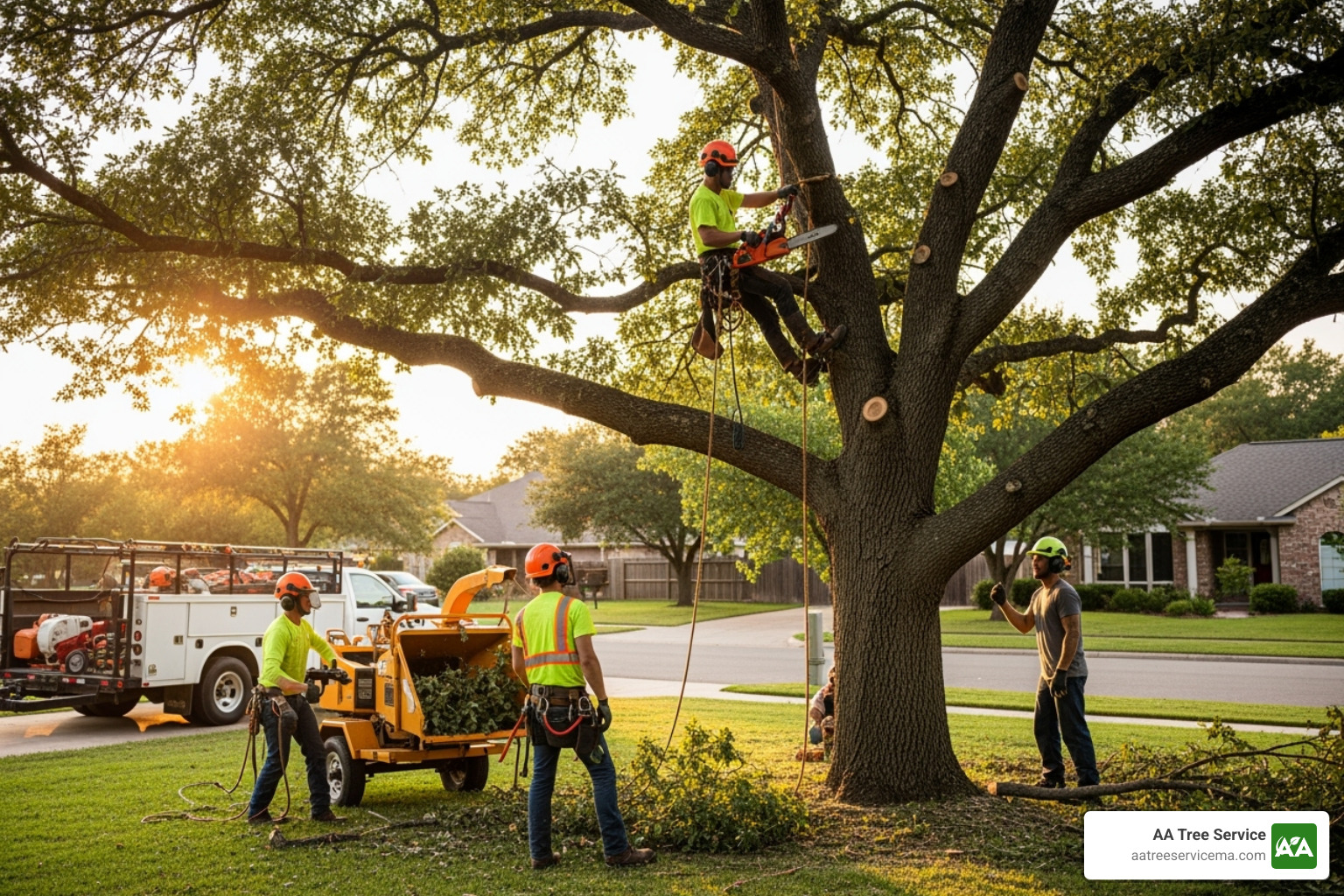
A certified arborist is the equivalent of a tree doctor. They possess a deep, evidence-based understanding of tree biology, soil science, pest identification, and disease pathology. This expertise allows them to care for the health of individual trees in residential and urban settings, going far beyond simple trimming to diagnose complex problems and prescribe effective treatments. Professional arborists adhere to ANSI A300 Standards, which are the industry’s authoritative benchmarks for every aspect of tree care, from pruning techniques to fertilization, ensuring practices that promote long-term tree health.
Their expertise in tree preservation helps you avoid costly emergencies by addressing issues like structural defects or early signs of decay before they become critical hazards. To maintain their certification, arborists must participate in continuous education, ensuring they are always using the latest techniques and are knowledgeable about emerging threats like new invasive pests in the New England area.
You can learn more about what makes these professionals special at the International Society of Arboriculture.
Essential Credentials and Insurance
When vetting tree experts near me, certain credentials are non-negotiable for your financial and legal protection. Look for:
- ISA Certified Arborist: This certification guarantees an individual has demonstrated a high level of knowledge by passing a comprehensive exam and adheres to a strict code of ethics.
- TCIA Accreditation: This credential applies to the entire company, not just an individual. It means the business has undergone a rigorous audit of its safety practices, professionalism, and ethics, making it a hallmark of a top-tier company.
- State Licensing for Massachusetts and New Hampshire: Ensures the company complies with all local and state regulations, which may include specific licenses for pesticide application or other services.
- Full Insurance: This is paramount. Always ask for a current certificate of insurance and verify it directly with the provider. The company must have both liability insurance (to cover any damage to your property) and worker’s compensation (to cover their employees in case of injury, protecting you from being sued).
Want to double-check an arborist’s credentials? Use this handy tool to verify an arborist’s credentials directly through the ISA.
Commitment to Safety Protocols
Tree work is consistently ranked as one of the most dangerous professions. A company’s commitment to safety is a direct reflection of its professionalism. Professional tree experts near me will always begin with a job hazard analysis to identify potential risks like power lines, unstable ground, or nearby structures. Expect to see crews using a full range of personal protective equipment (PPE), including helmets, safety glasses, hearing protection, and chainsaw-resistant chaps.
They should also demonstrate a clear commitment to property protection, using tools like heavy-duty mats to prevent ruts in your lawn and carefully rigging branches to be lowered with precision. Look for companies that invest in ongoing crew training and strictly adhere to the safety standards set by the Tree Care Industry Association (TCIA). This unwavering focus on safety ensures the job is done correctly, efficiently, and without incident.
Your Guide to Finding Reputable Tree Experts Near Me
With a systematic and informed approach, you can confidently steer your search and identify reputable tree experts near me who will treat your property with the care and respect it deserves. Taking the time to properly vet a company is the most important step in ensuring a successful outcome for your tree care project.
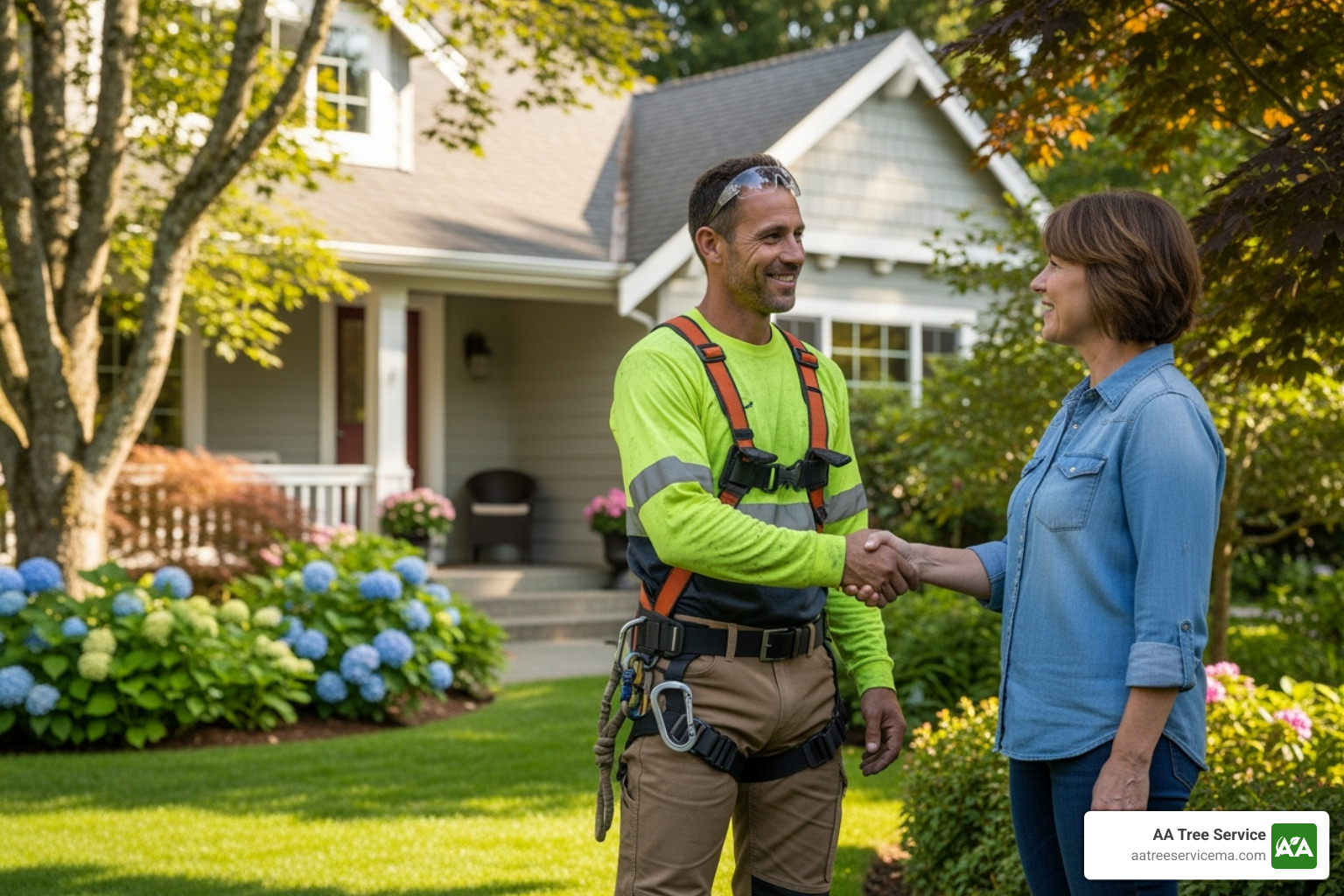
How to Find Local Tree Experts near me
Start your search for qualified tree experts near me in Massachusetts and New Hampshire with trusted, verifiable sources. The best place to begin is the ISA Arborist Search Tool at Find a Certified Arborist in your area, which lists professionals who have met stringent knowledge and ethical standards. Supplement this with targeted online searches and carefully review company websites for clear evidence of their credentials, insurance, and services.
Read local reviews on platforms like Google and Yelp, paying close attention to detailed comments that describe the communication, professionalism, and quality of the cleanup. Ask for word-of-mouth recommendations from neighbors who have had similar work done, as they can provide accounts of their experience. Finally, check the company’s Better Business Bureau (BBB) rating to review their history of customer service and complaint resolution. A local physical address and phone number are also good signs of a stable, legitimate business, not a storm-chasing outfit.
The Hiring Process: From First Call to Final Cleanup
A professional hiring process should be transparent and structured. It typically follows these steps:
- Initial Consultation: A phone call to discuss your needs. A reputable company will often offer a free, same-day quote or schedule an on-site visit promptly.
- On-Site Assessment: A certified arborist should visit your property to inspect the trees, discuss your goals, identify potential hazards, and provide expert recommendations.
- Written Estimate: You must receive a detailed, written contract. It should clearly outline the company’s contact information, proof of insurance, the specific scope of work for each tree, the total cost, the project timeline, and the terms of payment. Never accept a verbal agreement.
- Ask Questions: Before signing, ask about the equipment they plan to use, the size of the crew, and who will be your point of contact on the day of the job. This is your chance to gauge their professionalism.
- Scheduling & Job Execution: The crew should arrive on time with a clear plan, proper equipment, and a focus on protecting your property with barriers or mats as needed.
- Debris Removal & Final Inspection: A thorough cleanup is a hallmark of a professional job. You should walk through the completed work with the crew leader to ensure everything has been done to your satisfaction before making the final payment.
Red Flags to Avoid When Hiring a Tree Service
Knowing the warning signs can save you from a disastrous hiring decision. Be wary of any company that:
- Lacks Verifiable Insurance: If they can’t provide a certificate of insurance for both liability and worker’s compensation, walk away immediately.
- Offers Vague or Verbal Contracts: A professional job requires a professional contract. Insist on a detailed written estimate.
- Uses High-Pressure Sales Tactics: Reputable companies don’t pressure you into on-the-spot decisions or offer a special price that’s only good “today.”
- Recommends “Topping” Trees: This harmful and outdated practice involves indiscriminately cutting the top off a tree. It is a sure sign of an untrained operator and severely damages tree health.
- Demands Full Payment Upfront: A deposit for large jobs may be reasonable, but full payment should only be made after the work is completed to your satisfaction.
- Uses Climbing Spikes on a Live Tree: Spikes should only be used on trees that are being removed, as they create wounds that can lead to disease and decay in a tree that is meant to be preserved.
Decoding the Bill: What Influences Tree Service Costs?
Understanding the variables that influence tree service costs is essential for budgeting and for evaluating quotes when you search for tree experts near me. Every job is a custom project with a unique set of challenges and requirements. For this reason, reputable companies will always provide a free, on-site inspection to give you a detailed and accurate estimate. Pricing is not arbitrary; it is a calculated figure based on several key factors related to labor, equipment, and risk.
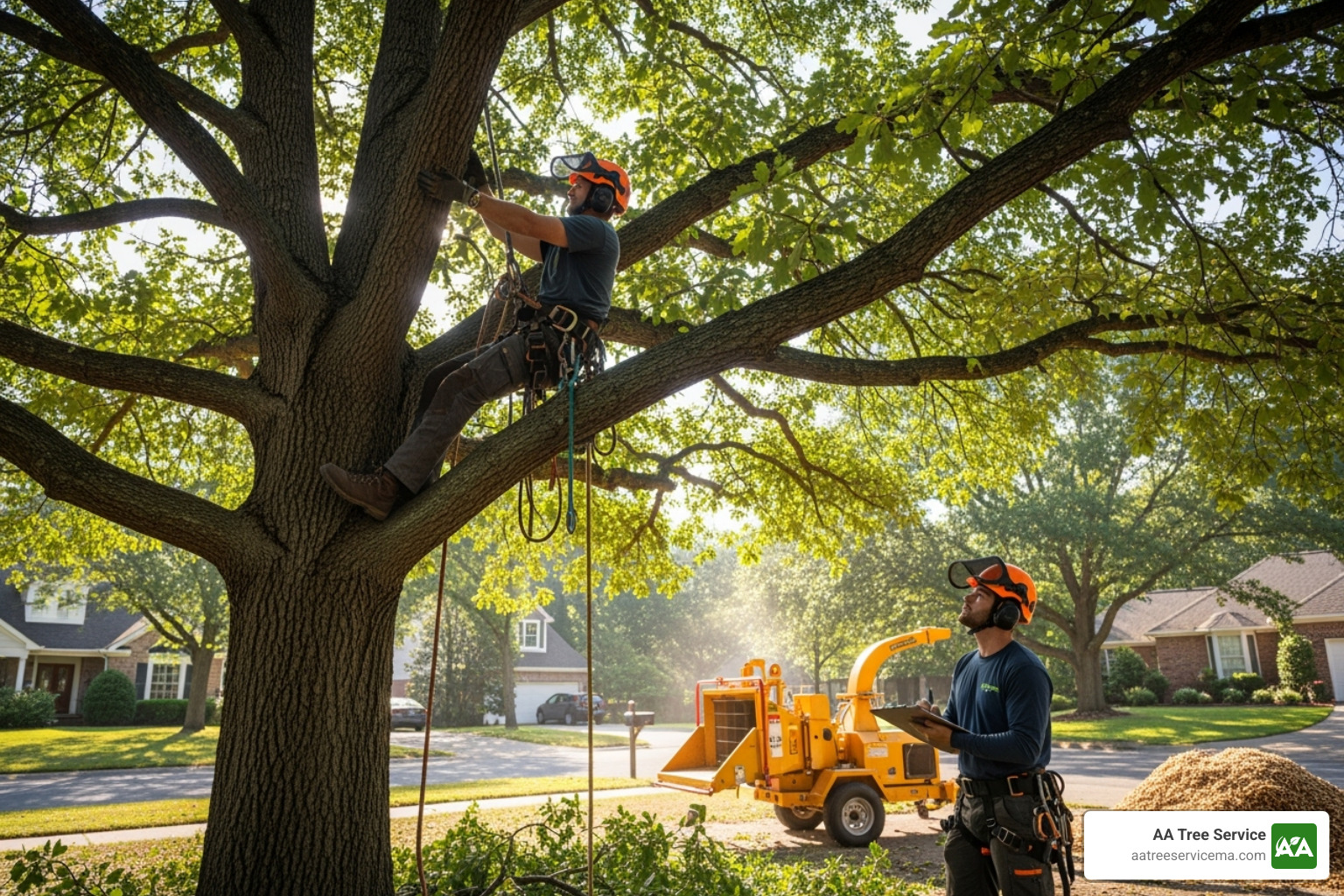
Key Factors That Determine Your Final Price
Several interconnected factors influence the final price of any tree work:
- Tree Size and Height: This is often the biggest factor. Larger, taller trees require more time, more crew members, and more sophisticated equipment (like a bucket truck or crane) to dismantle safely.
- Condition and Health: A dead or diseased tree can be more hazardous and unpredictable to work on than a healthy one. Brittle wood and structural decay increase the risk and complexity, which is reflected in the cost.
- Location and Accessibility: A tree in an open field is straightforward. A tree in a tight backyard, overhanging a house, near power lines, or close to a septic system requires significantly more planning, time, and technical rigging to work on safely.
- Job Complexity and Risk: The overall scope of the project matters. Removing a single tree is different from clearing multiple trees. The level of risk is also a major consideration; a tree leaning precariously over your home is a high-risk job that demands more expertise and caution, influencing the price.
- Equipment Needs: The specific machinery required directly impacts the cost. A job that can be done with ropes and chainsaws will be less expensive than one that necessitates a bucket truck, a large chipper, and especially a crane.
- Debris Removal: The quote should specify the plan for cleanup. The volume of wood and brush to be chipped, logged, and hauled away is factored into the labor and disposal costs.
Average Cost for Common Tree Services
While costs vary greatly based on the factors above, here are some general industry estimates to give you a baseline. Please note: these are average ranges based on internet data for the New England area and are not a direct quote from AA Tree Service. Always get a written estimate for your specific job.
| Service | Average Cost Range (MA & NH) | Notes |
|---|---|---|
| Tree Removal | $250 – $3,500+ | A small tree under 25 ft might be a few hundred dollars; a giant oak over a house could be thousands. |
| Tree Pruning | $200 – $1,800+ | A young tree’s structural prune is on the low end; a full crown reduction on a mature tree is higher. |
| Stump Grinding | $150 – $600+ | Often priced separately from removal, based on the stump’s diameter and accessibility. |
Tree removal is generally the most expensive service due to the high risk, intensive labor, and extensive cleanup involved. When comparing quotes from different tree experts near me, don’t just look at the bottom line. Ensure each quote details the same scope of work, insurance coverage, and cleanup plan. The cheapest bid is often not the best value, as it may come from an uninsured or unqualified company that cuts corners on safety and quality.
Is It Time to Call an Expert? Assessing Your Tree’s Health
Some tree problems are impossible to miss, like a large broken branch dangling precariously or a tree that develops a sudden, alarming lean after a storm. Other issues, however, are far more subtle and can develop over time. For homeowners in Massachusetts and New Hampshire, learning to recognize the key warning signs is crucial for knowing when to call tree experts near me. This proactive approach can prevent costly property damage, avoid potential injuries, and in many cases, save a tree that might otherwise have to be removed. You don’t need to be an arborist to do a basic visual inspection of your trees.

Signs Your Tree Needs Professional Pruning
Professional pruning is a vital health checkup for your trees. It’s not just about aesthetics; it’s about safety and longevity. Call an expert if you observe:
- Overgrown Branches: Limbs that are touching your house, scraping your roof, or growing too close to power lines are a clear sign that trimming is needed to prevent damage.
- Crossing or Rubbing Limbs: Branches that cross and rub against each other create wounds in the bark, which serve as entry points for pests and diseases.
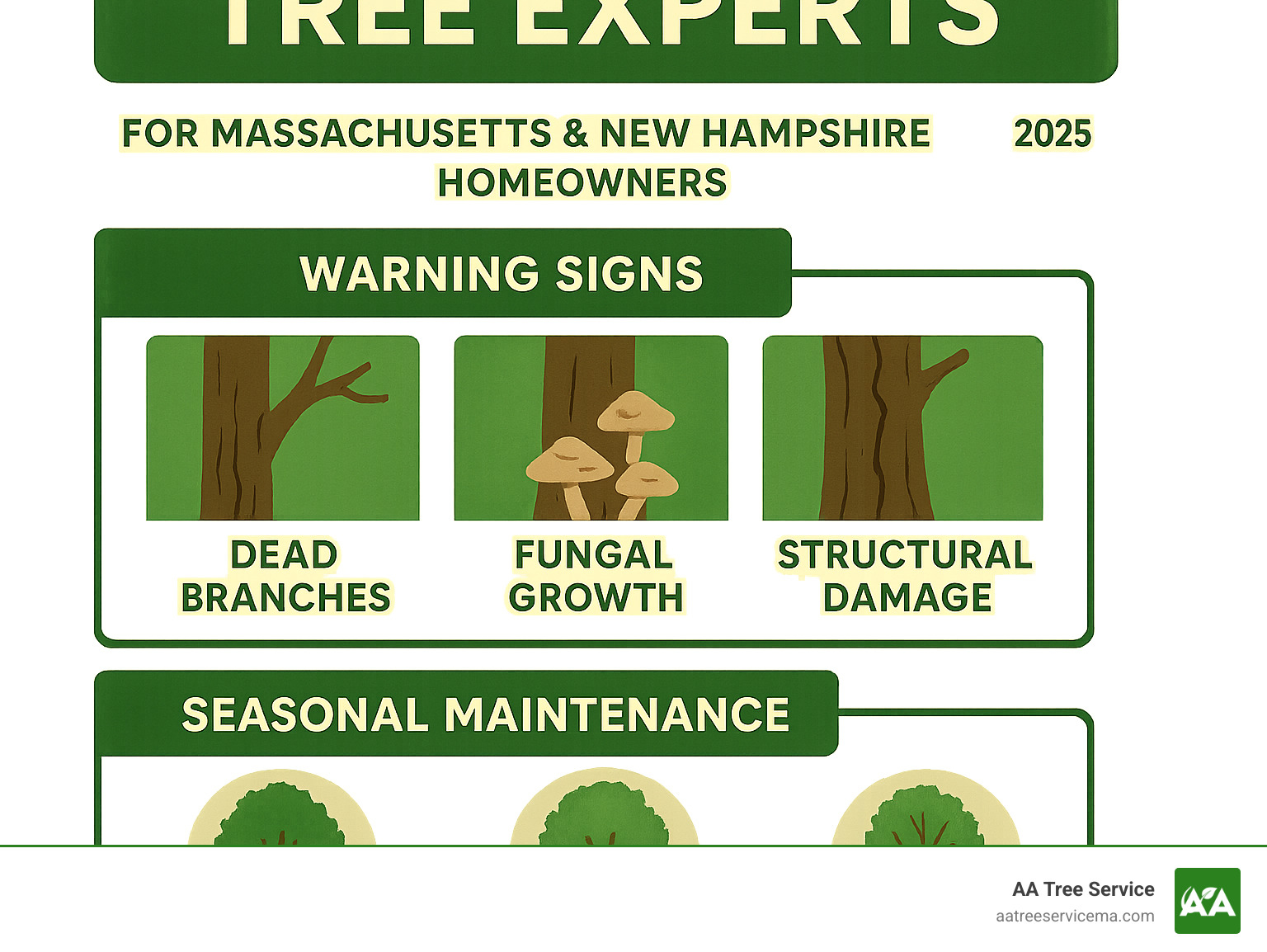
- Dead or Broken Branches: Often called “widowmakers,” these are significant hazards that can break and fall at any time, especially during high winds, snow, or ice storms.
- Signs of Disease or Pests: Look for fungal growth (like mushrooms) on the trunk or at the base, unusual leaf discoloration, or signs of insect infestation like small holes in the bark or sawdust-like frass.
- Poor Tree Structure: Especially in young trees, pruning can correct structural issues like co-dominant stems (competing main trunks) or weak branch attachments, preventing major problems as the tree matures.
For more detailed guidance on maintaining tree health through pruning, you can visit our page on More info about Tree Care Services.
When Tree Removal Becomes Necessary for Tree experts near me
While preservation is always the primary goal, removal is sometimes the only responsible option to ensure safety. A certified arborist can help you make this difficult decision. Consider removal if you notice:
- More than 50% of the tree is dead or in decline: If a tree has lost most of its canopy, it is likely structurally unsound and may not be able to recover.
- Major Trunk Damage: Look for large, deep cracks (especially vertical ones that go deep into the wood), hollow sections, or large areas of missing bark, as these compromise the tree’s stability.
- Sudden Leaning: A new or worsening lean, particularly if the ground around the base is heaving, often signals root failure and an imminent risk of falling.
- Root System Damage: Significant root damage from nearby construction, trenching, or soil compaction can destabilize a tree and cut off its ability to absorb water and nutrients.
- Hollow Trunk: While some trees can live with a hollow trunk, if a large portion of the trunk is hollow, it may be structurally compromised. An arborist can assess the extent of the decay.
- Proximity to Structures: If a high-risk tree is located where its failure would certainly damage your home, a neighbor’s property, or public utilities, removal is often the safest course of action.
For specific information on tree removal in our service areas, you can check out More info about Tree Removal in Nashua, NH.
Frequently Asked Questions about Hiring Tree Experts
When you’re considering hiring tree experts near me, it’s natural and wise to have questions. A professional company will be happy to provide clear, confident answers. Here are some of the most common inquiries we receive from homeowners in Massachusetts and New Hampshire.
How do you ensure the safety of my property during tree work?
Property protection is a top priority and a key differentiator for a professional service. Our safety measures begin with a thorough job hazard analysis to identify and mitigate all risks. We use specialized protective barriers, such as heavy-duty ground protection mats, to shield your lawn and driveway from heavy equipment. Our highly trained crew members use advanced rigging techniques to carefully control and lower every branch, preventing any impact on your home, garden, or fence.
For jobs near public roads, we also manage traffic control. Most importantly, we are fully licensed, bonded, and insured, including robust liability and worker’s compensation policies, which completely protects you from any liability.
What happens to the wood and debris after a job is complete?
A key benefit of hiring professional tree experts near me is our comprehensive debris management. We handle the entire cleanup process, leaving your property pristine. Branches and smaller limbs are chipped on-site into valuable wood chip mulch. You have the option to keep this mulch for your garden beds—it’s excellent for retaining moisture and suppressing weeds—or we can haul it away.
Larger wood from the trunk can be cut into firewood-length rounds and left for you, or it can be completely removed from the property. Our service includes a comprehensive haul-away of all unwanted material and a thorough final cleanup of sawdust, leaves, and small debris with rakes and blowers.
How often should my trees be pruned?
The ideal pruning frequency depends on your tree’s species, age, health, and location. There’s no one-size-fits-all answer. For example, fast-growing species like Silver Maples may need attention more often than slow-growing Oaks. As a general guideline, young trees benefit from structural pruning every 1-3 years to develop a strong, stable framework for future growth. Most mature, healthy trees benefit from a professional pruning every 3-5 years to clean out deadwood and maintain their structure. However, if you ever spot dead, diseased, or hazardous branches, they should be addressed immediately, regardless of the schedule.
What is the best time of year to prune my trees?
For most deciduous trees in New England, the dormant season (late fall and winter) is the ideal time for pruning. With the leaves gone, it’s much easier to see the tree’s structure and identify any problems. Pruning during dormancy also minimizes stress on the tree and reduces the risk of transmitting diseases like oak wilt or fire blight. However, there are exceptions. Trees that flower in early spring (like magnolias or dogwoods) should be pruned right after they finish blooming to avoid cutting off next year’s flower buds. An arborist can advise on the perfect timing for your specific trees.
Does my town require a permit for tree removal?
This is an excellent question, as regulations vary significantly by municipality. Some towns in Massachusetts and New Hampshire have ordinances protecting trees of a certain size or species, or trees located in conservation areas or near wetlands. A reputable, local tree service will be familiar with the specific regulations in your town and can advise you on whether a permit is needed. They can often assist with the application process, ensuring all work is done in full compliance with local laws.
Conclusion: Partnering with the Right Pro for a Healthier Landscape
Your trees are living, breathing investments that contribute immensely to your property’s beauty, value, and ecosystem. Partnering with the right tree experts near me is the most critical step you can take to protect that investment.
The process of finding a qualified professional should be deliberate and thorough. The key takeaways are to prioritize companies that employ ISA Certified Arborists, to diligently verify their insurance and licensing for operations in Massachusetts and New Hampshire, and to always insist on a detailed, written estimate before any work begins. Choosing a professional is an investment in safety, long-term tree health, and your own peace of mind. The proper care you provide today is the best defense against costly and dangerous emergencies tomorrow.
At AA Tree Service, we have built our reputation over 20 years of dedicated service in Massachusetts and New Hampshire. We understand the unique challenges our local climate presents, from heavy snow loads to summer storm damage. Our business is founded on a bedrock of expertise, demonstrated by our commitment to 24/7 emergency services, our offer of free, same-day quotes, and our unwavering dedication to customer satisfaction.
We provide expert tree services in Massachusetts and New Hampshire that are designed to improve the beauty, improve the health, and ensure the safety of your entire landscape. This isn’t just a job for us; it’s our craft.
Your property deserves the highest standard of professional care. Don’t leave the health and safety of your trees to chance. Request a Quote today to connect with our certified arborists and take the first step toward maintaining a healthy, safe, and vibrant landscape for many years to come.