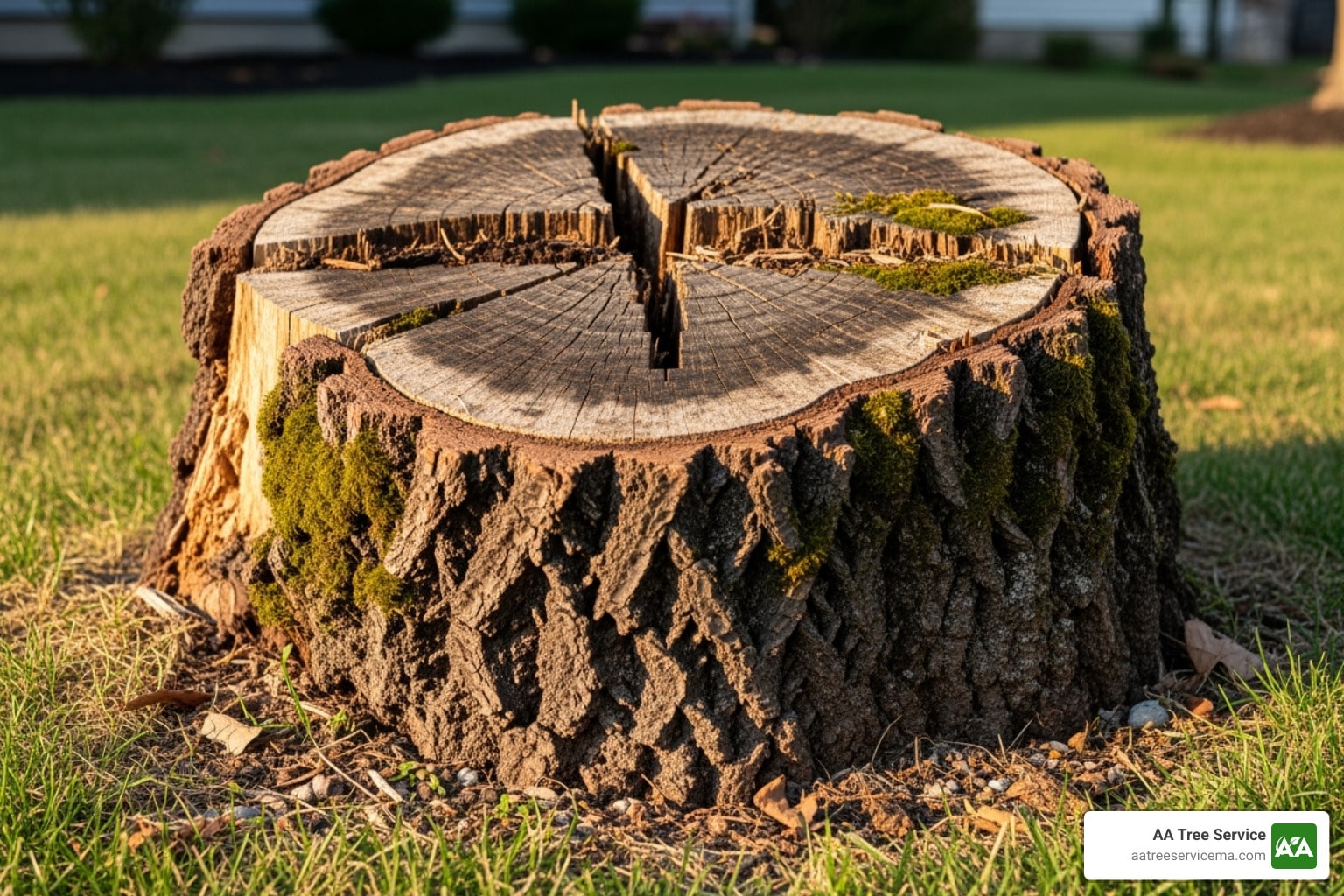
Why Stump Removal is the Smart Choice for Your Property
Stump removal is a cost-effective way to improve your yard’s safety, appearance, and usability. For properties in Massachusetts or New Hampshire, you have several options that won’t break the bank.
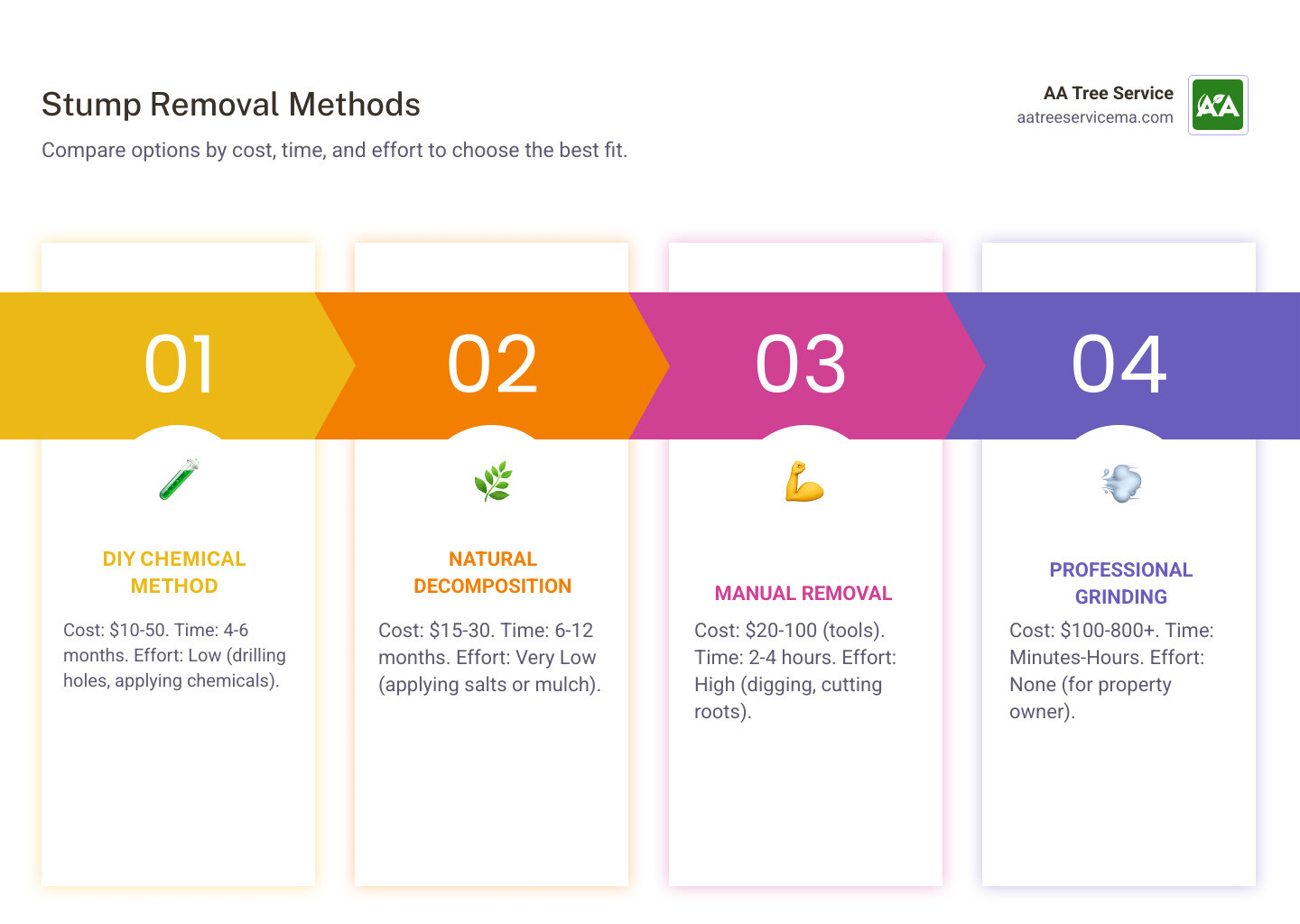
Quick Answer: Your Best Stump Removal Options
- DIY Chemical Method: $10-$50, takes 4-6 weeks
- Natural Decomposition: $15-$30, takes 6-12 months
- Manual Removal: $20-$100 in tools, 2-4 hours of work
- Professional Grinding: $100-$800+ (average internet pricing, not AA Tree Service rates)
- Rental Grinder: $110-$150 per day plus effort
That old stump is more than an eyesore; it’s a problem. Stumps attract pests like termites and carpenter ants, create tripping hazards, and can damage lawn mowers.
Fortunately, you don’t need to spend a fortune to solve this. From patient DIY methods to affordable professional services, there’s a solution for every budget and timeline. The key is understanding which method is best for your situation. A small, old stump might be removed with Epsom salt and patience, while a massive oak stump near your foundation is a job for professionals.
Must-know Stump Removal terms:
Why That Old Stump Has to Go: More Than Just an Eyesore
That old stump is more trouble than it’s worth. Here’s why stump removal should be a priority for your yard improvement.
Improve Aesthetics and Property Value
A stump disrupts the look of a smooth, beautiful lawn. It’s an eyesore that suggests deferred maintenance to potential home buyers. Removing it provides an immediate aesthetic improvement and can boost your property value.
Eliminate Safety Hazards
A stump is a serious tripping hazard for family and guests. It can also cause significant lawn mower damage if struck, leading to expensive repairs and the risk of flying debris.
Prevent Pest Infestations
A rotting stump is a guide for pests. Termites and carpenter ants colonize decaying wood and can spread to your home, deck, or fence. It also encourages fungi growth, which can spread diseases to healthy plants and be toxic to pets and children.
Reclaim Your Space and Stop New Growth
Unless the root system is dead, a stump can sprout new, weak shoots that are difficult to manage. Removal allows you to reclaim usable space for a garden, a new tree, or simply more open lawn for your family to enjoy.
Consider the Environmental Impact
When choosing a method, consider the environmental impact of stump removal. Some chemical treatments can harm soil health, while manual and grinding methods are gentler on your yard’s ecosystem. The bottom line is that removing the stump is an investment in your property’s safety, beauty, and value.
DIY Stump Removal: Your Guide to Low-Cost, High-Patience Options
If you have a tight budget and plenty of patience, DIY stump removal can be a rewarding project. These methods are inexpensive but require time.
Using Chemical Stump Removers
Chemical removers accelerate natural decomposition by making the wood porous and soft. The main ingredients are potassium nitrate or high-nitrogen fertilizers, which encourage microbes to break down the wood. Products like Bonide Stump-Out Granules cost around $15 and typically work in 4 to 6 weeks, though large stumps can take up to 6 months.
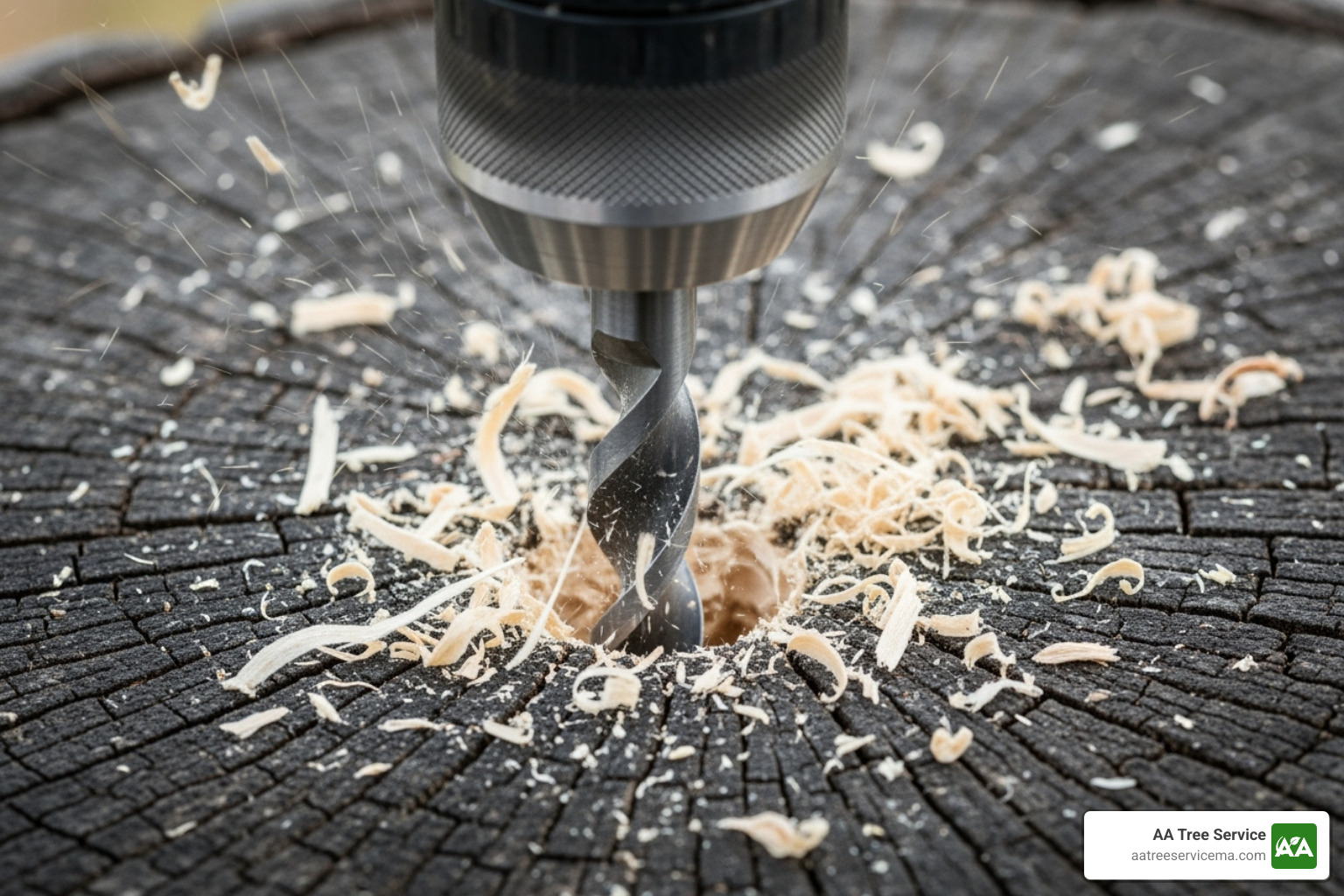
Here’s the process:
- Cut the stump as close to the ground as possible.
- Drill holes in the tree stump using a 1/2-inch (or wider) spade bit. Drill vertical holes 8-12 inches deep across the top, and then drill angled holes from the side to connect with the vertical ones.
- Pour your chosen tree stump removal chemicals into the holes as directed, then fill with water to activate them.
- Safety First: Always wear goggles and gloves. Potassium nitrate is a hazardous substance, so keep it away from children and pets.
- Cover the stump with a tarp to retain moisture. After 4 weeks to 6 months, the wood will be soft enough to break apart with an axe.
The Natural Decomposition Method for Stump Removal
For a completely natural approach, you can speed up decomposition from 3-7 years to just 6 to 12 months.
Epsom salt is a popular option that dehydrates the wood. Drill holes, fill them with Epsom salt, add water, and cover with a tarp. The stump should soften in 2-3 months. Be aware that high salt concentrations can harm the soil for future planting. Rock salt works similarly but is harsher on surrounding vegetation.
A better eco-friendly method is using organic mulch and high-nitrogen fertilizer. Drill holes, fill them with fertilizer, and then bury the entire stump under a thick layer of moist organic mulch (wood chips, leaves, etc.). This creates a composting environment that enriches the soil as the stump breaks down. Learn more in our guides to natural stump removal and natural stump dissolver methods.
Manual Stump Removal: The Sweat Equity Method
For small to medium stumps, especially older ones, manual stump removal is a great workout.
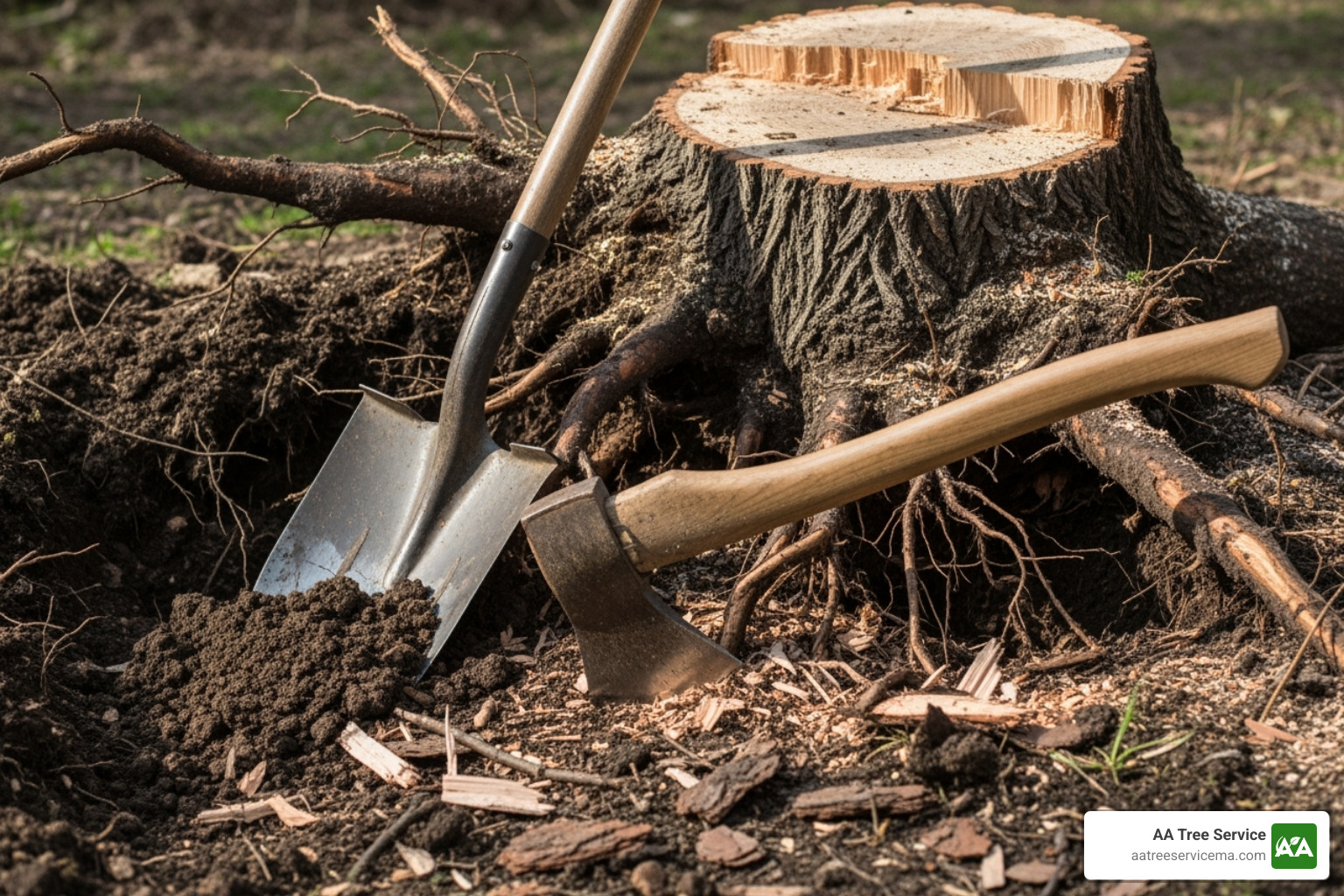
You’ll need a shovel, pickaxe, axe, bow saw, and a pry bar. The process involves digging a trench around the stump to expose the lateral roots. Cut through these roots with your axe or saw, rocking the stump to create tension. The final challenge is severing the main tap root growing straight down.
This method is labor intensive, taking 2 to 4 hours per stump, but it provides immediate results. The stump is completely gone, and the space is ready for use. Success requires patience and persistence.
Stump Grinding: The Fastest Way to Reclaim Your Yard
When you need a stump gone fast, stump grinding is the most efficient method. It can turn a large stump into a pile of wood chips in a fraction of the time of other methods.
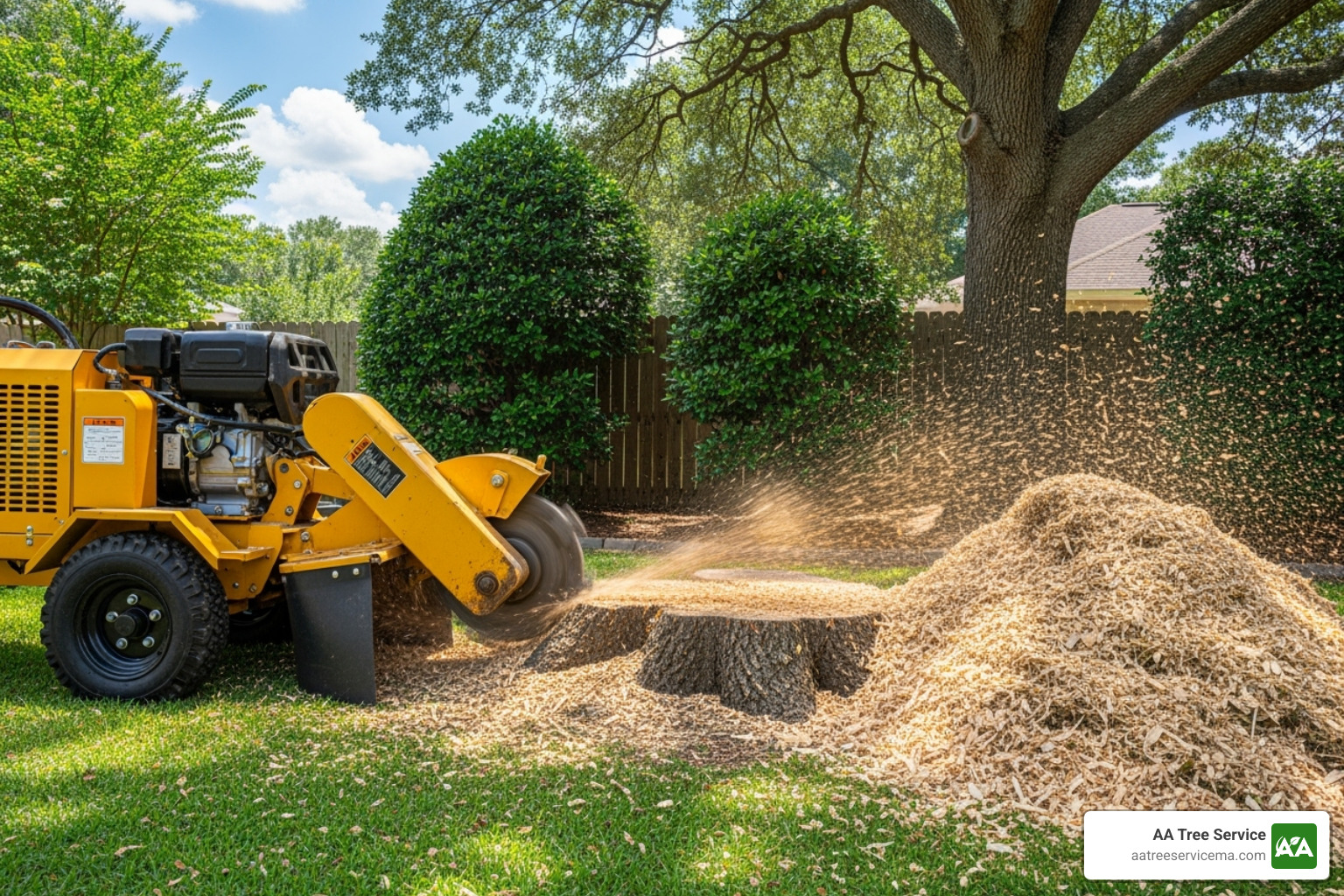
A stump grinder uses a powerful rotating cutting wheel to obliterate the stump down to 6 to 12 inches below ground level. A small stump can be gone in minutes, while larger ones may take an hour or two. The process also grinds the upper root system, leaving you with valuable mulch for your garden. This is the essence of fast stump removal.
Renting a Grinder vs. Hiring a Professional Service
You can either rent a grinder or hire a service. Here’s the breakdown:
- DIY Grinder Rental: Costs $110 to $150 per day, plus fuel and transport time. Operating these powerful machines requires a learning curve and proper safety gear (goggles, gloves, chaps). You are also liable for any damage to the machine or your property.
- Professional Service: Costs typically range from $100 to $800+ (based on average internet pricing, not AA Tree Service rates), depending on stump size and location. Professionals are insured, experienced, and highly efficient. They often include cleanup, saving you time and effort. For affordable stump grinding, a professional service often provides better value.
When to Call a Professional for Stump Removal
While DIY is tempting, calling a professional for stump removal is essential in certain situations:
- Large stumps (over 20 inches in diameter) that overwhelm rental equipment.
- Proximity to structures like your house, foundation, fence, or underground utilities.
- Multiple stumps, where professional efficiency saves significant time and money.
- Steep terrain or difficult access, which poses a safety risk for inexperienced operators.
- Tight time constraints for a landscaping project or property sale.
If you’re uncomfortable with heavy machinery or value your time and safety, a local stump removal service is the best choice. With over 20 years of experience in Massachusetts and New Hampshire, we handle all situations safely and efficiently.
After the Stump: Restoring Your Landscape
Once the stump is gone, you’re left with a hole filled with wood chips and a great opportunity to improve your landscape.
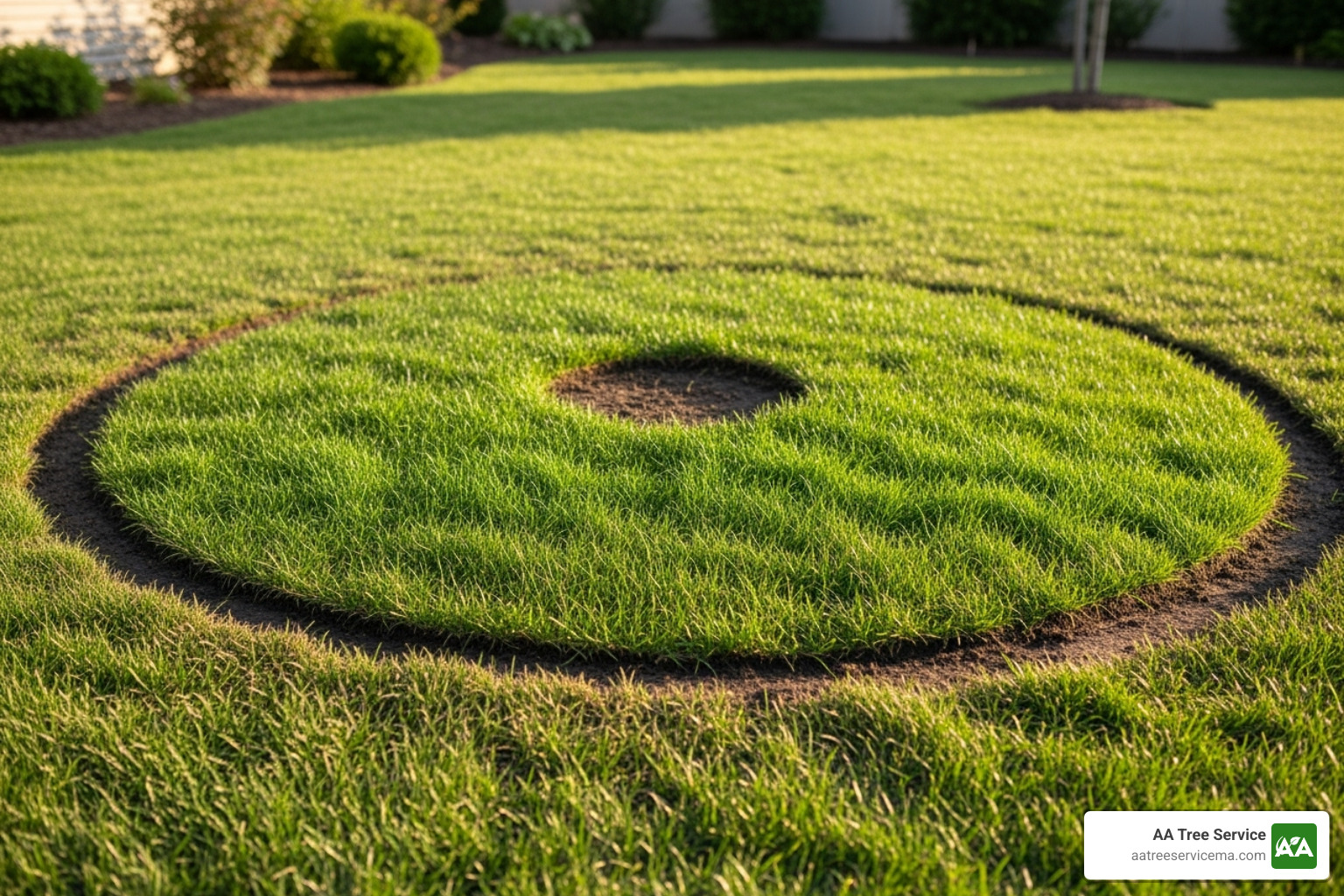
First, fill the hole by mixing the wood chips with quality topsoil. Mound the soil slightly higher than the surrounding ground, as it will settle over time.
Those wood chips from the grinding process are excellent organic mulch for garden beds or pathways. They help retain soil moisture and suppress weeds.
To plant grass seed, simply level the area and sow the seed or lay sod. Keep it well-watered for the first few weeks.
The cleared space is also perfect for a new flower bed or to plant a new tree. Just be sure to amend the soil with compost. If planting a tree, choose a species appropriate for Massachusetts or New Hampshire and consider its mature size.
By leveling the ground, you can also prepare the area for larger projects like a patio or garden shed. You’ve not only removed an eyesore but created a new, functional part of your landscape.
Frequently Asked Questions About Removing Stumps
Here are answers to the most common questions we receive about stump removal from homeowners in Massachusetts and New Hampshire.
How long does it take for a tree stump to rot on its own?
Without intervention, natural decomposition is very slow, taking 3 to 7 years. The exact time depends on the wood type (softwoods like pine rot faster than hardwoods like oak), climate (our cold winters slow the process), and the size of the stump. A massive oak stump could take a decade or more to disappear completely.
What is the most eco-friendly way to remove a tree stump?
There are several excellent green options:
- Manual digging is the most eco-friendly method. It uses no chemicals or fuel and allows for immediate reuse of the space.
- Natural decomposition with mulch is another great choice. Using high-nitrogen fertilizer and organic mulch creates a composting system that enriches your soil. This is a true natural stump dissolver.
- Professional grinding is also surprisingly eco-friendly. The machinery is efficient, and the root system is left to decompose naturally, adding organic matter back into the soil.
Avoiding harsh chemicals protects your soil and groundwater.
Can I burn a tree stump out of the ground?
We strongly advise against burning stumps on residential properties due to significant risks.
- Safety Risks: Stumps can smolder underground for days, creating a serious fire hazard near your home, fence, or other structures. Using accelerants like gasoline is extremely dangerous.
- Local Fire Codes: Most towns in Massachusetts and New Hampshire have strict open burning regulations and often require permits, which may be denied.
- Air Pollution: Burning creates smoke and soot that can bother neighbors and harm air quality.
Given the potential for uncontrolled fire and property damage, burning is a method we cannot recommend. Safer, more effective options are readily available.
Ready to Remove Your Stump? Here’s Your Next Step
You now have a complete guide to stump removal, from patient DIY methods to fast professional grinding. The best choice depends on your budget, timeline, and how much work you’re willing to do.
While DIY projects can be satisfying, safety should always come first. Large stumps, multiple stumps, or those near your home’s foundation or utility lines are best left to professionals. A DIY mistake can quickly become an expensive problem.
For homeowners in Massachusetts and New Hampshire, professional help is often the smartest investment. At AA Tree Service, we have over 20 years of experience solving these exact problems. We understand the local challenges and are committed to customer satisfaction. We offer free same-day quotes and have 24/7 emergency services available.
Ready to reclaim your yard? Contact us for a professional stump removal estimate and let’s turn that problem stump into a beautiful, usable space.