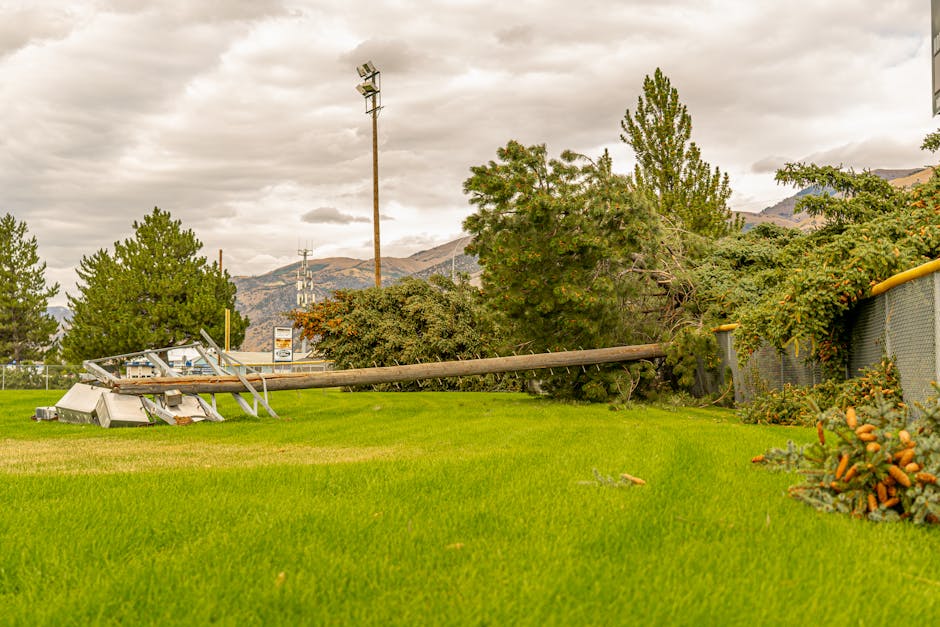
Storm damaged trees can transform a peaceful landscape into a scene of chaos, leaving homeowners in Massachusetts and New Hampshire with pressing concerns about safety and property aesthetics.
- Storm damaged trees often require immediate attention to prevent further harm.
- Professional help ensures the safety and health of your trees.
- Addressing tree care promptly can save money and preserve landscape beauty.
New England homeowners know that the region’s severe weather—ranging from hurricanes to ice storms—can inflict serious damage on trees. Wind gusts can snap branches and uproot trees entirely, while heavy snow and ice can weigh down limbs until they break.
Given the frequency of these weather events, tree care becomes a vital part of maintaining a secure and attractive property. Proactively managing tree health not only improves safety but also preserves the natural beauty of your surroundings.
Partnering with dedicated tree care professionals, like those at AA Tree Service, offers assurance that your landscape is in capable hands.
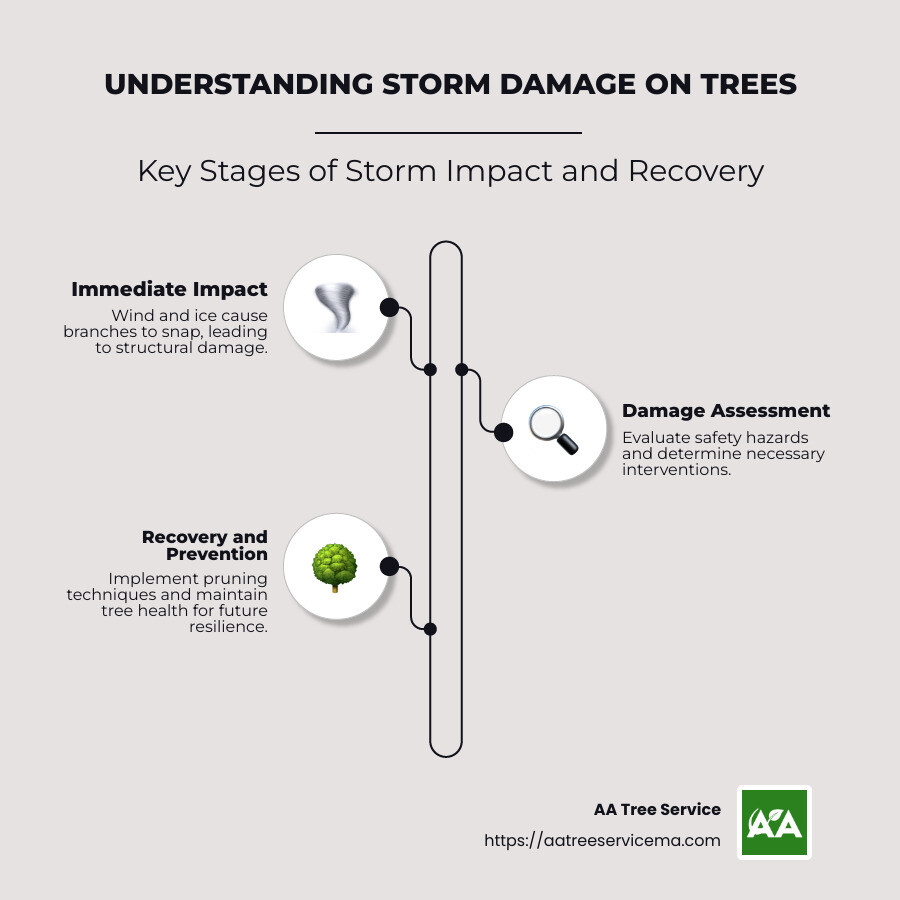
Storm damaged basics:
– downed tree removal near me
– emergency tree removal
– emergency tree removal near me
Understanding Storm Damage
Storm damage can turn a serene landscape into a chaotic mess. For homeowners in Massachusetts and New Hampshire, understanding how different weather conditions affect trees is crucial.
Wind Damage
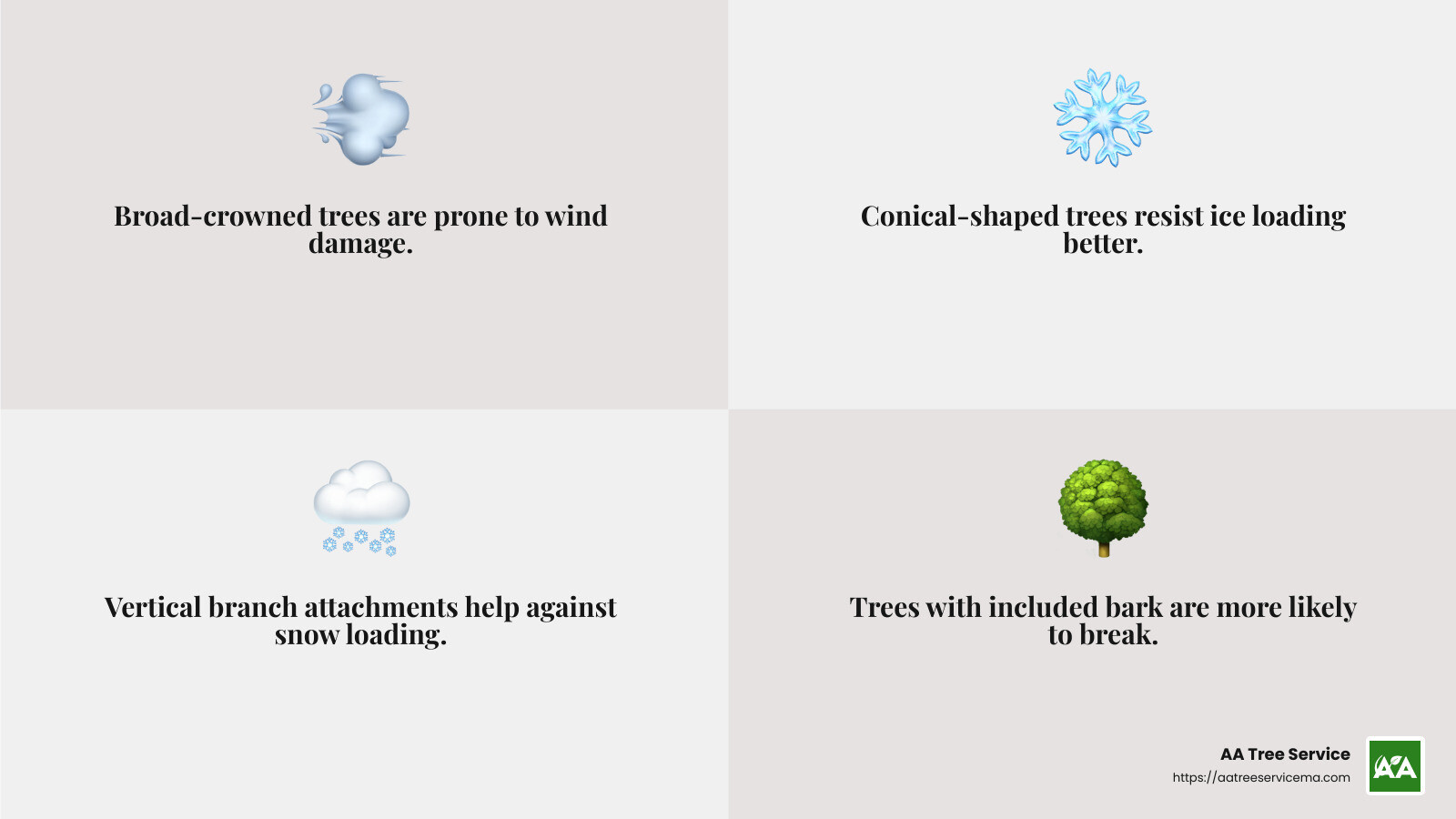
Strong winds are a common cause of storm damage. They can whip trees back and forth, causing branches to snap or even uprooting entire trees. Trees with broad crowns or those that haven’t been properly pruned are more susceptible to wind damage.
Tip: Regular pruning helps trees withstand strong winds by reducing their surface area.
Ice Loading
Ice loading occurs when ice accumulates on tree branches, adding significant weight. This can cause branches to break, especially in trees with horizontal branching. The extra weight from ice can be overwhelming, particularly for older trees with decreased flexibility.
Did you know? Trees with conical branching patterns are less likely to suffer from ice loading. Their shape naturally sheds ice and snow.
Snow Loading
Like ice, heavy snow can accumulate on branches, leading to breaks. However, snow loading is generally less damaging than ice. Still, trees with broad crowns or numerous small twigs are at risk.
Fun Fact: Trees with strong, vertical branch attachments are better at resisting snow loading.
Tree Susceptibility
Certain tree species are more prone to storm damage. Trees with included bark, which turns inward at branch junctures, are weaker and more likely to break. Old or over-mature trees with large crowns and internal decay are also at risk.
Key Insight: Selecting tree species with strong branch attachments and excurrent branching patterns can reduce susceptibility to storm damage.
Understanding these factors helps homeowners take proactive steps to protect their trees and property. Regular maintenance and careful species selection can significantly reduce the risk of storm damage, ensuring your landscape remains safe and beautiful.
Next, we’ll dive into evaluating and repairing storm-damaged trees, discussing damage assessment and safety hazards.
Evaluating and Repairing Storm-Damaged Trees
After a storm, assessing tree damage is crucial for safety and recovery. Here’s how to evaluate and repair storm-damaged trees in Massachusetts and New Hampshire.
Damage Assessment
Start by carefully inspecting each tree. Look for broken limbs, split branches, and leaning trunks. Trees with more than 50% canopy loss or significant trunk damage may not survive.
Ask yourself these questions:
- Is the tree still structurally sound?
- Are major limbs broken?
- Is the main leader intact?
If you’re unsure, it might be best to give the tree time to recover before deciding on removal.
Safety Hazards
Before any work begins, ensure the area is safe. Downed power lines and hanging branches pose serious risks. Always prioritize safety and avoid working near power lines without professional help.
Safety Tip: Large, twisted limbs under tension can snap back unexpectedly. Identify these hazards early to prevent accidents.
Pruning Techniques
Pruning is essential for tree recovery. Remove broken branches using the three-cut method to prevent bark tearing:
- Make a partial cut on the underside of the branch, several inches from the trunk.
- Cut through the branch from the top, a few inches beyond the first cut, to remove the weight.
- Finish with a clean cut at the branch collar to promote healing.
Important: Never “top” trees, as this can lead to weak regrowth and increased vulnerability to future storms.
Arborist Consultation
For complex situations, consulting a certified arborist is wise. They have the expertise to evaluate tree health and recommend the best course of action. Arborists can also handle dangerous tasks, like using chainsaws or working near power lines.
When to Hire an Arborist:
- Large branches need removal
- Trees are leaning dangerously
- You need expert advice on tree health
By following these steps, you can effectively manage storm-damaged trees, ensuring your landscape remains safe and beautiful. Next, we’ll explore how to prevent future storm damage through proper tree maintenance and selection.
Preventing Future Storm Damage
Preventing future storm damage to your trees in Massachusetts and New Hampshire is all about proactive care and smart choices. Here’s how you can help your trees weather the next storm:
Tree Maintenance
Regular maintenance is key to keeping trees healthy and strong. This includes regular inspections and proper care like watering and mulching. Healthy trees are more resilient to storm damage.
Key Maintenance Tips:
- Regular Inspections: Check for signs of disease or decay. Early detection can prevent bigger problems.
- Proper Watering: Ensure trees get enough water, especially during dry spells, to keep them strong.
- Mulching: A layer of mulch around the base helps retain moisture and protect roots.
Pruning Young Trees
Pruning young trees correctly helps them develop a strong structure. This makes them less likely to be damaged in storms.
Pruning Tips:
- Focus on Structure: Remove branches that are weakly attached or crossing.
- Promote a Single Leader: Encourage one main trunk to grow strong and straight.
- Regular Pruning: Start when the tree is young and continue every few years.
Selecting Resistant Species
Choosing the right tree species can significantly reduce the risk of storm damage. Some trees naturally withstand storms better than others.
Resistant Species for MA and NH:
- Norway Maple (Acer platanoides): Known for its sturdy structure.
- Ginkgo (Ginkgo biloba): Resilient and low maintenance.
- White Oak (Quercus alba): Strong and long-lived.
Avoid species with brittle wood or weak branch attachments, like the Silver Maple (Acer saccharinum), which are more prone to damage.
By focusing on these practices, you can minimize the impact of storms on your landscape. Next, we’ll address some common questions about storm-damaged trees and their recovery.
Frequently Asked Questions about Storm-Damaged Trees
Can a storm-damaged tree be saved?
Yes, many storm-damaged trees can recover with the right care. The first step is to assess the extent of the damage. If a tree is basically healthy and has not suffered major structural damage, it can often be saved through proper pruning and care.
Key Factors for Tree Recovery:
- Health and Vigor: A tree that’s healthy before the storm has a better chance of recovery.
- Pruning Techniques: Prune broken branches back to the trunk. This helps the tree heal and prevents decay.
- Leader Loss: If the main upward branch, or leader, is lost, the tree might become stunted or deformed, but it can still survive.

What makes a tree susceptible to storm damage?
Some trees are more vulnerable to storm damage due to their species, structural weaknesses, or location.
Factors That Increase Susceptibility:
- Tree Species: Trees like the Silver Maple (Acer saccharinum) and Black Cherry (Prunus serotina) have brittle wood, making them more prone to breakage.
- Structural Weaknesses: Trees with co-dominant leaders, weak branch attachments, or included bark are more likely to suffer damage.
- Location: Trees in confined spaces or with shallow roots are at greater risk.
How do I know if a tree needs to be removed?
Deciding whether to remove a tree depends on the extent of the damage and the tree’s overall health.
Signs a Tree May Need Removal:
- Trunk Damage: Extensive trunk damage can compromise a tree’s stability.
- Canopy Loss: If more than 50% of the tree’s canopy is lost, it may not produce enough foliage to survive.
- Major Limb Breakage: Loss of major limbs can severely impact a tree’s structure and appearance.
When in doubt, consulting with a certified arborist can provide clarity on whether a tree should be saved or removed. They can offer expert advice on managing storm-damaged trees safely and effectively.
Next, we’ll discuss how AA Tree Service can assist with emergency services and ensure customer satisfaction.
Conclusion
At AA Tree Service, we understand the stress and uncertainty that comes with dealing with storm-damaged trees. Our priority is to provide swift and effective solutions to restore safety and tranquility to your property in Massachusetts and New Hampshire.
Emergency Services
Storms don’t wait, and neither do we. With over 20 years of experience, our team offers 24/7 emergency services to address urgent tree removal needs. Whether it’s a fallen tree blocking your driveway or a precarious limb threatening your home, we’re ready to respond quickly.
Why Choose Our Emergency Services?
- Rapid Response: We offer free same-day quotes and fast dispatch to minimize any risk to your property.
- Expertise: Our certified arborists assess the situation and recommend the safest and most effective course of action.
- Safety First: We prioritize safety, ensuring that all operations are conducted without risk to your home or family.
Customer Satisfaction
Customer satisfaction is at the heart of what we do. We pride ourselves on our commitment to quality service and transparent communication. Our clients trust us to handle their trees with care and professionalism.
What Sets Us Apart?
- Comprehensive Services: From emergency tree removal to pruning and land clearing, we cover all aspects of tree care.
- Skilled Team: Our experienced professionals are equipped with the latest tools and techniques to handle any situation.
- Local Expertise: As a local business, we understand the unique challenges of the New England climate and how to address them effectively.
When storm damage strikes, trust AA Tree Service to bring your landscape back to life. For more information on our emergency services, visit our Emergency Tree Removal page. We’re here to help you steer from tempest to tranquility with confidence and care.