Why Saltpeter Could Be Your Budget-Friendly Solution
Got an unsightly stump ruining your Massachusetts or New Hampshire yard? You’re not alone. After a tree is removed, the remaining stump can be more than just an eyesore; it’s a stubborn obstacle that can disrupt your landscape for years. These remnants of once-mighty trees can pose tripping hazards for children and guests, make mowing the lawn a frustrating chore, and even become a breeding ground for pests like termites, carpenter ants, and fungi that could spread to healthy plants. For many homeowners, dealing with this final piece of the tree removal puzzle seems to require expensive, heavy-duty equipment.
But what if there was a time-tested, budget-friendly DIY approach? The good news is that there is. Using a saltpeter stump remover is a classic chemical method that leverages potassium nitrate to dramatically accelerate the natural decomposition process. While it’s not a solution for those in a hurry—we’re talking months, not days—it can save you a significant amount of money compared to professional stump grinding services.
Here’s a quick overview of what you need to know:
- What it is: Saltpeter is the common name for potassium nitrate (KNO3), a chemical compound that acts as a powerful nitrogen source for wood-decomposing microorganisms.
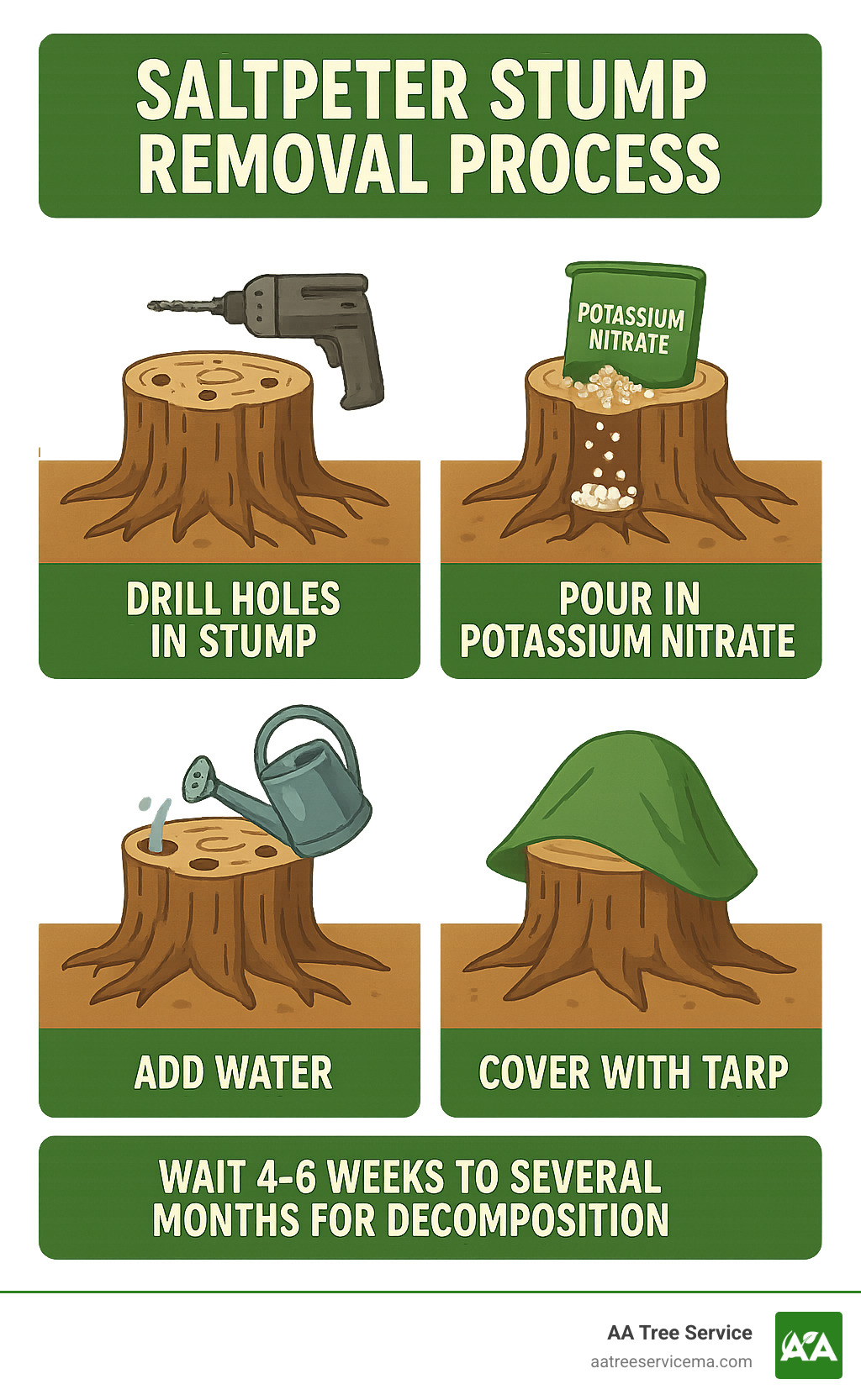
- How it works: You drill a series of deep holes into the stump, fill them with the saltpeter stump remover granules, add water to dissolve the chemical and carry it into the wood, and then cover it to trap moisture. The process kickstarts in about 4-6 weeks, but full decomposition can take several months to over a year.
- Cost: The DIY cost is incredibly low, typically ranging from $8 to $50 for the product itself. This is a fraction of the $100 to $500+ you might pay for professional grinding (based on average internet pricing).
- Best for: This method is ideal for small to medium-sized stumps (under 15 inches in diameter) when you have plenty of patience and are looking for the most economical option.
- Timeline: Expect a long wait. The complete breakdown of the stump can take anywhere from six months to two years, depending on various factors.
This method essentially boosts the natural rotting process. In any forest, fallen trees are slowly broken down by fungi and bacteria. However, this can take decades. The saltpeter stump remover provides these microscopic organisms with the high-nitrogen diet they need to multiply rapidly and work much more efficiently. Think of it as turning your stump into an all-you-can-eat buffet for nature’s cleanup crew. For homeowners in New England, where rocky soil can make digging out a stump by hand nearly impossible, this chemical approach offers a practical and satisfying alternative that has been trusted for generations.
Related content about saltpeter stump remover:
What is Saltpeter and How Does It Work on Stumps?
The saltpeter stump remover you find on the shelves of your local hardware store is a simple yet powerful chemical: potassium nitrate (KNO3). This white, crystalline compound has a long history of use in everything from fertilizers to food preservation, but its application in stump removal is a particularly clever use of its chemical properties. For homeowners facing a stubborn stump, it offers a way to work with nature, rather than against it.
The magic of saltpeter lies in two key properties: its high nitrogen content and its role as an oxidizer. Wood is primarily composed of complex organic molecules like cellulose and lignin, which are very low in nitrogen. The fungi and bacteria that are naturally present in the environment and responsible for decomposition require nitrogen to build proteins and multiply. In a normal setting, the lack of nitrogen is the main bottleneck that makes wood rot so slowly. When you introduce a saltpeter stump remover, you are essentially providing a massive dose of this essential nutrient, turning the stump into a five-star restaurant for these microscopic decomposers.
By feeding these microbes, you trigger a population boom. They begin to work much more efficiently, secreting enzymes that break down the tough cellulose and lignin fibers that give the stump its structural integrity. This is the primary mechanism by which the stump softens and rots from the inside out.
The Science of Decomposition: A Deeper Look
To truly understand the process, it helps to know a bit about the science. The main decomposers of wood are fungi, particularly a group known as white-rot fungi. These are the true powerhouses of wood decay because they are among the few organisms on Earth that can effectively break down lignin, the incredibly tough polymer that gives wood its rigidity and brown color. By providing them with nitrogen, the saltpeter stump remover helps these fungi thrive.
Potassium nitrate also acts as an oxidizer. This means it can release oxygen atoms as it breaks down. This is important because the decomposition process, especially deep within the wood, can become anaerobic (lacking oxygen). By supplying extra oxygen, saltpeter helps the aerobic (oxygen-requiring) microbes work more effectively and accelerates the chemical breakdown of the wood fibers. This dual-action approach—providing both a key nutrient and an essential element—is what makes potassium nitrate so effective over time.
This is an acceleration of a natural process, not a magical dissolution. The saltpeter stump remover doesn’t melt the wood away. Instead, it creates the perfect conditions for nature’s own recycling system to work on an expedited timeline. This is why patience is non-negotiable. The biological process of microbial colonization and wood consumption takes months, not days.
While it’s significantly faster than the decade it might take for a stump to rot on its own, it won’t deliver the instant results of mechanical grinding. This method is a safe DIY option precisely because you are enhancing a natural cycle, not introducing a harsh, caustic chemical that could harm the surrounding ecosystem. If you’re curious about other chemical approaches, our guide on Tree Stump Removal Chemicals covers your options in detail.
If you’re looking for ways to work with natural decomposition, our article on Natural Stump Dissolver explores other options that harness nature’s wood-breaking powers.
How to Use a Saltpeter Stump Remover: A Step-by-Step Guide
Using a saltpeter stump remover is a straightforward DIY project that almost any homeowner can tackle. While the results require patience, the process itself is simple and doesn’t require specialized skills or expensive equipment. Following these steps carefully will ensure you create the ideal conditions for the chemical to do its work effectively.
Step 1: Prepare the Stump and Gather Your Tools
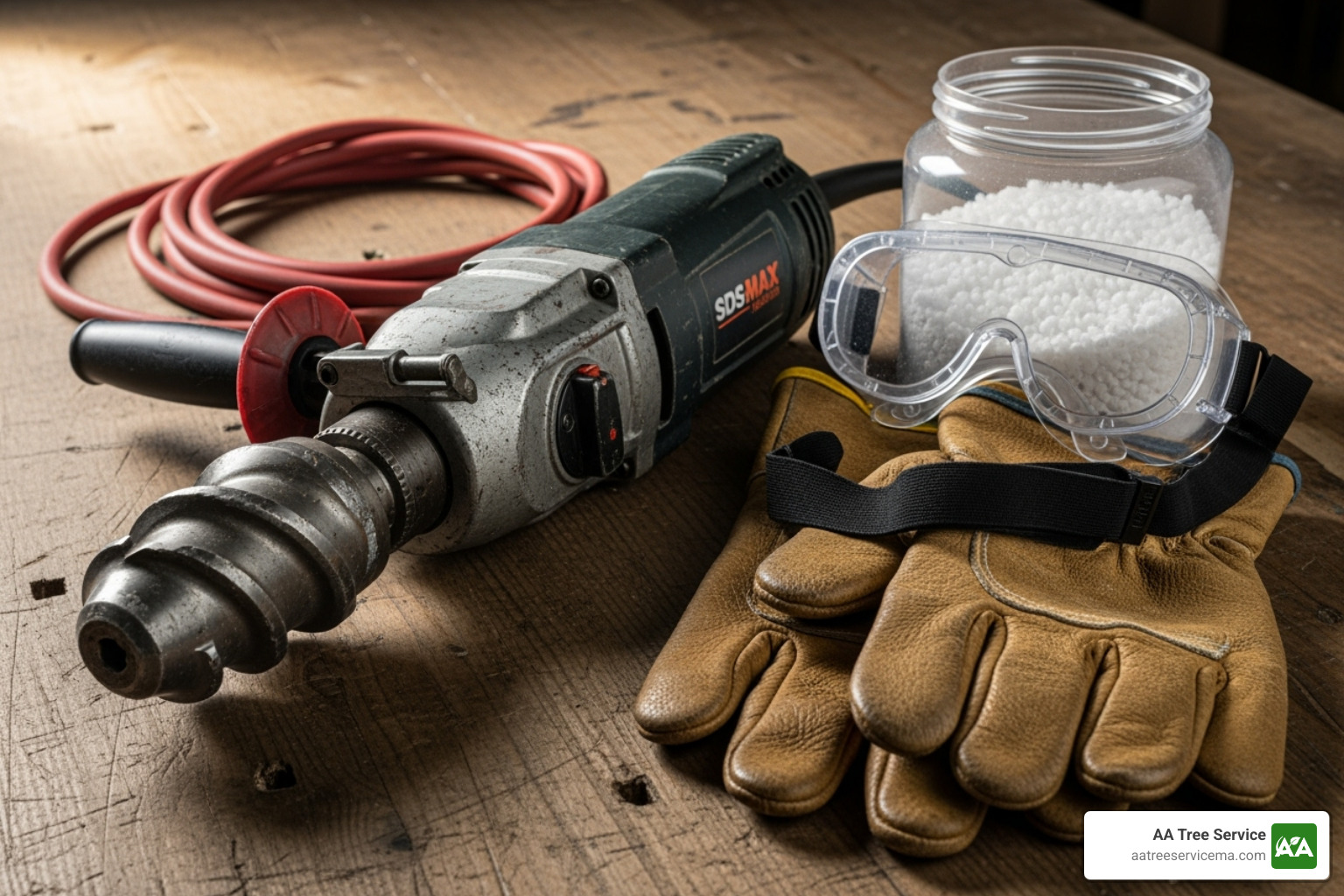
Proper preparation is the foundation of success. Before you begin, gather all your necessary supplies:
- Safety Gear: Always wear safety goggles to protect your eyes from wood chips and chemical dust, and heavy-duty work gloves to protect your hands.
- Power Drill: A powerful corded drill is often recommended, as drilling into dense hardwood can drain cordless batteries quickly.
- Drill Bit: You’ll need a long drill bit, at least 10-12 inches, with a diameter of 1 to 1.5 inches. A spade bit or an auger bit works best. The larger diameter creates a bigger reservoir for the saltpeter.
- Saltpeter Stump Remover: Purchase a container of potassium nitrate granules.
- Water: A gallon of warm water will help dissolve the granules more effectively.
- Covering: A plastic tarp or a sheet of heavy black plastic, large enough to cover the entire stump.
- Weights: Bricks, large stones, or soil to hold the tarp securely in place.
This method works best on seasoned stumps that have been dead for at least a year. A fresh, green stump is still full of sap and natural defenses that resist decay, making the process much slower. If your stump is freshly cut, it’s wise to first treat it with a brush killer to ensure the root system is completely dead and won’t send up new sprouts. Wait several weeks after applying the brush killer before starting the saltpeter treatment.
Step 2: Drilling Holes into the Tree Stump
This is the most labor-intensive part of the process. The goal is to create channels that allow the saltpeter stump remover to penetrate deep into the heartwood and root crown.
- Top Holes: Using your 1-inch (or larger) bit, drill vertical holes across the top surface of the stump. These holes should be at least 8-12 inches deep—the deeper, the better. For a very large stump, you may need an even longer bit. Space the holes approximately 3-4 inches apart from each other and from the edge of the stump.
- Angled Holes: After drilling the top holes, drill additional holes into the sides of the stump at a 45-degree downward angle. Aim for these holes to intersect with the vertical holes you’ve already drilled. This creates a network of channels that will help the solution spread more thoroughly throughout the wood mass and into the main lateral roots.
The more holes you drill, the faster the decomposition will occur. Take your time and let the drill do the work to avoid overheating the motor. Clear out any wood shavings from the holes as you go.
For more detailed tips on getting your drilling technique just right, check out our guide on Drilling Holes in Tree Stumps.
Step 3: Applying the Saltpeter
Now it’s time to introduce the active ingredient.
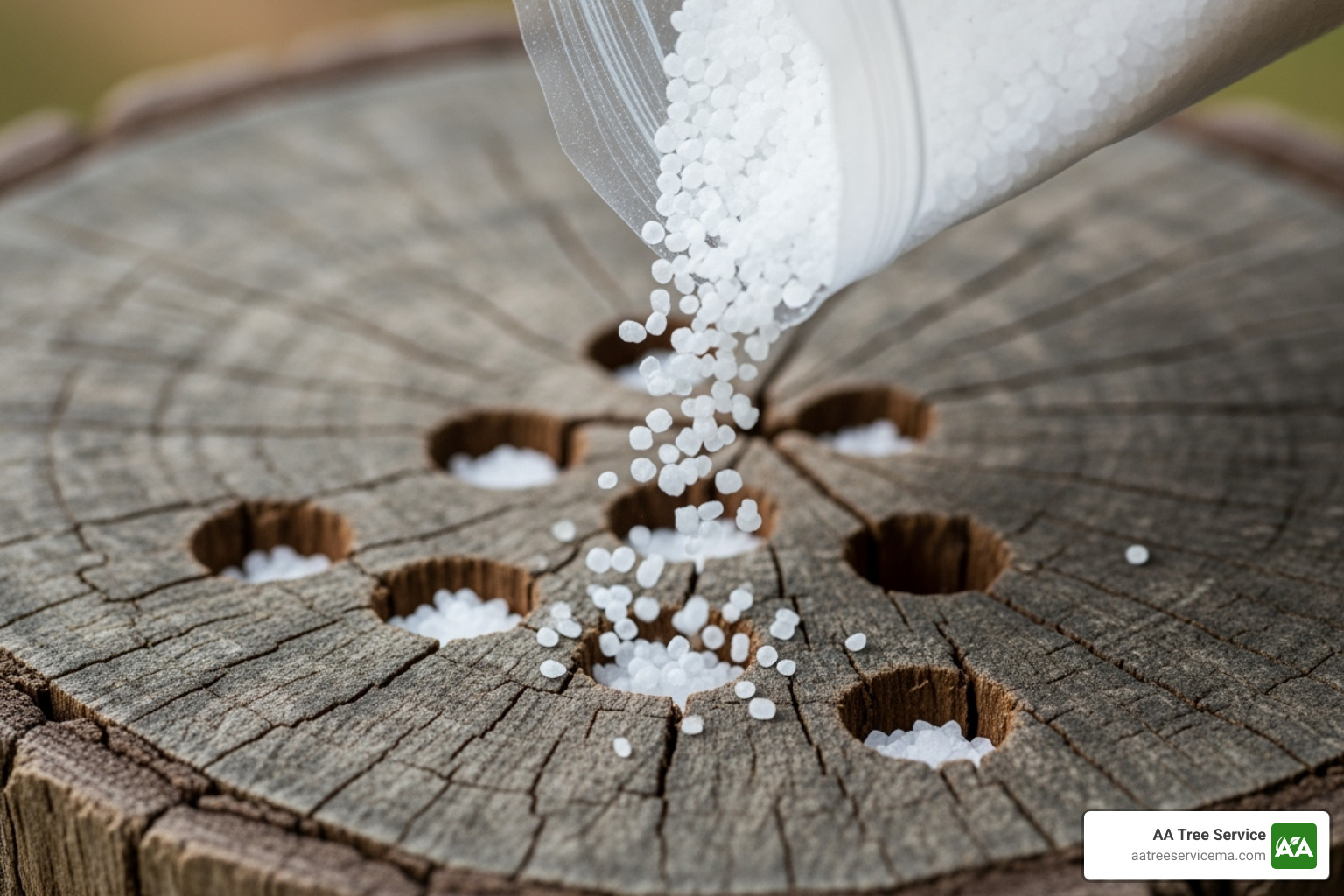
Carefully pour the saltpeter granules into each hole you’ve drilled. A small funnel can be very helpful here to prevent spills onto the surrounding lawn, as the concentrated nitrogen can burn your grass. Fill each hole about three-quarters full, leaving some space at the top for water. Always follow the dosage instructions on the product packaging, but a general rule is to use about 3-4 ounces of saltpeter per hole.
Step 4: Adding Water and Covering the Stump
This final step activates the saltpeter stump remover and creates the moist, dark environment that decomposers love. Slowly pour warm water into each hole until it’s full. The warmth helps the potassium nitrate dissolve more readily, allowing the nitrogen-rich solution to be absorbed deep into the wood’s pores. You may need to top off the holes a few times as the water soaks in.
Once the holes are filled, cover the entire stump with your plastic tarp. Pull it taut and secure the edges tightly with bricks, stones, or a layer of mulch or soil. The cover is critical: it traps moisture, prevents the holes from drying out, blocks sunlight that could inhibit fungal growth, and protects the treatment from being washed away by rain.
Now, the waiting begins. You should see the wood begin to soften and become spongy within 4-6 weeks. However, complete decomposition will take several months to over a year, depending on the stump’s size, wood density, and local climate. Check the stump every month or so to ensure it remains damp under the tarp, adding more water if necessary.
Safety, Costs, and Important Considerations
Before you commit to the saltpeter stump remover method, it’s crucial to understand the full picture. While this DIY approach is highly effective and budget-friendly, success depends on prioritizing safety, knowing the true costs, and recognizing its limitations. This is your comprehensive guide to the practical side of using saltpeter, ensuring your project is not only successful but also safe and frustration-free.
Safety Precautions When Using a Saltpeter Stump Remover
Safety should always be your top priority. While potassium nitrate is a common chemical, it requires respectful handling to avoid accidents.
- Personal Protective Equipment (PPE): This is non-negotiable. Wear safety goggles at all times to protect your eyes from flying wood chips during drilling and from any chemical dust when pouring the saltpeter. Work gloves are essential to prevent splinters and protect your skin from direct contact with the chemical. For very old, dry wood, consider wearing a dust mask to avoid inhaling fine wood particles.
- Chemical Handling and Storage: Read the entire product label before you begin. Store the saltpeter stump remover in its original container in a cool, dry, and secure location, far from the reach of children and pets. Potassium nitrate can be toxic if ingested, so keep it safely locked away. Always wash your hands thoroughly with soap and water after handling the product.
- Protecting Surrounding Vegetation: Potassium nitrate is a primary component of many fertilizers. A small spill on your lawn might not be noticeable, but a significant one can act like a concentrated dose of fertilizer, potentially burning and killing your grass or nearby plants. Use a funnel when filling the holes to be precise and clean up any spills immediately.
- The Critical Flammability Warning: This is the most important safety consideration. Saltpeter is an oxidizer, which means it dramatically increases the flammability of combustible materials like wood. Never attempt to burn a stump that has been treated with saltpeter. A treated stump will not just burn; it can smolder for days or even weeks, often underground and out of sight. These smoldering fires are incredibly difficult to extinguish and can travel along the root system, posing a serious fire hazard to your property, fences, and even your home. Many municipalities in Massachusetts and New Hampshire have strict regulations or outright bans on this practice. The goal of the saltpeter method is to rot the wood for easy manual removal, not to prepare it for burning.
The Cost and Availability of Saltpeter
One of the primary draws of using a saltpeter stump remover is its affordability. Let’s break down the costs and where to find it.
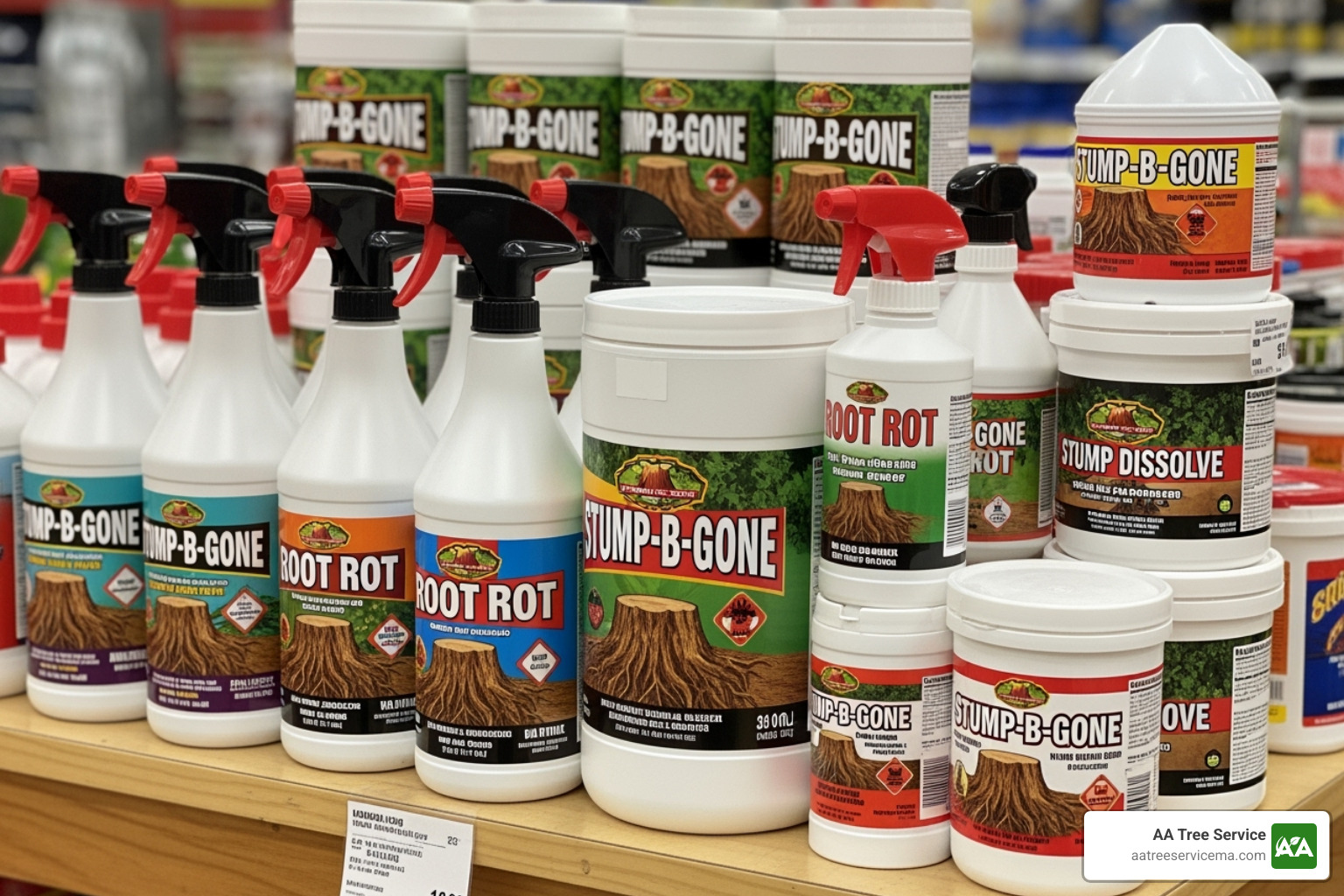
- Where to Buy: You can easily find products marketed as stump removers that contain potassium nitrate at most major hardware stores, home improvement centers, and garden supply shops. Popular brands include Spectracide, Bonide, and Gordon’s. It’s also widely available from online retailers.
- Expected Costs: The price varies by brand and size. A 1-pound container typically costs between $8 and $20, while larger 5-pound containers might range from $25 to $50. For a single, medium-sized stump, a 1-pound container is usually more than enough. This makes the cost per stump incredibly low, especially when compared to the hundreds of dollars for professional services. (Note: These are average prices based on internet data and not actual costs for AA Tree Service.)
Comparing Saltpeter Method vs. Professional Stump Grinding
To make an informed decision, honestly compare the DIY saltpeter method with professional stump grinding. The best choice depends entirely on your priorities: time, budget, effort, and desired outcome.
| Feature | Saltpeter Removal (DIY) | Professional Stump Grinding |
|---|---|---|
| Time | 6 months to 2+ years | 1-3 hours |
| Cost | $10 – $50 (product only) | $100 – $500+ (service) |
| Effort | High initial effort (drilling), long wait, final manual removal | No effort for homeowner |
| Result | Softened, rotted wood that must be manually removed | Stump and root crown ground into wood chips, 6-8 inches below grade |
| Cleanup | Messy removal of punky wood and mud | Wood chips can be used as mulch or hauled away |
| Readiness for Replanting | Soil may have high nitrogen; requires time to settle | Area is immediately ready for topsoil and new grass/plants |
| Best For | Small stumps, patient DIYers on a tight budget | Large stumps, multiple stumps, immediate results needed |
The time factor is the most significant difference. If you need the stump gone for a landscaping project next month, professional grinding is your only option. The effort and cleanup are also often underestimated by DIYers. While drilling is the main upfront work, the final stage of hacking and digging out the spongy, rotted wood with an axe and shovel is physically demanding and messy. In contrast, professional services like our Affordable Stump Grinding handle the entire process, leaving you with a clean slate and usable wood chips, offering excellent value when you consider the time and labor saved.
Frequently Asked Questions about Saltpeter Stump Removal
With over 20 years of experience helping homeowners in Massachusetts and New Hampshire, we’ve heard just about every question imaginable when it comes to using a saltpeter stump remover. Here are detailed answers to the most common inquiries to help you steer your DIY project.
How long does it really take for saltpeter to rot a stump?
This is the most common question, and the honest answer is: it depends. While you may notice the wood beginning to soften in as little as 4-6 weeks, the complete decomposition required for easy removal is a much longer process. A realistic timeline is several months to over a year, and sometimes longer for very large, dense stumps.
The key factors influencing the timeline are:
- Stump Size and Age: A small, 6-inch pine stump that’s been dead for two years might be removable in 6-8 months. A massive 30-inch oak stump might take 2-3 years to rot sufficiently.
- Wood Type: Softwoods like pine and fir decompose much faster than dense hardwoods like oak, maple, or hickory.
- Moisture Levels: This is critical. The stump must remain consistently damp for the microorganisms to thrive. A stump that dries out will stop decomposing. This is why covering it with a tarp is essential, especially during dry summer months.
- Environmental Conditions: Decomposition is a biological process that speeds up in warm weather and slows to a near halt during cold New England winters. The process will be most active from late spring to early fall.
Can I use saltpeter on a freshly cut stump?
You can, but it will be significantly less effective and take much longer. A freshly cut stump is still a living organism with natural defenses against decay. For the best results, it’s ideal to let the stump season for at least 12-18 months before treatment. If you can’t wait that long, you should first apply a systemic brush killer (containing glyphosate or triclopyr) to the fresh-cut surface to kill the root system completely. After the stump is confirmed dead, you can proceed with the saltpeter stump remover application.
Is it safe to burn a stump after using saltpeter?
Absolutely not. This is a critical safety warning. A stump treated with a saltpeter stump remover is a serious fire hazard. Potassium nitrate is a powerful oxidizing agent that will make the wood burn extremely hot and for a prolonged period. It can cause the stump to smolder underground for days or even weeks, traveling along the root system unseen.
This creates an uncontrollable fire risk that can damage property and is illegal in many areas. Many towns in Massachusetts and New Hampshire have strict local fire regulations that prohibit this. The goal is to rot the stump for manual removal, not to create a pyre in your backyard. For a fast, safe solution, professional stump grinding is the only answer. Check out our Local Stump Grinding services for a safe alternative.
What’s the difference between saltpeter and Epsom salt for stump removal?
This is a common point of confusion. While both are salts, they work in completely different ways. Saltpeter (potassium nitrate) works by providing nitrogen to accelerate natural decay. Epsom salt (magnesium sulfate) works by drawing moisture out of the stump, essentially drying it out and killing it. While Epsom salt can help kill a stump and its roots, it does not aid in decomposition. It simply makes the wood dry and hard, which can actually make it more difficult to remove later.
What do I do after the stump has rotted?
Once the stump has become soft and spongy, it’s time for the final step: manual removal. You will need tools like a sturdy shovel, a mattock, and an axe. Start by chopping and digging at the softened wood, breaking it apart and removing it in chunks. The process can be messy, as you’ll be dealing with a mixture of rotten wood and soil. Continue until you have removed the bulk of the stump and the main root crown to a level below the soil surface.
Will saltpeter kill my surrounding grass or plants?
If used carefully, it shouldn’t. However, since potassium nitrate is a nitrogen fertilizer, any significant spills on your lawn can cause “fertilizer burn”—a yellow or brown patch of dead grass. Be meticulous when filling the holes, using a funnel to prevent spills. The tarp will also help contain the chemical within the stump area. The amount that leaches into the soil over time is generally not enough to harm established nearby plants.
When to Skip the DIY and Call a Professional
While the saltpeter stump remover method is an excellent choice for the patient, budget-conscious DIYer with a small stump, it’s not a one-size-fits-all solution. There are many situations where the time, effort, and limitations of the chemical approach make professional stump grinding a far more practical and effective choice. Knowing when to put down the drill and pick up the phone can save you months of waiting and a great deal of frustration.
Consider calling a professional like AA Tree Service if you’re facing any of the following scenarios:
- Large or Hardwood Stumps: If your stump is over 18-24 inches in diameter, or if it’s from a dense hardwood tree like an oak, maple, or hickory, the saltpeter method can take years to show meaningful results. A professional grinder can remove a stump of any size and density in a matter of hours, not years.
- Multiple Stumps: Dealing with one stump is a manageable project. Dealing with five or six turns your yard into a long-term construction zone. The effort of drilling, treating, and monitoring multiple stumps is often more than homeowners bargain for. A professional service can clear an entire property of stumps in a single visit.
- Stumps Near Structures: If a stump is located close to your home’s foundation, a driveway, a sidewalk, or a fence, the DIY approach carries risks. The slow decomposition process can alter soil stability, and the final act of digging out the rotted wood could inadvertently damage these structures. Professional grinding is precise and controlled, protecting your valuable property.
- Time-Sensitive Projects: Life doesn’t always wait for wood to rot. If you’re planning to install a new patio, build a deck, plant a garden, or simply want your yard ready for a family event, you need the stump gone on your schedule. The saltpeter stump remover method operates on nature’s timeline, not yours.
- Safety Hazards: A stump located in a high-traffic area of your yard is a constant tripping hazard. Waiting months or years for it to decompose isn’t a safe option, especially if you have children or elderly family members. Immediate removal is the best way to ensure safety.
- Diseased Trees: If the tree was removed due to a disease like verticillium wilt or oak wilt, the pathogens can remain in the stump and root system. A DIY removal might not fully eliminate the source of the disease, potentially allowing it to spread to other healthy trees and shrubs in your yard. A professional arborist can assess the situation and ensure the removal is done in a way that contains the threat.
The Best Benefits of Professional Stump Grinding
When you need guaranteed results quickly and safely, professional stump grinding is the superior solution. It’s an investment in reclaiming your yard space immediately.
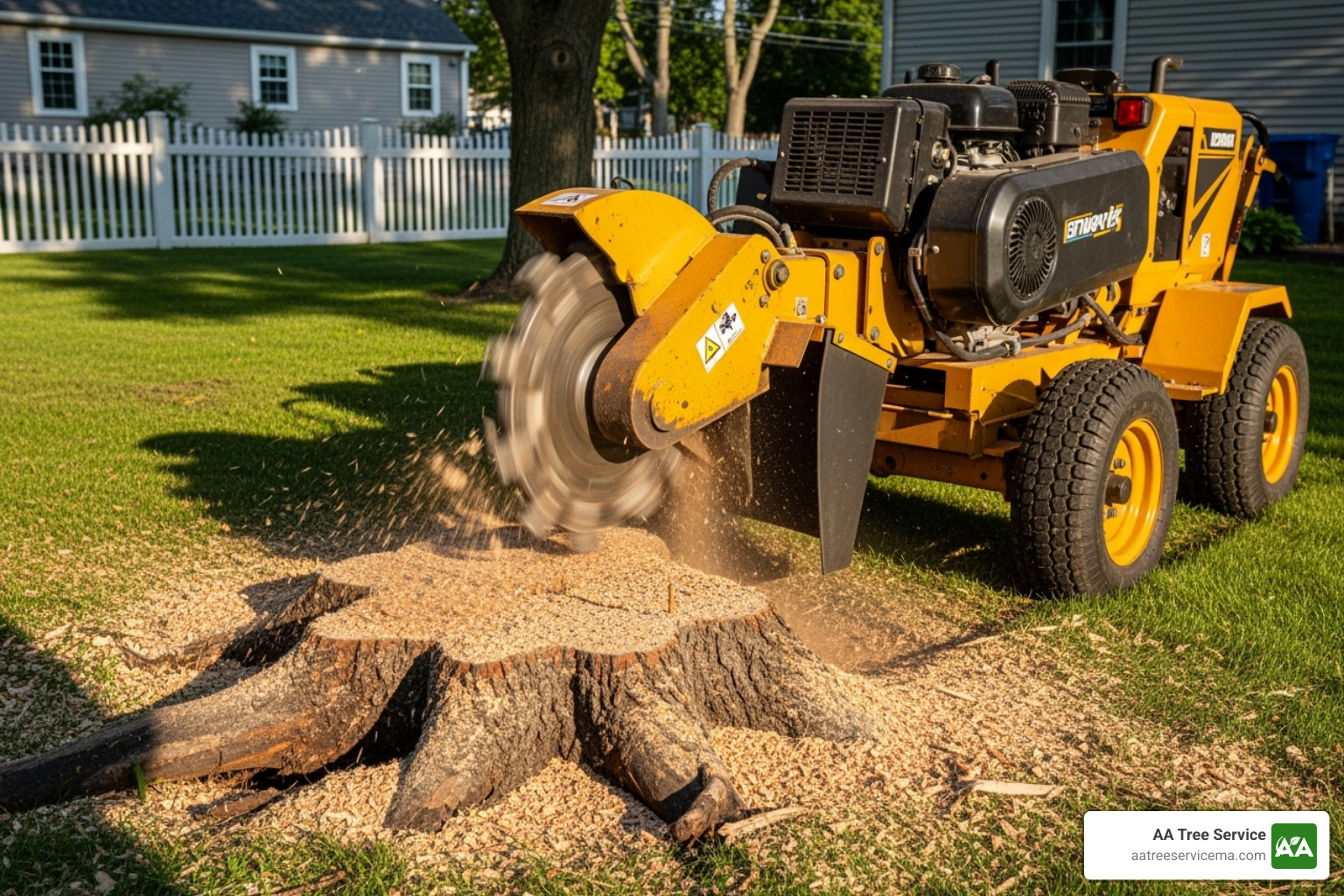
- Speed and Efficiency: This is the most significant advantage. While you’re waiting for a saltpeter stump remover to even begin working, we can have the stump completely gone. Most jobs, even for large stumps, are completed in 1-3 hours.
- Complete Removal Below Grade: Our grinding process obliterates the stump and the main root crown to a depth of 6-12 inches below the ground surface. This ensures the stump is gone for good and leaves you with a space that is immediately ready for topsoil, sod, or new plantings.
- No Harsh Chemicals: Professional grinding is a purely mechanical process. There are no chemicals introduced into your soil, which means no waiting period and no concerns about affecting the chemistry of your lawn or garden beds.
- Guaranteed Safety and No Property Damage: Our technicians are highly trained and insured professionals who know how to operate powerful machinery safely. We take every precaution to protect your home, landscaping, and underground utilities, eliminating the risks associated with DIY methods.
- Specialized Equipment for Any Job: We have a fleet of commercial-grade grinders, from large, powerful machines for open areas to smaller, more agile units that can fit through a standard yard gate to access stumps in tight spaces. This specialized equipment is far more effective than anything available for rent.
- Debris Management: Stump grinding produces a large pile of wood chips. We can either leave these chips for you to use as natural mulch in your garden beds or we can haul them away, leaving your property clean and tidy. This solves the messy cleanup problem that comes after a successful saltpeter treatment.
For comprehensive, hassle-free results, our Stump Grinding services are designed to meet your needs efficiently and safely across Massachusetts and New Hampshire.
Reclaim Your Yard from Unsightly Stumps
That stubborn tree stump in your Massachusetts or New Hampshire yard doesn’t have to be a permanent landscape feature. Throughout this guide, we’ve explored the saltpeter stump remover method, a time-honored and budget-friendly way to tackle the problem yourself. For the patient homeowner with a smaller stump and a desire to save money, this DIY approach can be incredibly rewarding. With a small investment of around $10-$50 in supplies and an afternoon of work, you can set in motion a natural process that will, over the coming months, turn that hard, woody obstacle into soft, removable rot.
However, as we’ve also discussed, this method demands a significant amount of patience. The reality is that not everyone has six months, a year, or even longer to wait for results. Perhaps you’re dealing with a massive oak stump that would laugh at a chemical treatment for years. Maybe that stump is a dangerous tripping hazard right in the middle of your kids’ play area, or you have exciting plans for a new deck or garden that can’t be put on hold. In these common scenarios, waiting for a saltpeter stump remover to work its slow magic simply isn’t a practical solution.
This is where professional expertise makes all the difference. At AA Tree Service, we have spent over 20 years helping homeowners across Massachusetts and New Hampshire solve their stump problems quickly and definitively. What takes the saltpeter method months or years to accomplish, our state-of-the-art stump grinders can finish in a few short hours. We don’t just remove the visible part of the stump; we grind it down well below ground level, completely eliminating the problem and leaving you with a clean slate, ready for whatever you envision for your yard.
We understand that every property and every homeowner’s needs are unique. Whether you’re in a densely wooded New Hampshire town or a suburban Massachusetts neighborhood, we are committed to providing a solution that fits your timeline and budget. That’s why we offer free, same-day quotes and maintain 24/7 emergency services for those times when a tree problem simply can’t wait.
Don’t let that unsightly stump dictate how you use your outdoor space any longer. You have options, from the slow-and-steady DIY path to the fast-and-finished professional solution. When you’re ready to reclaim your yard once and for all, we’re here to help.
For a fast, professional solution to your stump problems, explore our tree removal services and find how quickly we can help you achieve the beautiful, clear, and usable yard you deserve.
Like us on Facebook!