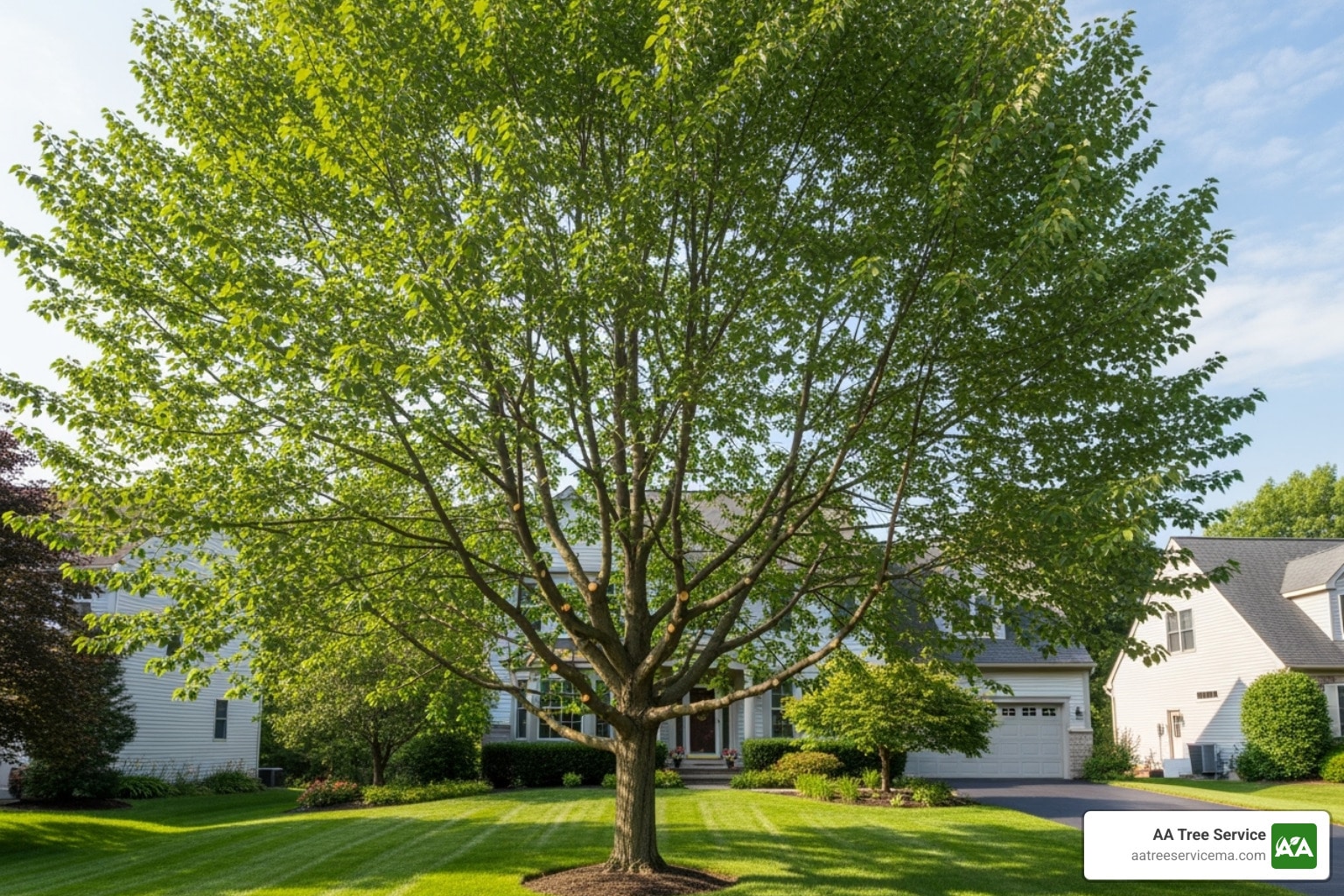
Why Routine Tree Maintenance is Key to a Thriving Yard
Routine tree maintenance is vital for any homeowner in Massachusetts and Southern New Hampshire. It’s more than just keeping your yard tidy; it’s about protecting a valuable, living asset that contributes significantly to your quality of life and property value.
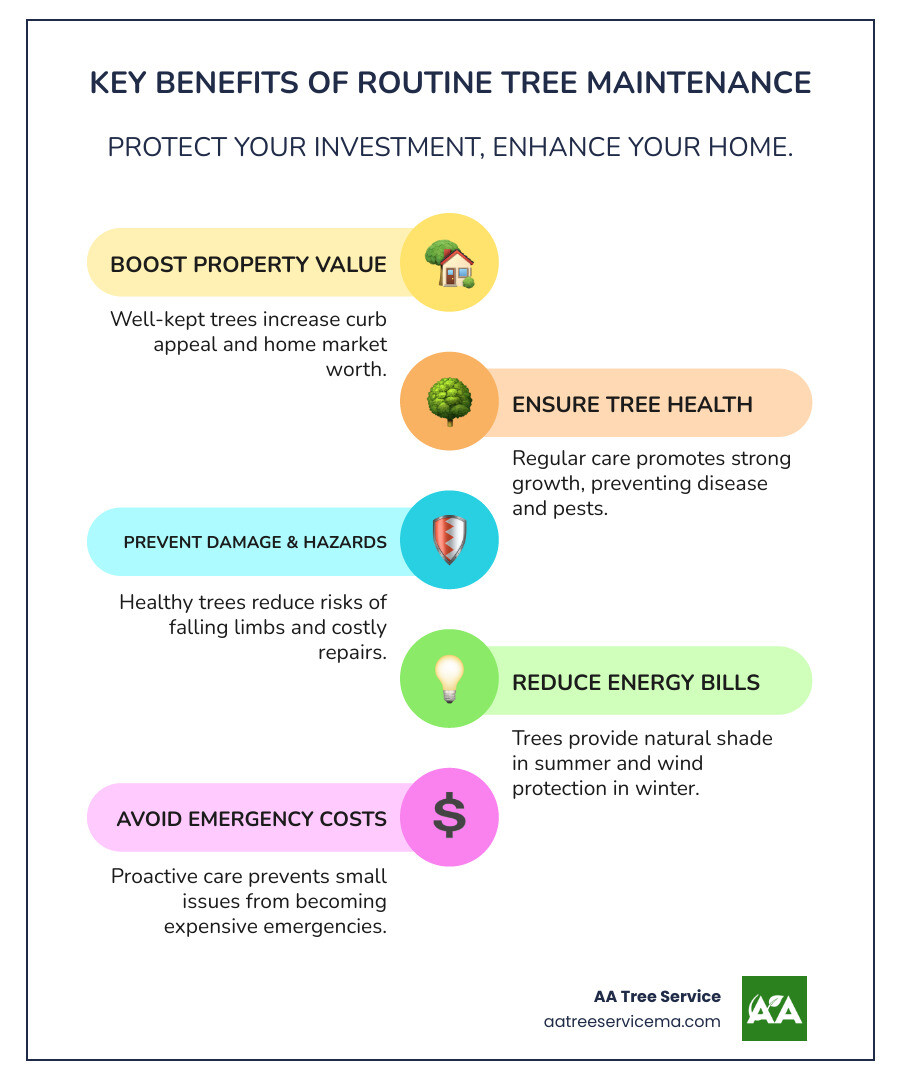
What are the key benefits of routine tree maintenance?
- Boosts Property Value & Curb Appeal: Well-kept trees make your home look better and can significantly increase its worth. According to the Council of Tree and Landscape Appraisers, a mature, healthy tree can have an appraised value of between $1,000 and $10,000. This significant boost is because healthy trees signal a well-cared-for property, creating an inviting atmosphere from the moment someone arrives.
- Ensures Tree Health & Longevity: Regular care helps trees stay strong, fight off disease and pests, and live longer. This includes developing a robust root system, a sturdy trunk, and a balanced canopy that can withstand the region’s unpredictable weather, from heavy snows to high winds.
- Prevents Costly Damage & Safety Hazards: Healthy, structurally sound trees are far less likely to drop limbs or fall during storms. Proactive maintenance saves you from expensive repairs to your home, vehicles, or fences and, most importantly, protects your loved ones from potential injury.
- Reduces Energy Bills: Strategically maintained trees can provide dense shade in summer and act as a windbreak in winter, lowering your heating and cooling costs. The U.S. Department of Energy notes that just three strategically placed trees can save a household an average of $100-$250 annually in energy costs.
- Avoids Expensive Emergency Services: Proactive maintenance prevents small issues from becoming large, costly problems. A small crack in a branch, if addressed early, is a simple pruning job. Left ignored, it can lead to a catastrophic failure requiring emergency removal, which is significantly more complex, dangerous, and expensive.
Trees are a big part of what makes a home beautiful and inviting. They offer shade, privacy, and even improve air quality by filtering pollutants. But they don’t take care of themselves. Just like your home’s plumbing or roof, your trees need regular, knowledgeable attention to thrive and remain safe.
Neglecting them can lead to a host of problems. Dying branches, weak structures, unchecked pest infestations, or rampant growth can quickly turn a natural beauty into a serious liability. This guide will walk you through the essential steps of keeping your trees healthy, safe, and beautiful for years to come.
Easy Routine tree maintenance word list:
Why Bother With Tree Maintenance? The Long-Term Payoffs
Investing in routine tree maintenance offers huge, long-term payoffs that extend far beyond simple aesthetics. Think of your trees as living investments that, with proper care, can live for 50 to 100 years or more, growing in value and benefit each year. Their health directly impacts your property’s safety, longevity, and can save you significant money while benefiting the local environment.
The benefits of trees are multifaceted. They can increase your property value, offer fantastic energy savings by shading your home in summer and blocking chilly New England winds in winter, and prevent costly property damage from falling limbs. Proactive care is always more effective and less expensive than reacting to major problems later. A well-maintained tree is an asset; a neglected one is a liability. (You can learn even more about the amazing benefits of trees here!)
Boost Your Home’s Curb Appeal and Value
A vibrant, healthy tree canopy instantly boosts your home’s aesthetics, curb appeal, and overall property value. A well-structured tree frames a home, adding depth, character, and a sense of establishment that is highly attractive to potential buyers. It creates a manicured, intentional landscape and makes a powerful first impression. Conversely, a tree with dying branches, an unbalanced shape, or unsightly overgrowth can detract from your home’s appearance, suggesting neglect. Regular trimming and pruning ensure your trees complement your home’s architecture and help your entire landscape shine.
Ensure Tree Health and Longevity
Routine tree maintenance is like preventative medicine for your trees. Just as regular check-ups are vital for human health, routine inspections and care are crucial for trees. This proactive approach helps prevent common New England tree diseases like Dutch elm disease or anthracnose, and manage pests such as the emerald ash borer or winter moth. It promotes a strong, resilient structure, making trees better equipped to handle the weather and environmental stressors in Massachusetts and New Hampshire.
Our specialized Tree Care Services stimulate healthy new growth by strategically pruning away dead, dying, and weak branches. This improves sunlight penetration and air circulation throughout the canopy, eliminates weak spots, and ensures your trees can thrive for decades, maintaining their beauty and structural integrity.
Prevent Costly Damage and Safety Hazards
A compelling reason for routine tree maintenance is safety and financial peace of mind. Neglected trees inevitably become liabilities. Falling branches during strong winds or ice storms can cause thousands, or even tens of thousands, of dollars in damage to your home, vehicles, and property. More importantly, they pose a significant safety hazard to people and pets. Routine maintenance eliminates these dangers by improving tree structure and removing weak or hazardous limbs before they fail.
This proactive approach, which often includes a thorough Tree Hazard Assessment, saves you from the unforeseen costs and stress of emergency repairs or personal injury. According to online data, while a smaller tree removal might cost a few hundred dollars, large or emergency removals can cost several thousand dollars. Furthermore, some homeowner’s insurance policies may not cover damage if it’s determined the tree fell due to homeowner negligence, making a documented history of professional care a wise financial protection.
The Essentials of Routine Tree Maintenance: A Seasonal Guide
Routine tree maintenance is a seasonal process, not a one-time event. Here in Massachusetts and New Hampshire, trees face unique challenges year-round, from heavy winter snow and ice to humid summers that can encourage fungal growth. Understanding when and how to perform each task is key to ensuring your trees not only survive but thrive in our demanding climate.
Key Tasks in Your Routine Tree Maintenance Plan
Creating a successful tree care routine means staying ahead of problems before they start. These foundational tasks are the building blocks of a healthy landscape.
Watering is foundational to tree health, especially for young trees establishing their root systems. New trees need 15-25 gallons weekly for their first 3-5 years. For mature trees, deep, infrequent watering is best—about 10 gallons per inch of trunk diameter during dry spells. Use a soaker hose or drip irrigation at the tree’s drip line to ensure water penetrates 12-18 inches into the soil, encouraging a deep, stable root system. Water when the top 6-10 inches of soil are dry, preferably in the early morning or late evening to minimize evaporation.
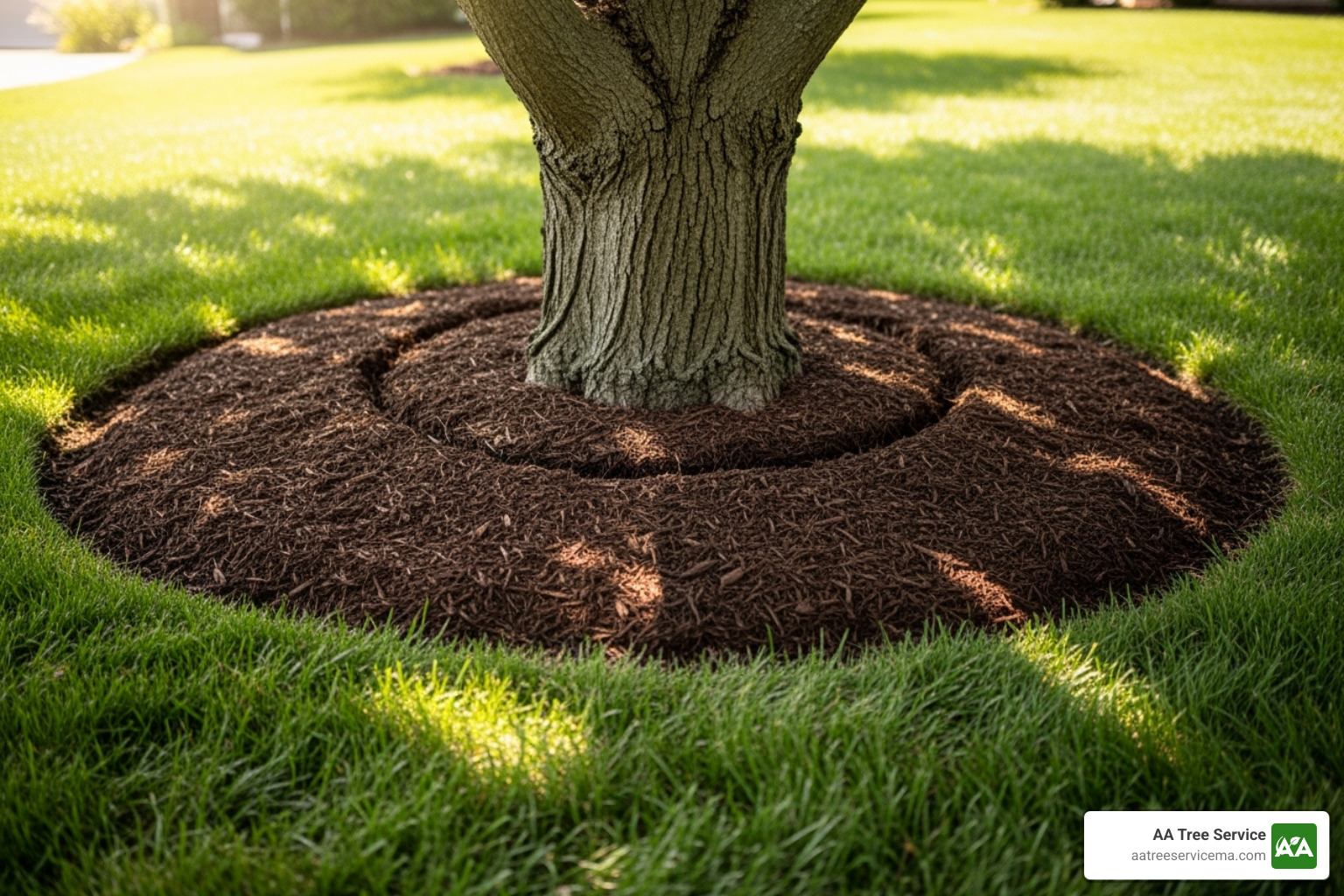
Mulching is one of the best things you can do for your trees. It retains soil moisture, regulates soil temperature against extreme heat and cold, and adds vital nutrients as it decomposes. Apply a 2-4 inch layer of organic mulch (like shredded bark or compost) out to the tree’s drip line. Crucially, keep mulch 4-6 inches away from the trunk itself to prevent rot, fungal diseases, and pest infestations.
Soil health is essential. Healthy soil means healthy roots. Improve soil structure with organic matter like compost and consider annual aeration to prevent compaction, especially in high-traffic areas. Compacted soil restricts oxygen and water flow, suffocating roots. A soil test every few years can identify nutrient deficiencies and guide any necessary amendments for optimal growth.
Watching for pests and diseases is vital. Regularly inspect trees for red flags like discolored or chewed leaves, unusual growths, sawdust-like frass, insects, or bark damage. Early detection makes problems easier and cheaper to address. If something looks off, take a photo and consult a professional arborist.
Winter preparation helps trees weather harsh New England winters. Give young and vulnerable trees a deep watering before the ground freezes. Add an extra layer of mulch for insulation. Wrap thin-barked trees like maples and lindens with burlap to prevent sunscald, a damaging condition caused by winter sun warming and then rapidly freezing the bark.
The Art and Science of Pruning
Pruning is a technical skill where every cut should have a purpose. Improper pruning can cause more harm than good.
Crown cleaning is the removal of dead, dying, diseased, or weak branches. This is the most fundamental type of pruning, improving the tree’s health, safety, and appearance.
Crown thinning selectively removes branches to open the canopy, improving light and air flow. This stimulates interior growth, reduces wind resistance (the ‘sail effect’), and helps prevent fungal diseases that thrive in stagnant, humid conditions.
When trees outgrow their space, crown reduction offers a gentler, healthier alternative to tree topping. This technique reduces height or spread by cutting back to strong secondary branches that can assume dominance, maintaining the tree’s natural form. It’s delicate work that requires understanding tree biology—you can learn more about this specialized approach through Tree Crown Reduction.
For large branches, always use the three-cut method to prevent the branch’s weight from tearing the bark down the trunk. Start with an undercut about a foot from the trunk, then a top cut further out to remove the limb’s weight, and finish with a final, precise cut just outside the branch collar—the swollen area crucial for healing.
Sharp, clean tools are kinder to your trees, as clean cuts heal faster and are less susceptible to disease. For comprehensive guidance, our Tree Pruning and Trimming services cover everything from technique to timing.
When to Perform Tree Maintenance
Timing is critical in tree care for maximum benefit and minimal stress to the tree.
Late winter pruning (January-March) is ideal for most species. During this dormant season, the tree’s structure is clearly visible, and the risk of transmitting pests and diseases is at its lowest.
Flowering trees have different needs. Prune early bloomers (like magnolias and forsythias) right after they finish flowering to avoid cutting off this year’s buds. Prune late bloomers (like hydrangeas and dogwoods) in early spring to encourage vigorous new growth and flowers.
Some trees have special requirements. To avoid attracting disease-carrying beetles, prune oak trees only during their dormant season (November through March) and avoid pruning elms during the growing season. Large pines are best pruned from November through April.
Year-round vigilance is key. Remove dead, diseased, or dangerous branches anytime they appear. Safety is a year-round priority.
DIY vs. Hiring a Professional: Knowing Your Limits
While caring for your trees is rewarding, it’s crucial to know your limits with routine tree maintenance. Many tasks are perfectly safe for a homeowner, but some carry serious risks and require the specialized skills, equipment, and insurance of a professional. Working high in a tree, near power lines, or diagnosing complex diseases is best left to the pros. An ISA-certified arborist has passed a comprehensive exam covering all facets of arboriculture and adheres to a strict code of ethics. You can find one through resources like Find an ISA-certified arborist.

DIY Tasks for the Diligent Homeowner
Homeowners in Massachusetts and New Hampshire can safely and effectively handle several routine tree maintenance tasks that form the foundation of good tree care. These include:
- Watering deeply and consistently, especially for newly planted trees during their establishment period.
- Applying mulch to retain moisture and improve soil health, but always remembering to keep it several inches away from the trunk to prevent rot.
- Inspecting for pests and diseases by regularly looking for unusual spots, holes, wilting, or growths. Early detection is your best defense.
- Pruning small, accessible branches that can be reached safely from the ground with hand tools like pruners or a pruning saw. As a rule of thumb, if you need a ladder or a chainsaw, you need a professional.
- Keeping tools sharp and clean to ensure clean cuts that heal quickly and to prevent the spread of disease from one plant to another.
If a ladder or pole saw is needed, the risk of injury increases dramatically. It’s time to call a professional.
When to Call a Professional Arborist
Some jobs are essential to leave to a professional arborist for your safety, your property’s protection, and the tree’s long-term health. Call an expert for:
- Large tree pruning: Climbing high into a tree with a chainsaw is incredibly dangerous without proper training, rigging, and safety gear. Professionals use ropes and harnesses to work safely and lower large limbs in a controlled manner.
- Branches near homes or power lines: Never attempt to prune branches near electrical wires yourself. Electrocution is a fatal risk. Call your power company (like National Grid or Eversource) first, as they may handle some of this work. Our teams are specially trained to work safely around these hazards.
- Disease diagnosis and treatment: An arborist can accurately diagnose complex tree diseases and pest infestations and recommend the most effective treatment plan, which may involve specialized applications.
- Dead tree removal: This is extremely dangerous as dead trees are unstable and unpredictable. An arborist can assess the decay and plan a felling or dismantling strategy that minimizes risk.
- Stump grinding: This requires specialized, powerful equipment that can be dangerous without experience. Professionals can remove the stump efficiently and safely.
- Expert assessment: If you’re ever unsure about your tree’s health, stability, or safety, a professional can provide a comprehensive assessment and give you peace of mind or a clear action plan.
At AA Tree Service, our insured team has over 20 years of experience providing safe, efficient tree services in Massachusetts and New Hampshire. We have the knowledge and equipment to protect you and your property. Learn more at More info about Professional Tree Service Massachusetts.
Common (and Costly) Tree Maintenance Mistakes to Avoid
Even with the best intentions, homeowners can make costly mistakes with routine tree maintenance. Certain common practices can severely compromise a tree’s health, structure, and safety. Knowing what to avoid is just as important as knowing what to do. These missteps can turn a healthy, valuable tree into a hazard that requires expensive intervention or removal.
The Dangers of “Tree Topping”
Tree topping is one of the most harmful and outdated mistakes in tree care. It involves indiscriminately cutting a tree’s upper branches to stubs, often out of a misguided attempt to reduce its size. This practice severely stresses the tree, forcing it to produce rapid, weak new growth (“water sprouts”) that are poorly attached and prone to breaking in storms, increasing the risk of falling limbs.
Topping also destroys the tree’s natural shape and beauty, leaving it disfigured. The large, improper cuts create wounds that don’t heal well, becoming major entry points for decay fungi and pests. This often leads to a rapid decline in health and premature death, requiring removal. It’s a harmful practice that should always be avoided in favor of proper pruning techniques like crown reduction.
Common Errors in Pruning and Care
Beyond topping, other common errors in routine tree maintenance can significantly harm your trees:
- Using dull tools: Dull blades crush and tear branches, creating ragged wounds that heal slowly and invite disease. Always use sharp, clean tools to make precise cuts.
- Making flush cuts: Cutting a branch flush with the trunk removes the “branch collar,” a specialized area of tissue at the base of the branch that contains the cells needed for healing. Removing it creates a large wound that the tree cannot properly seal, leaving it vulnerable to extensive decay.
- Over-watering: Too much water can be as harmful as too little, as it starves roots of oxygen. Signs include soggy soil, yellowing leaves, and root rot. Ensure proper drainage and water deeply but infrequently, allowing the soil to dry out between waterings.
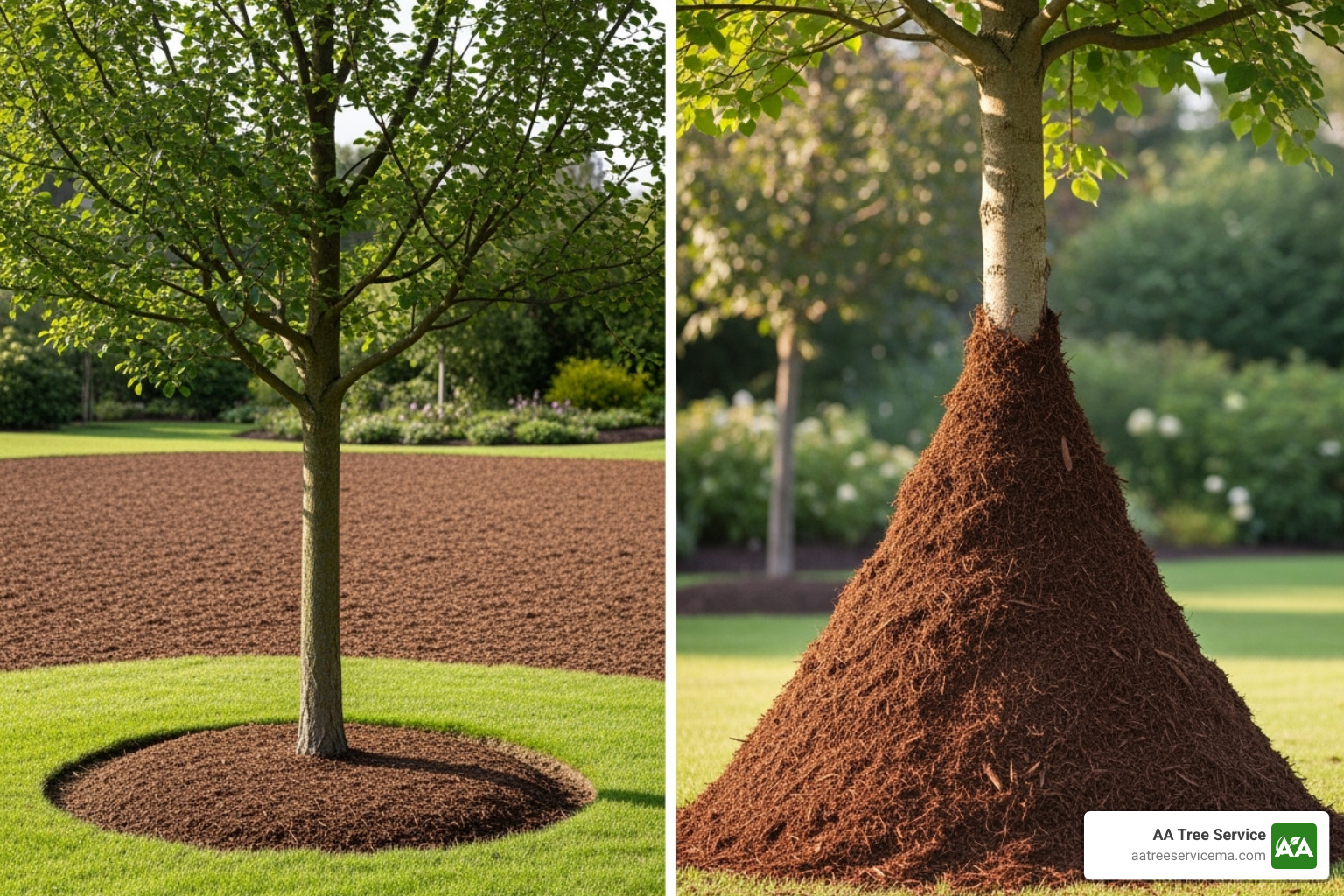
- Piling mulch against the trunk: “Volcano mulching” traps moisture directly against the bark, which can lead to decay, fungal diseases, and can provide cover for destructive insects and rodents. Always keep mulch pulled back 4-6 inches from the trunk, creating a donut shape, not a volcano.
- Ignoring warning signs: Delaying action on signs of distress like discolored leaves, dead branches, fungal growth, or a noticeable lean can turn a small, manageable issue into a major, expensive problem. Early detection and intervention are key to preserving your tree’s health and your property’s safety.
Frequently Asked Questions about Routine Tree Maintenance
We get it – caring for your trees can sometimes feel like a puzzle! Homeowners across Massachusetts and New Hampshire often have similar questions about keeping their leafy giants healthy and happy. We’re here to shed some light on the most common inquiries, providing clear, actionable answers to help you feel confident in your routine tree maintenance efforts.
How often should I have my trees professionally pruned?
The ideal frequency for professional pruning depends on the tree’s age, species, health, and location. As a general guideline, younger trees benefit from structural pruning every 2-3 years to guide their growth and build a strong, stable framework for the future. Most mature trees need maintenance pruning every 3-5 years to remove deadwood and maintain their health and safety. However, some slow-growing species like oaks may only need it every 5-10 years. Specialty trees, like fruit trees, often require annual pruning to maximize air circulation and fruit production. An ISA Certified Arborist can assess your specific trees and recommend a customized maintenance schedule.
How much does tree maintenance cost?
The cost of tree maintenance varies widely based on the service required, as well as the tree’s size, species, location, accessibility, and overall condition. Simple DIY tasks like watering and mulching only cost materials. For professional services, pruning a small, young tree might cost $200 to $500, while pruning a large, complex mature tree could be $800 to over $2,500, especially if it’s near hazards. Tree removal costs also vary, from $300 to $800 for a small tree to $1,500 to $5,000 or more for a large, hazardous removal that requires specialized equipment and includes stump grinding. Proactive routine tree maintenance is a sound investment that helps you avoid these larger, more expensive emergency services down the line.
Please remember, these figures are general average estimates based on internet data and are not a direct quote from AA Tree Service. Every job is unique, and we provide free, detailed quotes for your specific needs!
What are the signs of a sick or dying tree?
Learning to spot warning signs of a sick or structurally compromised tree early can prevent safety hazards and improve the chances of recovery. Be on the lookout for:
- Dead or leafless branches in the canopy during the summer growing season.
- Peeling, cracking, or deeply fissured bark. While some trees naturally shed bark, large cracks or areas where bark is falling off can indicate internal decay.
- Fungus growth (like mushrooms or shelf-like conks) on the trunk, branches, or near the base. This is often a sign of significant internal decay.
- A sudden or increasing lean, especially after a storm, which can signal root damage or failure.
- Discolored, wilted, or undersized leaves during the growing season.
- Excessive water sprouts or suckers (thin, weak shoots) growing from the trunk or base, which is a common sign of severe stress.
- Cavities or hollows in the trunk or major limbs, which can compromise the tree’s structural integrity.
If you notice any of these signs, it’s wise to contact a professional arborist for an accurate assessment and recommendation.
Protect Your Investment with Proactive Tree Care
Think of your trees as living, breathing treasures right in your yard. They are a dynamic part of your property’s ecosystem, offering so much – from the cooling shade on a hot summer day and a habitat for local wildlife to boosting your home’s curb appeal and market value. But just like any valuable asset, they need consistent, knowledgeable care to truly shine and thrive. That’s where a dedicated plan for routine tree maintenance comes in!
By staying on top of your tree care, you’re doing more than just keeping your yard looking neat. You’re actively safeguarding your property’s long-term health, ensuring safety for your family and home, and enhancing its overall beauty and value. It’s a modest investment of time and effort now that pays huge dividends down the road, preventing the stress and financial burden of reactive, emergency situations.
Proactive care helps you dodge those costly surprises, like unexpected storm damage from a weakened limb or the slow decline of a tree from an untreated pest infestation. It truly gives you peace of mind, knowing your trees are healthy, strong, and contributing positively to your outdoor space for years to come. You are not just maintaining a plant; you are stewarding a green legacy for your property.
Here at AA Tree Service, we deeply understand the unique needs of trees in the varied climate of Massachusetts and New Hampshire. With over 20 years of hands-on experience, our ISA-certified team is passionate about providing expert tree care rooted in arboricultural science. Whether it’s precise pruning to shape a young tree for a long, healthy life or safely removing a complex, hazardous one, we have the expertise and equipment to do the job right. We’re proud of our commitment to keeping our customers happy and their properties safe, offering 24/7 emergency services and free same-day quotes.
Let us help you protect that wonderful green investment in your yard. Your trees are worth it.
Get a free quote for your local tree care needs today, and let’s work together to keep your trees thriving beautifully for generations!