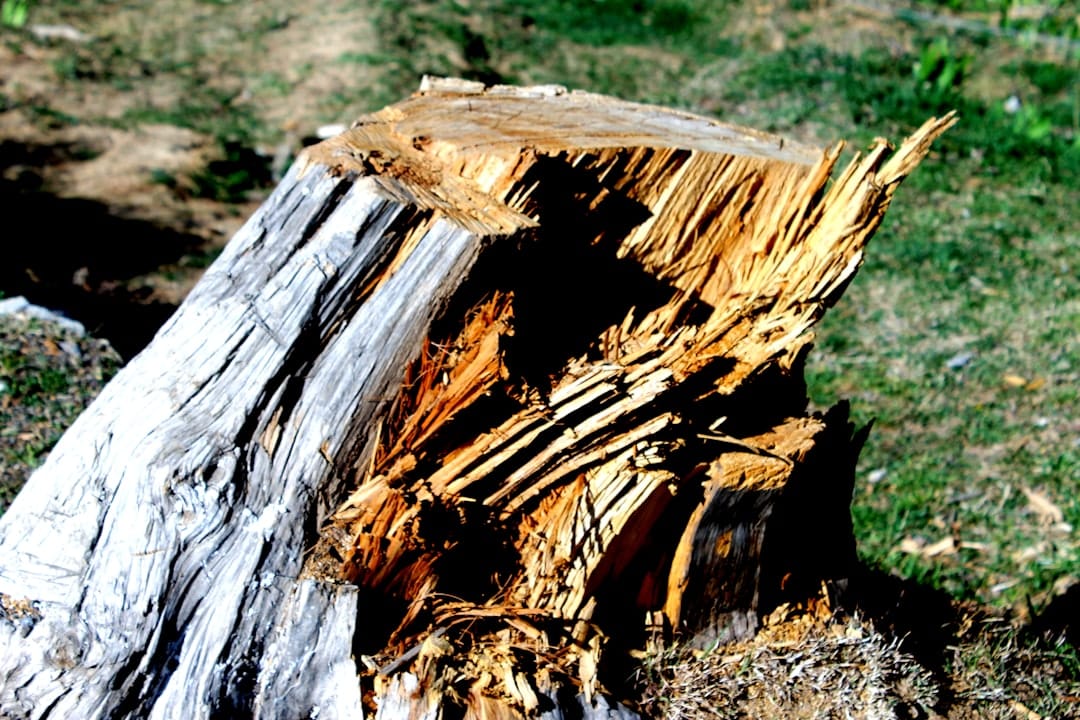
Why That Old Stump Has to Go
Old stump removal is essential for maintaining a safe, attractive, and functional yard. That unsightly remnant from your tree removal project isn’t just an eyesore – it’s creating multiple problems that will only get worse over time.
Quick Answer: Top 5 Old Stump Removal Methods
- Chemical decomposition – Drill holes, add potassium nitrate or Epsom salt (4-52 weeks)
- Manual removal – Dig, cut roots, extract by hand (3-12 hours)
- Controlled burning – Use kerosene in drilled holes (days to weeks)
- Stump grinding – Rent equipment or hire professionals (under 1 day)
- Professional service – Complete removal with expertise and insurance
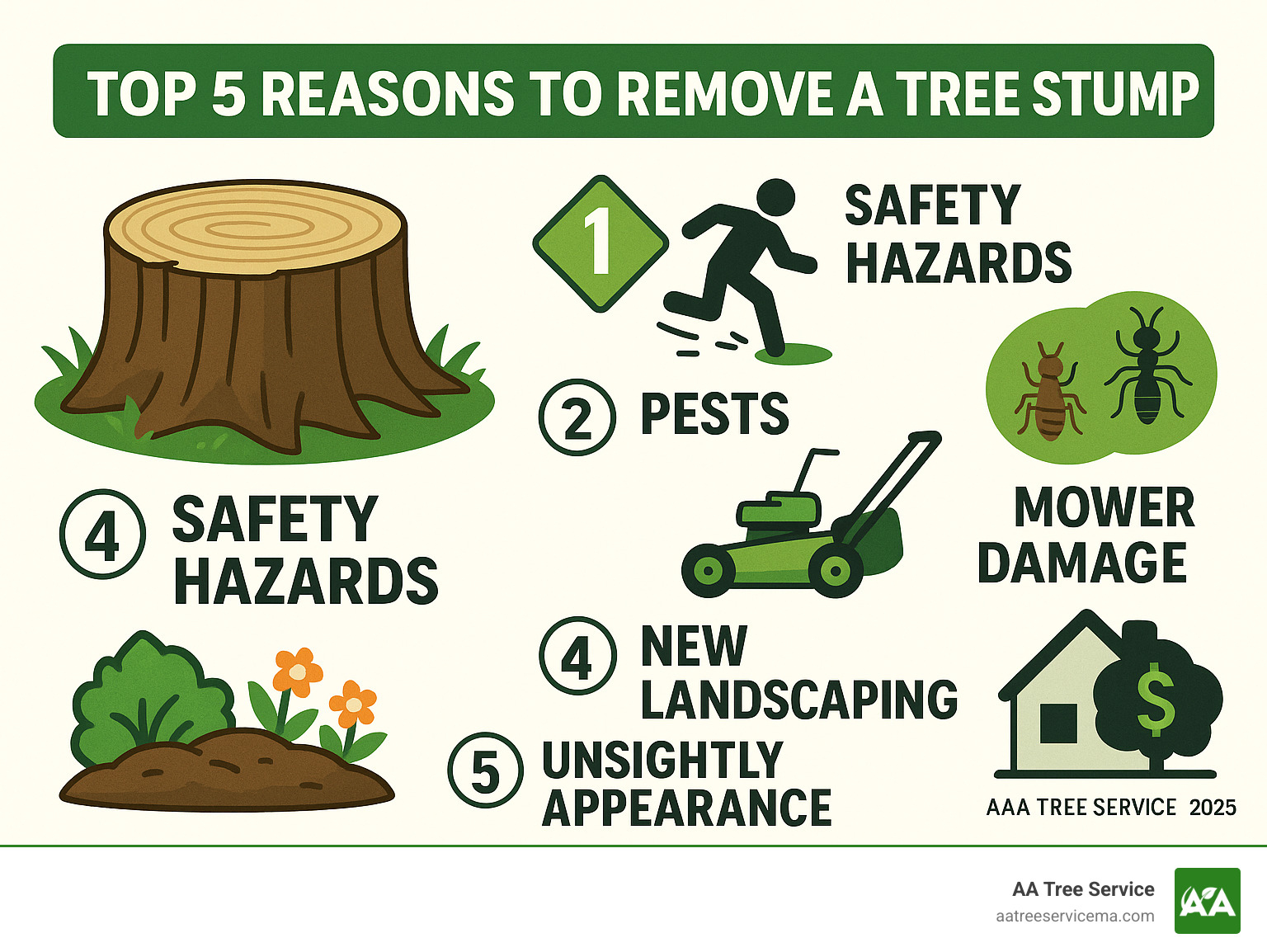
Left untreated, your old stump becomes a persistent tripping hazard, a low-lying obstacle that’s easy to forget until a child stumbles during a game of tag or a guest catches their foot in the dark. Beyond the immediate physical risk, it’s an open invitation to unwanted pests. Subterranean termites, for example, are drawn to the decaying wood in contact with the soil, establishing a satellite colony that can eventually move toward the wooden structures of your home.
Similarly, carpenter ants will excavate galleries within the moist, rotting wood to build their nests. The stump also becomes a breeding ground for fungal diseases like Armillaria root rot, which can remain in the soil and spread to the root systems of healthy, nearby trees and shrubs, compromising your entire landscape.
Your lawn mower suffers damage from hidden stump edges, and that prime yard space remains unusable for new landscaping projects like a garden bed, a play area for your children, or an extension of your patio. A stump left to its own devices will usually take around seven years to rot naturally – but can easily last over fifteen years if conditions aren’t right.
Whether you choose a DIY approach or professional service depends on your budget, timeline, and the stump’s size and location. Each method has distinct advantages for different situations.
Key old stump removal vocabulary:
DIY Stump Removal Methods: A Comprehensive Guide
Rolling up your sleeves for old stump removal can save you serious money while giving you that satisfying “I did it myself” feeling. But before you grab your tools and dive in, let’s talk safety first – because nobody wants a trip to the emergency room over a tree stump.

Whatever method you choose, a robust approach to safety is non-negotiable. Impact-resistant protective eyewear or safety goggles are your first line of defense against flying wood chips, dirt, and chemical splashes. Heavy-duty work gloves are essential to protect your hands from blisters, splinters, and direct contact with caustic chemicals.
Furthermore, steel-toed boots are highly recommended to guard against dropped tools, rolling stump pieces, and the unpleasant surprise of an axe glancing off a tough root. Always establish a clear, safe work zone, keeping children and pets indoors or well away from the area. Before you begin, check the weather forecast; attempting manual removal on wet, slippery ground increases the risk of falls, and applying chemicals just before a heavy rain is both ineffective and environmentally irresponsible.
For detailed information about chemical options, check out our guide on tree stump removal chemicals.
Chemical Decomposition: The Patient Approach
If you’re the type who prefers brain over brawn, chemical decomposition might be your perfect match. This method works by accelerating natural decay – essentially giving nature a turbo boost to break down that stubborn stump into soft, removable chunks.
The science is actually pretty cool. These chemicals provide concentrated nutrients, primarily nitrogen, that feed the fungi and bacteria already living in your stump. Think of it as a feast for microscopic helpers who then work around the clock, breaking down the tough cellulose and lignin that give wood its incredible structural strength. This process transforms the hard wood into a soft, spongy mass.
Getting started means cutting your stump as low as possible, then drilling holes strategically throughout. You’ll want holes about an inch wide and a foot deep, spaced every few inches around the stump’s perimeter. Some folks even drill connecting holes at angles – it’s like creating a highway system for your chemicals to travel. Our detailed guide on drilling holes in tree stumps walks you through the exact technique.
Potassium nitrate is the heavy hitter of stump chemicals. Pour about 3-4 ounces into each hole, add water to help it dissolve, then cover the whole stump with a tarp. This creates a humid, dark environment that speeds decomposition while preventing rain from washing away your investment. The stump should become soft and spongy within 4-6 weeks, though larger, denser stumps will take longer.
Here’s the catch though – potassium nitrate is a hazardous substance. It is a strong oxidizer and can irritate skin and eyes, so handle it carefully with gloves and eyewear, and store it securely away from children and pets.
For a gentler approach, Epsom salt (magnesium sulfate) works by drawing moisture out of the wood, essentially desiccating and mummifying your stump over time. It’s safer around kids and pets, but patience is required – we’re talking several months to a full year for complete breakdown. The process is identical: drill, fill, water, cover, and wait. Learn more about this and other options in our guide to natural stump dissolvers that actually work.
Commercial stump removers often contain different chemical blends beyond potassium nitrate, such as sodium metabisulfite. Always follow manufacturer instructions exactly – these aren’t suggestions, they’re safety requirements for effective and safe use.
The beauty of chemical removal lies in its low cost (usually under $20) and minimal physical effort. You’re basically hiring chemistry to do the heavy lifting. The downside? It’s a slow process that requires multiple applications and serious patience. If you need that stump gone next weekend for a barbecue, this isn’t your method.
Manual Removal: The Hands-On Method for old stump removal
Ready for a workout? Manual old stump removal is the “get it done today” approach that trades time and sweat for immediate results. This method works best on small to medium stumps (under 15 inches in diameter) and seasoned stumps that have been dead for at least a year – the wood is drier and the roots less aggressive.
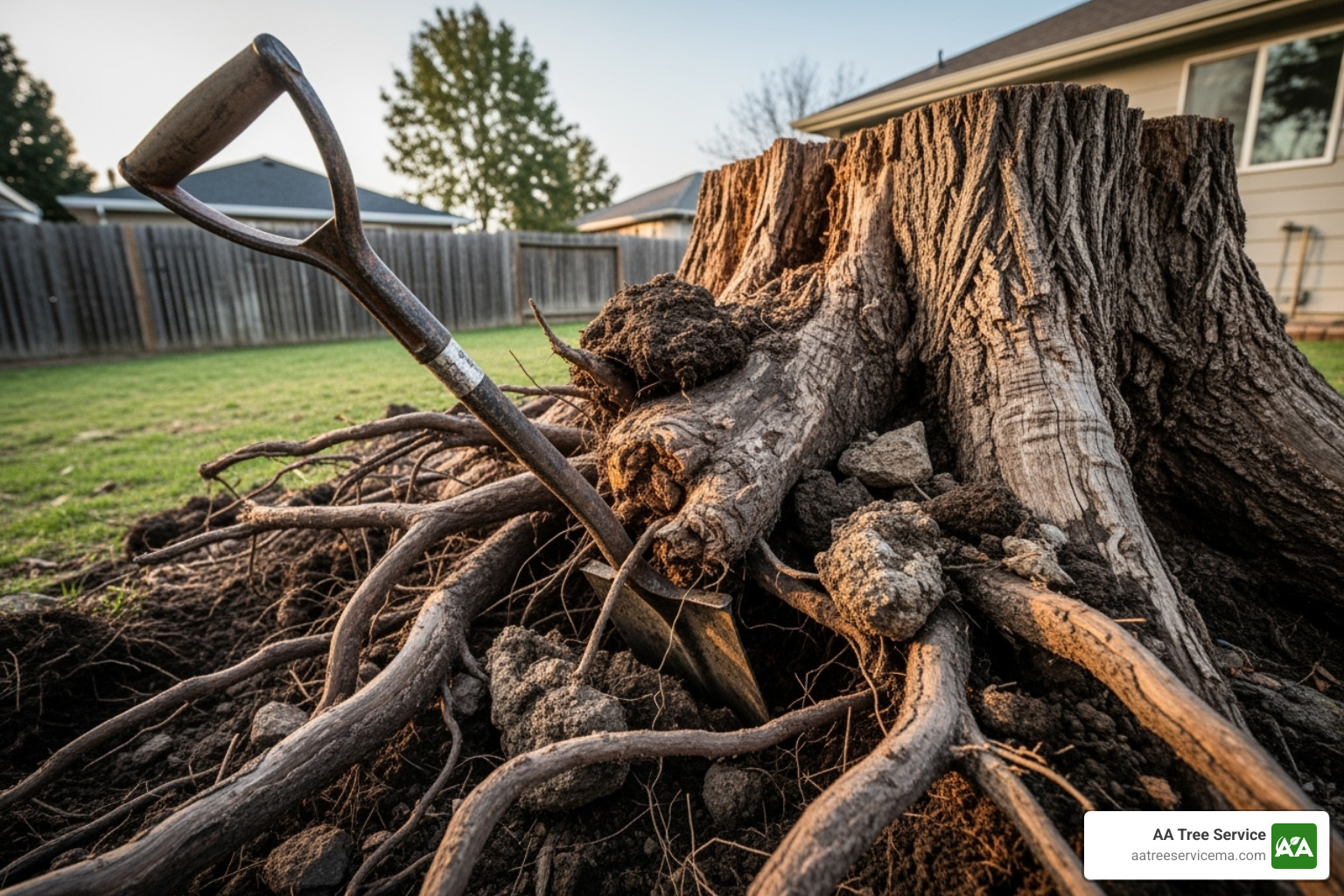
Start by digging a wide trench around the stump with a sturdy pointed shovel or a mattock, which is excellent for both digging and chopping through smaller roots. Your goal is to create a workspace at least a foot or two wide around the entire perimeter, giving you room to work and see what you’re doing. As you dig, you’ll begin to expose the main lateral roots. A heavy-duty digging bar becomes your best friend here; use its weight and leverage to pry up rocks and break through compacted soil. A quality digging bar is an investment that will pay for itself in saved effort and will last for years of tough landscaping projects.
Once you’ve exposed the roots, it’s time to play surgeon. Smaller roots surrender easily to a pair of heavy-duty bypass loppers, while thicker ones will require a sharp axe or a reciprocating saw with a pruning blade. A pruning saw is also an excellent choice. Work systematically around the stump, cutting every root you can reach. Pro tip: a garden hose helps wash away dirt so you can see what you’re doing, preventing your tools from dulling on hidden rocks.
The real challenge is severing the taproot – that central anchor that extends straight down, especially common in trees like oaks and hickories. You’ll need to dig directly under the stump center, often from multiple angles, then use your axe or saw to cut through this final connection. It’s often the toughest part of the whole job.
With the root system severed, your stump should rock freely when you pry with the digging bar. Use a combination of pushing, pulling, and prying, perhaps with the help of a friend, until it pops free. The satisfaction of pulling out that final stump is hard to beat.
Manual removal offers immediate results and uses no chemicals, making it an environmentally friendly option. You’ll get a solid workout and save money if you already own the tools. The flip side? It’s extremely labor-intensive and can take anywhere from 3 to 12 hours depending on the stump size, root system complexity, and your stamina level. Your back might remind you of this project for a few days.
Controlled Burning: Turning Your Stump to Ash
Burning stumps sounds almost primitive, but it’s been turning stubborn wood into ash for generations. However, this method comes with serious risks and legal considerations that make it unsuitable for most homeowners, especially in Massachusetts and New Hampshire where fire regulations are strict and population density is high.
Before even considering burning, you must check local fire codes with your municipal fire department in both MA and NH. Many areas prohibit open burning entirely or have seasonal bans due to drought conditions. Violations can result in hefty fines or worse. Even where legal, permits are almost always required.
The process involves cutting your stump low, drilling deep holes, and soaking them with kerosene or fuel oil for days or weeks to ensure deep penetration. Never use gasoline – its vapors are highly volatile and can ignite explosively, causing severe injury or death. Once ignited, often with the help of charcoal briquettes placed on top, the stump smolders slowly, potentially for days or weeks.
Safety precautions are absolutely critical. Clear all flammable materials like dry leaves, grass, and mulch within a 15-foot radius. Cover the smoldering stump with chicken wire or a metal screen to contain embers, and keep a charged hose nearby with water pressure ready at all times. The stump requires constant monitoring because underground smoldering can continue for months, potentially igniting nearby roots or structures long after you think the fire is out.
The fire hazard extends beyond the obvious flames. Roots can smolder underground like a fuse, creating invisible dangers that surface weeks later as a fire in your lawn or under your deck. Wind can carry embers to start new fires on neighboring properties, and the toxic smoke poses health risks to you and your community.
While burning can eliminate large, stubborn stumps completely, the significant risks, legal restrictions, and need for constant supervision make it impractical and ill-advised for most residential situations. Professional removal is almost always the wiser, safer choice.
Comparing Your Options: Time, Cost, and Effort for old stump removal
Now that we’ve explored the different DIY methods, let’s take a step back and compare your options. Choosing the right old stump removal approach really comes down to three key factors: how much time you have, what you’re willing to spend, and how much elbow grease you want to put in.
| Method | Time to Remove (Stump Softens/Is Gone) | Estimated DIY Cost | Effort Level (DIY) |
|---|---|---|---|
| Chemical Decomposition | 4 weeks to over 1 year | Less than $20 | Low |
| Manual Removal | 3-12 hours | $10-$50 (tools if needed) | High |
| Controlled Burning | Days to weeks | Low (fuel, briquettes) | Medium (monitoring) |
| Stump Grinding (DIY) | Under 1 day (45-60 minutes) | $100-$200 (rental) | Medium |
| Professional Grinding | Under 1 day (often hours) | $80-$800+ (average internet data) | Very Low |
If you’re in a hurry and need fast stump removal, grinding is your clear winner – whether you tackle it yourself or call in the pros.
Timeline: How Long Does Each Method Take?
Time is money, as they say, and the clock ticks very differently depending on which old stump removal method you choose. The timeline can be influenced by wood type (softwoods like pine decay faster than hardwoods like oak), stump age, and local climate.
Chemical removal is definitely the tortoise in this race, and its pace is heavily influenced by several factors. The type of wood is critical; a soft pine stump will succumb to chemicals much faster than a dense, hardwood oak stump. The age and condition of the stump also matter, as older, more seasoned wood may absorb the chemicals more readily.
You might start seeing the wood soften after about four weeks with potassium nitrate, but don’t expect to be breaking apart that stump with a shovel until at least six to eight weeks have passed. For the gentler Epsom salt approach, you’re looking at several months before the stump dries out significantly, and it could easily take a full year or more before it’s rotted enough to remove with minimal effort. Regular reapplication of the chemical and water may be necessary to keep the process active.
Manual removal sits on the opposite end of the spectrum. Once you roll up your sleeves and start digging, you’ll either have that stump out in three hours or you’ll be cursing at it for twelve hours straight. The good news? When you’re done, you’re really done.
Burning falls somewhere in the middle, but it’s tricky to predict. Once you light that stump, it’ll smolder away for days or even weeks. The catch is you can’t just walk away – someone needs to keep an eye on it the whole time, making it a significant time commitment.
Here’s something that might surprise you: if you do absolutely nothing, that stump will eventually disappear on its own. We’re talking about seven years for natural decay under ideal, moist conditions, though some stubborn hardwood stumps can hang around for fifteen years or more. That’s a long time to trip over the same obstacle!
Grinding is the speed demon of stump removal. Whether you rent the equipment or hire professionals, the actual grinding usually takes just 45 to 60 minutes for a typical 24-inch stump. Even massive stumps rarely take more than a few hours to grind down into a pile of manageable wood chips.
Cost Breakdown: DIY vs. Professional Services
Let’s talk dollars and cents. Most DIY old stump removal methods won’t break the bank, typically running between $10 and $50 for tools and materials you don’t already own.
Chemical removal is the budget champion at under $20 for the actual chemicals. You’ll need to factor in a drill with a long spade bit and some basic tools if you don’t already have them, but it’s still the most wallet-friendly option upfront.
Grinder rental steps up the cost significantly. Expect to pay $100 to $200 to rent a stump grinder for a half-day or full day. This can actually be a smart investment if you have multiple stumps to tackle or one particularly stubborn giant, as the per-stump cost drops with each one you remove.
Professional grinding varies widely based on stump diameter, accessibility, wood type, and desired grinding depth. According to average internet data, you might pay around $80 for a small, straightforward stump, but costs can climb to $800 or more for large stumps with extensive root systems or those in challenging locations, like on a steep hill or in a tight corner. Most professionals have a minimum service charge.
Cost Disclaimer: All prices mentioned are based on average internet data from various sources and are not actual costs for AA Tree Service. For precise pricing custom to your specific situation, we encourage you to contact us for a free, no-obligation quote. We’re proud to offer affordable stump grinding services throughout Massachusetts and New Hampshire.
The Grinding Option: When to Rent or Use a Stump Grinder
Stump grinding has earned its reputation as the most efficient method for old stump removal. These powerful machines literally chew through stumps with a high-speed cutting wheel, turning them into wood chips in a fraction of the time other methods require.
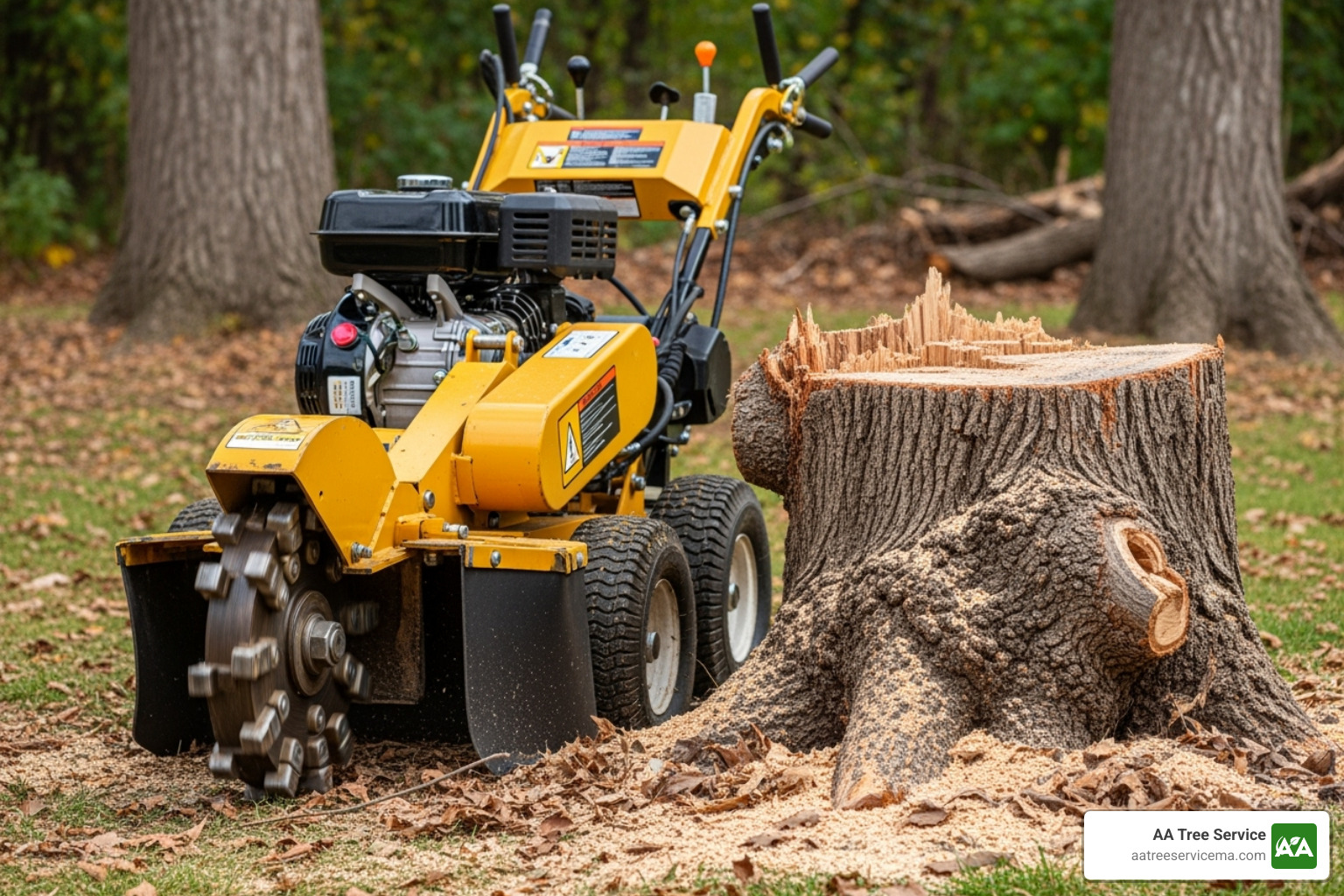
Renting makes sense when you’re dealing with large stumps (over 12 inches in diameter) that would take an entire weekend to remove manually, or when you have several stumps that need attention. When renting, you’ll likely encounter a few different types of machines. Smaller, walk-behind grinders like the Vermeer SC30TX are more maneuverable and good for tight spaces, but they require more physical effort to operate.
Larger, tow-behind units offer more power for giant stumps but require a vehicle with a tow hitch and more space to position. It’s crucial to assess your comfort level with operating heavy, vibrating machinery and your physical capability to handle it safely. Many homeowners find they can rent a stump grinder from local equipment rental companies or home improvement stores, but always ask for a full operational tutorial before you leave the lot.
Safety absolutely cannot be compromised when operating a grinder. These machines are powerful and unforgiving. Always wear proper protective equipment – safety glasses, hearing protection, and steel-toed boots are non-negotiable. Take time to read the operator’s manual thoroughly, clear the area of rocks, toys, and debris that could become dangerous projectiles, and keep family members and pets at a very safe distance.
For stumps on steep slopes, near foundations, or in other challenging locations, it’s wise to skip the DIY approach entirely. The risks of losing control of the machine or causing property damage simply aren’t worth the potential savings.
If you’re looking for expertise without the hassle, our team provides professional local stump grinding services throughout Massachusetts and New Hampshire, bringing years of experience and proper insurance coverage to every job.
When to Call the Professionals for Stump Removal
Sometimes, tackling old stump removal yourself just isn’t the smartest move. While we love a good DIY project as much as anyone, there are situations where calling in the pros isn’t just easier – it’s the safest and most practical choice.
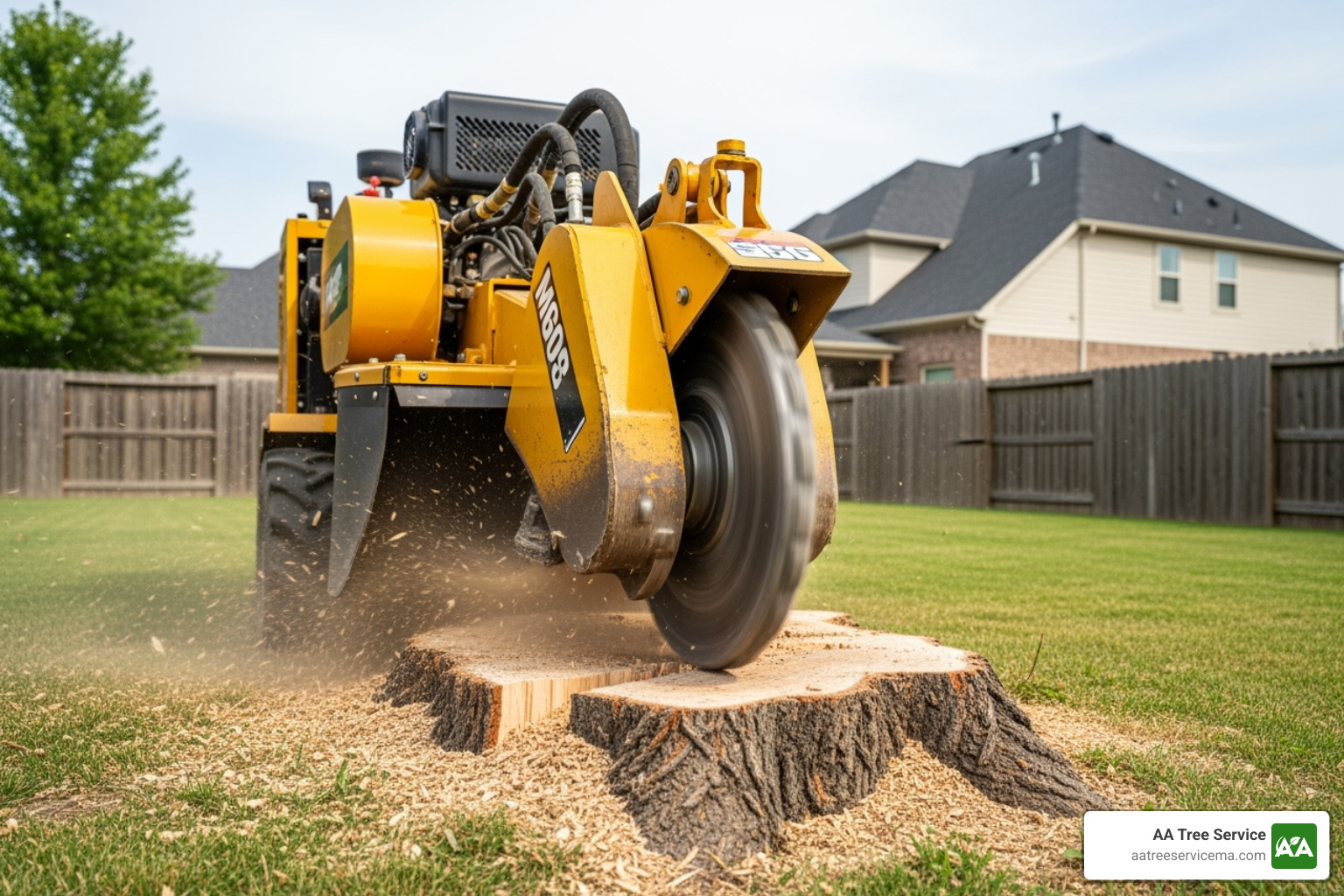
Large or difficult stumps are often the first sign you might want to call for backup. That massive 40-inch oak stump that’s been staring at you from across the yard? The one that makes your shovel look like a toy? Professional-grade hydraulic stump grinders can handle what would take you weeks of backbreaking work in just a few hours.
Location matters tremendously when it comes to old stump removal. Stumps near foundations require surgical precision, as aggressive digging or grinding can send vibrations that crack concrete or damage your home’s structural integrity. Similarly, stumps near utilities are a non-negotiable call for professional help.
Underground gas lines, electrical cables, water pipes, and sewer lines can be just inches below the surface. A professional crew will always contact the 811 “Call Before You Dig” service (known as Dig Safe in New England) several days before work begins. This free service sends utility companies to your property to mark the approximate location of their lines with flags or paint, preventing a costly and potentially catastrophic accident. Attempting to guess the location of these lines is a dangerous gamble you should never take.
The sheer number of stumps can also be a tipping point. While tackling one small stump might be a manageable weekend project, facing three, five, or even more stumps across your property changes the equation entirely. The time and cost of renting equipment, not to mention the cumulative physical toll, can quickly exceed the cost of hiring a professional service. A professional crew can arrive with a powerful grinder and systematically eliminate all of your stumps in a single visit, often in just a few hours, making it a far more efficient and often more economical choice for larger-scale clearing projects.
Let’s be honest about time and tools. If your weekends are already packed, or the thought of renting and transporting a 300-pound stump grinder makes you break out in a cold sweat, professional removal makes perfect sense. Lack of time and lack of tools are perfectly valid reasons to hand this job over to someone else.
Safety concerns shouldn’t be taken lightly either. Operating heavy machinery, handling potentially hazardous chemicals, or spending hours doing physically demanding work isn’t for everyone. If you have any doubts about your ability to complete the job safely, trust your instincts and call the experts.
When you hire professionals for old stump removal, you’re getting more than just muscle and machinery. You’re investing in expertise gained from years of experience with different tree species and challenging situations. Our team at AA Tree Service brings over 20 years of hands-on knowledge to every job.
Professional equipment makes a world of difference too. Commercial-grade stump grinders are far more powerful and efficient than typical rental units. They can grind deeper, handle harder woods with ease, and often fit into tighter spaces thanks to specialized designs. What might take you all weekend can often be completed in a matter of hours with the right tools.
Insurance coverage provides peace of mind that DIY methods simply can’t match. A reputable company will carry both general liability insurance (to cover your property) and worker’s compensation insurance (to cover their employees). In the unlikely event something goes wrong, this protects both your property and your wallet. Professional efficiency means getting your yard back to normal quickly, without the weeks or months that some DIY methods require.
For comprehensive stump grinding services throughout Massachusetts and New Hampshire, our experienced team can handle stumps of any size or complexity. Whether you need a single stump removed or want to clear multiple stumps from your property, our local stump removal service delivers reliable results you can count on.
Frequently Asked Questions about Old Stump Removal
Homeowners dealing with those pesky tree remnants often find themselves asking the same questions. Here are the answers to the most common concerns about old stump removal that we hear from our customers across Massachusetts and New Hampshire.
What is the fastest way to get rid of an old tree stump?
If speed is your priority, professional stump grinding wins hands down. A skilled operator with a commercial-grade, hydraulic grinder can reduce an average-sized stump to wood chips in under an hour – sometimes as little as 30 minutes. It’s like watching a stubborn problem simply disappear before your eyes.
For DIY enthusiasts, manual removal offers the quickest results you can achieve yourself, typically taking 3 to 12 hours of strenuous labor depending on the stump size and your determination. While it’s hard work, you’ll have immediate satisfaction seeing that eyesore completely gone by the end of the day.
Chemical methods might seem appealing because they require less sweat, but they are the slowest option by a wide margin. You’re looking at weeks to over a year before that stump becomes soft enough to remove. Burning can take days to weeks and comes with serious safety concerns and legal restrictions that make it impractical for most homeowners.
Our team provides fast, efficient stump grinding in Arlington and throughout the region, typically completing jobs the same day we arrive.
How deep do you need to grind a stump?
This is an excellent question, and the answer depends entirely on your future plans for the area. For most homeowners who simply want to eliminate the tripping hazard and plant grass, a grinding depth of 4 to 6 inches below the surface is perfectly adequate. This is deep enough to remove the visible stump and allow for a healthy layer of topsoil and seed to be added on top.
However, if you plan to replant a new tree or large shrub in the same spot, you will need a much deeper grind. In this case, you should request a grinding depth of at least 12 to 18 inches. This ensures that the old stump’s main root ball is completely obliterated, giving the new tree’s roots ample room to grow without obstruction. Be sure to communicate your plans to the stump grinding professional so they can adjust the depth accordingly, as deeper grinding may affect the price.
Can a tree stump grow back after being cut?
Here’s something that surprises many homeowners: yes, tree stumps can absolutely sprout new growth! This is especially true for certain hardwood species. Those little shoots popping up around your stump aren’t just weeds – they’re the tree’s determined attempt at a comeback, fueled by the energy stored in the living root system.
These new shoots, called suckers or sprouts, emerge from the remaining root system. If you ignore them, you might end up with multiple smaller trees growing in a cluster, creating a bushy mess that is even harder to remove later. At minimum, you’ll face an ongoing battle with persistent sprouts that keep appearing no matter how often you cut them down. Species like maple, willow, poplar, and elm are particularly notorious for resprouting.
The key to preventing regrowth lies in removing or destroying the root crown – that critical junction where the trunk meets the roots. This is why different old stump removal methods vary in their effectiveness at stopping regrowth.
Chemical treatments, when applied correctly, kill the entire living system, including the roots. Professional grinding removes the stump several inches below ground, eliminating the root crown completely. Thorough manual removal that extracts the main root mass also prevents new growth. Simply cutting a tree at ground level, however, often leaves enough living tissue to support new shoots.
What can I do with the wood chips after stump grinding?
Don’t let those wood chips go to waste! After grinding, you’ll have a pile of fresh organic material that’s actually quite valuable for your landscape.
The most practical option is using them as mulch around your trees, shrubs, and garden beds. Wood chips make excellent mulch because they help retain soil moisture, suppress weeds, and regulate soil temperature. As they slowly break down, they enrich your soil with organic matter. The Royal Horticultural Society provides great guidance on using woody materials effectively in your garden.
Filling the hole where the stump used to be is the most common immediate use. The chips will naturally settle and decompose over time. If you plan to plant grass, it’s best to remove most of the chips and fill the hole with a mix of chips and topsoil to prevent nitrogen depletion, which can yellow the new grass.
If you’re a composting enthusiast, wood chips add valuable carbon (a “brown” material) to your compost pile. They take longer to break down than softer materials like grass clippings, but they provide structure and help balance the nitrogen-rich “green” materials in your compost.
For disposal, most municipalities in Massachusetts and New Hampshire accept bagged wood chips with yard waste collection, though it’s worth checking your local regulations for volume limits. You can also transport excess chips to composting facilities or use them to create natural-looking pathways in wooded areas of your property.
Conclusion: Reclaim Your Yard with the Right Method
You’ve made it through the complete guide to old stump removal, and now it’s time to make your choice. The good news? There’s no single “wrong” way to tackle that stubborn stump – just different approaches that work better for different situations, budgets, and timelines.
If you’re the patient type who doesn’t mind waiting, chemical decomposition offers a low-cost, low-effort solution that works while you focus on other projects. The DIY enthusiast with energy to burn might find manual removal surprisingly satisfying, especially knowing the stump is gone for good in just one day. For those comfortable with fire safety regulations, controlled burning can handle larger stumps effectively, though it’s rarely recommended.
But here’s the reality check: for the majority of homeowners, professional stump grinding offers the ideal balance of speed, safety, and superior results. It’s an investment not just in removing an eyesore, but in reclaiming your property’s full potential. While DIY methods have their place for smaller, simpler projects, they often fall short when you’re dealing with massive hardwood stumps, a yard dotted with multiple remnants, or stumps located precariously close to your foundation, fences, or underground utility lines. In these scenarios, the risk of property damage, personal injury, or simply an incomplete job far outweighs the potential cost savings.
Your budget plays a role too. DIY chemical methods might cost under $20, but they require months of patience. Manual removal keeps costs low if you already own the tools, but demands significant physical effort. Renting a grinder runs $100 to $200 for the day, while professional services typically range from around $80 for smaller stumps to $800 or more for challenging removals – though remember, these are average internet estimates and actual costs vary significantly based on your specific situation.
The size and location of your stump often makes the decision for you. That small dogwood stump in your backyard? Perfect for a weekend DIY project. The massive maple stump sitting three feet from your septic system? That’s definitely a job for experienced professionals with proper insurance coverage.
At AA Tree Service, we’ve dedicated over 20 years to helping homeowners across Massachusetts and New Hampshire reclaim their yards safely and efficiently. We see every stump not just as a problem to be removed, but as an opportunity to restore beauty, safety, and function to your outdoor living space.
We understand that every old stump removal project is unique, from the species of the tree to the specific challenges of its location. That’s why we pride ourselves on providing personalized solutions, starting with a free, no-obligation quote where we assess your specific needs and provide a clear, upfront price. Our commitment extends to being there when you need us most, with 24/7 emergency services available for urgent situations.
Whether you choose the DIY route or decide to call in the experts, the important thing is getting started. That old stump isn’t going anywhere on its own, and every month you wait means more potential problems with pests, regrowth, and safety hazards. Taking action is the first step toward a safer, more beautiful, and more usable yard.
Ready to get that stump out of your life for good? Our experienced team is standing by to provide fast, safe, and professional solutions. Learn more about our comprehensive tree removal services and find how we can help you transform your yard from frustrating to fantastic.