Your Complete Guide to Local Tree Services
Ever glanced up at that massive oak hanging over your roof and wondered, “Is that safe?” Or maybe you’ve noticed a maple that’s seen better days after our last New England winter? You’re not alone.
Local tree services provide the expertise many Massachusetts and New Hampshire homeowners need but often don’t realize until that first big storm hits. From removing hazardous trees to maintaining the beauty of your landscape, professional arborists offer peace of mind that’s worth every penny.
When considering tree care, it helps to understand what you might expect to pay. While costs vary widely based on complexity, location, and tree specifics, here’s what internet data suggests for average pricing:
- Tree Removal: $200-$2,000 (with complex removals potentially reaching $6,000+)
- Tree Trimming/Pruning: $75-$1,000 (larger trees with difficult access costing more)
- Stump Grinding: Starting around $100, increasing with stump diameter
- Emergency Services: Available 24/7, though often at premium rates
What makes a tree service worth hiring? Look for the credentials that matter: ISA Certification (International Society of Arboriculture), comprehensive insurance coverage, and proper state licensing. These aren’t just fancy acronyms—they’re your protection against liability and poor workmanship.
Our New England region presents unique challenges for tree care. With approximately 3.5 million trees in our urban areas alone, plus countless more in suburban and rural settings, our landscape is defined by towering oaks, maples, pines, and other species that require knowledgeable handling. Add in our famous nor’easters and unpredictable weather patterns, and professional tree care becomes less of a luxury and more of a necessity.
As experienced arborists often say, “Every tree is either an asset or a liability.” The difference? Proper assessment and maintenance. That magnificent 80-year-old oak can add thousands to your property value—or become a costly disaster during the next ice storm.
Whether you’re facing an immediate hazard or simply want to maintain healthy trees for generations to come, working with qualified professionals ensures the job gets done safely and correctly.
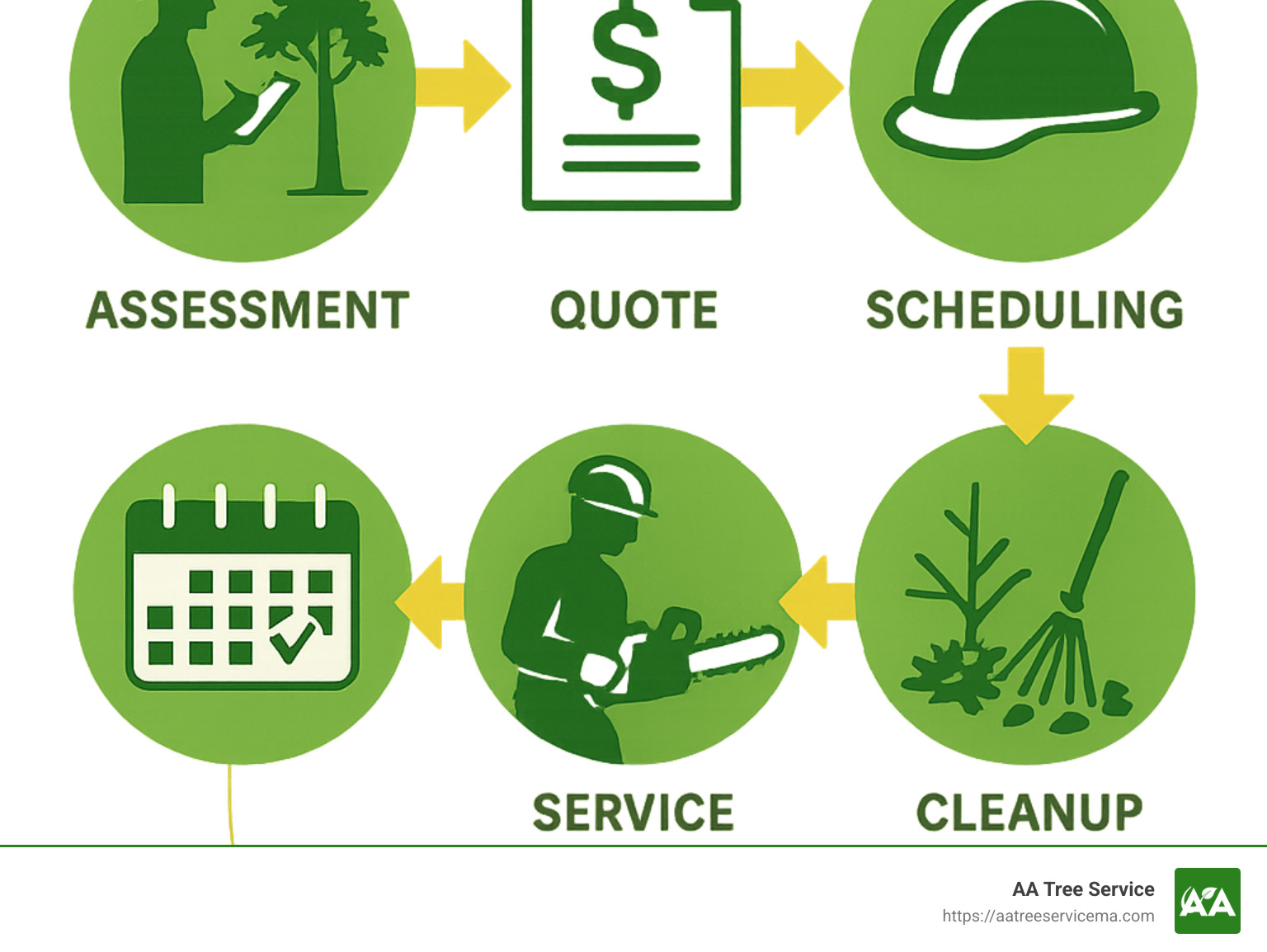
Throughout this guide, we’ll walk you through everything you need to know about local tree services—from understanding different types of tree work to navigating permits and regulations specific to Massachusetts and New Hampshire. We’ll help you identify when to call the pros, what questions to ask, and how to ensure you’re getting quality service at a fair price.
For quick reference, here are some common tree service terms you might encounter:
– Local tree stump grinders – Specialists who remove tree stumps using mechanical equipment
– Local tree trimming companies – Professionals who maintain tree health and appearance through strategic cutting
– Tree removal near me – Services that safely take down and dispose of unwanted or hazardous trees
Let’s dig into the details so you can make informed decisions about caring for your property’s most valuable natural assets.
Types of Tree Work You Can Book Locally
Local tree services come in many shapes and sizes, just like the trees in our New England landscapes. At AA Tree Service, we’ve spent over two decades helping homeowners and businesses throughout Massachusetts and New Hampshire keep their trees healthy, safe, and beautiful.
Removal & Felling
Sometimes a tree simply has to go. Whether it’s dead, diseased, dangerously leaning, or just in the wrong spot, removing a tree is serious business that demands professional attention.
“Many tree removals are dangerous and complex – and mistakes can be costly,” as industry experts often remind us. This rings especially true here in New England, where our mature oaks and maples can tower over homes and power lines.
When we tackle a removal job, we’re not just cutting down a tree. We’re conducting a thorough risk assessment, planning each cut strategically, and often bringing in specialized equipment like cranes for those massive specimens. Our team focuses on protecting your home, your landscape, and everyone’s safety throughout the process.
Those magnificent large oaks that define many Massachusetts neighborhoods? They’re gorgeous, but removing one over 80 feet tall might require a crane and specialized techniques, typically costing $1,500 or more depending on accessibility. At AA Tree Service, these challenging removals are our specialty – we handle the complexity so you don’t have to worry.
Trimming & Pruning
Think of trimming and pruning as your trees’ regular health check-ups. While people often use these terms interchangeably, there are subtle differences: pruning typically focuses on tree health, while trimming often aims more at appearance and shape.
When our certified arborists approach your trees, they’re looking at everything from structural cuts that strengthen the overall framework to crown cleaning that removes dead or diseased branches. We’re not just making your trees look better – we’re helping them live longer, healthier lives.
Timing matters tremendously in the tree world. In our Massachusetts and New Hampshire climate, winter dormancy is often ideal for major pruning work on deciduous trees. The trees are resting, their structure is clearly visible without leaves, and diseases are typically dormant. Plus, the frozen ground means less impact on your lawn and garden beds.
But spring-flowering trees have different needs – they’re best pruned right after their blooms fade. And when it comes to hazardous branches? Those should never wait, regardless of season.
More info about Tree Pruning and Trimming
Stump Grinding vs. Stump Removal
After saying goodbye to a tree, you’re left with a decision: what to do with that stubborn stump? We offer two main approaches.
Stump grinding is our most popular option, and for good reason. Our powerful machines chew the stump down to about 20 inches below ground level, effectively eliminating the visible portion while leaving the deeper roots to decompose naturally over time. It’s less disruptive to your landscape, more affordable, and allows you to reclaim that space for lawn or garden beds relatively quickly.
Complete stump removal, on the other hand, is a more intensive process where we extract the entire stump and major root system. While this creates a totally clean slate for new construction or landscaping, it’s also more disruptive and typically costs more.
“An old rotting stump becomes a home for damaging pests like termites or carpenter ants,” which is why addressing stumps promptly protects not just your landscape but potentially your home as well. Our equipment can handle stumps of all sizes, from dainty ornamentals to centuries-old giants.
More info about Stump Grinding
Emergency & Storm Response
New England weather doesn’t always play nice with our trees. From winter nor’easters to summer thunderstorms, when nature strikes, our 24/7 emergency crews are ready to respond.
When storms leave fallen limbs on your property or dangerous hanging branches (what we call “widowmakers”), quick action is essential. Our emergency response teams arrive promptly to assess hazards, safely remove damaged trees and limbs, and document everything thoroughly for your insurance claims.
We’ve seen it all – trees through roofs, across driveways, tangled in power lines. In these stressful situations, having professionals who know exactly how to safely handle the chaos makes all the difference. We coordinate with utility companies when necessary and leave your property clean and safe again.
If a neighbor’s tree falls on your property during a storm, don’t panic. Take plenty of photos for documentation, contact your homeowner’s insurance, and call us for prompt removal. We’ll help you steer this challenging situation with minimal stress.
More info about Emergency Tree Removal Service
Plant Health & Preventive Care
The healthiest trees are the ones that receive regular care before problems develop. Just like preventive healthcare for humans, proactive tree maintenance saves money and heartache in the long run.
Our plant health care programs include specialized fertilizers custom to your soil conditions, regular pest scouting to catch issues early, proper mulching techniques that benefit your trees without harming them, and professional ISA inspections that spot potential problems before they become serious.
Healthy trees are remarkably resilient against pests, diseases, and even storm damage. Proper mulching (not those “mulch volcanoes” piled against the trunk!) insulates roots from temperature extremes, retains moisture, and improves soil health. Regular inspections catch early signs of trouble that the untrained eye might miss.
For a seasonal approach to tree health, follow this excellent summer tree care checklist and consider scheduling regular check-ups with our certified arborists. Just like your own health, an ounce of prevention truly is worth a pound of cure when it comes to your valuable trees.
How Much Do Tree Services Cost in MA & NH?
When it comes to budgeting for local tree services, knowing what factors influence pricing helps you recognize fair quotes and avoid surprises. Let’s explore what you can expect to pay in Massachusetts and New Hampshire for professional tree care.
Average Cost for local tree services
Tree care is an investment in your property’s safety and value. Here’s what homeowners in Massachusetts and New Hampshire typically pay for common services, based on industry data:
| Service | Average Cost Range | Primary Cost Factors |
|---|---|---|
| Tree Trimming | $75-$1,000 | Tree height, complexity, accessibility |
| Tree Removal | $200-$2,000 | Size, location, complexity, equipment needed |
| Large Tree Removal (80+ ft) | $1,500-$4,500 | Size, equipment requirements, risk factors |
| Fallen Tree Removal | $100-$500 | Size, location, cleanup requirements |
| Stump Grinding | $100-$400 | Stump diameter, accessibility, depth |
| Emergency Services | Add 25-50% | Urgency, time of day, risk factors |
These figures represent industry averages gathered from internet data, not actual costs for AA Tree Service. Your specific situation might fall above or below these ranges depending on several factors we’ll explore next.
Factors That Raise or Lower Your Bill
Ever wonder why your neighbor paid half what you were quoted? Tree work isn’t one-size-fits-all, and several key elements can dramatically shift your final cost.
The tree itself plays the starring role in pricing. Those magnificent 80-foot oaks that provide wonderful shade also require more time, equipment, and expertise to work on safely than a 20-foot ornamental. Tree diameter matters too—a thick trunk means more cutting time and generates more debris for disposal. And tree species makes a difference; hardwoods like oak and maple are denser and more challenging to cut than softer species like pine.
Location, location, location isn’t just a real estate mantra—it applies to tree work too. That tree hanging over your garage? It’ll cost more than one in an open yard because it requires more precise cutting techniques and safety measures. Limited access might require specialized equipment, while sloped terrain increases complexity and worker fatigue.
The equipment needed can significantly impact your bill. When a crane becomes necessary for safely removing a large tree near structures, you might see an additional $500-$1,000 added to your quote. Proximity to power lines often requires coordination with utility companies and specialized safety protocols.
Timing and urgency also affect pricing. Just like plumbers charge more for midnight emergencies, tree companies typically add 25-50% for after-hours or emergency service. After major storms, when demand spikes, prices often reflect the urgent need for skilled professionals.
A real-world example? Removing a medium-sized hackberry tree with roots threatening your foundation might run around $1,500, including specialized rope techniques, property protection, cutting the tree into manageable sections, and complete stump removal.
At AA Tree Service, we believe in transparent pricing. Our estimates clearly outline all costs involved in your specific project, with no hidden fees or surprises. We’re committed to delivering exceptional value while maintaining the highest standards of safety and quality throughout Massachusetts and New Hampshire.
Permits, Regulations & Best Timing in New England
When it comes to local tree services in Massachusetts and New Hampshire, understanding the rules of the game makes all the difference. Our region’s trees aren’t just beautiful—they’re often protected by a patchwork of local regulations that vary from town to town.
Do You Need a Permit to Cut?
That tree in your yard might feel like it’s entirely yours to manage, but the reality is a bit more nuanced. In Massachusetts, many communities have dedicated tree wardens who serve as guardians of our leafy friends, particularly those along streets and in public spaces.
If you live near water in either state, your tree work likely falls under additional scrutiny. The Massachusetts Wetlands Protection Act creates special protections for trees near wetlands and waterways, while New Hampshire’s Comprehensive Shoreland Protection Act serves a similar purpose. These aren’t just bureaucratic hoops—they’re important safeguards for our watersheds and wildlife habitats.
Historic districts add another layer of consideration. That old maple might be part of your property’s historic character, and removing it could require special permission. In cities like Boston, Cambridge, or Portsmouth, even trees on private property often need permits if they’re over a certain size.
The good news? At AA Tree Service, we’ve steerd these waters for decades. We know which towns require tree-cutting warrants, which conservation commissions need to be consulted, and how to prepare applications that get approved without unnecessary delays. We handle the paperwork so you don’t have to become an expert in municipal forestry bylaws overnight.
Best Season to Schedule Work
Timing isn’t just about convenience—it can affect your tree’s health and your wallet. In New England, each season offers different advantages for tree work:
Winter dormancy (December-March) is often the sweet spot for major pruning and removal. The trees are sleeping, diseases are less active, and frozen ground means heavy equipment won’t tear up your lawn. Plus, without leaves in the way, arborists can better see the tree’s structure and make more precise cuts. The Morton Arboretum data shows that winter pruning gives trees an extended healing period before spring, when they need energy for new growth.
Spring awakening (April-May) brings special considerations. It’s perfect for pruning spring-flowering trees right after they bloom. However, oak trees should be left alone during oak wilt season (April-July) to prevent this deadly disease. Spring is also ideal for fertilization and health treatments as trees enter their growth phase.
Summer months (June-August) are better for light maintenance and health assessments. You can easily spot dead branches when they’re not producing leaves alongside healthy ones. However, heavy pruning during summer drought can stress trees, so we typically recommend minimal cutting during hot, dry periods.
Fall preparation (September-November) is tricky. While it seems logical to prune before winter, late fall cuts can sometimes stimulate new growth that won’t have time to harden before frost. Instead, fall is perfect for planting new trees and conducting pre-winter hazard assessments.
Of course, if a tree poses an immediate safety hazard, the best time is always “right now,” regardless of season. Safety trumps timing every time.
What If a Neighbor’s Tree Crosses the Line?
Few neighborhood tensions run higher than tree disputes. When branches hang over your property line or roots threaten your foundation, knowing your rights helps everyone stay neighborly.
In both Massachusetts and New Hampshire, the general rule is that you can trim branches that cross onto your property, but only up to the property line. Think of it as an invisible wall extending upward from your boundary—you can trim what’s on your side, but you can’t reach over and cut branches on their side. Also, your trimming can’t substantially harm the tree’s health or structure.
Tree ownership gets more complex when the trunk straddles the property line. These “boundary trees” typically have shared ownership, meaning neither neighbor can remove them without the other’s consent. Courts in both states have upheld this principle in numerous cases.
When it comes to fallen trees, the rules change depending on the tree’s condition before it fell. If a healthy tree topples during a storm (an “Act of God”), the owner of the property where it lands generally handles removal and damages. However, if your neighbor knew their tree was dead or dangerous and did nothing, they might be liable for damages when it falls.
Root issues are particularly thorny. While you can trim roots on your property, doing so recklessly could kill the tree and leave you liable for its value. For significant root problems, professional assessment is always worth the investment.
The best approach? Have a friendly chat with your neighbor before firing up the chainsaw. At AA Tree Service, we often serve as neutral third-party experts who can help neighbors reach reasonable solutions without involving attorneys. A professional assessment can save relationships and prevent costly legal battles that nobody wins.
Choosing Reputable local tree services
Finding the right tree service provider in Massachusetts and New Hampshire isn’t just about getting the job done—it’s about ensuring your property and trees receive the care they deserve. With so many options available, knowing what to look for can make all the difference between a stressful experience and a smooth, professional job.
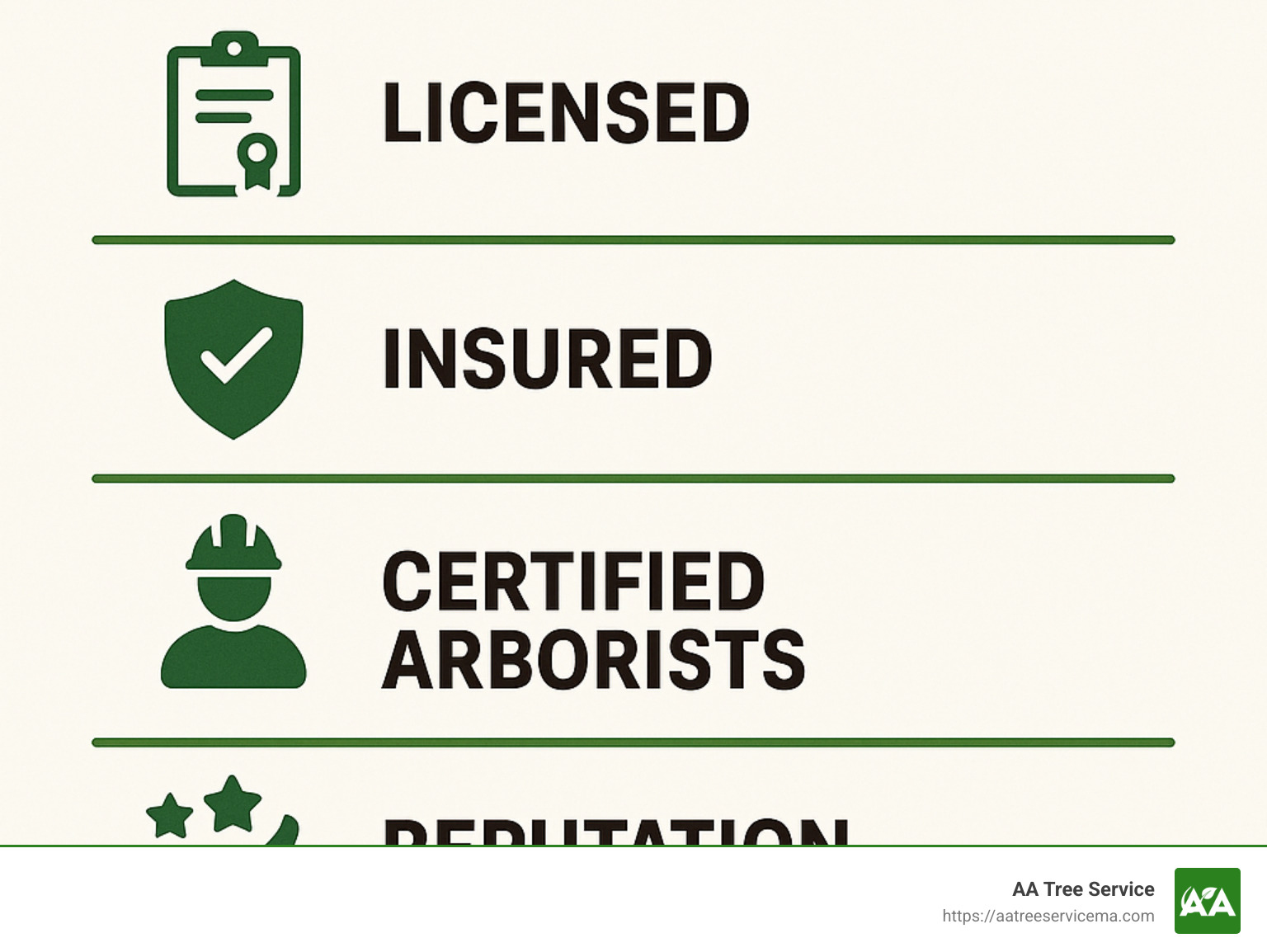
Benefits of Hiring Certified Arborists for local tree services
When it comes to caring for your trees, certified arborists bring a level of expertise that makes a world of difference. These professionals have earned their International Society of Arboriculture (ISA) certification through rigorous training and testing, demonstrating their commitment to the highest standards in tree care.
Think of certified arborists as the doctors for your trees. They can identify exactly what species you have and understand its unique needs, just like a physician would for a patient. This expert knowledge means they can accurately diagnose diseases and pest problems before they become severe, potentially saving beloved trees that might otherwise be lost.
Risk management is another crucial benefit of working with certified professionals. These experts can spot potential hazards that untrained eyes might miss—that seemingly healthy branch that’s actually structurally weak, or the subtle signs of root instability that could lead to a tree falling. This foresight helps protect your home, family, and property from unexpected damage.
Long-term tree health benefits tremendously from professional care. Certified arborists understand proper pruning techniques that promote structural integrity rather than weakening trees. They know exactly when and how to prune different species for optimal health, and can recommend the right soil treatments to help your trees thrive for generations.
“ISA Certified Arborists are recognized for their advanced skills and commitment to safety, expertise, and professionalism,” which means you’re not just getting a tree service—you’re investing in proper care that improves your property’s beauty, safety, and value.
Safety Standards Pros Must Follow
Tree work is inherently dangerous—professionals are working at heights with powerful equipment and unpredictable natural elements. That’s why reputable local tree services adhere to strict safety protocols that protect everyone involved.
Professional tree crews should always be decked out in proper safety gear. This includes helmets with face shields and hearing protection, cut-resistant chaps that can stop a chainsaw instantly, safety glasses to protect against flying debris, and appropriate footwear with ankle support and traction for climbing and navigating uneven terrain.
Behind the scenes, quality companies maintain rigorous equipment safety practices. Their tools and machinery undergo regular inspection and maintenance to prevent failures. Every crew member receives thorough training before operating equipment, and companies implement backup safety systems to prevent accidents.
When you see a professional crew setting up, you’ll notice they establish clear work zones with proper signage and barriers. This isn’t just for show—it’s part of the comprehensive safety approach outlined in the ANSI Z133 Safety Standards that guide the industry. Teams also maintain constant communication between ground workers and climbers, coordinating movements to prevent accidents.
Insurance coverage is perhaps the most overlooked aspect of safety, but it’s absolutely essential. Reputable companies carry comprehensive liability insurance (at least $1 million), workers’ compensation for all employees, and coverage for potential property damage. Always ask to see current certificates of insurance—legitimate companies will be happy to provide them.
As the old industry saying goes, “Safety Above All Else” should guide every aspect of tree work. When evaluating companies, their safety practices tell you volumes about their professionalism and the care they’ll take with your property.
Getting Quotes & Comparing Pros
Finding the right local tree services provider starts with gathering and evaluating quotes—but not all estimates are created equal. The process should involve much more than just getting a price.
The best companies always perform thorough on-site assessments. When an arborist visits your property, they should take time to examine not just the tree in question, but the surrounding area, soil conditions, and potential obstacles. They should ask about your goals and concerns, and explain their recommended approach in terms you can understand.
A quality estimate will always be provided in writing and should include a detailed description of the work to be performed, itemized costs for each service component, a timeline for completion, and clear information about cleanup and debris handling. If you’re getting vague estimates with just a bottom-line price, that’s a red flag.
Look for transparency about credentials and insurance. Reputable companies will openly share their insurance certificates, licensing information, and professional certifications. They’ll explain what equipment they’ll use and how many crew members will be on site.
Be wary of companies with prices significantly lower than other estimates—this often indicates corners being cut, whether in insurance coverage, equipment quality, or worker training. Also watch out for high-pressure sales tactics, door-to-door solicitations (especially after storms), or demands for immediate decisions or cash payments.
When comparing quotes, the lowest price rarely equals the best value. Consider the company’s expertise, equipment quality, safety practices, and customer service reputation alongside their pricing. A slightly higher estimate from a well-established, properly insured company with certified arborists will likely save you money and headaches in the long run.
At AA Tree Service, we believe in educating our customers through the estimation process, providing detailed information so you can make confident decisions about your trees and property.
More info about Certified Arborist Tree Service Near Me
Frequently Asked Questions about local tree services
What happens to debris and stumps after removal?
One of the most common questions we hear after completing a tree removal is “what happens to all this wood?” It’s a great question – after all, a mature tree can create an impressive amount of material!
Professional local tree services typically offer several flexible options for handling debris. At AA Tree Service, we always discuss these choices with you beforehand so there are no surprises.
For the wood itself, you can choose complete removal where we haul everything away, leaving your property clean and clear. Many homeowners prefer having trunk sections cut to firewood length and neatly stacked on-site – perfect if you enjoy cozy winter fires! We can also process smaller branches through our wood chipper to create useful mulch for your garden beds. Some clients even request larger log sections be left for landscaping features or future woodworking projects.
As for the stump, most homeowners opt for stump grinding, where we use specialized equipment to reduce the stump to about 20 inches below ground level. This allows grass to grow over the area while avoiding the extensive excavation of complete removal. If you need the entire root system gone for new construction, we also offer complete stump removal services, though this is more intensive and creates a larger disturbance to your landscape.
Whatever option you choose, we pride ourselves on leaving your property tidy and well-maintained after every job. No mess, no stress – just professional results.
When should I call after a storm?
New England weather can be unpredictable and sometimes downright destructive to our trees. Knowing when to call for professional help after a storm can prevent further damage and keep your family safe.
Call us immediately if you see any of these potentially dangerous situations:
Trees or large limbs that have fallen on your home, garage, vehicles, or power lines need urgent professional attention. The same goes for trees that are noticeably leaning or have partially uprooted – these can fall without warning. Those large broken limbs hanging precariously in the canopy (what arborists grimly call “widow-makers”) are accidents waiting to happen and should be removed promptly. And of course, any tree blocking access to your home deserves immediate attention.
While waiting for our team to arrive, safety should be your priority. Stay well away from damaged trees, especially any touching power lines – these can be deadly. Take photos of the damage for your insurance company, but only from a safe distance. If possible, move vehicles away from threatened areas to prevent further damage.
At AA Tree Service, we take storm emergencies seriously. Our crews are available 24/7 throughout Massachusetts and New Hampshire, and we prioritize situations based on safety risk. We can even work directly with your insurance company to make the claims process smoother during an already stressful time.
How can I keep my trees healthy year-round?
Trees need different care throughout the seasons, especially in our challenging New England climate. A year-round approach to tree care will help keep your landscape looking its best while preventing costly problems.
In spring, it’s time to inspect for winter damage and address any issues. This is when we recommend applying slow-release fertilizer (if soil tests indicate it’s needed) and adjusting any support systems for younger or vulnerable trees. Early spring is also when we begin monitoring for the season’s first pests and diseases.
During summer, your trees may need supplemental water during dry spells – aim for about an inch of water weekly for established trees, more for recent plantings. Proper mulching (2-4 inches deep, kept away from the trunk) helps retain moisture and regulate soil temperature. Summer is also when we watch closely for signs of stress or insect problems, addressing them before they become serious.
Fall is perfect for planting new trees, giving roots time to establish before winter’s freeze. Continue watering until the ground freezes, and avoid major pruning that might stimulate vulnerable new growth before winter. While it’s good to remove leaves from your lawn, leaving some in garden beds actually benefits beneficial insects.
Winter dormancy makes this the ideal time for structural pruning of deciduous trees. It’s also when young trees may need protection from hungry wildlife. After heavy snowfall, gently brush excess snow from branches to prevent breakage.
“Regular pruning supports healthy growth by redirecting energy to larger branches,” as experienced arborists know, while proper mulching “insulates soil against temperature extremes, retains moisture, suppresses weeds, prevents compaction, and reduces mower damage.”
At AA Tree Service, we’re passionate about helping Massachusetts and New Hampshire homeowners develop customized tree care plans that address their specific landscape needs through all four seasons. Our certified arborists can provide the expert guidance that keeps your trees healthy, beautiful, and safe year after year.
Conclusion
Proper tree care is an investment in your property’s safety, value, and beauty. Throughout Massachusetts and New Hampshire, homeowners and businesses rely on professional local tree services to maintain healthy trees and address hazards promptly.
At AA Tree Service, we bring over 20 years of experience to every project, large or small. Our team of certified arborists understands New England’s unique tree species, soil conditions, and weather challenges. We’re proud to serve communities throughout Massachusetts and New Hampshire with comprehensive tree care solutions.
When you choose us for your tree care needs, you’re not just hiring a service provider – you’re partnering with tree care experts who genuinely care about the health of your landscape and the safety of your property. We take the time to listen to your concerns, explain our recommendations, and deliver results that exceed expectations.
Our commitment to excellence includes 24/7 emergency response when storms strike, free same-day quotes for all services, and certified arborists supervising every project from start to finish. We invest in state-of-the-art equipment to ensure safety and efficiency, while our teams are trained to provide thorough cleanup that leaves your property looking better than when we arrived.
For your peace of mind, we maintain comprehensive insurance coverage that protects both our workers and your property. We’re happy to provide verification of our credentials before any work begins.
Whether you need routine pruning to maintain your property’s beauty, hazardous tree removal to protect your home, stump grinding to reclaim your yard space, or emergency storm response after a fierce New England nor’easter, we’re here to help with professional service and fair pricing.
We’ve built our reputation one satisfied customer at a time, and we’d love the opportunity to show you the difference that expertise, dedication, and customer focus can make in your tree care experience. Your trees deserve the best care possible – and so do you.
Contact AA Tree Service today for a free consultation and find why so many of your neighbors trust us with their valuable trees year after year.