Why Landscaping Tree Removal Can Transform Your Property
Landscaping tree removal is more than just cutting down a tree; it’s a strategic and professional service designed to safely and efficiently remove trees that are problematic, hazardous, or simply no longer fit your property’s aesthetic or functional goals. This process can fundamentally transform your outdoor space, turning a liability into an asset. For homeowners in Massachusetts and New Hampshire, where weather can be unpredictable and landscapes are diverse, understanding the nuances of tree removal is essential for maintaining a safe, beautiful, and valuable property.
Key Reasons for Tree Removal:
- Mitigating Safety Hazards: This is the most critical reason. Dead or dying trees are ticking time bombs, with weakened limbs that can fall unexpectedly during a storm or even on a calm day. Structurally compromised trees, whether from disease, pest infestation, or physical damage, pose a direct threat to people and property.
- Preventing Costly Property Damage: Proactive removal can save you thousands in repairs. Tree roots can aggressively invade and crack foundations, driveways, and underground utility lines. Overhanging branches can scrape against your roof, wearing away shingles, or fall and cause significant structural damage. Trees located too close to power lines are a major hazard, risking power outages and fires.
- Enabling Landscaping and Garden Enhancements: Sometimes a healthy tree is simply in the wrong place. Removing a large tree can open up your yard to much-needed sunlight, allowing your lawn, garden, or other plants to thrive. It can also unlock stunning views that were previously obscured, or create a more open, balanced, and usable outdoor living area.
- Clearing for Construction and Renovation: Ambitious home improvement projects like building a new deck, installing a swimming pool, or adding an extension to your home often require a clear and stable site. Professional landscaping tree removal is a necessary first step to prepare the land for these exciting new developments.
What to Expect from a Professional Service:
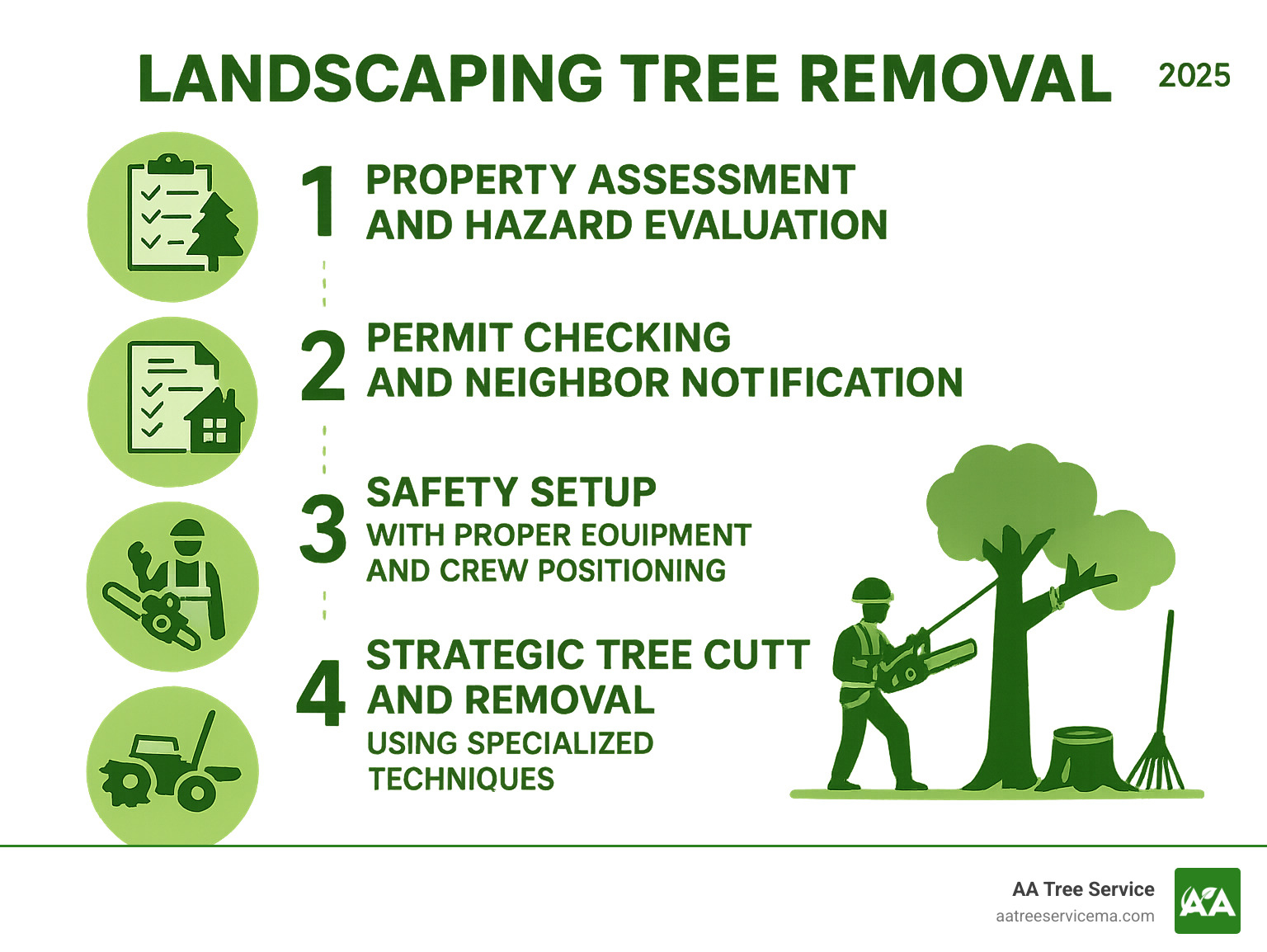
- Comprehensive Professional Assessment: The process begins with a thorough evaluation by a certified arborist who will assess the tree’s health, structural integrity, and the surrounding environment. This leads to a detailed, transparent, and free quote outlining the scope of work.
- Licensed, Insured, and Equipped Crews: You can expect a team of trained professionals who are fully licensed and insured, protecting you from any liability. They will arrive with state-of-the-art equipment, from chainsaws and rigging to cranes and wood chippers, all designed for safe and efficient work.
- Strategic and Safe Removal: Professionals use proven techniques to dismantle the tree in a controlled manner, minimizing any impact on your lawn, gardens, and surrounding structures.
- Thorough Cleanup and Restoration Options: A key part of the service is leaving your property pristine. This includes chipping all branches, hauling away wood, and raking the area clean. Optional services like stump grinding are highly recommended to fully reclaim the space and prevent pest issues.
Changing an overgrown, dangerous landscape into a safe, beautiful space requires professional planning, equipment, and expertise to protect your property and family. Tree removal costs vary based on size, location, and complexity. Research shows small trees (up to 30 feet) typically cost between $350 and $700, while large trees (60 to 120 feet) can range from $1,600 to $3,700 or more. These are average costs based on internet data and not actual costs for AA Tree Service.
Understanding the process helps you make informed decisions, whether you’re facing storm damage, planning a renovation, or addressing a safety concern.
Know your landscaping tree removal terms:
When to Remove vs. When to Save: A Homeowner’s Guide
Deciding whether to remove or save a tree is a tough choice for homeowners, balancing safety, property health, and your vision for your outdoor space. We prefer to save trees when possible, as they are valuable assets that add beauty, shade, and value to your property. However, ignoring a problem tree can lead to bigger, more expensive, and potentially dangerous issues down the road. An informed decision starts with knowing what to look for.
Telltale Signs a Tree Needs Removal
Recognizing warning signs, both obvious and subtle, can prevent costly damage or injury. A careful inspection of your trees a few times a year, especially after major storms, is a wise practice.
- Dead or Dying Trees: This is the most straightforward sign. If more than 50% of the tree is damaged, showing dead branches, significant leaf loss during the growing season, or brittle bark that flakes off easily, it is often beyond saving. This indicates its vascular system is failing, making it weak, unpredictable, and a prime candidate for removal.
- Signs of Disease and Decay: Look for fungal growth, such as mushrooms or conks, sprouting from the trunk or major roots—this is a strong indicator of internal rot that is compromising the tree’s structural wood. Cankers, which are areas of dead bark that appear sunken, discolored, or have liquid seeping from them, also point to underlying disease. Large, deep cavities in the trunk or major limbs are another red flag that the tree’s structural integrity is severely weakened.
- Evidence of Pest Infestation: Small, D-shaped exit holes in the bark of an ash tree could signal a deadly Emerald Ash Borer infestation. Piles of fine sawdust at the base of a pine tree might indicate bark beetles. Extensive tunneling by carpenter ants can also weaken a tree from the inside out. If you see significant insect activity or evidence of widespread damage, the tree may be too stressed to recover and could become a hazard.
- Structural Defects and Damage: Deep cracks or splits in the trunk, especially those that extend through the bark and into the wood, are serious warning signs of potential failure. Multiple trunks that are weakly attached (known as codominant stems) can be prone to splitting apart during a storm. A sudden or progressive lean, particularly when combined with heaving soil around the base or exposed roots on one side, suggests the root system is failing and the tree could topple with little warning.
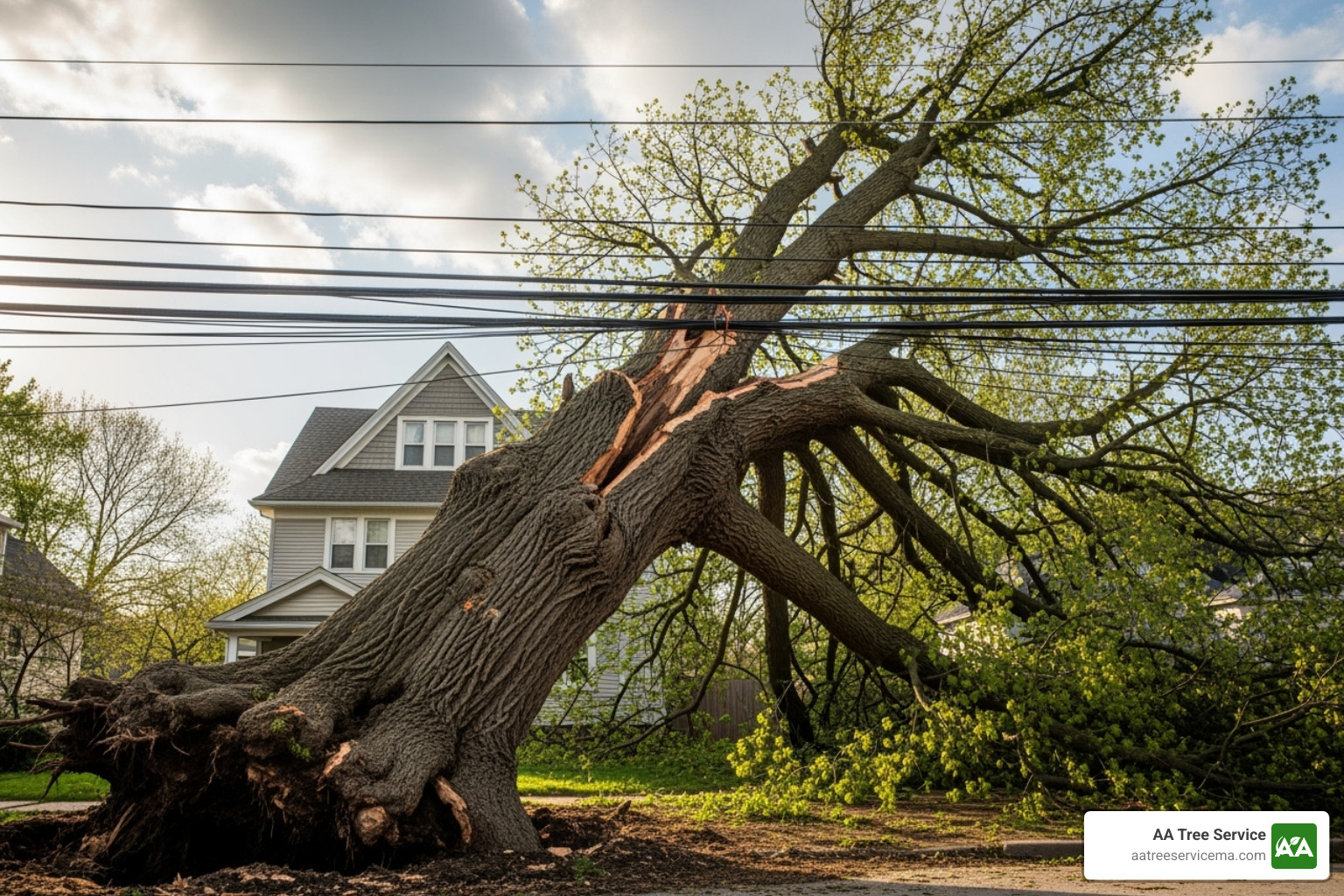
A tree with a dangerous lean toward your house, power lines, or high-traffic areas is an urgent problem that requires immediate attention. If you’re unsure about any of these signs, don’t guess. A professional Tree Hazard Assessment provides an expert evaluation and the peace of mind that comes from a definitive answer.
Proactive Reasons for Landscaping Tree Removal
Sometimes, removing a perfectly healthy tree is a smart, proactive move. Strategic landscaping tree removal can dramatically improve your property’s usability, health, and aesthetics.
- Improving Sunlight for Your Lawn and Garden: A dense canopy can create too much shade, leading to a patchy, moss-filled lawn and struggling flower beds. Strategic removal can create the perfect light conditions for a lush, green landscape.
- New Construction Projects: Before you can build that dream deck, garage, or home addition, you need a clear, level space. Removing trees is often a non-negotiable part of site preparation for construction.
- Preventing Future Root Damage: Some tree species have notoriously aggressive root systems that seek out water, often leading them directly to sewer lines, septic systems, and foundations. Removing a problematic tree before its roots cause thousands of dollars in damage is a wise financial decision.
- Enhancing Views and Reducing Overcrowding: Trees planted too close together compete for light, water, and nutrients, leading to poor health for all of them. Thinning the stand can improve the health of the remaining trees and create a more aesthetically pleasing, park-like setting. It can also open up a beautiful vista of a lake, mountain, or city skyline that you’ve been missing.
If you’re planning construction but want to keep some trees, check out our guide on Tree Preservation During Construction.
Alternatives to Removal: Can This Tree Be Saved?
Before deciding on removal, always consider the alternatives. Many trees with issues can be saved with professional care, preserving a valuable asset on your property.
- Professional Pruning and Trimming: Our Tree Trimming Services involve more than just aesthetics. An arborist can perform crown cleaning (removing dead, diseased, or weak branches), crown thinning (improving light and air circulation), and crown reduction (decreasing the tree’s size) to improve its health and reduce risk.
- Selective Removal of a Hazardous Limb: If only one large branch is posing a threat—perhaps hanging over a walkway or showing signs of decay—it can often be removed surgically, eliminating the specific risk while preserving the rest of the healthy tree.
- Cabling and Bracing: For trees with structural weaknesses, like split trunks or heavy, overextended limbs, installing steel cables in the upper canopy and braces on the lower trunk can provide the necessary support to prevent failure, allowing the tree to be safely preserved for years to come.
- Integrated Pest and Disease Management: Early detection is key. Professional treatments, including soil injections, trunk sprays, and targeted applications, can often halt the progression of many common diseases and pest infestations, giving the tree a chance to recover its health and vigor.
When in doubt, get a professional assessment. You might be surprised by what’s possible to save a tree you love.
The Professional Process of Landscaping Tree Removal
When you decide on landscaping tree removal, expertise, safety, and legal compliance are critical. Understanding the professional process reveals the immense value and protection that specialists provide. It’s a highly technical operation that requires far more than just a chainsaw and a ladder.
The Critical Importance of Safety and Equipment
Tree removal is consistently ranked as one of the most dangerous jobs in the country, and for good reason. DIY attempts are extremely risky and strongly discouraged. A seemingly small tree can weigh thousands of pounds, and professionals spend years learning tree physics and cutting techniques to control how they fall safely. Without this expertise, the risk of severe injury or catastrophic property damage is incredibly high.
- The Unseen Dangers of DIY Tree Removal: Homeowners often underestimate the forces at play. A tree’s weight is immense, and its center of gravity can be unpredictable. A wrong cut can cause the tree to fall in an unintended direction, kick back at the cutter, or split dangerously. Chainsaw injuries are severe and common among amateurs. Without proper training, you risk catastrophic damage to your home, vehicles, and utility lines, not to mention life-threatening personal injury.
- The Professional’s Edge: Training and Technique: Certified arborists and professional tree cutters undergo years of rigorous training. They understand tree biology, physics, and advanced cutting techniques like the hinge cut, which allows them to precisely control the direction of the fall. They are experts in complex rigging techniques, using an intricate system of ropes, pulleys, and friction devices to safely lower massive sections of wood to the ground without any impact on your home or landscape.
- Lifesaving Personal Protective Equipment (PPE): Professional crews never compromise on safety gear. This includes ANSI-rated hard hats to protect from falling debris, safety glasses or face shields, hearing protection against loud equipment, and specialized chainsaw-resistant chaps and boots. Every piece of PPE is a critical barrier against injury and is inspected before every job.
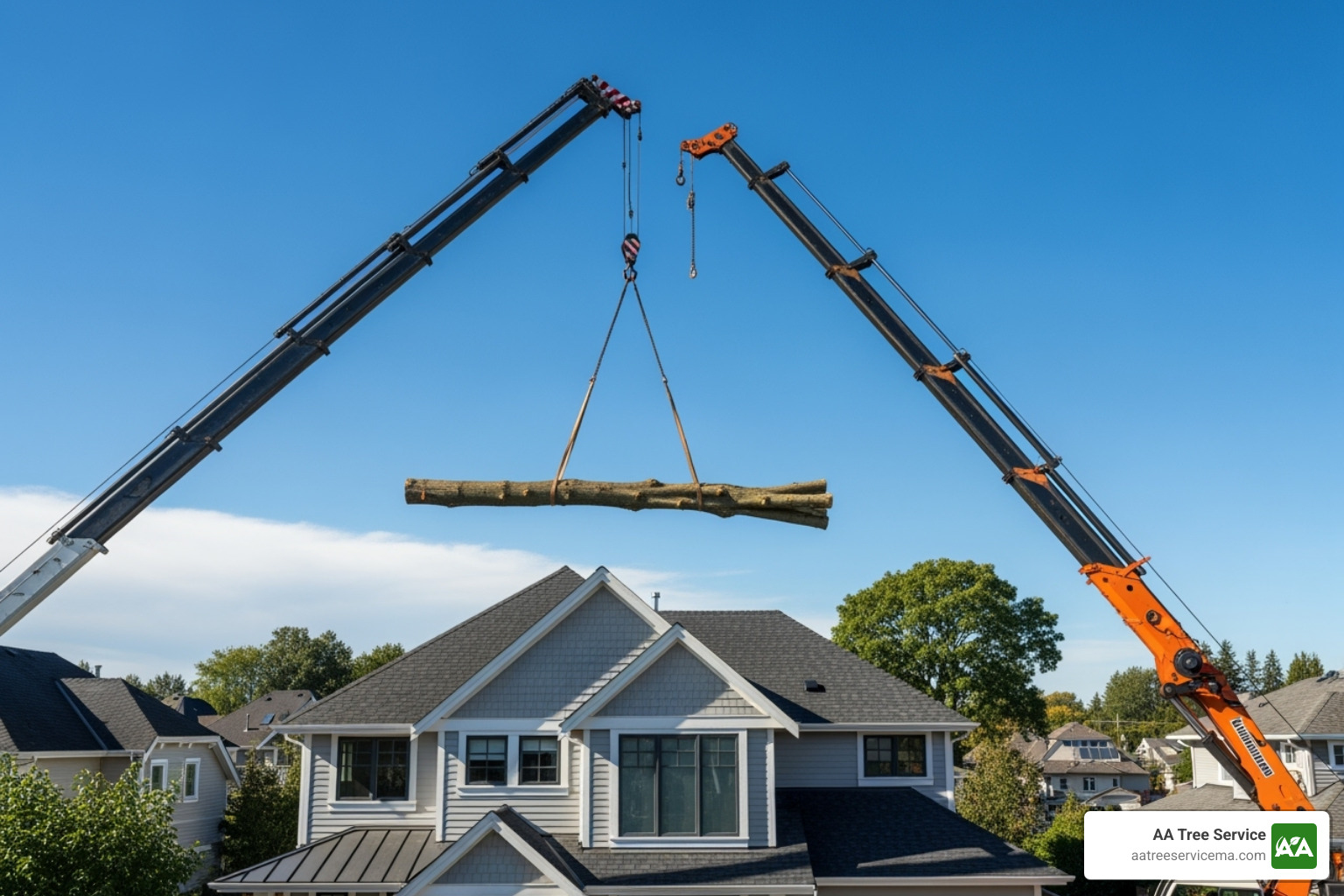
- The Right Tool for Every Job: Professional landscaping tree removal relies on more than just a chainsaw. For large or inaccessible trees, specialized equipment like aerial lifts (bucket trucks) or cranes is essential. A crane can lift enormous sections of the tree up and over your house, power lines, or prized garden beds, making an otherwise impossible job safe and efficient. High-capacity wood chippers turn a mountain of brush into manageable mulch in minutes.
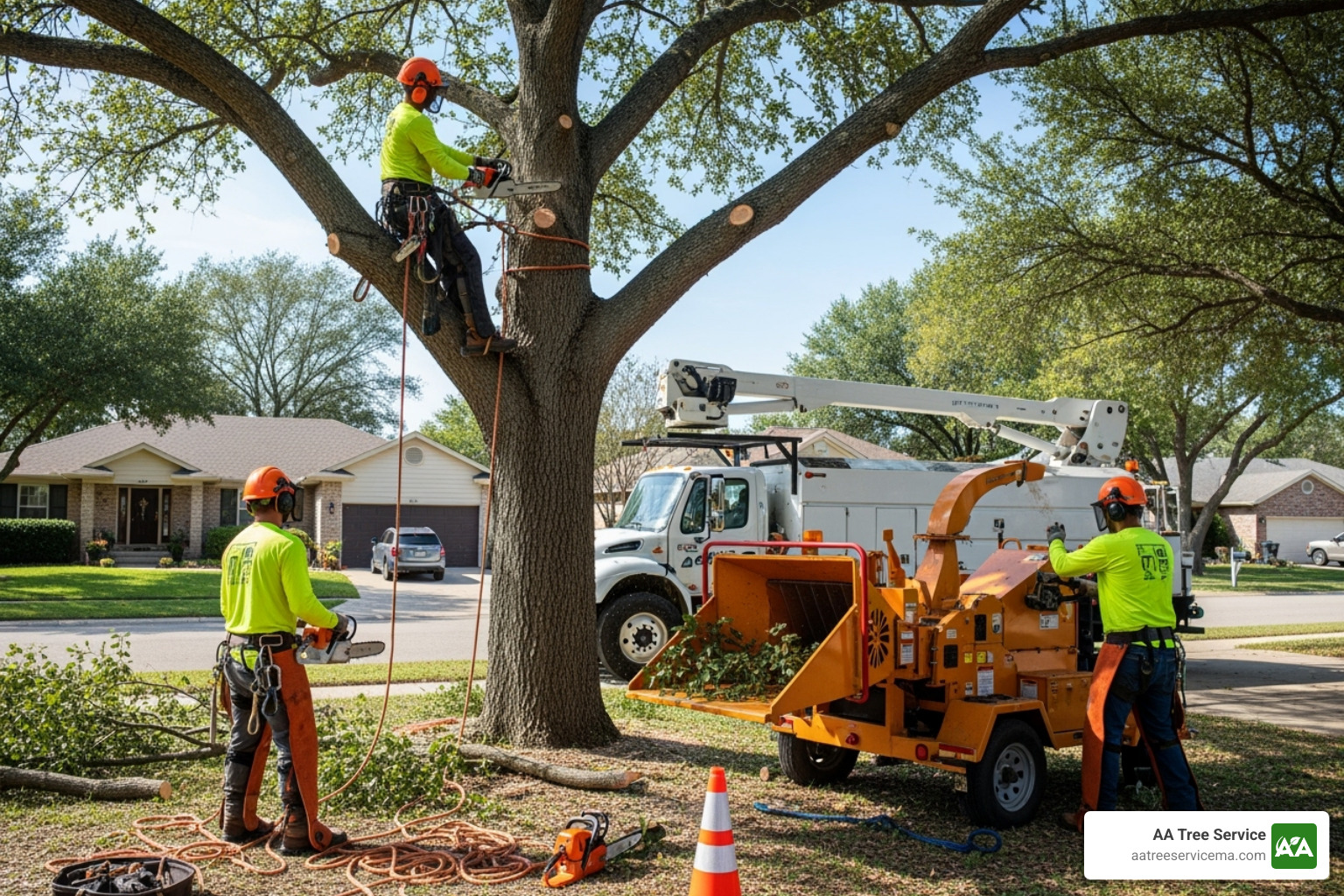
- The Ground Crew: The Unsung Heroes of Safety: The ground crew is the backbone of a safe operation. They establish and maintain a secure work zone, manage the rigging lines to guide limbs down, clear away debris to prevent tripping hazards, and maintain constant, clear communication with the climber or crane operator. Their vigilance is what ensures the entire process runs like a well-oiled machine, protecting everyone and everything in the vicinity.
We follow strict industry-recognized Safe Work Practices because these standards are built on decades of experience. Our commitment to safety protects our crew, your property, and everyone nearby.
Navigating Legal and Environmental Considerations in MA & NH
Before any landscaping tree removal begins in Massachusetts or New Hampshire, a thorough check of legal and environmental regulations is necessary to avoid hefty fines and disputes.
- Property Line Laws and Neighborly Relations: In MA and NH, laws regarding trees on property lines can be complex. If the trunk of a tree is entirely on your property, you generally have the right to remove it. However, if the trunk straddles the property line (a “boundary tree”), you legally need your neighbor’s consent for removal. Even if the tree is yours, branches overhanging a neighbor’s property can be a source of dispute. It’s always best practice to communicate with your neighbors beforehand to maintain good relations and avoid legal headaches.
- Town and City Ordinances: Don’t assume you can remove any tree on your property without checking local rules. Many municipalities require a permit to remove any tree over a certain diameter (e.g., 10 inches at chest height). Some towns have “tree replacement” policies, requiring you to plant a new tree for every one you remove. Others have seasonal restrictions to protect wildlife. Always check with your local town hall, planning board, or conservation commission before scheduling work.
- Protected or Historic Trees: Be aware of regulations protecting specific trees. A tree might be designated as “historic” or “specimen” due to its age, size, or species. Others may be protected because they are located within a wetland buffer zone, a conservation area, or along a designated scenic road. Removing such trees without the proper, often extensive, permitting process can result in substantial fines.
- Trees in Public Spaces (Right-of-Way): The strip of land between the sidewalk and the street, often called the tree belt or right-of-way, typically belongs to the municipality. Any trees in this area are public property. If such a tree is dead or hazardous, you must report it to the town’s Department of Public Works or tree warden. You cannot legally hire a private company to remove it yourself. As the example from Arlington, Massachusetts shows, towns have specific procedures for managing their public trees, and attempting to bypass them is illegal.
Your Role in a Smooth Tree Removal Project
Landscaping tree removal is a partnership. While the professionals handle the dangerous and technical work, your active involvement is crucial for ensuring a smooth, efficient, and successful project. A little preparation on your part, from vetting the right team to readying your property, protects your investment and guarantees peace of mind from start to finish.
How to Choose the Right Landscaping Tree Removal Company
Not all tree removal companies are created equal. A cheap quote can hide significant risks and hidden costs. Investing time in choosing the right team is a direct investment in the safety and integrity of your property.
- Insurance Verification: Your Financial Shield: This is the absolute first priority and is non-negotiable. A legitimate company must carry both General Liability insurance (to cover any damage to your property) and Workers’ Compensation insurance (to cover injuries to their crew). Do not just take their word for it. Ask for a certificate of insurance and call the insurance provider listed to confirm the policy is active and provides adequate coverage for tree work. Without this verification, you could be held financially liable for accidents or injuries that occur on your property.
- Credentials, Experience, and Specialization: Look for companies with a long-standing, reputable presence in your community, like our 20+ years serving MA and NH. Check for professional credentials such as certifications from the International Society of Arboriculture (ISA). An ISA Certified Arborist has passed a comprehensive exam and must maintain their certification with ongoing education, demonstrating a high level of knowledge in tree care, safety, and ethics. Ask if they specialize in the type of removal you need, such as complex crane work.
- Scrutinize Customer Reviews and References: Go beyond the curated testimonials on a company’s website. Look at independent review sites like Google, Yelp, and Angi to get an unbiased picture of their reputation. Pay close attention to comments about professionalism, punctuality, communication, site cleanup, and how they handled unexpected issues. Don’t hesitate to ask for references from recent, local jobs similar to yours.
- Demand a Detailed, Itemized Quote: A professional quote is a detailed document, not a number scribbled on a business card or sent in a text. It should clearly break down the costs and specify exactly what is included: the removal of the tree itself, chipping of all brush, cutting the trunk into manageable logs (and whether they will be hauled away or left), and the separate, itemized price for optional services like stump grinding and topsoil/seeding. This prevents misunderstandings and surprise charges later.
- Inquire About Safety Culture and Records: A company that prioritizes safety will be proud to talk about it. Ask them directly about their safety protocols, regular team safety meetings, and their accident record. Their willingness and ability to discuss these topics openly is a strong indicator of their professionalism and commitment to protecting their workers and your property.
At About AA Tree Service, we believe transparency builds trust and are always happy to provide our insurance documentation and discuss our extensive experience and unwavering commitment to safety.
Preparing Your Property for Removal Day
Once you’ve chosen your team, a few simple preparations can make the job significantly easier, safer, and more efficient for the crew.
- Clear the Work Zone and Access Paths: The crew will need a clear path for themselves and their equipment. Move all vehicles from the driveway and the street in front of your house. Relocate patio furniture, grills, potted plants, bird feeders, and any other decorative items from the area around the tree. This prevents accidental damage and eliminates tripping hazards.
- Ensure the Safety of Pets and Family: For their own safety and to prevent any distraction to the crew, keep all pets securely indoors for the entire duration of the job. Inform your family, especially children, about the work schedule and establish a strict “no-go” zone around the tree and all equipment.
- Communicate with Your Neighbors: A professional landscaping tree removal project involves loud equipment like chainsaws, chippers, and possibly cranes. Giving your neighbors a friendly heads-up is a simple courtesy that can prevent complaints and maintain good relationships. Let them know when the work will start and roughly how long it will take.
- Pre-Work Walk-Through with the Crew Leader: Before the first cut is made, walk the property with the foreman or crew leader. This is your final opportunity to confirm the scope of work, point out the exact tree(s) to be removed, and identify any fragile or hidden elements on your property, such as sprinkler heads, landscape lighting, invisible dog fences, or the precise location of your septic tank and leach field.
After the Cut: Landscape Restoration and Aftercare
After the tree is safely on the ground, the project shifts to restoring your landscape and planning for the future.
- The Importance of Stump Grinding: We highly recommend stump grinding. Leaving a stump is not just unsightly; it’s a hazard. Stumps can be difficult to mow around, pose a tripping risk, and can attract pests like termites, carpenter ants, and bees as they decay. Grinding mechanically shreds the stump and major roots down to well below ground level, allowing you to immediately reclaim the area for lawn, a garden bed, or new planting.
- Restoring the Ground: After grinding, you’ll have a pile of wood chips mixed with soil. This can be used as natural mulch in other garden beds or hauled away. To grow grass in the spot, you’ll need to remove the bulk of the chips, fill the shallow hole with fresh, high-quality topsoil, and then apply grass seed that matches the rest of your lawn. Proper watering is crucial for establishing the new grass.
- Consider a Replacement Tree: The removal of one tree opens up an opportunity for a new one. Consider planting a new tree that is better suited to the location in terms of its mature size, growth habit, and maintenance needs. Our Tree Planting Services can help you select and properly install a species that will enhance your property for years to come without creating future problems.
- Complete Site Cleanup: The job isn’t finished until your property is clean. A hallmark of professional landscaping tree removal is a thorough final cleanup. The crew will use rakes and blowers to remove all sawdust, twigs, and small debris from your lawn, driveway, and walkways, leaving your property looking as good as, or better than, when they arrived.
For larger projects, our Land Clearing Services can prepare your entire property for its next chapter.
Understanding the Costs and Common Questions
When considering landscaping tree removal, the cost is understandably a major question for homeowners. Pricing isn’t a simple, one-size-fits-all number, as every tree and property presents a unique set of challenges and requirements. We’ll break down the key pricing factors in detail so you can understand your quote and budget confidently for your project.
What Factors Influence Tree Removal Costs?
Several interconnected factors influence the final cost of a landscaping tree removal project. A professional quote will carefully consider each of these variables.
- Tree Size (Height and Diameter): This is the primary driver of cost. A tall, sprawling tree requires significantly more time, more complex rigging, a larger crew, and potentially more expensive equipment to dismantle safely compared to a small, ornamental tree. The diameter of the trunk also matters, as thicker wood takes longer to cut and is much heavier to handle and haul.
- The Tree’s Condition and Health: A healthy, strong tree is generally predictable. A dead, decaying, or storm-damaged tree is not. It may have brittle branches (“widow-makers”) that can snap unexpectedly or a compromised trunk that requires extreme care and specialized cutting techniques to fell safely. This increased risk and complexity translate directly to a higher cost.
- Location and Accessibility: Where the tree is located on your property is a major factor. A tree in an open front yard with easy access for a bucket truck and chipper will be significantly less expensive to remove than the exact same tree situated in a tight, fenced-in backyard with no vehicle access. Poor access may mean the crew has to manually carry every piece of wood to the street, dramatically increasing labor time and cost.
- Proximity to Hazards and Structures: This is a critical pricing variable that speaks to the risk involved. If a tree’s branches hang directly over your house, a neighbor’s property, a swimming pool, or delicate landscaping, the job requires surgical precision. Crews must use advanced rigging or a crane to ensure no damage occurs. Trees entangled in power lines are especially complex and dangerous, requiring coordination with the utility company and adding to the overall cost.
What is the Average Cost of Tree Removal?
Based on industry data from across the internet, landscaping tree removal costs can vary dramatically. These figures provide a general ballpark, but a custom quote is the only way to get an accurate price.
- Small Trees (under 30 feet): For smaller trees like Japanese Maples or Dogwoods, you might expect costs to range from $350 to $1,500. The lower end of this range would be for a simple removal in an open area, while the higher end would account for a more difficult location, poor condition, or limited access.
- Medium Trees (30 to 60 feet): Trees like a mature Birch or a mid-sized Maple often fall in this category. Costs can range from approximately $700 to $2,000. Factors like the number of large limbs, the spread of the canopy, and proximity to your home will influence the final price.
- Large Trees (60 to 120+ feet): For massive, mature trees like Oaks, Pines, or Sycamores, the cost reflects the significant risk, time, and resources required. Prices typically start around $1,600 and can easily exceed $5,000. Removals requiring a large crane for an entire day can push the cost even higher.
- Emergency Tree Removal: When a tree has already fallen on your house or is an imminent threat after a storm, expect to pay a premium. Emergency Tree Removal services often involve after-hours or weekend call-outs, hazardous working conditions, and the need for immediate mobilization, all of which increase the cost.
- Cost of Additional Services: The base price is typically for removal only. Be sure to clarify what’s included in your quote. Stump grinding usually adds $150 to $400+ per stump, depending on its size and accessibility. Hauling away all the wood may cost extra, as some companies price for leaving it onsite for your use as firewood. Thorough cleanup should be standard, but confirm this is itemized.
These are average costs based on internet data and not actual costs for AA Tree Service. Every situation is different, which is why we provide free, same-day quotes custom specifically to your tree and your property.
What’s the Best Time of Year for Tree Removal?
While we perform landscaping tree removal year-round to meet our clients’ needs, the dormant season often offers distinct advantages for non-emergency work.
- The Dormant Season Advantage (Fall and Winter): For non-emergency removals, the dormant season is often the ideal time. In fall and winter, deciduous trees have no leaves, which means less volume of debris to chip and clean up, and it provides a clearer view of the tree’s structure for the arborist to plan cuts. The frozen ground in New England winters can be a major benefit, as it provides a solid surface that can better support heavy equipment and protect your lawn and the underlying root systems of other plants from compaction and damage.
- The Growing Season (Spring and Summer): While removal can certainly happen in spring and summer, there are a few considerations. The ground is softer and more susceptible to ruts and damage from equipment. It can also be more disruptive to nesting birds and other wildlife, which some local ordinances may restrict. However, assessing a tree’s health can sometimes be easier when it’s in full leaf, as dead sections stand out clearly against the green canopy.
- Emergency Removals: Any Time is the Right Time: It’s crucial to understand that emergency removal waits for no season. A tree that is leaning dangerously, has a large split trunk, or has been damaged in a storm poses an immediate threat to safety and property. These situations require urgent action, regardless of whether it’s a snowy day in January or a hot afternoon in July. As our Storm Damage Tree Care Tips highlight, safety must always be the top priority. Our crews are equipped and ready to handle your tree removal needs safely and efficiently year-round, adapting to New England’s ever-changing weather.
Conclusion: Reclaim Your Landscape with Confidence
Deciding on landscaping tree removal is a significant decision for any homeowner, but it doesn’t have to be an overwhelming one. Throughout this guide, we’ve aimed to demystify the process, empowering you to make a confident and informed choice for your property. The most important principle to remember is that a professional assessment and a commitment to safety must always come first. Understanding the critical difference between a tree that can be saved through expert care and one that must be removed is the foundation of responsible property management, protecting your home, your family, and your financial investment.
We have explored the many facets of professional tree removal in Massachusetts and New Hampshire, from identifying the telltale signs of a hazardous tree to navigating the complex legal and environmental regulations that govern this work. The true value of professional service is not merely in the physical act of cutting down a tree, but in the expertise, precision, and peace of mind that comes with it.
This includes meticulous planning, the use of specialized equipment, adherence to strict industry safety standards, and the expert handling of local ordinances and neighborly considerations. Your role as a prepared homeowner is also vital; by choosing a properly insured company, preparing your property for the work, and planning for the landscape’s restoration, you become an active partner in the project’s success.
While the costs—which can range from $350 for a simple job to over $5,000 for a complex, large-scale removal—may seem substantial, they are a direct reflection of the skill, risk, and heavy equipment required to do the job safely and correctly. Investing in a qualified professional is an investment in preventing costly property damage and ensuring the safety of everyone involved. Remember, these are industry averages based on internet data, not a quote from AA Tree Service. We believe in transparent, personalized pricing, which is why we provide custom quotes tailored to the unique circumstances of your tree and property.
The transformation that follows a strategic landscaping tree removal is often remarkable. An overgrown, shaded, or hazardous yard can become a safe, bright, and functional space that enhances your home’s curb appeal and your family’s quality of life. We take pride in helping homeowners reclaim their outdoor spaces, creating open, inviting landscapes where they can relax and play with complete confidence.
For over 20 years, AA Tree Service has been the trusted partner for homeowners across Massachusetts and New Hampshire, offering expert tree care, 24/7 emergency response, and free, same-day quotes. We know that tree problems don’t operate on a 9-to-5 schedule, and our commitment to our clients means that we don’t either.
Don’t let a problematic tree be a source of constant worry. Whether you are recovering from storm damage, planning a major home renovation, or simply wish to improve the health and beauty of your landscape, professional guidance is your most valuable tool. Take the first step toward a safer, more beautiful property today.
Get a Professional Quote for Your Tree Removal Project