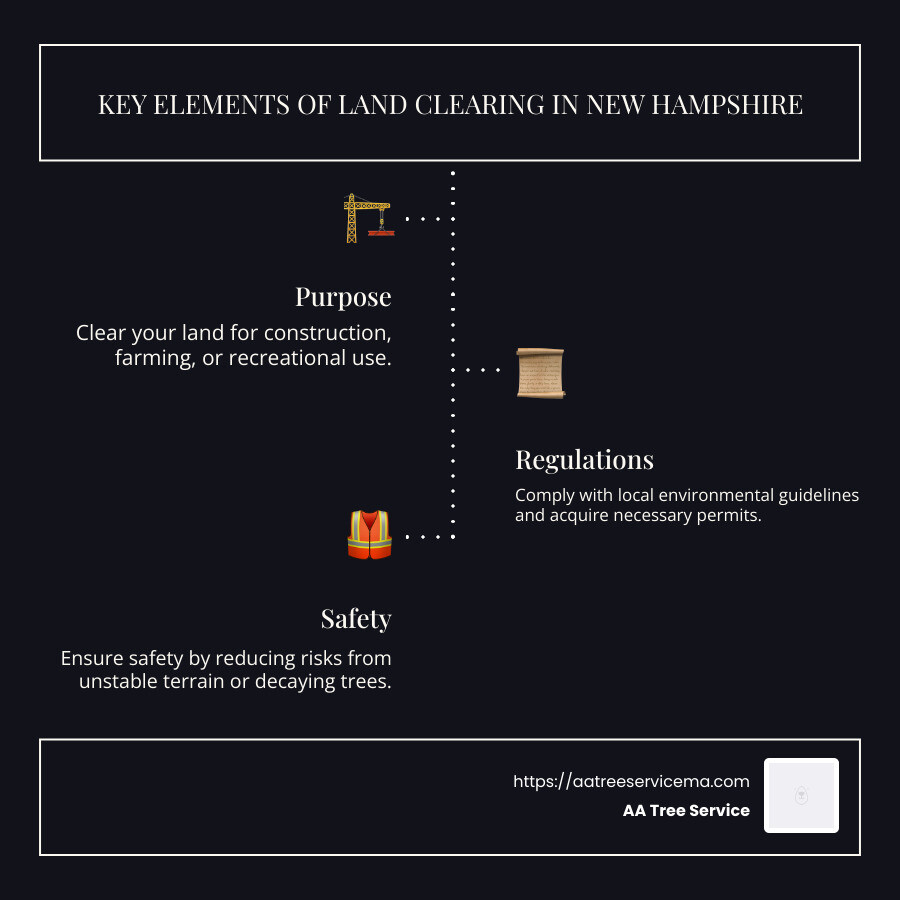
Land clearing New Hampshire is a crucial step in changing untamed terrain into usable land. Whether you’re preparing a site for new construction or managing overgrown vegetation, understanding the essentials of land clearing ensures a smooth start to any project. Here are the key elements to remember for site preparation in New Hampshire:
- Purpose: Clear your land for construction, farming, or recreational use.
- Regulations: Comply with local environmental guidelines and acquire necessary permits.
- Safety: Ensure safety by reducing risks from unstable terrain or decaying trees.
Land clearing can reshape a wild landscape into a blank canvas, setting the stage for development and growth. It involves more than just removing trees; it’s about planning each step carefully and responsibly. With varied landscapes and dense forests, New Hampshire presents unique challenges and opportunities for land clearing. It’s essential to approach the process with both precision and an understanding of the environment to create safe, accessible, and aesthetically pleasing spaces.
New Hampshire residents who want to clear their land efficiently should consider seeking professional help. Experts can steer the legalities and employ the latest techniques for effective land clearing, minimizing environmental impact while maximizing project success. Trusting licensed, insured providers like AA Tree Service can ensure that both safety protocols and customer satisfaction are prioritized.
Understanding Land Clearing in New Hampshire
When it comes to land clearing in New Hampshire, understanding the regulations and permits involved is crucial. The state has specific guidelines to protect its natural resources while allowing landowners to develop their property. Let’s break down the essentials:
Regulations and Permits
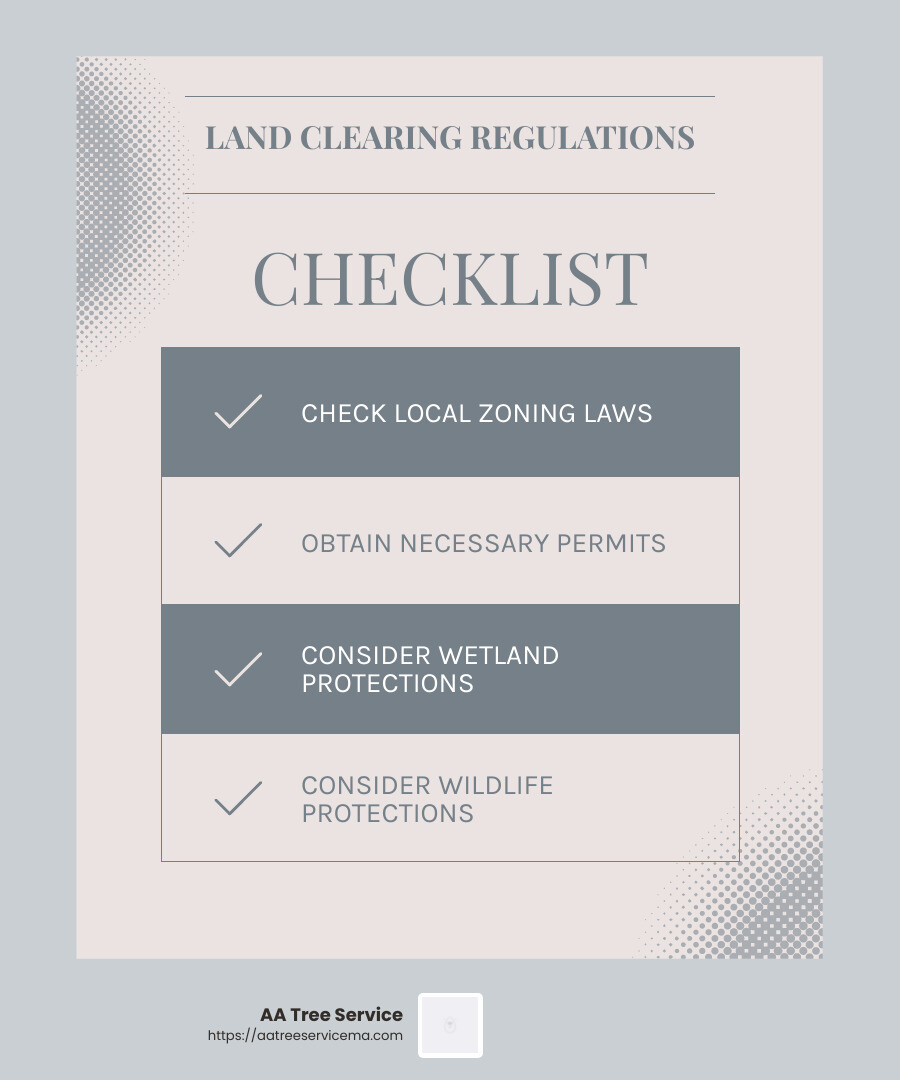
In New Hampshire, land clearing activities are governed by state and local regulations to ensure environmental protection. Before you start clearing your land, it’s important to:
- Check Local Zoning Laws: These laws vary by municipality and can dictate what you can do with your land. Always verify with your local planning office.
- Obtain Necessary Permits: Depending on the size and scope of your project, you may need permits for tree removal, grading, or other activities. Contact your local Department of Environmental Services for guidance.
- Consider Wetland and Wildlife Protections: New Hampshire values its wetlands and wildlife, so there are additional protections in place. If your land has wetlands or is a habitat for protected species, you may face additional restrictions.
Environmental Care
Clearing land responsibly means taking environmental care into account. Here are some best practices to minimize impact:
- Selective Clearing: Instead of removing all vegetation, consider selective clearing. This approach helps preserve the natural landscape and biodiversity.
- Erosion Control: Implement measures like silt fences and hay bales to prevent soil erosion, especially on sloped areas.
- Debris Management: Properly dispose of or recycle cleared vegetation. This could include chipping it for mulch or composting.
By understanding these regulations and prioritizing environmental care, you can ensure that your land clearing project is both compliant and sustainable. Working with experienced professionals like AA Tree Service can help you steer these complexities with ease, ensuring your project is completed efficiently and responsibly.
Methods of Land Clearing
When it comes to clearing land, there are several effective methods to consider. Each has its own benefits and is suited for different types of projects. Let’s explore three common techniques: grubbing, mulching, and tree removal.
Grubbing
Grubbing involves removing trees, shrubs, and roots from the ground. This method is particularly useful for preparing land for construction, as it ensures that no roots are left to interfere with future building projects.
- How It Works: Heavy machinery like bulldozers and excavators are typically used. They dig up roots and stumps, ensuring the ground is clear and ready for development.
- Advantages: Grubbing provides a clean slate, removing all obstacles from the soil. This makes it ideal for projects that require a stable foundation.
- Considerations: While effective, grubbing can be more invasive and may disturb the soil structure. It’s essential to plan for erosion control and soil stabilization afterward.
Mulching
Mulching is a less invasive land-clearing method that involves shredding vegetation into small pieces and leaving it on the ground as mulch. This technique is environmentally friendly and helps in soil conservation.
- How It Works: Specialized equipment, like forestry mulchers, grind down trees and brush into mulch. This mulch can then be spread across the cleared area.
- Advantages: Mulching is quick and efficient, reducing project timelines. It also enriches the soil with organic material and helps prevent erosion.
- Considerations: While mulching is excellent for clearing underbrush and small trees, it may not be suitable for larger trees or stumps that require removal.
Tree Removal
Tree removal is a targeted method for dealing with specific trees that need to be cleared from a site. This can be part of a larger land-clearing project or a standalone service.
- How It Works: Professionals use chainsaws, cranes, or other equipment to safely cut down and remove trees. This method is precise and minimizes damage to surrounding vegetation.
- Advantages: Tree removal allows for selective clearing, which is beneficial when you want to preserve certain parts of the landscape. It’s also essential for removing hazardous trees.
- Considerations: Safety is paramount. It’s crucial to hire experienced professionals to avoid accidents, especially when trees are near structures or power lines.
Each of these methods has its place in the land-clearing process. The choice depends on the specific needs of your project and environmental considerations. Whether you’re preparing a site for construction or simply managing overgrown areas, understanding these methods will help you make informed decisions.
Up next, we’ll dig into the costs and considerations associated with these land-clearing methods, helping you plan your project effectively.
Costs and Considerations
When planning a land-clearing project in New Hampshire, understanding the cost to clear land is essential. Prices can vary based on the size of the area, the density of vegetation, and the specific methods used. Here’s a breakdown of the key factors to consider:
Cost to Clear Land
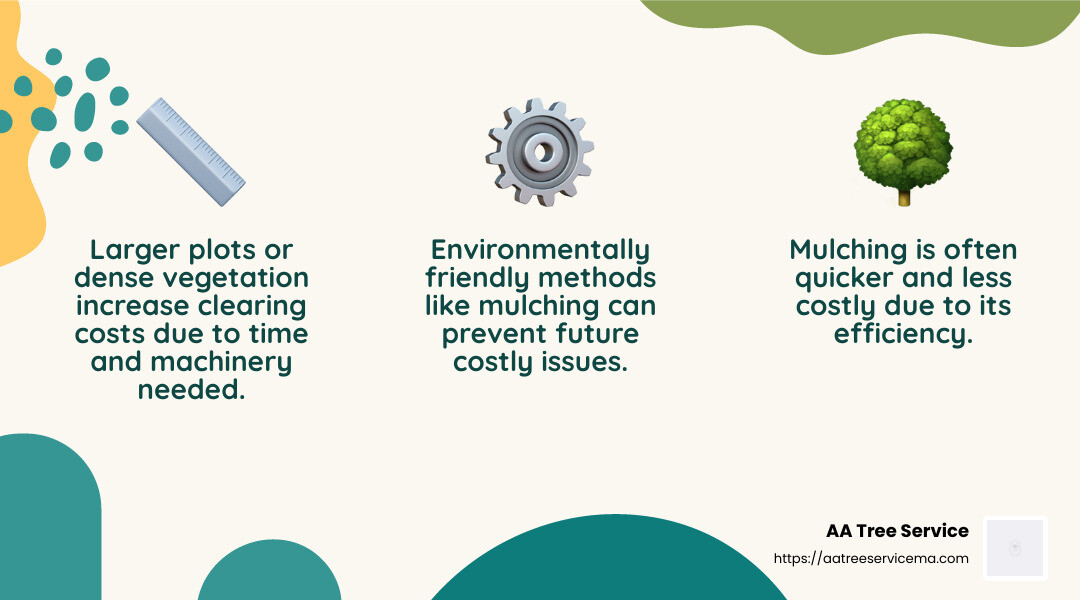
- Project Size and Complexity: Larger plots or those with dense vegetation typically cost more to clear. For example, removing thick brush and large trees requires more time and specialized equipment, increasing the overall cost.
- Method Used: Each clearing method—grubbing, mulching, or tree removal—comes with its own price tag. Grubbing might be more expensive due to the heavy machinery involved, while mulching could be more cost-effective for areas with smaller vegetation.
- Permits and Regulations: In New Hampshire, obtaining necessary permits can add to the cost. It’s crucial to check local regulations to avoid fines or delays.
Project Timelines
- Efficiency of Methods: Methods like mulching can significantly reduce project timelines, as they are quicker and less labor-intensive. This can be beneficial if you’re on a tight schedule.
- Weather Conditions: New Hampshire’s weather can affect timelines. Wet or snowy conditions may slow down the clearing process, so planning for seasonal changes is wise.
Cost-Effectiveness
- Long-Term Benefits: Investing in professional land-clearing services can save money in the long run. Proper clearing prevents future issues, like root interference in construction or soil erosion, which can be costly to fix.
- Environmental Impact: Choosing environmentally friendly methods like mulching not only benefits the ecosystem but also can be more economical by reducing the need for additional soil stabilization measures.
- Hiring Professionals: While it might be tempting to clear land independently, hiring experts like AA Tree Service ensures safety and precision. This reduces the risk of costly mistakes and accidents.
Choosing the right method and understanding the associated costs can make a significant difference in your project’s success. Up next, we’ll explore best practices for land clearing in New Hampshire, focusing on safety, precision, and the use of advanced tools.
Land Clearing New Hampshire: Best Practices
When it comes to land clearing in New Hampshire, following best practices is key to ensuring a successful project. Here are some essential aspects to consider:
Safety First
Safety is paramount in any land-clearing project. AA Tree Service prioritizes the well-being of its crew and clients by adhering to strict safety protocols. Using protective gear, ensuring proper training, and maintaining equipment are just a few ways to minimize risks.
Consider this: heavy machinery and falling trees can be hazardous. By hiring professionals, you ensure that all safety measures are in place, reducing the chance of accidents.
Precision Matters
Precision in land clearing means doing the job right the first time. This involves carefully planning the project, assessing the land, and using the right techniques. For instance, survey-grade GPS technology can map out the land accurately, guiding the clearing process to avoid unnecessary damage to the property.
Using precise methods also helps in preserving the natural beauty of the landscape, ensuring that only the necessary areas are cleared.
Advanced Tools and Technology
Modern technology plays a crucial role in efficient land clearing. AA Tree Service employs advanced tools such as real-time kinematics-enabled drones to improve precision and efficiency. These tools help in identifying obstacles and planning the best approach for clearing.
By leveraging such technology, projects are completed faster and more accurately, saving both time and money. Plus, using the latest equipment minimizes environmental impact, aligning with eco-friendly practices.
Environmental Care
Being mindful of the environment is not just a good practice; it’s a responsibility. By choosing methods like mulching, which recycles organic material back into the soil, AA Tree Service ensures that land clearing is done sustainably.
This approach not only protects the ecosystem but also improves soil health, making the land more suitable for future use.
In summary, adhering to these best practices in land clearing ensures a safe, precise, and environmentally friendly project. Next, we’ll answer some frequently asked questions about land clearing in New Hampshire, including permit requirements and the cheapest methods available.
Frequently Asked Questions about Land Clearing in New Hampshire
Do you need a permit to clear land in NH?
Yes, you often need a permit for land clearing in New Hampshire. The requirement for a permit depends on the size of the area you intend to clear and the local regulations. Each town may have specific guidelines, so it’s crucial to check with your local planning department before starting any clearing project. AA Tree Service can assist you in understanding these regulations and obtaining necessary permits.
Permits help ensure that land clearing activities comply with environmental standards, protecting local ecosystems and water quality. It’s always best to be informed and compliant to avoid potential fines or project delays.
What is the cheapest method of clearing land?
When it comes to cost-effective land clearing, grubbing and mulching are popular methods.
- Grubbing involves removing trees, shrubs, and roots from the ground. It’s a straightforward and economical option for clearing smaller areas or preparing land for construction.
- Mulching uses specialized equipment to grind vegetation into small pieces, which are then left on the ground to decompose naturally. This method is not only cost-effective but also environmentally friendly, as it enriches the soil.
Both methods are efficient and can be custom to fit the budget and needs of your specific project. AA Tree Service can help you choose the best approach based on your land and budget.
Are you allowed to clear your own land?
In New Hampshire, landowners can clear their own land, but there are restrictions and guidelines to follow. If the area is large or if the work involves significant tree removal, you may still need a permit. Additionally, there are environmental regulations to consider, such as protecting wetlands and maintaining buffer zones around water bodies.
It’s important to be aware of these guidelines to avoid legal issues and ensure that your land clearing efforts are sustainable. For those who prefer professional assistance, AA Tree Service offers expert solutions that adhere to all local regulations and environmental considerations.
By understanding the requirements and methods for land clearing in New Hampshire, you can make informed decisions that align with both your goals and legal responsibilities.
Conclusion
Choosing the right partner for land clearing in New Hampshire can make all the difference in your project’s success. At AA Tree Service, we pride ourselves on delivering exceptional customer satisfaction. Our commitment is not just to clear your land, but to ensure the process is smooth, safe, and meets your specific needs.
With over 20 years of experience, we understand the importance of precision and care in every project. Whether it’s a small residential plot or a larger commercial site, our team is equipped with the expertise and tools to handle it all. We provide 24/7 emergency services to address urgent needs, ensuring your property is cleared efficiently and safely at any time.
Our services are designed to exceed expectations. We offer free same-day quotes, giving you a clear understanding of the costs and timelines involved without delay. This transparency and dedication to quality make us a trusted partner for land clearing projects across Massachusetts and New Hampshire.
If you’re ready to transform your land, reach out to us today. Let us help you steer the complexities of land clearing with confidence and ease.
For more information on our services and service areas, visit our Service Area page.