Land clearing for development is an essential first step when preparing a site for construction or landscaping projects. Whether you’re a homeowner in Massachusetts or New Hampshire considering a new addition, or a developer planning a large project, understanding the basics of land clearing is crucial. Here’s a quick overview:
- Land Clearing: This process involves removing vegetation, rocks, and other obstructions to make the land suitable for development.
- Site Preparation: Once cleared, the site is leveled and graded to ensure a stable foundation for any construction.
- Development: Proper land clearing paves the way for safe and efficient development, ensuring structures are built on a solid base.
From removing unwanted growth to assessing soil conditions, land clearing prepares the canvas on which new structures are erected. In the busy areas of Massachusetts and Southern New Hampshire, with their changing landscapes, efficient land clearing helps balance urban growth with the preservation of natural spaces.
Land clearing is not just about making room for new structures—it’s about doing so responsibly and sustainably while respecting local regulations. As demands for new homes and businesses rise, particularly in regions like Massachusetts and Southern New Hampshire, professional land clearing services like AA Tree Service ensure that development projects begin with a strong foundation for success.
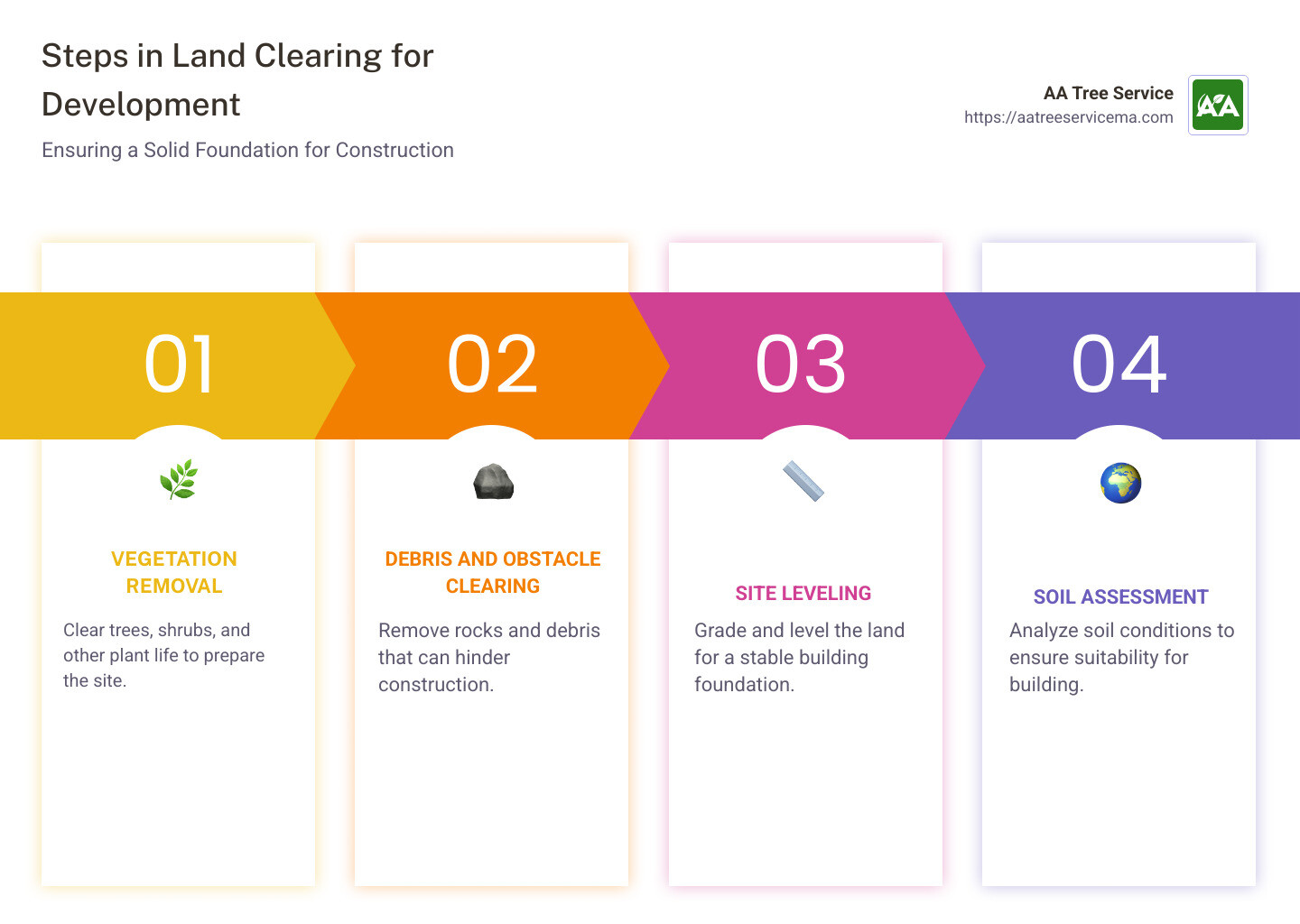
Understanding Land Clearing for Development
When preparing land for construction in Massachusetts and New Hampshire, land clearing for development is a critical step. It involves several key components that ensure the site is ready for the next stages of development.
Vegetation Removal
The first task in land clearing is removing vegetation. This includes trees, shrubs, and undergrowth that could interfere with construction. Clearing these elements not only makes the land accessible but also prevents future issues with roots or plant growth that could damage structures.
Did you know? Effective vegetation removal can improve soil conditions by aerating the earth, making it more conducive for new landscaping and reducing competition for nutrients among plants.
Site Obstacles
Beyond vegetation, other obstacles like rocks, stumps, and debris must be cleared. These can pose significant challenges if left unaddressed, potentially hindering construction and increasing costs. Removing these obstacles ensures that the land is smooth and ready for development.
Quick Tip: Using methods like the cut-and-grind or pulling techniques can efficiently handle various site obstacles, depending on the size and type of debris.
Construction Preparation
Once the land is cleared of vegetation and obstacles, the next step is construction preparation. This involves leveling and grading the land to create a stable foundation. Proper grading prevents water accumulation, reducing the risk of erosion and foundation issues later on.
In Massachusetts and New Hampshire, where weather conditions can vary, thorough site preparation is essential to withstand the elements and ensure long-lasting structures.
In Summary: Land clearing is more than just removing what’s on the surface. It’s about preparing the land to support new developments safely and sustainably. As urban areas continue to grow, particularly in Massachusetts and New Hampshire, efficient land clearing practices are vital to successful construction projects.
Essential Land Clearing Techniques
When it comes to land clearing for development in Massachusetts and New Hampshire, choosing the right technique is crucial. Each method has its pros and cons, and the best choice depends on the specific needs of your project. Here are some of the most common techniques used:
Bulldozing
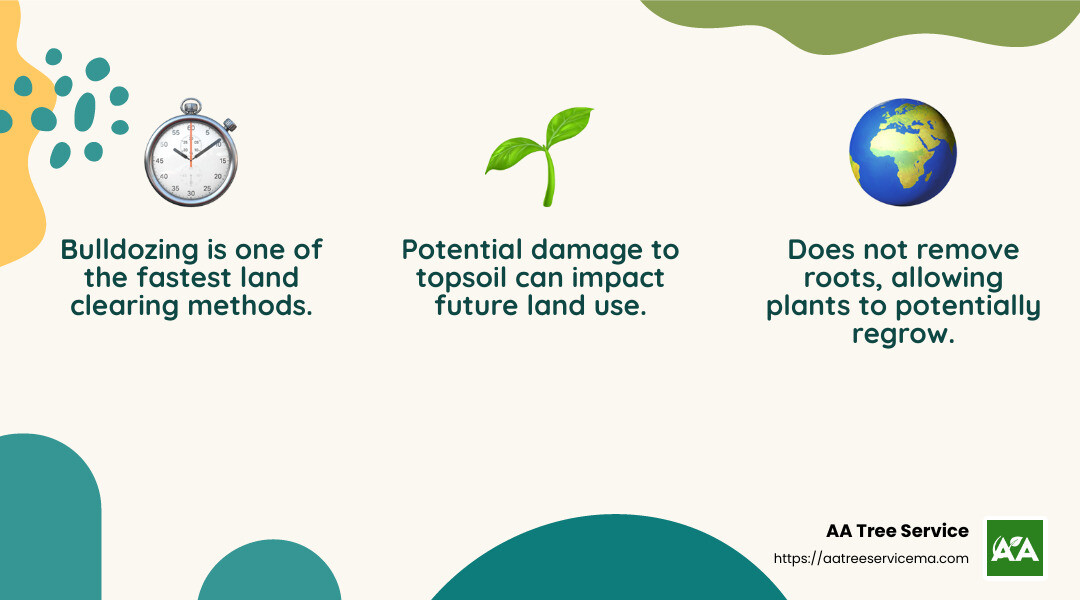
Bulldozing is one of the fastest ways to clear land. Also known as the “pusher method,” it involves using a bulldozer to push trees, shrubs, and debris out of the way. This method is efficient for removing surface vegetation quickly. However, it doesn’t remove the roots, which means plants might grow back over time. Another drawback is the potential damage to the topsoil, which can complicate future landscaping or agriculture projects.
Cut and Grind
The cut-and-grind method is more precise than bulldozing. It involves cutting down trees and shrubs and then grinding the stumps and roots into mulch. This technique is excellent for projects where you want to reuse organic material, as the mulch can enrich the soil. The cut-and-grind method is thorough but can be time-consuming and requires specialized equipment like saws and stump grinders.
Pulling
Pulling is an older technique that involves attaching chains to trees or shrubs and pulling them out of the ground with a tractor or heavy-duty truck. This method is effective for removing both the plant and its roots, preventing regrowth. However, pulling is labor-intensive and can be time-consuming, making it less suitable for large projects.
Pile and Burn
The pile and burn method is straightforward and cost-effective. After clearing the land, the vegetation is piled up and burned. This method is fast and doesn’t require the removal of debris. However, it can have environmental impacts, such as air pollution, and is subject to local regulations regarding open burning.
Each of these techniques has its place in the land-clearing process. The choice depends on factors like project size, environmental considerations, and the specific characteristics of the land in Massachusetts and New Hampshire.
Next, we’ll explore the benefits of hiring professional land clearing services to ensure your project is completed safely and efficiently.
Benefits of Professional Land Clearing
When starting on a land clearing for development project in Massachusetts or New Hampshire, hiring professionals brings numerous advantages. Let’s dig into the key benefits:
Safety
Safety is paramount in any land clearing project. Professional services prioritize the well-being of both workers and future occupants. By carefully addressing hazards like unstable ground or hidden stumps, professionals help prevent accidents. They conduct thorough site evaluations to identify potential risks, ensuring a safer environment for everyone involved.
“Professional services mitigate these risks by conducting thorough site evaluations and using appropriate equipment, reducing the chance of accidents and injury on-site.”
Efficiency
Time is money, especially in development projects. Professionals use advanced machinery like bulldozers, excavators, and mulchers to expedite the process. This efficiency means a large plot can be cleared in days rather than weeks. Experienced operators also know how to handle complex terrains, ensuring minimal disruption and a smoother process.
Environmental Compliance
Adhering to environmental standards is crucial. Improper land clearing can harm ecosystems, soil, and water sources. Professional services are well-versed in local regulations and employ best practices to minimize environmental damage. Techniques like erosion control are used to protect the land, ensuring compliance with environmental standards and preserving natural resources.
“Responsible practices prevent erosion, protect water quality, and foster ecological balance.” source
In summary, hiring professional land clearing services in Massachusetts and New Hampshire not only improves safety and efficiency but also ensures environmental compliance. These benefits make it a smart choice for any development project.
Next, we’ll discuss the environmental and regulatory considerations involved in land clearing to ensure your project meets all necessary requirements.
Environmental and Regulatory Considerations
When preparing land for development in Massachusetts or New Hampshire, understanding environmental and regulatory considerations is essential. Here, we’ll explore key aspects like erosion control, permits, and legal requirements.
Erosion Control
Erosion can be a significant issue during land clearing. It can lead to soil degradation and water pollution, impacting the local environment. Professionals employ various techniques to manage erosion effectively:
- Silt Fences: These barriers help prevent soil from washing away during heavy rains.
- Vegetative Buffers: Planting grass or shrubs can stabilize soil and reduce erosion.
- Erosion Control Blankets: These are laid over the soil to protect it from wind and rain.
Using these methods ensures the land remains stable and ready for development while protecting nearby water sources.
Permits
Before starting any land clearing project, securing the necessary permits is crucial. Massachusetts and New Hampshire have specific regulations governing land clearing, and failing to comply can result in fines or project delays. Here’s what you need to know:
- Local Permits: Check with your town or city for specific requirements. Some areas may need permits for tree removal or grading.
- State Regulations: Both Massachusetts and New Hampshire have state-level environmental regulations. Ensure your project aligns with these standards.
Working with professionals familiar with local and state regulations can streamline this process, ensuring all paperwork is in order.
Legal Requirements
Legal requirements vary by location and project scope. Key considerations include:
- Zoning Laws: Understand the zoning laws that apply to your property. These laws dictate what types of development are allowed.
- Wetlands Protection: If your land includes wetlands, there are additional regulations to protect these sensitive areas.
- Historical Preservation: Some sites may have historical significance, requiring special care during development.
Navigating these legal requirements can be complex, but professional land clearing services are equipped to handle them. They ensure your project adheres to all regulations, avoiding potential legal issues.
By understanding these environmental and regulatory considerations, you can ensure your land clearing for development project proceeds smoothly and legally.
Next, we’ll answer some frequently asked questions about land clearing in Massachusetts and New Hampshire to further guide your development journey.
Frequently Asked Questions about Land Clearing for Development
When starting on a land clearing project in Massachusetts or New Hampshire, you might have some questions. Here, we tackle some of the most common queries to help you steer the process smoothly.
How much does it cost to clear land in Massachusetts and New Hampshire?
Cost Factors: The cost of land clearing in these states can vary widely based on several factors:
- Size of the Land: Larger plots require more resources and time, increasing costs.
- Type of Vegetation: Dense forests or areas with large trees are more expensive to clear than open fields.
- Terrain Difficulty: Steep or rocky terrains can add complexity and cost to the project.
Regional Pricing: On average, land clearing costs in Massachusetts and New Hampshire can range from $1,500 to $5,000 per acre. For more precise estimates, it’s best to get a professional assessment custom to your specific site conditions.
Do I need a permit to clear land in Massachusetts and New Hampshire?
Permit Requirements: Yes, permits are typically required for land clearing projects in both states.
- Local Regulations: Each town or city may have its own set of requirements. Checking with local authorities is crucial.
- State-Level Permits: Massachusetts and New Hampshire have state regulations that might necessitate permits, especially if your project impacts wetlands or involves significant tree removal.
Failure to obtain the necessary permits can lead to fines or project delays, so ensure compliance before starting your land clearing activities.
What is the cheapest way to clear land?
Grubbing and Mulching: These are cost-effective methods commonly used in land clearing:
- Grubbing: This involves removing roots and stumps, making the land ready for development without the need for heavy machinery.
- Mulching: Instead of hauling away debris, mulching machines grind vegetation into small pieces, which can then be left on-site to decompose naturally.
These methods not only save money by reducing equipment and labor costs but also benefit the soil by adding organic matter.
By understanding these key aspects, you can make informed decisions about your land clearing project in Massachusetts and New Hampshire. Up next, we’ll dig into the benefits of professional land clearing services to ensure your development project is a success.
Conclusion
As we wrap up our exploration of land clearing for development, it’s clear that this crucial step sets the stage for successful construction projects. Whether you’re preparing a site in Massachusetts or New Hampshire, choosing the right partner for your land clearing needs is vital.
AA Tree Service stands out as a top choice for professional land clearing services. With over 20 years of experience, our team is committed to ensuring customer satisfaction through reliable and efficient services. We understand the unique challenges of land clearing in the New England region and are equipped to handle projects of all sizes.
Our comprehensive services include not only land clearing but also tree removal, pruning, and emergency services, all designed to keep your property safe and ready for development. We pride ourselves on our ability to deliver results while respecting environmental and regulatory requirements.
At AA Tree Service, we believe in transparency and convenience. That’s why we offer free same-day quotes and 24/7 emergency services, ensuring that you receive the support you need when you need it. Our licensed and insured technicians are dedicated to providing peace of mind and a hassle-free experience.
For those seeking to transform their land into a development-ready site, contact us today to find how our expert team can help you achieve your goals. Let us clear the path to your next successful project, ensuring that your land is prepared with precision and care.