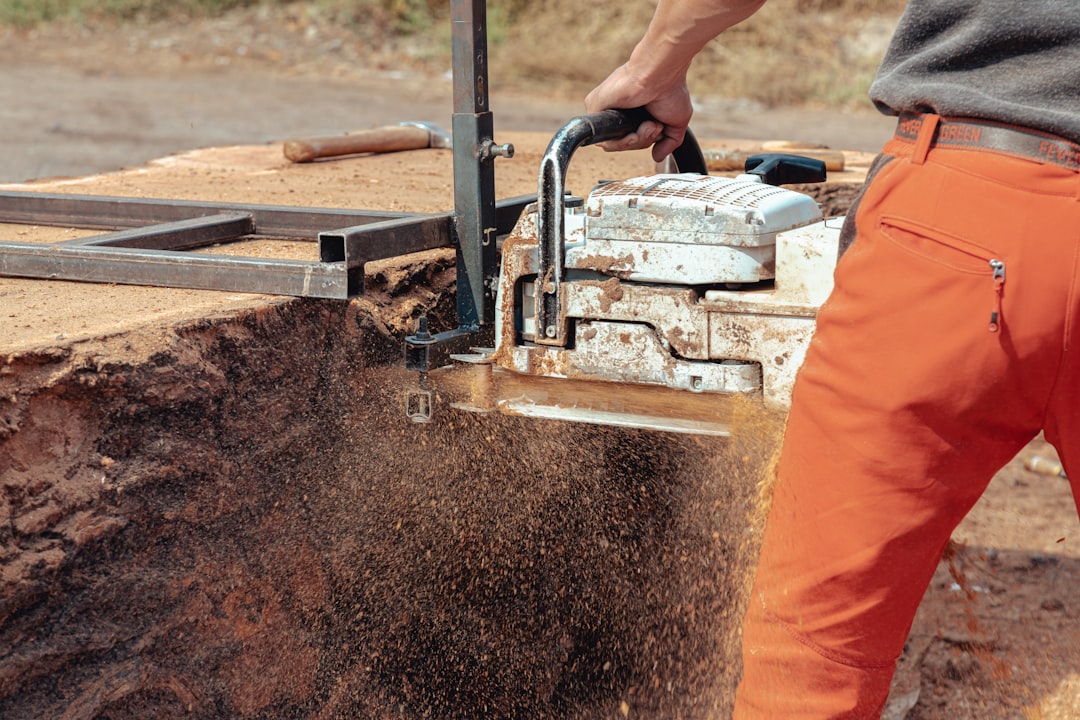
Why Homeowners Need Fast Stump Removal Solutions
Fast stump removal is the key to changing your yard from an obstacle course into a beautiful, safe landscape. Whether you’re dealing with one stubborn stump or several eyesores left behind after tree removal, you have several options to get the job done quickly:
Quick Answer – Your Fast Stump Removal Options:
- Professional stump grinding – Minutes to complete, works on any size stump
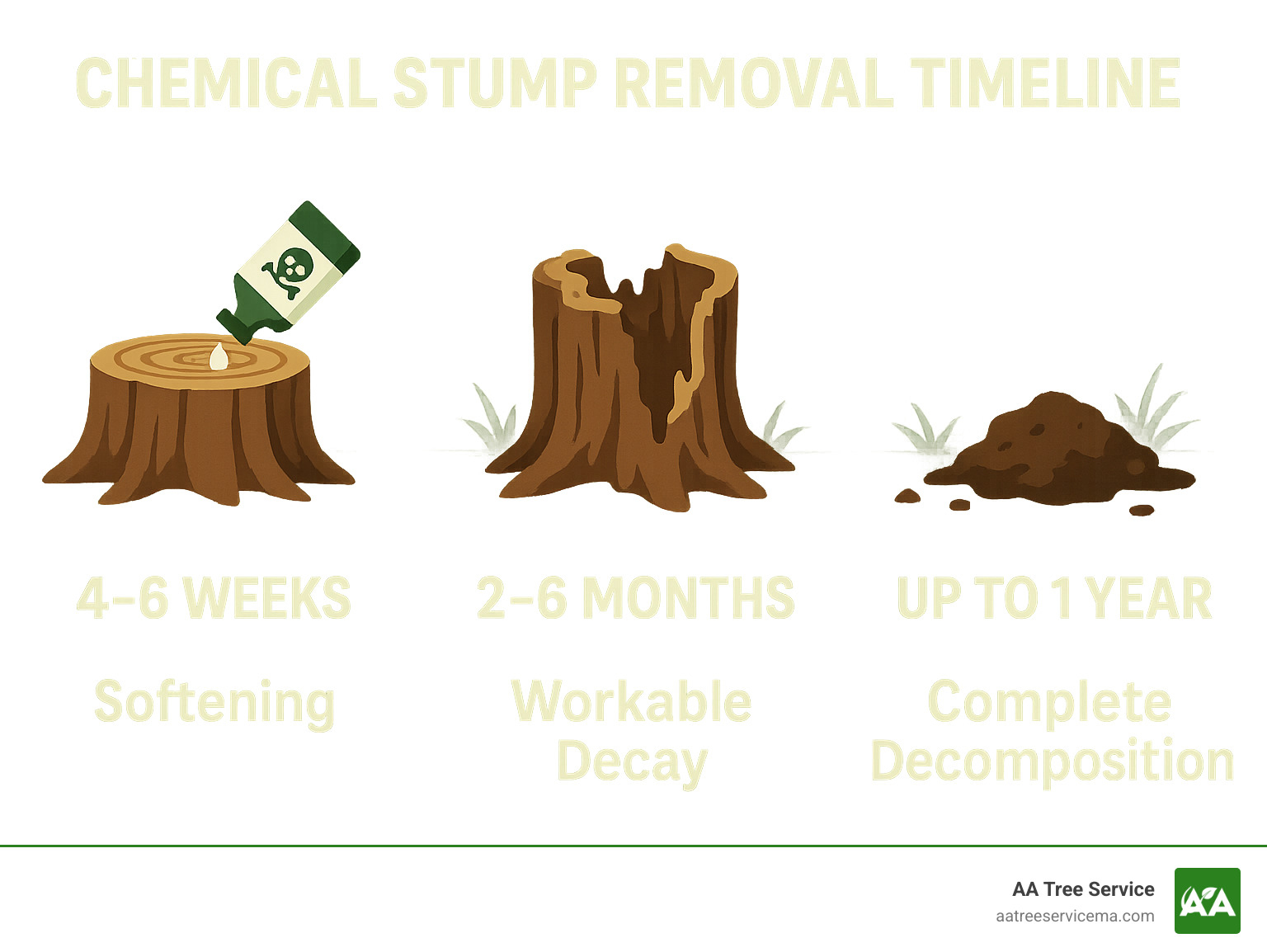
- Chemical accelerators – 4-6 weeks to soften, several months for complete decay
- Epsom salt method – 6-12 months for natural breakdown
- Manual removal – Few hours of hard work for immediate results
- Controlled burning – Can be fast but often incomplete and risky
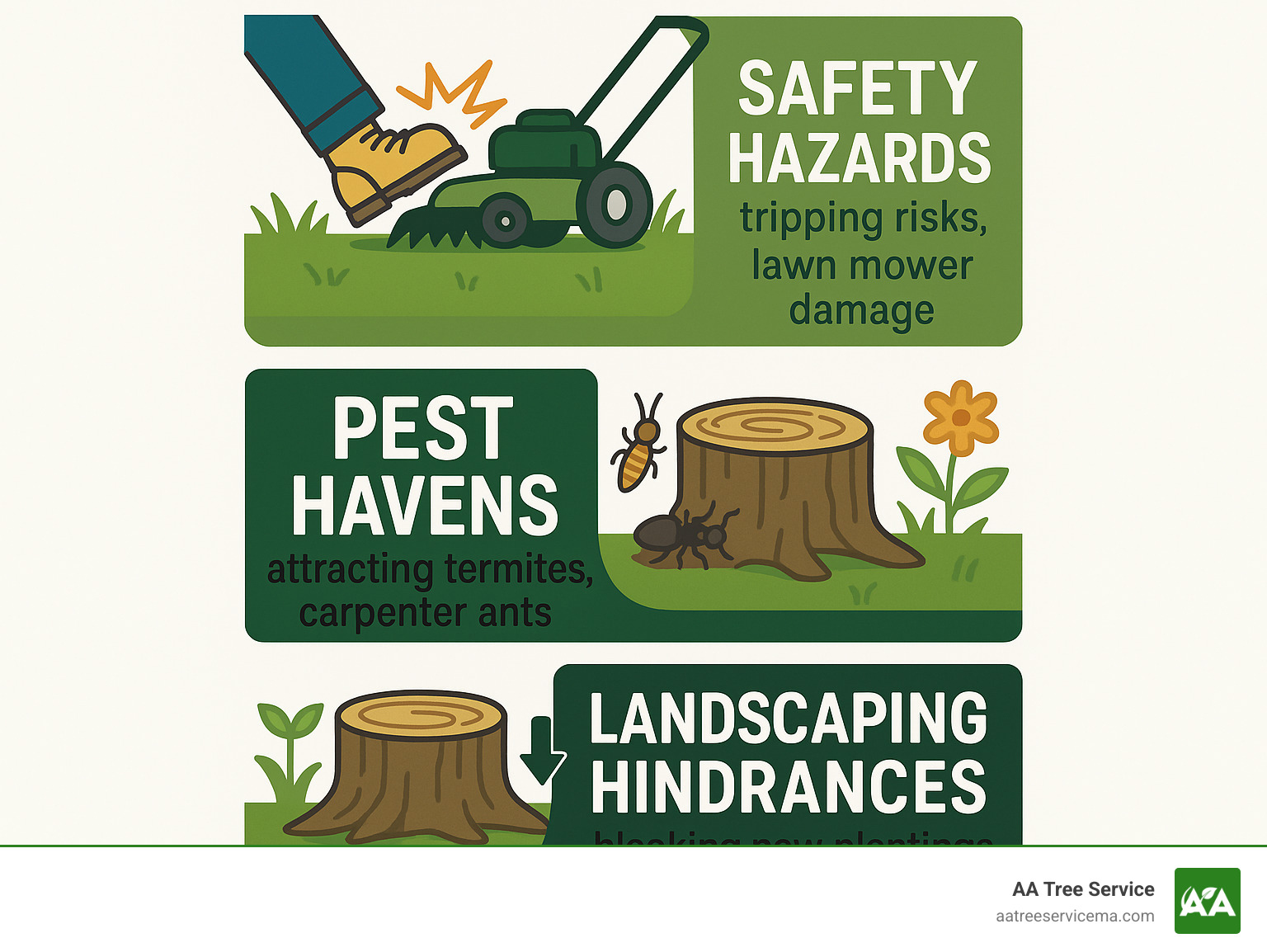
That ugly stump in your yard isn’t just an eyesore – it’s a genuine problem waiting to get worse. Left alone, stumps become tripping hazards for your family, magnets for pests like termites and carpenter ants, and breeding grounds for fungal diseases that can spread to your healthy plants.
The good news? You don’t have to live with that stump for the 3-7 years it takes to rot naturally. Modern stump removal methods can reclaim your yard in everything from a few minutes (professional grinding) to a few months (chemical treatments).
The choice comes down to your timeline, budget, and comfort level with DIY projects. Some homeowners prefer the immediate satisfaction of professional grinding, while others enjoy the cost savings and patience required for chemical methods.
Fast stump removal glossary:
Why That Stump Needs to Go: Problems Caused by Unwanted Stumps
That innocent-looking stump in your yard might seem harmless, but it’s actually a ticking time bomb of problems waiting to explode. Every homeowner we’ve worked with in Massachusetts and New Hampshire has been surprised by just how much trouble one leftover stump can cause.
Let’s start with the safety hazards that keep us up at night. Picture this: your kids are playing tag in the backyard, running full speed, when suddenly someone catches their foot on that “harmless” stump. We’ve seen too many twisted ankles, scraped knees, and worse from these hidden obstacles. And it’s not just the kids – adults trip over stumps too, especially when they’re partially hidden by grass or autumn leaves.
Your lawnmower is also in danger. Hit a stump with your mower, and you’re looking at damaged or destroyed blades, bent shafts, and repair bills that can easily reach several hundred dollars. Even those low stumps that seem “safe” can still wreak havoc on your equipment.
Pest infestations are where things get really nasty. Decaying stumps are like five-star hotels for termites, carpenter ants, beetles, and rodents. These unwelcome guests don’t just stay put – they spread to your home, deck, shed, and any other wooden structures on your property. We’ve seen cases where a single rotting stump led to thousands of dollars in pest control treatments and structural repairs.
The fungal growth that thrives in rotting wood creates those unsightly mushrooms popping up around your yard. But the real problem is underground, where these fungi can spread diseases to your healthy plants and trees. Some of these fungal spores can lie dormant in your soil for years, just waiting to attack new plantings.
From an aesthetic standpoint, a stump is an immediate eyesore that screams “neglected property” to anyone who sees it. Real estate professionals consistently tell us that yards with stumps are harder to sell and command lower prices. Your curb appeal takes a major hit, and so does your property value.
Perhaps the most frustrating problem is regrowth. Many stumps keep sprouting new shoots from their root systems, creating an endless cycle of cutting and trimming. Those roots can spread far underground, potentially damaging your foundation, sidewalks, and underground utilities. Fast stump removal is the only way to stop this ongoing headache.
For more information about professional solutions, check out our tree removal services or read more about removing tree stumps.
Your Guide to Fast Stump Removal Without a Grinder
Not everyone has access to a professional stump grinder, and that’s perfectly fine. The DIY approach to fast stump removal can save you serious money while giving you that satisfying sense of accomplishment that comes from tackling a project yourself.
The beauty of DIY stump removal lies in having complete control over your timeline and budget. You can choose the method that fits your situation best, whether that’s the patience required for chemical treatments or the immediate satisfaction of manual removal.
Here’s how the main DIY methods stack up against each other:
| Method | Time to Complete | Cost | Physical Effort | Best For |
|---|---|---|---|---|
| Chemical | 4-6 weeks to soften | $10-50 | Low | Medium to large stumps |
| Epsom Salt | 6-12 months | $10-30 | Low | Eco-friendly approach |
| Burning | 1-2 days | $20-40 | Medium | Dry climates, away from structures |
| Manual | 3-12 hours | $0-100 | Very High | Small stumps, immediate results |
Each method has its sweet spot. Chemical removal offers the best balance of speed and convenience for most homeowners. Epsom salt appeals to those who prefer natural solutions and don’t mind waiting longer. Burning can be fast but comes with significant risks and legal restrictions. Manual removal is the only option that gives you immediate, complete results.
Using Chemicals for Fast Stump Removal
Chemical stump removal is like giving Mother Nature a turbo boost. Instead of waiting 3-7 years for natural decay, you can have a soft, removable stump in just 4-6 weeks.
The science behind it is straightforward. Potassium nitrate (the active ingredient in most commercial stump removers) accelerates fungal growth that breaks down the wood’s cellular structure. High-nitrogen fertilizer works similarly, and both are readily available at garden centers across Massachusetts and New Hampshire.
Getting started requires some basic preparation. First, cut your stump as close to ground level as possible. Then comes the drilling – this is where many DIYers make mistakes. You’ll want to use a 1-inch spade bit to create holes about 12 inches deep, spaced 6-8 inches apart around the stump’s perimeter. Don’t forget to drill additional holes at a 45-degree angle to connect with your vertical holes.
The magic happens when you pour 3-4 ounces of stump removal chemicals into each hole, then fill them with water. The chemicals need moisture to work effectively, so covering the entire stump with a plastic tarp is crucial. Add some organic mulch over the tarp to hold it in place and maintain that moisture.
Timeline expectations vary by wood type. Softwoods like pine respond faster than hardwoods like oak or maple. Most stumps become soft and workable within 4-6 weeks, though complete decay takes several months.
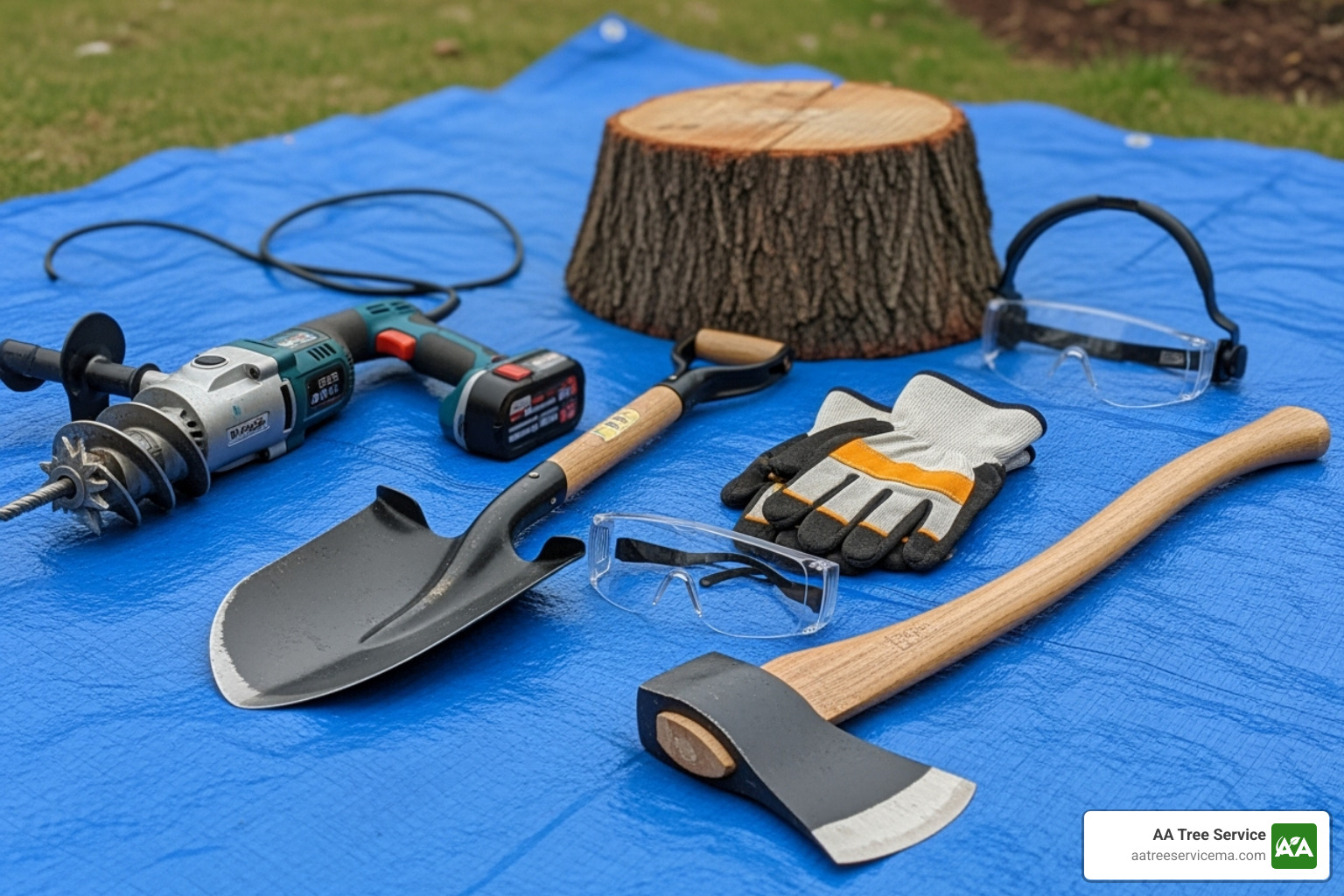
Safety can’t be overlooked when working with chemicals. Always wear protective gear including gloves, safety glasses, and long sleeves. The Potassium Nitrate Hazardous Substance Fact Sheet outlines important precautions. Keep children and pets away from treated stumps, and never use chemicals near water sources or vegetable gardens.
For detailed guidance on this method, check out our comprehensive guide on tree stump removal chemicals and learn more about drilling holes in tree stumps.
The Epsom Salt Method: A Natural Accelerator
If you prefer a gentler approach, Epsom salt offers a more natural path to fast stump removal. While it takes longer than commercial chemicals, it’s much kinder to your soil and surrounding plants.
Magnesium sulfate (Epsom salt’s scientific name) works by drawing moisture out of the stump, essentially dehydrating it to death. Think of it as creating a hostile environment where the stump can’t maintain its structural integrity. The magnesium also helps break down the wood’s cellular structure over time.
The process mirrors chemical treatment but with a natural twist. After drilling your holes using the same pattern, pack them tightly with Epsom salt – you’ll need about 19 pounds for a large stump. Add just enough water to dissolve the salt, then cover with a tarp to block sunlight and retain moisture.
Patience is key with this method. Expect 6-12 months for significant decay, depending on stump size, wood type, and weather conditions. The good news? A 19-pound bag of Epsom salt costs under $30, making this the most budget-friendly option.
The environmental benefits are substantial. Unlike harsh chemicals, Epsom salt won’t harm beneficial soil organisms or nearby plants. The resulting wood chips can even be composted or used as mulch in your garden.
This method works particularly well for homeowners who aren’t in a rush and want to maintain their yard’s natural ecosystem. Learn more about eco-friendly options at our natural stump dissolvers that actually work page.
Is Burning a Fast Stump Removal Method?

Burning can eliminate the visible portion of a stump in just a day or two, but it’s also the most dangerous and often incomplete method. Many homeowners are attracted to the speed, but the reality comes with serious risks and limitations.
Effectiveness varies dramatically based on conditions. Burning works best on dry, seasoned stumps and struggles with green or wet wood. Even successful burns often leave substantial root systems underground, so you’re not getting complete removal – just eliminating what’s visible above ground.
Before even considering this method, check local fire ordinances in your Massachusetts or New Hampshire municipality. Many towns prohibit open burning entirely, and violations can result in hefty fines or legal liability if something goes wrong.
If burning is legal in your area, the process requires careful preparation. Drill holes throughout the stump using the same pattern as other methods, then fill them with kerosene or diesel fuel – never gasoline, which is extremely dangerous. Allow the fuel to penetrate for several days before igniting carefully.
Major safety risks make burning unsuitable for most suburban situations. Underground roots can smolder for days or weeks, potentially igniting nearby structures, gas lines, or septic systems. We’ve heard horror stories of root fires burning underground for months, eventually surfacing far from the original stump location.
Additional concerns include toxic fumes from treated wood, fire spread to nearby vegetation, and potential legal liability. Never attempt burning near structures, utility lines, or during drought conditions.
For safer alternatives, consult resources like the Chemical Control of Unwanted Vegetation guide.
Manual Removal: The Most Labor-Intensive but Quickest DIY Fix
Manual removal is the only DIY method that provides immediate, complete results. While it requires significant physical effort, you’ll have your stump completely gone in a matter of hours rather than months.
Small to medium stumps (under 12 inches diameter) are the best candidates for manual removal, especially if they’ve been dead for at least a year. Softwood species like pine or fir are much easier to tackle than hardwoods. Fresh stumps are significantly more difficult due to their extensive, living root systems.
You’ll need the right tools for success: a sharp spade for digging, a mattock for breaking up soil and cutting roots, a digging bar for prying and leverage, and a bow saw or axe for cutting roots. A bow saw is safer for inexperienced users, while an axe requires more skill but can be faster.
The process starts with digging a trench around the stump, about 3 feet from the base. Expose major roots by digging and using a hose to wash away soil – this makes cutting much easier. Cut visible roots with your saw or axe, then continue digging to expose the taproot.
Cutting the taproot is usually the most challenging step, as it’s often the thickest and most stubborn part of the root system. Once it’s severed, you can use leverage to pry the stump from the ground. Fill the hole with soil and reseed when you’re done.
Timeline expectations range from 3-12 hours of hard work, depending on stump size and your experience level. This is genuinely strenuous labor that’s not suitable for everyone, but the immediate satisfaction can be worth it.
Here’s a pro tip: manual removal is much easier if you leave 3-4 feet of trunk when initially cutting the tree. This provides leverage for rocking and pulling the stump out of the ground.
Visit our natural stump removal page for more detailed techniques and tips.
The Professional Option: When to Call for Stump Grinding
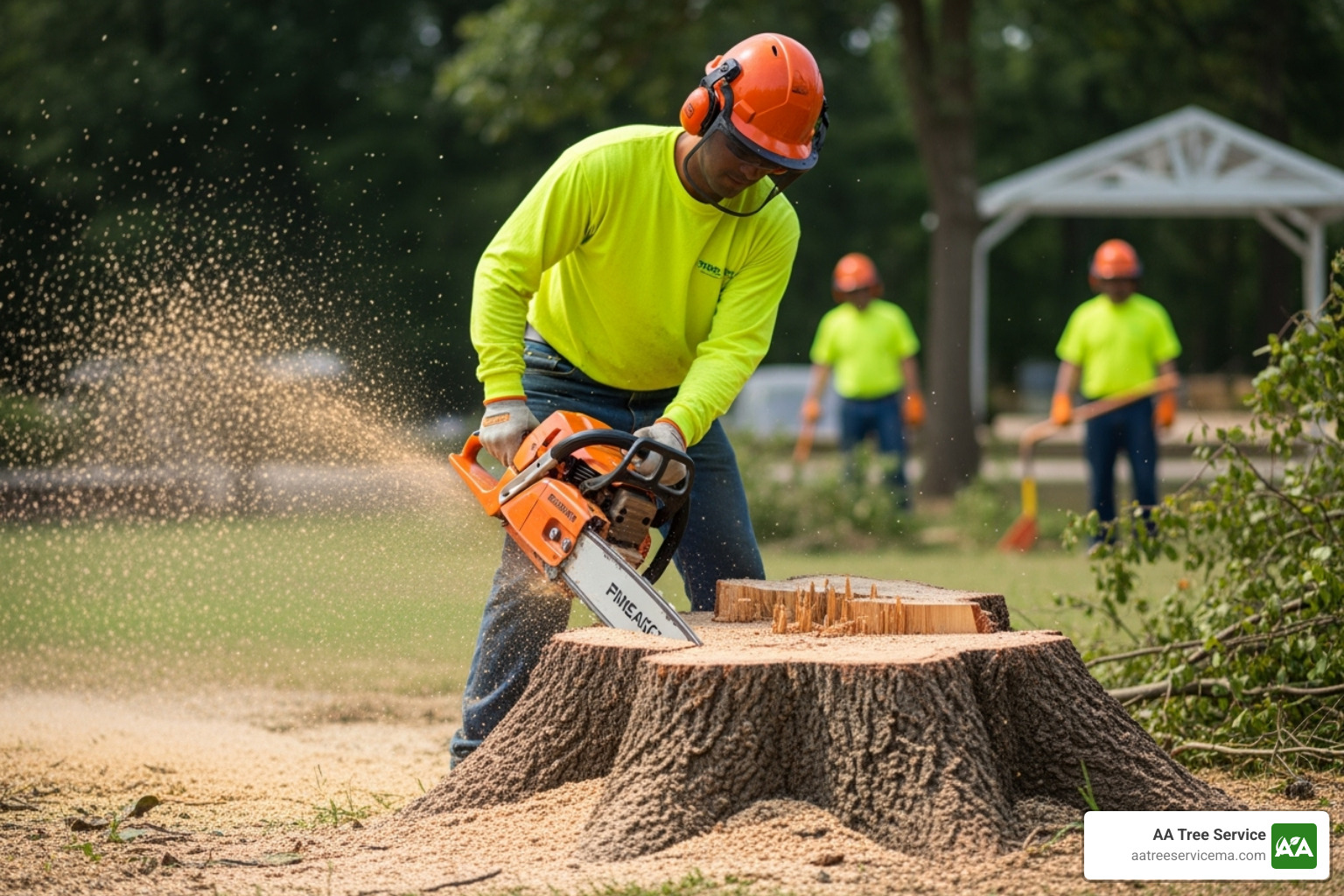
When you need fast stump removal that’s guaranteed to work, professional stump grinding is your answer. While DIY methods have you waiting weeks or months (and sometimes crossing your fingers), professional grinding turns any stump into wood chips in minutes.
Stump grinding is beautifully simple: A powerful machine with a rotating cutting wheel chews through the stump like a giant pencil sharpener. The cutting wheel doesn’t just stop at ground level – it grinds 6 to 18 inches below the surface, eliminating the visible stump and those stubborn surface roots that cause problems later.
The speed alone makes professional grinding worth considering. Most stumps disappear in 15 minutes to 2 hours, depending on size. Compare that to the 4-6 weeks you’ll wait for chemicals to work, or the back-breaking hours of manual digging. Professional grinding handles any size stump – from small saplings to massive oak stumps that would take months to remove by other methods.
Safety is another huge advantage. No hazardous chemicals around your kids and pets, no fire risks that could spread to your home, and no risk of injury from heavy manual labor. Professional operators have the training and insurance to handle any complications.
Let’s talk about cost, because it’s probably not as expensive as you think. Based on internet research, industry averages range from $150 for small stumps to over $800 for large or difficult-access situations. Most companies charge around $6 per inch of diameter with minimum charges typically running $150-200. These are general market averages and not specific quotes for AA Tree Service.
When should you call a professional? Large stumps over 12 inches in diameter are prime candidates – they’re tough to tackle with DIY methods and grinding makes quick work of them. Multiple stumps also make professional service more cost-effective since you’re paying for the equipment to come out anyway. Stumps near foundations, utilities, or structures require professional expertise to avoid expensive damage.
Hardwood stumps like oak, maple, and hickory are particularly stubborn. These dense woods resist chemicals and manual removal but surrender quickly to professional grinders. If you’re dealing with time constraints – maybe you’re selling your home or planning a landscaping project – professional grinding provides immediate results you can count on.
The clean results are another bonus. Those wood chips can stay as natural mulch for your garden beds, or the crew can haul them away for a completely clean slate. Either way, you’re ready to plant, build, or landscape immediately.
At AA Tree Service, we’ve been solving stump problems across Massachusetts and New Hampshire for over 20 years. Our experienced crews handle everything from single stumps to large land clearing projects, and we’re equipped to work safely around your home and landscaping.
Ready to reclaim your yard? Check out our stump grinding services or find local stump grinding options in your area.
Frequently Asked Questions About Fast Stump Removal
What is the absolute fastest way to get rid of a tree stump?
If you need that stump gone today, professional stump grinding is your answer. We’re talking about a process that takes minutes, not months – most residential stumps disappear in 15-30 minutes, while even the most stubborn giants rarely take more than 2 hours.
Compare that to waiting 4-6 weeks for chemicals to work their magic, or the 3-7 years Mother Nature needs to break down a stump naturally. There’s simply no contest when it comes to speed.
Professional grinding delivers complete removal too. The machine grinds 6-18 inches below ground level, so you can plant new trees, lay sod, or build a deck in the same spot immediately. No waiting around wondering if the job is really done.
Here in Massachusetts and New Hampshire, we’ve seen homeowners try to rush DIY methods, only to end up frustrated with half-finished results. Professional grinding eliminates that uncertainty entirely.
Looking for budget-friendly options? Check out our affordable stump grinding services.
How long does it take for a stump to rot with chemicals?
The honest answer? It depends on what you’re working with. Most stumps become soft and workable within 4-6 weeks of chemical treatment, but complete decomposition is a longer game – anywhere from several months to a full year.
Wood type makes a huge difference. That old pine stump in your backyard? It might be ready to break apart with an axe after just a month. But if you’re dealing with a stubborn oak or maple stump, you could be looking at 3-4 months before it’s soft enough to remove easily.
Size matters too. A small 6-inch stump has much less mass to break down than a 24-inch monster. We’ve seen cases where large stumps took twice as long as expected simply because there was so much wood to decompose.
Don’t forget about New England’s weather patterns. Our warm, humid summers speed up the decay process, while cold winters essentially put everything on pause. A stump treated in spring will progress much faster than one treated in late fall.
Getting the application right is crucial for staying on schedule. Properly drilled holes, adequate chemical amounts, and consistent moisture all keep things moving. Homeowners who skip steps or use too little product often find themselves waiting much longer than expected.
Is it safe to use gasoline to burn a tree stump?
Please don’t. We can’t stress this enough – gasoline and stump burning is a recipe for disaster. We’ve seen too many close calls over our 20+ years in the business, and none of them were worth the risk.
Gasoline creates an explosion hazard that can seriously injure you and anyone nearby. Those vapors ignite faster than you can blink, and the resulting fireball is completely unpredictable. We’re talking about potential severe burns, property damage, and fires that can spread beyond your control.
The dangers don’t stop there. Gasoline burns too hot and fast to manage safely, releases toxic fumes that you definitely don’t want to breathe, and leaves chemical residue that poisons your soil for years. Plus, if something goes wrong, you could face serious legal liability.
If you’re determined to try burning, stick with kerosene or diesel fuel – they burn more slowly and predictably. But even then, you need to check with your local fire department first. Many towns in Massachusetts and New Hampshire have strict rules about open burning, and permits are often required.
Better alternatives exist that don’t put you, your family, or your property at risk. Chemical fast stump removal methods are safer and more reliable. Professional grinding eliminates the stump completely without any fire danger. Even manual removal, while labor-intensive, is much safer than playing with gasoline and matches.
Your stump will be gone eventually no matter which method you choose. Why risk everything for a few hours of time savings?
Reclaim Your Yard Today
Looking back at all your fast stump removal options, you’ve got some real choices to make. The DIY routes – whether you go with chemical treatments, Epsom salt, or roll up your sleeves for manual removal – can save you money but require either serious patience or serious sweat equity.
Chemical methods will get you results in 4-6 weeks, which beats waiting years for natural decay. The Epsom salt approach takes longer but gives you that peace of mind of using something gentler on your soil. Manual removal? Well, that’s a weekend warrior’s dream if you’re up for the challenge, but it’s genuinely hard work.
Then there’s burning, which we’ve covered extensively. While it can be fast, it’s often incomplete and comes with risks that make most homeowners think twice.
Professional stump grinding really is in a league of its own. Minutes to complete, works on any size stump, and you’re done. No waiting around, no wondering if it worked, no sore back the next day. It’s the kind of solution that makes you wonder why you didn’t call sooner.
Here’s the thing about choosing the right method: your timeline matters most. Planning a new garden next spring? Chemical treatment might work perfectly. Kids tripping over that stump this weekend? Time to call the pros.
Your budget plays a role too, but professional grinding often costs less than you’d expect – and when you factor in your time, tools, and the guarantee of complete removal, it’s often the smartest investment.
AA Tree Service has been helping Massachusetts and New Hampshire homeowners solve exactly these problems for over 20 years. We’ve seen every type of stump situation imaginable, and honestly, most folks are surprised by how quickly we can transform their yard from obstacle course to open space.
We get it – every stump situation is different. Maybe you’ve got one stubborn oak stump that’s been mocking you for months, or perhaps you’re dealing with multiple stumps after a storm cleanup. Either way, we have the equipment and know-how to handle whatever you’re facing.
Our team offers 24/7 emergency services because we know stump problems don’t wait for business hours. We also provide free same-day quotes, so you can make an informed decision without any pressure or surprises.
Ready to reclaim your yard? For the fastest, safest, and most complete stump removal solution, contact our experts for professional stump grinding service. We’ll come out, assess your situation, and give you straight answers about the best approach for your specific needs.
Don’t let that stump keep winning. Take back your yard and turn it into the beautiful, safe space your family deserves.