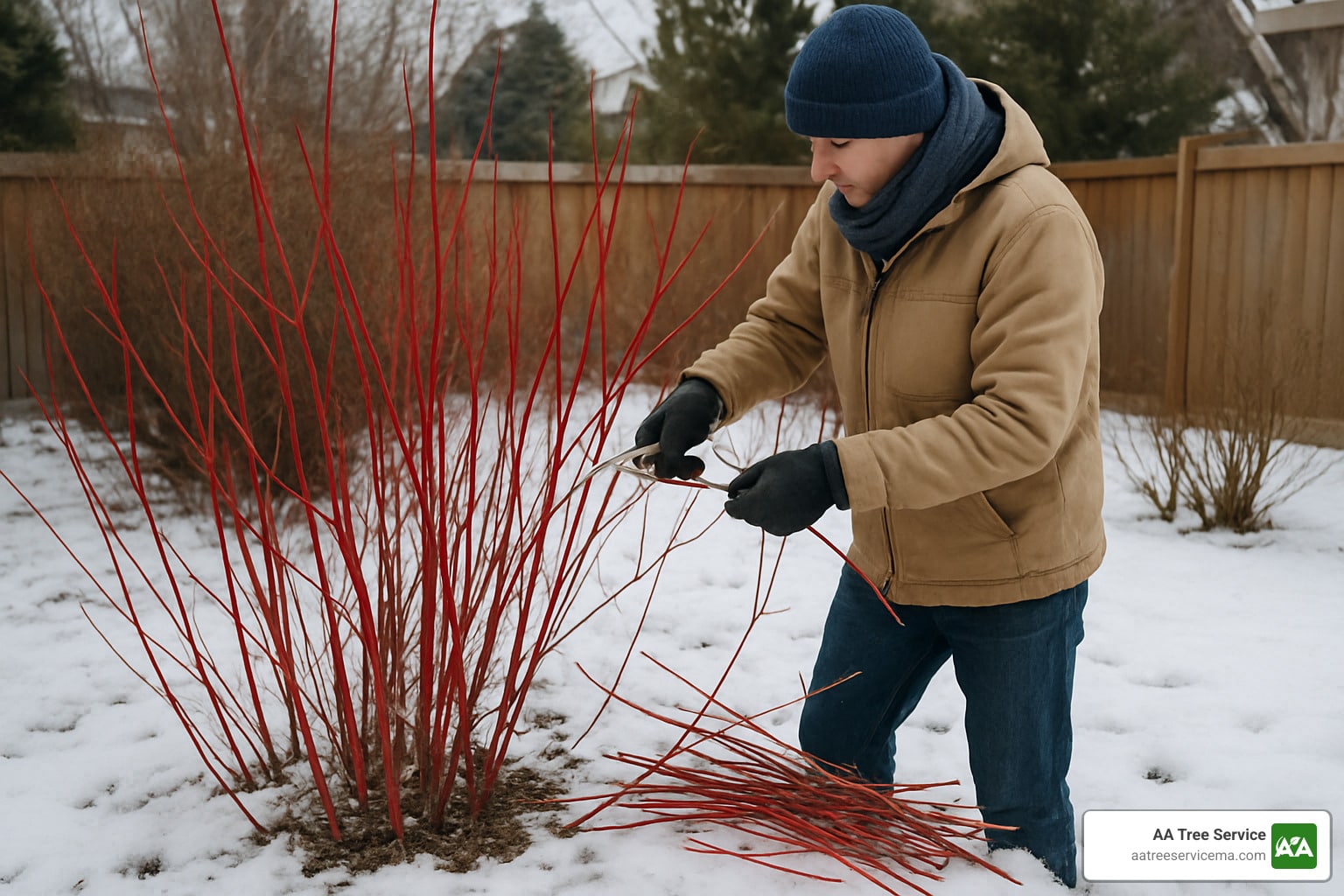
The Bright Side of Winter: Why Dogwood Bush Pruning Matters
Dogwood bush pruning is essential for maintaining vibrant winter color and healthy shrub structure. Here’s what you need to know:
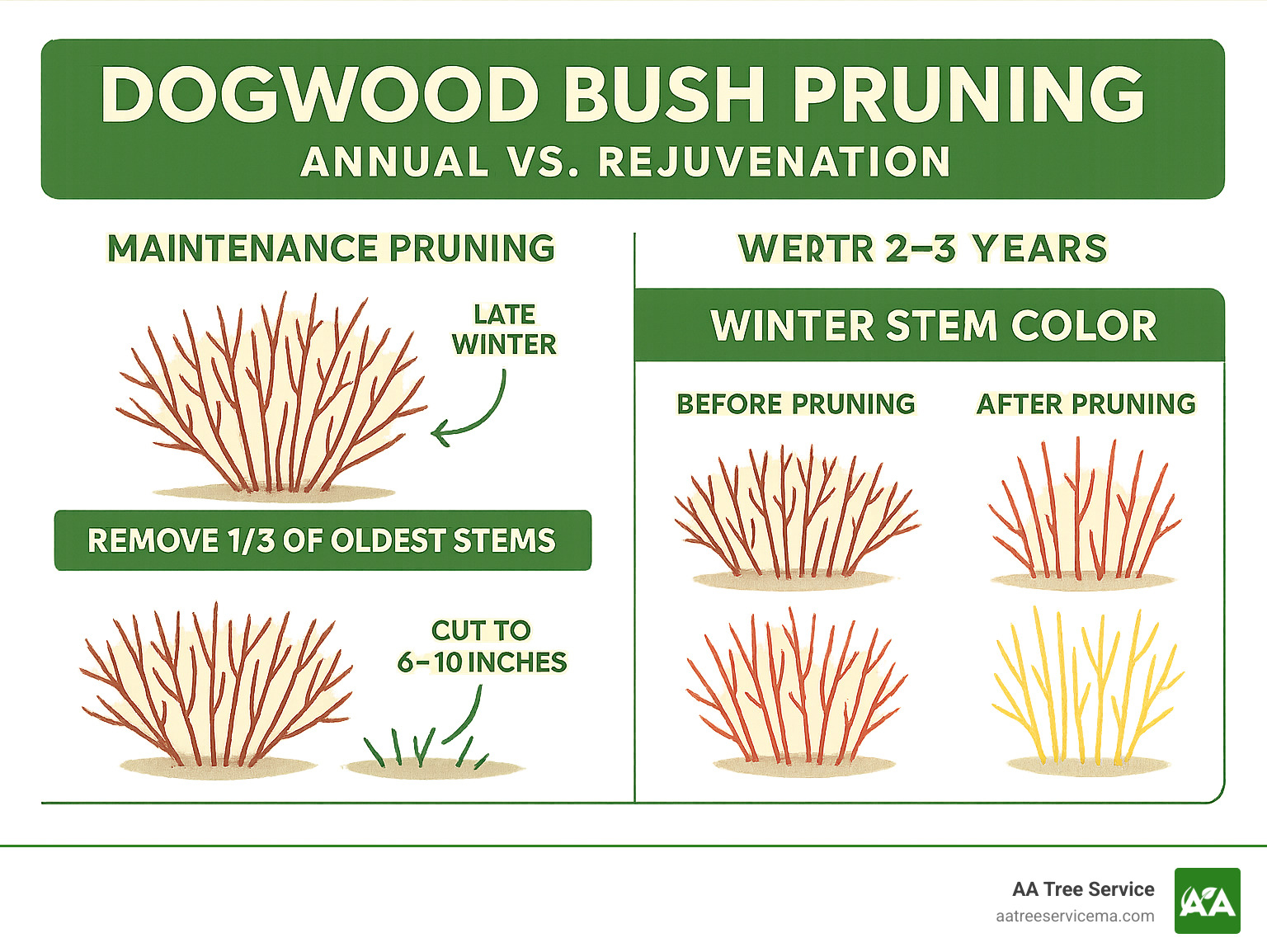
- Best time to prune: Late winter (February-March) before new growth appears
- How much to remove: Cut 1/3 of oldest stems to ground level annually
- Rejuvenation pruning: Every 2-3 years, cut entire shrub to 6-10 inches above ground
- Tools needed: Sharp bypass pruners, loppers, and pruning saw
- Result: Up to 30% brighter stem color the following winter
If you’ve ever admired those striking red or yellow stems brightening up a winter landscape, you’re looking at a well-pruned dogwood shrub. Unlike their tree cousins, dogwood bushes (Cornus alba and Cornus sericea) are grown primarily for their colorful winter stems rather than spring flowers or fall foliage.
“If you do nothing else to care for your Dogwood shrubs, prune them,” advises many horticultural experts – and with good reason. Without regular pruning, dogwood bushes lose their signature bright stem color, become overgrown, and produce fewer of the vivid twigs that make them garden standouts during Massachusetts and New Hampshire winters.
Proper pruning isn’t just about aesthetics. It promotes healthy new growth, improves air circulation to prevent disease, and can extend the lifespan of your shrub. The good news? Dogwood bushes are remarkably forgiving plants that respond exceptionally well to even hard cutbacks.
This guide will walk you through everything you need to know about pruning dogwood bushes, from timing and techniques to troubleshooting common issues. Whether you’re dealing with a neglected tangle or maintaining a prized specimen, the right pruning approach can transform your dogwood shrub’s appearance and health.
What Makes a Dogwood Bush Different from a Dogwood Tree?
Before diving into pruning techniques, it’s important to understand what makes dogwood bushes unique. While dogwood bushes and trees share the genus Cornus, they have distinctly different growth habits and care needs that affect how we approach dogwood bush pruning.
The two stars of the winter landscape that most homeowners in Massachusetts and New Hampshire choose are:
- Tatarian Dogwood (Cornus alba) – A Siberian, Chinese, and Korean native with stems that glow fiery red against the snow
- Red-osier Dogwood (Cornus sericea) – Our North American native with stems ranging from deep red to rich purple
Unlike their cousin dogwood trees (Cornus florida or Cornus kousa) that grow with a dignified single trunk and spreading canopy, dogwood bushes are the social butterflies of the garden. They grow in a multi-stemmed clump and love to spread the party by sending up new shoots from their roots.
A mature dogwood bush typically reaches 6-10 feet tall and wide when happy, though some enthusiastic specimens can stretch up to 15 feet if you never introduce them to your pruners. While they do produce delicate white flower clusters in spring and berries that birds absolutely adore, let’s be honest – we grow them for those stunning winter stems that bring life to our New England landscapes when everything else has gone dormant.
Structural & Growth Habits
The unique growth style of dogwood bushes directly influences how we prune them:
These shrubs are naturally social, growing multiple stems from the base rather than developing a single main trunk. They’re also ambitious spreaders, sending up new shoots from their roots and lower stems like they’re trying to colonize your yard (in the nicest possible way).
Dogwood bushes grow with impressive speed – up to 2 feet in a single season when conditions are right. What makes them particularly forgiving for beginners is their remarkable renewal capability. Even if you get a bit overzealous with the pruners, they bounce back with vigorous new growth.
While they can tolerate partial shade, dogwood bushes produce their most vivid stem color when planted in full sun. That bright winter color is what we’re after, and it’s the newest growth that delivers the most intense reds and yellows.
This explains why dogwood bush pruning focuses on regularly removing the oldest wood. Those senior stems gradually fade to a dull brown or gray, losing the vibrant color that makes these shrubs so special. By selectively removing these older branches, we encourage the plant to produce bright new growth – those living paintbrushes that create such dramatic winter interest when the rest of the landscape has gone to sleep.
Understanding these fundamental differences between dogwood trees and bushes will help you approach pruning with confidence, ensuring your shrubs remain healthy, vibrant, and the envy of the neighborhood during those long New England winters.
The Science of Timing: When & How Often to Prune
Timing isn’t just important for dogwood bush pruning – it’s everything! Think of it as planning the perfect haircut for your shrub: too early and you might expose it to winter damage, too late and you’ll interfere with its flowering cycle.
The sweet spot for pruning these colorful winter beauties falls between late February and early March in Massachusetts and New Hampshire. During this dormant period, your dogwood is essentially “sleeping,” which means:
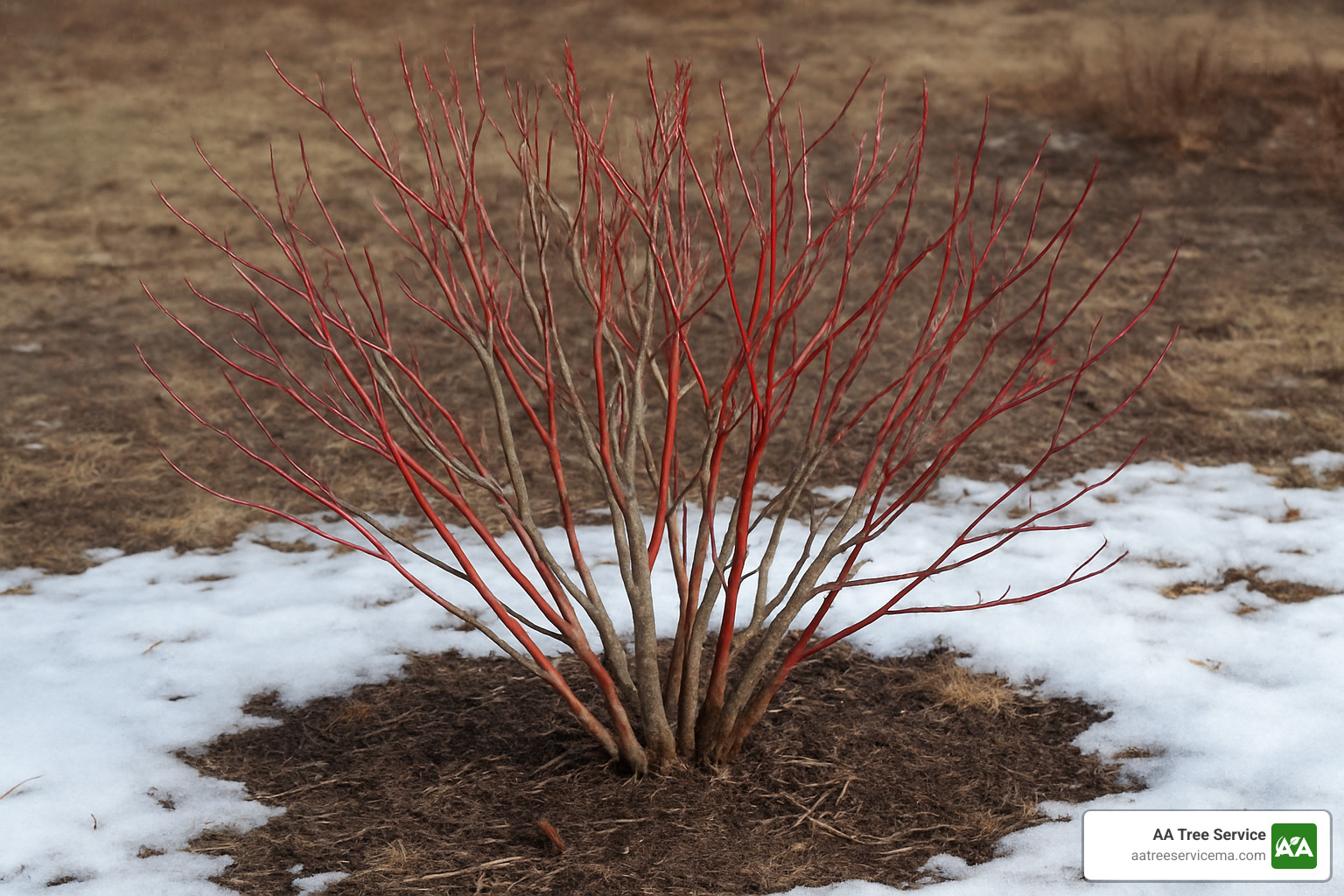
Most local gardeners use what I call the “Super Bowl to St. Patrick’s Day” rule of thumb – a perfect window for USDA Zones 5-6 that covers most of MA and NH. This timing works wonderfully because you can clearly see the branch structure without leaves, the plant isn’t actively growing (so it won’t “bleed” sap excessively), and diseases are mostly dormant in cold weather.
Pruning during this period gives your dogwood plenty of time to recover before the growing season kicks into high gear. According to research from the Royal Horticultural Society, this timing maximizes the plant’s natural healing processes while minimizing stress – their studies on coppicing shrubs confirm what gardeners have known for generations.
Best Months for Dogwood Bush Pruning
If you’re marking your calendar for dogwood bush pruning in Massachusetts or New Hampshire, here’s your month-by-month guide:
February is ideal – plants are fully dormant, and you can easily identify those older, duller stems that need removing. March remains excellent, though keep an eye out for swelling buds, especially in warmer coastal areas near Boston or Portsmouth.
By April, you’ve missed your prime window as new growth has begun, and from May through June, it’s best to leave your dogwood alone during its active growth phase. If you absolutely must prune during the growing season, July offers a small window for minimal, strategic cuts.
From August through January, simply wait it out – unless you’re removing damaged or diseased branches, which should be addressed immediately regardless of season.
Our New England microclimates matter! A dogwood in coastal Newburyport might wake up weeks earlier than one in chillier inland areas like Amherst NH. Always check for signs of bud swell before making your first cut.
Frequency Guidelines
How often should you break out the pruners? That depends on your gardening goals and how vibrant you want those winter stems to be.
For the brightest color display, follow the “one-third rule” – remove approximately one-third of the oldest stems each year. These older stems (typically three years or older) have lost much of their vibrant coloration and removing them encourages fresh, brilliantly colored new growth.
If annual pruning feels too frequent, a biennial approach works well too. Some gardeners prefer removing about half the old wood every other year, which still maintains good color while reducing maintenance.
For neglected shrubs or those that have lost their winter wow-factor, rejuvenation pruning every 2-3 years can work wonders. This more dramatic approach (sometimes called coppicing) involves cutting the entire shrub down to about 6-10 inches above ground level.
The science supports regular pruning – dogwoods left unpruned for 3-4 years typically lose up to half their potential color vibrancy. That’s why at AA Tree Service, we often remind our Massachusetts and New Hampshire customers that these 20-minute annual pruning sessions deliver months of winter garden interest.
Essential Tools & Safety Checklist
Grabbing the right gear before you start dogwood bush pruning can make the difference between a frustrating afternoon and a satisfying garden change. Think of your pruning tools as extensions of your hands—they should feel comfortable and work efficiently.
For most dogwood bushes, you’ll need a simple but effective toolkit:
Bypass pruners become your best friend for stems up to ½ inch thick. These work like scissors rather than crushing stems, creating clean cuts that heal quickly. Loppers (essentially pruners with long handles) give you the leverage needed for stems between ½-1½ inches in diameter, while a pruning saw handles anything thicker, especially during those more dramatic rejuvenation pruning sessions.
Don’t forget about personal protection! A good pair of garden gloves shields your hands from scratches, while eye protection prevents unexpected debris from causing injuries. I learned this lesson the hard way when a small branch snapped back unexpectedly—safety glasses have been non-negotiable ever since!
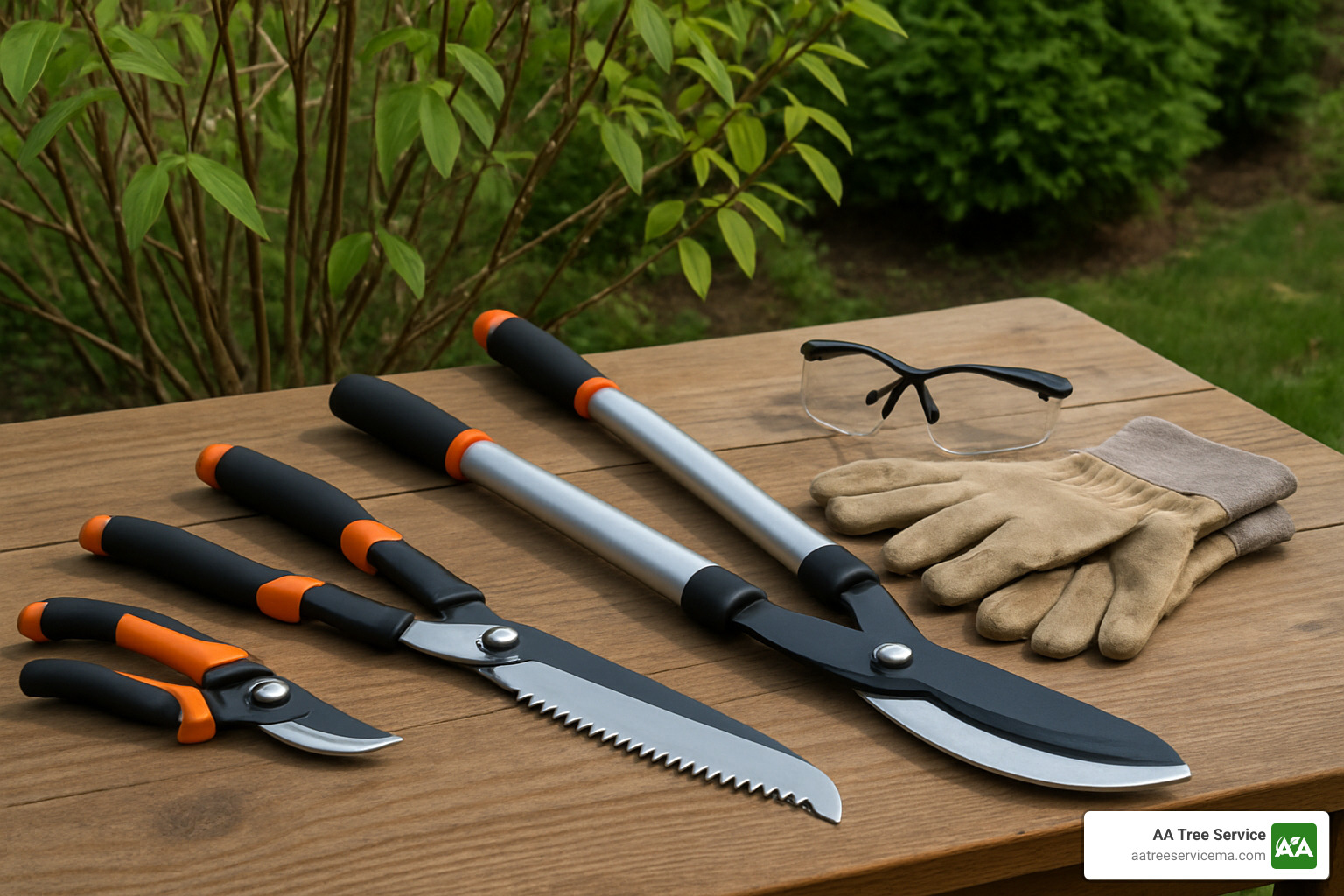
Preparing Your Gear for Dogwood Bush Pruning
Before you make that first cut, take a few minutes to prep your tools properly. Your dogwood will thank you!
Sharp blades create clean cuts that heal quickly. Dull tools crush plant tissue instead of slicing it cleanly, potentially introducing disease and slowing recovery. If you can’t remember the last time you sharpened your pruners, today’s the day.
Tool sanitation might sound fussy, but it’s genuinely important, especially with dogwoods which can be susceptible to diseases like anthracnose. A simple solution of isopropyl alcohol (70%) or a 1:3 bleach-to-water mixture works perfectly. Wipe down your tools before you start, and ideally between shrubs if you’re working on multiple plants.
When I’m heading out for a morning of dogwood bush pruning, I’ll mix up a fresh batch of bleach solution in a small container with a lid. This lets me quickly dip blades between cuts if I spot any suspicious signs of disease. For cordless tools, I always charge batteries the night before—nothing worse than running out of power halfway through!
If your dogwood bushes have grown particularly large or you’re tackling multiple shrubs, consider whether it’s a DIY job or time to call the professionals. Here in Massachusetts and New Hampshire, ladder safety becomes especially important on uneven winter ground. AA Tree Service offers Tree Maintenance Services with trained arborists who have both the specialized equipment and expertise to handle larger pruning jobs safely and efficiently.
Quality tools are an investment that pays off in healthier plants and more enjoyable gardening. That $40 pair of bypass pruners will likely serve you better than the $10 bargain version—and your wrists will appreciate the difference too!
Dogwood Bush Pruning Techniques Step-by-Step
Ready to give your dogwood bushes the care they deserve? Let’s roll up our sleeves and explore the hands-on techniques that will transform your winter landscape. Think of dogwood bush pruning as an art form with science backing it up—one that rewards you with a spectacular display of vibrant stems when the snow falls.
Annual “Bright-Stem” Dogwood Bush Pruning
The yearly maintenance approach keeps your shrubs looking their absolute best without dramatic changes:
First, take a moment to study your shrub. Those oldest stems are easy to spot—they’re thicker, woodier, and their color has faded to a dull grayish-brown instead of the vibrant red or yellow you love. These are your primary targets! Remove about one-third of these old-timers, cutting them as close to ground level as possible.
While you’re at it, look for any damaged or dead wood that needs to go. Those crossing branches or stems growing toward the center? They’re not doing your shrub any favors—remove them to maintain an open, vase-like structure that allows air to circulate freely.
“I always tell homeowners to step back every few cuts,” says one of our senior arborists at AA Tree Service. “It’s easy to get caught up in the pruning zone and lose perspective on the overall shape.”
The payoff for this annual attention is impressive. Research shows that properly pruned red twig dogwoods produce up to 30% more brightly colored stems the following winter. After pruning, a fresh 2-inch layer of mulch (kept a few inches from the stems) will help retain moisture and keep weeds at bay.
Rejuvenation Dogwood Bush Pruning
Sometimes a dogwood needs a fresh start—especially if it’s been neglected, is severely overgrown, or has lost most of its winter color. That’s when rejuvenation pruning comes to the rescue:
This approach might seem dramatic, but it works wonders. Cut all stems down to about 3-4 inches above ground level, making clean cuts at a slight angle to shed water. Use loppers or a pruning saw for thicker stems, and be thorough—this is no time for half measures!
Once you’ve finished cutting, clean up all the pruned material (don’t leave cuttings lying around the base), apply a 2-3 inch layer of mulch, and water thoroughly, especially if conditions are dry.
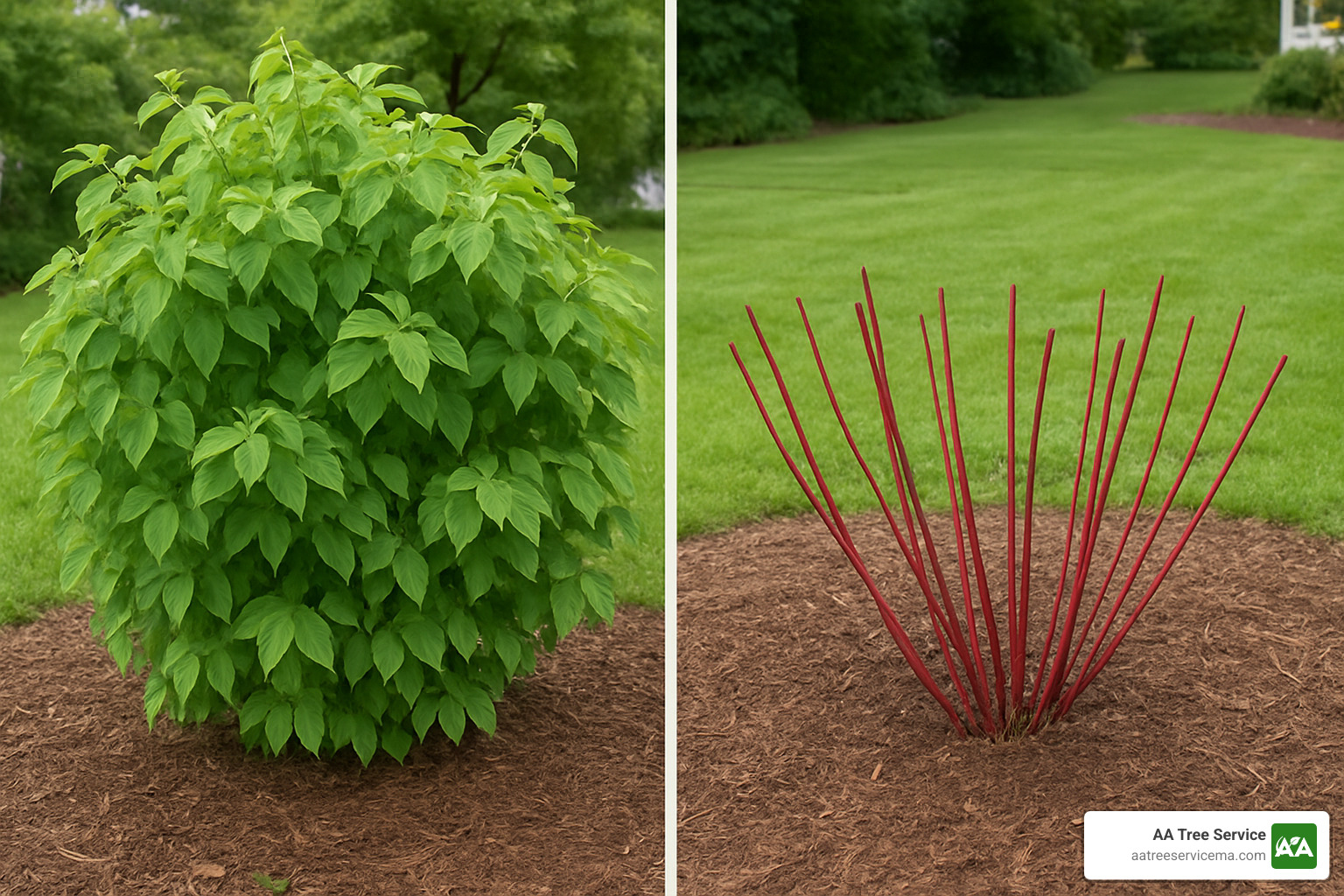
Don’t worry about being too harsh—dogwoods are remarkably resilient. Within one growing season, your shrub will bounce back with fresh, colorful stems that can grow an impressive 3-5 feet. It’s like giving your plant a youth serum!
Shaping & Size Control
Need to keep your dogwood’s dimensions in check without a full rejuvenation? Here’s how to maintain control while preserving the plant’s natural beauty:
Start by removing the tallest stems completely to the ground. This immediately reduces height while encouraging new growth from the base. Next, thin out the center to improve air circulation—a crucial step for preventing disease issues that dogwoods can sometimes face in our humid New England summers.
For selective pruning, remember the 45-degree rule: when shortening stems, cut about ¼ inch above an outward-facing bud, angling your cut at 45 degrees sloping away from the bud. This encourages the new growth to develop outward rather than toward the center, maintaining that desirable open structure.
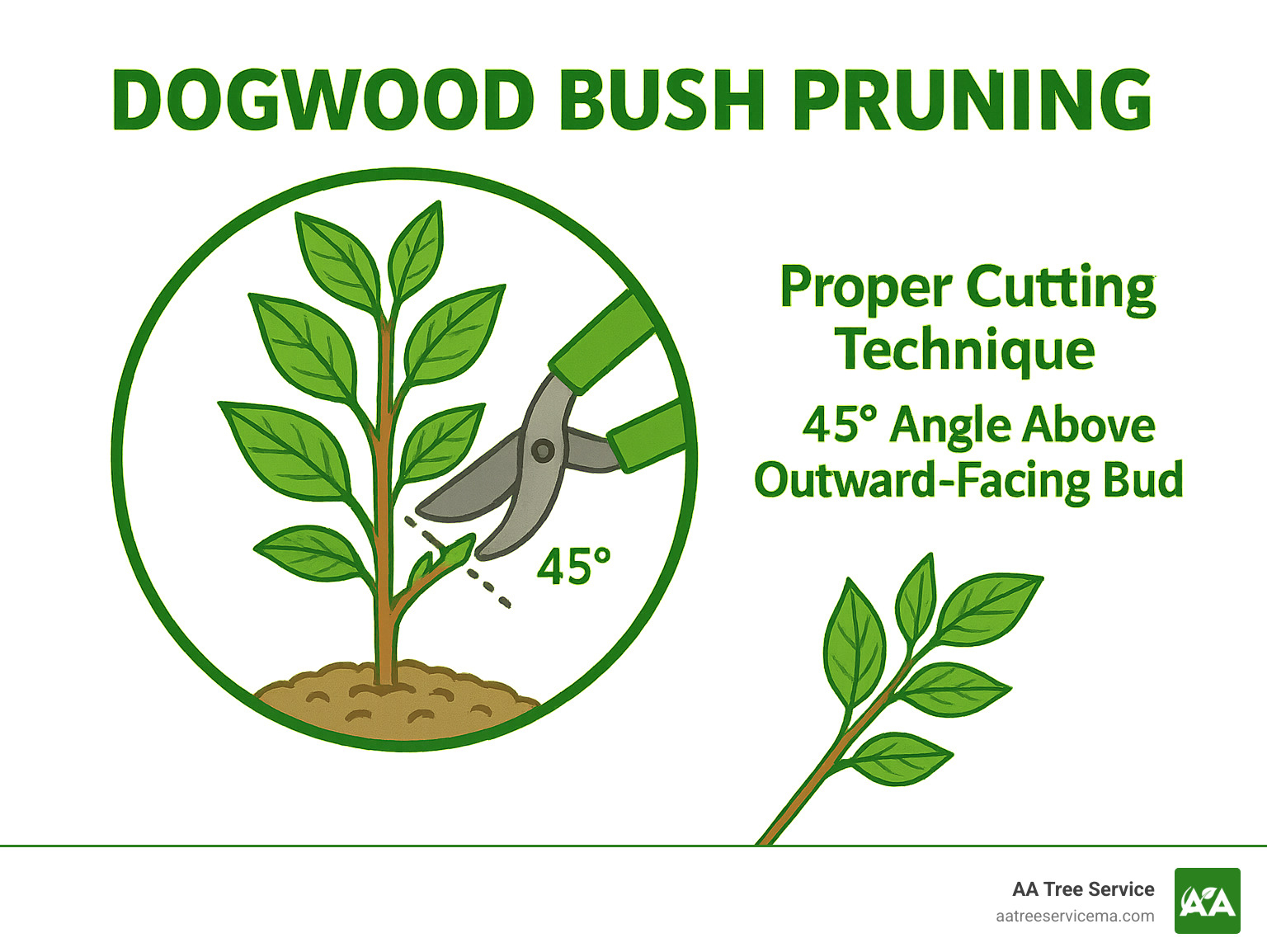
“The one-third rule is golden,” explains our team at AA Tree Service. “Never remove more than one-third of the total growth in a single session.” This prevents stress and ensures your shrub maintains enough foliage to photosynthesize effectively.
If shaping your dogwood bushes feels overwhelming, our Tree Pruning Services are available throughout Massachusetts and New Hampshire. Our experienced team brings professional expertise and specialized equipment to ensure your shrubs get exactly the care they need.
Troubleshooting & Common Mistakes
Let’s face it—even green thumbs occasionally slip up when it comes to dogwood bush pruning. The good news? Most mistakes are easily prevented with a little know-how.
Spotting Diseases During Dogwood Bush Pruning
Pruning season offers the perfect opportunity to play plant detective. As you work, keep your eyes peeled for these common dogwood health issues:
When you notice dark, sunken lesions on stems, you’re likely looking at anthracnose—a fungal disease that can eventually kill branches if left unchecked. Canker reveals itself through sunken, discolored areas with cracked bark, while dieback shows up as dead branch tips that gradually work inward. If you’re pruning during the growing season (though we recommend against this), watch for the telltale white dusting of powdery mildew on leaves.
Found something suspicious? Don’t panic! Grab your alcohol spray bottle and disinfect your tools between each cut—this simple step prevents spreading the problem throughout your shrub. Cut at least 6 inches below any visible symptoms to remove all infected tissue. And please, don’t toss those diseased cuttings on your compost pile—bag them up and remove them from your property completely.
For shrubs showing significant disease, focus extra attention on thinning the center to improve air circulation. Sunlight and airflow are your best allies against fungal problems. In severe cases, you might need a fungicide, but we’d recommend consulting with professionals before going that route.
Our team at AA Tree Service has seen it all when it comes to dogwood diseases across Massachusetts and New Hampshire. We can’t stress enough how important early intervention is—catching problems during your annual pruning session can save your beloved shrubs from serious decline.
What NOT to Do
We’ve seen some well-intentioned pruning turn into plant predicaments. Here’s how to avoid the most common dogwood bush pruning missteps:
Timing matters enormously. Don’t prune during active growth when sap is flowing freely—your dogwood will “bleed” excessively and become stressed. Similarly, don’t remove more than one-third of the plant in a single session, as this overtaxes even the most resilient shrubs.
Technique is just as important as timing. Don’t make flush cuts right against the main stem—always preserve the branch collar (that slightly swollen area at the base of branches) where the plant’s natural healing occurs. On the flip side, don’t leave stubs sticking out, as these invite decay.
Your tools deserve attention too. Don’t use dull tools that crush rather than cleanly cut stems. And please don’t skip sanitizing between plants—or even between cuts on an infected plant. This simple step prevents spreading disease throughout your garden.
Some folks approach dogwoods like they would a boxwood hedge. Big mistake! Don’t shear dogwoods into formal shapes—they need selective pruning that respects their natural growth habit. And finally, don’t neglect aftercare. A good drink of water and fresh mulch helps your freshly pruned shrub recover quickly.
The most damaging mistake we see in yards across New Hampshire and Massachusetts is improper cut placement. Always make cuts at a slight angle about ¼ inch above a bud or branch junction. Too close (flush cuts) or too far (stubby cuts) both invite problems that can shorten your dogwood’s lifespan.
With these troubleshooting tips in mind, you’ll avoid the pitfalls that can turn a simple pruning session into a shrub emergency. And remember, if you’re ever unsure or overwhelmed, our team at AA Tree Service is just a phone call away.
Using Your Cuttings: Propagation & Creative Uses
Those piles of stems after dogwood bush pruning aren’t just yard waste—they’re opportunities! Before you haul them to the compost pile, consider how these vibrant cuttings can become new plants or beautiful decorations.
Propagation from Cuttings
Turning your pruned stems into new plants is surprisingly easy. Dogwoods are among the most cooperative shrubs when it comes to propagation, especially from winter prunings.
Select straight, healthy sections of current-year growth (the brightest colored ones) and cut them into 6-8 inch lengths. Make your cuts clean—a straight cut below a leaf node and an angled cut above a node at the top. Strip off the lower leaves, leaving just 2-3 pairs at the top.
While not strictly necessary, dipping the cut end in rooting hormone dramatically improves your success rate. Then simply push the cutting into a pot filled with moistened rooting medium—a mix of perlite and peat moss works beautifully.
“The key to success is consistent moisture,” says one of our arborists at AA Tree Service. “Cover your pots with clear plastic to create a mini-greenhouse effect, and within 4-6 weeks, you’ll see roots forming.”
By spring, these cuttings will begin leafing out, and by fall, you’ll have new plants ready for the garden—all for free! It’s a wonderful way to expand your garden or share with neighbors across Massachusetts and New Hampshire.
Creative Uses for Pruned Stems
The striking colors that make dogwood bushes so attractive in winter landscapes also make their pruned stems perfect for creative projects:
Winter arrangements bring the garden indoors during the coldest months. Place freshly cut red or yellow dogwood stems in a tall vase with water, and they’ll last for weeks—sometimes even rooting in the water! They look particularly stunning against white walls or paired with evergreen branches.
Holiday decorations get a natural boost from dogwood stems. Bundle them with pine or spruce branches in outdoor containers for a festive look that lasts through the winter. The bright colors pop beautifully against snow.
Living willow structures are possible with the most flexible young stems. Weave them into garden arches, fences, or even whimsical sculptures while they’re still fresh. Many will root where they touch soil, creating permanent garden features.
Dried arrangements work well too, as dogwood stems retain some of their color when dried. Hang bundles upside down in a dark, dry place for two weeks before using.
Garden stakes and supports can be made from the straightest, thicker stems. They’re perfect for supporting young perennials or vegetable plants, adding both function and a touch of color to your garden beds.
Five crafty projects that work beautifully with dogwood stems include: twig wreaths for doors, decorative twig bundles tied with raffia, woven twig baskets, natural plant markers, and rustic picture frames.
The next time you’re out doing your annual dogwood bush pruning in your Massachusetts or New Hampshire garden, set those colorful stems aside. Whether you’re propagating new plants or creating beautiful decorations, those trimmings have a bright future beyond the brush pile!
Dogwood Bush Pruning in MA & NH: Local Tips & Average Costs
Anyone who’s weathered a New England winter knows our region brings unique challenges for gardeners. When it comes to dogwood bush pruning in Massachusetts and New Hampshire, these local conditions deserve special attention.
Living in Bedford MA or Portsmouth NH means your dogwoods face different stresses than those in milder climates. Heavy snow accumulation can bend and even break branches, especially in densely packed shrubs. That’s why many experienced New England gardeners maintain a slightly more open structure in their dogwoods—giving those beautiful red stems room to flex rather than snap when loaded with wet snow.
If your dogwoods line a driveway or roadway, they’re likely getting splashed with road salt throughout winter. During your late-winter dogwood bush pruning session, take time to examine stems for salt damage (look for brown, dried-out sections), and consider a thorough soil rinse in early spring to flush away salt buildup that could harm new growth.
Our four-legged friends present another regional challenge. Those tender new dogwood shoots that emerge after pruning might as well be deer candy in many NH and MA neighborhoods! If your property sees regular deer traffic, consider temporary protection for freshly pruned shrubs until new growth toughens up.
“I always tell my clients in northern New Hampshire to prune a bit earlier in the February-March window,” shares one of our AA Tree Service arborists. “Their growing season starts later but ends earlier too, so giving plants maximum recovery time before bud break matters.”
Average Costs
Wondering what professional dogwood bush pruning might cost? Based on online data (not AA Tree Service pricing), the average costs in Massachusetts and New Hampshire can vary significantly:
- Small dogwoods under 4 feet might run $150-$300
- Medium-sized shrubs in the 4-8 foot range typically cost $250-$450
- Large or seriously overgrown specimens could range from $350-$650+
- For multiple shrubs or an entire hedgerow, expect $500-$1,500+
These figures represent industry averages with considerable variation. Location, accessibility, and the shrub’s condition all impact final pricing. Many homeowners find professional help worthwhile for larger specimens or when rejuvenation pruning is needed.
When to Call Professionals
While many gardeners enjoy maintaining their dogwoods, some situations call for expert help. Consider reaching out to professionals when:
Your dogwood has become a small forest—shrubs over 10 feet tall or wide often require specialized equipment for safe pruning. Major rejuvenation of mature specimens can also be physically demanding work that professionals can complete efficiently.
Disease concerns present another good reason to call in experts. Our certified arborists can identify specific pathogens affecting your dogwoods and recommend appropriate treatments alongside proper pruning techniques.
Location matters too. Dogwoods growing near structures, power lines, or in tight spaces may require more technical pruning approaches to maintain both plant health and property safety.
At AA Tree Service, we’ve been helping Massachusetts and New Hampshire homeowners with ornamental shrub care for over two decades. Our team understands local growing conditions and brings specialized knowledge to every property we service. When your dogwoods need expert attention, we’re just a call away—offering free same-day quotes and reliable service throughout our service area.
Frequently Asked Questions about Dogwood Bush Pruning
When can I safely prune if I missed late winter?
Oops! The ideal pruning window slipped by? Don’t worry – your dogwood is more forgiving than you might think.
If you missed the February-March dogwood bush pruning timeframe, mid-July offers your next best opportunity. By this point, the spring growth flush has hardened off, making summer cuts less stressful for the plant.
“I always tell my Massachusetts customers that it’s better to wait for the right window than to prune at the wrong time,” explains one of our arborists at AA Tree Service. “But if you absolutely need to prune outside the ideal times, just be more conservative with your cuts.”
If you particularly value the ornamental flowers, you can also prune right after blooming ends. And remember, safety trumps timing—damaged, diseased, or dangerous branches should be removed immediately regardless of season. Just be extra vigilant about tool cleanliness when making off-season cuts.
How tall will my dogwood bush get if I never prune?
Left to their own devices, dogwood bushes can become surprisingly large! Most varieties will reach heights of 8-15 feet and spread 6-12 feet wide. With their enthusiastic suckering habit, they can expand even further horizontally, growing up to 2 feet annually in ideal New England conditions.
But here’s the catch—while unpruned dogwoods certainly get bigger, they actually become less impressive. Those stunning red or yellow winter stems that make dogwood bushes so special? They gradually fade as older stems dominate the shrub. Research shows that dogwoods left unpruned for 3-4 years may lose up to half their winter color vibrancy.
So while your unpruned dogwood might eventually make a privacy screen, it won’t be the winter showstopper that makes these shrubs so popular throughout Massachusetts and New Hampshire.
Can I mix red-twig and yellow-twig in one bed?
Absolutely! In fact, combining these varieties creates some of the most spectacular winter gardens we see across our service area. The contrast between red-twig dogwood (like Cornus sericea ‘Cardinal’) and yellow-twig varieties (such as Cornus sericea ‘Flaviramea’ or Arctic Fire® Yellow) creates a stunning visual impact that single-color plantings simply can’t match.
For maximum impact, consider planting them in groups of 3-5 of each color, positioning them where they’ll be visible from your windows during those long New England winters. They look particularly dramatic when backed by evergreens or illuminated with landscape lighting.
The best part? Both color varieties require identical dogwood bush pruning regimens, so maintenance remains straightforward. You’ll follow the same late-winter schedule and techniques for both types.
Will pruning affect flowering and berries?
Yes, your pruning approach will impact both flowering and fruiting. Standard annual maintenance pruning (removing one-third of oldest stems) strikes a balance, maintaining some flower production while optimizing stem color. Complete rejuvenation pruning, however, will significantly reduce flowering for one season, and summer pruning might remove developing berries.
If providing berries for local wildlife is a priority in your Massachusetts or New Hampshire garden, consider a modified approach. Try pruning just one-third of the shrub each year on a three-year rotation. This maintains some mature flowering wood at all times while still gradually refreshing the plant’s structure.
Many of our clients throughout MA and NH have found this rotating approach offers the best of both worlds—reliable berries for birds plus enough new growth for colorful winter stems.
Can dogwood bushes be pruned into a single-stem tree form?
While technically possible, training a dogwood bush into a single-stemmed tree form is fighting against its natural growth habit. More importantly, this approach eliminates the very feature that makes these shrubs special—those vibrant young stems that light up winter landscapes.
If you’re dreaming of a dogwood tree, we recommend planting an actual tree species instead. Flowering Dogwood (Cornus florida) or Kousa Dogwood (Cornus kousa) make beautiful specimen trees with their distinctive spring flowers and attractive branching patterns.
As one of our senior arborists at AA Tree Service likes to say, “Plants are happiest when we work with their natural tendencies, not against them.” Throughout our years serving Massachusetts and New Hampshire communities, we’ve found this wisdom holds true for all aspects of tree and shrub care.
Conclusion
The magic of dogwood bush pruning isn’t just in the technique—it’s in the change. Those bright stems lighting up a snowy Massachusetts backyard or adding color to a New Hampshire winter landscape are the direct result of proper pruning care. With the right approach, your dogwoods can become the stars of your winter garden when most other plants are dormant and colorless.
As we’ve explored throughout this guide, successful dogwood bush pruning comes down to a few essential practices:
Timing makes all the difference—that late winter window from February to March gives your shrubs the perfect fresh start just before the growing season kicks in. Mark your calendar for that “Super Bowl to St. Patrick’s Day” sweet spot when the plants are fully dormant but ready to spring into action.
The renewal strategy couldn’t be simpler: remove about one-third of the oldest stems each year to keep a constant supply of those vibrant young twigs coming. Those older, grayer stems aren’t doing your landscape any favors—cutting them away makes room for the bright new growth that makes these shrubs special.
For shrubs that have been neglected, don’t be afraid of rejuvenation pruning. Cutting the entire shrub back to just a few inches above the ground every 2-3 years might seem drastic, but dogwoods are remarkably resilient. They’ll bounce back with vigor and a fresh new look that will transform your garden.
Your tools matter just as much as your technique. Sharp, clean pruners make clean cuts that heal quickly and resist disease. Taking the extra minute to disinfect between shrubs (or between cuts if you spot disease) can save you heartache later.
Here in Massachusetts and New Hampshire, our unique climate presents both challenges and opportunities for dogwood growers. From heavy snow loads to salt spray near roadways, considering these local factors will help your shrubs thrive through our distinctive seasons.
At AA Tree Service, we’ve spent over two decades getting to know the trees and shrubs that thrive in our New England climate. Our team of certified arborists brings that regional expertise to every property we service across Massachusetts and New Hampshire. Whether you’re looking for guidance on dogwood bush pruning or need help with more extensive tree and shrub care, we understand what works in our local growing conditions.
For those times when the job seems too big or the techniques too complex, professional help is just a call away. We offer free same-day quotes and 24/7 emergency services to ensure your landscape gets the care it needs, when it needs it.
With the right pruning approach, your dogwood bushes will reward you year after year with those spectacular stems that seem to glow from within on cold winter days. The modest effort of annual pruning pays such rich dividends—a splash of color exactly when your garden needs it most.
Ready to see your dogwoods reach their full potential? Grab those pruners when late winter arrives, or reach out to our team for professional assistance. Either way, your landscape will thank you with a brilliant winter display that neighbors will envy and wildlife will appreciate.