

Boston tree removal is essential for maintaining safety, aesthetics, and the health of your property. In Boston, tree removal is governed by specific regulations to ensure the protection of public shade trees and adherence to Massachusetts General Law Chapter 87. Here’s a quick breakdown of what you need to know:
- Permits are required for removing street trees in Boston.
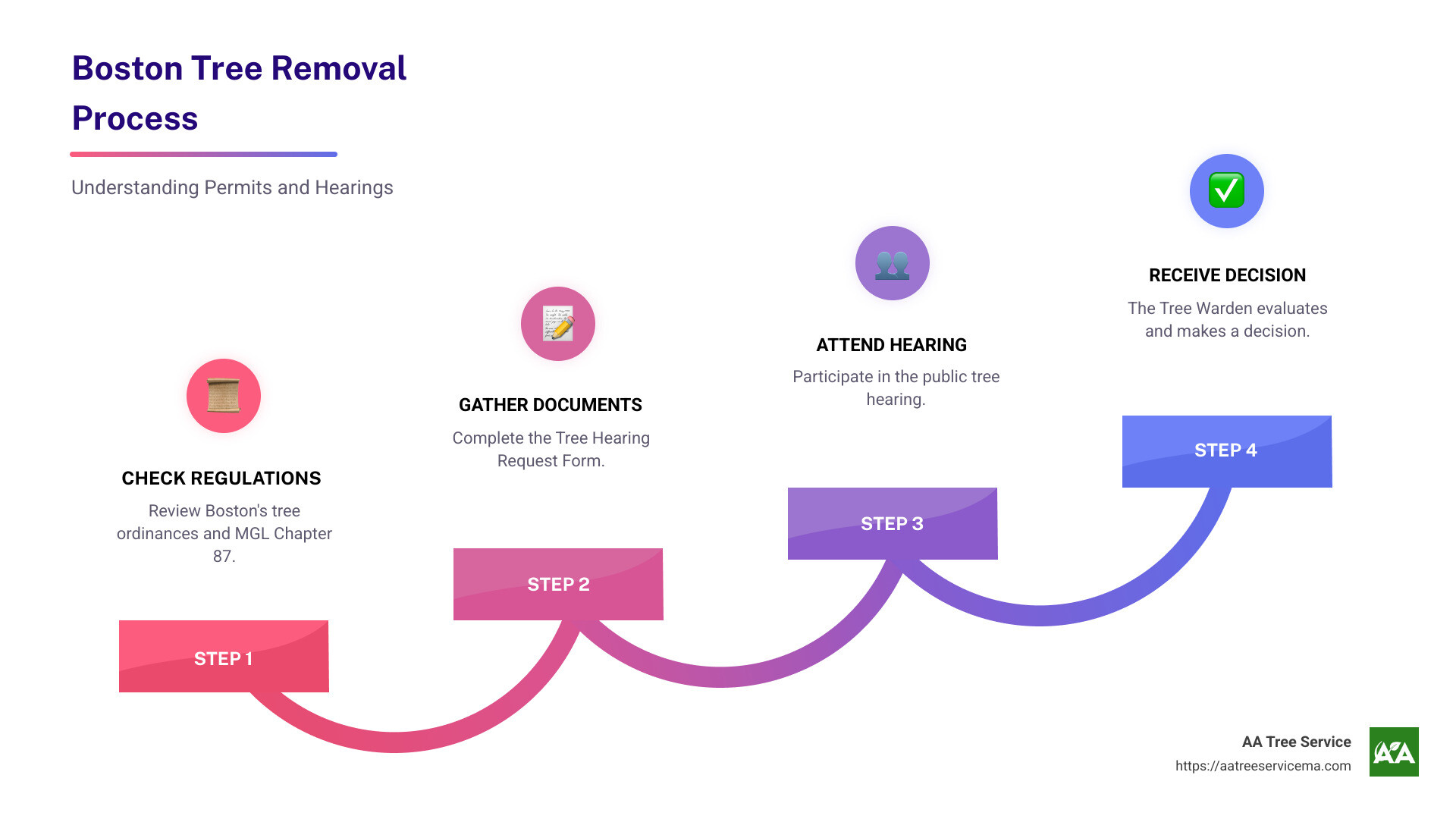
- You must complete a Tree Hearing Request Form.
- A public tree hearing is necessary, where community input can affect the decision.
- The Tree Warden evaluates the tree and oversees hearings.
The process can seem daunting, but understanding the steps and requirements helps simplify your tree removal plans.
Boston’s tree regulations are designed to protect urban greenery while accommodating necessary removals for safety and development. The city’s intricate permit process underscores the importance of preserving this natural resource.
Learn more about boston tree removal:
– tree service newton ma
– tree trimming newton ma
Understanding Boston Tree Removal
In Boston, tree removal isn’t just about cutting down a tree. It involves understanding and navigating through a series of regulations aimed at preserving the city’s green spaces. Here’s what you need to know:
Boston Tree Ordinance
Boston has specific rules for tree removal to protect its urban forest. These rules are part of the city’s commitment to maintaining a healthy and sustainable environment. If you’re planning a boston tree removal, you must follow these regulations closely.
Public Shade Trees
Public shade trees, often called street trees, are trees located within the public right of way. This typically means they are found between the curb and the sidewalk. These trees are protected under Massachusetts General Law Chapter 87 (MGL 87), which has been in place for over a century. This law ensures that public shade trees are preserved for the benefit of the community.
MGL 87
Massachusetts General Law Chapter 87 provides the legal framework for the protection of public shade trees. It requires that any proposed removal of these trees, especially if they are healthy, must go through a public hearing process. This involves:
- Submitting a Tree Hearing Request Form: This form is your first step in the removal process. It must be filled out and submitted with all necessary documents, including a site plan.
- Conducting a Public Tree Hearing: The Tree Warden, along with the Parks Department, will review your request. A public hearing is then scheduled, typically on the first Thursday of each month. Here, community members can voice their opinions, which may influence the final decision.
- Evaluation by the Tree Warden: The Tree Warden will assess the health and impact of the tree(s) in question. This evaluation plays a crucial role in the decision-making process.
Understanding these steps is crucial for anyone considering tree removal in Boston. It not only ensures compliance with local laws but also protects the city’s valuable natural resources.
The process may seem complex, but it’s designed to balance urban development with environmental preservation. By following these guidelines, you contribute to maintaining Boston’s beautiful and vital urban canopy.
Cost Factors in Tree Removal
When considering boston tree removal, understanding the cost factors is crucial. Several elements contribute to the overall expense, including the complexity of the job, average costs, and any required replacement fees.
Average Costs
In Boston, the cost to remove a tree can vary widely. On average, homeowners can expect to pay between $300 and $2,500 per tree, depending on the size and location. Smaller trees are generally less expensive to remove, while larger ones with extensive root systems or those located near structures can significantly increase the cost.
Complex Jobs
Complex jobs often involve trees that are large, diseased, or located in hard-to-reach areas. For instance, if a tree is near power lines or buildings, the removal process becomes more intricate and requires specialized equipment like cranes. This complexity can add to the cost, making these jobs more expensive than standard removals.
Replacement Fees
In Boston, if you’re removing a public shade tree, you may need to pay a replacement fee. This fee is calculated based on the tree’s diameter and is currently set at $550 per diameter inch measured at 4.5 feet above ground. This cost helps mitigate the loss of the tree from Boston’s urban canopy and goes towards the Fund for Parks and Recreation.
Understanding these cost factors can help you budget effectively and ensure you’re prepared for any additional expenses that may arise during the tree removal process. By being informed, you can make better decisions and contribute to maintaining Boston’s green spaces.
Best Time for Tree Removal
Timing is everything when it comes to boston tree removal. Choosing the right season can save you money and make the process smoother.
Seasonal Cost Variations
Tree removal costs can fluctuate throughout the year. Many homeowners find that February and March are the best months for tree removal. During these months, demand is lower, which can translate to better pricing. Winter is often less busy for tree services, so companies might offer discounts to keep their crews working.
February and March
In the winter months, trees are dormant. This means there’s less foliage, making it easier for tree removal experts to access branches and trunks. Removing trees during this time can also minimize the impact on your landscape, as the ground is often harder and less prone to damage from heavy equipment.
Booking Early
Planning ahead is key. If you’re considering tree removal during the peak winter months, booking early is a smart move. By scheduling your service in advance, you can secure the best rates and ensure that your preferred tree removal company is available. This proactive approach can also give you more time to handle any necessary permits or paperwork.
By understanding these seasonal factors, you can make informed decisions about when to schedule your tree removal, potentially saving time and money in the process.
Navigating the Permit Process
When it comes to boston tree removal, navigating the permit process can seem daunting. But with a clear roadmap, you can tackle it with ease.
Tree Hearing Request Form
First things first, you need to fill out the Tree Hearing Request Form. This form is your ticket to getting the necessary approval for tree removal. Make sure to complete it thoroughly and attach a detailed site plan. You can submit it via email to trees@boston.gov, or drop it off at the Parks and Recreation Department at 1010 Mass Ave, Dorchester, MA.
Public Tree Hearing
Once your paperwork is in, the city will schedule a public tree hearing. These hearings happen on the first Thursday of each month at 10 a.m. If the first Thursday is a holiday, the hearing moves to the second Thursday. During the hearing, the Tree Warden will assess the impact on public shade trees, and you’ll have a chance to present your case.
The public is welcome to comment, and their feedback can influence the decision. So, it’s wise to prepare a compelling explanation of your project and its necessity. Notices for these hearings are posted on the city’s website and around the affected area at least seven days in advance.
Role of the Tree Warden
The Tree Warden is a crucial figure in this process. They evaluate the health and significance of the trees in question and guide the hearing. Their goal is to balance development needs with the preservation of Boston’s urban canopy. Understanding their role can help you prepare better and address any concerns they might raise.
By following these steps and understanding the key players, you can smoothly steer the permit process for boston tree removal. This will ensure that your project complies with local regulations and contributes to the sustainable management of Boston’s urban forest.
Frequently Asked Questions about Boston Tree Removal
How much does it cost to remove a tree in Boston?
The cost of boston tree removal can vary widely. On average, you might expect to pay between $500 and $1,500 for a typical removal job. However, complex jobs, such as those involving large trees or trees in difficult-to-access areas, can significantly increase these costs. In such cases, the use of specialized equipment like cranes might be necessary, adding to the expense.
Do you need a permit to cut down a tree in Boston?
Yes, you generally need a permit to remove a tree in Boston, especially if it is a public shade tree. According to Massachusetts General Law Chapter 87, a public shade tree is located within the public right of way, typically between the curb and the sidewalk. To remove such a tree, you must go through a formal process that includes submitting a Tree Hearing Request Form and participating in a public hearing. The Tree Warden and the Parks Department will evaluate your request to ensure it aligns with the city’s tree protection regulations.
What is the cheapest time of year for tree removal?
Timing can influence the cost of boston tree removal. Generally, February and March are considered the most cost-effective months for tree removal. During this period, demand for tree services tends to be lower, which often results in more competitive pricing. Booking early in these months can help you secure a better rate and ensure your project is completed before the busy spring season begins.
By understanding these key aspects, you can better steer the tree removal process in Boston, balancing cost considerations with regulatory requirements.
Conclusion
At AA Tree Service, customer satisfaction is our top priority. With over 20 years of experience in Massachusetts and New Hampshire, we pride ourselves on delivering high-quality tree removal services custom to your specific needs. Our team of certified arborists is dedicated to ensuring your property remains safe and beautiful, whether you’re dealing with a hazardous tree or planning a landscaping project.
One of our standout features is our 24/7 emergency services. We understand that tree emergencies can happen at any time, and quick action is crucial to prevent damage to your property. Our team is always ready to respond promptly, providing you with peace of mind when unexpected situations arise.
Choosing AA Tree Service means choosing a partner committed to excellence. We offer free same-day quotes, so you can make informed decisions without any pressure. Our transparent pricing ensures no surprises, and our competitive rates mean you get the best value for your investment.
Whether you’re in Boston or any of the surrounding areas, we’re here to help with all your tree care needs. For more information or to schedule a service, visit our Newton MA Tree Removal Company page. Let us take care of your trees, so you can focus on enjoying your outdoor space.
