What to Expect: A Quick Cost Overview
The average price for stump grinding ranges from $120 to $400 per stump for professional services, with costs varying based on stump size, wood type, and accessibility. While this range provides a good starting point, understanding the components of the price is key to evaluating a quote. Here’s what most homeowners pay:
Quick Pricing Guide:
- National Average: $150-$450 per stump
- Per-Inch Pricing: $2-$6 per diameter inch
- Minimum Service Fee: $80-$160
- Additional Stumps: $30-$70 each
- Extra-Large Stumps: $300-$800+
These prices are average industry costs found online and are not actual prices from AA Tree Service.
When you’re comparing quotes for stump grinding, you’ll quickly notice that prices can vary widely—sometimes by hundreds of dollars for what seems like the same job. That’s because stump grinding costs depend on more than just the size of what’s left behind after a tree comes down.
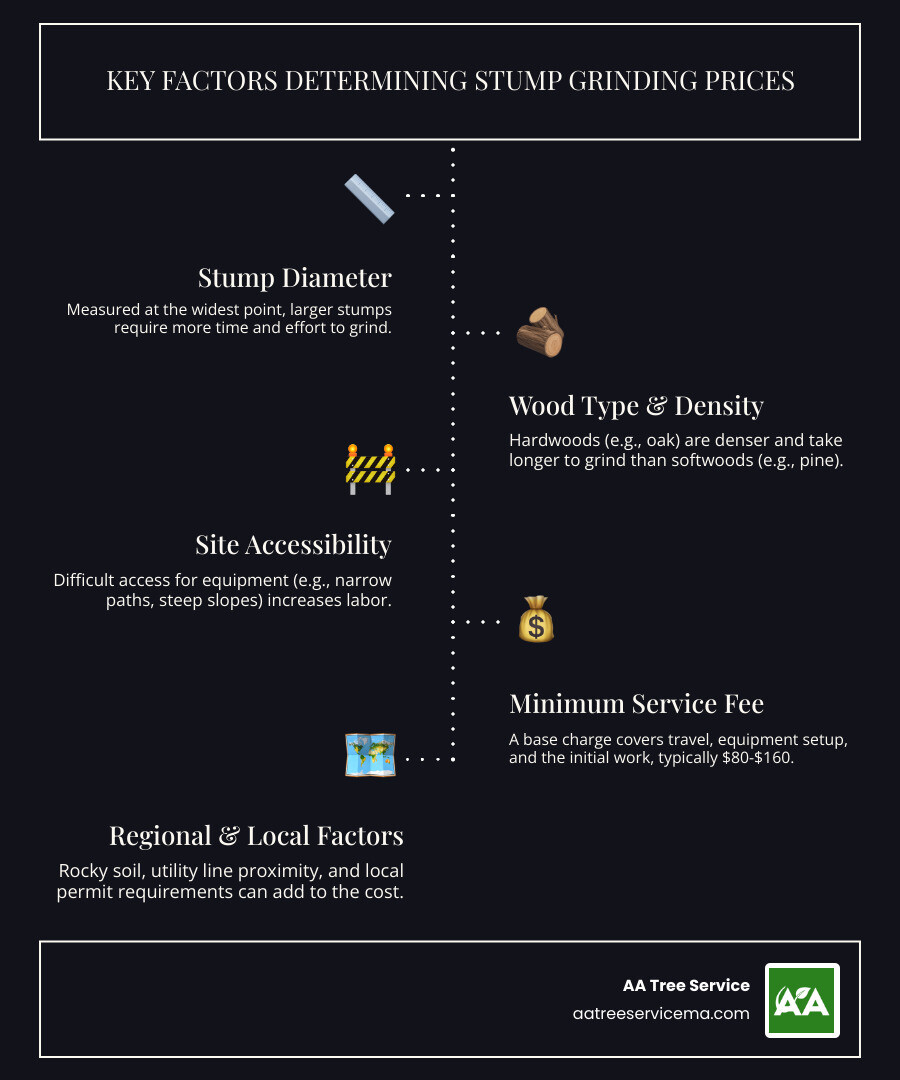
The three main factors that determine your final price are:
- Stump diameter (measured at the widest point, including root flares)
- Wood type (dense hardwoods cost more than softwoods)
- Accessibility (how easy it is for heavy equipment to reach the stump)
Most companies charge either a per-inch rate or an hourly fee, plus a minimum service charge. This minimum fee, sometimes called a trip charge, is crucial to understand. It covers the significant overhead of a professional operation, including the time and fuel for travel, loading and unloading heavy machinery, general liability and workers’ compensation insurance, and allocating the cost of equipment maintenance. It ensures that even a small, quick job is viable for the business. Understanding these pricing structures helps you spot fair quotes versus inflated ones.
In Massachusetts and New Hampshire, you’ll also need to account for regional factors that can increase the average cost. The notoriously rocky New England soil can dull or break grinder teeth, requiring more time and materials. Furthermore, the higher cost of living, local business insurance rates, and the prevalence of dense hardwood trees like oak and maple all contribute to a higher baseline price compared to other parts of the country. The good news? Multiple stumps typically come with significant discounts, since the crew and equipment are already on-site, making the per-stump cost much more efficient.
Basic average price for stump grinding vocab:
Understanding the Average Price for Stump Grinding
When we talk about the average price for stump grinding, these are industry-wide figures. These prices are average industry costs found online and are not actual prices from AA Tree Service. We aim to provide transparency so you can make an informed decision.
Across the industry, the typical cost to grind a stump generally falls between $150 and $450. However, for particularly challenging or extra-large stumps, this cost can soar up to $1,600. Many professionals calculate their fees based on the stump’s diameter, with rates commonly ranging from $2 to $6 per inch. You’ll also frequently encounter a minimum service fee, which can be anywhere from $80 to $160, regardless of how small the stump might be. This minimum fee helps cover the costs of travel, equipment setup, and the crew’s time, even for quick jobs.
For a deeper dive into what our services entail, you can find More info about our Stump Grinding Service.
How Stump Size Impacts the Average Price for Stump Grinding
The size of a stump is arguably the most significant factor influencing the grinding cost. We measure the stump’s diameter at its widest point, often including any visible root flares, to get an accurate assessment. The larger and wider the stump, the more time, fuel, and equipment wear will be involved.
Here’s a general breakdown of how stump size affects pricing:
- Small Stumps (up to 10 inches in diameter): These are often the quickest and easiest to handle. You might expect to pay as little as $15 (plus any minimum fees) up to around $75 for a small stump.
- Medium Stumps (10 to 30 inches in diameter): This is the most common size range. For these, costs typically fall between $75 and $150.
- Large Stumps (over 30 inches in diameter): As stumps get larger, they require more powerful equipment and more grinding time. Prices for large stumps generally range from $150 to $417.
- Extra-Large Stumps (over 72 inches or in difficult conditions): These colossal stumps can be a full day’s work or more. “Difficult conditions” can include stumps on a severe slope, those intertwined with fencing or a retaining wall, or stumps from trees that had extensive, thick surface roots that also require grinding. For these, costs can easily jump from $300 to $800, and in complex situations, even up to $1,600.
How Grinding Depth Affects Cost
Another critical, often overlooked, factor is the desired depth of the grind. Standard stump grinding removes the stump to a depth of 4 to 8 inches below the existing grade. This is perfectly adequate for planting grass or small shrubs. However, if you plan to replant a new tree with a large root ball or install a footing for a deck or fence post, you will require a deeper grind.
- Deeper Grinding (12-18+ inches): This service costs more because it takes significantly more time, consumes more fuel, and produces a much larger volume of wood chip debris that may need to be managed. Expect the price to increase by 50% to 100% or more for a deep grind compared to a standard one.
The Cost of One Stump vs. Multiple Stumps
While the first stump often comes with a higher price tag, you can usually save money per stump if you have multiple stumps to be ground. This is because a significant portion of the cost for the first stump covers the initial mobilization—things like travel to your property, equipment setup, and administrative time.
- First Stump Cost: Expect to pay the full rate, often ranging from $120 to $210 (or around $123 as an average starting point), which includes that base call-out fee.
- Discount for Additional Stumps: Once our crew and equipment are on-site, the cost for each subsequent stump usually drops significantly. You can expect to pay an additional $30 to $75 per stump. This per-stump cost reduction makes bundling multiple stumps a smart financial move. It’s more efficient for us, and more cost-effective for you!
Labor Costs and Hourly Rates
Labor is a substantial component of the overall average price for stump grinding, often accounting for as much as 90% of the total cost. Our crews are skilled professionals operating specialized, heavy machinery, and their expertise is reflected in the pricing.
- Hourly Rates: Many professionals charge by the hour, with rates typically ranging from $100 to $200 per hour. This rate covers the operator’s time, fuel, and the wear and tear on the machinery.
- Job Complexity and Equipment: The type of equipment needed affects labor time. A large, tow-behind grinder might make quick work of an open-field stump but requires more setup. A smaller, self-propelled grinder might be necessary for a backyard with a narrow gate, increasing the grinding time but making the job possible. The more complex the job, the more labor hours it will require. Factors like difficult terrain, restricted access, or the presence of rocks and debris can significantly increase the time needed to grind a stump.
- Site Accessibility: If a stump is in a tight spot that’s hard to reach with our equipment, it will take more time and specialized maneuvers, adding to the labor cost.
We believe in providing Affordable Stump Grinding services without compromising on quality or safety.
Key Factors That Influence Your Final Quote
Beyond just size and depth, several other elements can significantly sway your final stump grinding quote. Understanding these factors can help you anticipate costs and know what to discuss with your service provider.
When we assess a stump grinding job in Massachusetts or New Hampshire, we consider:
- Tree Type: The species of tree directly affects the wood’s density and how long it takes to grind.
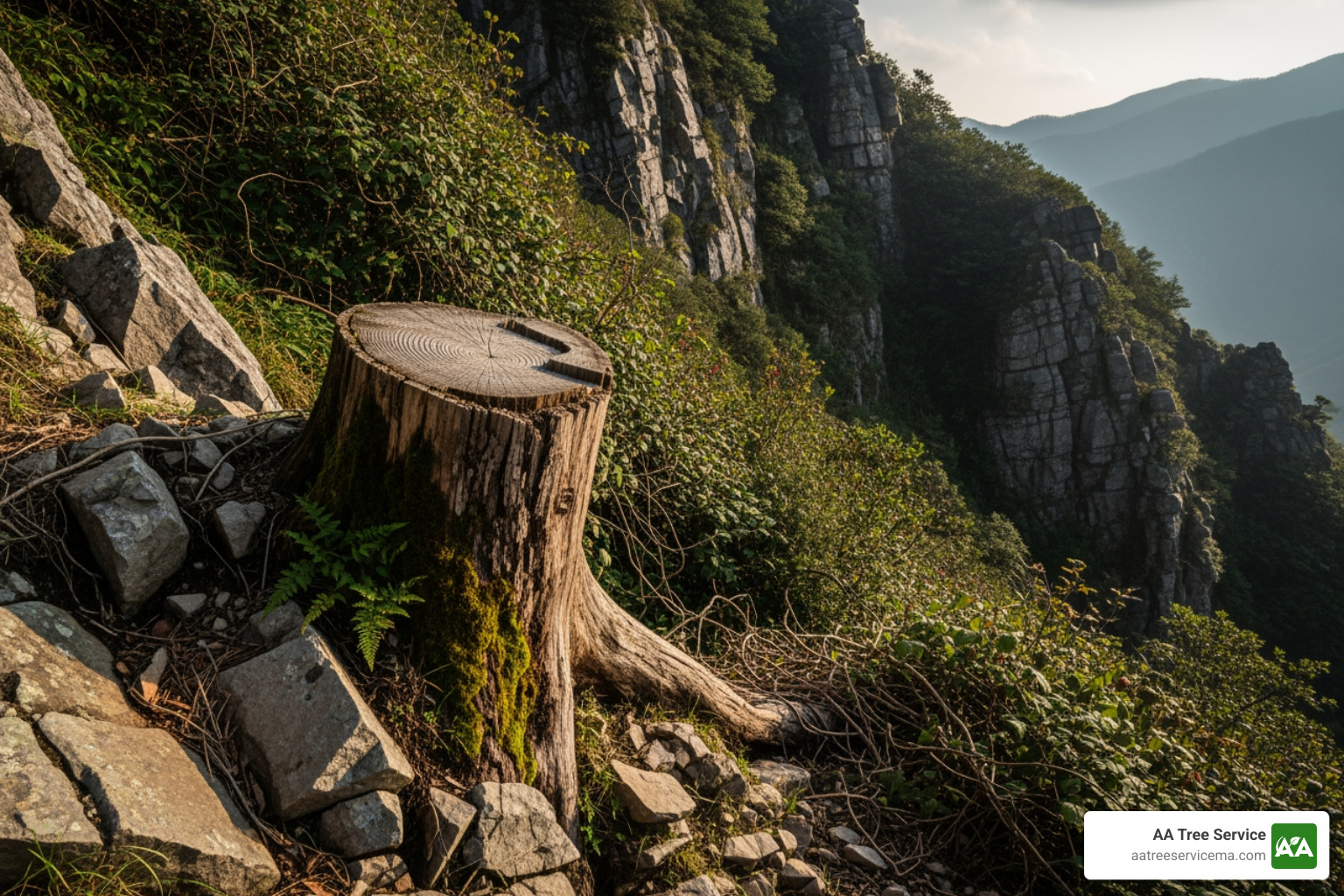
- Terrain Difficulty: A flat, open lawn is much easier to work on than a steep, rocky slope.
- Soil Condition: Rocky or sandy soil can impact equipment and grinding efficiency.
- Proximity to Structures: Stumps near fences, foundations, or utility lines require extra caution and precision.
- Stump Age and Condition: A freshly cut stump is much harder to grind than one that has been rotting for years.
How Tree Type Affects Grinding Costs
Not all wood is created equal, especially when it comes to stump grinding. The density and properties of the tree’s wood play a crucial role in how much effort and time is required, directly impacting the cost.
- Hardwood vs. Softwood: Hardwood stumps, such as oak, maple, hickory, and birch (common in our MA and NH service areas), are significantly denser and tougher to grind than softwoods like pine, spruce, or cedar. This density means our equipment works harder, blades wear down faster, and the grinding process takes longer.
- Specific Wood Properties: Some woods present unique challenges. For example, the resin in pine stumps can be gummy and clog the grinder’s teeth, requiring periodic cleaning. The sheer density of a petrified oak stump, on the other hand, is like grinding a rock, causing extreme wear on the machinery.
- Oak and Maple Costs: Grinding hardwoods like oak and maple can incur an additional cost, often $50 to $150 more per stump, due to the increased difficulty and wear on our machinery.
- Pine and Cedar Costs: Conversely, softer wood stumps are generally quicker and cheaper to grind.
- Equipment Wear and Tear: Denser wood causes more wear and tear on our grinder blades, leading to higher maintenance costs for our equipment, which is factored into the service price. For more in-depth Information on wood density, you can explore external resources.
Location, Terrain, and Accessibility
The environment surrounding the stump can present unique challenges that influence the grinding cost.
- Sloped Yards: Working on a steep incline or uneven terrain is more difficult and dangerous. It may require specialized equipment with tracks for stability or extra time to secure the machine. Jobs on sloped yards can add up to $50 per hour or a flat fee of up to $200 to the total cost.
- Rocky Soil: New England is known for its rocky soil, and this can be a real headache for stump grinding. Hitting rocks can damage or break expensive grinder blades, slow down the process, and increase the risk of equipment malfunction. If our team has to spend time replacing teeth due to rocky soil, this increases the overall project cost.
- Narrow Access Points: If the stump is located in a backyard with a narrow gate, tight pathways, or other obstructions, it might require smaller, specialized equipment or more manual labor to get the grinder into position. This can increase the time and complexity of the job.
- Proximity to Structures & Utilities: Safety is our top priority. A stump located inches from a house foundation, a vinyl fence, a septic tank, or an underground sprinkler system requires surgical precision. The operator must work slowly and carefully to avoid causing thousands of dollars in damage. This extra time and skill adds to the cost. We always recommend calling 811 before any digging or grinding commences to have underground utility lines (gas, water, electrical) marked. While this doesn’t directly add to our grinding cost, it’s a crucial step that can influence the overall project timeline.
- Travel Distance for Service: For properties in more rural parts of Massachusetts and New Hampshire, longer travel distances for our crew and equipment might incur additional mileage charges.
Stump Grinding vs. Full Stump Removal
It’s common for people to use “stump grinding” and “stump removal” interchangeably, but there’s a significant difference in process, cost, and outcome.
| Feature | Stump Grinding | Full Stump Removal |
|---|---|---|
| Process | Grinds the stump into wood chips several inches below ground level. Leaves roots in the ground. | Physically extracts the entire stump and main root ball from the earth using heavy machinery. |
| Cost | Generally cheaper: $100-$400 (average) | More expensive: $370-$675 (average), can exceed $1,000+ |
| Roots | Remaining roots will naturally decay over time. | Entire root system is extracted. |
| Ground Disturbance | Minimal disruption, leaves a hole filled with chips. | Significant disruption, leaves a large crater requiring extensive backfill and grading. |
| Time | Faster (15 minutes to a few hours per stump). | Slower (hours to days, more labor-intensive). |
| Future Use | Suitable for planting grass, small plants, or covering with topsoil. | Ideal for construction, replanting a new tree, or laying concrete. |
Stump grinding is generally the more cost-effective and less invasive option for most homeowners. It eliminates the visible hazard and allows you to reclaim your yard space for lawn or a garden bed. However, full stump removal, while more disruptive and expensive, is non-negotiable in certain situations. If you plan to build a foundation, pour a patio, install a driveway, or plant another large-maturing tree in the exact same spot, the entire root ball must be excavated to ensure structural integrity and prevent future interference. Full removal often requires heavy equipment like a backhoe, which can cause significant collateral damage to the surrounding lawn and landscape.
For more detailed information on this topic, refer to our comprehensive guide on Tree Stump Removal.
DIY vs. Professional Grinding: A Cost-Benefit Analysis
When faced with a stubborn stump, you might wonder if tackling it yourself is a viable option. While DIY can seem like a cost-saving measure, it’s crucial to weigh the true costs, time commitment, and inherent safety risks involved against the efficiency and expertise of professional services.
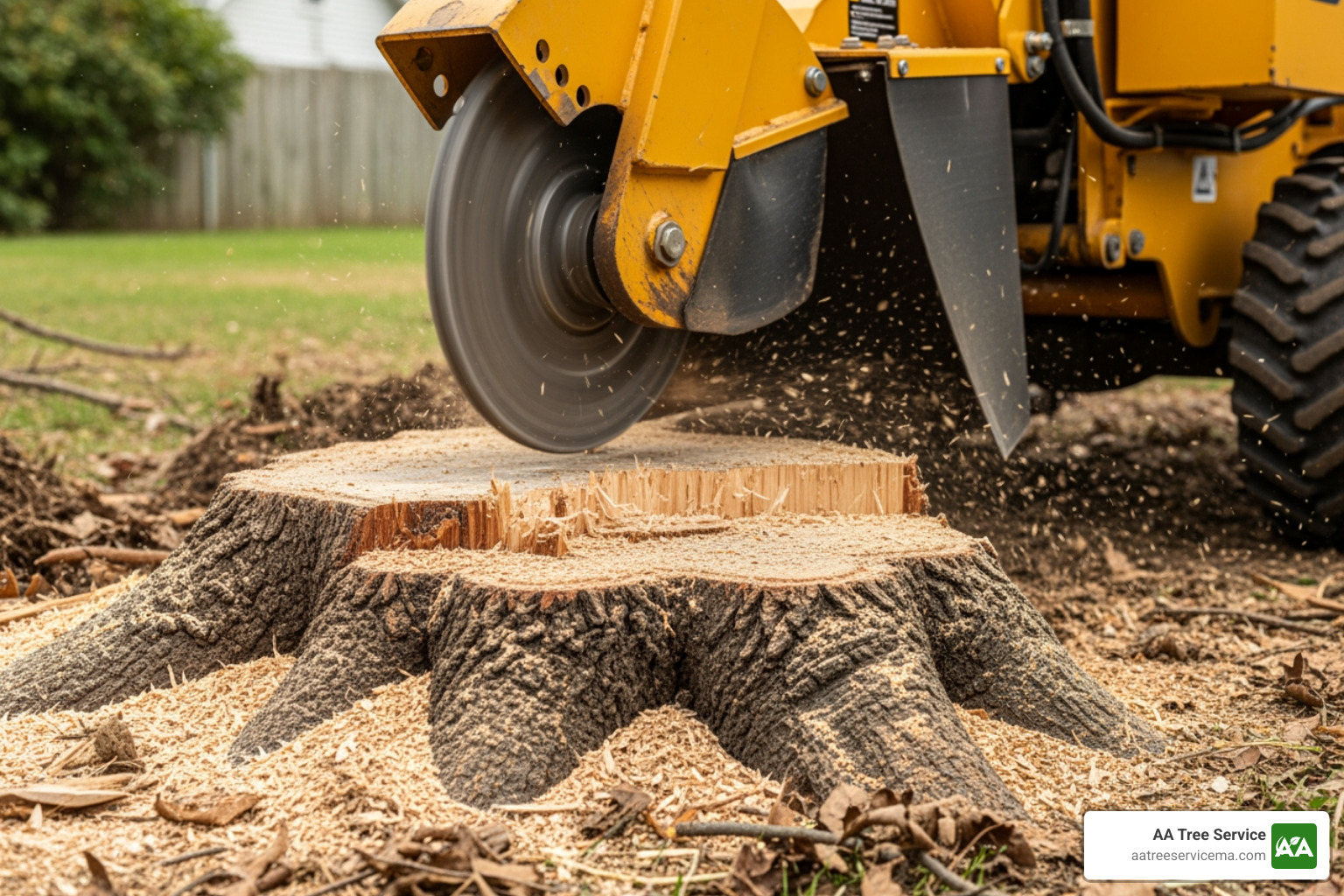
- Safety Risks: Operating a stump grinder is extremely dangerous for the untrained. These powerful machines have rapidly rotating cutting wheels that can cause serious injury or death. There’s also the risk of flying debris (wood, rocks, soil) that can shatter windows or harm people and pets. Professionals are trained, insured, and equipped with the necessary personal protective equipment (PPE) and experience to mitigate these risks.
- Equipment Rental Costs: Renting a stump grinder isn’t cheap, and it often comes with hidden costs and logistical challenges. We’ll break these down below.
- Time and Physical Effort: Grinding a stump, especially a large or hardwood one, is physically demanding work. What might take a professional an hour could take a homeowner a full, exhausting day, factoring in learning to operate the machine, transportation, and unexpected challenges like hitting rocks.
- Professional Efficiency & Results: Our teams use commercial-grade equipment that is far more powerful and efficient than typical rental models. We can complete a job much faster and achieve a cleaner, deeper grind than a DIY attempt, saving you time and preventing headaches.
Calculating the Average Price for Stump Grinding Yourself
If you’re considering the DIY route, here’s a more realistic look at what you might expect for the average price for stump grinding yourself:
- Stump Grinder Rental: Renting a grinder can cost anywhere from $100 to $400 per day, with the average daily cost typically around $260 to $270. For a larger stump, you might need it for more than one day.
- Transportation: Most stump grinders weigh over 1,000 pounds. Do you have a vehicle with a proper tow hitch and the capacity to safely transport it from the rental yard and back?
- Safety Gear Costs: Don’t skimp on safety! You’ll need a hard hat, eye protection, hearing protection, heavy-duty gloves, steel-toed boots, and possibly chaps. Purchasing this essential safety gear can add an initial cost of $300 to $400.
- Fuel and Supplies: The grinder will need fuel, and you may need to purchase replacement grinder teeth if you damage them, which can be costly.
- Hidden Costs & Liability: This is the biggest factor. What is the value of your time? What are the costs of a potential injury? Rental agreements often hold you 100% liable for any damage to the machine. A single broken cutting tooth can cost over $100 to replace, and a damaged cutting wheel can cost much more. For just one or two stumps, the total cost and risk of DIY often exceed the price of hiring a professional.
For more details on our professional approach to Stump Grinding, visit our service page.
Additional Costs to Consider
When budgeting for stump grinding, it’s wise to factor in potential additional services that might not be included in the base grinding price.
- Debris Removal: After grinding, you’ll be left with a pile of wood chips mixed with soil. Some homeowners choose to keep this organic material for mulch. However, be aware that fresh wood chips can temporarily deplete the soil of nitrogen as they decompose, potentially harming nearby plants. If you opt for professional debris removal, it can cost an additional $50 to $200, or sometimes $2 to $4 per diameter inch of the stump.
- Root Removal: Standard stump grinding only goes a few inches below the surface and does not remove the entire root system. If you need extensive surface root removal for aesthetic reasons or deeper root chasing for construction, this is a separate service. Root removal or grinding can cost $100 to $200 per hour.
- Yard Repair: After the stump is ground and the chips are handled, you’ll have a hole in your yard. To restore the area, you might need to:
- Mulch: Filling the hole with some of the remaining wood chips is a common and affordable option, costing around $0.35 per square foot.
- Topsoil and Seeding: If you want to grow grass, you’ll need to remove most of the chips, fill the hole with high-quality screened topsoil, and then seed it. This can cost $1 to $2 per square foot for laying sod, plus the cost of topsoil and seed. It’s often best to let the area settle for a few weeks before adding the final layer of topsoil to avoid a depression forming later.
- Permit Fees: Depending on your specific town or city in Massachusetts or New Hampshire, you might need a permit for stump grinding, especially if the stump is on public land, in a wetland buffer zone, or near utility easements. Permit fees can range from $50 to $300 (or even up to $438 in some areas). It’s always best to check with your local municipality before starting any work. While we can’t provide legal advice for State-by-state tree regulations, we encourage you to verify local requirements in MA and NH.
Frequently Asked Questions about Stump Grinding Costs
We often get questions about how different circumstances can affect the average price for stump grinding. Here are some common inquiries:
Is it cheaper to grind a stump in the winter?
Yes, scheduling your stump grinding in the colder months can potentially save you money.
- Off-Season Demand: Winter typically sees a lower demand for tree services, including stump grinding, compared to the busy spring and summer seasons.
- Potential for Discounts: With less demand, many tree service companies in Massachusetts and New Hampshire may offer discounts to keep their crews busy. You could potentially save up to 20% on your stump grinding service during the winter months.
- Frozen Ground Conditions: While frozen ground might seem like a hindrance, it can sometimes provide better stability for heavy equipment, reducing the risk of lawn damage and potentially making access easier in certain soft or wet areas.
- Contractor Availability: Our teams often have more availability during the winter, making it easier to schedule your service at your convenience.
Are old, rotten stumps cheaper to grind?
Generally, yes, old and rotten stumps are indeed cheaper and easier to grind.
- Decomposed Wood: Over time, stumps naturally decompose. This means the wood becomes softer and less dense.
- Less Resistance: A rotten stump offers far less resistance to the grinder’s blades, requiring less engine power, less fuel, and causing less wear and tear on the equipment.
- Faster Grinding Time: Because the wood is softer, the grinding process is usually much quicker, which translates to fewer labor hours and a reduced overall cost.
For more information on handling these types of stumps, check out our guide on Old Stump Removal.
How deep is a stump typically ground?
This is an excellent question, as the depth directly impacts both cost and future land use.
- Standard Depth (4-8 inches): Most professional stump grinding services will grind to a standard depth of 4 to 8 inches below ground level. This is more than sufficient to remove the visible stump and allow you to fill the area with topsoil and grow a healthy lawn.
- Deep Grinding (12-18+ inches): If you plan to replant a new tree, install a fence post, or pour a small concrete slab, you will need a deeper grind. This service costs significantly more because it takes much longer, requires more effort to manage the larger volume of debris, and puts more strain on the equipment. Always communicate your future plans for the area to your service provider to ensure they grind to the appropriate depth.
Will the leftover wood chips attract pests like termites or carpenter ants?
This is a common concern, but largely unfounded. While termites and carpenter ants are attracted to wood, they primarily seek out large, solid pieces of decaying wood that are in constant contact with moist soil. The small, loose wood chips produced by a stump grinder are not an ideal habitat. They tend to dry out quickly and are too dispersed to support a new colony. While it’s not impossible, it is highly unlikely that a pile of stump grindings will attract a new pest infestation. However, as a general rule, it’s not advisable to leave any large pile of wood debris directly against your home’s foundation for extended periods.
What should I do before the grinding service arrives?
Preparing your yard before our team arrives can help ensure a smooth, efficient, and safe stump grinding process.
- Call 811: This is the most critical first step. Contact 811 (the “Call Before You Dig” hotline) a few days before the scheduled service to have underground utility lines (gas, water, electric, communication) marked on your property. This is a free service and is required by law to prevent accidental damage and ensure the safety of our crew and your home.
- Clear the Area: Remove any obstacles from around the stump. This includes garden hoses, lawn ornaments, potted plants, yard furniture, and children’s toys. Create a wide berth for the machine and operator.
- Remove Obstacles: If there are loose rocks, bricks, or other hard debris near the stump, please remove them. These can become dangerous projectiles when hit by the grinder.
- Discuss Plan with Professionals: When our team arrives, take a moment to walk through the job with them. Point out the exact stumps to be ground, confirm the desired depth, and identify any potential hazards like sprinkler heads or invisible dog fences. Clear communication ensures we meet your expectations.
Reclaim Your Yard with Professional Stump Grinding
Understanding the average price for stump grinding involves more than just a single number. It’s a complex equation influenced by stump size, wood type, accessibility, labor costs, and potential additional services like debris or root removal. While DIY might seem appealing, the costs of equipment rental, safety gear, and the inherent risks often make professional service the more sensible and cost-effective choice.
Choosing a professional service like AA Tree Service ensures that your stumps are removed safely, efficiently, and with minimal disruption to your property. With over 20 years of experience serving Massachusetts and New Hampshire, we bring expertise, the right equipment, and a commitment to customer satisfaction to every job. We offer free same-day quotes, so you know exactly what to expect.
Don’t let unsightly or hazardous stumps diminish your property’s appeal or safety. Contact us for a free stump grinding estimate today and let us help you reclaim your yard.