The Importance of Arlington Tree Care
Tree care is crucial for maintaining a healthy and beautiful landscape in your Arlington, MA, or Southern New Hampshire home. Proper tree care not only improves the aesthetic appeal of your property but also ensures the safety and longevity of your trees.
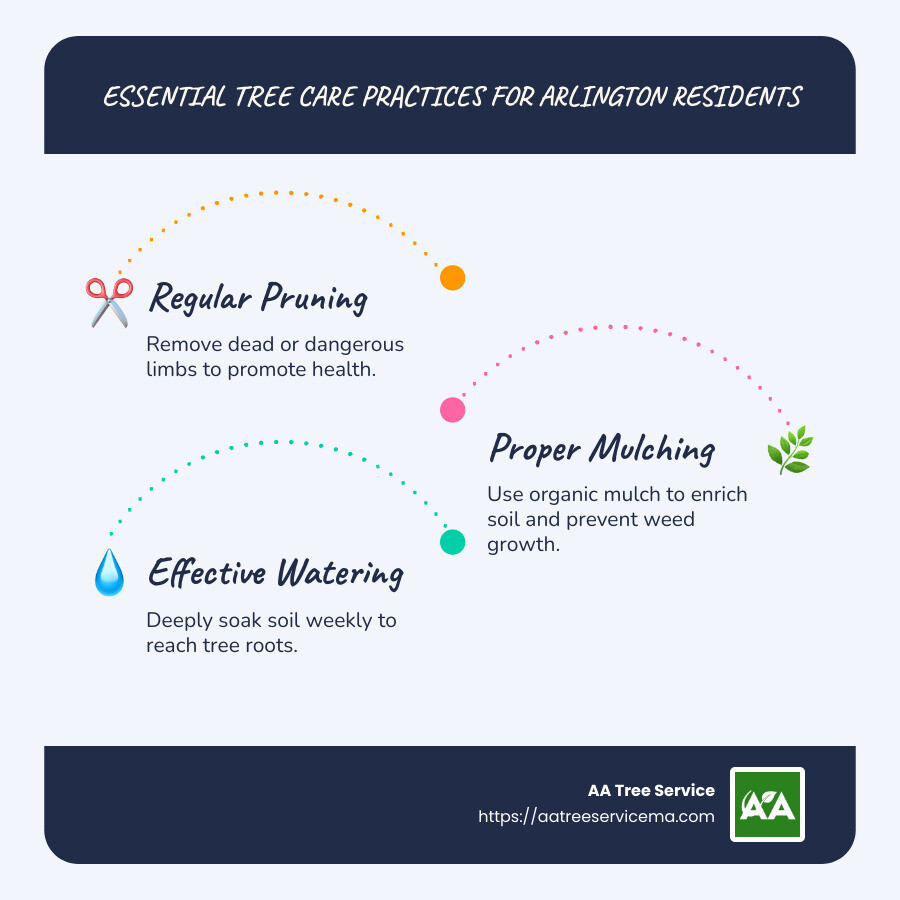
For those looking to maintain tree health, consider these essential practices:
- Regular Pruning: Helps remove dead, damaged, or dangerous limbs, promoting tree health.
- Proper Mulching: Use organic mulch to enrich soil and prevent weed growth.
- Effective Watering: Ensure thorough soil soaking every week to reach tree roots.
- Inspection and Evaluation: Conduct annual checks to prevent potential hazards.
Trees are a vital part of any ecosystem, offering shade, improving air quality, and adding to property value. In Arlington, where seasonal changes can be harsh, ongoing tree maintenance becomes even more critical.
It’s essential to be proactive and informed about tree care practices to protect your investment in your landscape. The right interventions today can prevent costly damages tomorrow.
Arlington tree care word roundup:
Understanding Tree Health
Caring for trees is like nurturing a long-term relationship. It requires attention, understanding, and regular maintenance. In Arlington, MA, and Southern New Hampshire, taking care of your trees involves three key practices: pruning, mulching, and watering.
Pruning Techniques
Pruning is essential for maintaining tree health and safety. It involves removing dead or unsafe limbs to prevent hazards. Here’s how to do it right:
- For Mature Trees (over 12 inches in trunk diameter): Follow the TreesAreGood Consumer Brochure for Pruning Mature Trees. This guide helps you make cuts that won’t harm the tree, focusing on branches that are dead, broken, or pose a risk. Avoid topping, which can severely damage the tree.
- For Young Trees (12 inches or less in trunk diameter): Use the TreesAreGood Consumer Brochure for Pruning Young Trees. Pruning young trees helps shape their growth and remove any weak branches early on.
Excessive pruning can stress trees, so only prune when necessary.
Proper Mulching Practices
Mulching is like giving your trees a cozy blanket. It helps retain moisture, enrich soil, and reduce weeds.
- Organic Mulch: Apply up to 2 inches deep over the root area. This type of mulch breaks down over time, improving soil quality.
- Wood Chips: Use up to 3 inches deep. They’re great for long-term moisture retention.
Avoid volcano mulching, where mulch is piled against the trunk. This can lead to rot and pest issues.
Effective Watering Strategies
Watering is crucial, especially during dry periods. Here’s how to ensure your trees get the hydration they need:
- Thorough Soaking: Water deeply once a week, allowing moisture to penetrate 12-18 inches into the soil. This reaches the roots effectively.
- Root Coverage: Focus on covering the area under the tree’s canopy. This is where most roots are concentrated.
Even mature trees need watering during dry spells. Consistent moisture helps them stay healthy and resilient.

These practices are the foundation of Arlington tree care. By understanding and implementing these techniques, you’ll ensure your trees remain healthy and robust, contributing to a beautiful and safe landscape.
Next, we’ll explore how seasonal maintenance can further protect your trees.
Arlington Tree Care: Seasonal Maintenance
Emergency Storm Damage Response
In Arlington, MA, and Southern New Hampshire, unpredictable weather can pose significant challenges to tree health. Storms, particularly, can wreak havoc on trees, leading to broken branches, uprooted trees, and potential hazards. Here’s how to prepare and respond effectively to storm damage:
Inspection and Evaluation
Regular inspection is your first line of defense against storm damage. Before the storm season hits, have your trees evaluated by professionals. This involves checking for:
- Dead or Weak Branches: These are more likely to break during a storm and should be removed.
- Structural Stability: Look for signs of decay or disease that could compromise the tree’s integrity.
- Root Health: Ensure roots are not exposed or damaged, as this can affect the tree’s stability.
Safety Guidelines
Safety is paramount when dealing with storm-damaged trees. Here are some essential guidelines:
- Keep a Safe Distance: If a tree or branch has fallen, stay away from the area until professionals can assess the situation.
- Avoid Power Lines: Never attempt to remove branches that are near or touching power lines. This is extremely dangerous and should be handled by experts.
- Use Proper Equipment: If you must perform any minor cleanup, ensure you have the right tools and protective gear.
Emergency Services
In the aftermath of a storm, quick response is crucial to mitigate further damage and ensure safety. AA Tree Service offers emergency services to address storm-related issues promptly. Here’s what you can expect:
- Rapid Response: In emergency situations, AA Tree Service aims to respond quickly to minimize risks and restore safety.
- Professional Assessment: Experts will evaluate the damage and determine the best course of action to remove hazards.
- Safe Removal: Using specialized equipment, professionals will safely remove fallen or dangerous trees and branches.
Storm Preparation Tips
- Prune Regularly: Regular pruning helps maintain tree health and reduces the risk of storm damage.
- Secure Loose Items: Before a storm, secure outdoor items that could become projectiles and damage trees.
- Plan Ahead: Know the contact information for emergency tree services, like AA Tree Service, so you’re prepared when a storm hits.
By following these guidelines and leveraging professional services, Arlington residents can protect their trees and properties from the adverse effects of storms. Next, we’ll dig into protecting trees from development impacts.
Protecting Trees from Development
Tree Preservation Strategies
Development projects can pose significant threats to trees, particularly through root damage. In Arlington, MA, and Southern New Hampshire, it’s crucial to understand how to protect your trees when construction is nearby.
Root Damage and Property Lines
Tree roots often extend far beyond the visible canopy, reaching out across property lines. Root systems are vital for a tree’s stability and health, making them vulnerable during nearby construction. Damage to these roots can lead to tree decline or even death.
- Understanding Root Zones: The critical root zone (CRZ) is the area around a tree where roots are most concentrated. This zone is typically 1.5 times the tree’s height. Protecting this area is crucial during development.
- Property Lines: Roots do not adhere to property boundaries. If construction is occurring next door, your tree’s roots could be at risk. Communicate with neighbors and contractors to ensure your trees are considered in development plans.
Development Impact on Trees
Construction activities like excavation, grading, and heavy machinery movement can compact soil and sever roots. This can stress trees, making them susceptible to disease and pests.
- Soil Compaction: Heavy equipment can compact the soil, reducing oxygen and water availability to roots. Use barriers to prevent machinery from entering the CRZ.
- Root Severance: Cutting roots during excavation can destabilize trees. Plan construction paths and trenches to avoid the CRZ whenever possible.
Tree Protection Measures
Taking proactive steps to protect trees during development is essential.
- Install Barriers: Erect physical barriers around the CRZ to keep machinery and foot traffic away.
- Mulching and Watering: Apply mulch around the base of the tree to retain moisture and provide nutrients. Ensure trees are adequately watered, especially during dry spells.
- Consult Professionals: Arborists can assess tree health and recommend protective measures custom to your situation. Their expertise is invaluable in minimizing development impacts.
Development Guidelines
Following established guidelines can help mitigate the risks of development on trees.
- Pre-Construction Assessment: Have trees evaluated by a certified arborist before construction begins. This helps identify vulnerable trees and plan for their protection.
- Monitoring During Construction: Regularly check trees for signs of stress or damage during the project. Quick intervention can prevent long-term harm.
- Post-Construction Care: After construction, continue to monitor and care for your trees. Mulching, watering, and pruning can help them recover from any stress.
By implementing these strategies, Arlington residents can help safeguard their trees from the adverse effects of nearby development. Up next, we’ll answer some frequently asked questions about Arlington tree care.
Frequently Asked Questions about Arlington Tree Care
How often should trees be pruned?
Pruning is essential for maintaining tree health and safety, but how often should it be done? For most trees, pruning should occur every 3-5 years. However, young trees may need more frequent attention to encourage proper growth and shape.
- Mature Trees: Prune every 3-5 years to remove dead or damaged branches and to maintain structural integrity.
- Young Trees: Consider annual pruning to guide growth and ensure a strong framework for the future.
Pruning not only improves a tree’s appearance but also reduces the risk of falling branches, which can be a safety hazard.
What are the signs of a hazardous tree?
Identifying hazardous trees is crucial for preventing accidents and property damage. Here are some signs to watch for:
- Dead or Dying Branches: These can fall unexpectedly, posing a risk to people and property.
- Cracks or Splits in the Trunk: Structural weaknesses can lead to tree failure.
- Leaning Trees: A sudden lean could indicate root damage or instability.
- Fungal Growth: Mushrooms or other fungi at the base of a tree might signify internal decay.
If you notice any of these signs, it’s wise to consult an arborist to assess the tree’s health and recommend appropriate actions.
Do I need a permit for tree removal?
In Arlington, MA, most tree removals on private property do not require a permit. However, there are exceptions, especially if the tree is part of a conservation area or if specific local ordinances apply. Always check with local authorities to ensure compliance with any regulations before proceeding with tree removal.
For professional assistance with tree care or removal, consider reaching out to AA Tree Service for expert guidance and support. We offer a range of services to help maintain the health and beauty of your trees in Arlington and beyond.
Conclusion
Choosing AA Tree Service means opting for quality and reliability in tree care. With over 20 years of experience, their certified arborists ensure that your trees are healthy and your property remains safe. Whether it’s routine maintenance or emergency services available 24/7, AA Tree Service delivers exceptional results with a commitment to customer satisfaction.
For residents in Arlington looking to maintain the beauty and safety of their landscapes, AA Tree Service stands out as a trusted partner. Reach out today to experience their professional, efficient, and dependable tree care solutions.