5 Warning Signs Your Tree Is Dying or Dangerous (Time for Removal)
How to spot serious tree problems before they damage your home or put your family at risk
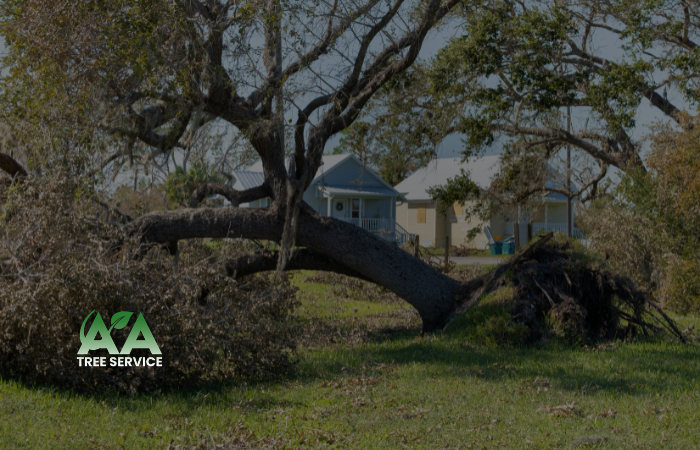
Not all tree issues are obvious. In fact, some of the most dangerous trees look healthy—until they fall during a storm, drop a massive limb, or begin leaning toward your roof.
As a homeowner in Massachusetts or New Hampshire, it’s important to know when a tree on your property poses a risk. The longer a hazardous tree is ignored, the higher the chances of property damage, injury, or emergency removal.
At AA Tree Service, we’ve helped countless homeowners assess and safely remove dangerous trees before disaster strikes.
Here are five clear warning signs that your tree may be dying or unstable—and why you should never wait to have it checked.
1. Large Dead Branches (Especially Over Structures)
Dead or broken limbs are one of the most visible signs your tree is in trouble. If you notice large branches that no longer produce leaves, or limbs hanging over your roof, driveway, or power lines, it’s time to take action.
Dead branches can fall without warning—especially during wind, snow, or ice storms. Even if the trunk looks solid, failing branches increase liability and pose a serious safety risk.
2. Trunk Damage: Cracks, Cavities, or Missing Bark
Take a look at your tree’s trunk. Do you see vertical cracks, large holes, or bark peeling away?
These are often signs of decay or structural weakness. Cracks and cavities indicate internal rot, insect infestation, or storm damage that may have compromised the tree’s core.
If left unchecked, the trunk could snap under pressure—bringing the entire tree down unexpectedly.
3. Leaning Trees or Uneven Growth
While some trees naturally grow at an angle, a sudden lean is a red flag.
Leaning trees often signal root damage, shifting soil, or structural imbalance. If you notice your tree beginning to tilt, especially after a storm or heavy rain, it may be losing its anchor to the ground.
This is especially dangerous if the tree is near your home, a sidewalk, or neighboring properties.
4. Fungal Growth at the Base
Mushrooms or other fungi growing around the base of your tree may look harmless—but they often indicate internal decay.
Fungal growth means the root system or lower trunk may be rotting from the inside out. A tree with a compromised root base is far more likely to fall during storms or heavy winds.
Don’t ignore what’s happening at ground level. Root rot is one of the leading causes of sudden tree failure.
5. Excessive Insect Activity or Woodpecker Damage
A tree crawling with termites, carpenter ants, or wood-boring beetles is in trouble. These pests feed on dead or decaying wood and accelerate internal rot.
Likewise, if woodpeckers are constantly pecking at your tree, they may be feeding on insects within—a sign the tree is already dying from the inside.
In both cases, your tree may not be structurally sound and should be inspected right away.
Contact Us
Don’t Wait for the Next Storm
If you notice any of these warning signs, don’t take a “wait and see” approach. Trees can look stable one day and collapse the next.
Our certified team at AA Tree Service offers free safety assessments and will let you know if your tree needs pruning, removal, or just routine monitoring.
Professional Tree Removal in MA & NH
We provide fast, professional tree removal and emergency services across Massachusetts and New Hampshire. Whether your tree is leaning dangerously, showing signs of decay, or has already dropped a large branch, we can help—safely and affordably.
We serve both residential and commercial properties, and our 24/7 team is ready to respond after storms or sudden damage.
Schedule a Tree Safety Assessment Today
Not sure if your tree is dying? Get peace of mind with a free on-site evaluation.
We’ll inspect the tree’s health, root stability, trunk strength, and risk factors—then recommend the safest next step. No pressure, no guesswork.
FAQs
- Can a dying tree be saved?
Sometimes. If the issue is limited to a few branches or an early-stage infection, treatment or pruning may help. But once structural damage or root rot sets in, removal is usually the safest option. - What happens if I don’t remove a dead tree?
It may fall unexpectedly, especially during storms or high winds. You could be liable for damage to your home, your neighbor’s property, or injuries caused by falling limbs. - Who is responsible if a tree falls on my neighbor’s property?
If you knew the tree was a hazard and failed to act, you may be held financially responsible. That’s why documentation and early removal are critical. - How long does it take to remove a tree?
Most removals are completed in one day, depending on size and location. Emergency removals are prioritized and handled as quickly as possible. - Do I need a permit to remove a tree?
It depends on your city or town. Some municipalities require permits for trees above a certain size or in protected zones. We help navigate that process as part of our service.