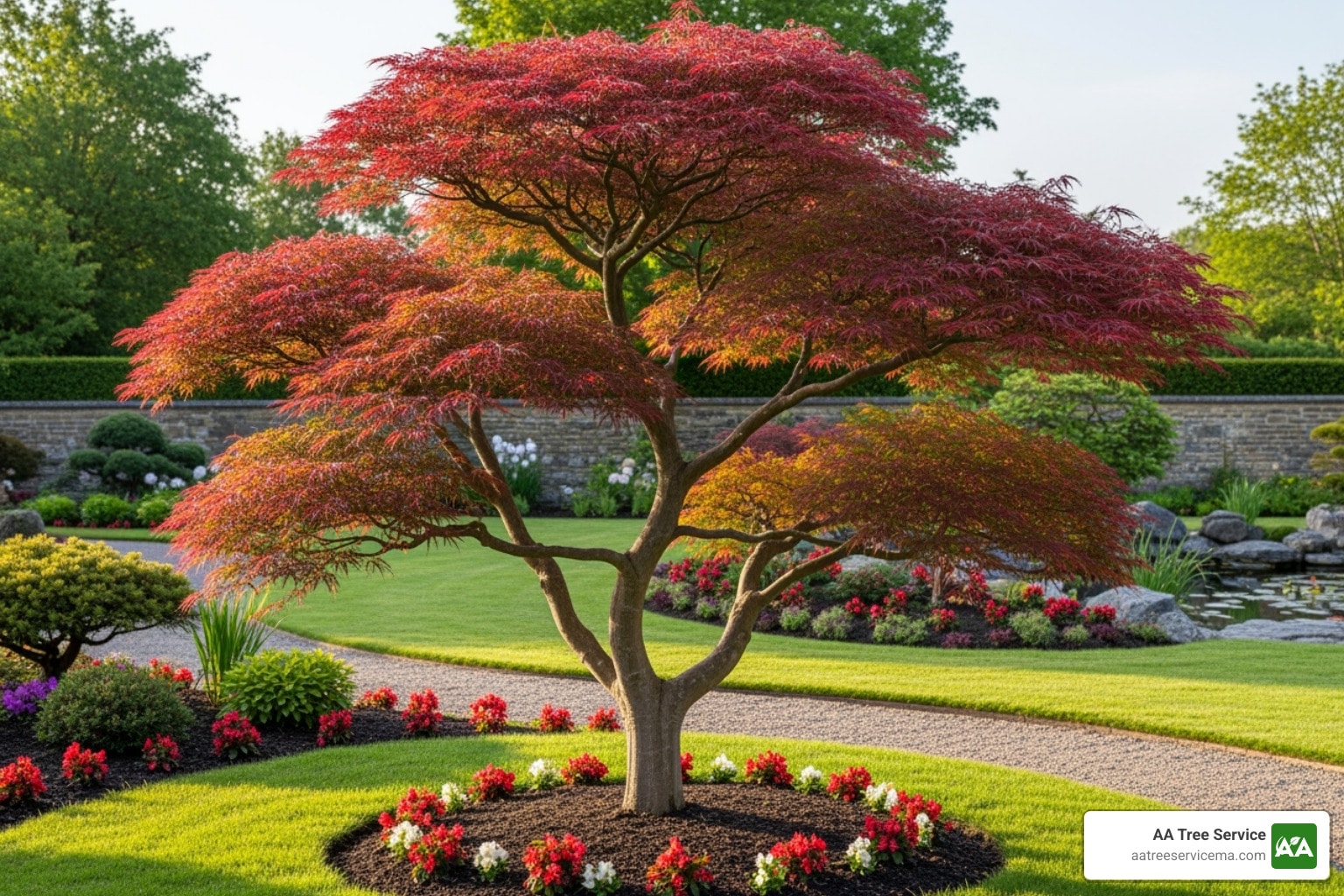
Why Ornamental Tree Pruning is Essential for Your New England Landscape
Ornamental tree pruning is the strategic removal of branches to improve a tree’s health, safety, and appearance. Proper pruning transforms ordinary trees into stunning landscape features by blending the art of aesthetics with the science of horticulture.
Key Benefits:
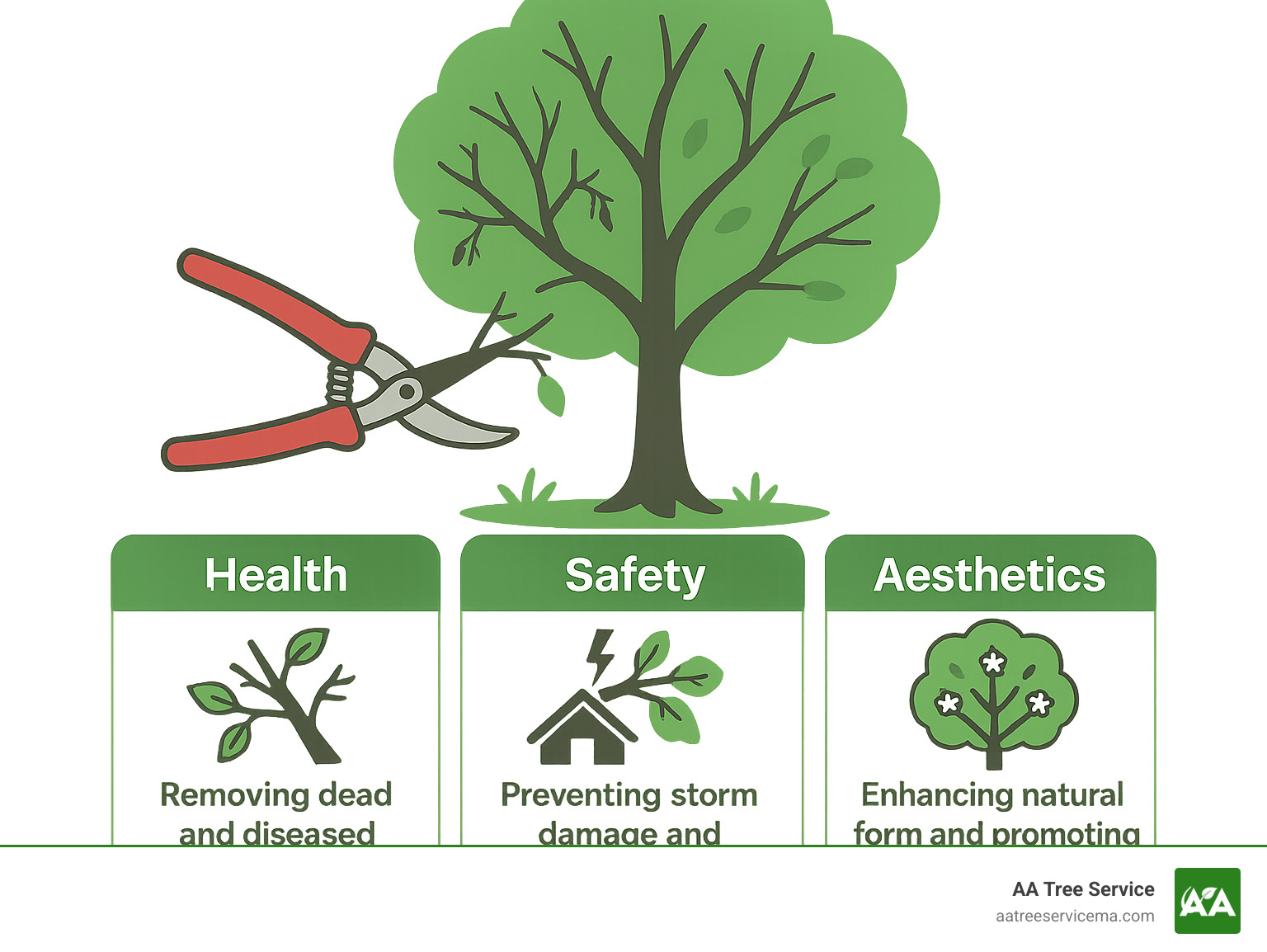
- Health: Removes dead, diseased, and damaged branches.
- Safety: Prevents storm damage and falling limbs.
- Beauty: Improves natural form and flowering.
- Growth: Redirects energy to desired areas.
Best Timing:
- Spring-flowering trees: Prune immediately after blooming.
- Summer-flowering trees: Prune in late winter or early spring.
- Evergreens: Prune in late spring or early summer.
- General rule: Avoid heavy pruning in late summer or fall.
Essential Tools:
- Bypass hand pruners: For branches under 1 inch.
- Loppers: For branches 1-2 inches.
- Pruning saw: For larger branches.
- Note: Always use clean, sharp tools to prevent disease.
In Massachusetts and New Hampshire, our distinct seasons dictate the ideal pruning schedule. Winter dormancy, for example, allows for a clear view of a tree’s structure. The key is knowing why, when, and how to prune. Making the wrong cut at the wrong time can sacrifice an entire season of beautiful blooms.
Why Prune? The Art and Science of Shaping Your Trees
Ornamental tree pruning is a practice that blends scientific knowledge with artistic vision to create healthier, more beautiful trees. Correct pruning redirects a tree’s energy toward promising branches, helping it develop a strong, balanced structure that can weather New England’s notorious storms.
Thoughtfully thinning the canopy allows light and air to penetrate deeper, reducing the humid conditions that fungal diseases love. It also reduces the risk of wind and snow damage by removing competing branches and improving weight distribution. This is particularly important in Massachusetts and New Hampshire, where winter storms can be brutal.
If you’re considering professional help, our Tree and Shrub Service covers comprehensive care for all your ornamental trees.
Maintaining Tree Health and Vigor
The foundation of healthy ornamental tree pruning starts with removing the “4 D’s”:
- Dead branches: These are weak points that can snap during storms and harbor pests and diseases.
- Diseased wood: Removing branches with cankers or fungal growth can stop an infection from spreading and save the entire tree.
- Damaged limbs: Wounds from storms or construction invite more problems. A clean pruning cut heals much better than a ragged tear.
- Deranged branches: Branches that cross, rub, or grow in odd directions create wounds that never heal properly.
Addressing these issues with regular maintenance pruning is like preventative medicine for your trees. Most healthy ornamentals benefit from removing 5% to 20% of their branches annually to stay vigorous.
Enhancing Aesthetic Appeal
This is where the artistry of ornamental tree pruning shines. The goal is to help a tree show off its best features and natural beauty.
- Reveal natural structure: Thinning excess growth uncovers the tree’s hidden architecture, creating stunning winter silhouettes.
- Encourage unique forms: Some trees, like Japanese maples, can be pruned to form lovely horizontal layers or “cloud formations.”
- Maintain a specific size: Gentle guidance can keep a tree appropriately sized for its space without resorting to aggressive shearing.
- Create focal points: Advanced techniques like espalier (training trees flat against a wall) or topiary (creating living sculptures) can create dramatic visual interest.
- Highlight features: Pruning can also open up views of beautiful bark or interesting trunk structures.
The goal is a tree that looks naturally beautiful—fuller where it should be, and more open where light and air need to flow. For comprehensive landscape care, explore our Tree Care Services to see how we can improve your property’s natural beauty.
Timing is Everything: When to Prune Ornamental Trees in MA & NH
Timing is critical for ornamental tree pruning. Pruning at the wrong time can sacrifice flowers, stress the tree, or increase disease vulnerability. In Massachusetts and New Hampshire, our four distinct seasons create specific windows for proper tree care.
The dormant season (after leaf fall, before spring buds swell) is generally best for major structural work. The tree’s skeleton is visible, and it experiences less stress. However, minor pruning to remove dead or damaged branches can be done any time of year.

Pruning Flowering Trees (Deciduous)
To maximize blooms, you must understand a tree’s flowering habits. The key is knowing if it blooms on new wood (this year’s growth) or old wood (last year’s growth).
- Spring-flowering trees like dogwood, magnolia, and ornamental cherry bloom on old wood. They form their flower buds the previous summer. To preserve the flowers, prune immediately after they finish blooming. This gives them a full season to develop buds for next year. For specific guidance, see our information on trimming a dogwood tree.
- Summer-flowering trees, such as certain hydrangea varieties, bloom on new wood. For these, late winter or early spring pruning is ideal, as it encourages the vigorous new growth that will produce this year’s flowers.
Pruning Evergreen and Non-Flowering Trees
Evergreens are generally more forgiving about timing.
- Coniferous evergreens (pines, spruce, firs) need minimal pruning. To encourage denser growth on pines, you can pinch the new growth shoots (“candles”) in half in late spring. Avoid cutting into the bare “dead zone” on conifers, as they often won’t regrow from old wood.
- Broadleaf evergreens (holly, rhododendrons) are more flexible and can be pruned lightly each year. Removing spent flower heads from rhododendrons after they bloom can encourage more flowers next season.
- Japanese maples are popular in MA and NH but are known as “bleeders.” They can lose significant sap if pruned in late winter or early spring. To avoid this, prune them in mid-summer or late fall.
Dead or damaged branches can be removed any time of year. Following these timing guidelines for major work will keep your trees healthy and beautiful.
The Right Cut: Essential Tools and Techniques for Ornamental Tree Pruning
Proper ornamental tree pruning requires the right tools and techniques to make clean cuts that heal quickly. Understanding a tree’s anatomy, especially the branch collar, is as important as having sharp tools.
Essential Pruning Tools and Safety Gear
Using quality, sharp equipment protects your tree’s health.
- Hand Pruners: Use bypass pruners (not anvil) for clean cuts on branches up to 1 inch.
- Loppers: Provide leverage for branches up to 2 inches.
- Pruning Saw: Needed for branches larger than 2 inches.
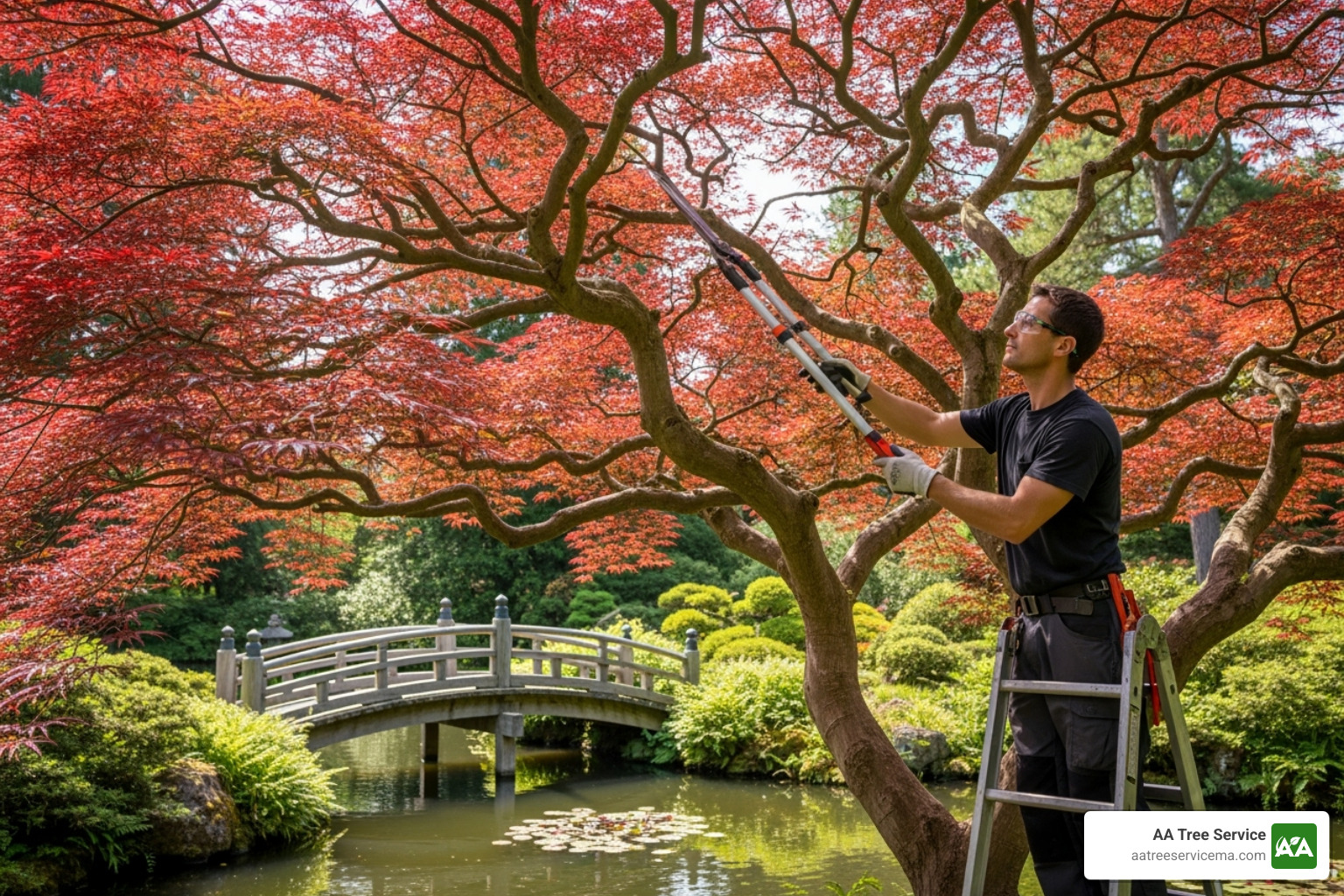
- Pole Pruners: Extend your reach for higher branches, avoiding ladders.
Tool Maintenance: Keep tools sharp and clean them with rubbing alcohol between trees to prevent spreading disease.
Safety Gear: Always wear safety glasses and gloves. A hard hat is essential when working under branches.
Know when to call a professional: Jobs involving large limbs, power lines, or climbing require a certified arborist. For complex or risky jobs, contact our team at AA Tree Service for safe, expert help.
Mastering the Basics of Ornamental Tree Pruning
Making the right cut works with a tree’s natural ability to heal.
- Thinning Cuts: Remove an entire branch back to its point of origin. This reduces density, improves air circulation, and maintains the tree’s natural form.
- Heading (Reduction) Cuts: Shorten a branch to a bud or smaller side branch to encourage denser growth. Always cut back to a lateral branch that is at least one-third the diameter of the limb being removed.
- The Branch Collar: This swollen area where a branch meets the trunk is vital for healing. Never cut into it (a “flush cut”) or leave a long stub.
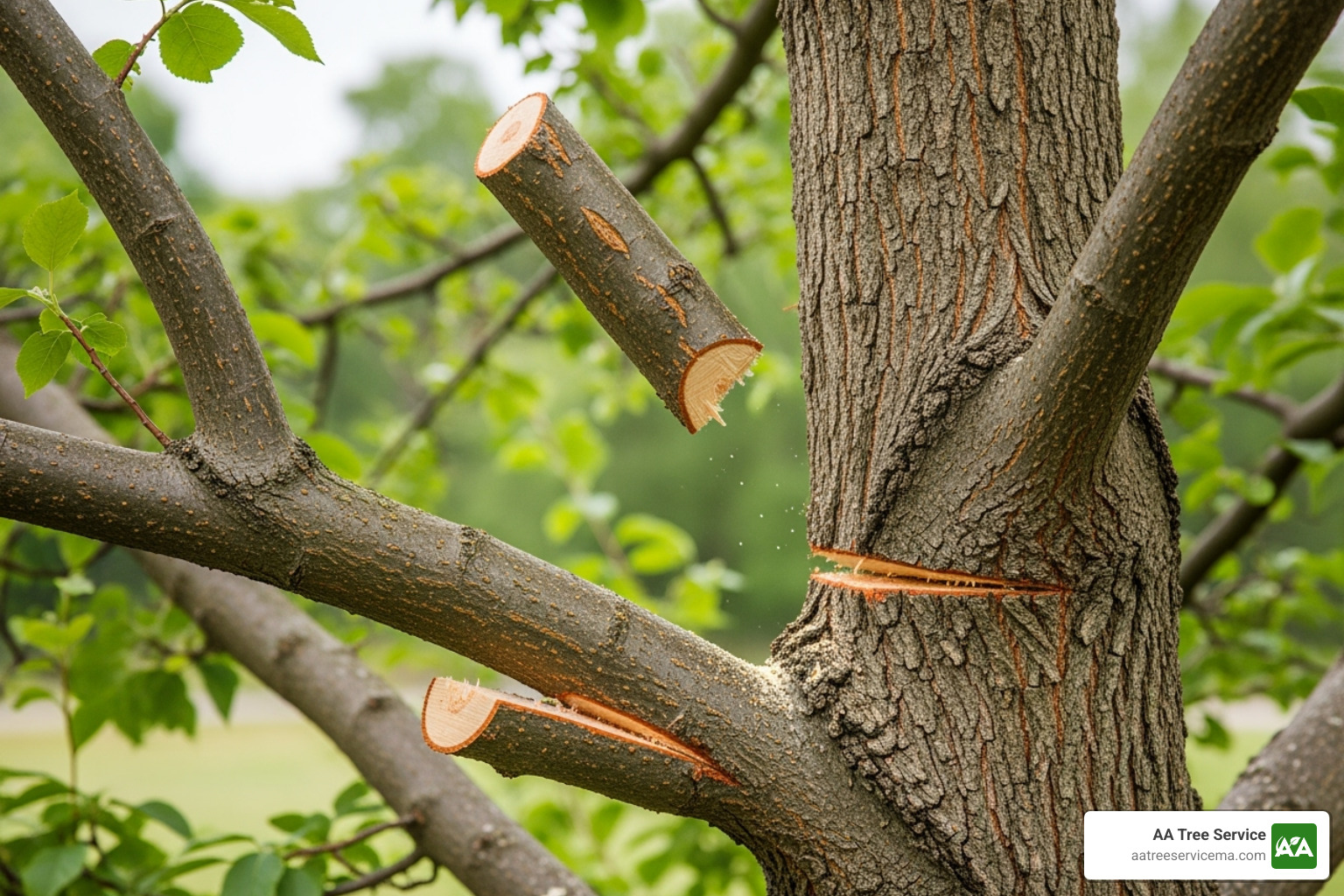
For branches over 2 inches, use the three-cut method to prevent bark from tearing:
- Make an undercut 6-12 inches from the trunk, about one-third through the branch.
- Make a second cut from the top, a few inches further out, to remove the branch’s weight.
- Make the final cut just outside the branch collar to remove the remaining stub.
This technique ensures a clean wound that heals properly. For more details, see this guide on tree pruning techniques.
How Much Can You Safely Prune?
Over-pruning can severely stress a tree.
- The 25% Rule: Never remove more than 25% of a tree’s live canopy in a single year.
- Annual Maintenance: A light annual pruning, removing 5-20% of branches, is far better than infrequent heavy pruning.
- Live Crown Ratio: Aim to maintain a healthy ratio of at least two-thirds canopy to one-third trunk.
- Avoid Over-thinning: Don’t strip the tree’s interior. Those leaves are essential for the tree’s health.
You can always remove more later, but you can’t put branches back. Start conservatively.
Special Cases and Common Mistakes to Avoid
Some situations in ornamental tree pruning require a nuanced approach, while certain common practices can cause long-term harm. Understanding these special cases and mistakes is key to success.
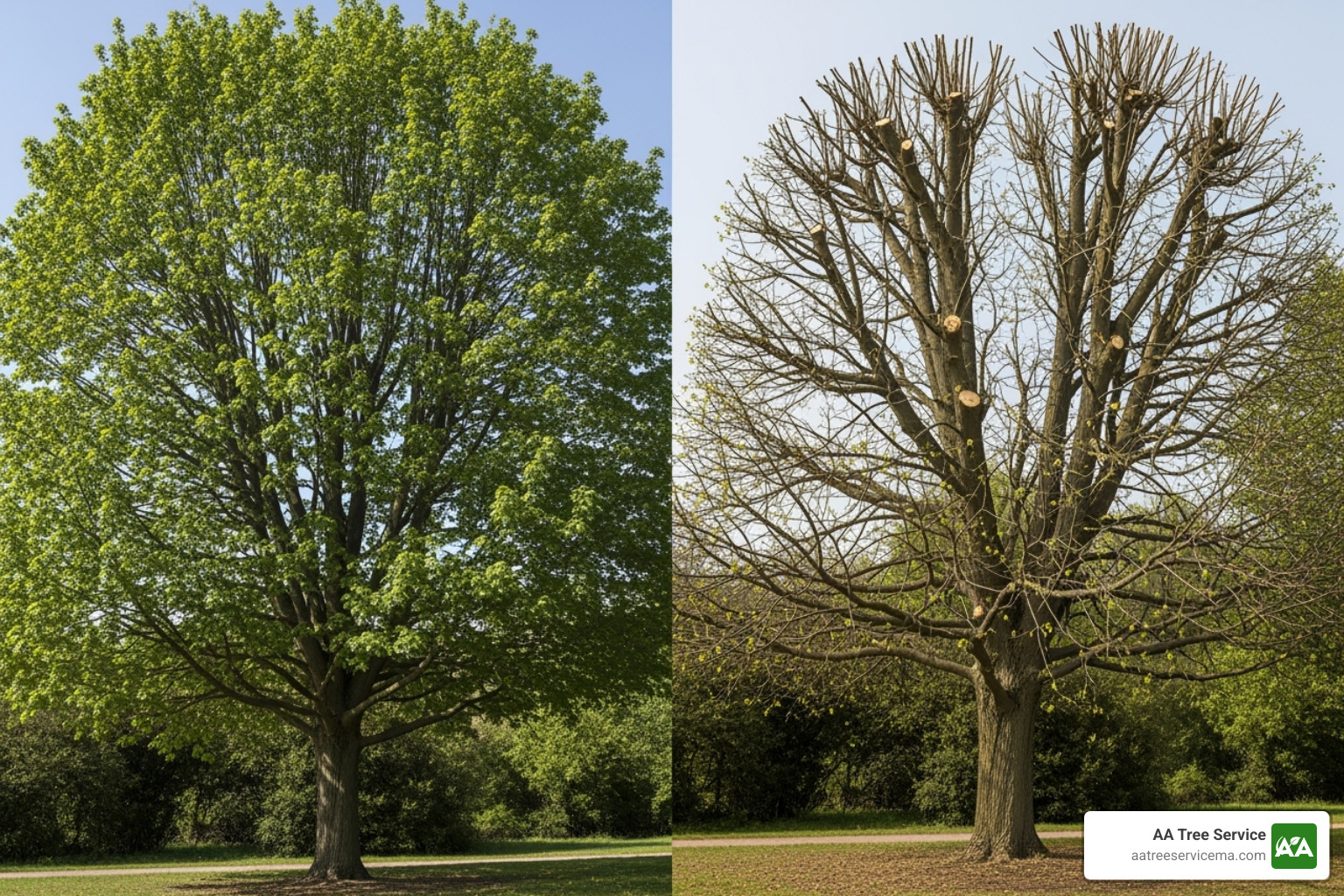
Special Considerations for Ornamental Tree Pruning
- Newly Planted Trees: These are stressed from transplanting and need gentle, structural pruning. Focus on establishing a strong central leader and removing branches with weak, “V”-shaped attachments to prevent future problems.
- Overgrown Trees: For neglected trees, use renewal pruning by removing about one-third of the oldest stems over three years. This gradual approach refreshes the plant without shock. A more dramatic option for some species is rejuvenation pruning, which involves cutting the plant back to the ground. Learn more about handling overgrown trees at More info on Pruning Overgrown Dogwood Tree.
- Weeping Trees: Pruning these trees is an art. The goal is to improve their natural cascading form, not shear them into a uniform shape.
Pruning Myths and Mistakes
Avoid these common but harmful practices:
- Topping Trees: This is the most damaging mistake. Drastically cutting the top of a tree creates large wounds and encourages weak, hazardous regrowth that is prone to breaking in New England storms. It starves the tree and shortens its life.
- Flush Cuts: Cutting a branch flush with the trunk removes the branch collar, the tree’s natural healing zone. This invites decay. Always cut just outside the collar.
- Using Wound Paint: Research shows these sealers are unnecessary and can trap moisture and disease. Trees heal best on their own.
- Shearing into Shapes: This is fine for formal hedges but damages most ornamental trees. It creates a dense outer shell that shades out and kills interior foliage.
- Using a Chainsaw for Delicate Work: Chainsaws are for large cuts, not the precise work required for ornamental pruning. They cause ragged wounds that heal poorly.
- Believing All Trees Need Heavy Pruning: Most established trees only need light pruning to remove dead, diseased, damaged, or deranged branches. Work with your tree’s natural form, don’t fight it.
Frequently Asked Questions about Ornamental Tree Pruning
Homeowners often have questions about ornamental tree pruning. Here are answers to some of the most common ones.
Is it necessary to coat pruned surfaces on ornamental trees?
No. This is a common myth. Trees have a natural process called “compartmentalization” to seal wounds. Wound dressings or paint can actually hinder this process by trapping moisture and creating an ideal environment for fungal growth and disease. It’s best to let the tree heal itself. This guide on Pruning Ornamental Trees and Shrubs explains more.
Can I kill my tree by pruning it at the wrong time?
It’s highly unlikely that a single poorly timed cut will kill a healthy tree. The most common consequence is sacrificing a season of flowers. Some trees, like maples and dogwoods, may “bleed” sap if pruned in late winter or early spring, which looks alarming but rarely causes long-term damage. The greater risk to a tree’s health comes from improper cuts (like flush cuts) or removing too much of the canopy at once (over 25%), which can cause severe stress.
How often should I prune my ornamental trees?
The frequency depends on the tree’s age, species, and health.
- Young Trees: Prune annually for the first few years to establish a strong structure. This early training minimizes the need for major cuts later.
- Mature Trees: Major structural pruning may only be needed every 5 to 10 years.
- Annual Inspection: All trees benefit from an annual check-up. Light maintenance pruning to remove dead, diseased, or damaged branches (the “4 D’s”) can be done every year or two.
Regular, light pruning is always better for the tree than infrequent, heavy pruning.
Conclusion
Proper ornamental tree pruning is an investment in the health, safety, and beauty of your landscape. By understanding the benefits, timing, and techniques, you can help your trees thrive in the New England climate.
Correct pruning creates healthier trees that can withstand our harsh Massachusetts and New Hampshire winters, reduces the risk of hazardous branches, and increases your home’s value. Respecting the unique schedules for spring-flowering, summer-flowering, and evergreen trees is crucial for a spectacular seasonal display.
While basic maintenance can be a rewarding DIY task, some jobs are too big, high, or risky to handle without professional expertise. When dealing with large branches, trees near power lines, or any job that requires climbing, call in certified arborists.
At AA Tree Service, we have over 20 years of experience perfecting the art and science of ornamental tree pruning across Massachusetts and New Hampshire. Our ISA Certified Arborists help your trees reach their full potential while keeping your property safe.
We offer free same-day quotes and 24/7 emergency services. Your trees are a valuable asset; don’t leave their care to chance. Contact us for professional Tree Pruning and Trimming services and let us help you create the beautiful, safe landscape you deserve.