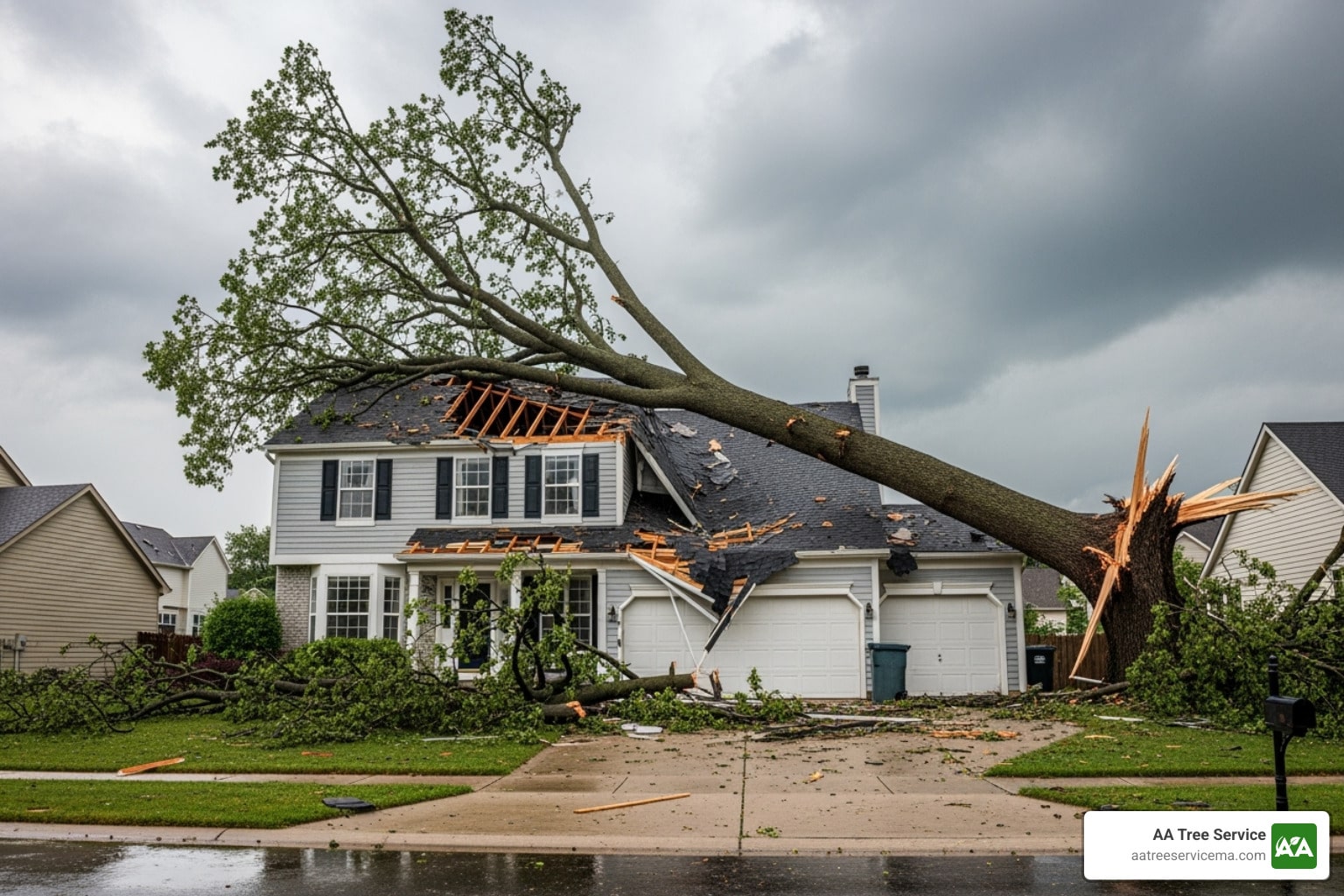
Understanding Tree Service Insurance Claims
Tree service insurance claims cover financial liabilities and damages from tree-related incidents. These claims typically involve:
- Property Damage: When a tree falls on a home, vehicle, or other structure.
- Personal Injury: If someone is hurt during tree work or by a fallen tree.
- Professional Liability: When a tree service makes a mistake that causes damage or loss.
Whether it’s storm damage or an accident during professional tree work, navigating insurance can be confusing. This guide explains when insurance covers tree-related issues for both homeowners and tree service professionals in Massachusetts and New Hampshire, helping you save time, money, and stress.
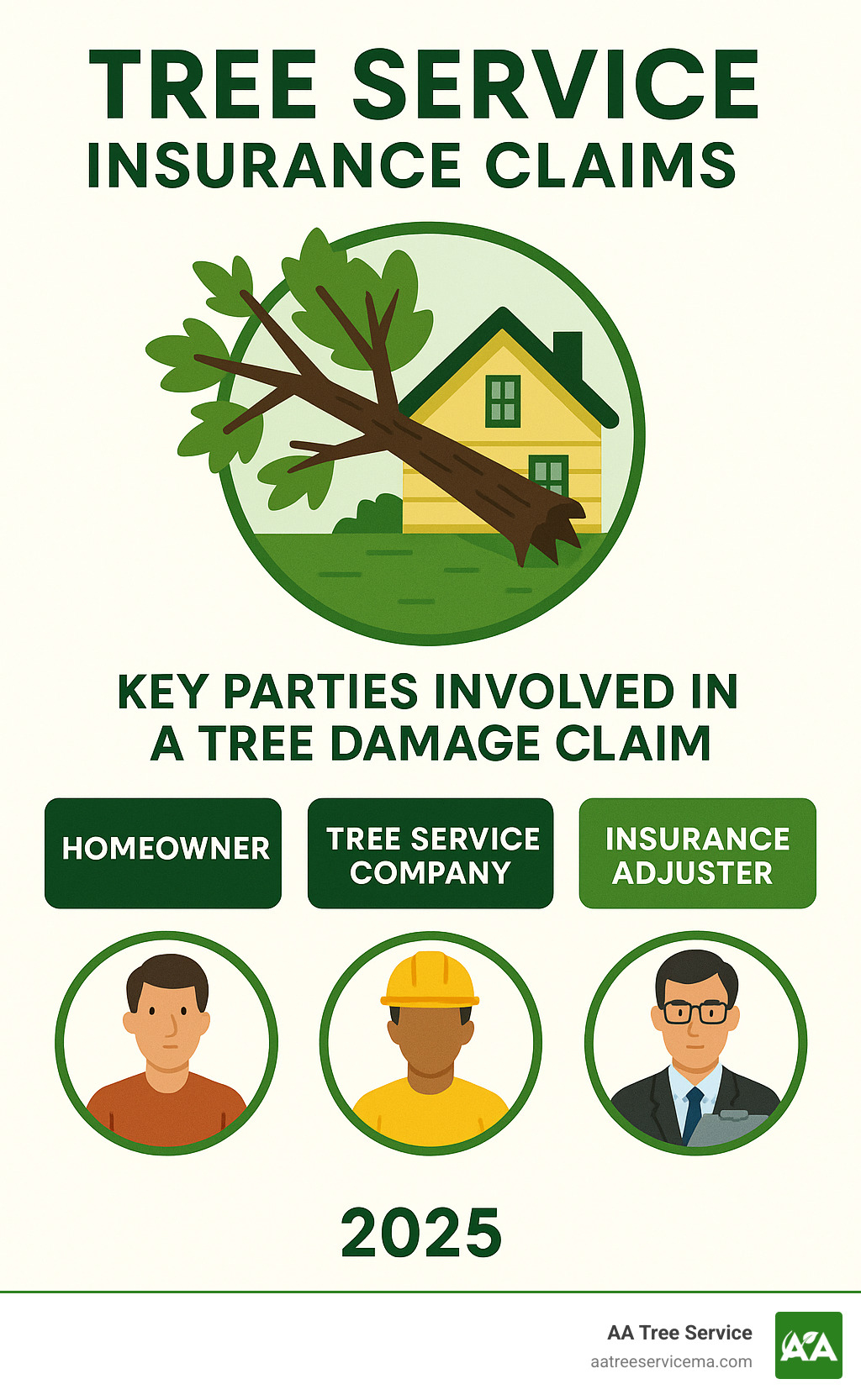
Quick Tree service insurance claims terms:
For Tree Service Professionals: Why Specialized Insurance is Non-Negotiable
For tree service business owners, the risks are immense. Working at heights with heavy machinery makes specialized arborist insurance essential to protect your business, crew, and clients.
Arborist insurance, also called tree removal insurance, is a custom policy covering injuries, property damage, and other unexpected issues during tree services. Without it, a single accident could be financially devastating.
Daily risks like falling branches or equipment failure are common. In Massachusetts and New Hampshire, proper insurance is a legal and professional necessity, showing clients your commitment to safety and accountability.
Working with insurance companies, especially after storms, can be challenging. To ensure fair payment, provide clear documentation: photos, scope of work, access issues, hazards, and detailed costs. Knowing how to work with adjusters is key to success in the tree care industry. To learn more about this important interaction, you can read about Working With Insurance Companies on Storm-Damage Claims.
Key Policies in a Comprehensive Arborist Insurance Plan
A strong insurance plan for a tree service business is a layered shield against various risks. Here are the must-have types of coverage:
Commercial General Liability (CGL) Insurance is your foundational protection. It covers legal responsibility for third-party injuries or property damage, including medical bills and legal fees. While a basic policy might start around $540 per year for a $2 million coverage limit, the high risks of tree work mean experts often recommend liability limits of $1 million to $5 million for true peace of mind.
Workers’ Compensation is legally required in Massachusetts and New Hampshire if you have employees. It covers their medical expenses and lost wages from on-the-job injuries. This coverage has no dollar limit and protects you from being personally liable for these significant costs.
Commercial Auto Insurance is vital, as personal policies don’t cover work vehicles. It covers damages and injuries from accidents involving your business trucks, chippers, and other vehicles.
Inland Marine Insurance (Equipment Coverage) protects your valuable tools like chainsaws, chippers, and stump grinders from loss, damage, or theft, which is essential given their high cost.
Professional Liability Insurance (Errors & Omissions – E&O) covers claims of mistakes in your professional services, like assessing a tree’s health incorrectly or removing the wrong tree. While CGL covers physical damage, E&O covers financial loss from professional negligence.
Common Scenarios That Trigger a Business Claim
Here are some real-life situations that often lead to tree service insurance claims:
Property Damage is the most common claim. A branch hitting a client’s patio or a tree falling on a fence are typical examples covered by your CGL policy.
Bodily Injury is a serious risk. If a bystander is hurt by falling debris, your CGL policy applies. If an employee is injured, Workers’ Compensation covers the costs.
Incorrect Tree Removal or Negligence, such as removing the wrong tree or a faulty health assessment leading to damage, is covered by your E&O policy. You can find more information about how we handle challenging situations like this on our Broken Trees page.
Vehicle Accidents involving work trucks are covered by your commercial auto policy, for example, if one of your trucks backs into a client’s car.
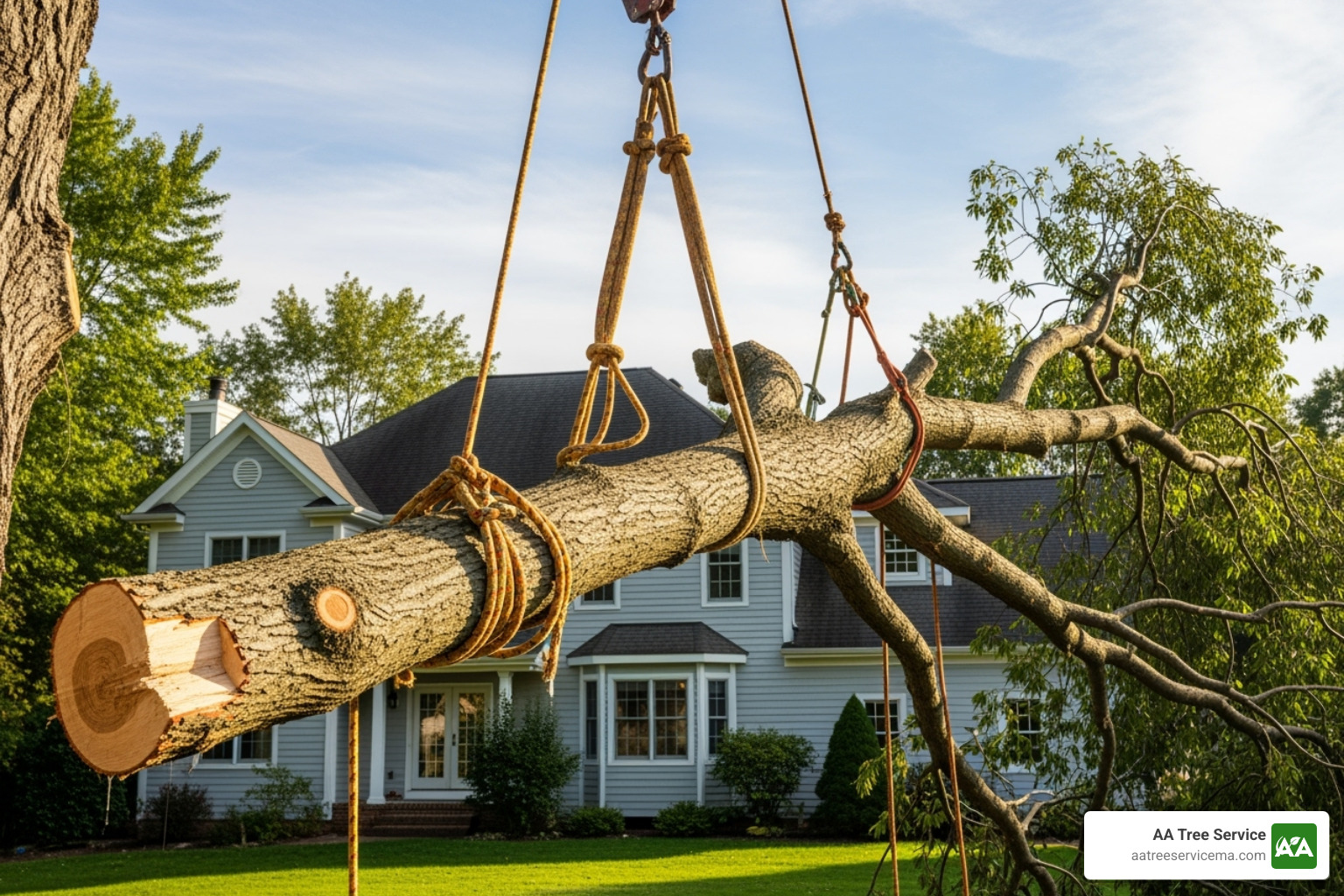
Factors That Influence Your Insurance Premiums
Several factors influence your insurance premiums:
- Number of employees: More employees increase risk and Workers’ Comp costs.
- Services offered: High-risk services (large tree removal, crane work) increase rates over basic pruning.
- Annual revenue: Higher revenue suggests more work and higher risk, leading to higher premiums.
- Claims history: A history of frequent or large claims will increase your rates. A good safety record is key.
- Safety training and certifications: Certifications (like ISA Certified Arborist or TCIA accreditation) can demonstrate lower risk and may lead to better rates.
- Location and service area: Your service area matters. Operating in regions with severe weather like Massachusetts and New Hampshire can increase rates due to higher risk.
For Homeowners: When Does Your Policy Cover Tree Damage?
When a tree falls on your property, questions about responsibility and insurance coverage arise. Understanding your homeowner’s policy for tree damage doesn’t have to be complicated.
Typically, homeowner’s insurance covers tree damage from sudden events or “acts of God,” like windstorms, lightning, or heavy snow. If a New England nor’easter knocks down your tree, your policy will likely help.
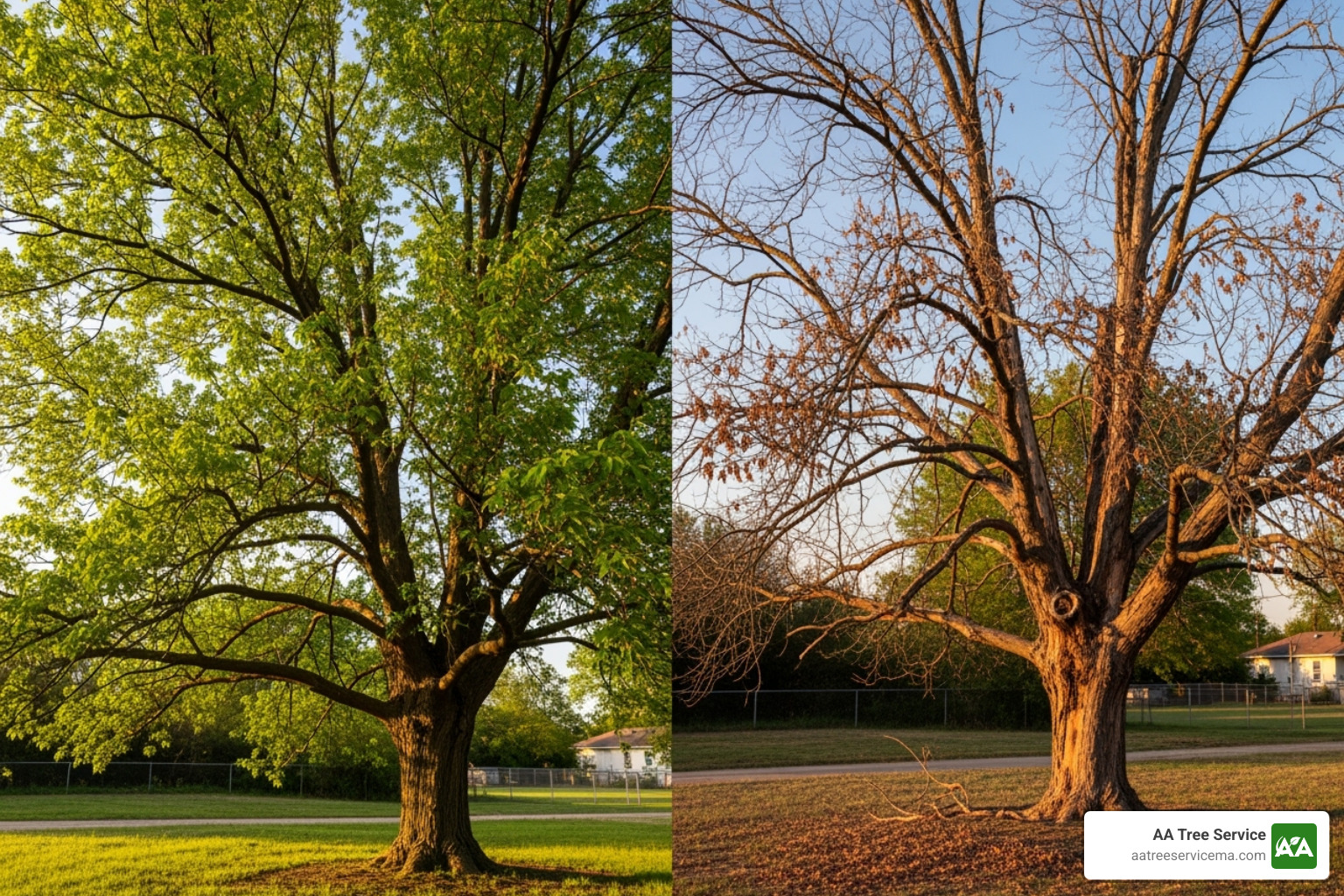
However, negligence can void coverage. If a tree falls because it was visibly diseased or rotting and you ignored it, your insurer may deny the claim. Insurance protects against surprises, not neglected maintenance.
Regular tree maintenance is a financial safeguard, not just for curb appeal. It can save you thousands by preventing predictable damage. When storm damage does occur, our team provides reliable Fallen Tree Removal Services throughout Massachusetts and New Hampshire.
Understanding Your Coverage for Tree Service Insurance Claims
Most homeowner’s policies follow similar patterns for tree service insurance claims:
If a fallen tree damages your house, garage, or another insured structure (like a shed or fence), your policy typically covers both structural repairs and the cost of removing the tree from the structure.
If a tree blocks your driveway, most policies cover removal costs, as it’s a safety hazard or prevents access, even without structural damage.
If a tree falls in your yard without damaging anything, you are usually responsible for the removal costs. Insurers typically require property damage to trigger coverage for cleanup.
Policies often have a debris removal limit, typically between $500 and $1,500. This may not cover the full cost, which can range from $300 to over $5,000 for large trees. Individual policy limits often fall short of actual costs.
Remember your deductible. If the removal cost is less than your deductible, filing a claim is not financially beneficial. For detailed information about what different policies typically cover, check out this helpful resource: Will Insurance Cover Tree Removal Costs?
What to Verify Before Hiring a Tree Service Company
Before hiring a tree service in Massachusetts or New Hampshire, verify their credentials to avoid a financial nightmare. A few minutes of due diligence is crucial.
- Certificate of Insurance (COI): Always request a current COI. A legitimate company will provide it without hesitation; refusal is a major red flag.
- Liability Coverage Limits: Check for at least $1 million in general liability coverage, though $2 million is better. This protects you if they damage your property or cause injury.
- Workers’ Compensation: This insurance is non-negotiable. Without it, you could be liable for an injured worker’s medical bills and lost wages, a financially devastating scenario.
- Professional Certifications: Look for credentials like ISA Certified Arborists or membership in the Tree Care Industry Association (TCIA). These suggest a commitment to industry standards and professionalism.
For expert guidance on assessing potential tree hazards before they become insurance claims, visit our Tree Hazard Assessment page. The cheapest quote often comes with the highest hidden costs.
Navigating the Tree Service Insurance Claims Process Step-by-Step
When a tree falls on your property, the aftermath is stressful. Understanding the tree service insurance claims process is key to a smooth recovery. Quick, thorough documentation is your best tool, especially after a major storm. For severe situations, remember our Storm Damaged Tree Removal services are here to help.
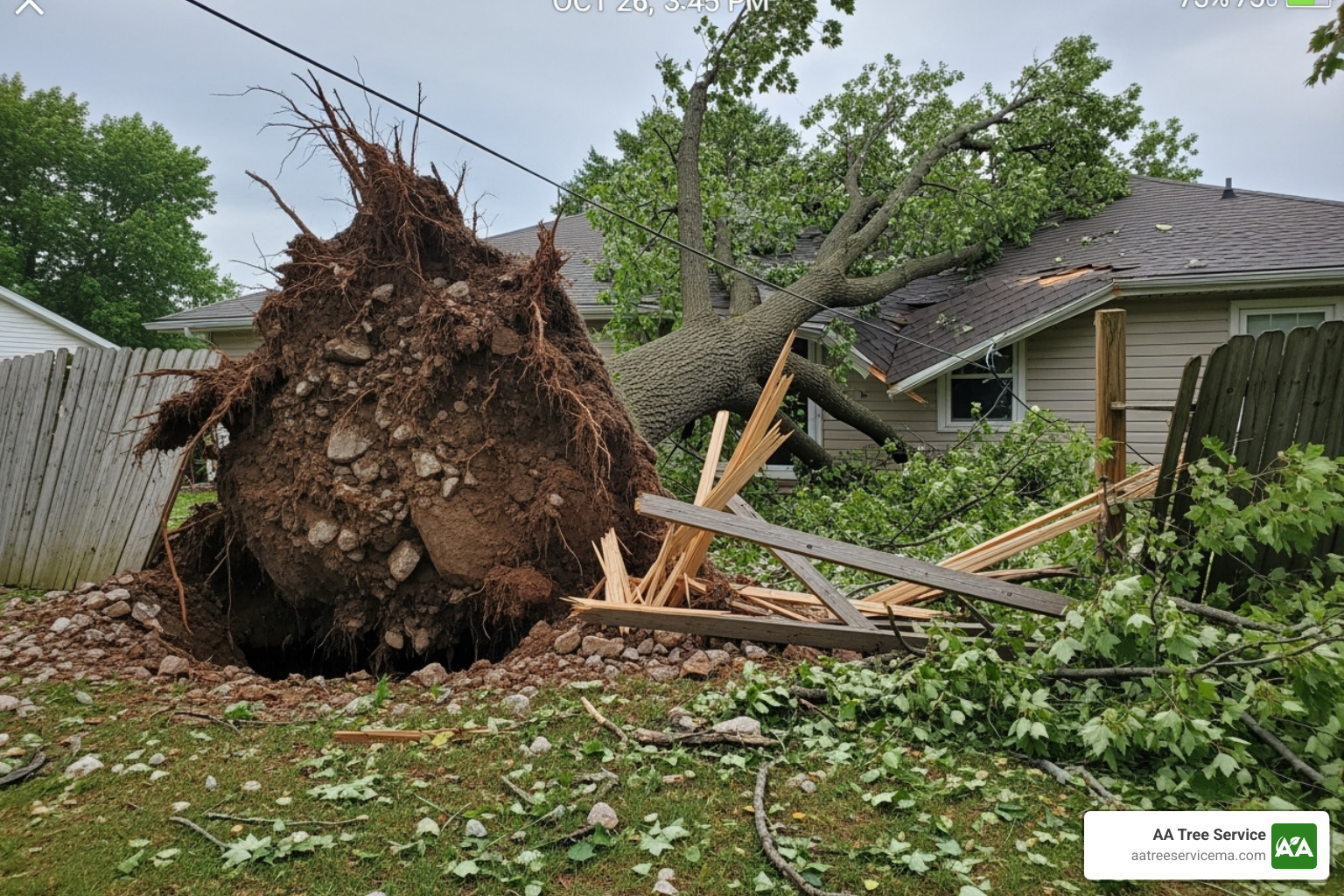
Immediate Steps After a Tree Causes Damage
Your first actions can make a huge difference in how your insurance claim proceeds.
- Ensure Safety: First, check for downed power lines or unstable branches. Keep everyone away from the area and call emergency services if you see any electrical hazards.
- Document the Scene: Before any cleanup, take extensive photos and videos from multiple angles, capturing all damage to your property and the tree. This evidence is crucial for your claim.
- Mitigate Further Damage: Take reasonable steps to prevent the problem from worsening, like covering a damaged roof with a tarp. Keep receipts for any materials used for potential reimbursement.
- Contact Your Insurance Provider: Notify your insurer promptly, as most policies require it. Be ready to explain what happened.
- Call a Professional: For an emergency assessment, contact a trusted tree service like AA Tree Service. We can secure the area and provide a free, same-day quote for removal, helping you start the recovery process.
Working with the Insurance Adjuster and Tree Service Company
Clear communication and organization are essential for a fair settlement.
An insurance adjuster will assess the damage and determine what your policy covers, providing an estimate for repairs and removal. When they visit, provide all your documentation. Your photos, videos, and notes will strengthen your case.
It’s also wise to get multiple quotes from reputable, insured tree service companies. Ensure the estimates separate the cost of removing the tree from structures (usually covered) from general yard cleanup (often limited).
Review the settlement offer carefully. If it seems low compared to your quotes, don’t be afraid to negotiate. Use your documentation and professional estimates to support your position.
Finally, coordinate with your chosen tree service. It’s often smoothest for you, the homeowner, to hire and pay the company directly, then get reimbursed by your insurer. You always have the right to choose your own trusted contractor.
Proactive Measures: Preventing Damage and Future Claims
The old saying, “An ounce of prevention is worth a pound of cure,” is especially true for trees. Taking smart steps to reduce risk can prevent damage and future tree service insurance claims, saving you headaches and money.
The Financial Wisdom of Regular Tree Maintenance
Regular, professional tree maintenance is a smart investment in safety, aesthetics, and financial savings. A well-maintained tree is less likely to cause damage during a storm.
A professional arborist can identify and remove weak or dead branches before they become hazards. They can also perform a thorough health assessment, spotting signs of disease or structural issues early. Addressing these issues can save a tree or allow for its safe removal before it becomes a liability. The cost of preventative pruning (perhaps $150 to $1,500) is minimal compared to emergency removal and damage repair. (Please note: These are average costs based on internet data and not actual costs for AA Tree Service.)
When you compare maintenance costs to potential repair costs—tens of thousands for a damaged roof or car—the financial wisdom of proactive care is clear. It’s a wise investment that protects your most valuable assets. Should you need it, we also provide comprehensive Tree Debris Removal services.
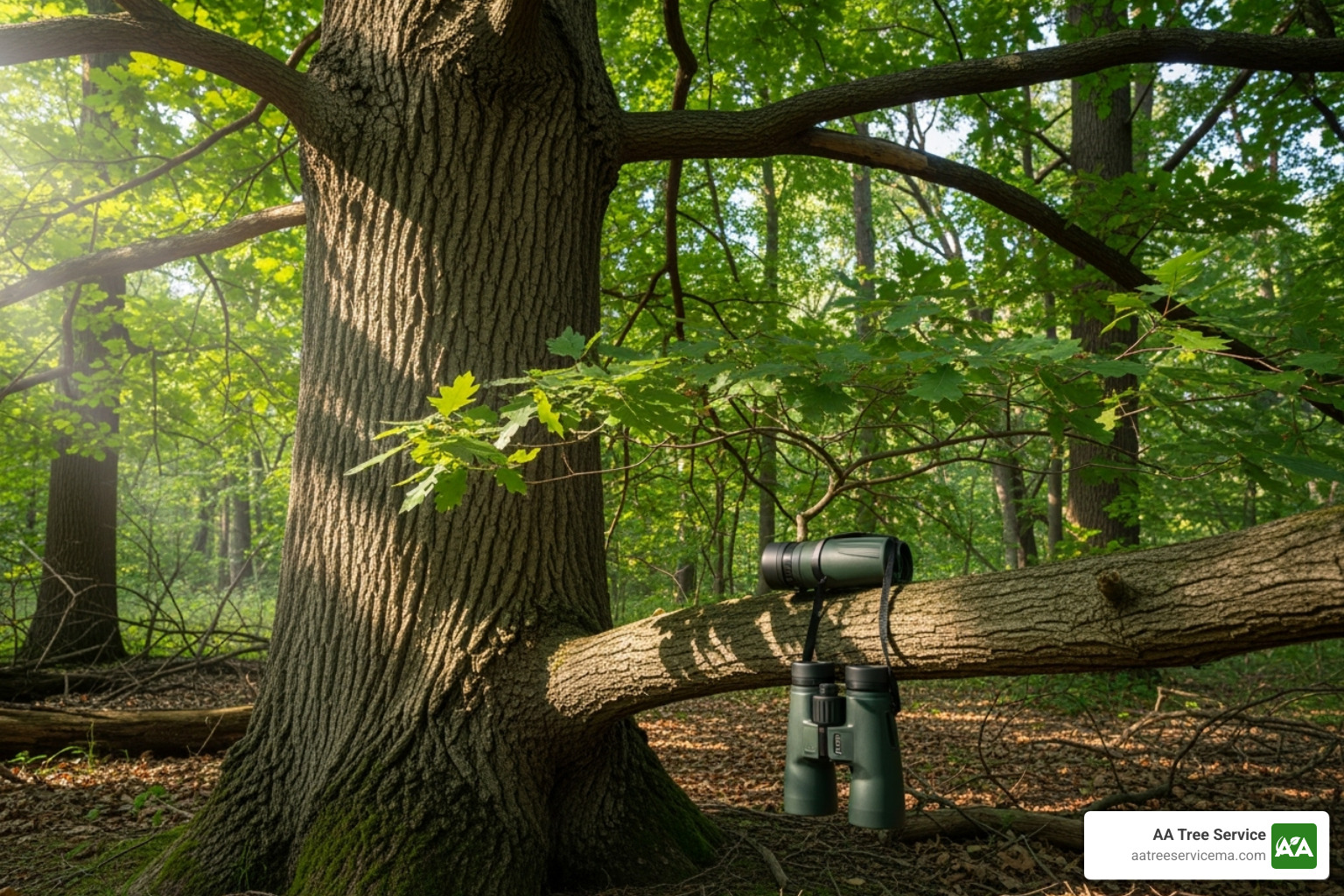
Preparing for Storms in Massachusetts and New Hampshire
In Massachusetts and New Hampshire, severe weather is a given. Preparing your trees for Nor’easters, blizzards, and thunderstorms is crucial for protecting your home.
We highly recommend seasonal tree inspections. An annual check-up by a certified arborist, ideally in fall or spring, can identify vulnerabilities before storm season hits.
Before a storm, do a quick pre-storm check yourself. Look for hanging branches or leaning trees. If you spot anything concerning, call a professional.
If an arborist identifies a hazard, prioritize removing it before a storm. While proactive removal isn’t typically covered by insurance, it’s a small price to pay for peace of mind compared to the potential damage. After these events, our Storm Clean Up Services are always ready to assist.
Frequently Asked Questions about Tree Service Insurance Claims
When a tree emergency strikes, it’s natural to have questions. Here are some of the most common questions, answered with our expert insights.
What if my neighbor’s tree falls on my property?
This is a common scenario. Here’s how it usually works:
- Your Insurance Pays First: Typically, your own homeowner’s policy covers damage to your property, regardless of where the tree came from. It will also cover removing the tree from the damaged structure.
- When Your Neighbor is Liable: Your neighbor is only responsible if you can prove they were negligent—meaning they knew their tree was hazardous and did nothing.
- Proving Negligence is Difficult: Without prior written documentation (like a certified letter you sent them), proving negligence is hard. Filing with your own insurer is usually the less stressful path.
- Be Proactive: If you’re concerned about a neighbor’s tree, document its condition with photos and communicate your concerns to your neighbor in writing to create a record.
Will my insurance rates go up after a tree damage claim?
This is a valid concern. The impact of a tree service insurance claims on your rates can vary:
- Claims Can Affect Rates: Yes, filing a claim can lead to a premium increase at renewal, as it may signal a higher risk.
- What Influences the Change: The size of the claim, your claims history, and your insurer’s policies all influence the potential rate change.
- “Claim Forgiveness” Policies: Check if your policy includes “claim forgiveness,” which may prevent a rate hike after your first claim.
- Consider Your Deductible: For minor damage, it may be cheaper to pay out-of-pocket than to file a small claim that could raise your future rates.
Does insurance cover removing a tree that looks like it might fall?
This is another common question, and the answer is usually no.
- Insurance Covers Accidents, Not Maintenance: Homeowner’s insurance covers sudden, accidental damage. It does not cover preventative removal of a hazardous-looking tree, as this is considered routine maintenance.
- The “Imminent Danger” Exception is Rare: In very rare cases, if a qualified arborist deems a tree an imminent threat (e.g., partially uprooted but not yet fallen), an insurer might pre-authorize its removal to prevent greater loss. This is exceptional and requires explicit approval.
- Policies Exclude Neglect: If a tree you neglected to maintain falls and causes damage, your claim could be denied.
- Maintenance is Your Responsibility: Proactively maintaining your trees is the best way to prevent damage and avoid insurance claims. For urgent situations where a tree becomes an immediate threat, AA Tree Service offers professional Emergency Tree Services in Massachusetts and New Hampshire.
Conclusion
Navigating the aftermath of a fallen tree and the insurance process can be overwhelming. However, understanding tree service insurance claims is a powerful tool for both homeowners and tree service professionals.
For homeowners, preparedness is key. Know your policy, document any incidents thoroughly, and invest in proactive tree maintenance to protect your property and prevent costly repairs from situations like a Broken Tree.
For tree service professionals, specialized insurance is the foundation of your business’s security, protecting your team, equipment, and reputation.
Peace of mind comes from being proactive and having reliable partners. When disaster strikes in Massachusetts or New Hampshire, or you need expert advice, don’t hesitate to reach out. For expert assistance with Emergency Tree Removal and post-storm cleanup, trust the experts to help you recover safely and efficiently.