Why Your Property Deserves Professional Tree Care
Finding a local tree service you can trust is one of the most important decisions you’ll make as a homeowner in Massachusetts or New Hampshire. Whether you’re dealing with storm damage, overgrown branches threatening your roof, or simply want to improve your property’s curb appeal, the right tree care professional can save you thousands in potential damage while keeping your family safe.
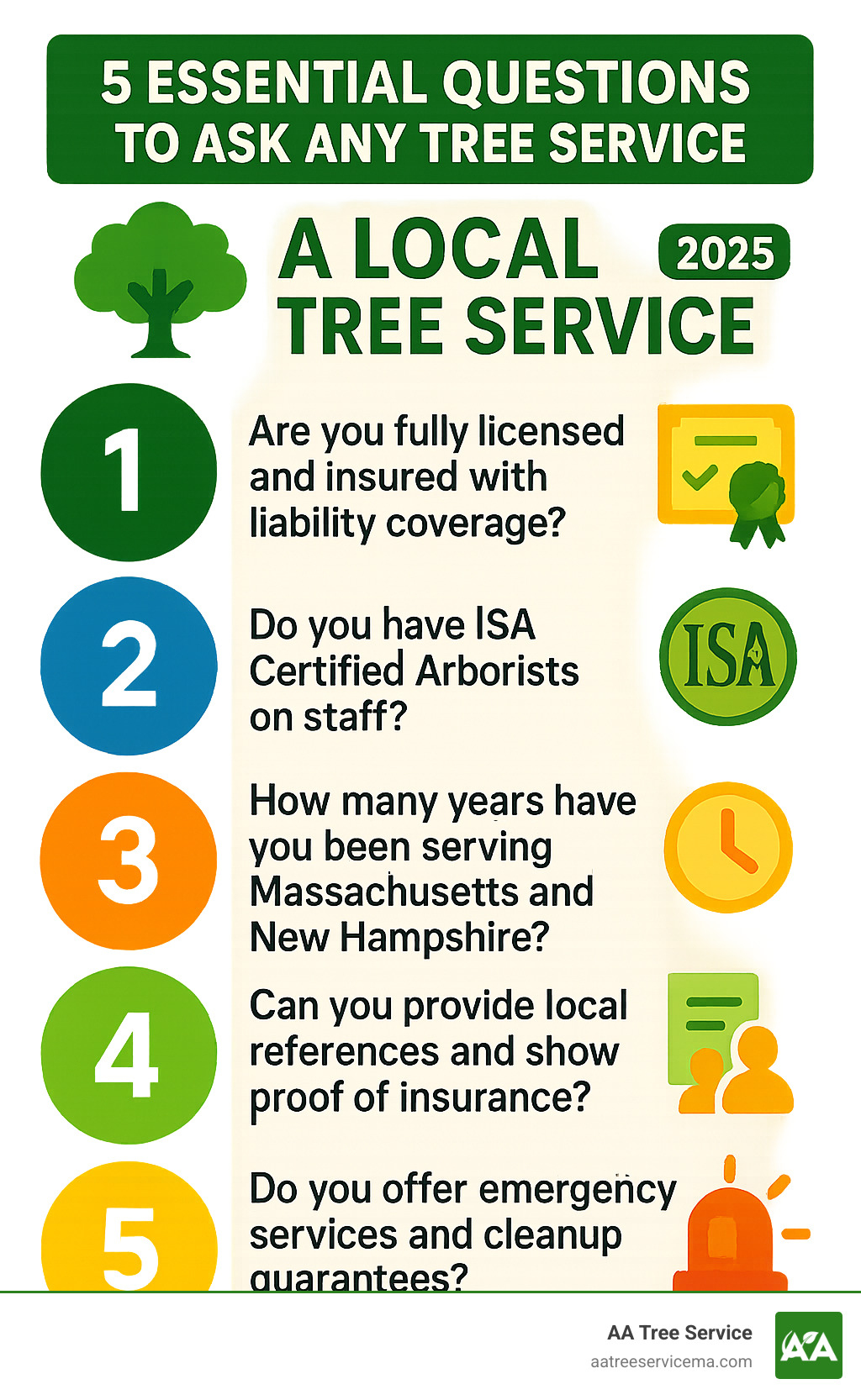
Quick Answer: What to Look for in a Local Tree Service:
- Licensed and fully insured with liability and worker’s compensation coverage
- ISA Certified Arborists on staff with proper credentials
- Local experience in Massachusetts and New Hampshire climate conditions
- Emergency services available for storm damage and urgent situations
- Free estimates with detailed, written quotes
- Positive reviews and established community reputation
Your trees are valuable assets that can increase property value by up to 15% when properly maintained. But they can also become serious liabilities if neglected. A single falling branch can cause tens of thousands in damage to your home, vehicles, or neighboring properties.
The challenge? Not all tree services are created equal. Some lack proper insurance, use dangerous techniques, or simply don’t understand the unique needs of New England trees facing harsh winters, ice storms, and hurricane-force winds.
This guide will walk you through everything you need to know to make an informed decision – from understanding different services to vetting credentials and getting fair pricing.
A local tree service terms to know:
Why Choosing a Local Tree Service in MA & NH is Crucial
Here’s something we’ve learned after decades of working in New England: a local tree service isn’t just convenient – it’s absolutely essential for protecting your property and trees.
Your Trees Face Unique New England Challenges
Massachusetts and New Hampshire throw everything they can at your trees. We’re talking about nor’easters that can dump three feet of snow overnight, ice storms that turn every branch into a crystal chandelier (beautiful, but deadly), and hurricane-force winds that can uproot century-old oaks in minutes.
Then there’s our famous freeze-thaw cycles. One day it’s 45 degrees and your trees are thinking about spring, the next it’s 15 degrees and everything’s locked in ice. This constant temperature roller coaster weakens tree structure in ways that companies from warmer climates simply don’t understand.
Native Species Need Specialized Care
Your sugar maples have completely different pruning needs than the white pines towering over your neighbor’s house. And that beautiful red oak in your front yard? It’s susceptible to specific diseases that are common in our region but rare elsewhere.
Local arborists know that you never prune maples during their active growing season (unless you want a sticky mess of sap). They can spot emerald ash borer damage before it becomes catastrophic and recognize the early warning signs of winter moth infestations that can devastate entire neighborhoods.
Emergency Response When Minutes Matter
When a massive branch crashes through your roof during a midnight thunderstorm, you don’t want to wait three days for help. Local tree services can typically respond within hours because they understand our weather patterns and keep crews ready during storm season.
We’ve seen how faster emergency response can mean the difference between a $500 repair and a $15,000 insurance claim. Plus, local crews know exactly which roads flood during heavy rains and which neighborhoods lose power first.
Community Accountability Makes All the Difference
Here’s the thing about local businesses – they live in the same communities they serve. Their kids go to the same schools as your kids. They shop at the same grocery stores and attend the same town meetings.
This creates a level of accountability that you simply can’t get from large national chains. When your reputation depends on word-of-mouth referrals from neighbors, you make sure every job is done right the first time.
Plus, supporting local businesses keeps money circulating in our Massachusetts and New Hampshire communities, creating jobs for our neighbors and strengthening our local economy.
Decoding Tree Care: A Complete Guide to Professional Services

When you’re looking for a local tree service, it helps to understand exactly what you’re getting. Tree care isn’t just about cutting branches – it’s a specialized field that combines science, safety, and skill. Let’s break down what professional tree services actually do.
Professional Tree Removal Services involve much more than just firing up a chainsaw. A skilled crew starts by studying your tree’s lean, weight distribution, and potential hazards. They’ll use specialized equipment like cranes when trees are close to your house or power lines, and they know exactly where each section will fall before they make the first cut.
The cleanup afterward is just as important as the removal itself. You shouldn’t be left with a yard full of branches and sawdust when the job’s done.
Tree Pruning and Trimming is where science meets art. Professional arborists understand tree biology well enough to make cuts that actually help your trees grow stronger. They’ll remove dead, diseased, or damaged branches while improving air circulation and sunlight penetration.
Good pruning also reduces wind resistance, which can save your trees during those fierce New England storms. The timing matters too – most trees should be pruned during dormant seasons to minimize stress and disease risk.
After a tree comes down, Stump Grinding Solutions take care of what’s left behind. Those stumps can keep sprouting new growth and become serious trip hazards. Professional grinding equipment can take stumps down below ground level, and the wood chips created make excellent mulch for your garden.
Land Clearing Services go beyond just removing everything in sight. Whether you’re planning construction or just want to expand your yard, professional clearing includes selective removal to preserve valuable trees, complete vegetation removal when needed, and proper disposal of all debris.
When storms hit Massachusetts and New Hampshire, Emergency Tree Services become absolutely critical. Professional emergency response means 24/7 availability for urgent situations, safe removal of trees from structures, and temporary stabilization of damaged trees until permanent repairs can be made.
Storm Cleanup Services involve more detective work than you might expect. After the obvious damage is cleared, professionals assess remaining trees for hidden damage that might cause problems later. They’ll clear debris from gutters and roofs, and coordinate with insurance adjusters to document everything properly.
Certified Arborist Services bring specialized knowledge that goes far beyond basic tree removal. These professionals can diagnose diseases, recommend soil treatments, perform detailed tree health inspections, and create preventive care plans to keep your trees healthy for years to come.
The International Society of Arboriculture sets the standards for professional tree care, and their ISA Certified Arborist qualifications ensure you’re working with someone who truly understands tree biology and proper care techniques.
The Smart Homeowner’s Checklist for Hiring a local tree service
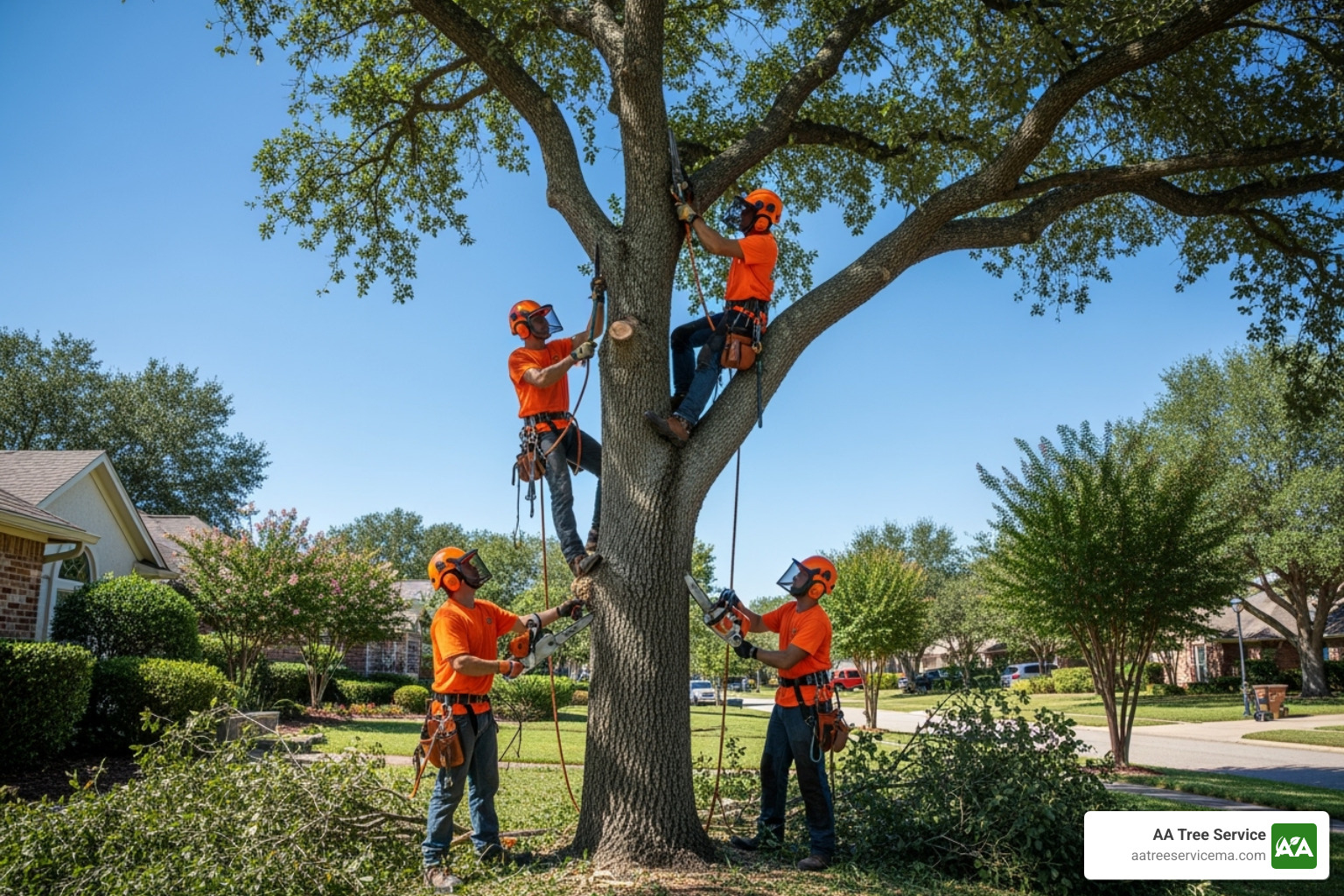
Finding a local tree service you can trust doesn’t have to feel overwhelming. Think of it like hiring any other professional – you want someone qualified, experienced, and accountable. The difference? Tree work involves chainsaws, heavy equipment, and potentially dangerous situations around your home.
Here’s your roadmap to making a smart choice that protects both your property and your peace of mind.
Credentials That Count: Licensing, Insurance, and Certifications
Let’s start with the absolute must-haves – because cutting corners here can cost you dearly.
Insurance is your safety net – and it’s completely non-negotiable. Tree work ranks among the most dangerous professions, and without proper coverage, you could be on the hook for medical bills or property damage. Always ask to see current certificates for full liability insurance (we’re talking minimum $1 million coverage) and worker’s compensation coverage. Don’t just take their word for it – verify these credentials directly with the insurance company.
We’ve heard too many horror stories of homeowners facing massive bills because they hired an uninsured crew. One falling branch through a neighbor’s window can quickly turn into a $10,000+ nightmare.
Licensing shows they’re legitimate, but it’s just the starting point. Any legitimate business needs proper licensing to operate in Massachusetts and New Hampshire. Think of it as the baseline – not the gold standard.
The real differentiator? Look for companies affiliated with the International Society of Arboriculture. ISA Certified Arborist qualifications represent serious expertise – these professionals have invested years in understanding tree biology, proper pruning techniques, and safe removal practices.
Even better? Companies with Board Certified Master Arborist distinction on staff. This represents the pinnacle of arborist certification, requiring additional experience and advanced testing. It’s like the difference between a good doctor and a specialist.
Experience and Reputation: What to Look for in a local tree service
Years in business tell a story – especially in tree care. Companies that have survived multiple decades in Massachusetts and New Hampshire have weathered countless storms (literally). They understand how ice storms affect different tree species, when hurricane season poses the biggest risks, and which trees are most likely to fail during high winds.
This local experience is invaluable. A company that’s been serving your community for 20+ years has seen it all and learned from every challenge.
Real customer feedback reveals everything you need to know about how a company handles pressure. Check their customer testimonials and online reviews carefully. Look for patterns – do they consistently show up on time? Clean up thoroughly? Handle unexpected complications professionally?
Don’t just read the glowing reviews. Pay attention to how companies respond to complaints or challenges. The best companies address concerns directly and work to make things right.
A+ BBB rating isn’t just a nice-to-have – it demonstrates long-term commitment to customer satisfaction and transparent business practices. Companies with this rating have shown they’ll work with third-party oversight to resolve any issues that arise.
Word-of-mouth referrals from neighbors carry special weight. If your neighbor was happy enough to recommend a company, that says something meaningful about their experience.
The Commitment to Safety and Customer Satisfaction
Safety-first culture should be obvious from the moment you interact with a professional tree service. Their crew should arrive with proper personal protective equipment, use modern equipment that’s well-maintained, and follow clear safety protocols.
Tree work involves specialized techniques that weekend warriors simply can’t master. Professional companies invest in ongoing training, crane services for complex removals near structures, and advanced climbing techniques that minimize risk to both workers and property.
Thorough site cleanup separates the pros from the amateurs. Your property should look better when they leave than when they arrived. This means complete debris removal, protection of your landscaping and structures, and proper restoration of any disturbed areas.
The companies worth hiring take pride in their customer service focus. They return calls promptly, provide detailed written estimates, explain exactly what work will be performed, and follow up to ensure you’re completely satisfied.
Remember – you’re not just hiring someone to cut down a tree. You’re investing in the safety of your family, the protection of your property, and the long-term health of your landscape. Take the time to do your due diligence. Your peace of mind is worth it.
Understanding the Costs: What Factors Influence Your Quote?
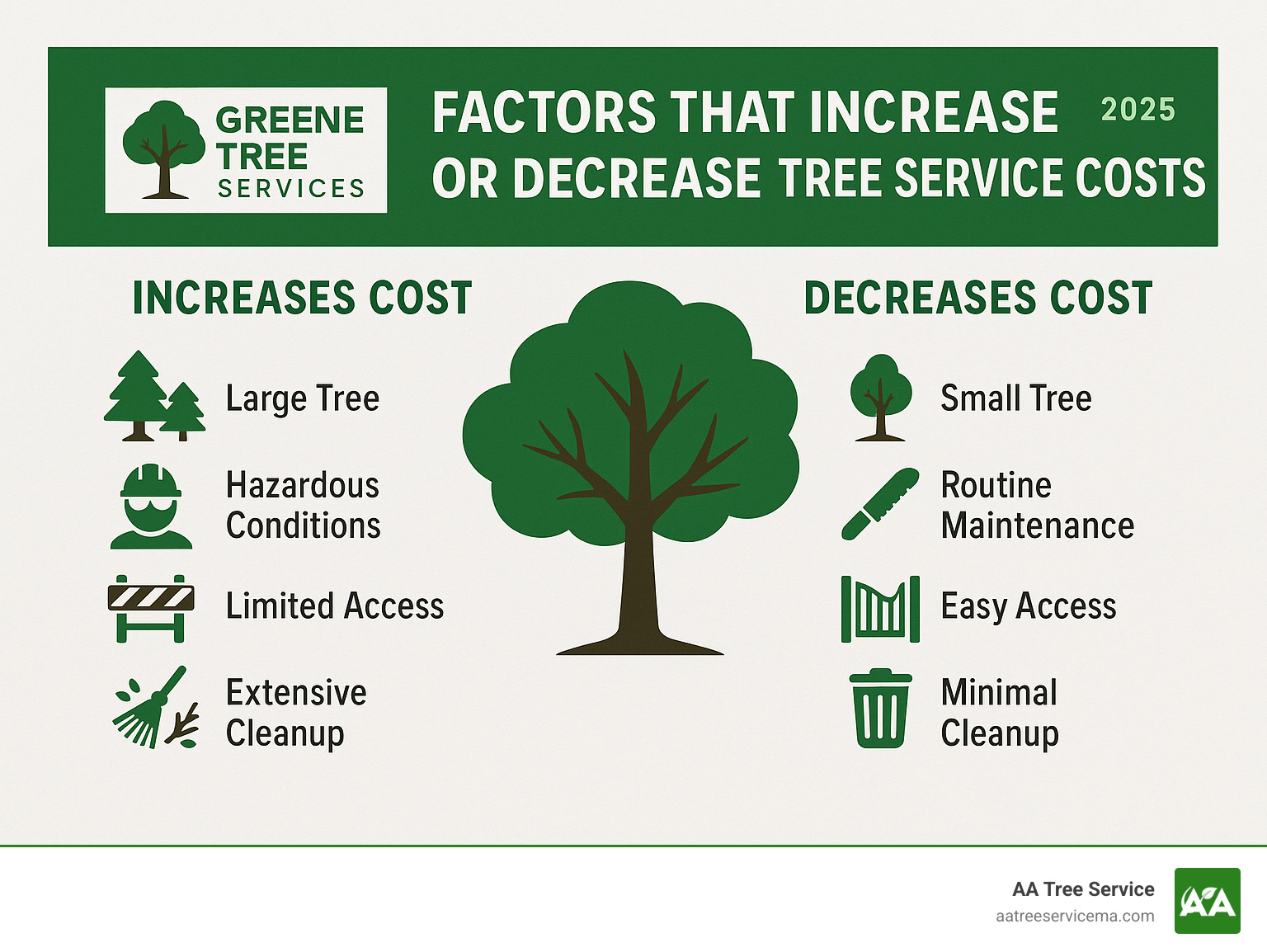
Getting quotes for tree work can feel like a mystery. Why does one company quote $500 while another says $2,000 for the same tree? The truth is, a local tree service considers dozens of factors when pricing your job, and understanding these can help you make sense of the numbers.
Tree size and height are the biggest cost drivers. A small ornamental tree in your front yard might take an hour to remove, while a massive oak towering over your roof could require a full day with specialized equipment. The difference in effort – and risk – is enormous.
Accessibility plays a huge role too. A tree in your backyard that requires crews to haul equipment through your house and carry debris piece by piece will cost significantly more than one right next to the driveway. We’ve seen jobs where difficult access doubled the final price.
Proximity to structures and power lines turns routine tree work into precision operations. When a tree hangs over your roof or grows near electrical lines, every cut must be calculated. This often means bringing in cranes, coordinating with utility companies, and taking extra safety precautions – all of which increase costs.
The tree’s health and condition matter more than you might think. A healthy tree with predictable wood grain is much easier to work with than a diseased tree that could split unexpectedly. Dead trees are particularly challenging because they’re brittle and unpredictable.
Emergency services naturally cost more than scheduled work. When you need a tree removed from your roof after a storm, you’re paying for immediate response, weekend or holiday work, and often more dangerous conditions.
Debris hauling is another factor many homeowners overlook. Some companies include cleanup in their base price, while others charge extra. A large tree can generate several truckloads of debris, and disposal fees add up quickly.
A General Guide to Tree Service Pricing
Note: These are average costs based on internet research and not actual costs for AA Tree Service. Always request personalized quotes for accurate pricing.
Understanding typical pricing ranges helps you evaluate quotes, but every job is unique. Small tree removal typically runs $200 to $600, which covers most ornamental trees and younger specimens under 30 feet tall.
Medium-sized trees usually fall in the $600 to $1,500 range. These include mature maples, oaks, and pines that require more time and equipment but don’t need cranes or extensive safety measures.
Large tree removal is where costs can really vary – anywhere from $1,500 to $5,000 or more. These giants often require cranes, multiple crew members, and sometimes multiple days to complete safely. The high end of this range typically involves trees near structures or with other complicating factors.
Fallen tree removal is often less expensive, ranging from $100 to $500, since much of the dangerous work is already done. However, if the tree has damaged structures or is tangled in power lines, costs can increase dramatically.
Stump grinding adds another $100 to $400 per stump, depending on size and accessibility. Larger stumps with extensive root systems take more time and wear down equipment faster.
The average tree removal cost across all sizes is around $750, but this number can be misleading since it includes everything from small shrubs to massive specimens.
The cheapest quote isn’t always the best value. A company charging significantly less might be cutting corners on insurance, using outdated equipment, or planning to add surprise charges later. When it comes to tree work, investing in a properly insured, experienced local tree service protects both your property and your wallet in the long run.
Frequently Asked Questions about Local Tree Care
How often should my trees be professionally inspected?
Annual inspections are the sweet spot for most mature trees in Massachusetts and New Hampshire. Think of it like your annual physical – catching problems early saves you money and headaches down the road.
Some trees need more frequent check-ups though. If you have trees over 50 years old, they’re like your aging relatives – they need a bit more attention. The same goes for trees showing signs of stress, disease, or those awkwardly positioned near your house or power lines.
Storm damage is another game-changer. After a harsh New England winter or a summer thunderstorm, it’s worth having a professional take a look. Regular tree health inspections are essential to controlling diseases and bugs while helping your trees thrive in our challenging climate.
The beauty of catching issues early? A $200 pruning job today can prevent a $2,000 emergency removal tomorrow. When you’re looking for a local tree service to handle inspections, choose someone who knows our region’s specific challenges.
Is stump grinding necessary after a tree is removed?
Here’s the thing about stumps – they’re not just ugly lawn ornaments. While grinding isn’t legally required, it’s usually the smart move for several practical reasons.
First, stumps are trip hazards waiting to happen. Ask any homeowner who’s stumbled over one while mowing the lawn. They also become cozy homes for termites, carpenter ants, and other pests you definitely don’t want moving closer to your house.
But here’s what surprises many people: trees can continue to grow even after being reduced to stumps. Those little shoots popping up around the base? That’s your “removed” tree trying to make a comeback. Grinding eliminates this problem entirely.
If you want to replant in that spot or restore your lawn, grinding is practically essential. Plus, let’s be honest – a smooth, green lawn looks infinitely better than a rotting stump reminder of what used to be.
Why shouldn’t I attempt major tree trimming or removal myself?
We get it – YouTube makes everything look doable, and hiring professionals costs money. But tree work is genuinely dangerous in ways that aren’t immediately obvious.
The statistics are sobering: homeowners becoming injured gravely, maimed, or experiencing death while attempting dangerous DIY tree jobs happens more often than you’d think. We’re talking about chainsaws, ladders, heavy branches, and unpredictable falling patterns. One wrong move can change your life forever.
Then there’s the electrocution risk from power lines. Even if wires look far away, trees conduct electricity and branches can spring unexpectedly when cut. Professional crews know how to work safely around electrical hazards.
Property damage is another huge concern. That branch you’re cutting might look like it’ll fall harmlessly into the yard, but physics has other plans. Professional arborists understand tree physics and use techniques to control exactly where everything lands.
Beyond safety, improper cuts can seriously damage tree health. Trees don’t heal like humans – they compartmentalize damage. Bad cuts create permanent weak spots and disease entry points.
When you need a local tree service in Massachusetts or New Hampshire, you’re paying for specialized training, proper equipment, and insurance protection. It’s not just about getting the job done – it’s about getting it done safely and correctly.
Conclusion: Making the Right Choice for Your Property
When you’re standing in your yard looking at that towering oak tree or storm-damaged maple, choosing a local tree service can feel overwhelming. But you now have all the tools you need to make a smart, informed decision that protects both your property and your wallet.
The foundation of any good choice starts with verification – making sure your tree service has proper licensing, full liability insurance, and worker’s compensation coverage. These aren’t just nice-to-haves; they’re your protection against potentially devastating liability.
Experience matters tremendously in tree care, especially here in Massachusetts and New Hampshire where our weather can be absolutely brutal. Look for companies with decades of local experience who understand how nor’easters affect different tree species and know exactly when to prune sugar maples versus white pines.
Safety should never be compromised when it comes to tree work. The right company will have a safety-first culture, modern equipment, and crews trained in the latest techniques. This is dangerous work that requires specialized knowledge – it’s not the time to go with the lowest bidder who might cut corners.
Your trees are living investments that can increase your property value by up to 15% when properly cared for. Professional tree care isn’t just about solving today’s problems – it’s about prioritizing safety and long-term tree health through proper pruning, disease prevention, and ongoing maintenance.
The peace of mind that comes with working with a trusted professional is invaluable. When that next ice storm hits or you notice concerning changes in your trees, you’ll have an established relationship with experts who know your property and can respond quickly.
For Massachusetts and New Hampshire homeowners who want a trusted, fully-insured provider with over 20 years of experience serving our unique New England conditions, companies like AA Tree Service represent the kind of local expertise and commitment to customer satisfaction that makes all the difference.
Ready to protect your property and give your trees the professional care they deserve? Request a Free Estimate for your tree care needs and take that important first step toward safer, healthier, and more beautiful trees.