When Tree Branches Become a Problem: Finding the Right Solution
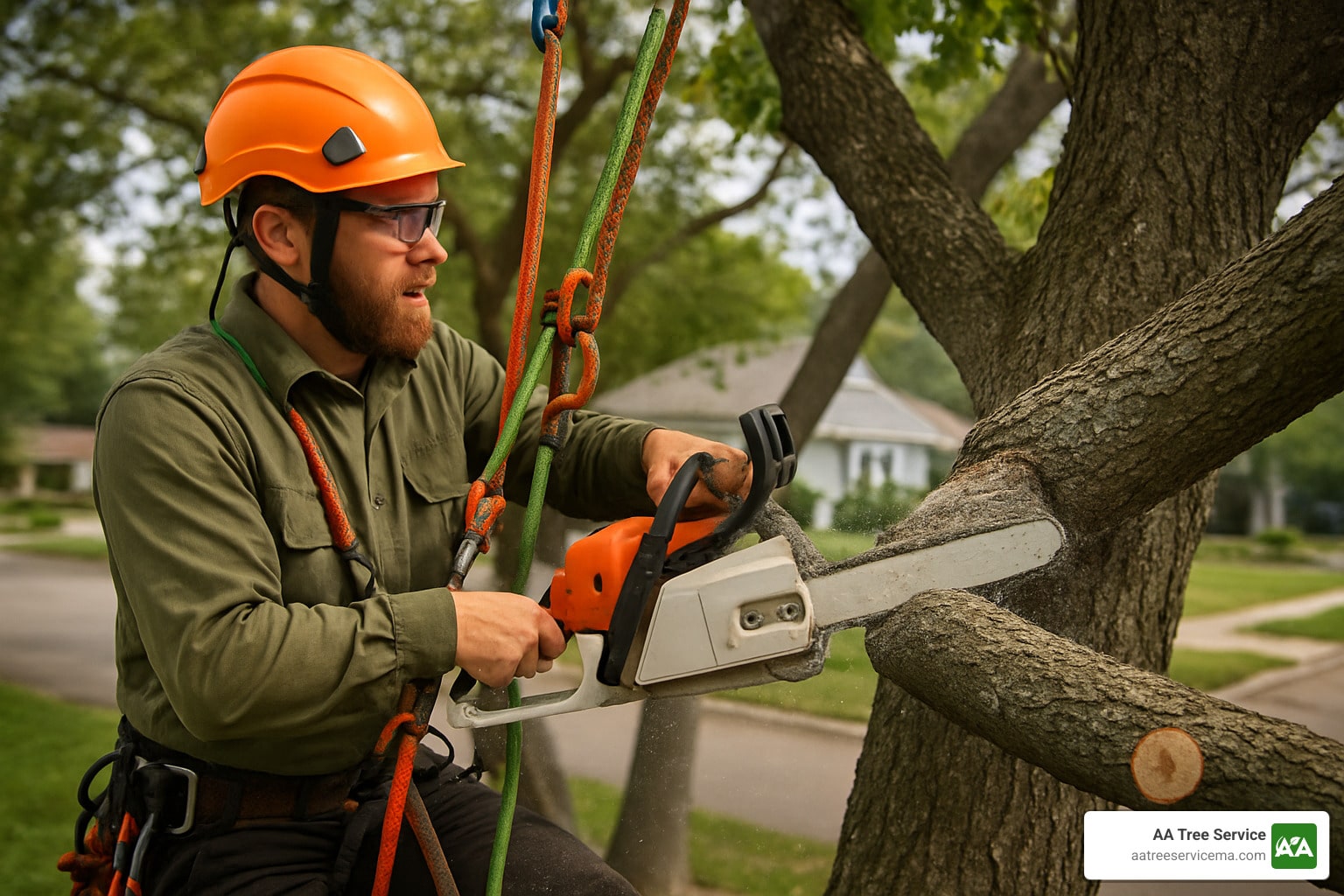
Tree branch removal service is a specialized arboricultural procedure that involves the safe cutting and disposal of limbs from trees on your property. If you’re looking for professional tree branch removal, here’s what you need to know:
Quick Guide to Tree Branch Removal Services:
* Average cost: $75-$1,800 depending on size, accessibility, and number of branches
* When to call: Dead limbs, storm damage, branches touching structures, disease
* Who to hire: ISA Certified Arborists with proper insurance and local licenses
* Key benefits: Safety, tree health, property protection, professional cleanup
Overgrown or damaged tree branches can pose significant risks to your Massachusetts or New Hampshire property. Whether it’s a diseased limb threatening to fall during the next Nor’easter, branches scraping against your roof, or limbs encroaching on power lines, professional branch removal addresses these hazards before they become emergencies.
“When trees grow into or near power lines, they can cause power interruptions to you and your neighborhood,” notes utility companies that regularly maintain tree clearance. This highlights just one of many reasons why branch management is essential for homeowners.
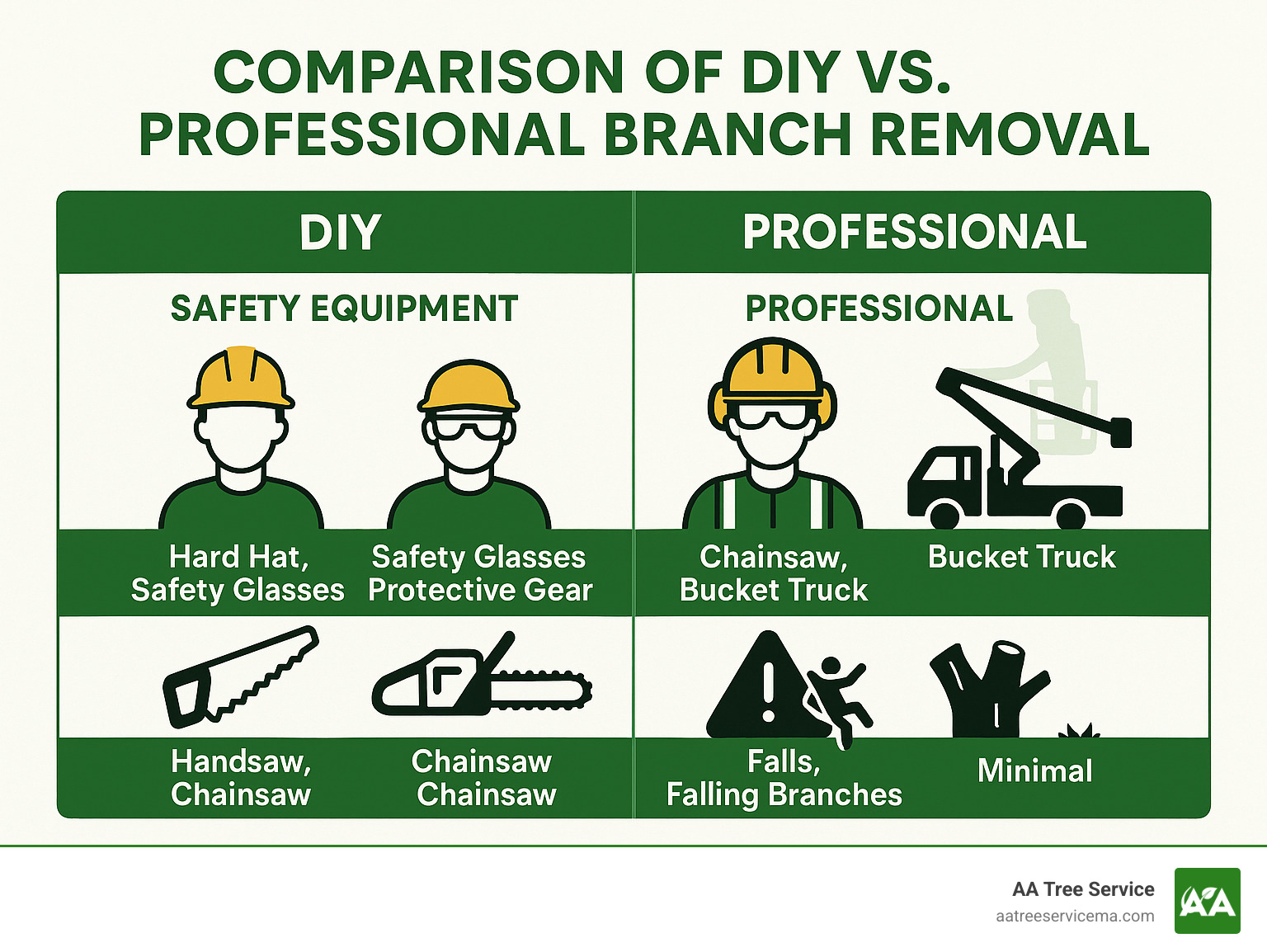
Professional tree branch removal services employ trained arborists who understand the biology of trees, ensuring cuts are made properly to promote healing and prevent disease. Unlike DIY approaches, which often lead to property damage or personal injury, certified professionals use specialized equipment and techniques to safely remove branches without harming the rest of the tree or surrounding property.
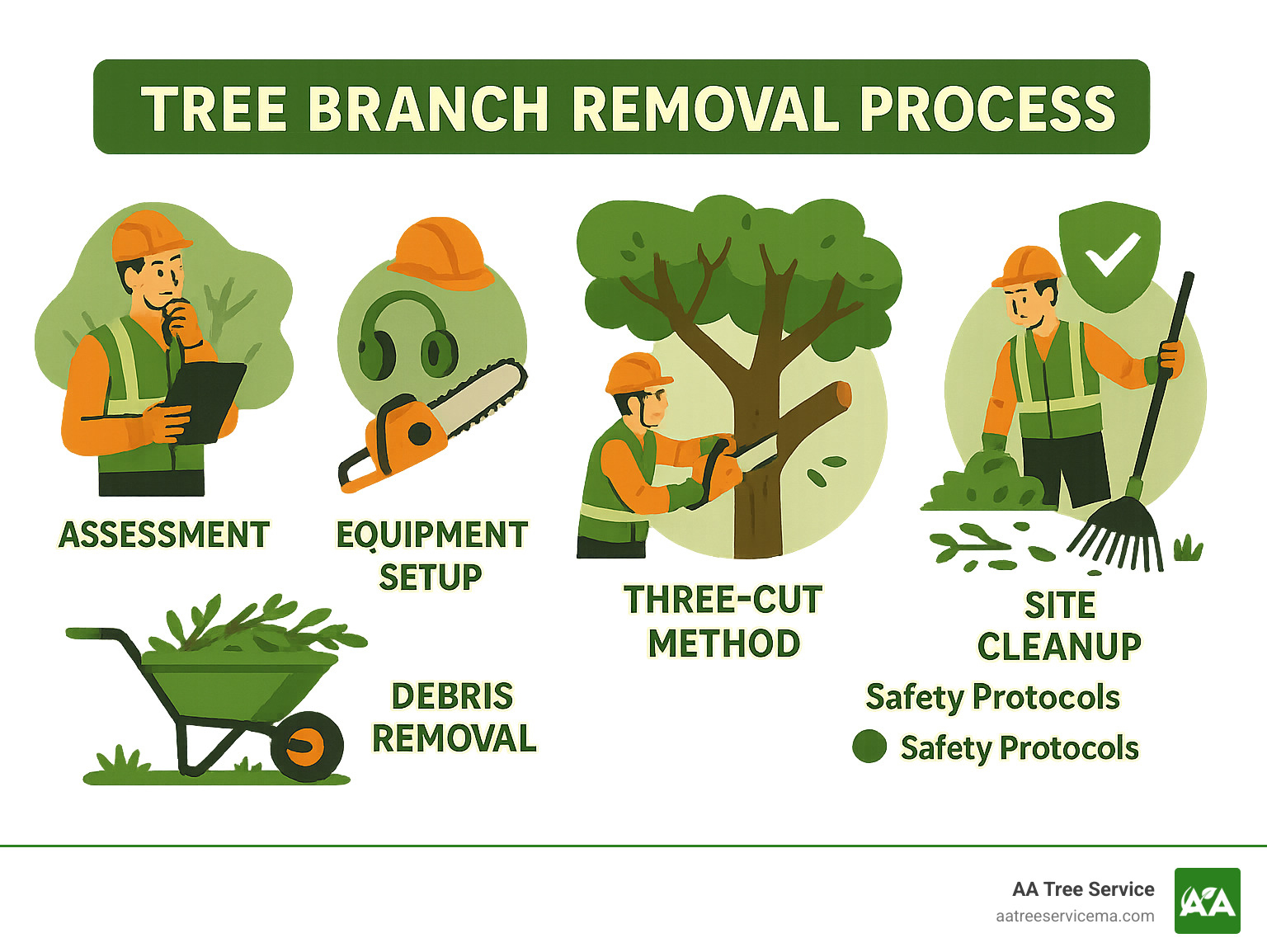
The three-cut method—making an undercut, an overcut, and a final collar cut—is the industry standard that prevents bark tearing and promotes proper healing. This technique is just one example of the expertise that professional services bring to your property.
Explore more about tree branch removal service:
– tree and landscaping services
– tree maintenance services
– stump removal service
Why & When To Remove Tree Branches
Those towering trees that add character to your Massachusetts or New Hampshire property sometimes need a helping hand. Understanding when it’s time for a tree branch removal service can protect your home, family, and the tree itself from unnecessary risks.
Signs You Need a Tree Branch Removal Service ASAP
That crack you noticed after last week’s windstorm? It might be telling you something important. When trees start showing certain symptoms, it’s best not to wait.
Cracked or split limbs are nature’s warning signs that shouldn’t be ignored. Just ask Bruce from Lexington, MA: “After a brutal winter storm, I spotted a massive crack in my oak’s main branch. The team at AA Tree Service came out that same day and removed it before it could crash onto my garage. Best call I made all year.”
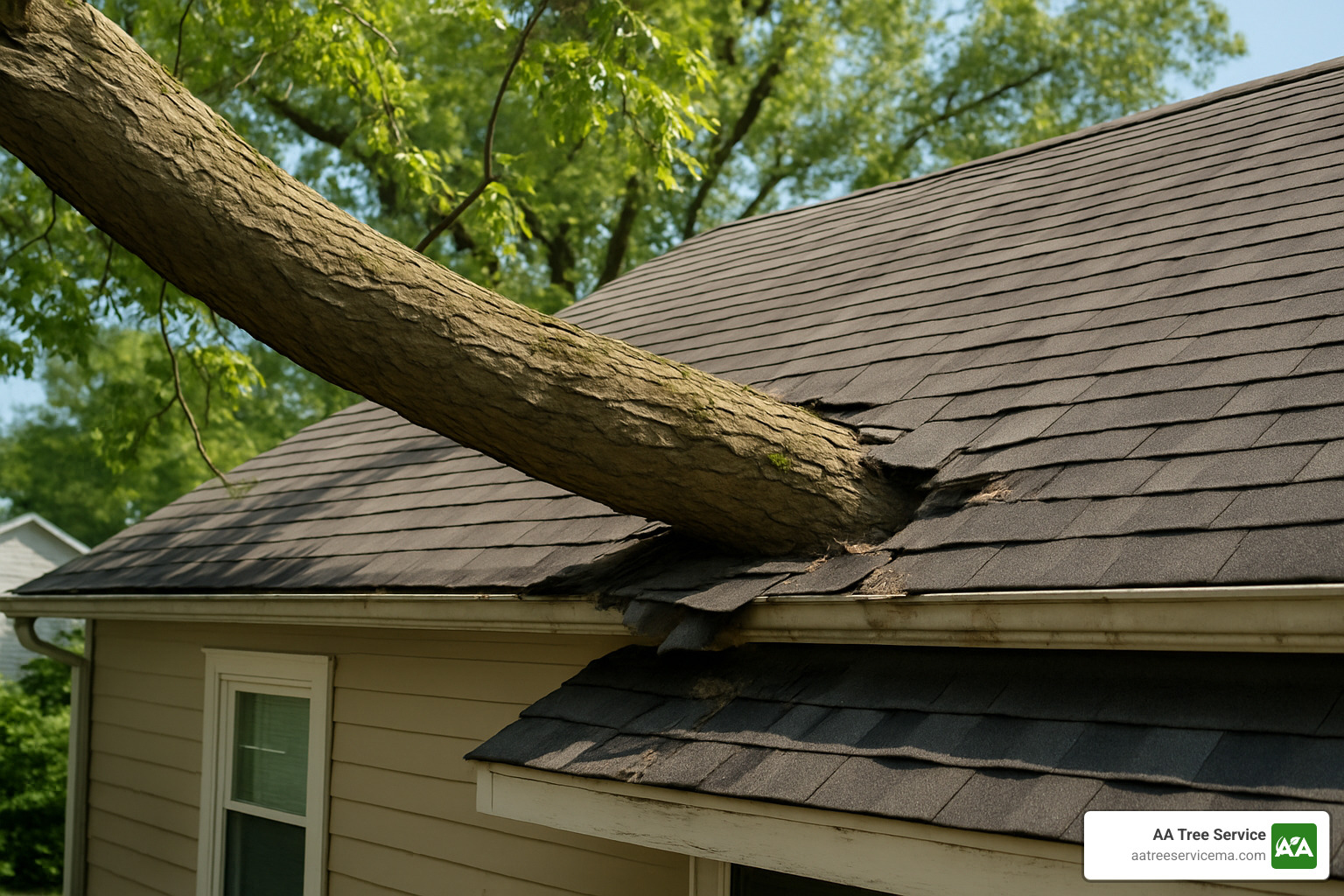
Those branches without leaves during spring and summer aren’t just eyesores—they’re deadwood that can fall without warning, even on perfectly calm days. Similarly, when you notice branches scraping against your roof, they’re not just making that eerie sound during windstorms—they’re actively damaging your shingles and potentially creating openings for water to enter.
Keep an eye out for pest nests and fungal growth too. When you spot carpenter ants marching up and down your maple or mushrooms sprouting from your elm’s branches, it’s time to call in the professionals. These unwelcome visitors signal decay that’s already well underway inside the wood.
Best Seasons for Pruning in New England
New England’s distinct seasons create natural windows for optimal branch removal:
Dormant winter pruning (November through early March) gives deciduous trees their best chance at healthy recovery. Without leaves in the way, arborists can better assess the tree’s structure and make precise cuts. Plus, with the ground frozen, heavy equipment causes less damage to your lawn.
Post-bloom summer pruning (June-July) works wonders for your flowering trees. Your cherry and dogwood can show off their spring blossoms, then get the maintenance they need afterward—just in time to set next year’s buds.
As for fall storm preparation (August-October), it’s practically a New England tradition. “We see a tenfold increase in emergency calls after the first heavy snowfall,” explains one AA Tree Service arborist. “Taking care of those vulnerable branches in the fall can save thousands in potential damage—and a lot of headaches during those winter power outages.”
Timing Your Tree Branch Removal Service for Health & Safety
Beyond seasons, other factors should influence your timing:
Consider your tree’s overall health before making cuts. A vigorous tree bounces back quickly, while one already stressed by drought or disease might need more careful attention. When in doubt, an arborist can help determine if your tree can handle pruning right now.
Be mindful of nesting wildlife in spring and early summer. That robin family that returns to your property each year is protected by Massachusetts and New Hampshire wildlife laws while nesting. A quick check before scheduling can keep you on the right side of both the law and good karma.
For branches near power lines, coordination is key. Utility companies in MA and NH typically have their own maintenance schedules for line clearing. Rather than risking dangerous DIY work, contact your provider about branches encroaching on lines.
Planning a graduation party or wedding in your backyard? Schedule your tree branch removal service well in advance. Nothing ruins outdoor photos quite like dead branches photobombing your special moments.
Healthy trees with proper maintenance not only look better but provide more shade, better air quality, and increased property value. For more comprehensive care options, check out AA Tree Service’s tree maintenance services for everything your leafy friends might need.
Tree Branch Removal Service: Choosing Qualified Professionals
Finding the right tree branch removal service isn’t just about getting branches cut—it’s about ensuring your trees remain healthy and your property stays safe. When those massive New England maples or oaks need attention, here’s how to find true professionals who won’t leave you with bigger problems than you started with.
Credentials & Certifications to Demand
When I’m talking with Massachusetts and New Hampshire homeowners, I always recommend looking beyond the “guy with a chainsaw” approach. Your trees deserve better!
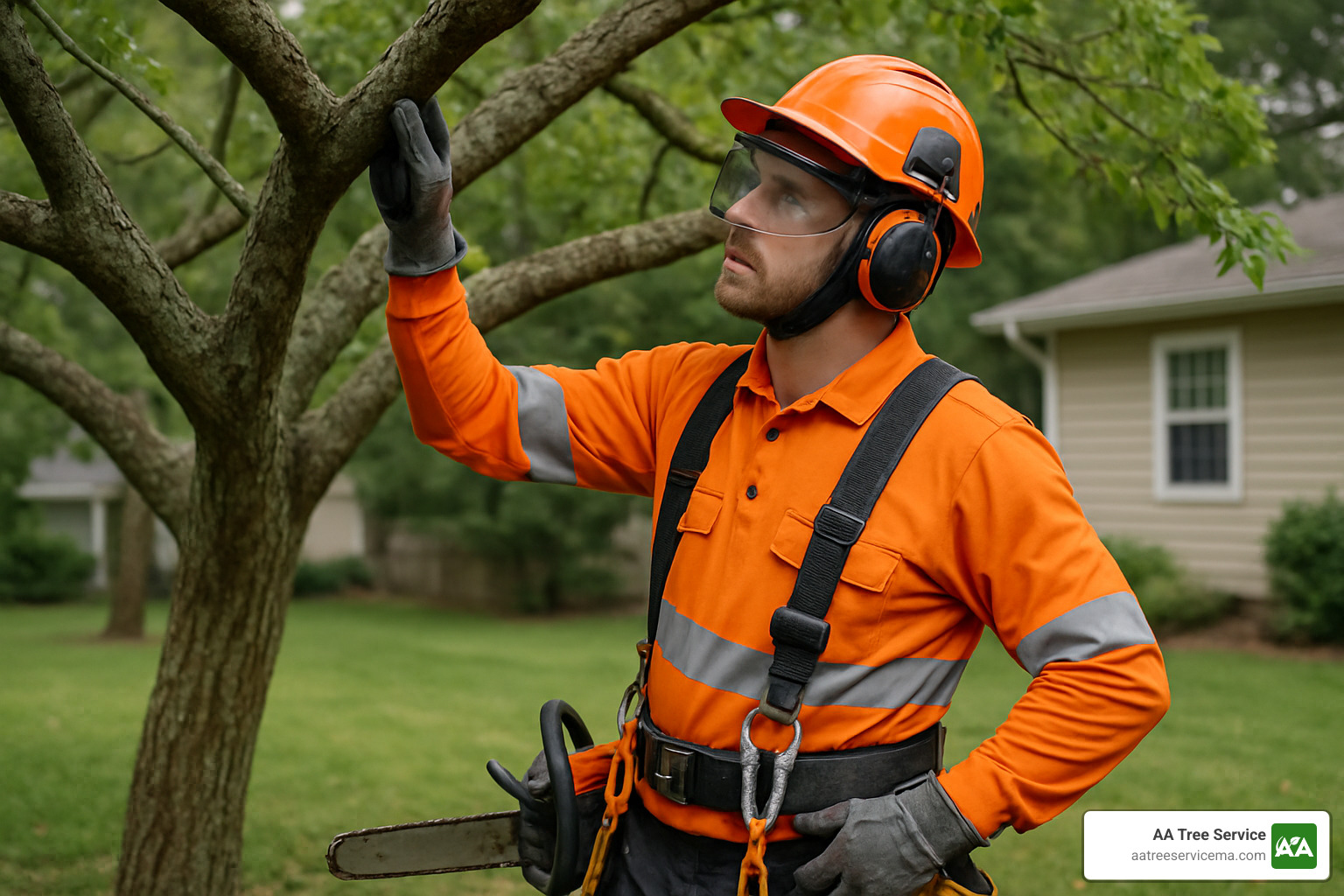
Look for an ISA Certified Arborist credential first and foremost. These professionals have passed rigorous exams covering all aspects of tree care and continue their education yearly. This isn’t just a fancy certificate—it’s proof they understand tree biology and won’t make cuts that doom your tree to disease or early death.
TCIA Membership (Tree Care Industry Association) is another green flag. At AA Tree Service, we maintain active membership because it keeps us connected to evolving industry standards and ethical practices. When storms hit Massachusetts hard, you want someone who follows established safety protocols, not someone making it up as they go.
Does your tree service mention following ANSI A300 Standards? They should! These guidelines represent industry consensus on proper pruning techniques. Without them, you might end up with harmful practices like “topping” that look terrible and actually weaken trees.
For companies that climb rather than solely using bucket trucks, ask about their Climber Safety Certification and Aerial Rescue Training. When someone’s 40 feet up in your oak tree with a chainsaw, you want to know they’re prepared for anything that might happen.
Comparing Quotes Without Compromising Quality
We all like saving money, but when it comes to tree branch removal service, the cheapest quote often comes with hidden costs. I’ve seen too many Massachusetts homeowners hire based on price alone, only to call us later to fix the damage.
Start by ensuring equal scope of work across all quotes. One company might be removing three branches while another includes five—naturally creating a price difference. Make your comparisons apples-to-apples.
Always get written estimates that spell out exactly which branches will be removed, what methods they’ll use, when they’ll complete the work, and how cleanup will be handled. At AA Tree Service, we provide detailed written quotes because we believe transparency builds trust.
Cleanup inclusion is a major consideration. Some companies leave you with a yard full of branches or charge extra for hauling them away. We include comprehensive cleanup in our quotes because we believe your property should look better after we leave—not worse.
Insurance verification isn’t optional—it’s essential. Valid liability insurance and workers’ compensation protect you from potentially devastating financial liability. Don’t hesitate to call their insurance company to verify coverage. A legitimate arborist will appreciate your thoroughness.
Before making your final decision, ask pointed questions about their approach: “Do you prune according to ANSI A300 standards?” “How many years have you been in business?” “Will cleanup be included?” and “What happens if other parts of the tree are damaged during pruning?”
As one of our senior arborists often says, “Choosing a tree service based solely on price is like choosing a surgeon based on who charges the least. The results can be disastrous.” When you’re protecting both valuable trees and your property, quality workmanship is always the better investment.
For more information about proper tree care standards, the International Society of Arboriculture offers excellent resources for homeowners wanting to educate themselves before hiring professionals.
Inside the Service: Process, Safety, Costs & Permits
Ever wondered what actually happens when a tree branch removal service team arrives at your doorstep? Understanding the process helps you know what quality work looks like when the crew pulls up to your Massachusetts or New Hampshire home.
Step-by-Step Professional Workflow
When our team at AA Tree Service arrives for branch removal, we follow a carefully choreographed dance that prioritizes safety and tree health:
First comes the site inspection – our arborists examine not just the problem branches, but the entire tree’s health, looking for nesting wildlife and noting hazards like power lines or structures. As we often tell customers, “We’re looking at the whole tree, not just the branches you’ve pointed out.”
Next, we establish a safety perimeter with cones or tape. This isn’t just for show – it keeps your curious children and pets at a safe distance while work is underway. Our crew then calculates the hazard zone where branches might fall, clearing the area or planning for controlled lowering using specialized equipment.
The actual cutting follows the three-cut technique for larger branches – a method that prevents damaging bark tears. We start with an undercut about a third through the branch, followed by a top cut slightly farther out to remove the branch weight, and finish with a precise cut at the branch collar to promote proper healing.
For branches hanging over your prized garden or new deck, we use ropes and rigging for a controlled descent rather than letting gravity take its course. After the cutting comes the cleanup – we process debris through our chipper and either haul it away or leave it as fresh mulch for your garden beds (your choice!).
Before we pack up, we perform a final inspection of both the tree and work area. As one customer recently told us, “I was amazed that my yard looked cleaner after they left than before they arrived!”

Understanding Costs & What Influences Them
“How much will this cost?” It’s probably the first question on your mind. The honest answer is: it depends on several factors.
According to industry data, tree branch removal service typically ranges from $75 to $1,800, though complex jobs can run significantly higher. These are average costs based on internet data and not actual costs for AA Tree Service.
What drives these price variations? Think of it like this: removing a few small branches from an easily accessible maple tree is similar to a simple haircut, while removing large limbs hanging over your home is more like complex surgery.
Tree size and species matter tremendously – oak and maple branches are denser and heavier than pine, requiring more labor to handle safely. Branch location plays a huge role too – branches hanging over your roof cost more to remove than those with a clear drop zone. And naturally, more branches mean more work and more debris to process.
The equipment required can range from simple chainsaws to bucket trucks or even cranes for challenging situations. And if you’re calling after a midnight storm knocked a branch onto your roof, expect to pay premium rates for emergency service.
As we like to remind our New England customers: “The cost of proper tree work is nothing compared to the cost of improper tree work.” Those savings from hiring the cheapest company often disappear when you’re fixing landscape damage or treating a tree that wasn’t properly pruned.
Permit & Insurance Essentials for MA & NH Homeowners
Before a single chainsaw starts up, there’s paperwork to consider. Many Massachusetts and New Hampshire communities have tree ordinances requiring permits even for branch removal, especially for street trees or in conservation areas.
Some trees enjoy protected status due to their historical significance or environmental importance. And branches near power lines? Those typically fall under utility company jurisdiction in both states. Always contact your utility before attempting any work near power lines – it’s not just about permits, it’s about staying alive.
The insurance question is equally critical. If you hire an uninsured company and a worker gets injured on your property, you could be facing a liability nightmare. Similarly, damage to neighboring properties from falling branches could become your financial responsibility if your tree service lacks proper insurance.
At AA Tree Service, we handle permit applications when required and carry comprehensive insurance coverage to protect our clients. As Martha from Concord, NH told us last year, “They took care of all the paperwork with the town. I didn’t have to worry about a thing.”
Prevention, Emergencies & FAQs
Taking care of your trees before problems arise isn’t just smart—it’s the best way to protect your investment in your Massachusetts or New Hampshire landscape. Think of it as preventive medicine for your leafy friends!
Preventive Strategies
The old saying “an ounce of prevention is worth a pound of cure” certainly applies to tree care. Regular maintenance helps avoid those middle-of-the-night emergency calls when a branch comes crashing down during a Nor’easter.
Have your trees professionally inspected every 2-3 years, or annually for older specimens over 60 years. These check-ups can catch potential problems before they become hazards. Young trees especially benefit from early structural pruning—as one of our AA Tree Service arborists often tells clients, “A $200 pruning job on a young tree can save thousands in remedial work or removal costs when it matures.”
Proper mulching makes a world of difference too. Maintain 2-4 inches of mulch around (but never touching) the trunk to reduce stress and promote health. Many towns in Massachusetts and New Hampshire offer free mulch from their tree trimming operations—that’s approximately 14 cubic yards of garden gold per truckload!
As for utility lines, it’s best to leave that to the professionals. Utilities in our region maintain regular trimming cycles, but if you notice branches encroaching on power lines, contact your utility company promptly. Your safety is worth more than trying to handle it yourself.
Before winter storms hit New England, consider having compromised branches removed. One of our long-time customers in Andover shared, “After losing a large branch during a winter storm last year, I now schedule pre-winter maintenance every fall with AA Tree Service. Best decision I’ve made for my property.”
Emergency Response
New England weather doesn’t always cooperate with our schedules. When storms strike, damaged branches can create immediate hazards that need addressing right away. That’s why AA Tree Service offers 24/7 emergency response throughout Massachusetts and New Hampshire for situations like:
- Branches crashed onto your roof or car
- Limbs blocking your driveway or entrance
- Branches tangled in utility lines (we coordinate with utility companies)
- Those scary partially attached hanging branches (arborists call these “widow makers” for good reason)
During major storm events when calls flood in, emergency services typically prioritize hazards in order of urgency: immediate safety threats to people first, then access issues for emergency vehicles, followed by property damage prevention, and finally convenience concerns.
Having an established relationship with AA Tree Service before emergencies occur can mean faster response when you’re in a pinch. We remember our regular customers, and yes, they often get priority attention when everyone needs help at once!
Frequently Asked Questions about Tree Branch Removal Service
Do I need a permit before scheduling a tree branch removal service?
Permit requirements vary widely across Massachusetts and New Hampshire communities. Generally, work on private trees away from conservation areas doesn’t require permits, but street trees (those between sidewalk and street) or trees in wetland buffer zones often do. Historic districts may have additional restrictions to preserve community character.
AA Tree Service can determine if permits are needed for your specific situation and handle the application process for you. We’ve steerd the permit maze in dozens of New England communities and know how to get things approved efficiently.
How much does a typical tree branch removal service cost in MA & NH?
Based on industry data (not specific to AA Tree Service), the average cost for tree branch removal service ranges from $75 to $1,800, with complex jobs potentially costing much more depending on the circumstances. Several factors affect pricing, including tree size, branch accessibility, number of branches needing removal, equipment required, and whether you need emergency service.
For an accurate estimate custom to your specific situation, we recommend scheduling a free on-site assessment with AA Tree Service. Each job has unique requirements, and we pride ourselves on transparent pricing with no surprise fees.
Can I trim branches near power lines myself?
Absolutely not—this is extremely dangerous and potentially fatal. Even professional arborists with specialized training should never work within 10 feet of energized lines, and only utility-authorized contractors should work near power infrastructure.
If branches are getting too close to power lines, contact your utility company or call AA Tree Service—we can coordinate with the utility when necessary. As utility companies consistently advise, “Have qualified professionals trim any vegetation within 10 feet of overhead lines.” Your life is worth more than saving a few dollars on tree branch removal service.
Want to be proactive about your tree care? More info about Emergency Tree Branch Removal or simply fill out our online form to schedule a consultation.
Conclusion: Making the Right Choice for Your Trees
When it comes to your property’s trees, proper tree branch removal service isn’t just about cutting away problem limbs—it’s an investment in both beauty and safety that pays dividends for years to come. The difference between expert pruning and hasty cutting can determine whether a cherished maple thrives for generations or faces premature decline.
At AA Tree Service, we’ve spent over two decades getting to know the unique challenges that New England weather presents to Massachusetts and New Hampshire homeowners. Our team doesn’t just remove branches; we provide thoughtful care that considers your tree’s future health, structural integrity, and the safety of your property.
One of our longtime clients in Lexington put it perfectly: “What impressed me most wasn’t just how safely they removed the damaged branches after that ice storm, but how they explained which cuts would help my oak recover strongest. That’s not just skill—that’s genuine care.”
We understand that tree work isn’t something most homeowners think about until there’s a problem. That’s why we’ve built our service around making the process as stress-free as possible:
Free same-day quotes that give you clear information without pressure, comprehensive insurance coverage that protects your property, meticulous cleanup that leaves your yard looking better than when we arrived, and expert advice you can trust for the long-term health of your landscape.
When storms roll through New England, our 24/7 emergency response team stands ready to handle hazardous situations quickly and safely. We pride ourselves on being there when our neighbors need us most—whether it’s a branch threatening your roof after a Nor’easter or routine maintenance to prevent future problems.
As one of our certified arborists often reminds clients, “When you hire a tree service, you’re not just paying for someone to cut branches—you’re investing in the expertise to know which branches to cut, how to cut them, and how those cuts will affect the tree for years to come.”
Trees are living investments that improve your property’s value, provide shade on hot summer days, and create the character that makes your home uniquely yours. Trusting their care to qualified professionals who understand the science of arboriculture ensures they’ll continue to bring joy and value to your property for generations.
For professional tree branch removal service that balances immediate needs with long-term tree health, contact AA Tree Service for a free consultation. From routine maintenance to complex removals, our experienced team is ready to provide the thoughtful, expert care your landscape deserves.